
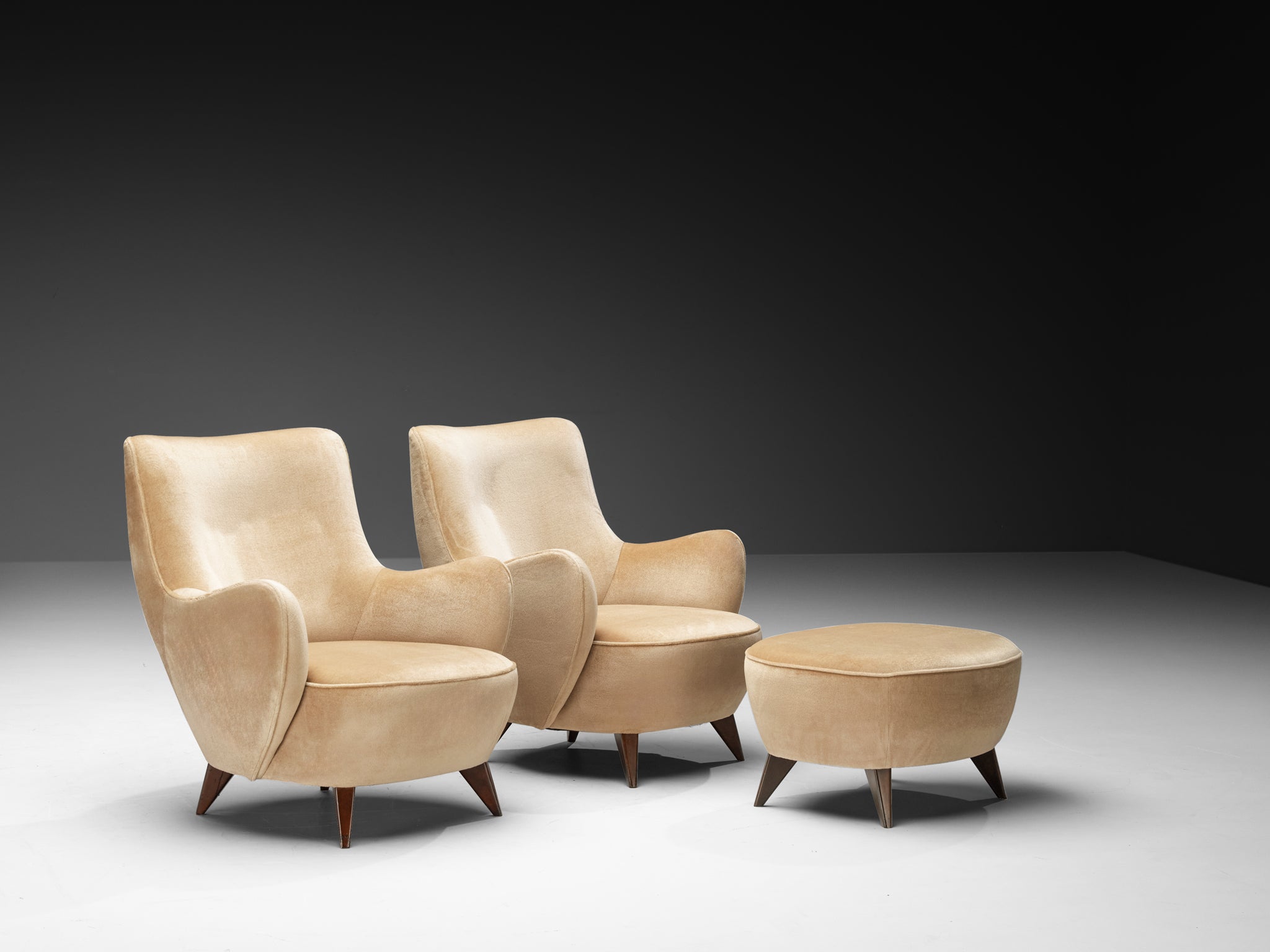
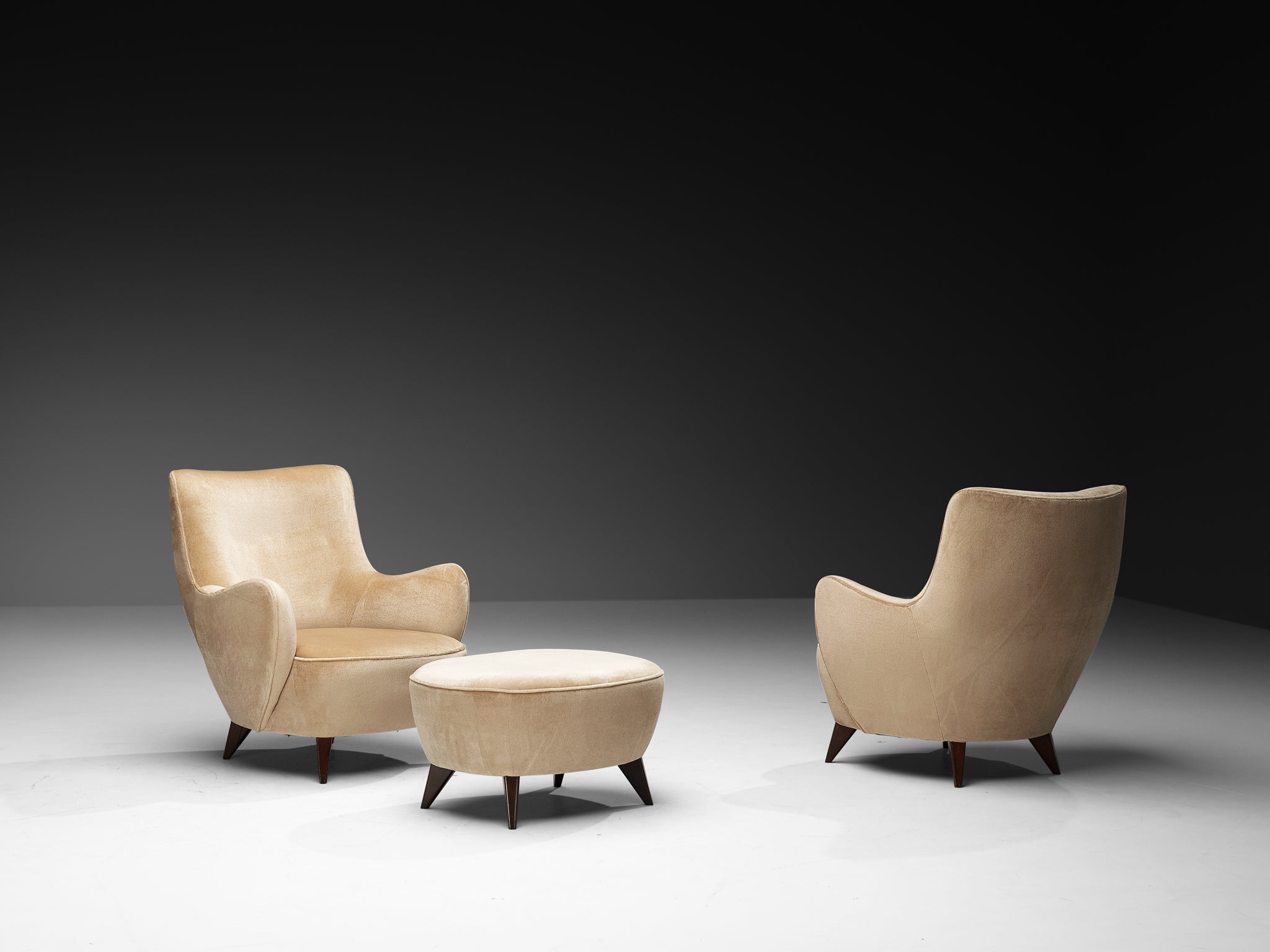
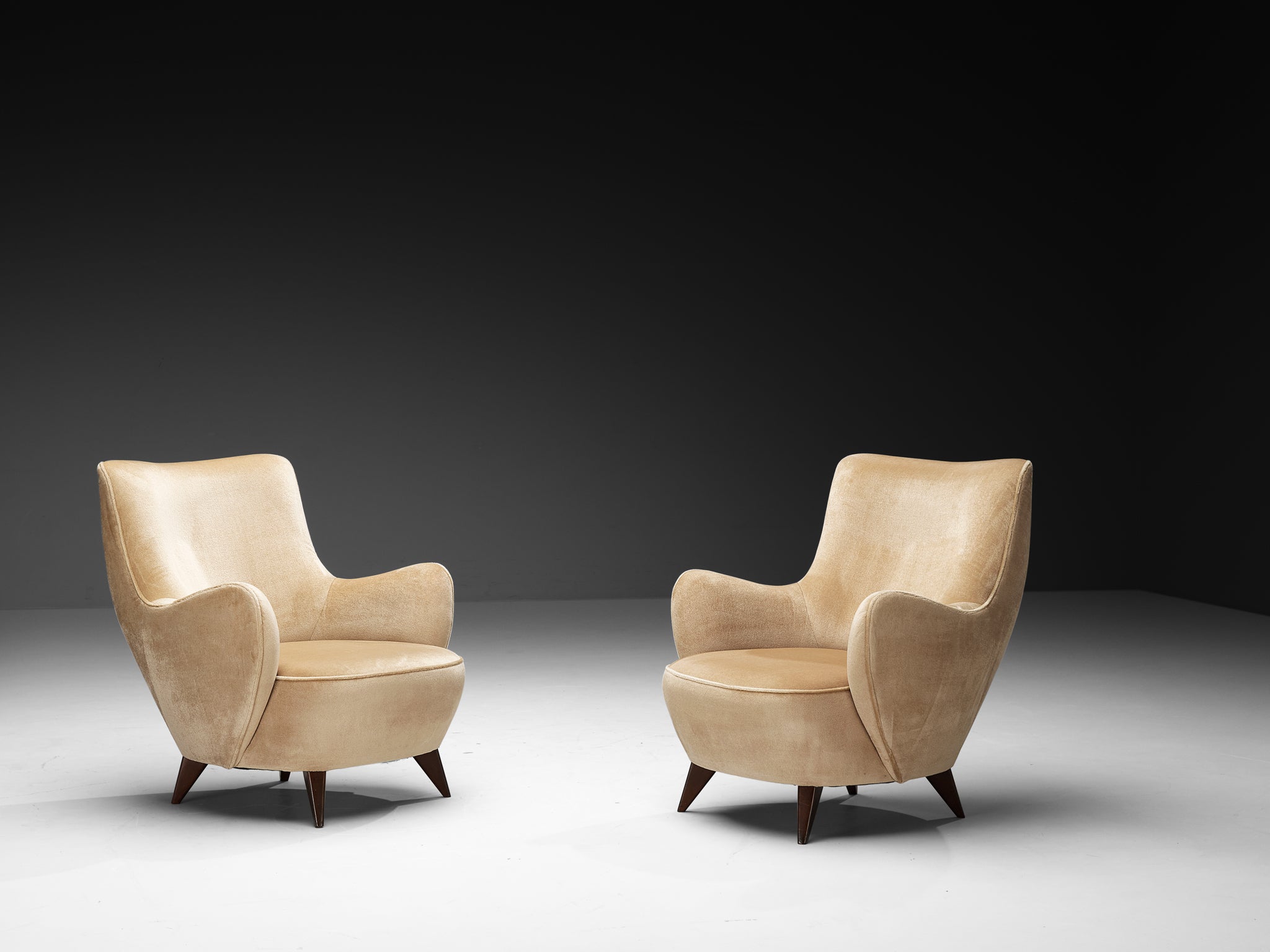
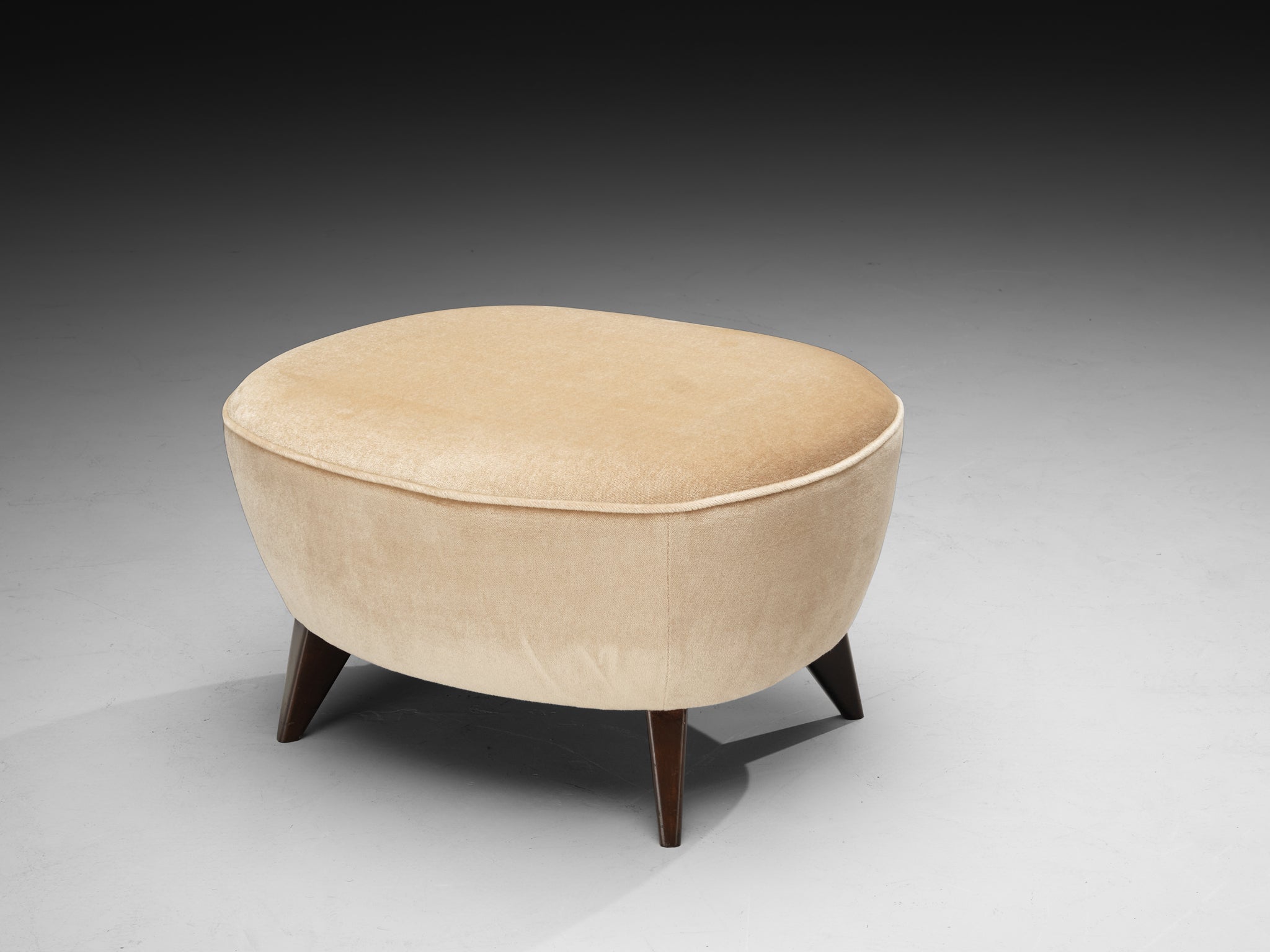
Vladimir Kagan 'Barrel' Lounge Chairs and Ottoman in Light Beige Mohair
Tearsheet
×
Receive a copy in your email or download directly:
I accept emails from Morentz.
 Open here
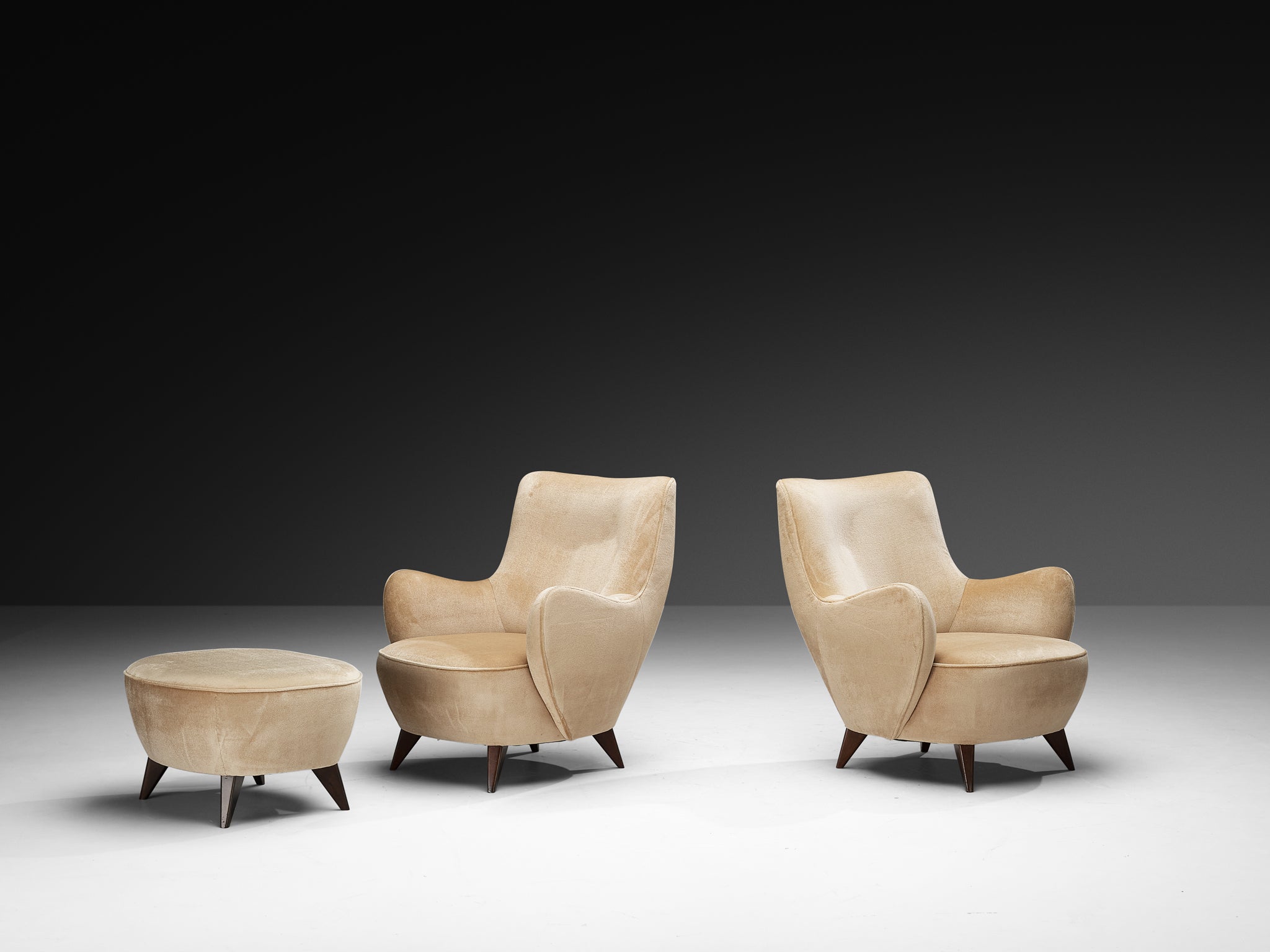
Vladimir Kagan for Kagan Couture, 'Barrel' armchairs and ottoman, model '100B', mohair, beech, United States, design 1947
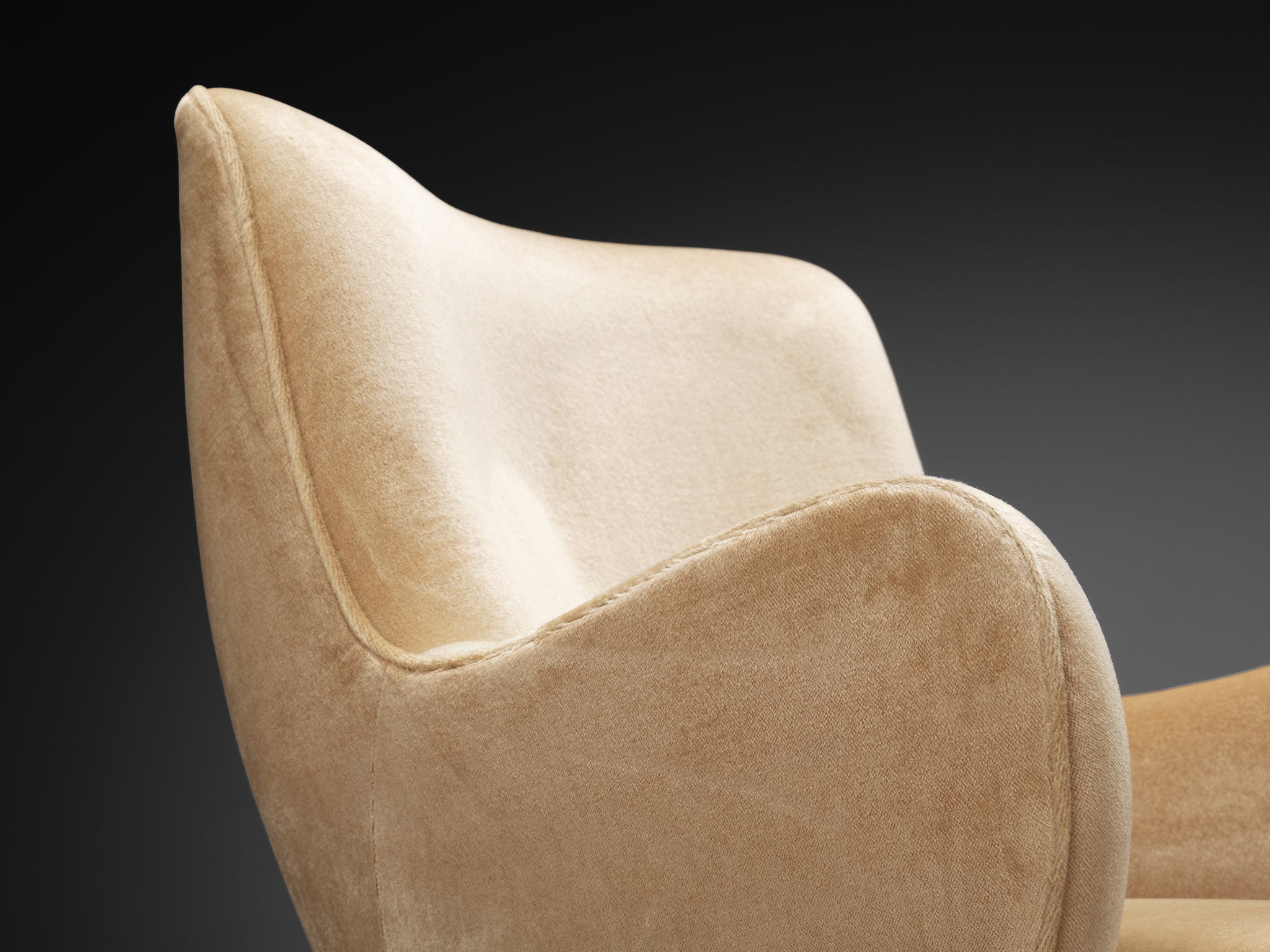
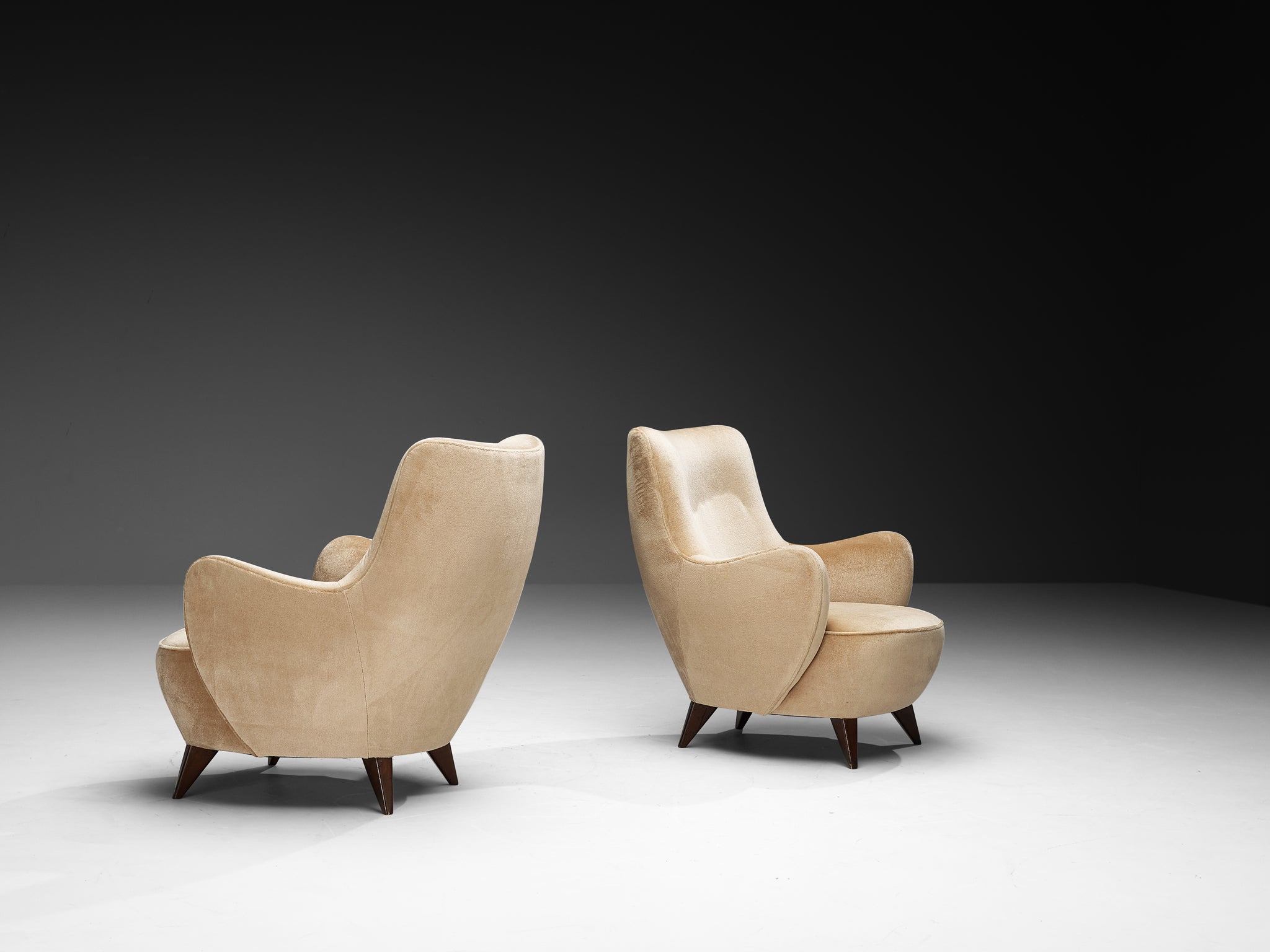
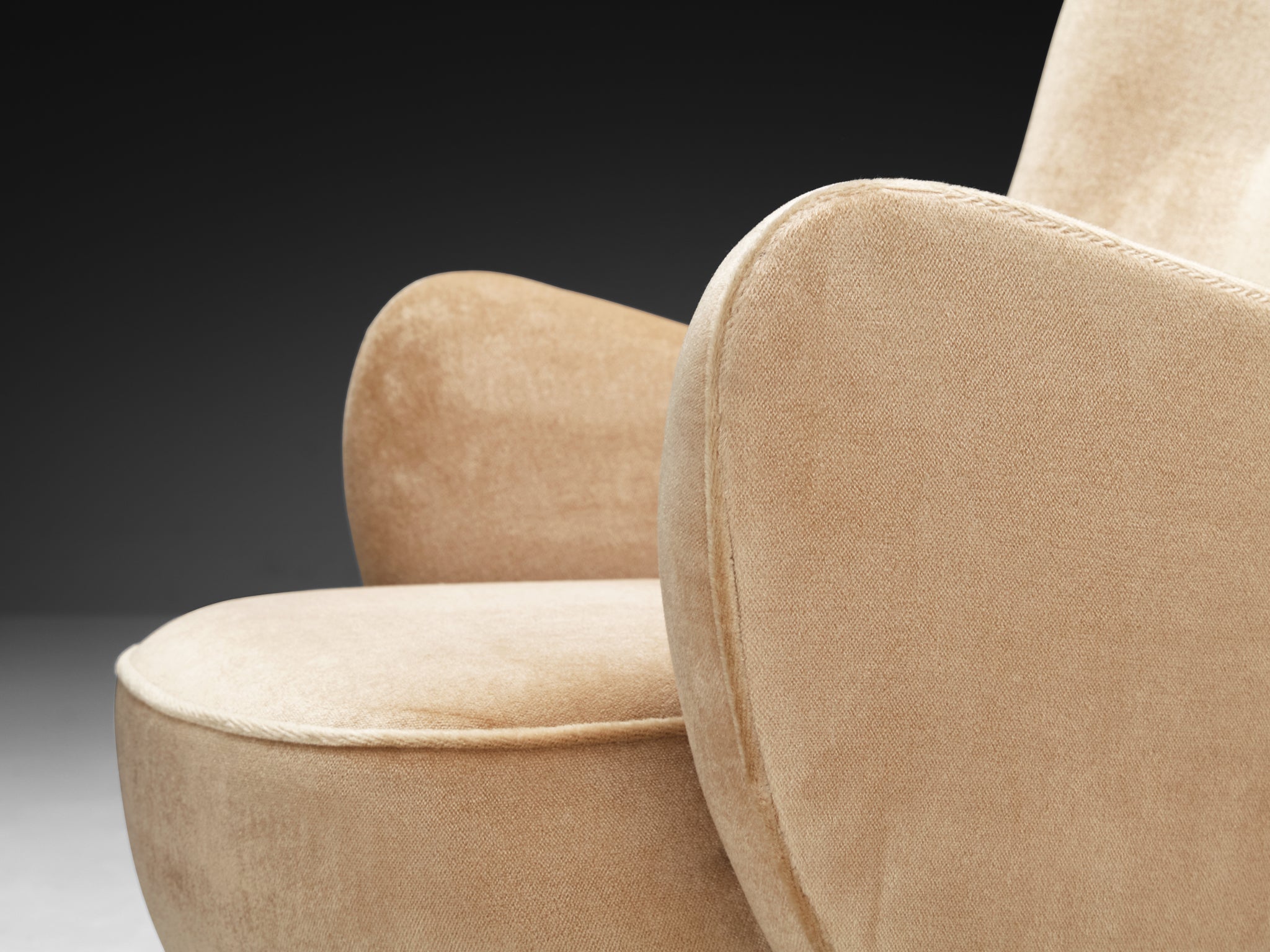
The Barrel Chair, first introduced by Vladimir Kagan in 1947, is a study in sensuous volume and sculptural containment. The form is immediately welcoming: its stout, enveloping shape nods to its namesake. Looking closely at the shape, there is a strong sense of containment and embrace. The arms swell outward in a fluid gesture, rising in tandem with the backrest to create an unbroken, sinuous line that cocoons the sitter. The proportions suggest a clear departure from rigid, rectilinear modernist forms and instead align with a post-war softness, a biomorphic response to the industrial trauma of the 1940s. The reference to zeppelins, as Kagan himself cited, becomes evident in the inflated silhouette. The rounded seat base bulges just slightly at the sides. The wooden feet provide a critical counterpoint. Angular and splayed, they visually lift the volume above the floor and offer a material contrast. This set is approximately twenty years old.
Vladimir Kagan (1927-2016) was born in Germany and grew up in the United States where his father opened a cabinet shop. Later, Kagan joined the family business. Here the designer experimented with organically sculpted wood in works that became the hallmarks of his career. Kagan himself explained that his father always said 'measure three times and cut once' whereas Kagan did exactly the opposite. He also believed that there was no way that ratio could replace dumb luck. Kagan's furniture has the extraordinary ability to completely change the landscape of the room, even with a single object.
The Barrel Chair, first introduced by Vladimir Kagan in 1947, is a study in sensuous volume and sculptural containment. The form is immediately welcoming: its stout, enveloping shape nods to its namesake. Looking closely at the shape, there is a strong sense of containment and embrace. The arms swell outward in a fluid gesture, rising in tandem with the backrest to create an unbroken, sinuous line that cocoons the sitter. The proportions suggest a clear departure from rigid, rectilinear modernist forms and instead align with a post-war softness, a biomorphic response to the industrial trauma of the 1940s. The reference to zeppelins, as Kagan himself cited, becomes evident in the inflated silhouette. The rounded seat base bulges just slightly at the sides. The wooden feet provide a critical counterpoint. Angular and splayed, they visually lift the volume above the floor and offer a material contrast. This set is approximately twenty years old.
Vladimir Kagan (1927-2016) was born in Germany and grew up in the United States where his father opened a cabinet shop. Later, Kagan joined the family business. Here the designer experimented with organically sculpted wood in works that became the hallmarks of his career. Kagan himself explained that his father always said 'measure three times and cut once' whereas Kagan did exactly the opposite. He also believed that there was no way that ratio could replace dumb luck. Kagan's furniture has the extraordinary ability to completely change the landscape of the room, even with a single object.

Choose options
Vladimir Kagan 'Barrel' Lounge Chairs and Ottoman in Light Beige Mohair
Sale price$39,500.00
Regular price
Tearsheet
×
Receive a copy in your email or download directly:
I accept emails from Morentz.
VAT within the EU: When buying or delivering an item within the EU, VAT usually applies and will be added.
Product Details