

Studio B.B.P.R. for Arteluce Ceiling or Wall Lights
 Open here
Studio B.B.P.R. for Arteluce, ceiling or wall lights, model ‘2045/p’, lacquered aluminum, acid-etched prismatic glass, Italy, 1962
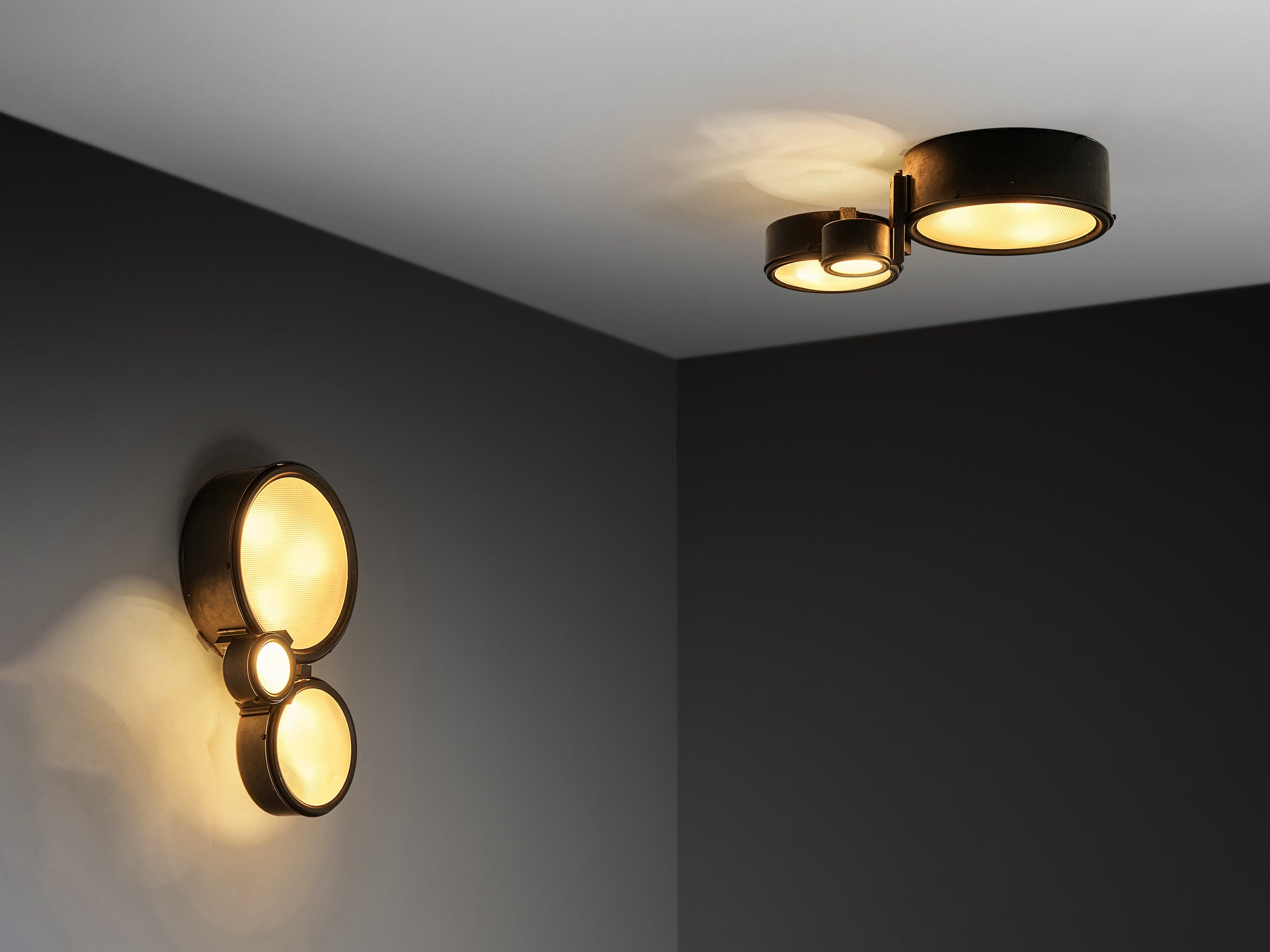
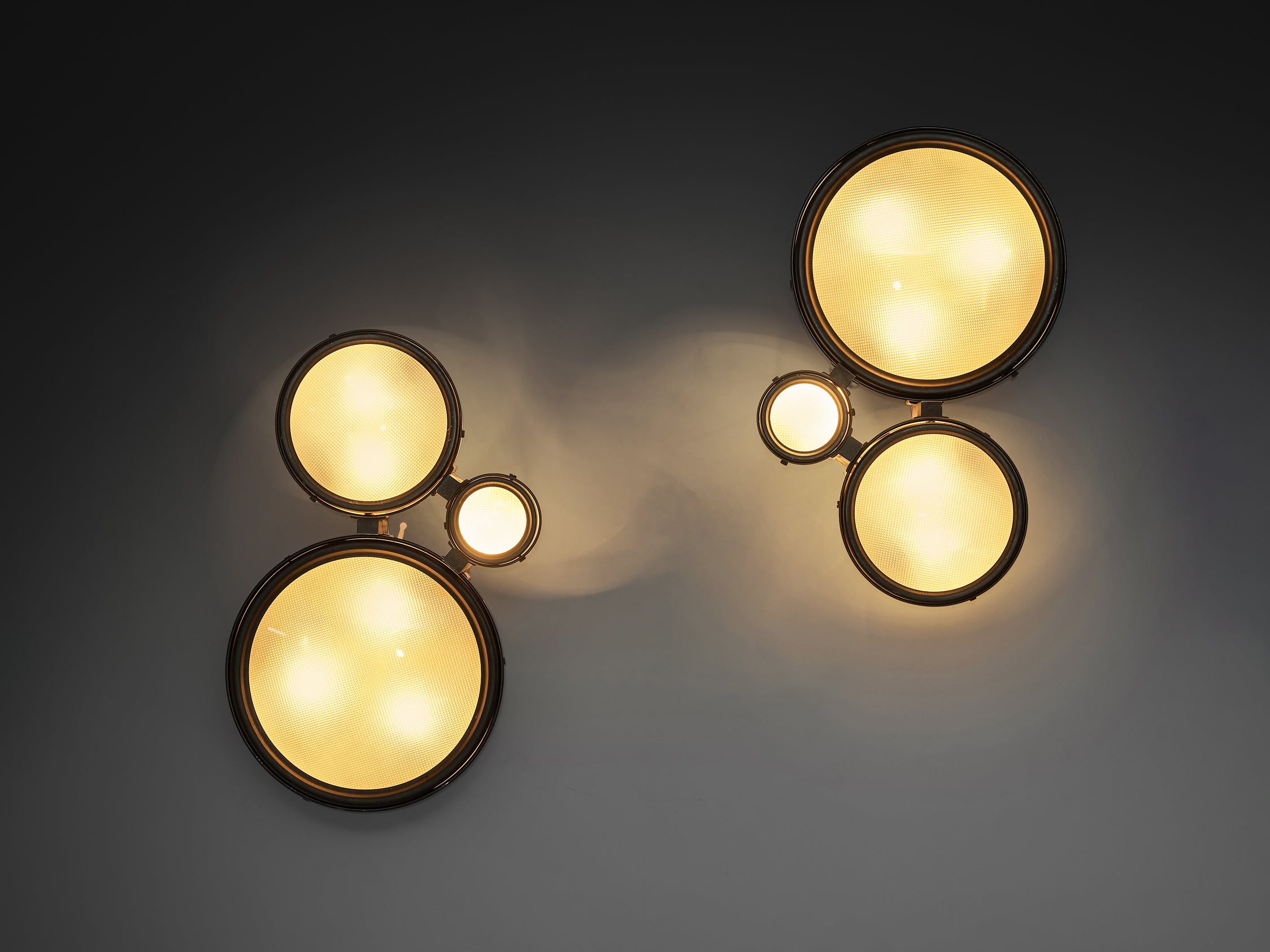
Designed in the early 1960s by the Milanese architectural collective B.B.P.R. for Arteluce, these ceiling or wall lights represent a fascinating intersection of architecture, industrial design, and technological innovation. Conceived as a modular lighting system rather than a fixed object, the design allowed for an extraordinary degree of customization. Components could be combined in varying scales and configurations, enabling architects and interior designers to create compositions tailored to individual spaces.
When the system was presented in Domus in June 1963, particular attention was given to its ingenious connecting joint, which made possible an almost limitless variety of arrangements, from rigorously symmetrical compositions to highly dynamic and asymmetrical installations. More than a lighting fixture, the design functioned as an architectural tool.
Custom variations of the system were specified for some of the most ambitious Italian design projects of the post-war era, including the Hispano-Olivetti Building in Barcelona (1960–1964), designed by B.B.P.R. together with Josep Maria Soteras i Mauri, and the celebrated interiors of the ocean liner SS Michelangelo, where monumental versions of the lighting system contributed to the vessel’s distinctly modern character.
Today, surviving examples are exceptionally rare. While the system was employed in prestigious architectural projects, it was equally adaptable to private interiors.
The significance of these lamps becomes clearer when viewed within the broader oeuvre of B.B.P.R., the influential Milanese partnership founded in 1932 by Gianluigi Banfi, Lodovico Barbiano di Belgiojoso, Enrico Peressutti, and Ernesto Nathan Rogers. While the group is best known for architectural landmarks such as Milan’s Torre Velasca, their practice extended far beyond buildings to encompass exhibition design, interiors, furniture, and lighting.
United by their opposition to Fascism, the architects sought an alternative to both the regime's monumental classicism and the universal principles associated with the International Style. Unlike many modernists of their generation, B.B.P.R. sought to reconcile innovation with historical continuity, reinterpreting rather than rejecting the legacy of the past. Their work was rooted in what Ernesto Nathan Rogers famously described as preesistenze ambientali (the pre-existing environment), an approach that sought to engage with the historical, cultural, and physical realities of a place rather than impose a universal design formula. Closely related to this was Rogers' belief in a caso per caso ("case by case") approach, whereby each design solution emerged from the specific requirements of its setting.
Conceived as a flexible and highly adaptable system, it could be configured to suit a wide variety of architectural environments, from private residences to large-scale public interiors. Rather than imposing a fixed formal solution, the system allowed each installation to respond to the specific character and requirements of its setting, a principle that closely echoes Rogers' notion of caso per caso.
The collaboration with Arteluce further elevates the importance of the project. Founded by Gino Sarfatti in 1939, Arteluce was arguably the most influential lighting manufacturer in post-war Italy, serving as a platform for some of the period’s most progressive experimentation in lighting design. The partnership between B.B.P.R. and Arteluce brought together two protagonists of Italian modernism whose shared interest in innovation and functionality resulted in a system that was both technically sophisticated and visually compelling.
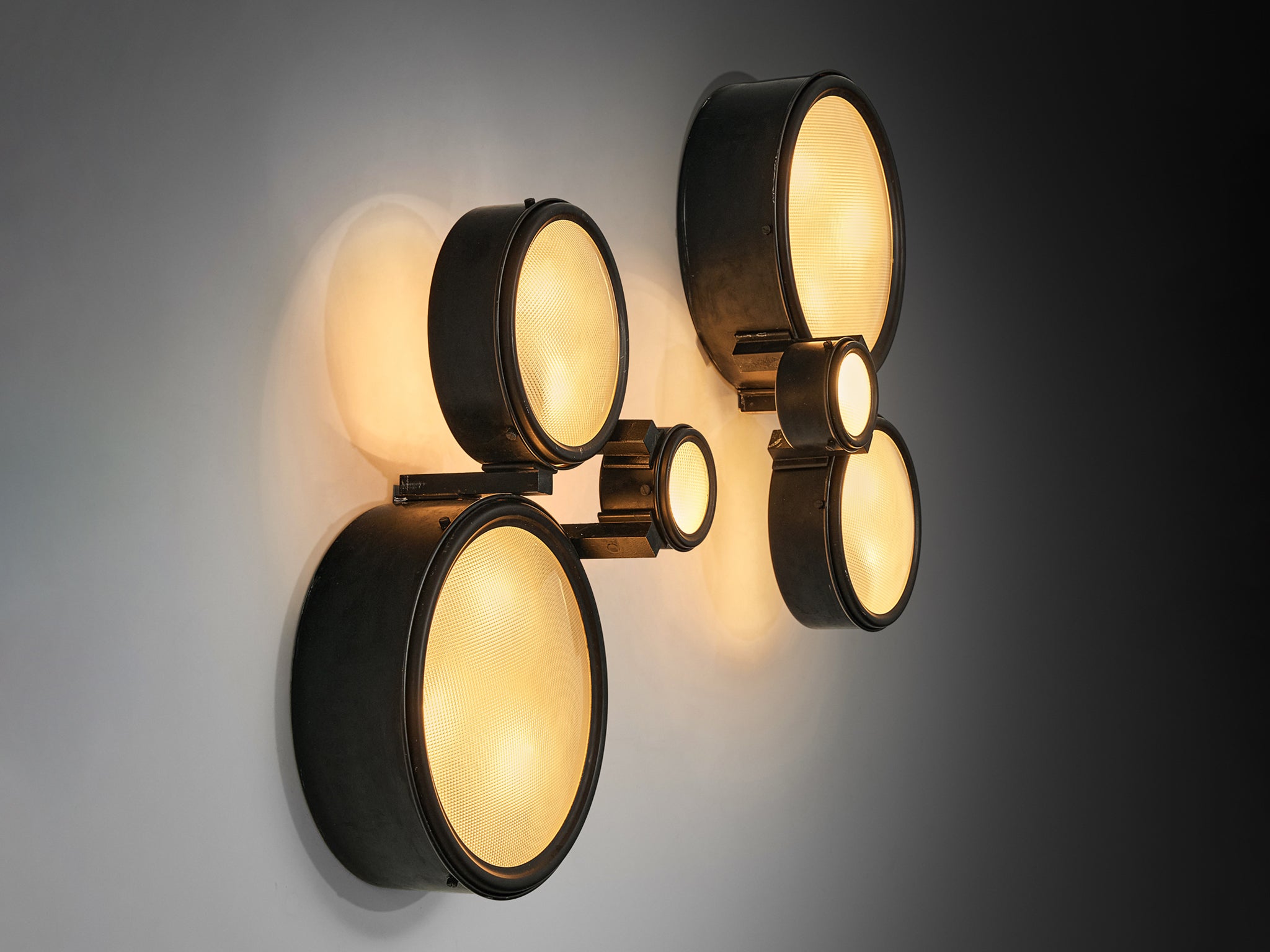
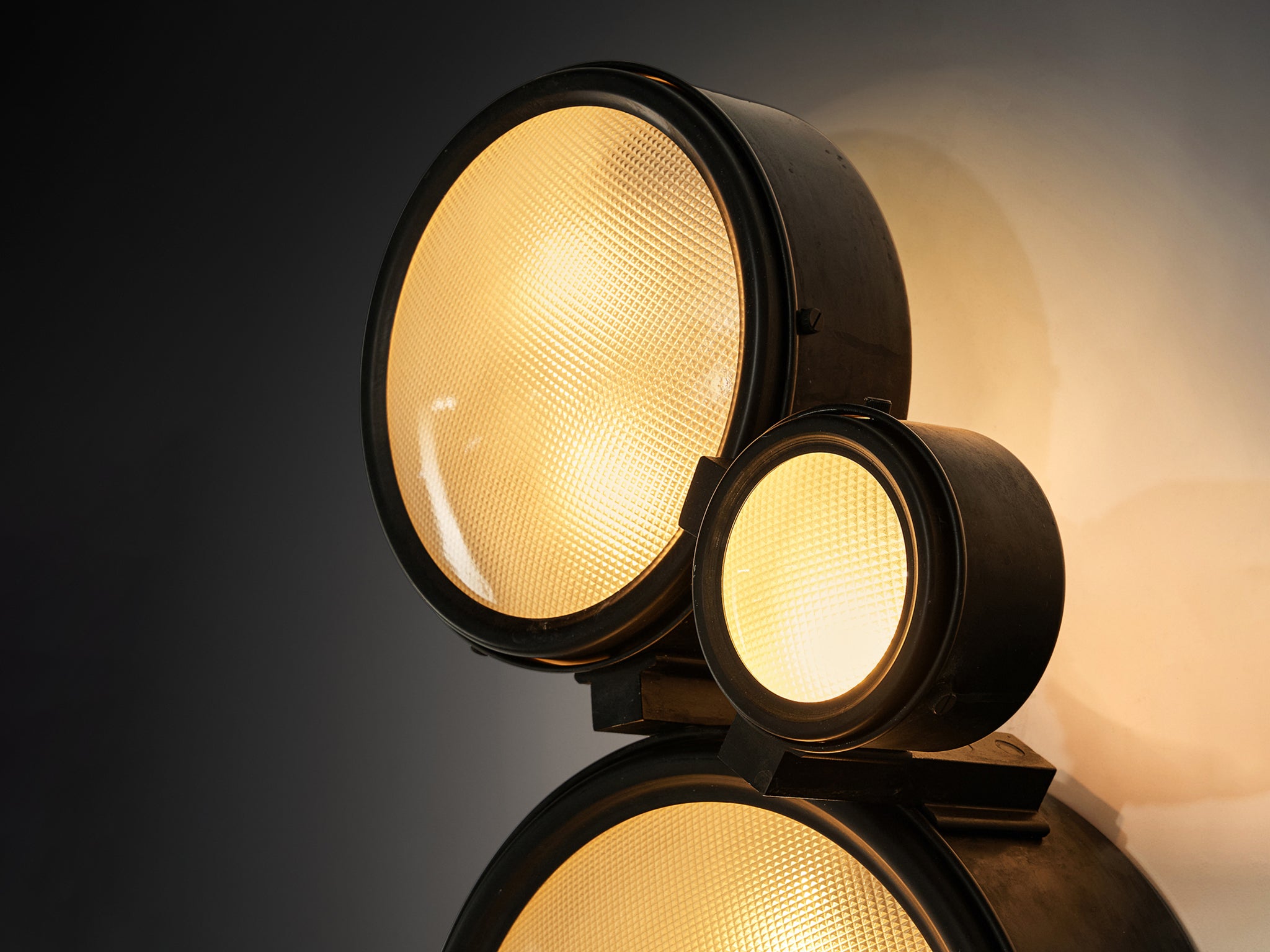
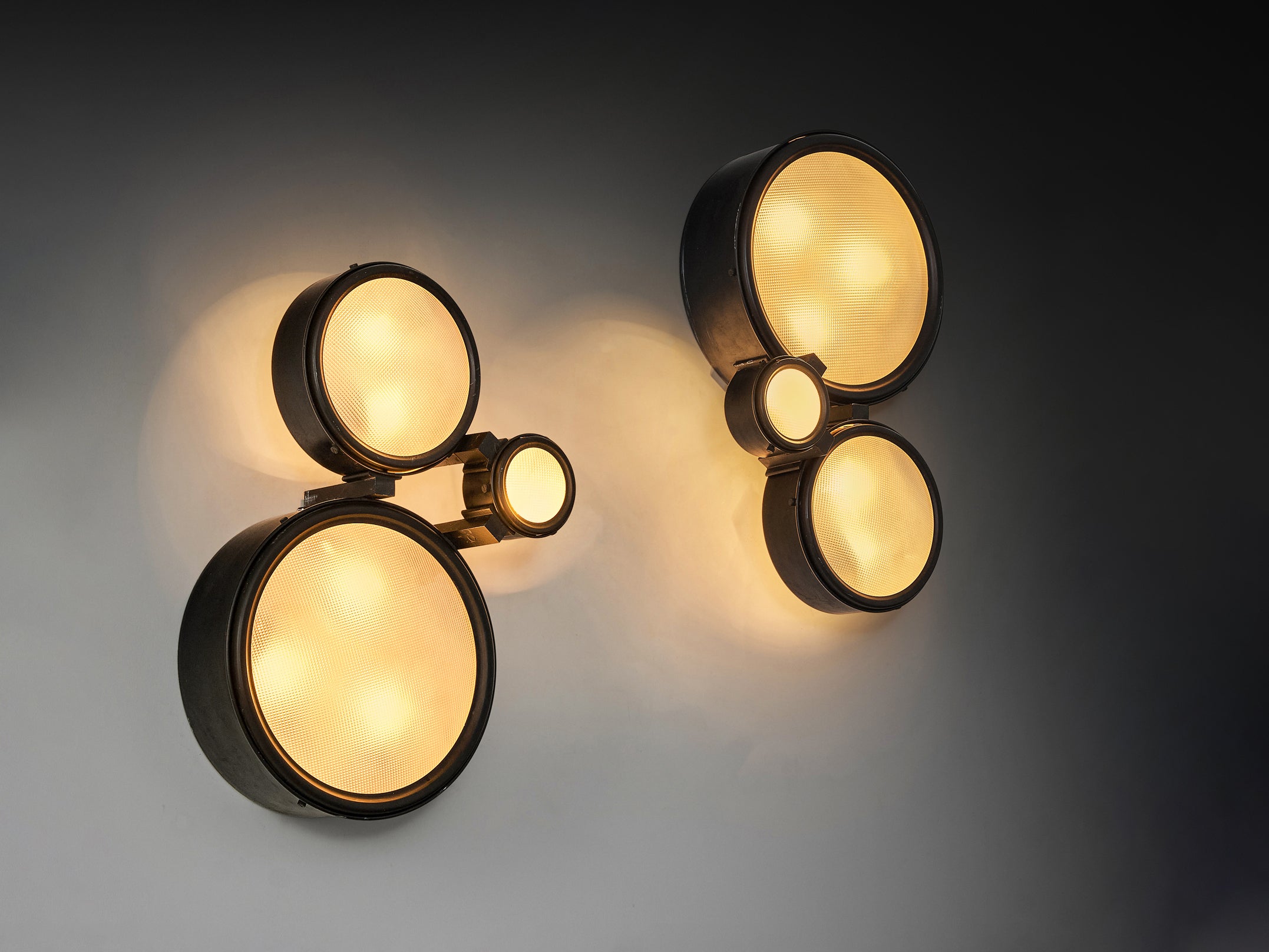
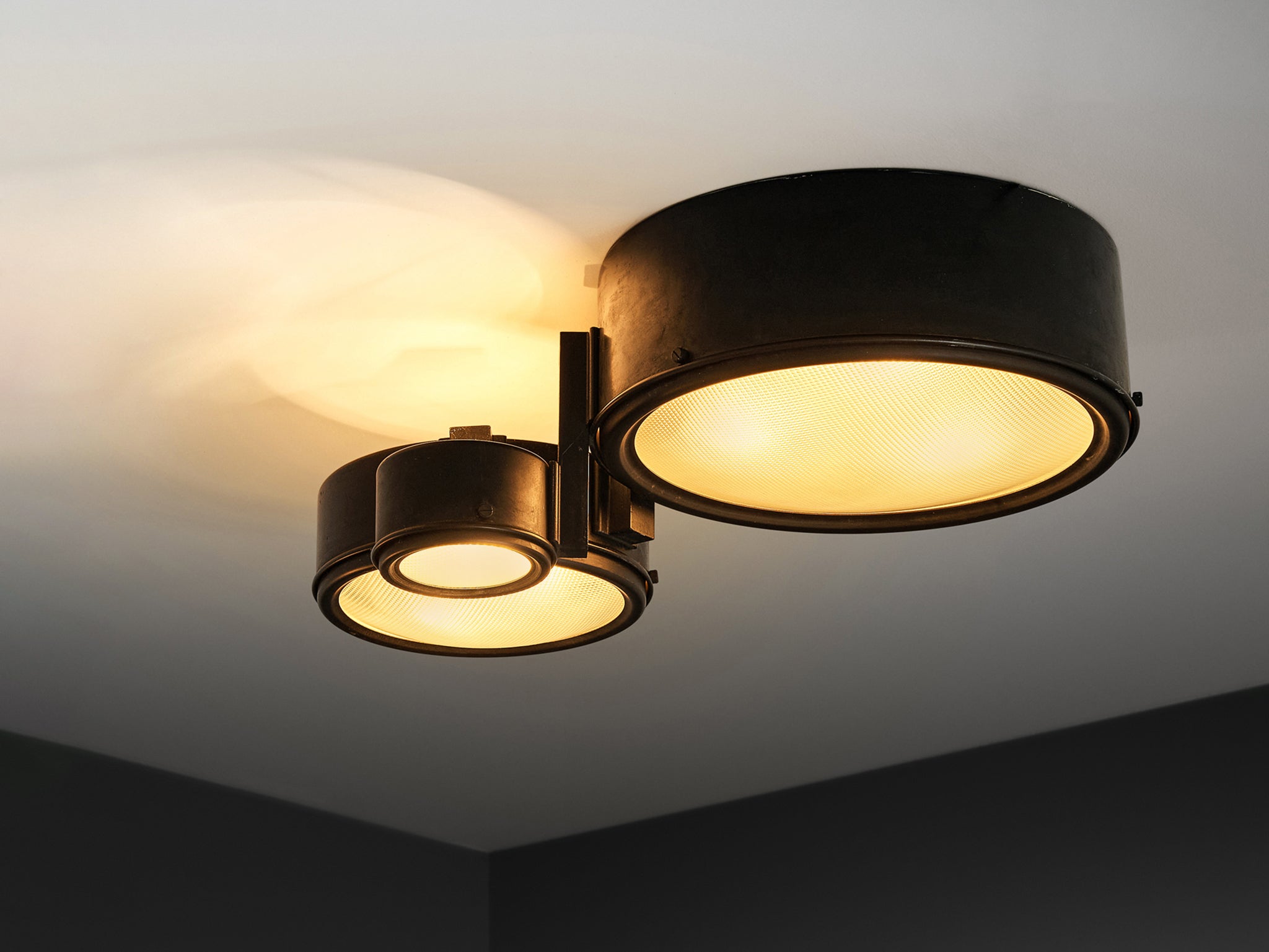
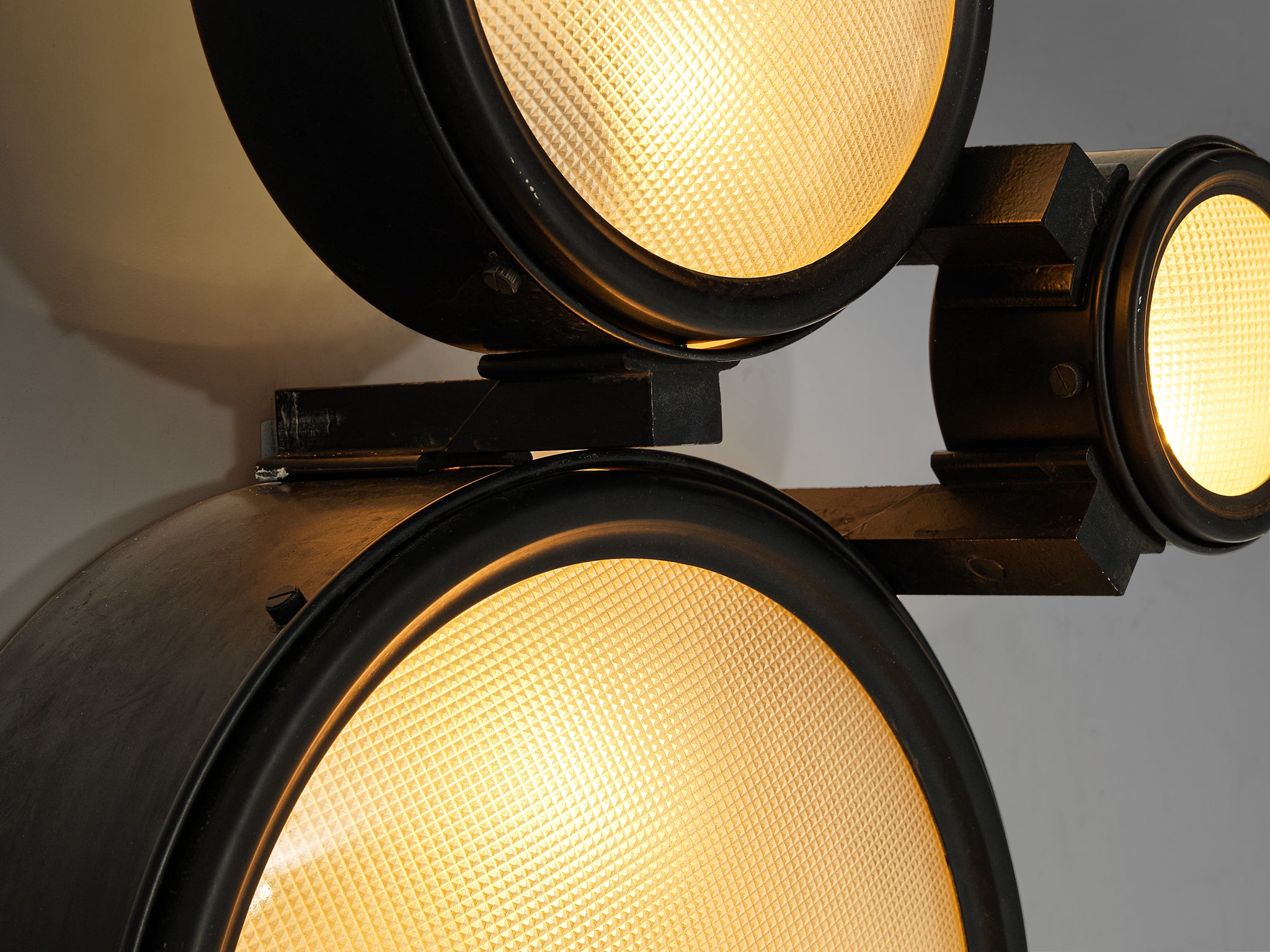
The present example features three cylindrical aluminum shades, each finished in black and executed in a different scale. Although geometric in form, the shades possess a notable softness. Their carefully detailed construction is emphasized by rounded raised edges that temper the hardness of the metal and lend the composition a subtle elegance.
Each shade houses a prismatic glass diffuser with a delicate visible grid structure. This element transforms the quality of the emitted light, producing a warm and evenly distributed illumination that contrasts beautifully with the industrial precision of the aluminum framework.
As with many of B.B.P.R.’s most successful designs, the result is both rational and humane: a lighting system that demonstrates how technical innovation and architectural thinking could be translated into objects of enduring visual sophistication.
The listed price is per item.
Designed in the early 1960s by the Milanese architectural collective B.B.P.R. for Arteluce, these ceiling or wall lights represent a fascinating intersection of architecture, industrial design, and technological innovation. Conceived as a modular lighting system rather than a fixed object, the design allowed for an extraordinary degree of customization. Components could be combined in varying scales and configurations, enabling architects and interior designers to create compositions tailored to individual spaces.
When the system was presented in Domus in June 1963, particular attention was given to its ingenious connecting joint, which made possible an almost limitless variety of arrangements, from rigorously symmetrical compositions to highly dynamic and asymmetrical installations. More than a lighting fixture, the design functioned as an architectural tool.
Custom variations of the system were specified for some of the most ambitious Italian design projects of the post-war era, including the Hispano-Olivetti Building in Barcelona (1960–1964), designed by B.B.P.R. together with Josep Maria Soteras i Mauri, and the celebrated interiors of the ocean liner SS Michelangelo, where monumental versions of the lighting system contributed to the vessel’s distinctly modern character.
Today, surviving examples are exceptionally rare. While the system was employed in prestigious architectural projects, it was equally adaptable to private interiors.
The significance of these lamps becomes clearer when viewed within the broader oeuvre of B.B.P.R., the influential Milanese partnership founded in 1932 by Gianluigi Banfi, Lodovico Barbiano di Belgiojoso, Enrico Peressutti, and Ernesto Nathan Rogers. While the group is best known for architectural landmarks such as Milan’s Torre Velasca, their practice extended far beyond buildings to encompass exhibition design, interiors, furniture, and lighting.
United by their opposition to Fascism, the architects sought an alternative to both the regime's monumental classicism and the universal principles associated with the International Style. Unlike many modernists of their generation, B.B.P.R. sought to reconcile innovation with historical continuity, reinterpreting rather than rejecting the legacy of the past. Their work was rooted in what Ernesto Nathan Rogers famously described as preesistenze ambientali (the pre-existing environment), an approach that sought to engage with the historical, cultural, and physical realities of a place rather than impose a universal design formula. Closely related to this was Rogers' belief in a caso per caso ("case by case") approach, whereby each design solution emerged from the specific requirements of its setting.
Conceived as a flexible and highly adaptable system, it could be configured to suit a wide variety of architectural environments, from private residences to large-scale public interiors. Rather than imposing a fixed formal solution, the system allowed each installation to respond to the specific character and requirements of its setting, a principle that closely echoes Rogers' notion of caso per caso.
The collaboration with Arteluce further elevates the importance of the project. Founded by Gino Sarfatti in 1939, Arteluce was arguably the most influential lighting manufacturer in post-war Italy, serving as a platform for some of the period’s most progressive experimentation in lighting design. The partnership between B.B.P.R. and Arteluce brought together two protagonists of Italian modernism whose shared interest in innovation and functionality resulted in a system that was both technically sophisticated and visually compelling.
The present example features three cylindrical aluminum shades, each finished in black and executed in a different scale. Although geometric in form, the shades possess a notable softness. Their carefully detailed construction is emphasized by rounded raised edges that temper the hardness of the metal and lend the composition a subtle elegance.
Each shade houses a prismatic glass diffuser with a delicate visible grid structure. This element transforms the quality of the emitted light, producing a warm and evenly distributed illumination that contrasts beautifully with the industrial precision of the aluminum framework.
As with many of B.B.P.R.’s most successful designs, the result is both rational and humane: a lighting system that demonstrates how technical innovation and architectural thinking could be translated into objects of enduring visual sophistication.
The listed price is per item.

Choose options
Studio B.B.P.R. for Arteluce Ceiling or Wall Lights
Sale price$52,400.00
Regular price
Product Details
VAT within the EU: When buying or delivering an item within the EU, VAT usually applies and will be added.