




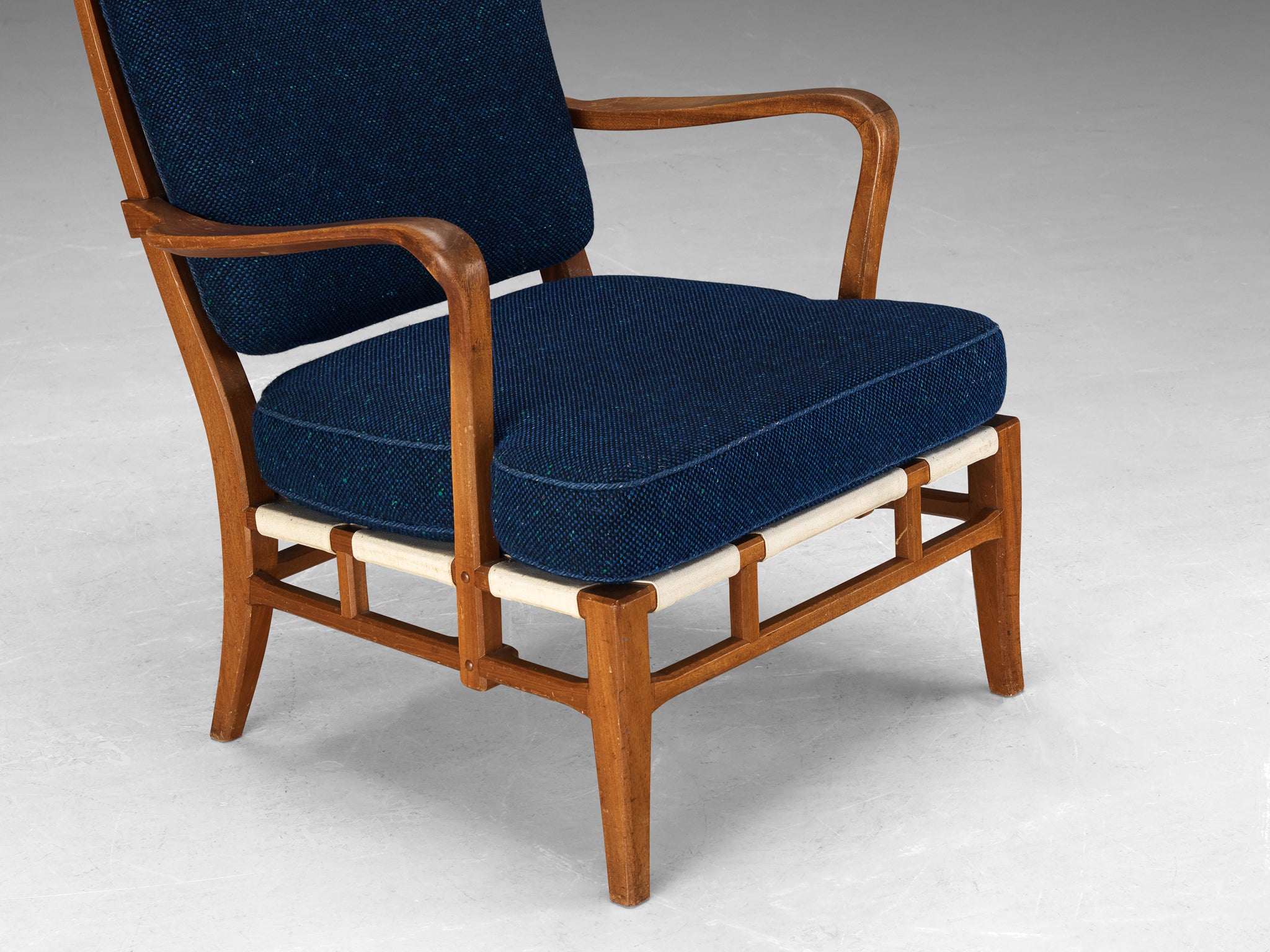
Special Carl-Axel Acking Lounge Chair from Own Home in Mahogany and Wool
Tearsheet
×
Receive a copy in your email or download directly:
I accept emails from Morentz.
 Open here
Carl-Axel Acking for Nordiska Kompaniet Hantverk, lounge chair, mahogany, wool, leather, Sweden, 1940s
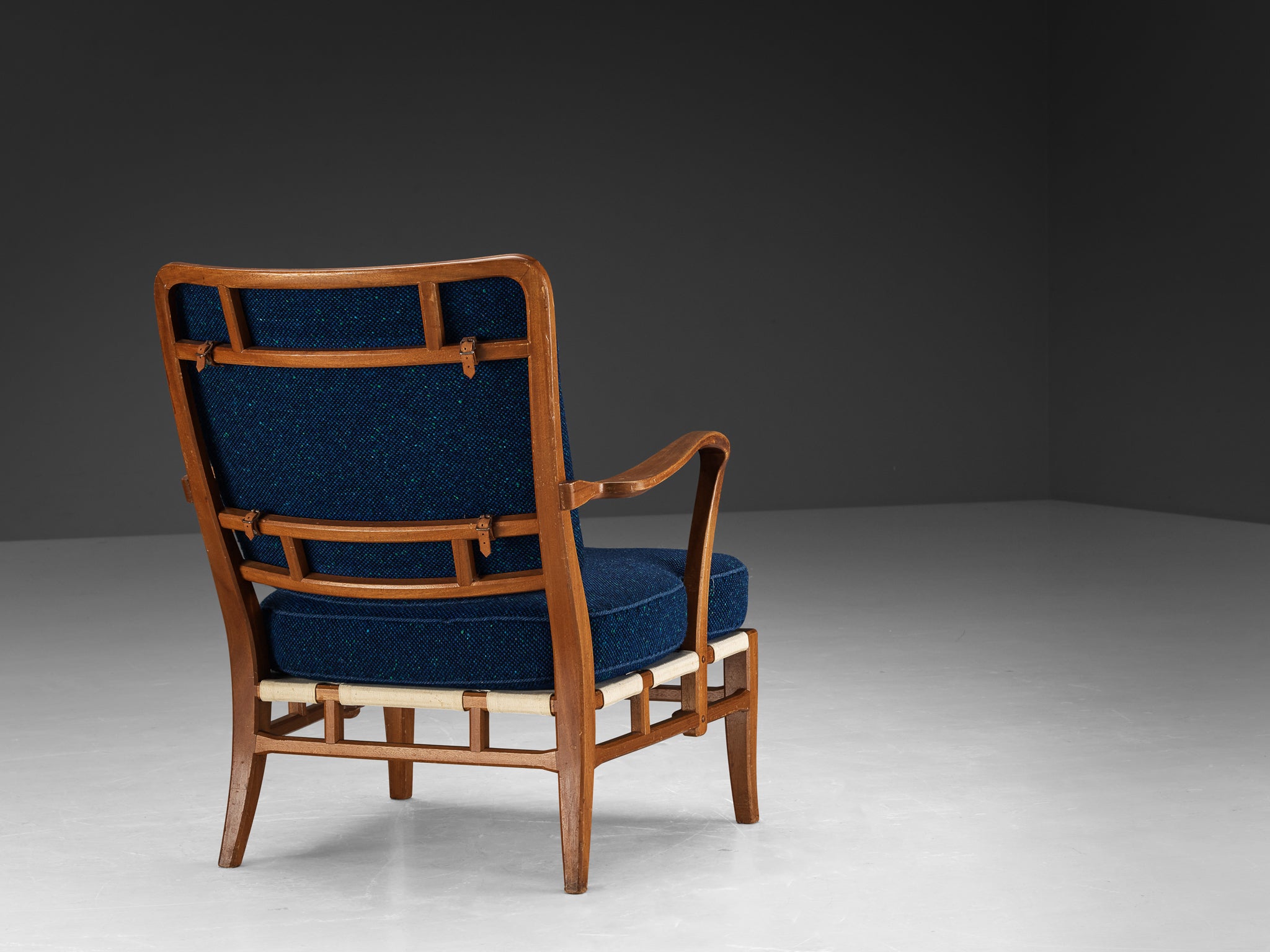
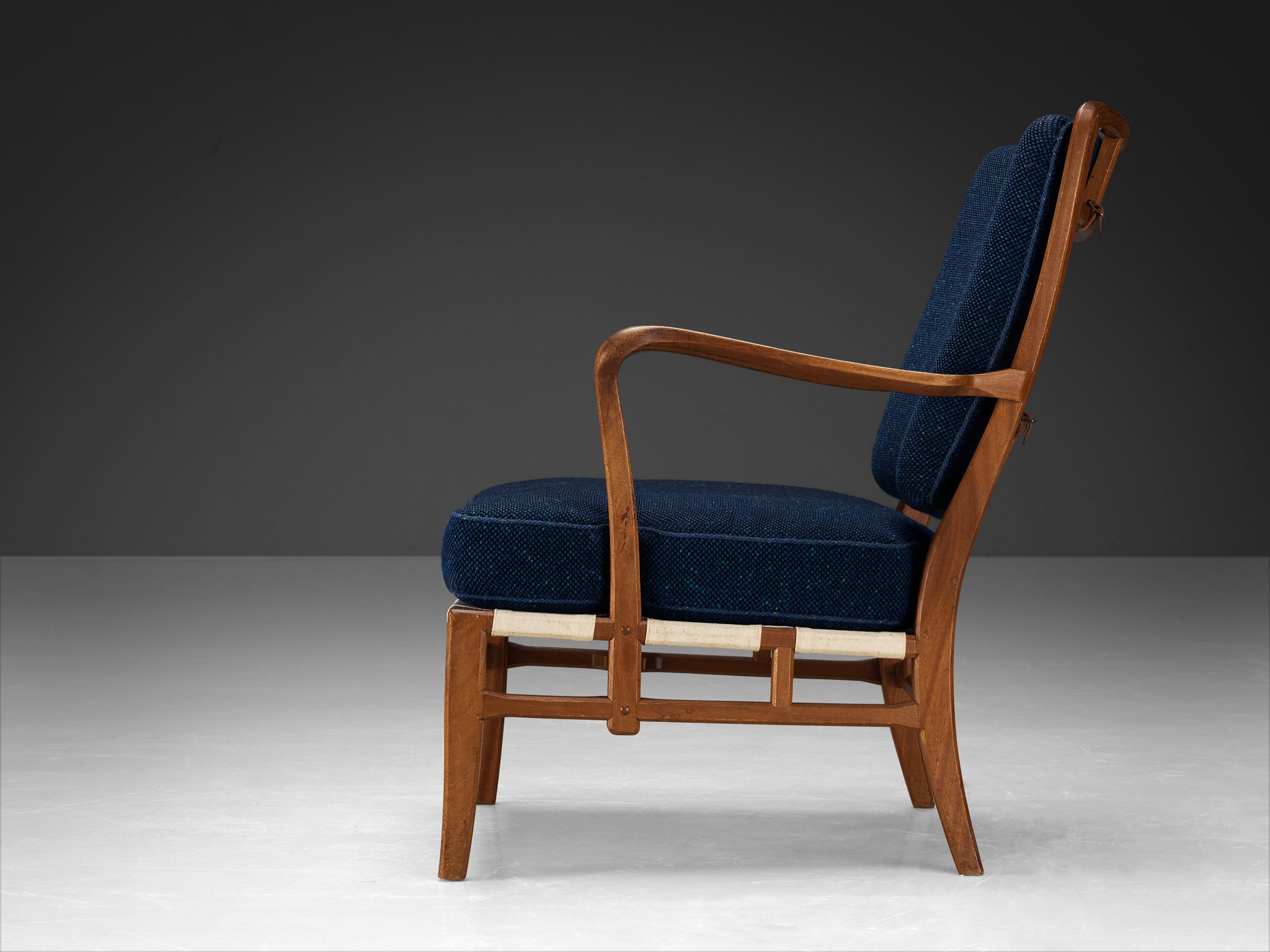
You have come across a remarkable piece of furniture by the acclaimed Swedish designer Carl-Axel Acking, once part of his own private home – a truly special provenance. Acking began his career as a committed functionalist, having trained under Gunnar Asplund at his architectural office. Asplund was a leading advocate of the industrially rational design language of functionalism, rooted in the principle of design for the sake of function. Over time, however, Acking moved toward a softer and more humanistic approach, inspired by Josef Frank, who regarded the home as a place of rest and wellbeing rather than an “efficient machine.” Acking can thus be positioned between these two poles. He sought a balance between function and aesthetic refinement, between the rational and the natural — a balance expressed through soft, supple lines and carefully considered proportions.
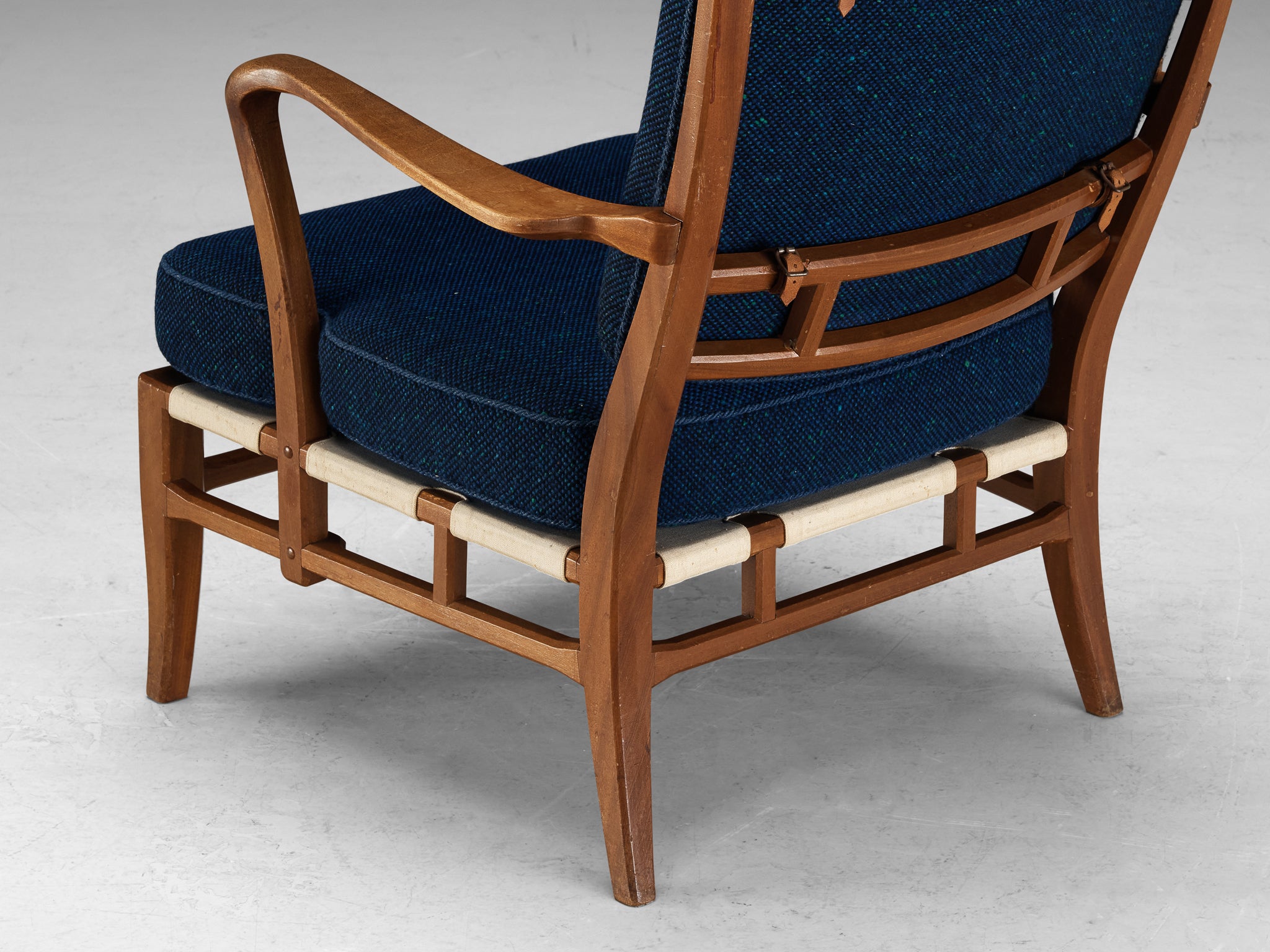
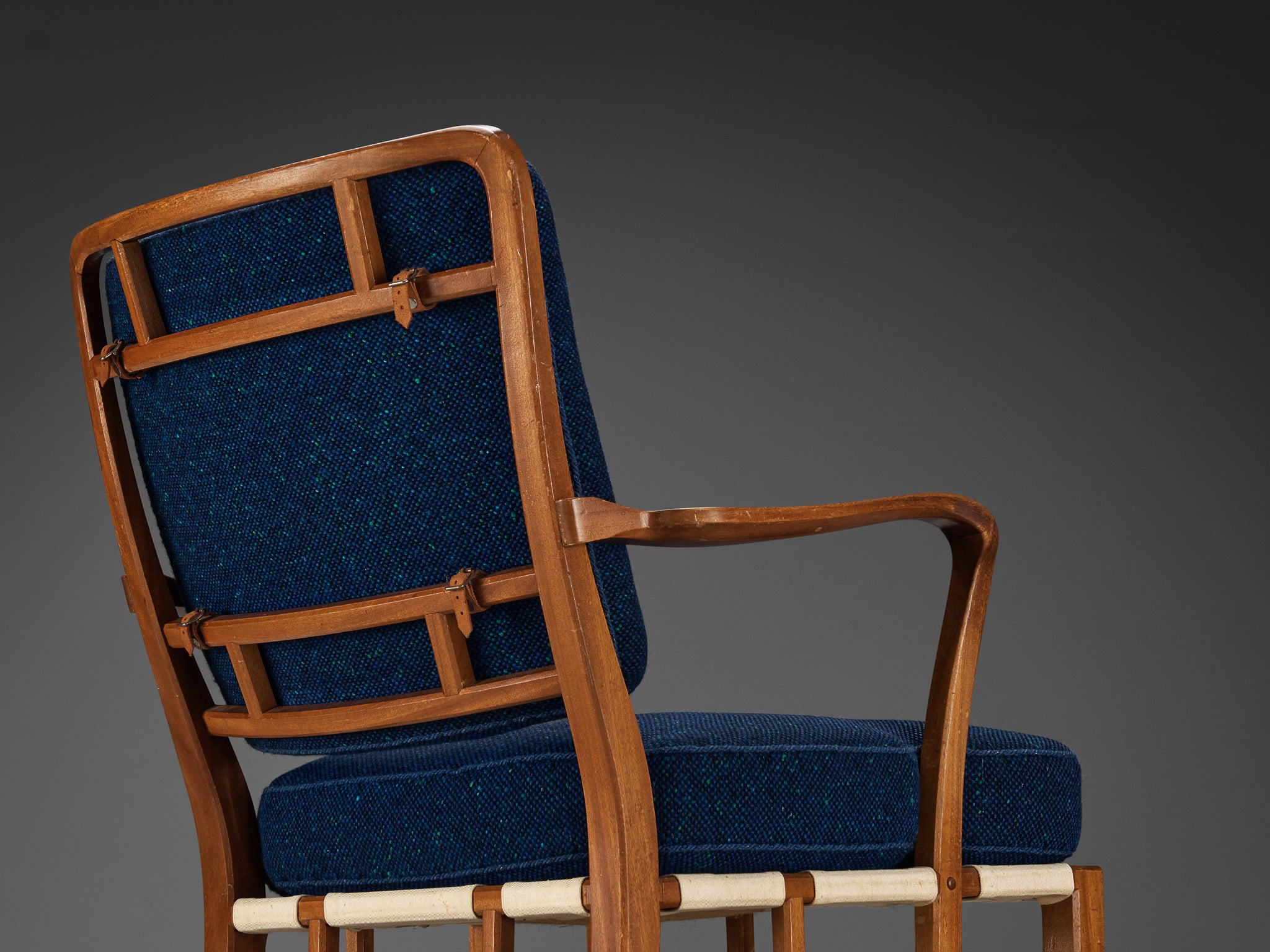
This lounge chair exemplifies that synthesis. The meticulously carved armrests follow gently undulating lines, while the backrest echoes this supple contour to support the body with ease and comfort. The rear of the chair is equally striking: a refined interplay of intersecting lines and open apertures that subtly recall ancient or archetypal forms.
Acking placed great importance on testing furniture in everyday use as a prerequisite for achieving maximum comfort alongside visual appeal. That this chair was part of his own home suggests that he personally valued and lived with the design. The piece is signed with his initials, “CAA” (Carl-Axel Acking).
You have come across a remarkable piece of furniture by the acclaimed Swedish designer Carl-Axel Acking, once part of his own private home – a truly special provenance. Acking began his career as a committed functionalist, having trained under Gunnar Asplund at his architectural office. Asplund was a leading advocate of the industrially rational design language of functionalism, rooted in the principle of design for the sake of function. Over time, however, Acking moved toward a softer and more humanistic approach, inspired by Josef Frank, who regarded the home as a place of rest and wellbeing rather than an “efficient machine.” Acking can thus be positioned between these two poles. He sought a balance between function and aesthetic refinement, between the rational and the natural — a balance expressed through soft, supple lines and carefully considered proportions.
This lounge chair exemplifies that synthesis. The meticulously carved armrests follow gently undulating lines, while the backrest echoes this supple contour to support the body with ease and comfort. The rear of the chair is equally striking: a refined interplay of intersecting lines and open apertures that subtly recall ancient or archetypal forms.
Acking placed great importance on testing furniture in everyday use as a prerequisite for achieving maximum comfort alongside visual appeal. That this chair was part of his own home suggests that he personally valued and lived with the design. The piece is signed with his initials, “CAA” (Carl-Axel Acking).

Choose options
Special Carl-Axel Acking Lounge Chair from Own Home in Mahogany and Wool
Sale price$14,500.00
Regular price
Tearsheet
×
Receive a copy in your email or download directly:
I accept emails from Morentz.
VAT within the EU: When buying or delivering an item within the EU, VAT usually applies and will be added.
Product Details