
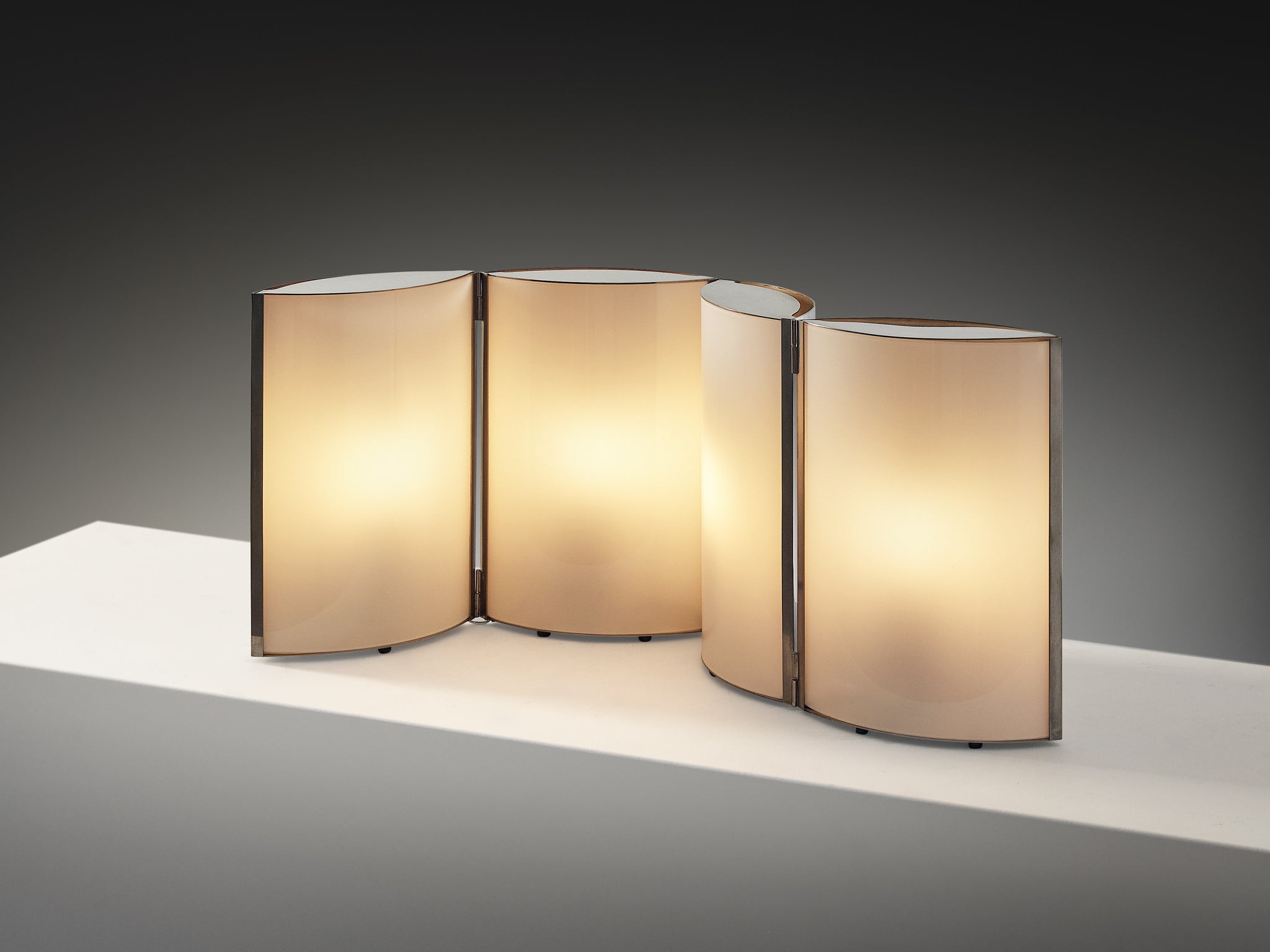
Rare Jean-Pierre Vitrac for Verre Lumière 'Éventail' Folding Lamp
Tearsheet
×
Receive a copy in your email or download directly:
I accept emails from Morentz.
 Open here
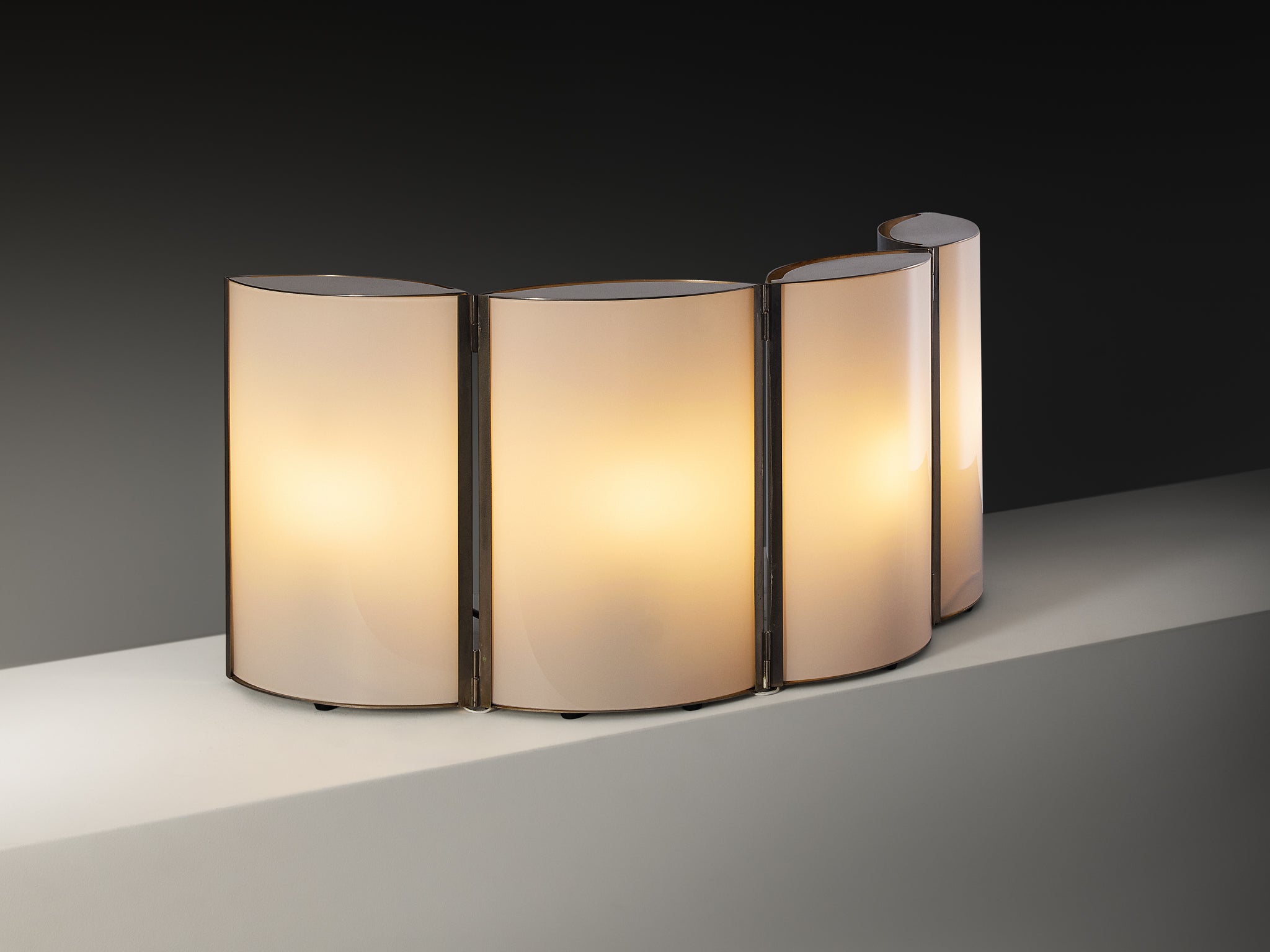
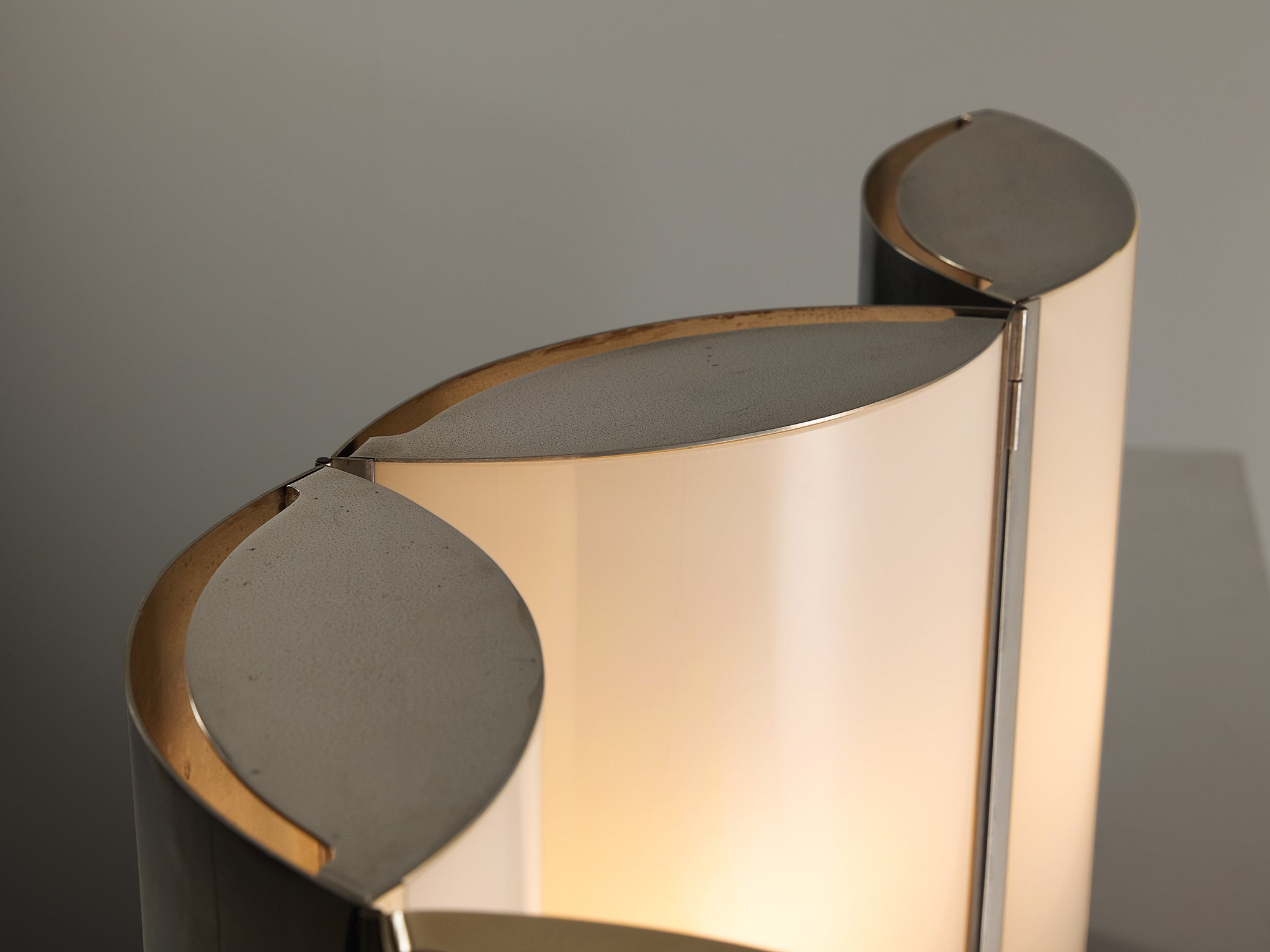
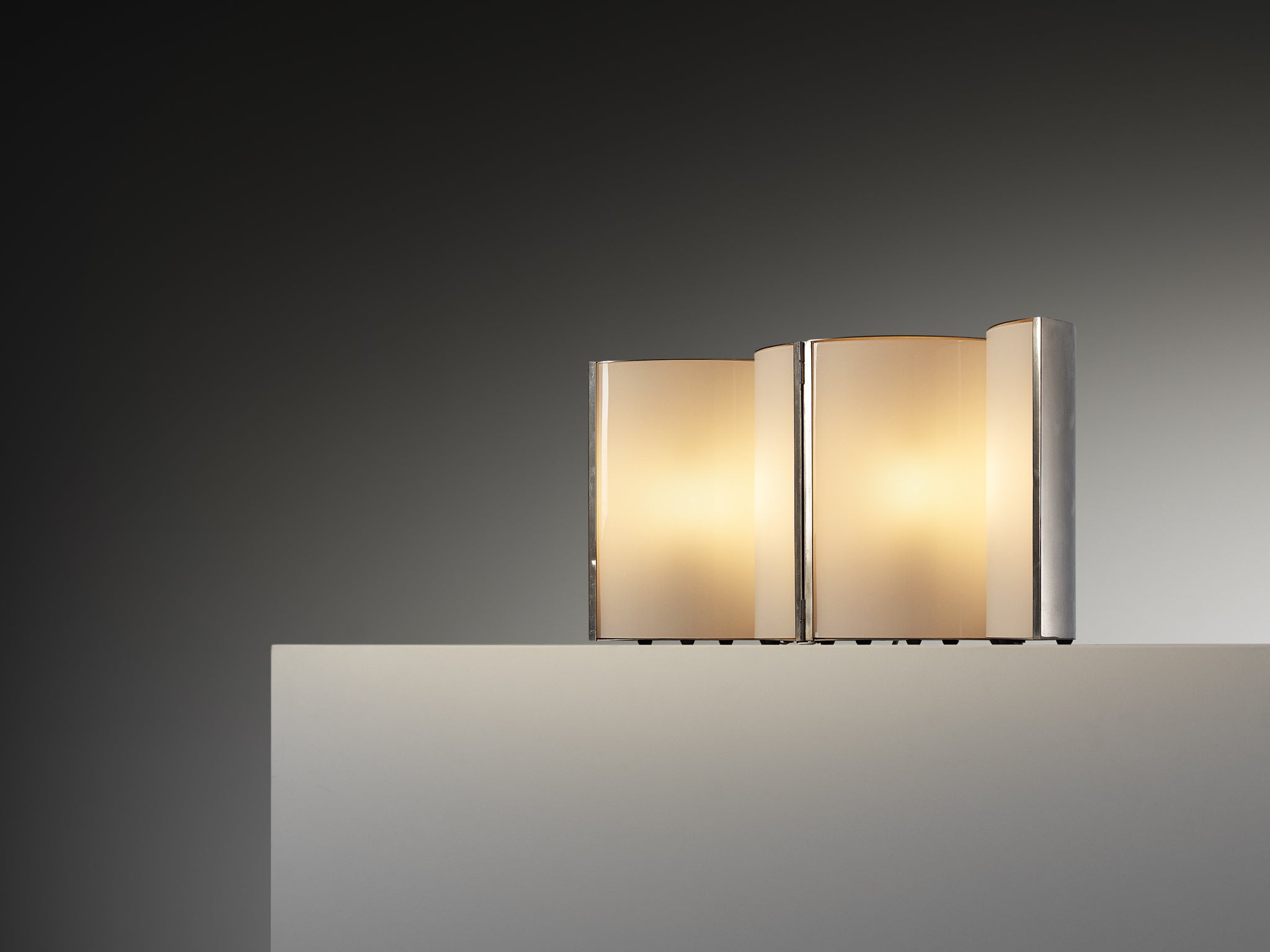
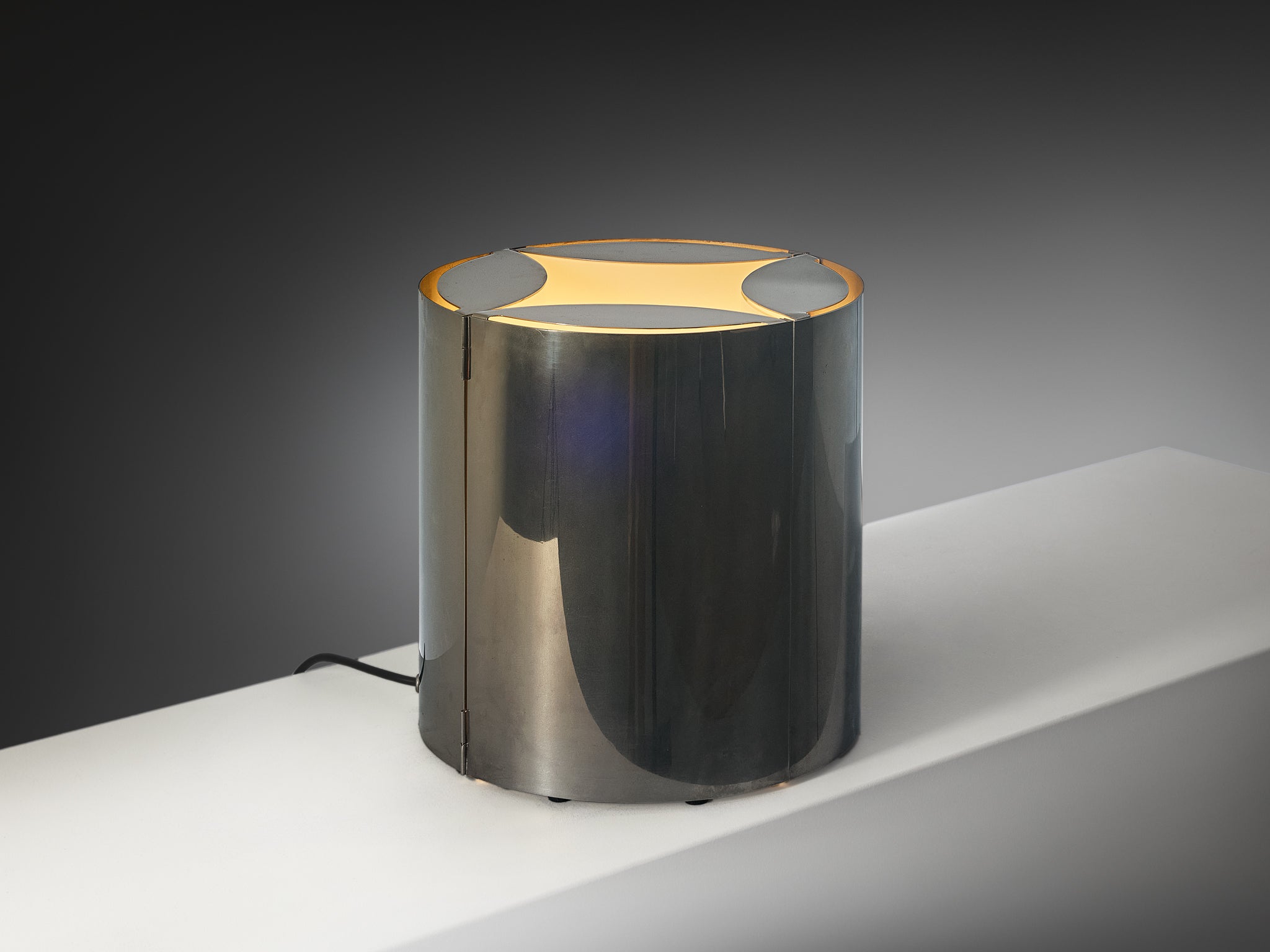
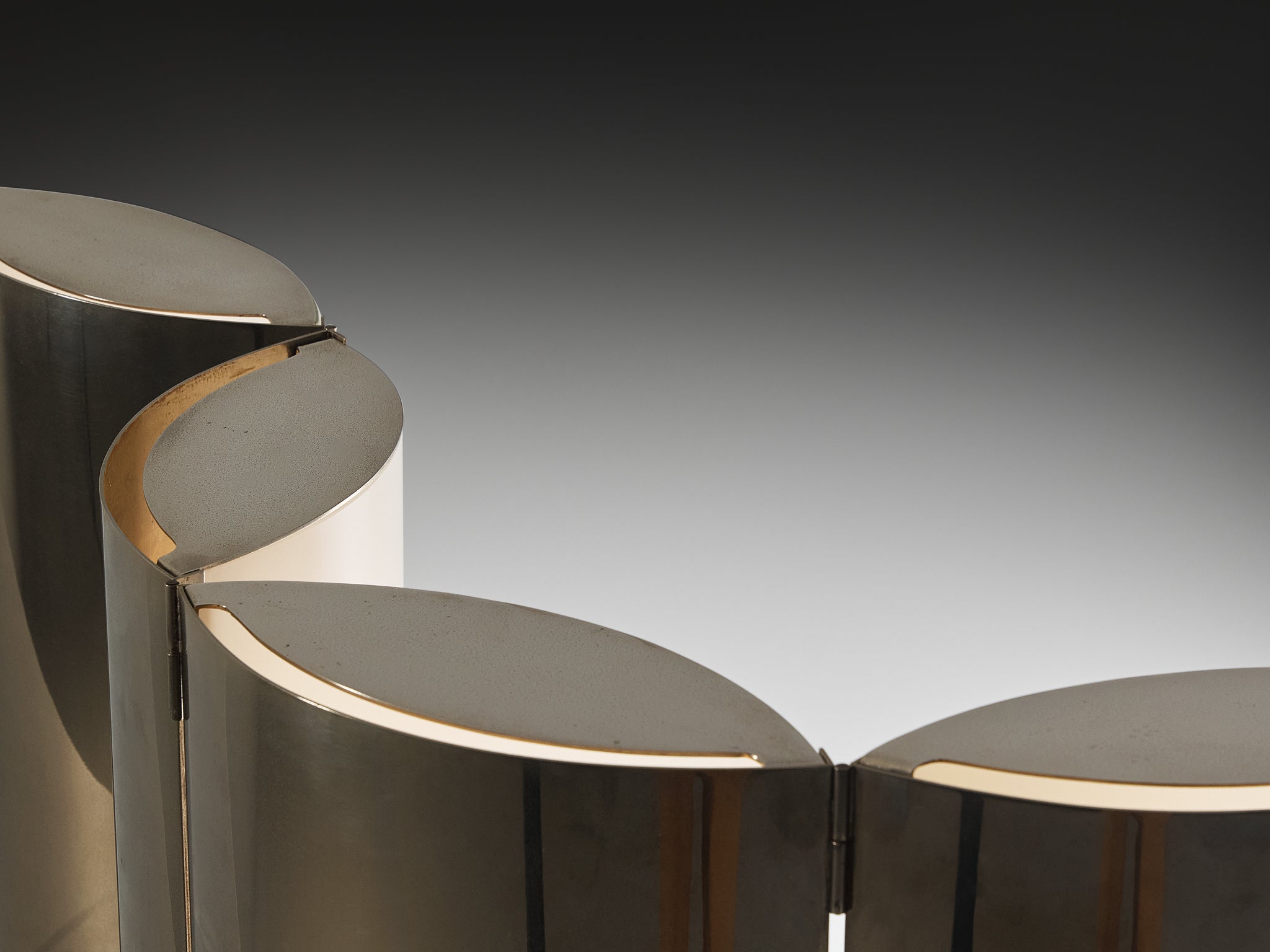
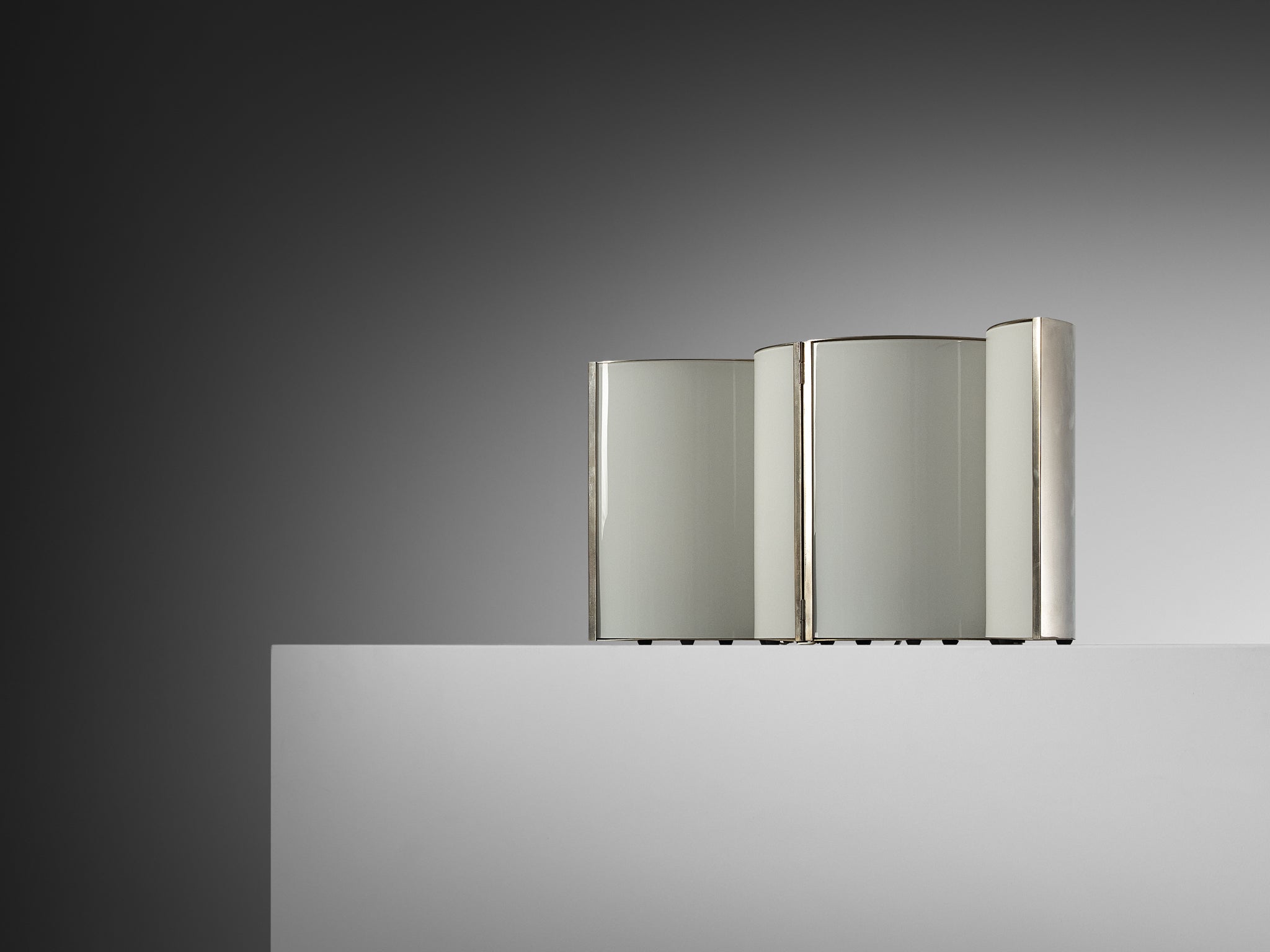
Jean-Pierre Vitrac for Verre Lumière, Éventail (or Fan) folding table lamp, model '10481', nickel-plated metal, opaline glass, France, ca. 1972
Jean-Pierre Vitrac emerged in the late 1960s and early 1970s as part of a generation of designers seeking to fuse sculptural expression and technical ingenuity in objects of everyday use. One of his best-known collaborations was with the French lighting firm Verre Lumière, through which he produced some of his iconic works such as the present Éventail (Fan) lamp from around 1972.
At its core, the design consists of four sections, each housing an independently movable light source. The sections can be arranged in a long row or folded together to form a cylinder, transforming both the object's shape and the way it emits light.
The piece exemplifies Vitrac’s fascination with transformable systems, a theme that recurs throughout his work – from his earlier Fleur (Flower) lamp to his modular tube systems such as Fluogam. In each case, function and play coexist; the object’s structure becomes a language for adaptability and interaction. In the Éventail lamp, this approach takes on a lyrical form: the cold precision of metal is tempered by the organic rhythm of opening and concealing, a subtle reconciliation of nature and machine.
Verre Lumière (1968-1988)
Verre Lumière was a pioneering French lighting manufacturer founded in 1968, renowned for its synthesis of technological innovation, material experimentation, and aesthetic refinement. Emerging in the dynamic postwar design climate of late-1960s France, the company represented a unique collaboration between art, industry, and craftsmanship. It was established through the initiative of Max Ingrand – the celebrated glass master and former artistic director of Fontana Arte – together with Saint-Gobain, the industrial glass giant, and Mazda, the lighting division of the Thomson group. This tripartite partnership gave the firm a rare balance of technical expertise, artisanal capacity, and creative ambition, allowing it to function as both a design studio and an experimental laboratory for new forms of illumination.
Following Ingrand’s death in 1969, commercial leadership passed to Jacques Vidal, while Ben Swildens assumed the position of artistic director and Sabine Charoy directed the creative studio. From its headquarters and workshop in Puteaux, west of Paris, a team of approximately forty craftsmen oversaw every stage of production, from prototyping to finishing. This structure afforded Verre Lumière an unusual degree of agility and quality control, enabling its designers to push the boundaries of what could be achieved in functional lighting.
From the outset, the company’s philosophy was grounded in the union of technical innovation and visual poetry. It was one of the first French firms to adopt halogen bulbs, and later embraced fluorescent and compact fluorescent technologies. The interplay between glass – often opaline, frosted, or acid-etched – and metals such as stainless steel, brass, or aluminum became a defining characteristic of its aesthetic. These materials were handled not as mere supports for electrical function but as expressive surfaces that shaped and modulated light itself. Verre Lumière’s production included both serially manufactured lamps and large-scale architectural lighting commissions.
The firm collaborated with an impressive roster of designers who would become central figures in postwar French design. Among them were Jean-Pierre Vitrac, author of the celebrated Fleur (or Flower) lamp whose adjustable metal petals could open and close like a bloom; Michel Boyer, designer of the Brasília lamps for the French Embassy in Brazil; Ben Swildens himself, known for elegant, geometric compositions; and Sabine Charoy, who oversaw much of the studio’s creative development. Other contributors included Michel Mortier, Joseph-André Motte, Pierre Guariche, Yonel Lebovici, Christian Germanaz, and Maria Pergay, among others. This diversity of voices lent Verre Lumière an eclectic but coherent identity: one grounded in the belief that technological precision and artistic imagination were complementary, not opposed.
Verre Lumière’s technical skill and design sensibility made it a favored collaborator for major architectural projects in France and abroad. The company realized Pierre Paulin’s lighting for President Georges Pompidou’s apartment in the Palais de l’Élysée (1972), Michel Boyer’s fixtures for the French Embassy in Brasília (1974), and numerous other commissions for the Peugeot headquarters, the Hotel Le Méridien Étoile, the Rothschild Bank, and even international sites such as the Palace of the Shah of Iran and the Cosmos Hotel in Moscow.
Commercially, Verre Lumière operated a prestigious boutique on rue du Faubourg Saint-Honoré in Paris, where it presented its own creations alongside those of leading Italian designers like Gio Ponti and the enterprise Fontana Arte. The brand’s reputation for sophistication and reliability made it a key supplier to architects and decorators seeking integrated lighting solutions rather than mere lamps. Its production was intentionally limited in scale, either in small series or to order. Each model was developed through close collaboration between designers and the company’s in-house workshop of craftsmen in Puteaux, reflecting Verre Lumière’s artisanal ethos and its sustained commitment to technological innovation.
Verre Lumière remained active through the 1980s, though shifts in industrial economics, the rise of cheaper mass-produced fixtures, and changing tastes in design gradually curtailed its operations. Nonetheless, its two-decade existence (1968-1988) left a profound mark on the history of modern lighting. Its works combined the clarity of French modernism with a sculptural sensitivity rarely matched in industrial production.
Jean-Pierre Vitrac emerged in the late 1960s and early 1970s as part of a generation of designers seeking to fuse sculptural expression and technical ingenuity in objects of everyday use. One of his best-known collaborations was with the French lighting firm Verre Lumière, through which he produced some of his iconic works such as the present Éventail (Fan) lamp from around 1972.
At its core, the design consists of four sections, each housing an independently movable light source. The sections can be arranged in a long row or folded together to form a cylinder, transforming both the object's shape and the way it emits light.
The piece exemplifies Vitrac’s fascination with transformable systems, a theme that recurs throughout his work – from his earlier Fleur (Flower) lamp to his modular tube systems such as Fluogam. In each case, function and play coexist; the object’s structure becomes a language for adaptability and interaction. In the Éventail lamp, this approach takes on a lyrical form: the cold precision of metal is tempered by the organic rhythm of opening and concealing, a subtle reconciliation of nature and machine.
Verre Lumière (1968-1988)
Verre Lumière was a pioneering French lighting manufacturer founded in 1968, renowned for its synthesis of technological innovation, material experimentation, and aesthetic refinement. Emerging in the dynamic postwar design climate of late-1960s France, the company represented a unique collaboration between art, industry, and craftsmanship. It was established through the initiative of Max Ingrand – the celebrated glass master and former artistic director of Fontana Arte – together with Saint-Gobain, the industrial glass giant, and Mazda, the lighting division of the Thomson group. This tripartite partnership gave the firm a rare balance of technical expertise, artisanal capacity, and creative ambition, allowing it to function as both a design studio and an experimental laboratory for new forms of illumination.
Following Ingrand’s death in 1969, commercial leadership passed to Jacques Vidal, while Ben Swildens assumed the position of artistic director and Sabine Charoy directed the creative studio. From its headquarters and workshop in Puteaux, west of Paris, a team of approximately forty craftsmen oversaw every stage of production, from prototyping to finishing. This structure afforded Verre Lumière an unusual degree of agility and quality control, enabling its designers to push the boundaries of what could be achieved in functional lighting.
From the outset, the company’s philosophy was grounded in the union of technical innovation and visual poetry. It was one of the first French firms to adopt halogen bulbs, and later embraced fluorescent and compact fluorescent technologies. The interplay between glass – often opaline, frosted, or acid-etched – and metals such as stainless steel, brass, or aluminum became a defining characteristic of its aesthetic. These materials were handled not as mere supports for electrical function but as expressive surfaces that shaped and modulated light itself. Verre Lumière’s production included both serially manufactured lamps and large-scale architectural lighting commissions.
The firm collaborated with an impressive roster of designers who would become central figures in postwar French design. Among them were Jean-Pierre Vitrac, author of the celebrated Fleur (or Flower) lamp whose adjustable metal petals could open and close like a bloom; Michel Boyer, designer of the Brasília lamps for the French Embassy in Brazil; Ben Swildens himself, known for elegant, geometric compositions; and Sabine Charoy, who oversaw much of the studio’s creative development. Other contributors included Michel Mortier, Joseph-André Motte, Pierre Guariche, Yonel Lebovici, Christian Germanaz, and Maria Pergay, among others. This diversity of voices lent Verre Lumière an eclectic but coherent identity: one grounded in the belief that technological precision and artistic imagination were complementary, not opposed.
Verre Lumière’s technical skill and design sensibility made it a favored collaborator for major architectural projects in France and abroad. The company realized Pierre Paulin’s lighting for President Georges Pompidou’s apartment in the Palais de l’Élysée (1972), Michel Boyer’s fixtures for the French Embassy in Brasília (1974), and numerous other commissions for the Peugeot headquarters, the Hotel Le Méridien Étoile, the Rothschild Bank, and even international sites such as the Palace of the Shah of Iran and the Cosmos Hotel in Moscow.
Commercially, Verre Lumière operated a prestigious boutique on rue du Faubourg Saint-Honoré in Paris, where it presented its own creations alongside those of leading Italian designers like Gio Ponti and the enterprise Fontana Arte. The brand’s reputation for sophistication and reliability made it a key supplier to architects and decorators seeking integrated lighting solutions rather than mere lamps. Its production was intentionally limited in scale, either in small series or to order. Each model was developed through close collaboration between designers and the company’s in-house workshop of craftsmen in Puteaux, reflecting Verre Lumière’s artisanal ethos and its sustained commitment to technological innovation.
Verre Lumière remained active through the 1980s, though shifts in industrial economics, the rise of cheaper mass-produced fixtures, and changing tastes in design gradually curtailed its operations. Nonetheless, its two-decade existence (1968-1988) left a profound mark on the history of modern lighting. Its works combined the clarity of French modernism with a sculptural sensitivity rarely matched in industrial production.
%20folding%20table%20lamp,%20model%20'10481',%20nickel-plated%20metal,%20opaline%20glass,%20France,%20ca.%201972Jean-Pierre%20Vitrac%20emerged%20in%20the%20late%201960s%20and%20early...)
Choose options
Rare Jean-Pierre Vitrac for Verre Lumière 'Éventail' Folding Lamp
Sale price$58,500.00
Regular price
Tearsheet
×
Receive a copy in your email or download directly:
I accept emails from Morentz.
Product Details
VAT within the EU: When buying or delivering an item within the EU, VAT usually applies and will be added.