
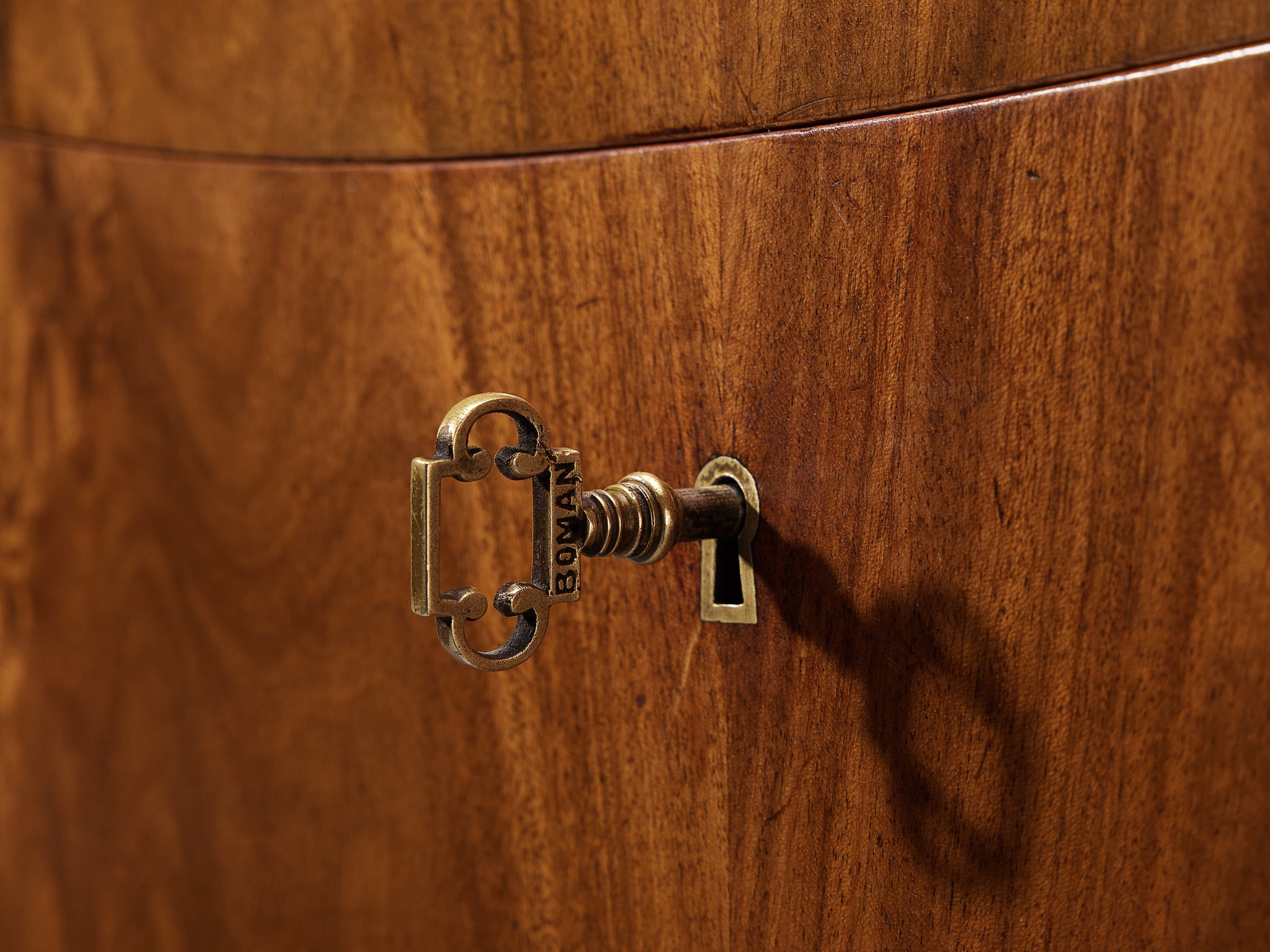
Rare Gunnel Nyman for Boman Secretaire in Pyramid Mahogany
 Open here
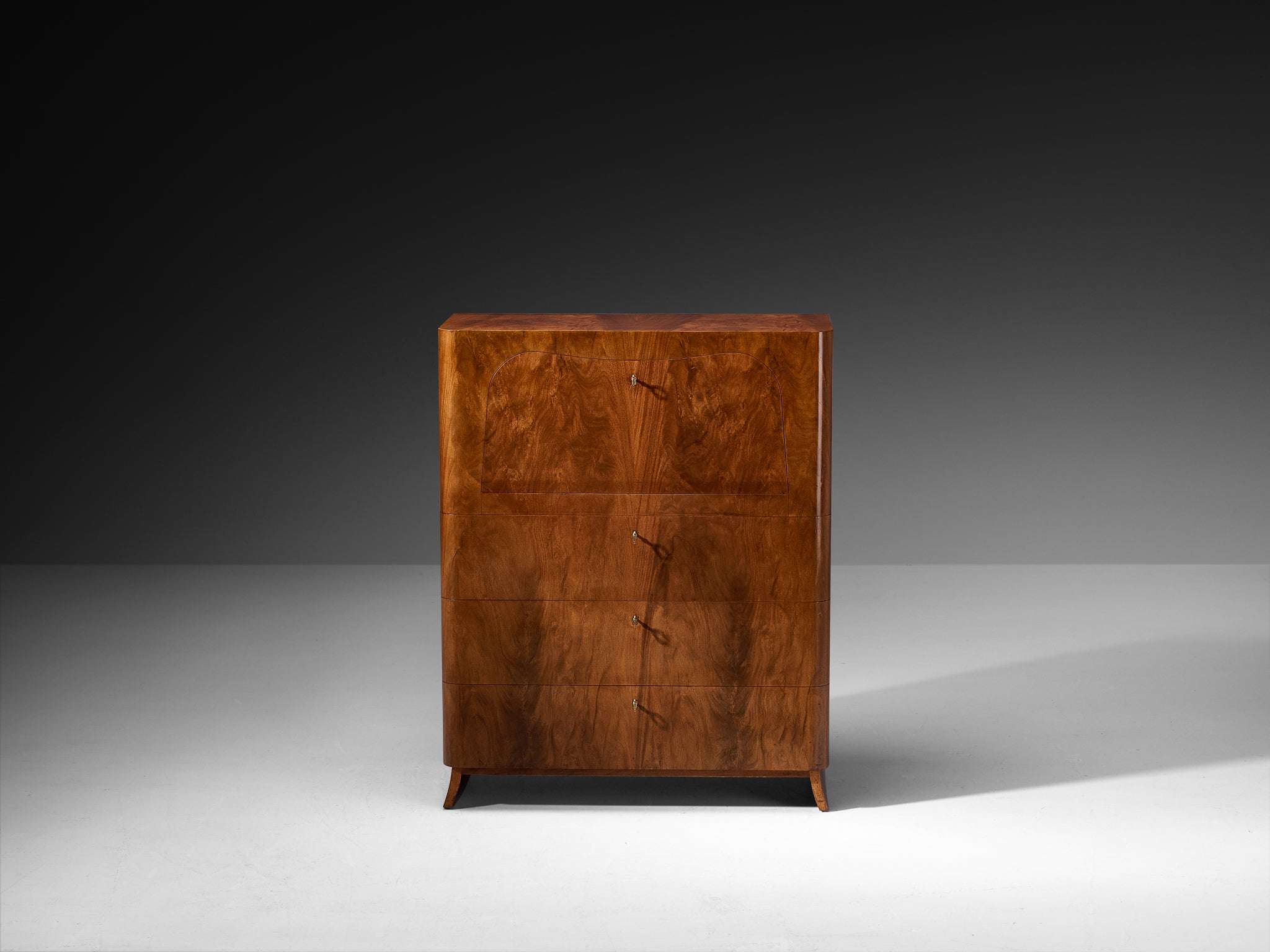
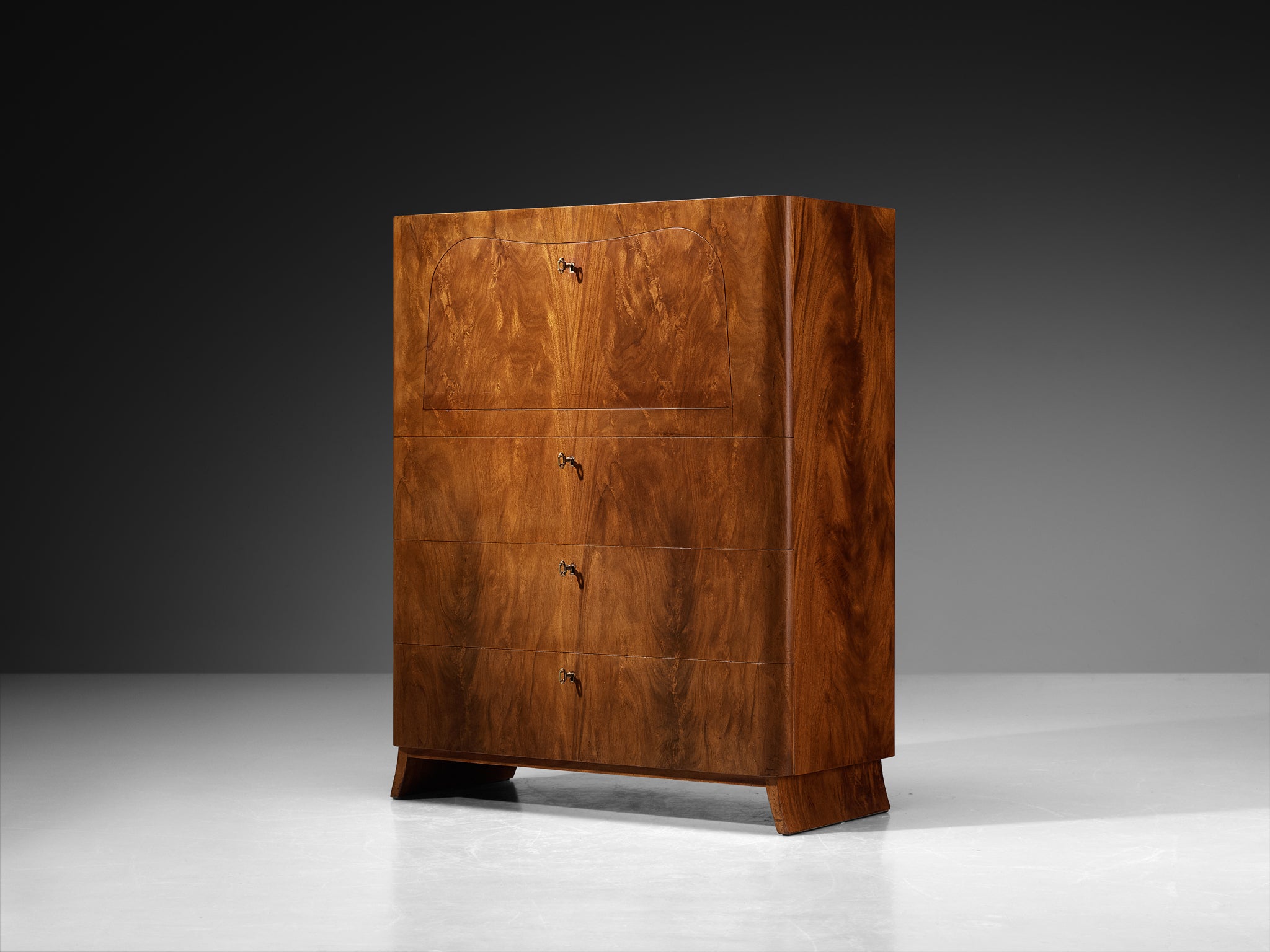
Gunnel Anita Gustafsson-Nyman for Oy Boman Ab, secretaire, pyramid mahogany, Finland, ca. 1937
The Finnish artist Gunnel Anita Gustafsson-Nyman (1909–1948) is best known for her glasswork. Although her career spanned only about twenty years due to her untimely death at the age of thirty-nine, it was a notably fruitful period. During this brief but intense period, she created works that are now held in major international museum collections, including the British Museum and The Metropolitan Museum of Art. Today, Nyman is regarded as a pioneer of modern glass design and as one of the figures who laid the foundation for the global recognition of Finnish glass art in the 1950s. Despite lacking formal training in glass, she began designing glassware for several leading Finnish glassworks, including Riihimäki, Karhula, Iittala, and Nuutajärvi. Her work quickly gained international attention, earning awards at the Paris World Exhibition and at the Milan Triennials.
Nyman was originally trained not as a glass artist, but as a furniture designer. She studied at the Central School of Arts and Crafts in Helsinki from 1928 to 1932 under the guidance of Arttu Brummer (1891-1951). After graduating, she worked broadly within the field of design. She created furniture for Oy Boman Ab (from 1937 onward) and designed lighting for Taito Oy (1932–1938) and Idman (1945 onward).
Although Nyman is most often celebrated for her pioneering work in glass, focusing solely on this aspect of her career overlooks the breadth of her talent. Her achievements in furniture and lighting design reveal the same dedication to craftsmanship, material sensitivity, and professional excellence that characterized her glasswork. In her furniture designs in particular, she combined craftsmanship techniques with professionalism. Through these creations, she played a significant role in shaping Finnish design in the 1930s and 1940s, contributing a voice that was both contemporary and distinctly her own.
Boman
Oy Boman Ab is Finland's oldest and largest furniture manufacturing company since the 1920s. Founded by master carpenter Nikolai Boman (1845-1923) in 1871, the company's roots are in Turku, Finland, with a store in Helsinki providing furniture, interior accessories, and design guidance. Carl-Johan Boman (1883-1969) steered the family business, serving as both artistic director and designer from 1906, later taking on the role of managing director until the mid-1950s. The furniture company participated in various exhibitions across Finland and abroad, being one of the first Finns participating in the Monza International Exhibition of Fine Arts, a precursor to the Milan Triennale. The Boman factory's collaborative tradition extended to renowned designers like Carl Malmsten and textile artist Elsa Gullberg from Sweden, as well as Finnish designers Arttu Brummer, Gunnel Nyman, Carin Bryggman, and Jarl Eklund. Dora Jung and Greta Skogster-Lehtinen were also notable textile artists involved.
Throughout its history, the shop's core mission has been to serve the public's needs. It evolved from furnishing opulent homes to modern, modest residences. The work method embraced skillful craftsmanship, artistic taste, and high-quality materials. Boman's furniture design prioritized carefully considered proportions and luxurious material usage.
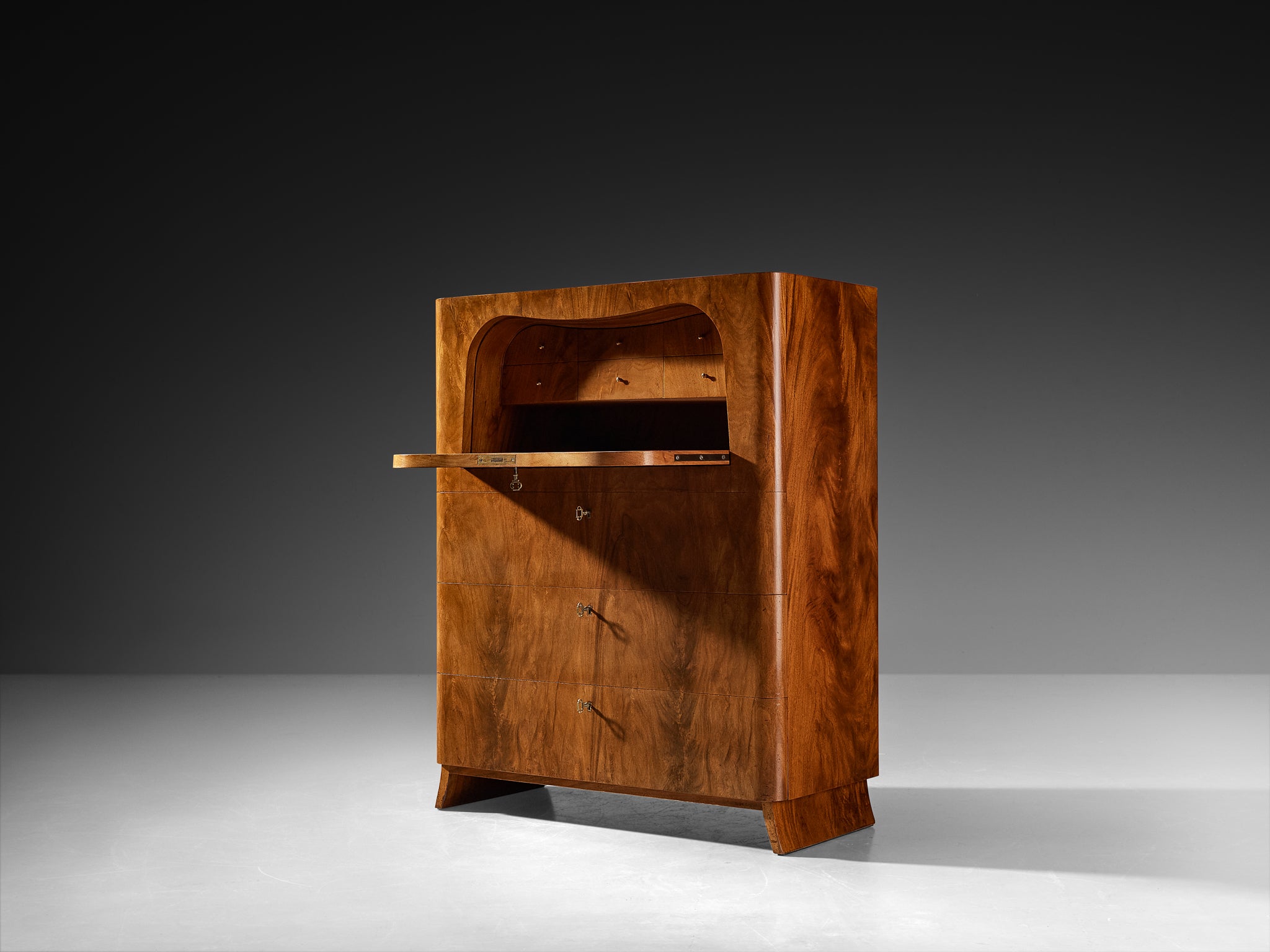
Between 1937 and 1940, Boman participated in several major exhibitions, where the company’s work was met with lively and favorable reception. At the Paris World Exhibition in 1937, Boman presented furniture designed by Gunnel Nyman, earning a silver medal for their contribution. The present secretaire was originally created for this exhibition and marks a significant turning point in Nyman’s career.
According to design historian Marianne Aav (1952–2011), who studied Nyman’s furniture design extensively, this piece represents Nyman’s final departure from the strict formal language of functionalism, rooted in the principle of design purely in service of function. Instead, it reflects a broader stylistic shift that took place in the late 1930s: a move away from the sharp, angular lines characteristic of early functionalism toward a softer, more ornamental, and humanistic expression inspired by the 19th-century Biedermeier tradition.
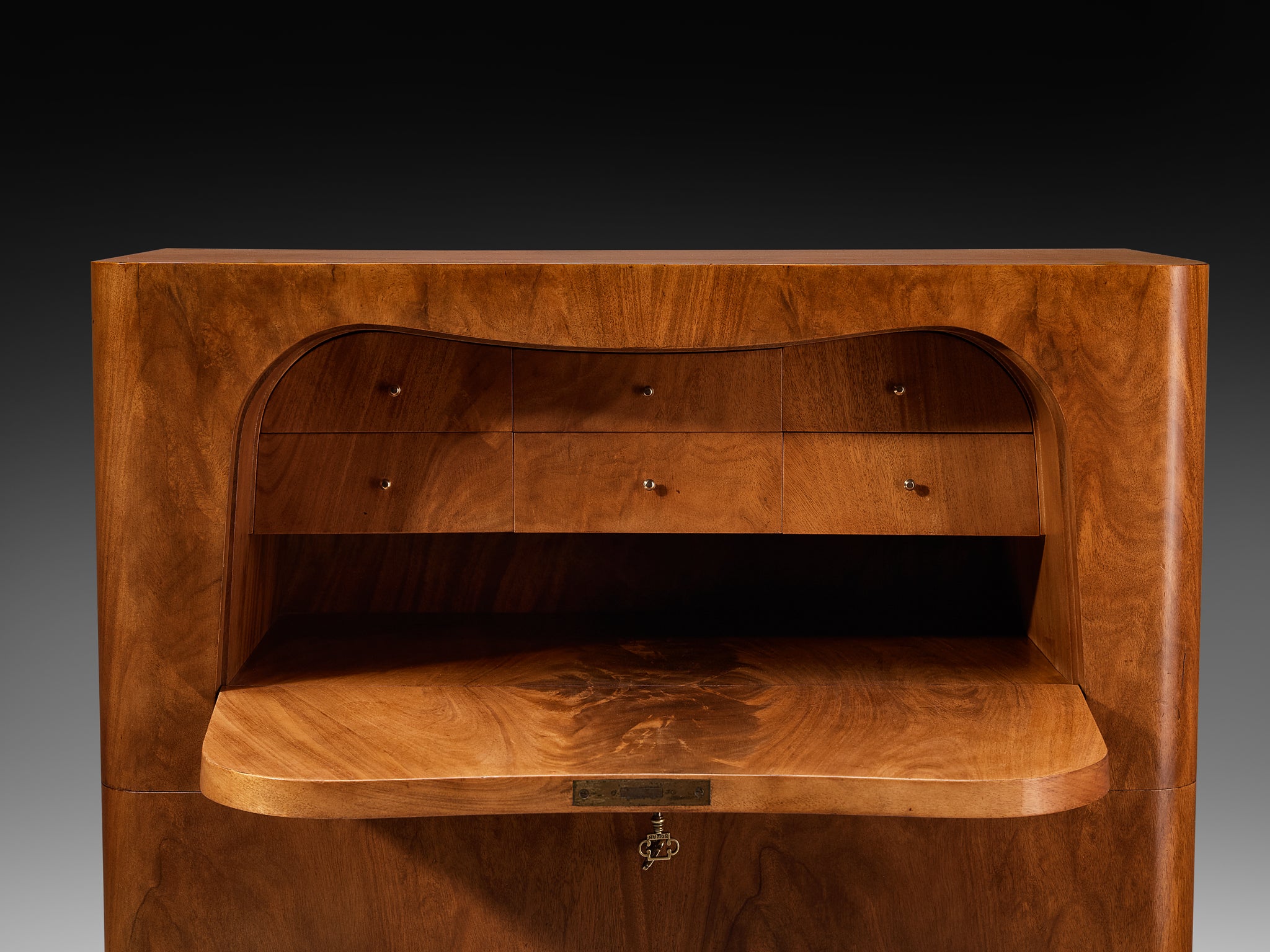
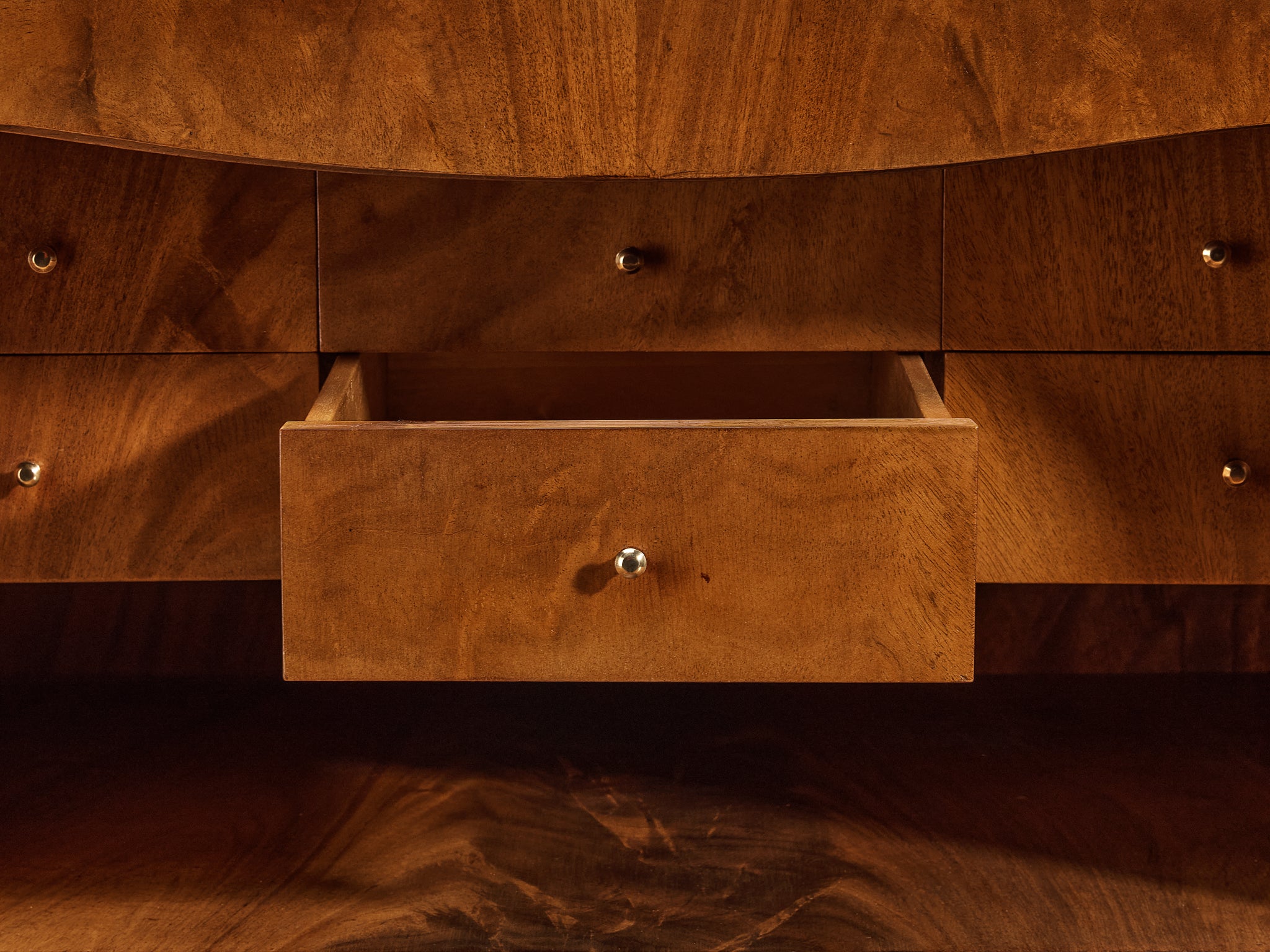
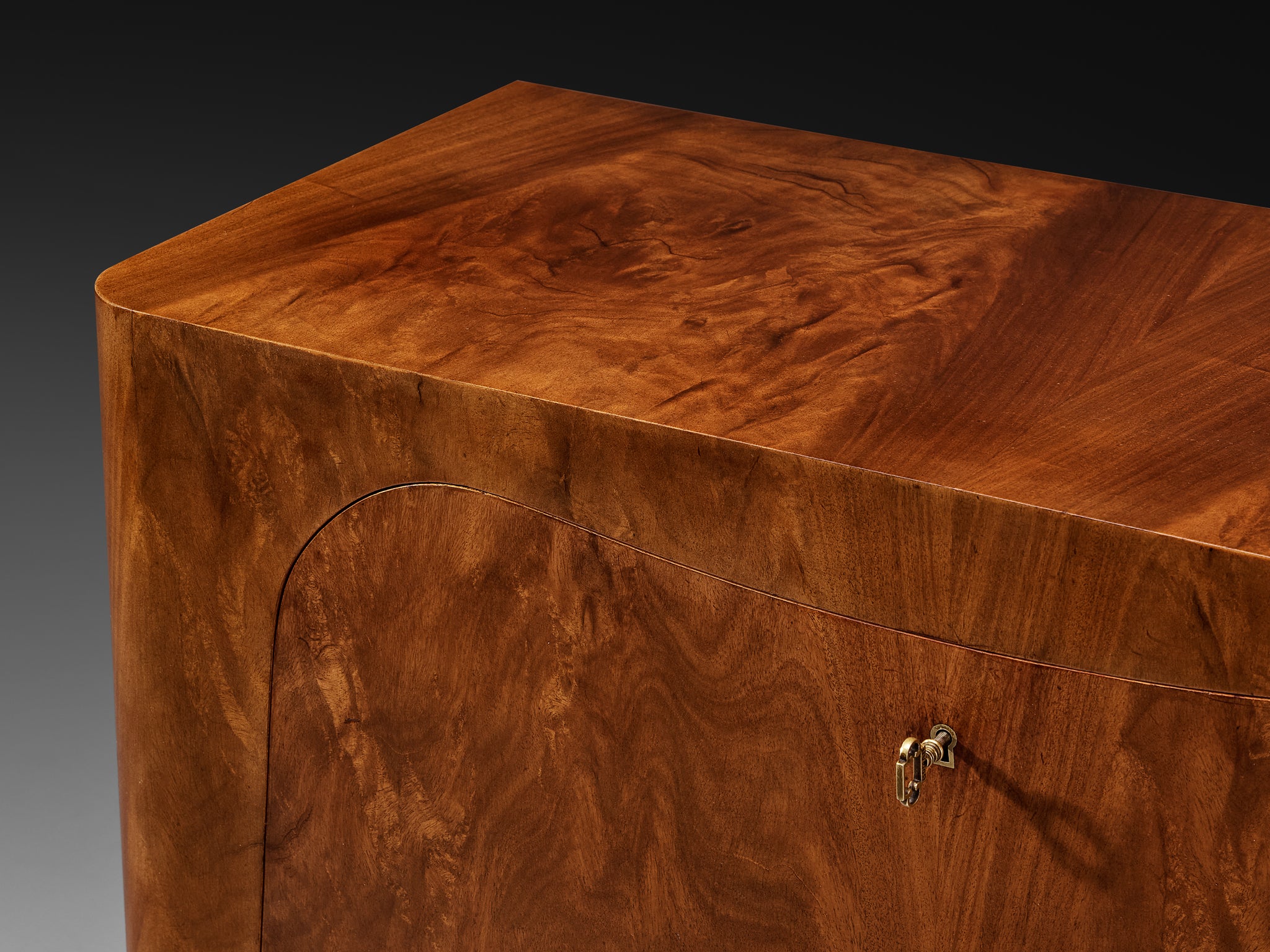
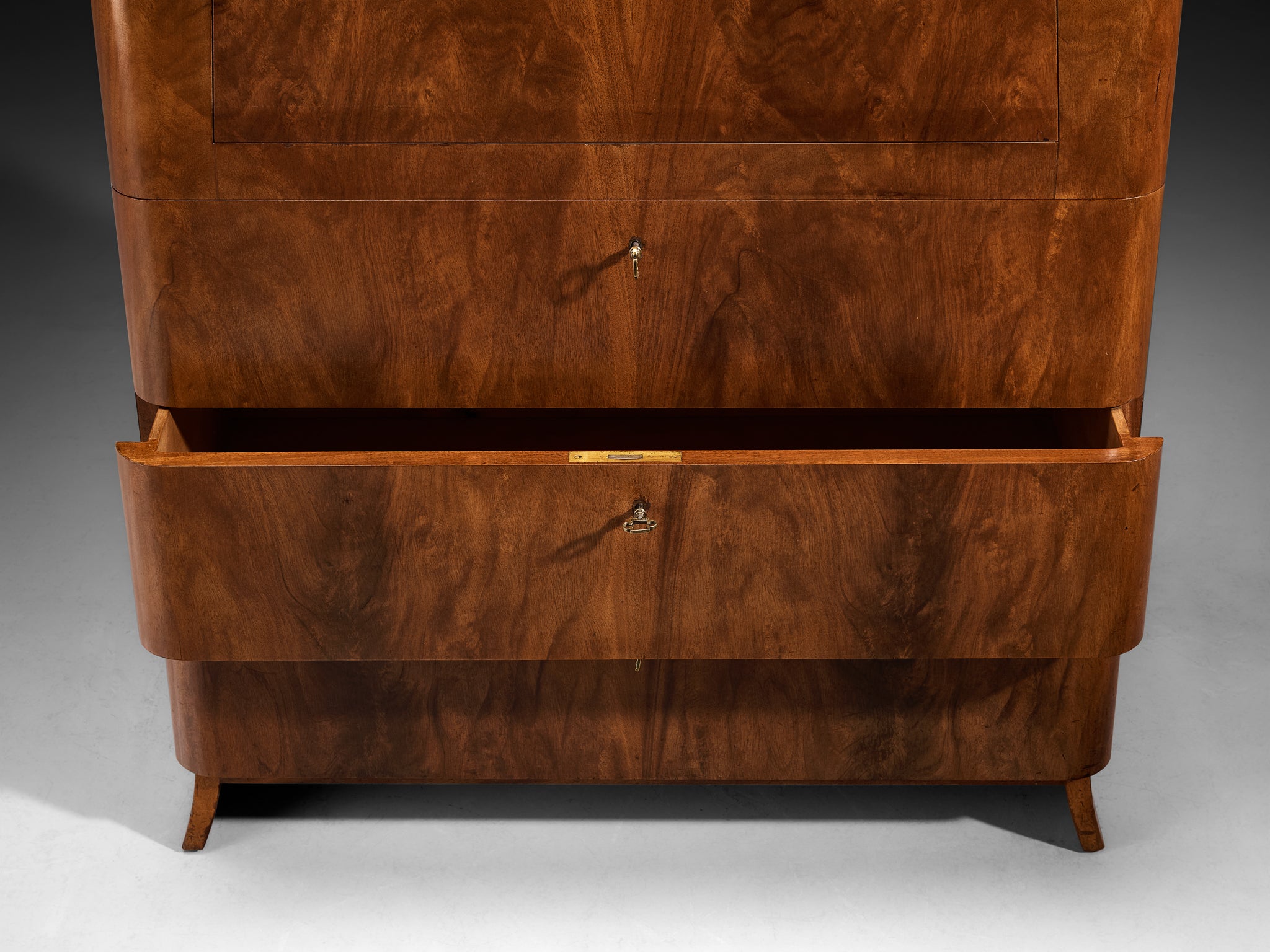
Aav further suggests that this transformation was closely linked to Nyman’s collaboration with Boman, then the oldest carpentry factory in Finland. Known for its exceptional craftsmanship and use of fine imported materials, Boman provided a context that encouraged refinement and decorative richness. This shift in style is evident in the cabinet’s richly toned, expressive crotch mahogany, its gently rounded overall form, and its carefully articulated details – from the subtly undulating edge of the lid to the gracefully tapering legs, which function as both structural and decorative elements.
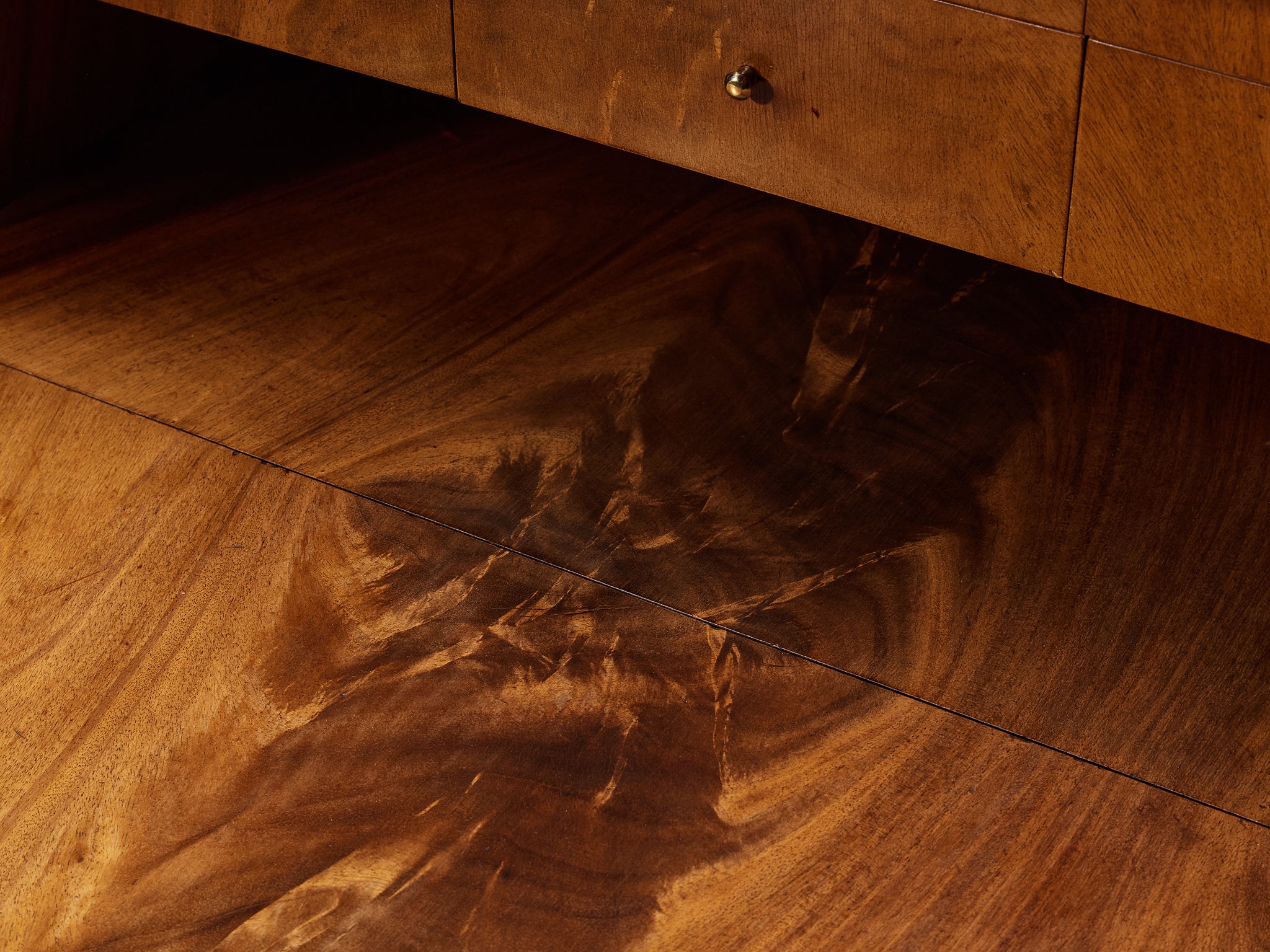
Ultimately, nature has been Nyman’s most important teacher. She regarded natural forms as inherently perfect, and in this cabinet, one senses her aspiration to translate that organic harmony into furniture design. She began with the expressive grain of the wood as the conceptual foundation of the design, allowing its natural character to guide the overall form of the piece. In this way, the material was given prominence in its own right. The proportions, form, and decoration were carefully considered not as independent elements, but as means to highlight and enhance the wood’s distinctive qualities.
The cabinet can be seen as an organic and unified composition, shaped by a sensitivity that feels distinctly personal. Contemporary accounts describe Nyman as warm, intellectually curious, cultivated, and deeply committed to her work, yet modest in character. She found sincere joy in the act of creation and in the beauty her designs embodied. This generosity of spirit and attentive presence seem to echo in her work, which carries a quiet humanity beneath its refined exterior.
The Finnish artist Gunnel Anita Gustafsson-Nyman (1909–1948) is best known for her glasswork. Although her career spanned only about twenty years due to her untimely death at the age of thirty-nine, it was a notably fruitful period. During this brief but intense period, she created works that are now held in major international museum collections, including the British Museum and The Metropolitan Museum of Art. Today, Nyman is regarded as a pioneer of modern glass design and as one of the figures who laid the foundation for the global recognition of Finnish glass art in the 1950s. Despite lacking formal training in glass, she began designing glassware for several leading Finnish glassworks, including Riihimäki, Karhula, Iittala, and Nuutajärvi. Her work quickly gained international attention, earning awards at the Paris World Exhibition and at the Milan Triennials.
Nyman was originally trained not as a glass artist, but as a furniture designer. She studied at the Central School of Arts and Crafts in Helsinki from 1928 to 1932 under the guidance of Arttu Brummer (1891-1951). After graduating, she worked broadly within the field of design. She created furniture for Oy Boman Ab (from 1937 onward) and designed lighting for Taito Oy (1932–1938) and Idman (1945 onward).
Although Nyman is most often celebrated for her pioneering work in glass, focusing solely on this aspect of her career overlooks the breadth of her talent. Her achievements in furniture and lighting design reveal the same dedication to craftsmanship, material sensitivity, and professional excellence that characterized her glasswork. In her furniture designs in particular, she combined craftsmanship techniques with professionalism. Through these creations, she played a significant role in shaping Finnish design in the 1930s and 1940s, contributing a voice that was both contemporary and distinctly her own.
Boman
Oy Boman Ab is Finland's oldest and largest furniture manufacturing company since the 1920s. Founded by master carpenter Nikolai Boman (1845-1923) in 1871, the company's roots are in Turku, Finland, with a store in Helsinki providing furniture, interior accessories, and design guidance. Carl-Johan Boman (1883-1969) steered the family business, serving as both artistic director and designer from 1906, later taking on the role of managing director until the mid-1950s. The furniture company participated in various exhibitions across Finland and abroad, being one of the first Finns participating in the Monza International Exhibition of Fine Arts, a precursor to the Milan Triennale. The Boman factory's collaborative tradition extended to renowned designers like Carl Malmsten and textile artist Elsa Gullberg from Sweden, as well as Finnish designers Arttu Brummer, Gunnel Nyman, Carin Bryggman, and Jarl Eklund. Dora Jung and Greta Skogster-Lehtinen were also notable textile artists involved.
Throughout its history, the shop's core mission has been to serve the public's needs. It evolved from furnishing opulent homes to modern, modest residences. The work method embraced skillful craftsmanship, artistic taste, and high-quality materials. Boman's furniture design prioritized carefully considered proportions and luxurious material usage.
Between 1937 and 1940, Boman participated in several major exhibitions, where the company’s work was met with lively and favorable reception. At the Paris World Exhibition in 1937, Boman presented furniture designed by Gunnel Nyman, earning a silver medal for their contribution. The present secretaire was originally created for this exhibition and marks a significant turning point in Nyman’s career.
According to design historian Marianne Aav (1952–2011), who studied Nyman’s furniture design extensively, this piece represents Nyman’s final departure from the strict formal language of functionalism, rooted in the principle of design purely in service of function. Instead, it reflects a broader stylistic shift that took place in the late 1930s: a move away from the sharp, angular lines characteristic of early functionalism toward a softer, more ornamental, and humanistic expression inspired by the 19th-century Biedermeier tradition.
Aav further suggests that this transformation was closely linked to Nyman’s collaboration with Boman, then the oldest carpentry factory in Finland. Known for its exceptional craftsmanship and use of fine imported materials, Boman provided a context that encouraged refinement and decorative richness. This shift in style is evident in the cabinet’s richly toned, expressive crotch mahogany, its gently rounded overall form, and its carefully articulated details – from the subtly undulating edge of the lid to the gracefully tapering legs, which function as both structural and decorative elements.
Ultimately, nature has been Nyman’s most important teacher. She regarded natural forms as inherently perfect, and in this cabinet, one senses her aspiration to translate that organic harmony into furniture design. She began with the expressive grain of the wood as the conceptual foundation of the design, allowing its natural character to guide the overall form of the piece. In this way, the material was given prominence in its own right. The proportions, form, and decoration were carefully considered not as independent elements, but as means to highlight and enhance the wood’s distinctive qualities.
The cabinet can be seen as an organic and unified composition, shaped by a sensitivity that feels distinctly personal. Contemporary accounts describe Nyman as warm, intellectually curious, cultivated, and deeply committed to her work, yet modest in character. She found sincere joy in the act of creation and in the beauty her designs embodied. This generosity of spirit and attentive presence seem to echo in her work, which carries a quiet humanity beneath its refined exterior.
%20is%20best%20known%20for%20her%20glasswork.%20Although...)
Choose options
Rare Gunnel Nyman for Boman Secretaire in Pyramid Mahogany
Sale price$66,500.00
Regular price
Product Details
VAT within the EU: When buying or delivering an item within the EU, VAT usually applies and will be added.