


Rare Carl-Axel Acking '5017' Wall Light with Organic Shades in Perforated Brass
 Open here
Carl-Axel Acking for Bröderna Malmströms Metallvarufabrik, wall light, model ‘5017’, brass, lacquered brass, Sweden, 1940s
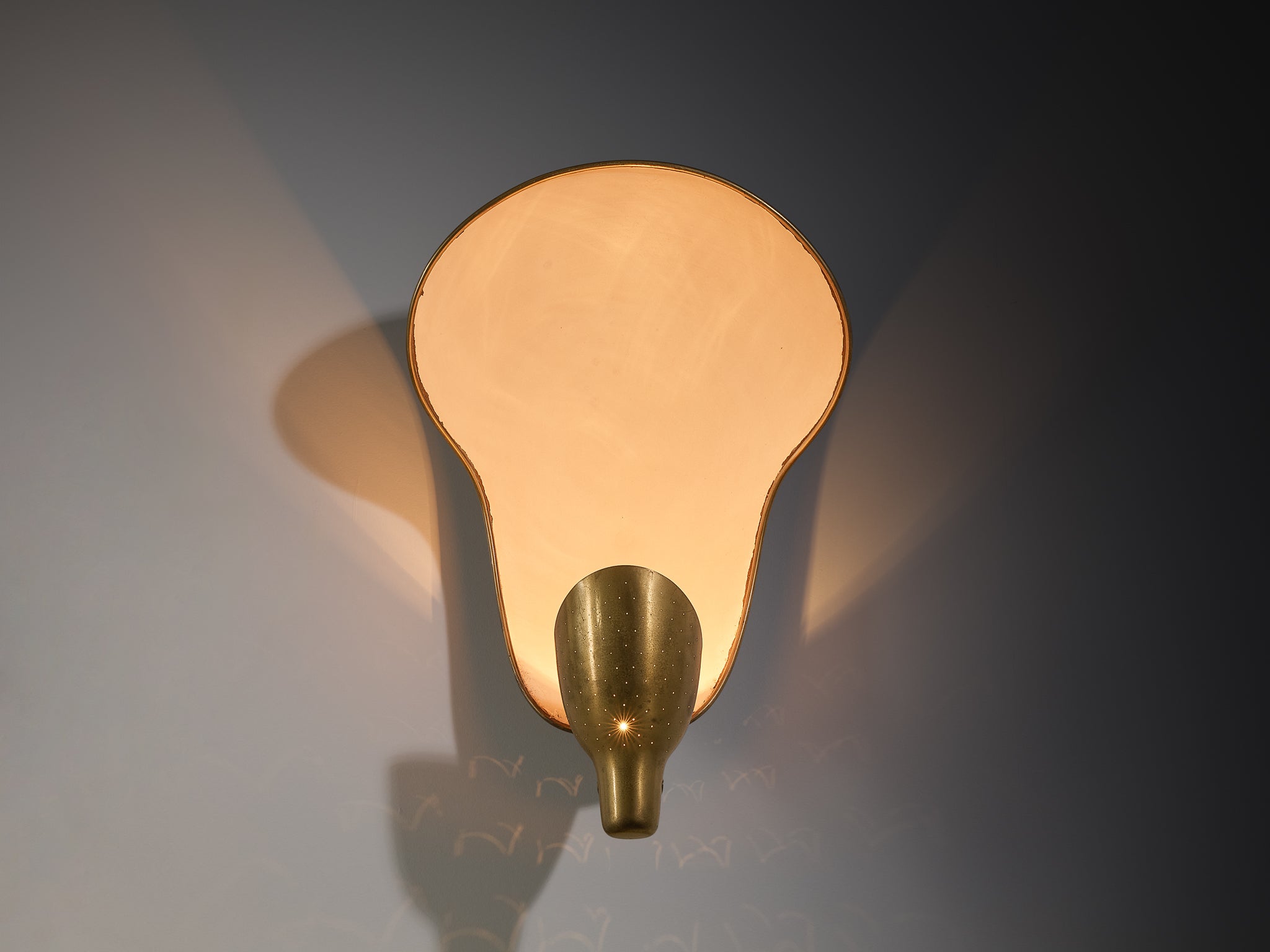
Elegant and constructively decorative, these wall lights are designed by Carl-Axel Acking (1910-2001) and were commissioned for a church interior in Skåne, Sweden, in the 1940s. Acking was part of a new generation of Swedish architects who shaped the character of Swedish Modern, a style that blended the simplicity of functionalism with the tactility of fine craftsmanship and softly shaped forms. Educated at the Royal Institute of Technology and what is now Konstfack in Stockholm, he combined technical precision with an acute sensitivity to materials and detail, working across the fields of architecture, custom furniture, interior design, and lighting. For Acking, lighting was never an afterthought but a vital architectural component; a medium through which structure, atmosphere, and function converged.
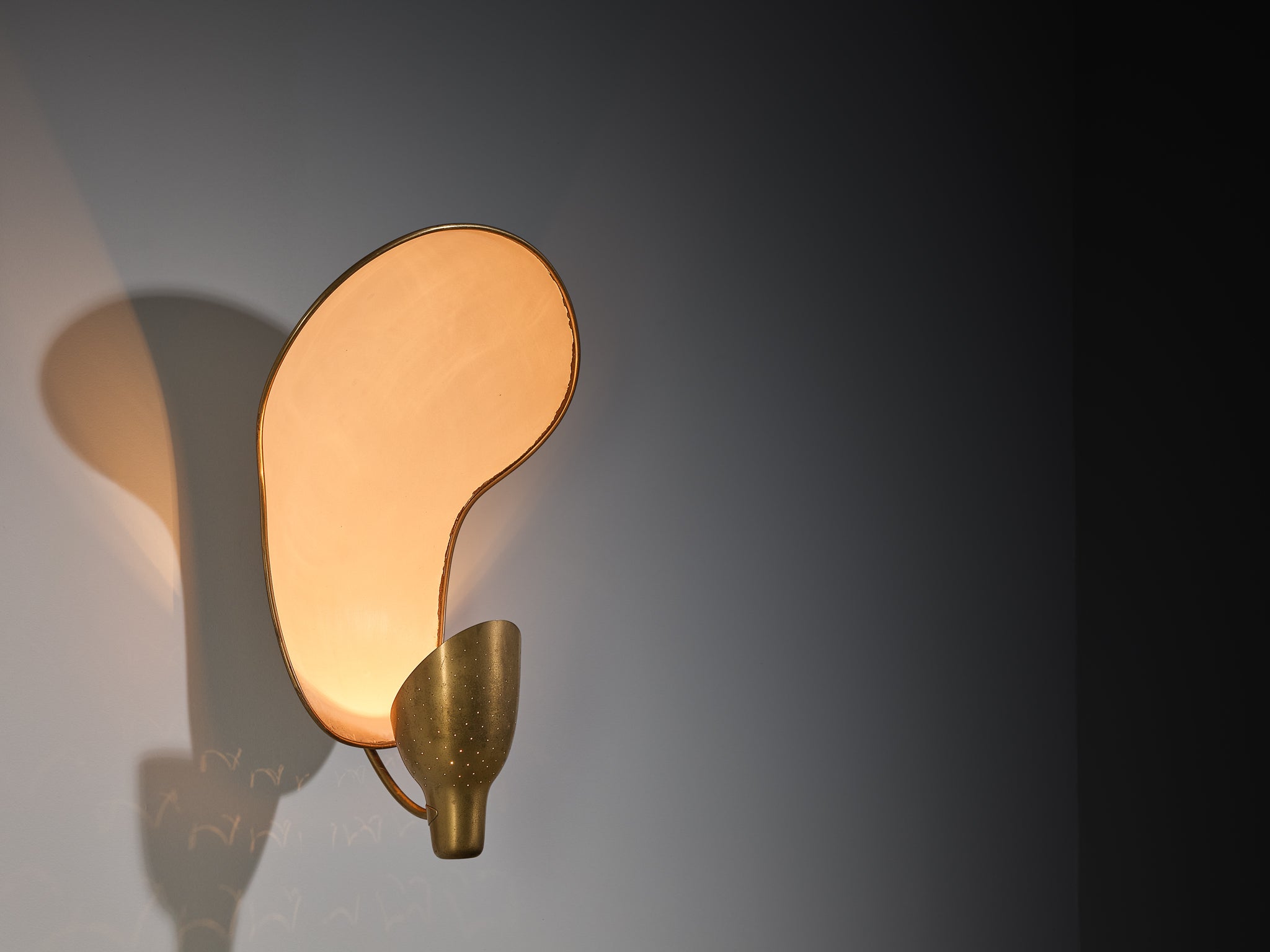
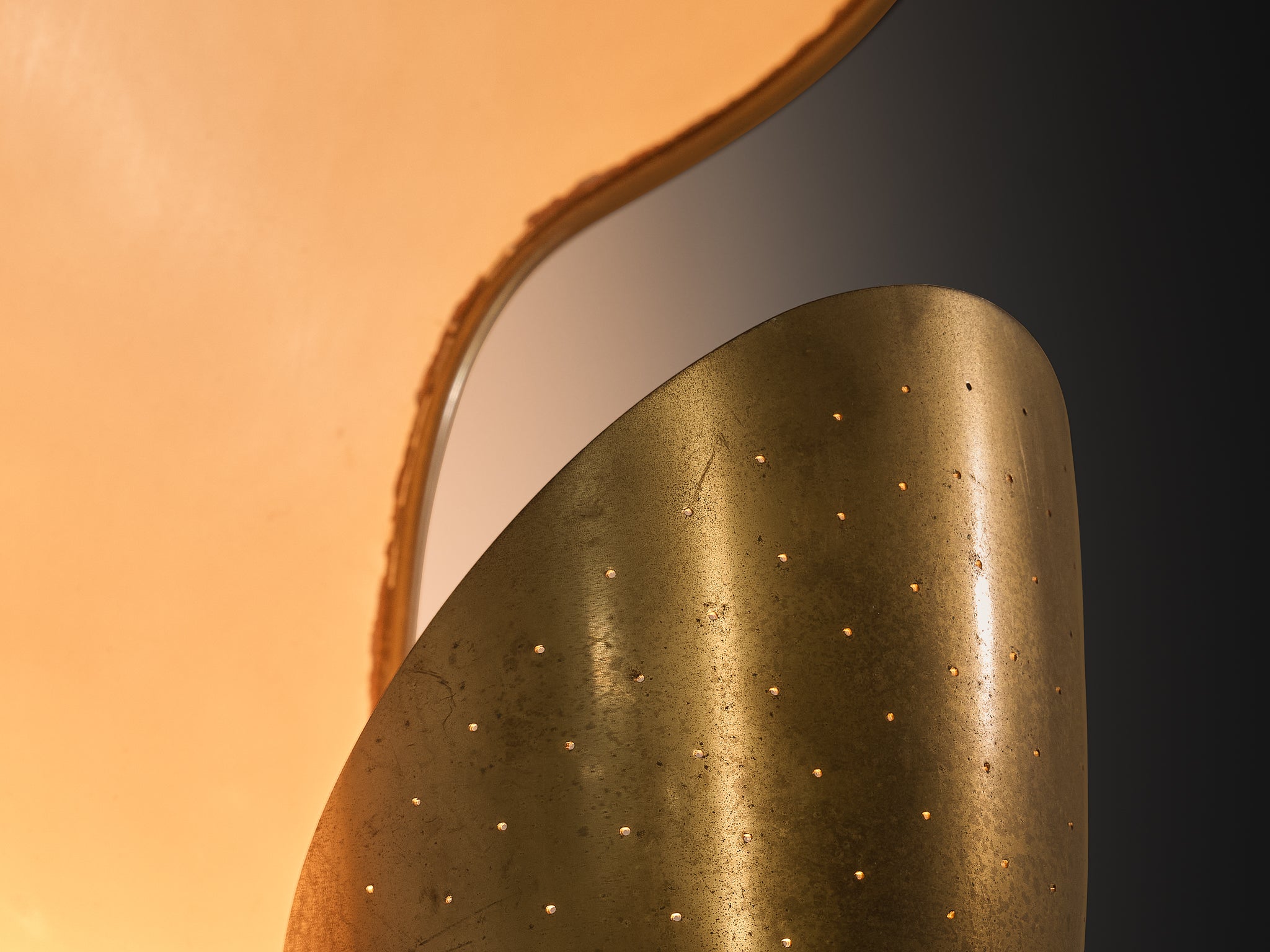
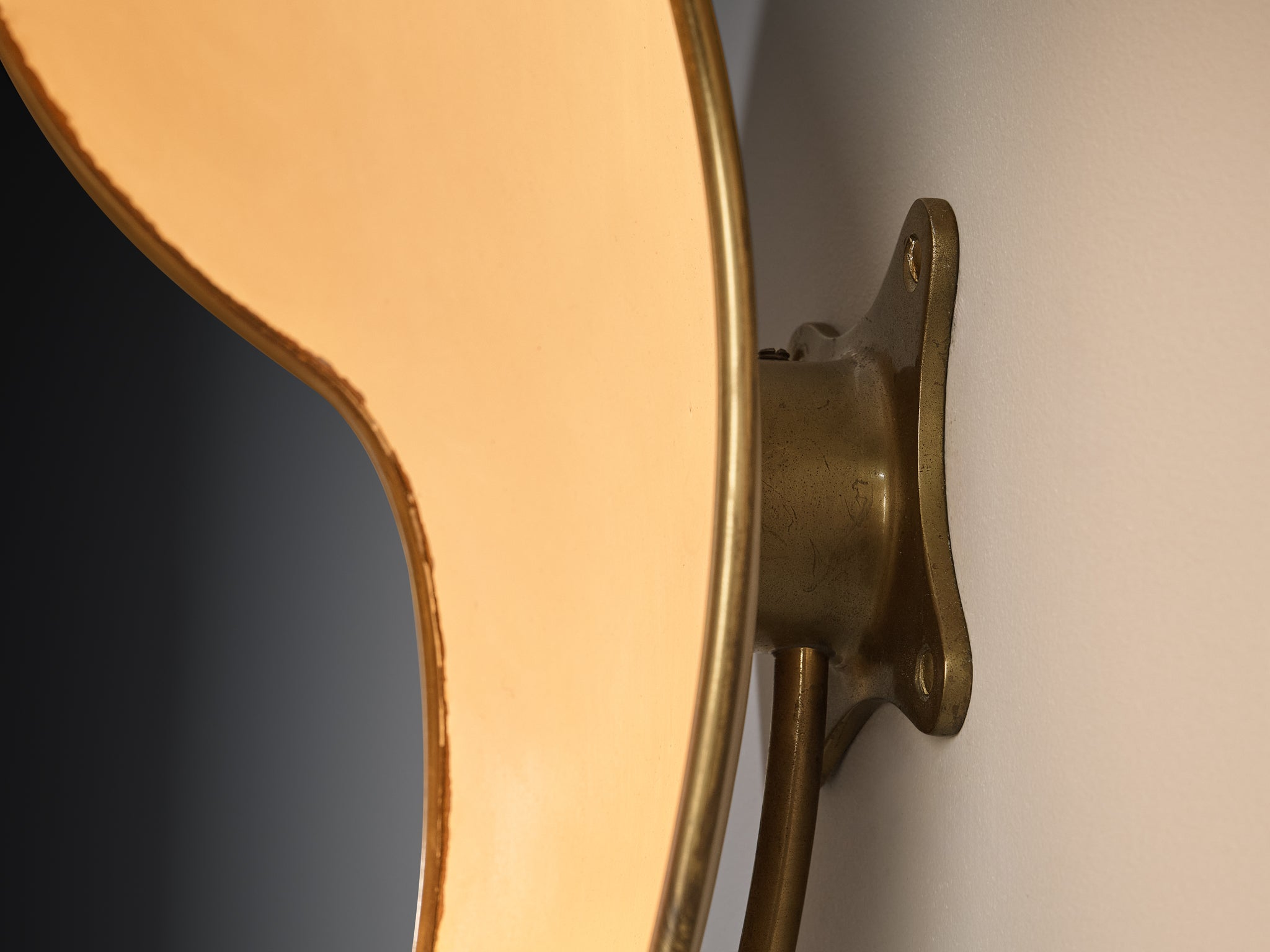
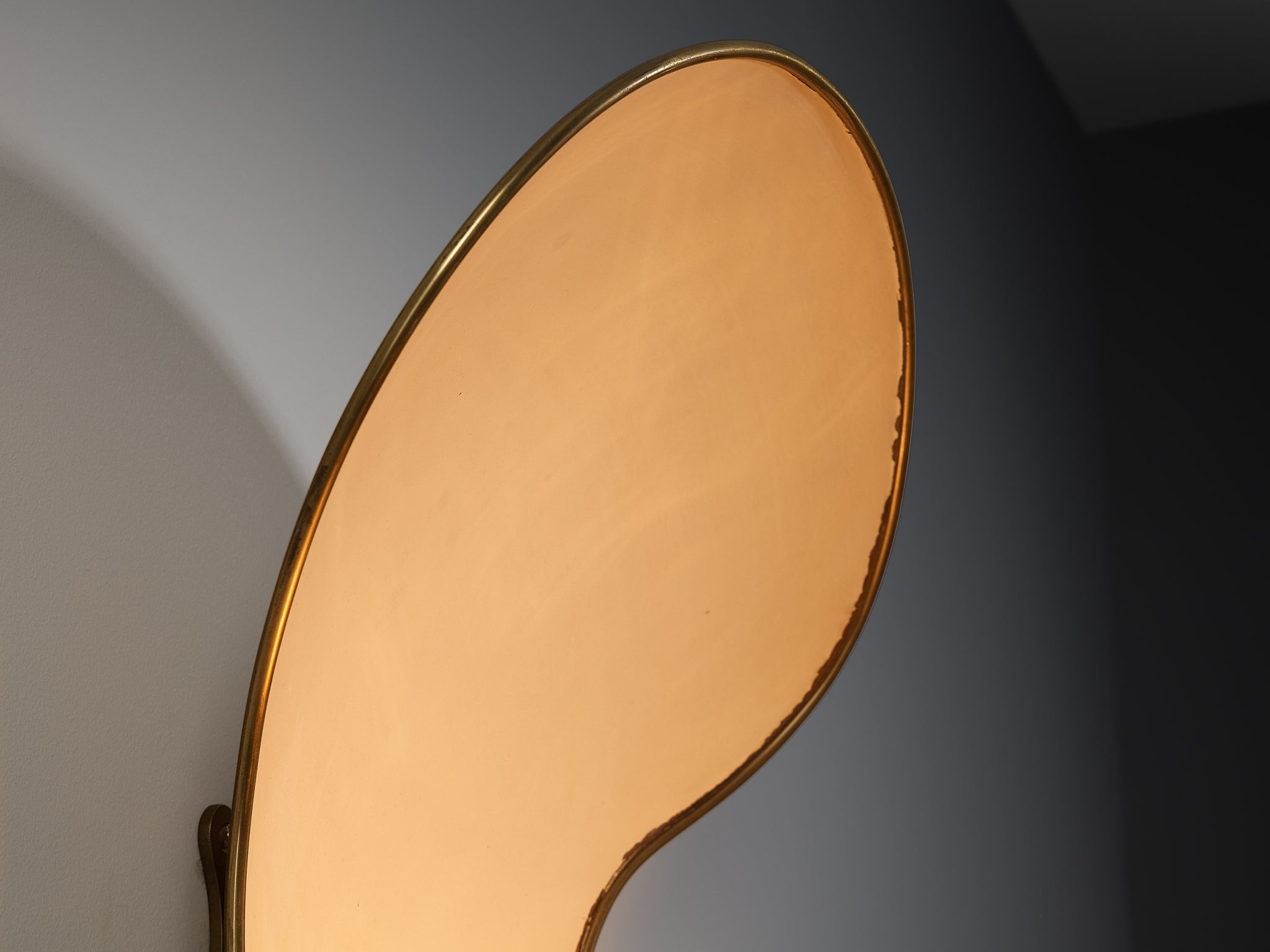
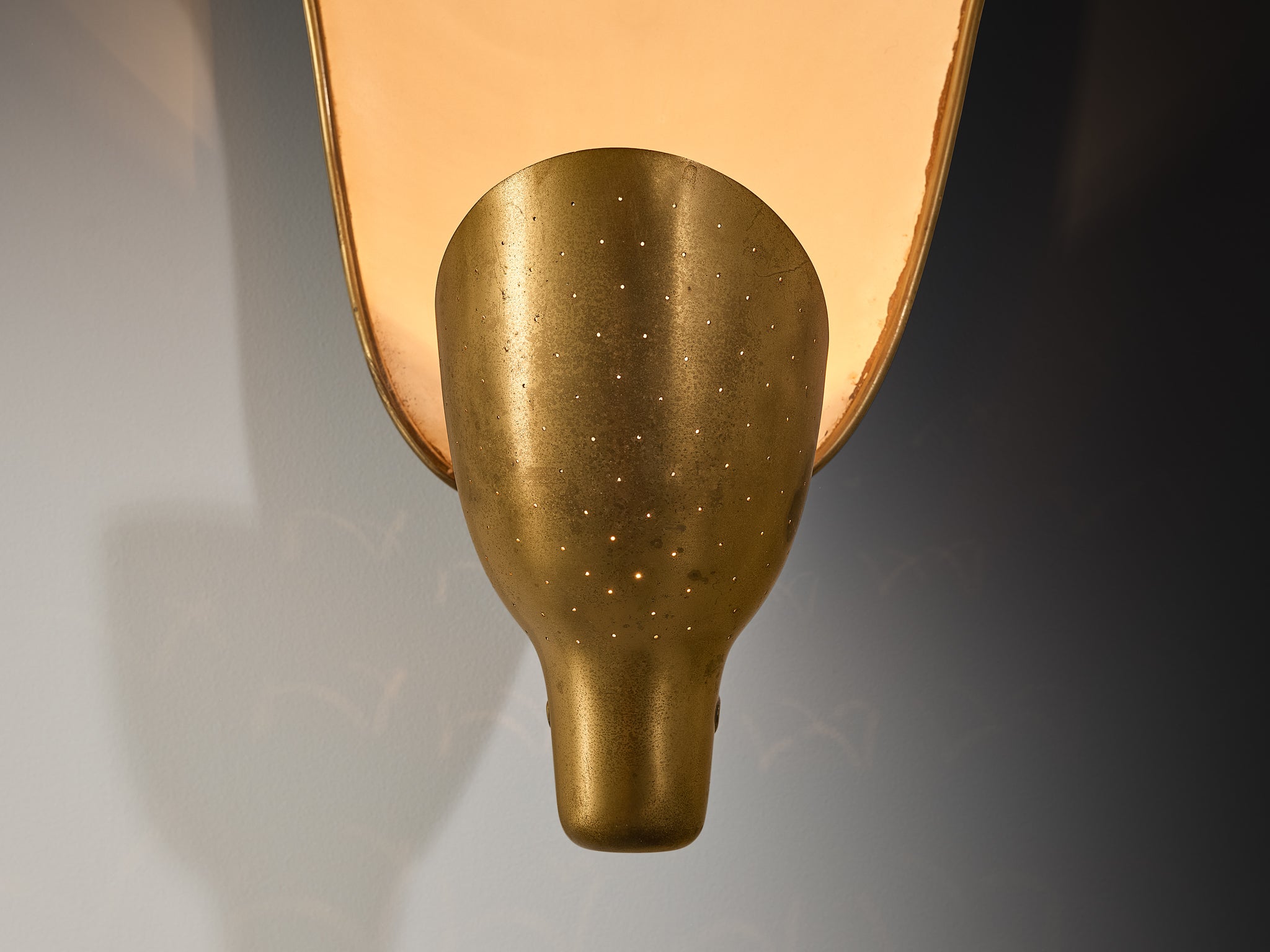
The lamp is characterized by an elongated, organically shaped reflector in white lacquered brass, further outlined in brass to accentuate its soft, undulating shape. A second, smaller reflector – with the light bulb concealed – is positioned below and affixed to the arm without any visible screws or fittings – attesting to meticulous craftsmanship and the technical mastery of the workshop Bröderna Malmströms Metallvarufabrik, the firm initially responsible for the commission. Based in Malmö, Bröderna earned its place among other major players in the Swedish lighting industry, including Nordiska Kompaniet in Nyköping, Ateljé Lyktan in Åhus, and Böhlmarks in Stockholm. Together, these companies shaped not just the market but also the cultural identity of lighting design in Sweden during the 20th century. The company was known for its high-quality metal craftsmanship and its collaborations with leading Swedish designers and architects.
The double-reflector principle (where one reflector directs light upward into another, larger reflector) appears in several other works by Bröderna Malmströms, especially in their collaborations with Acking. In the broader discourse of the 1920s and 1930s, this approach resonates with contemporary debates on rational lighting design, a topic explored in the Swedish Journal of Light Culture (founded 1928). Theorists and practitioners sought to educate architects and consumers alike in the principles of glare reduction, indirect illumination, and material optimization. Acking absorbed these ideas and transformed them into practice. The reflector diffuses a soft ambient light, while fine streaks escape through the perforations of the shade. This model captures Acking’s fusion of sculptural form and technical precision, turning light fixtures into architectural elements rather than mere sources of illumination.
Provenance: Commissioned for a church in Skåne, southern Sweden, in the 1940s.
Elegant and constructively decorative, these wall lights are designed by Carl-Axel Acking (1910-2001) and were commissioned for a church interior in Skåne, Sweden, in the 1940s. Acking was part of a new generation of Swedish architects who shaped the character of Swedish Modern, a style that blended the simplicity of functionalism with the tactility of fine craftsmanship and softly shaped forms. Educated at the Royal Institute of Technology and what is now Konstfack in Stockholm, he combined technical precision with an acute sensitivity to materials and detail, working across the fields of architecture, custom furniture, interior design, and lighting. For Acking, lighting was never an afterthought but a vital architectural component; a medium through which structure, atmosphere, and function converged.
The lamp is characterized by an elongated, organically shaped reflector in white lacquered brass, further outlined in brass to accentuate its soft, undulating shape. A second, smaller reflector – with the light bulb concealed – is positioned below and affixed to the arm without any visible screws or fittings – attesting to meticulous craftsmanship and the technical mastery of the workshop Bröderna Malmströms Metallvarufabrik, the firm initially responsible for the commission. Based in Malmö, Bröderna earned its place among other major players in the Swedish lighting industry, including Nordiska Kompaniet in Nyköping, Ateljé Lyktan in Åhus, and Böhlmarks in Stockholm. Together, these companies shaped not just the market but also the cultural identity of lighting design in Sweden during the 20th century. The company was known for its high-quality metal craftsmanship and its collaborations with leading Swedish designers and architects.
The double-reflector principle (where one reflector directs light upward into another, larger reflector) appears in several other works by Bröderna Malmströms, especially in their collaborations with Acking. In the broader discourse of the 1920s and 1930s, this approach resonates with contemporary debates on rational lighting design, a topic explored in the Swedish Journal of Light Culture (founded 1928). Theorists and practitioners sought to educate architects and consumers alike in the principles of glare reduction, indirect illumination, and material optimization. Acking absorbed these ideas and transformed them into practice. The reflector diffuses a soft ambient light, while fine streaks escape through the perforations of the shade. This model captures Acking’s fusion of sculptural form and technical precision, turning light fixtures into architectural elements rather than mere sources of illumination.
Provenance: Commissioned for a church in Skåne, southern Sweden, in the 1940s.

Choose options
Rare Carl-Axel Acking '5017' Wall Light with Organic Shades in Perforated Brass
Sale price$27,400.00
Regular price
Product Details
VAT within the EU: When buying or delivering an item within the EU, VAT usually applies and will be added.