
Rare Axel Einar Hjorth ‘Lido’ Lounge Chair in Patinated Leather
Tearsheet
×
Receive a copy in your email or download directly:
I accept emails from Morentz.
 Open here
Axel Einar Hjorth for Nordiska Kompaniet, lounge chair ‘Lido’, leather, lacquered birch, Sweden, 1932
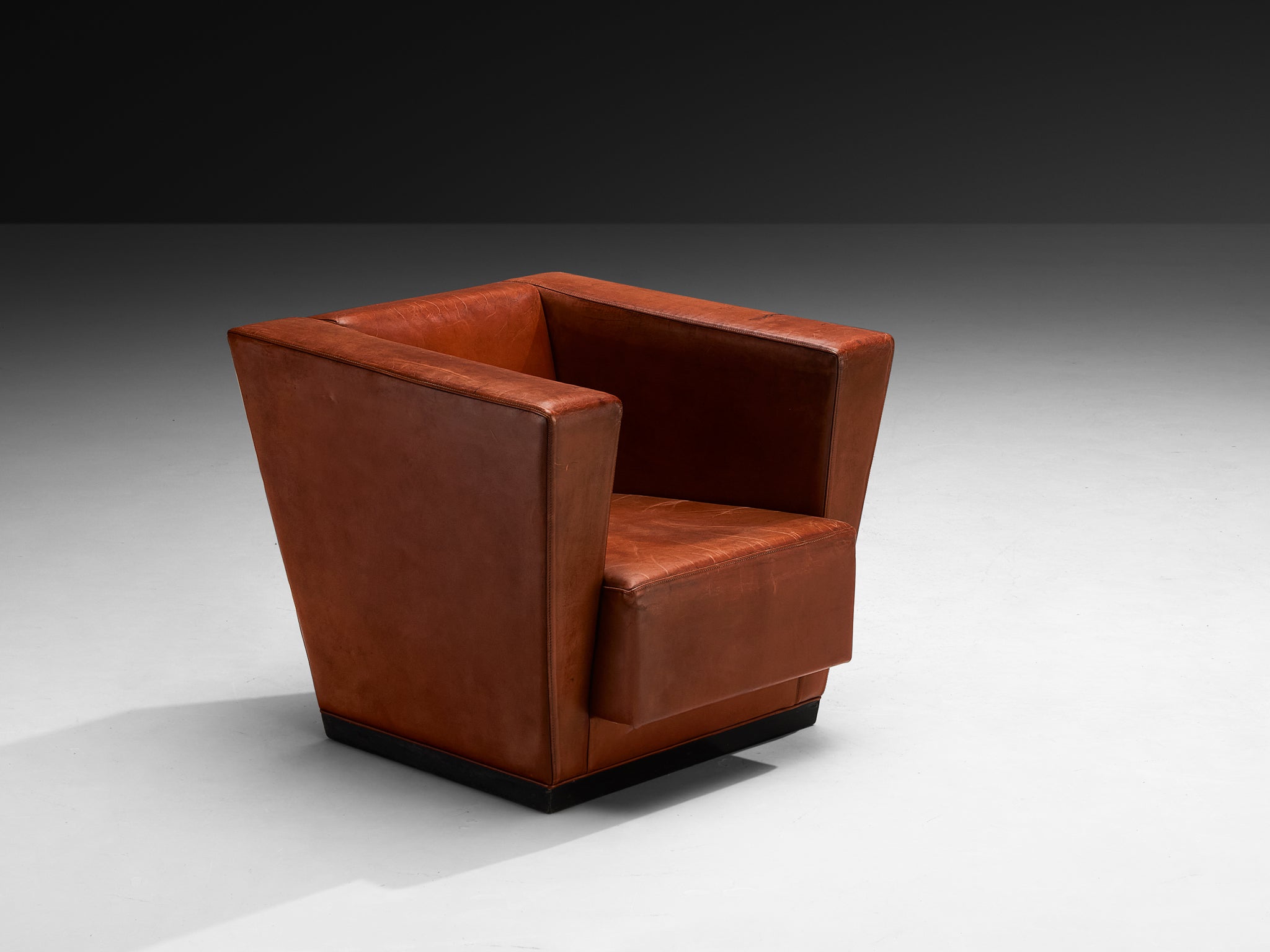
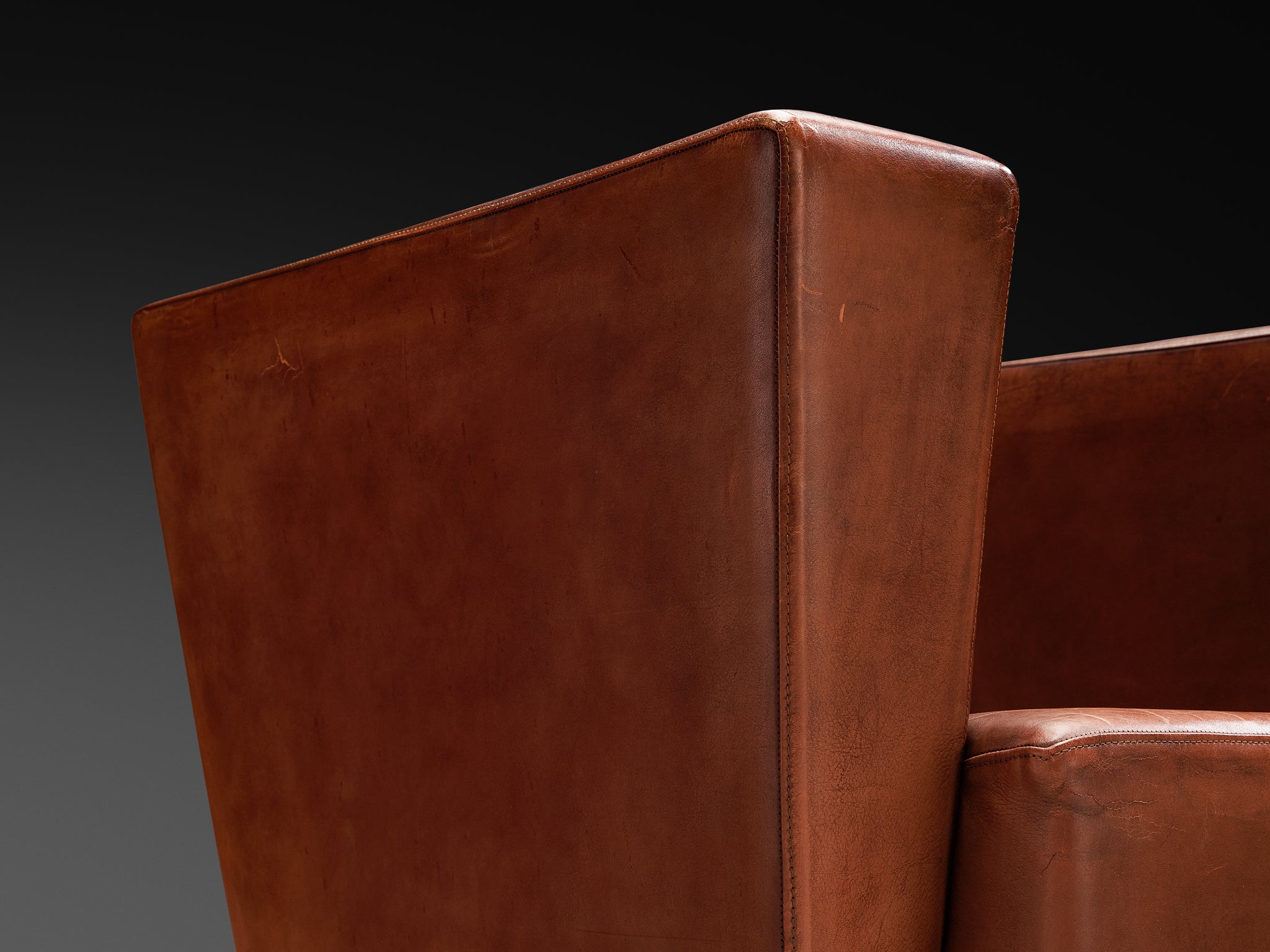
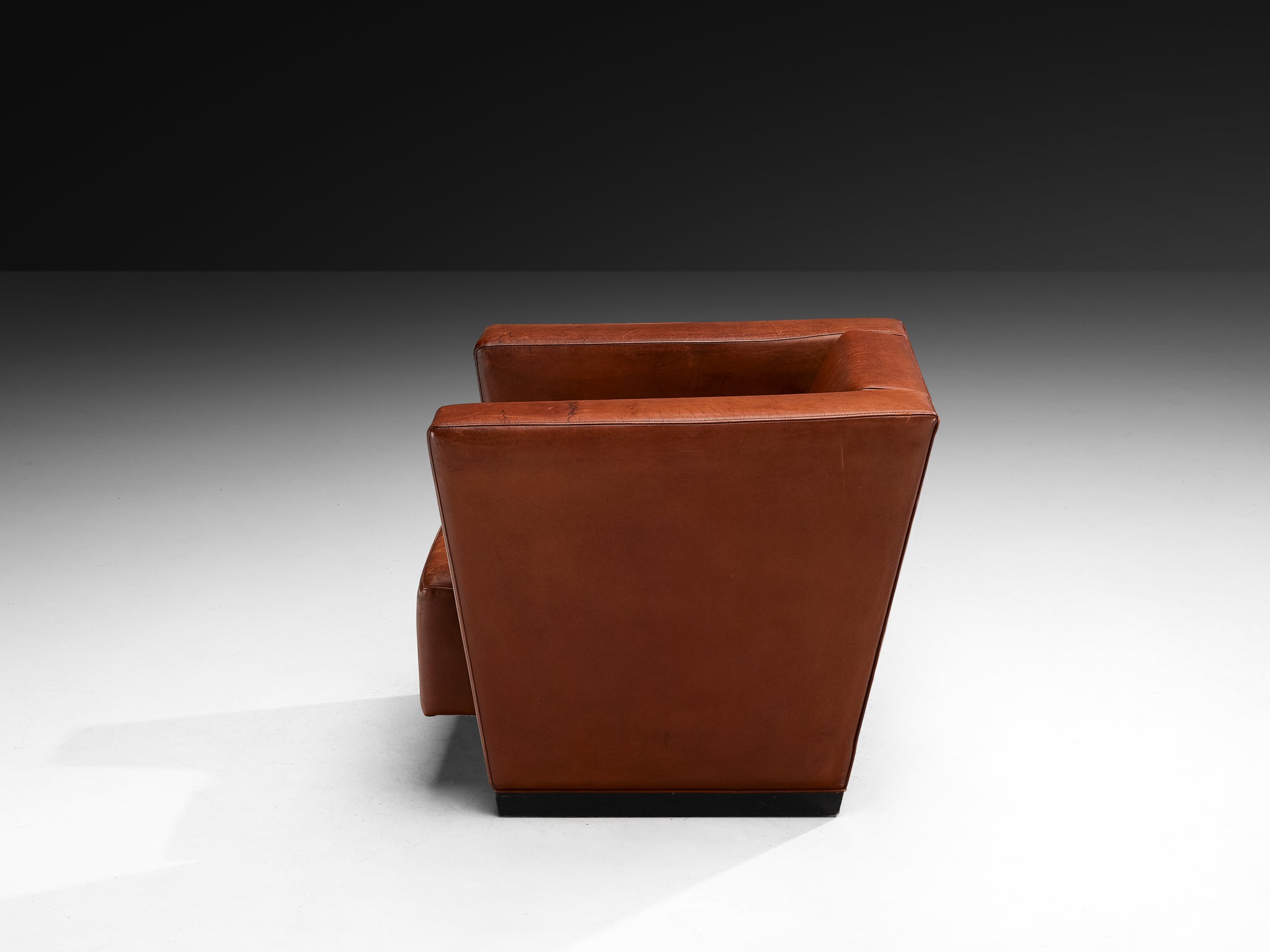
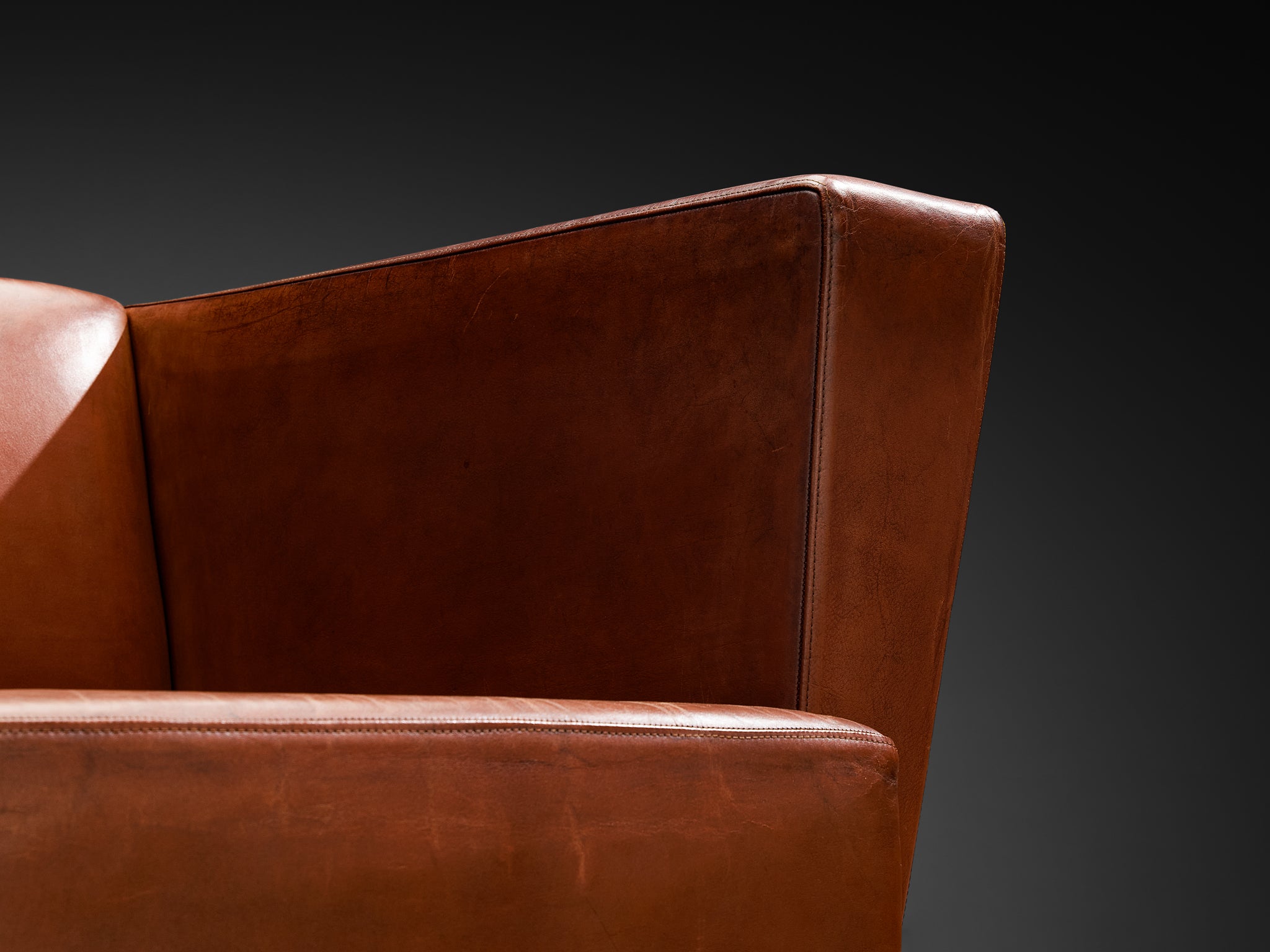
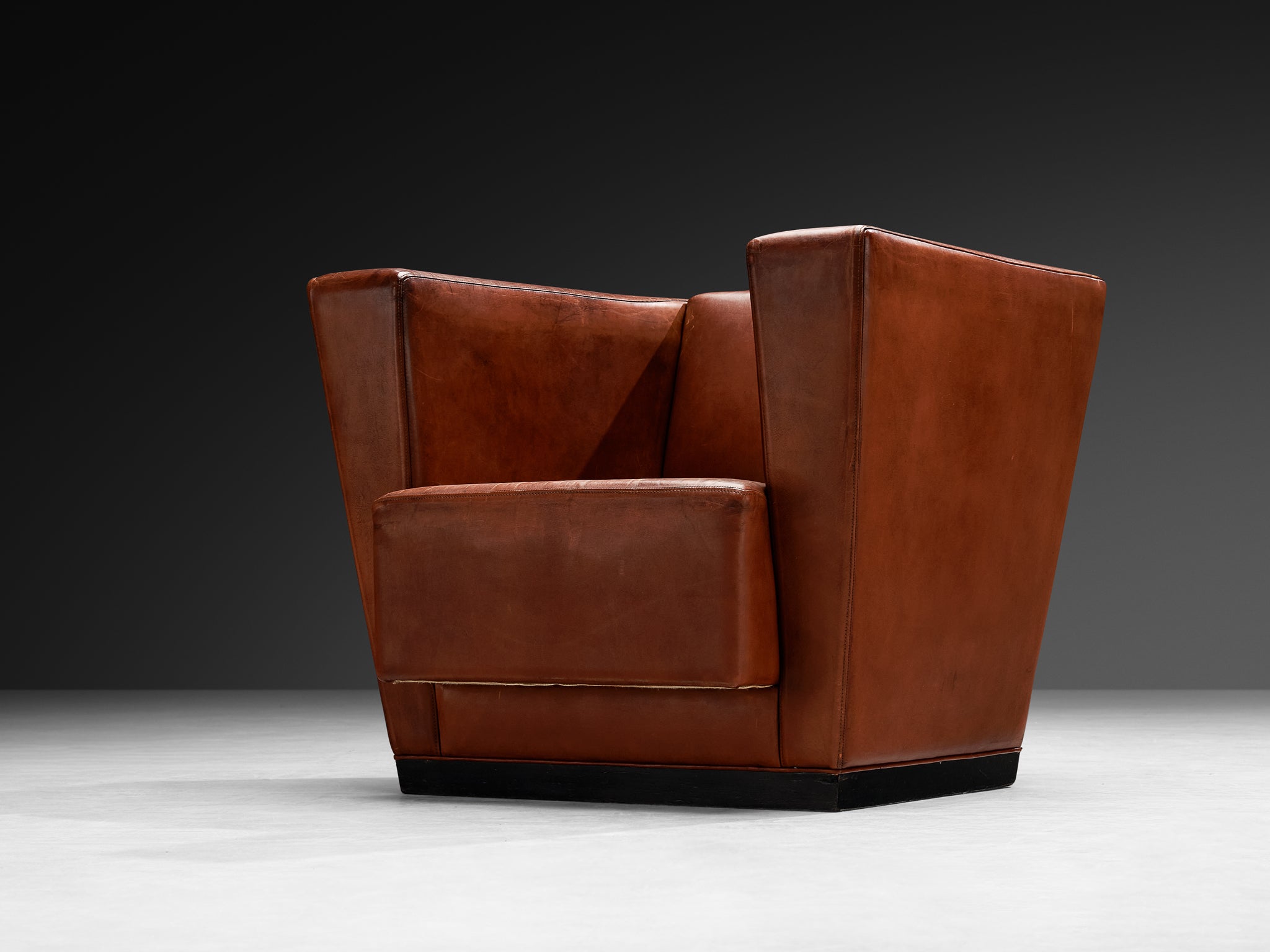
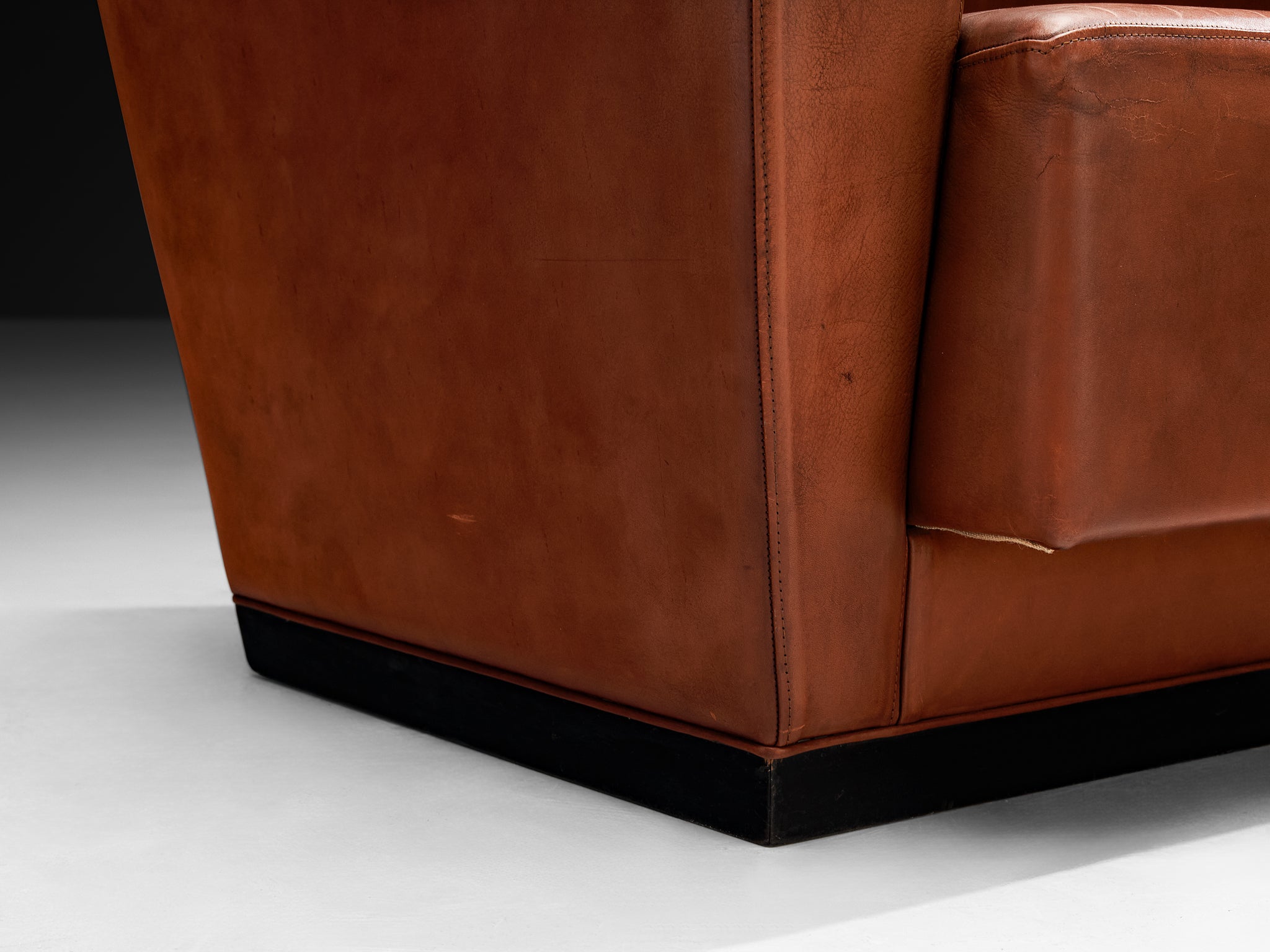
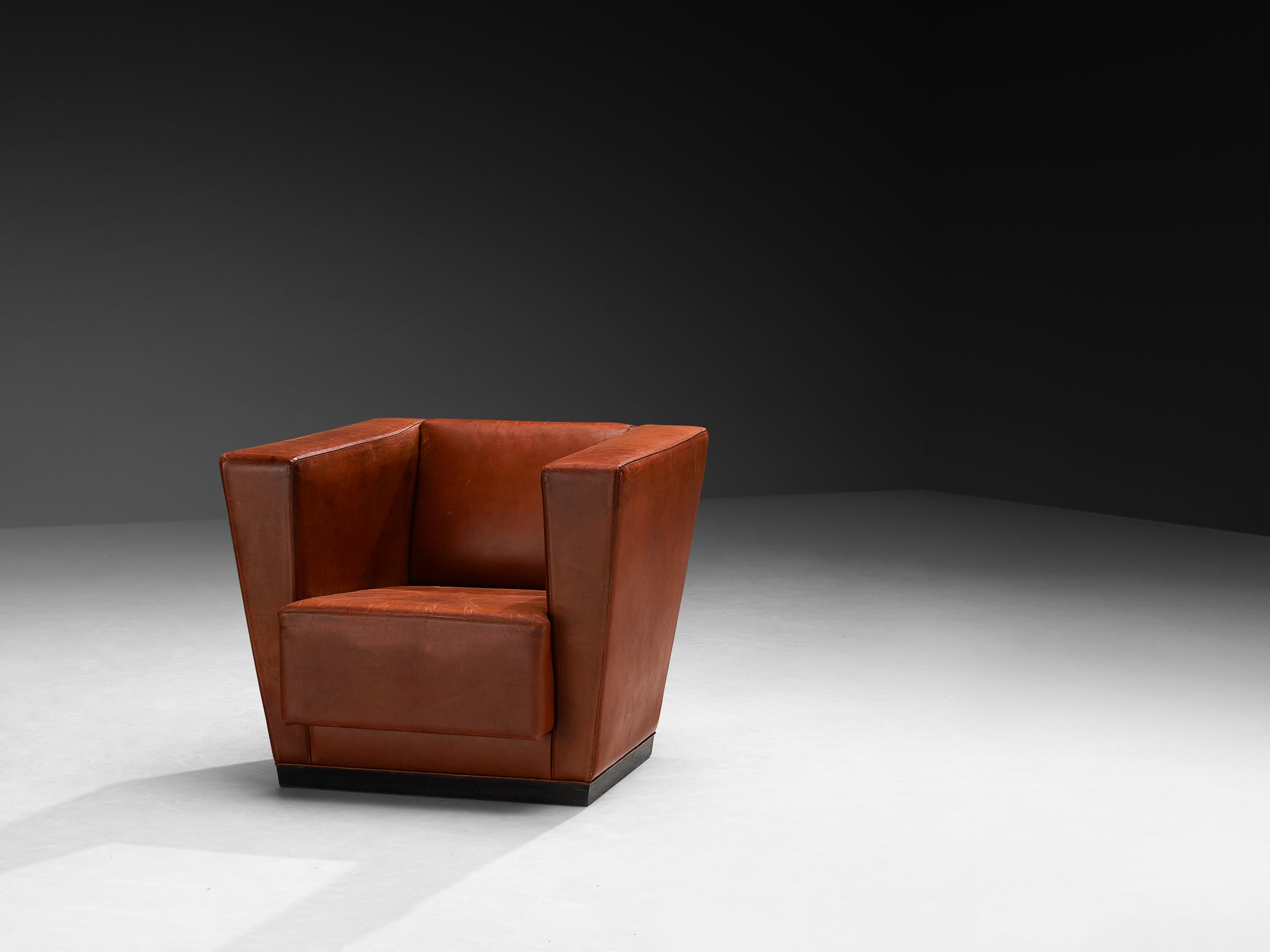
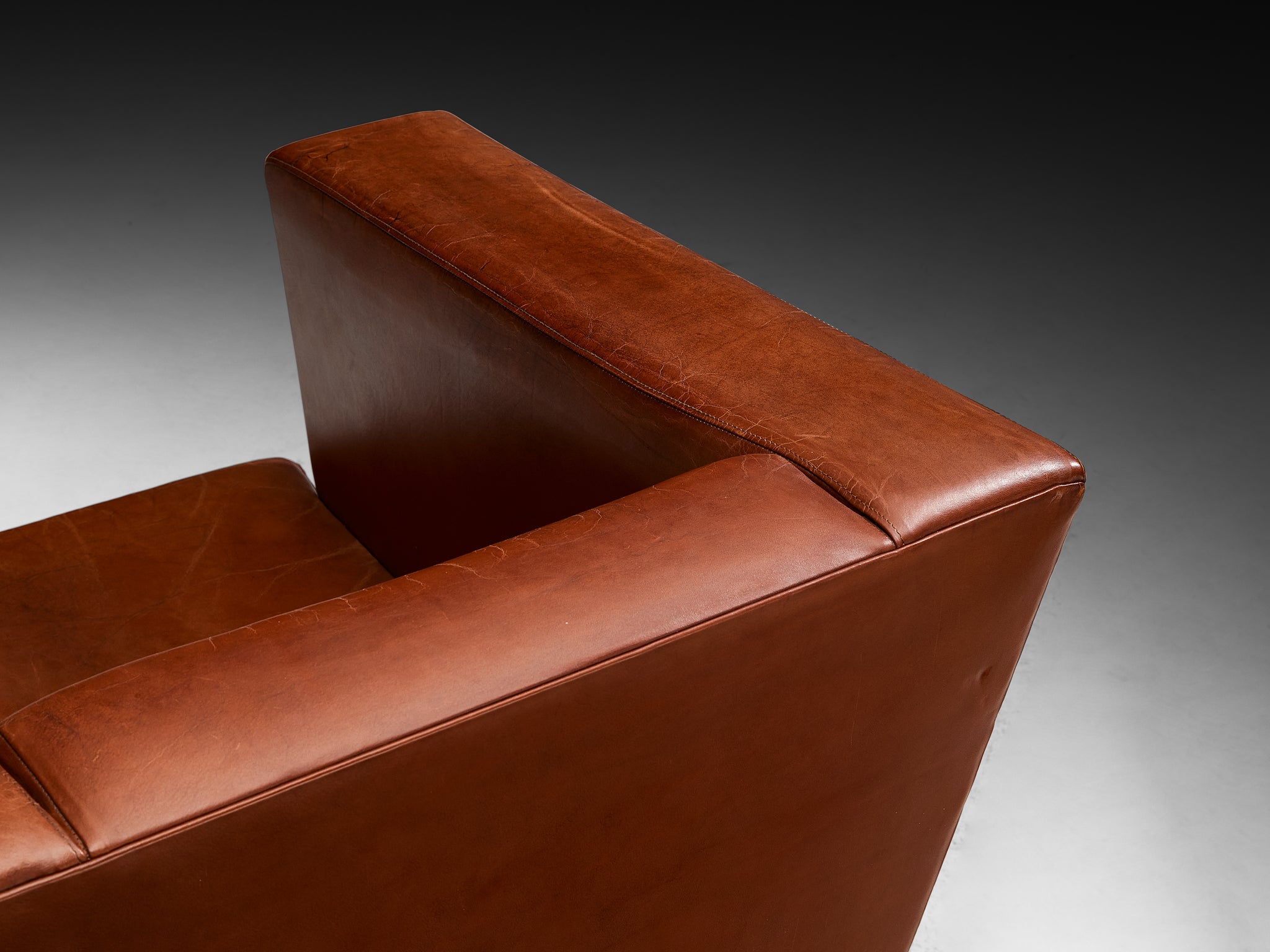
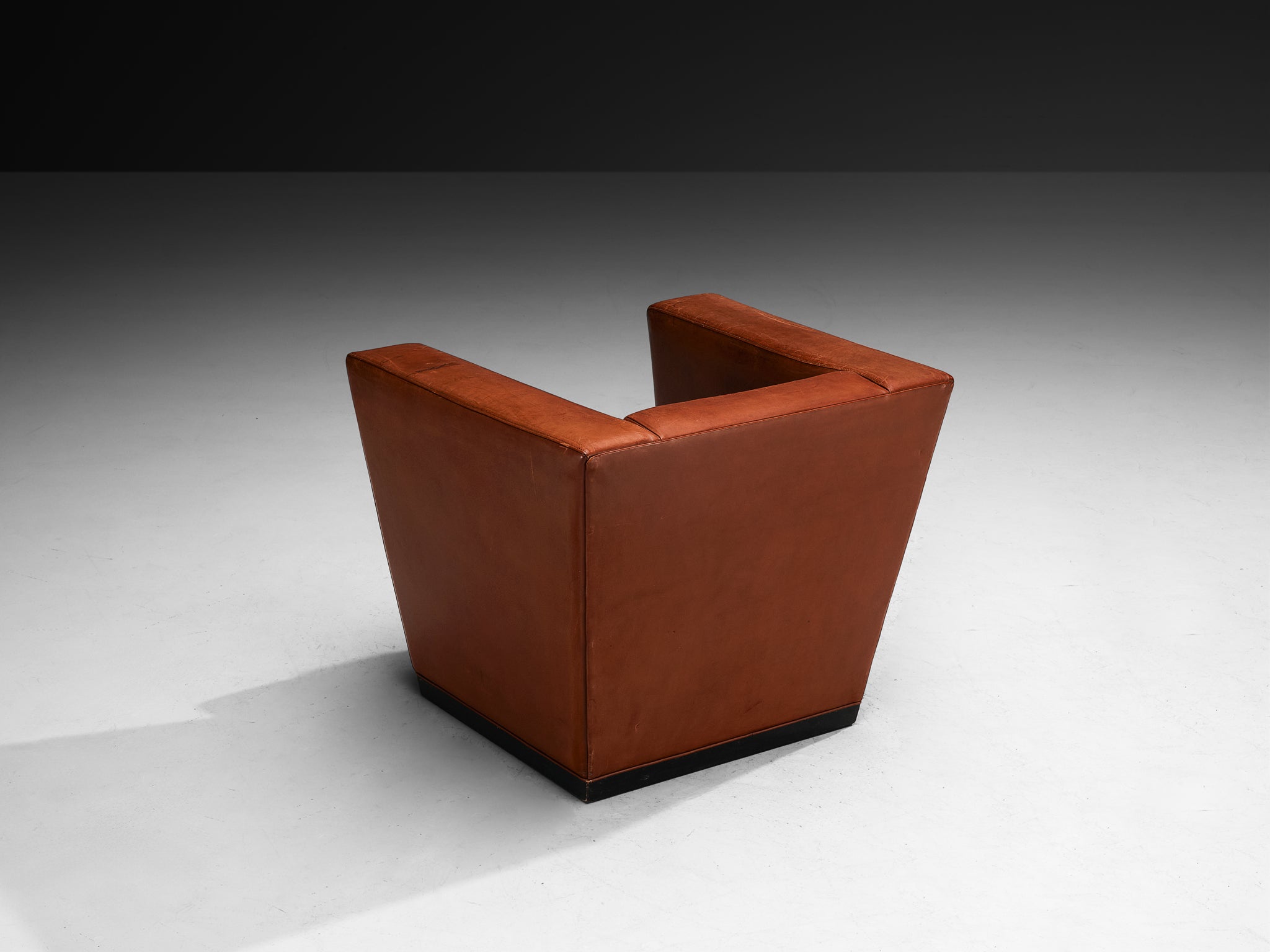
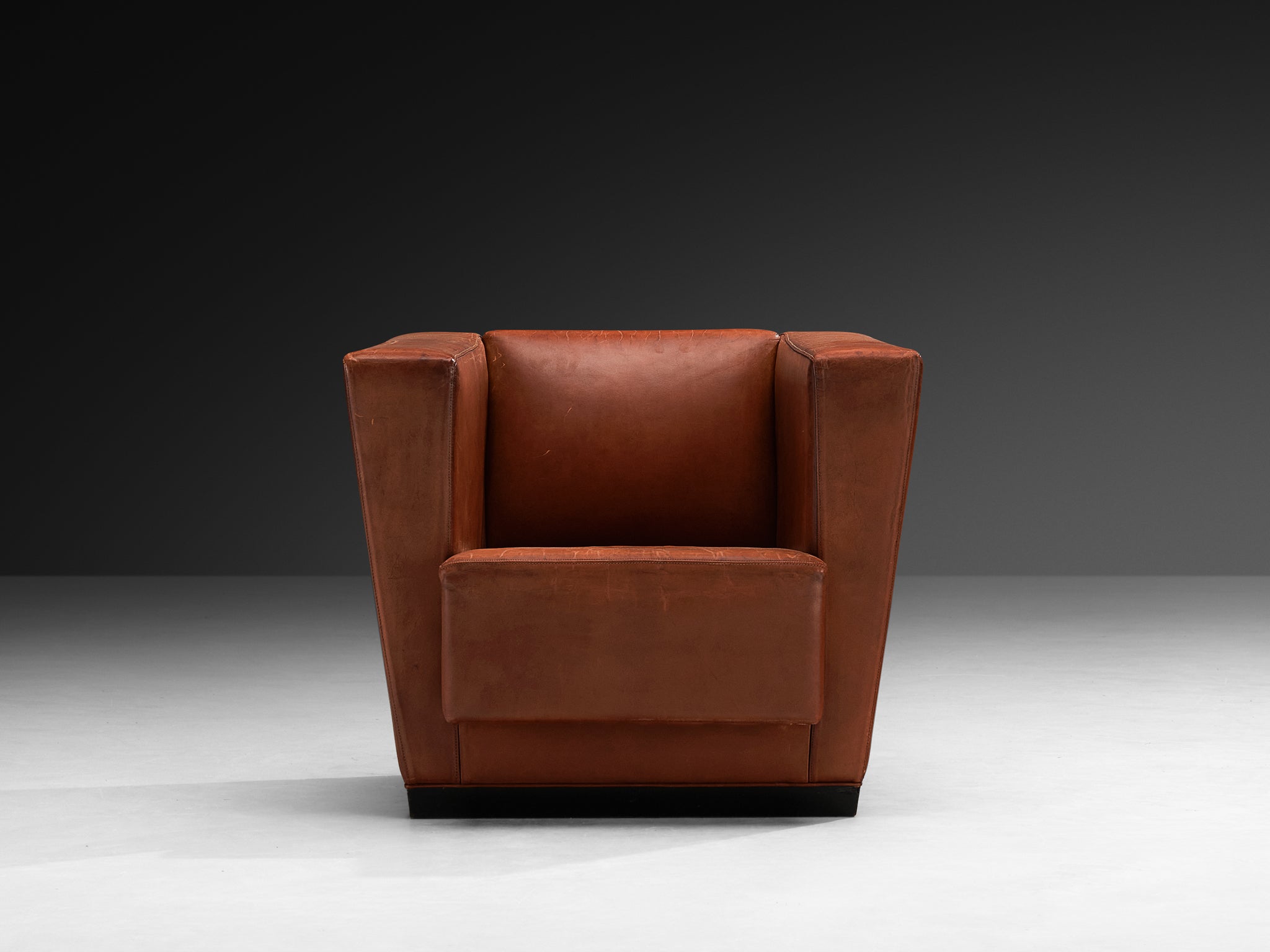
Rare lounge chair by Swedish designer Axel Einar Hjorth designed and manufactured in 1932 for Nordiska Kompaniet. What is striking about this design is the modern approach it expresses. Clearly leaving his more classical approach of previous designs behind, Hjorth here designed a chair that could not be more modern. In the time Hjorth was chief designer at Nordiska Kompaniet, he created a strong and cubic design free of any decorative details. Therefore, the patinated leather in red brown color embraces the purity of the shape. Backrest and armrests are on the same height and surround the sitter in a cozy way. A thick seat cushion which overlaps provides comfort. But this lounge chair is way more about proportions and detail in lines. Per example notice the slightly trapezoid shape the chair has when observed from all sides.
On the bottom of the wooden frame a metal plate of Nordiska Kompaniet is fixated with the engraved number R 36277 – C.
Axel Einar Hjorth was born on 7 March 1888 in Krokek, a small village in Östergötland, nearby Norrköping, Sweden. Due to a difficult youth and home situation, he was placed in a foster family from a young age. At the age of twenty, he decided to move to Stockholm, where he studied architecture and design at the Högre Konstindustriella Skolan (later known as the Konstfack) from 1908 to 1910. However, he dropped out of his studies after the death of his foster father who left no inheritance and started working as a furniture designer. Although he never graduated, he successfully established himself in the world of furniture design. The absence of a diploma did not hinder his career. During the 1920s, Hjorth designed for Stockholms Stads Hantverksförening (the Stockholm city crafts association) while also collaborating with Swedish furniture manufacturers, such as H. Joop & co, Jonssons, Myrstedt & Stern, Bodafors, and briefly for Nordiska Kompaniet under the architect Carl Bergsten (1879-1935).
A major milestone in his career came in October of 1927, when he was appointed chief architect and designer at Nordiska Kompaniet (NK), a prestigious department store and one of the leading producers of exclusive Scandinavian furniture. In that capacity, he designed both interiors and furniture collections. Furthermore, he represented Sweden at important international fairs and exhibitions, gaining fame and promoting contemporary Swedish design. Hjorth, along with Carl Malmsten (1888-1972) and Carl Hörvik (1882-1954), showcased their work at the Exhibition of Contemporary Swedish Decorative Arts at the Metropolitan Museum of Art in New York City. Two years later, he presented his Louis and Caesar series at the 1929 World Exhibition in Barcelona. The following year, under Nordiska Kompaniet, Hjorth participated at the Stockholm Exhibition of 1930. By the end of the 1920s, functionalism had begun to gain ground among progressive architects and designers in Sweden, a movement that would become dominant after exhibition. With over four million visitors, this landmark event introduced the general public to the aesthetics and social ambitions of modernism.
Eventually, in 1938, Hjorth left NK and opened his own shop and established an architectural and design studio in central Stockholm. In the late 1940s he accepted a position as chief designer at A.B. Svenska Kontorsmöbelfabriker (ASKI - Swedish Office Furniture Factory) for additional income, designing more modest, office-type furniture, working hand in hand with his private design practice until around the mid-1950s. Unfortunately, in 1959, Hjorth fell ill and died shortly after. Hjorth’s early work is characterized by a decorative, neoclassical style aligned with the Swedish Grace movement. He combined luxurious materials and fine craftsmanship with classical forms to create furniture for an exclusive clientele. At the same time, he began experimenting with more modernist and functionalist designs for a broader public.
Rare lounge chair by Swedish designer Axel Einar Hjorth designed and manufactured in 1932 for Nordiska Kompaniet. What is striking about this design is the modern approach it expresses. Clearly leaving his more classical approach of previous designs behind, Hjorth here designed a chair that could not be more modern. In the time Hjorth was chief designer at Nordiska Kompaniet, he created a strong and cubic design free of any decorative details. Therefore, the patinated leather in red brown color embraces the purity of the shape. Backrest and armrests are on the same height and surround the sitter in a cozy way. A thick seat cushion which overlaps provides comfort. But this lounge chair is way more about proportions and detail in lines. Per example notice the slightly trapezoid shape the chair has when observed from all sides.
On the bottom of the wooden frame a metal plate of Nordiska Kompaniet is fixated with the engraved number R 36277 – C.
Axel Einar Hjorth was born on 7 March 1888 in Krokek, a small village in Östergötland, nearby Norrköping, Sweden. Due to a difficult youth and home situation, he was placed in a foster family from a young age. At the age of twenty, he decided to move to Stockholm, where he studied architecture and design at the Högre Konstindustriella Skolan (later known as the Konstfack) from 1908 to 1910. However, he dropped out of his studies after the death of his foster father who left no inheritance and started working as a furniture designer. Although he never graduated, he successfully established himself in the world of furniture design. The absence of a diploma did not hinder his career. During the 1920s, Hjorth designed for Stockholms Stads Hantverksförening (the Stockholm city crafts association) while also collaborating with Swedish furniture manufacturers, such as H. Joop & co, Jonssons, Myrstedt & Stern, Bodafors, and briefly for Nordiska Kompaniet under the architect Carl Bergsten (1879-1935).
A major milestone in his career came in October of 1927, when he was appointed chief architect and designer at Nordiska Kompaniet (NK), a prestigious department store and one of the leading producers of exclusive Scandinavian furniture. In that capacity, he designed both interiors and furniture collections. Furthermore, he represented Sweden at important international fairs and exhibitions, gaining fame and promoting contemporary Swedish design. Hjorth, along with Carl Malmsten (1888-1972) and Carl Hörvik (1882-1954), showcased their work at the Exhibition of Contemporary Swedish Decorative Arts at the Metropolitan Museum of Art in New York City. Two years later, he presented his Louis and Caesar series at the 1929 World Exhibition in Barcelona. The following year, under Nordiska Kompaniet, Hjorth participated at the Stockholm Exhibition of 1930. By the end of the 1920s, functionalism had begun to gain ground among progressive architects and designers in Sweden, a movement that would become dominant after exhibition. With over four million visitors, this landmark event introduced the general public to the aesthetics and social ambitions of modernism.
Eventually, in 1938, Hjorth left NK and opened his own shop and established an architectural and design studio in central Stockholm. In the late 1940s he accepted a position as chief designer at A.B. Svenska Kontorsmöbelfabriker (ASKI - Swedish Office Furniture Factory) for additional income, designing more modest, office-type furniture, working hand in hand with his private design practice until around the mid-1950s. Unfortunately, in 1959, Hjorth fell ill and died shortly after. Hjorth’s early work is characterized by a decorative, neoclassical style aligned with the Swedish Grace movement. He combined luxurious materials and fine craftsmanship with classical forms to create furniture for an exclusive clientele. At the same time, he began experimenting with more modernist and functionalist designs for a broader public.

Choose options
Rare Axel Einar Hjorth ‘Lido’ Lounge Chair in Patinated Leather
Sale price$22,000.00
Regular price
Tearsheet
×
Receive a copy in your email or download directly:
I accept emails from Morentz.
Product Details
VAT within the EU: When buying or delivering an item within the EU, VAT usually applies and will be added.