
Pietro Chiesa for Fontana Arte '1098' Floor Lamp
Tearsheet
×
Receive a copy in your email or download directly:
I accept emails from Morentz.
 Open here
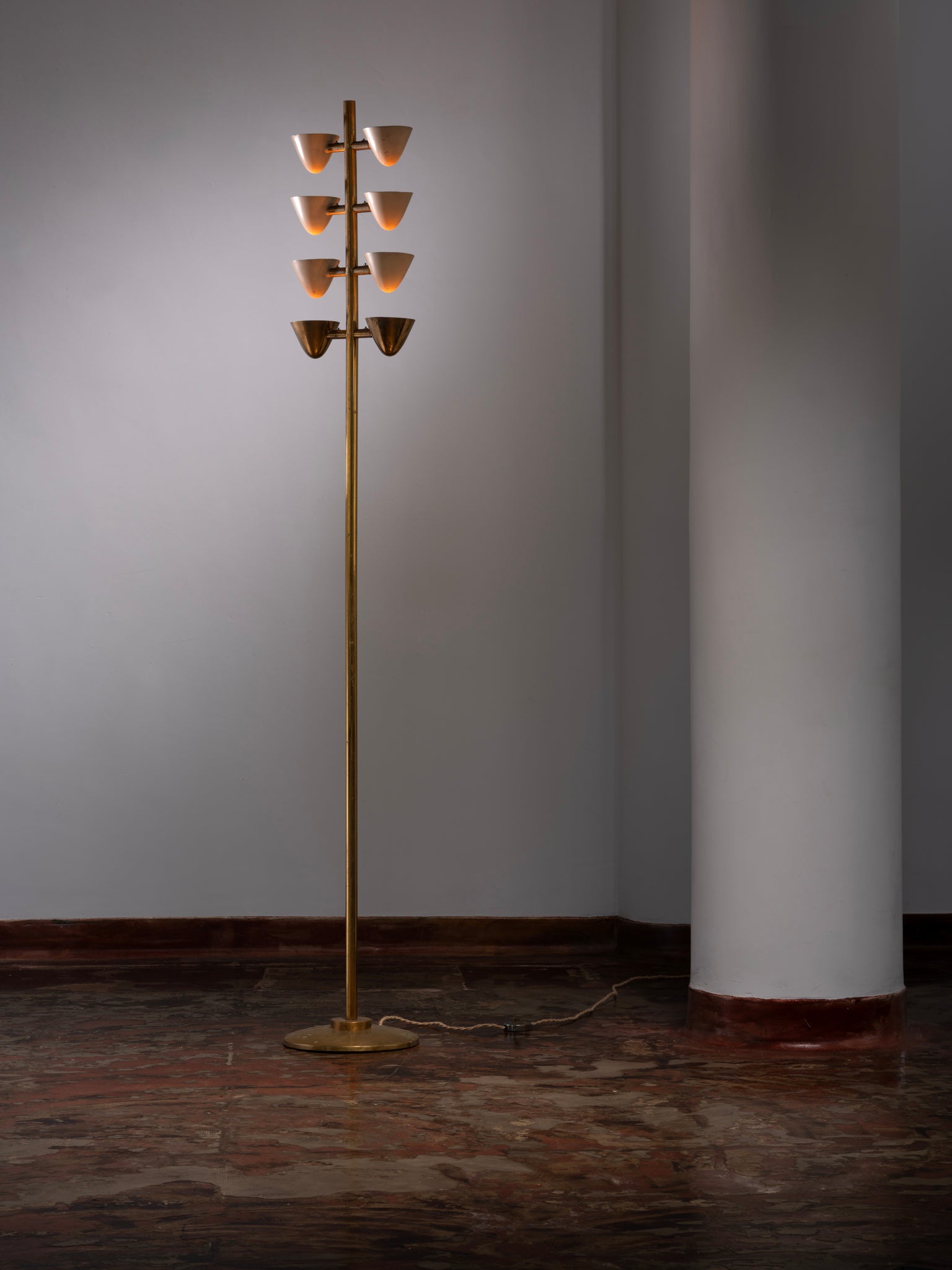
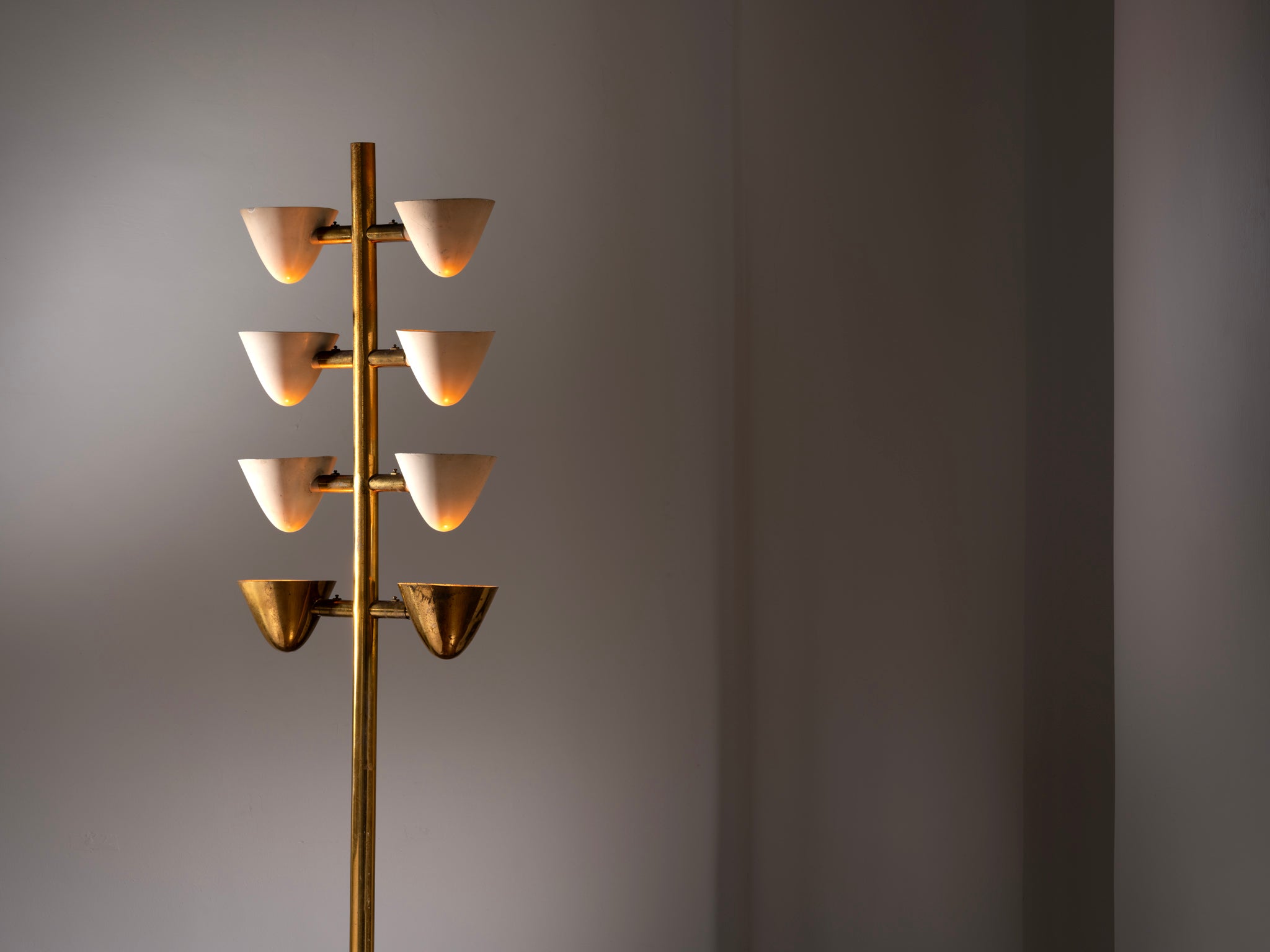
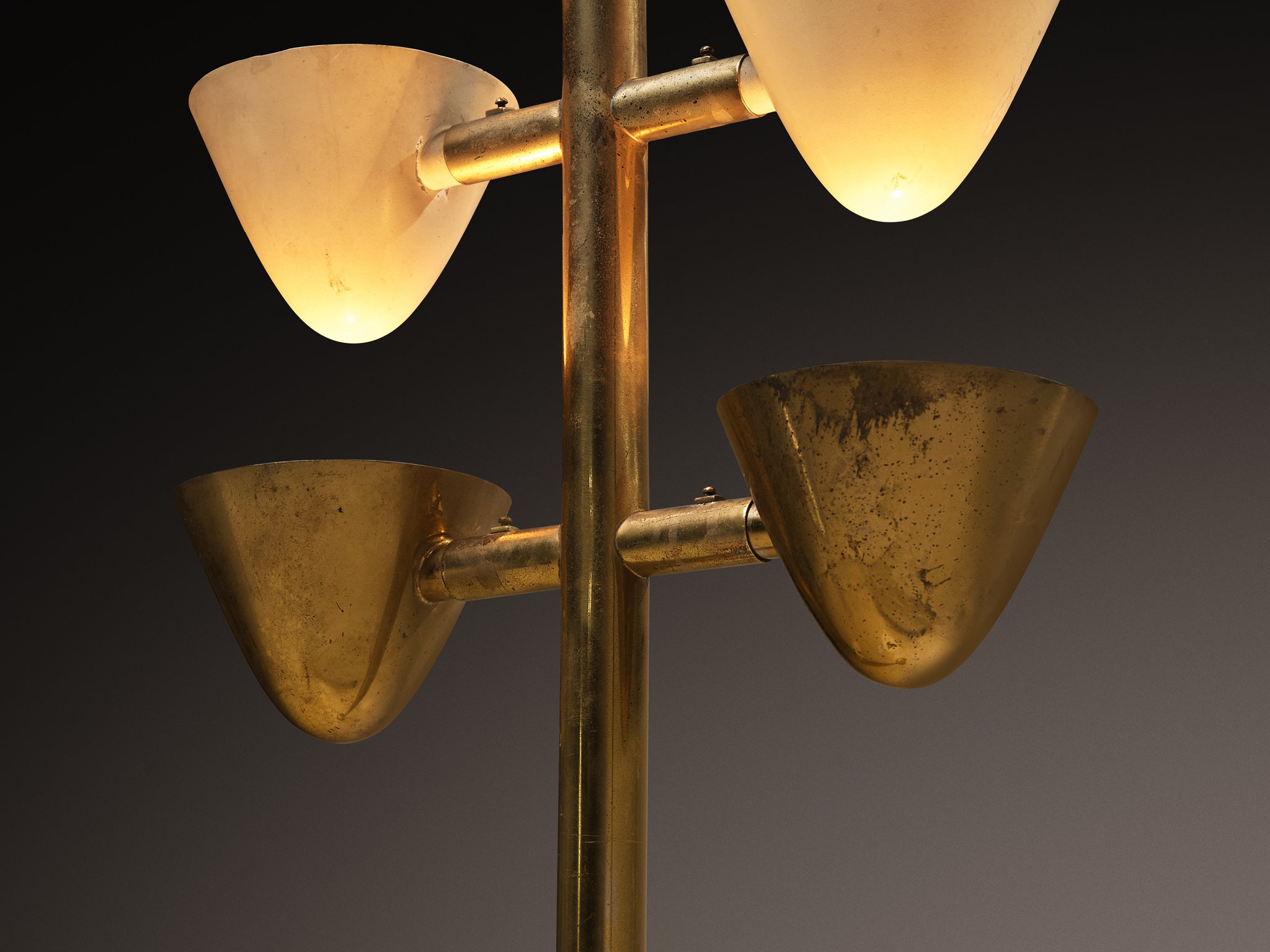
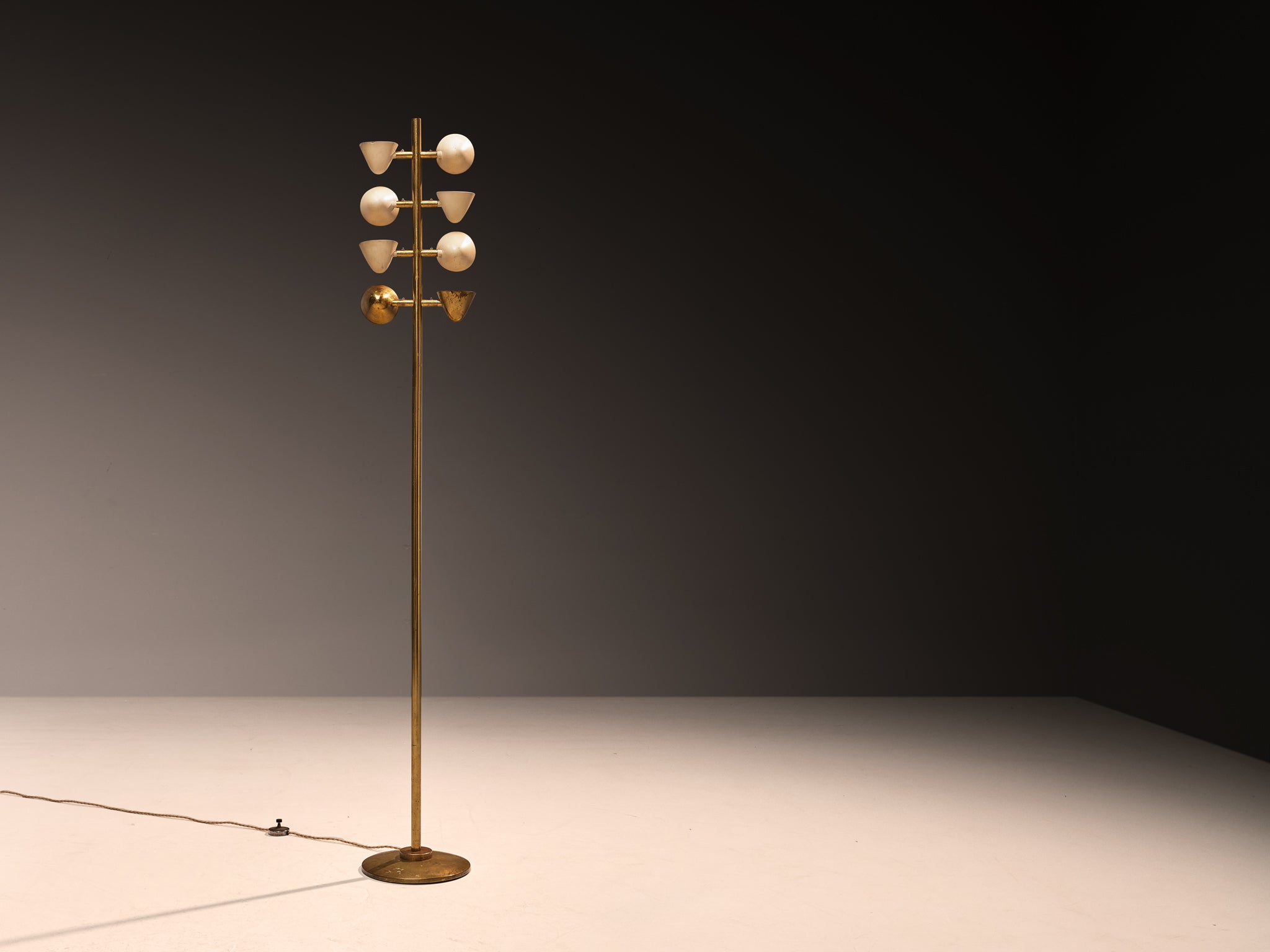
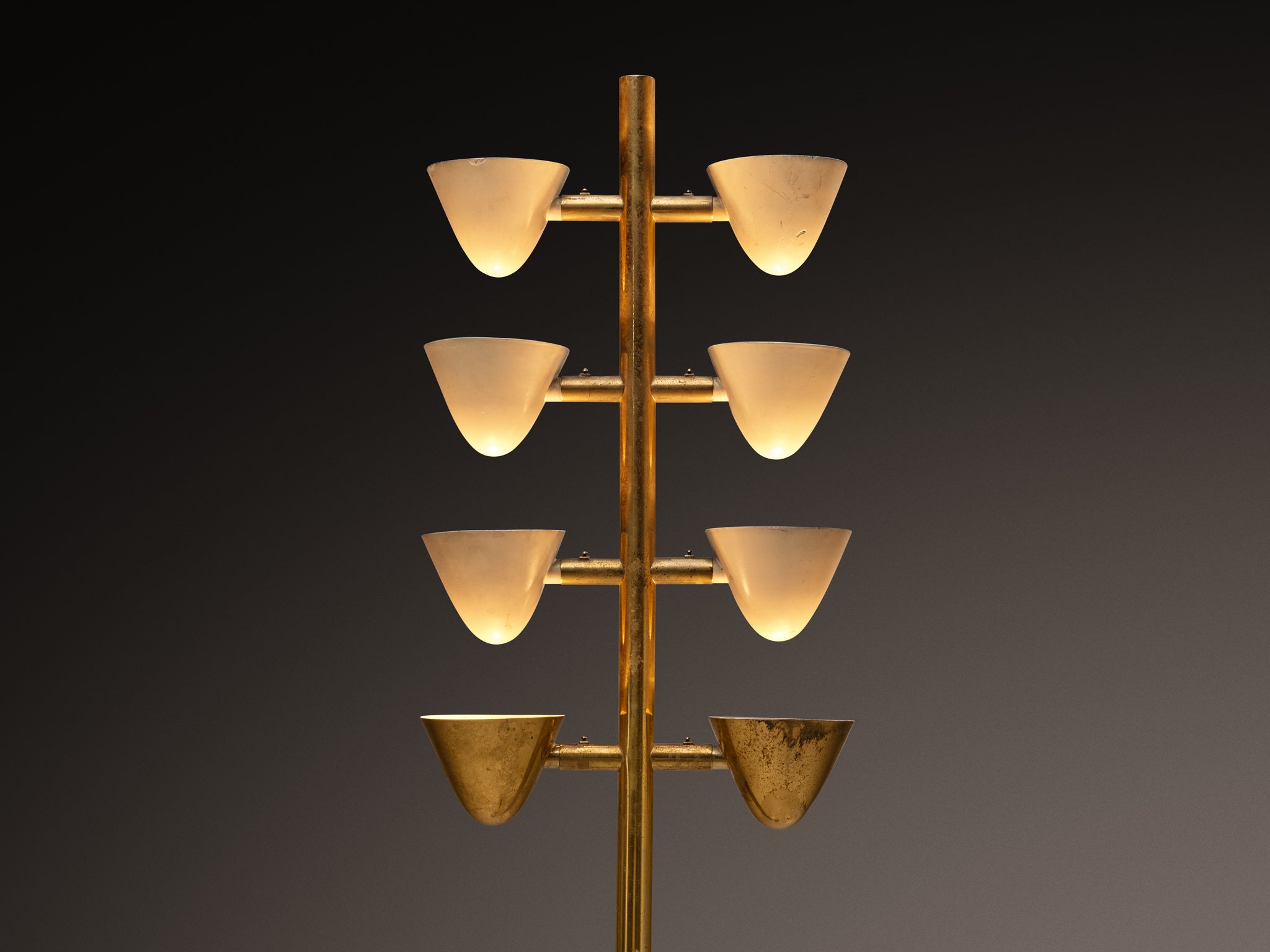
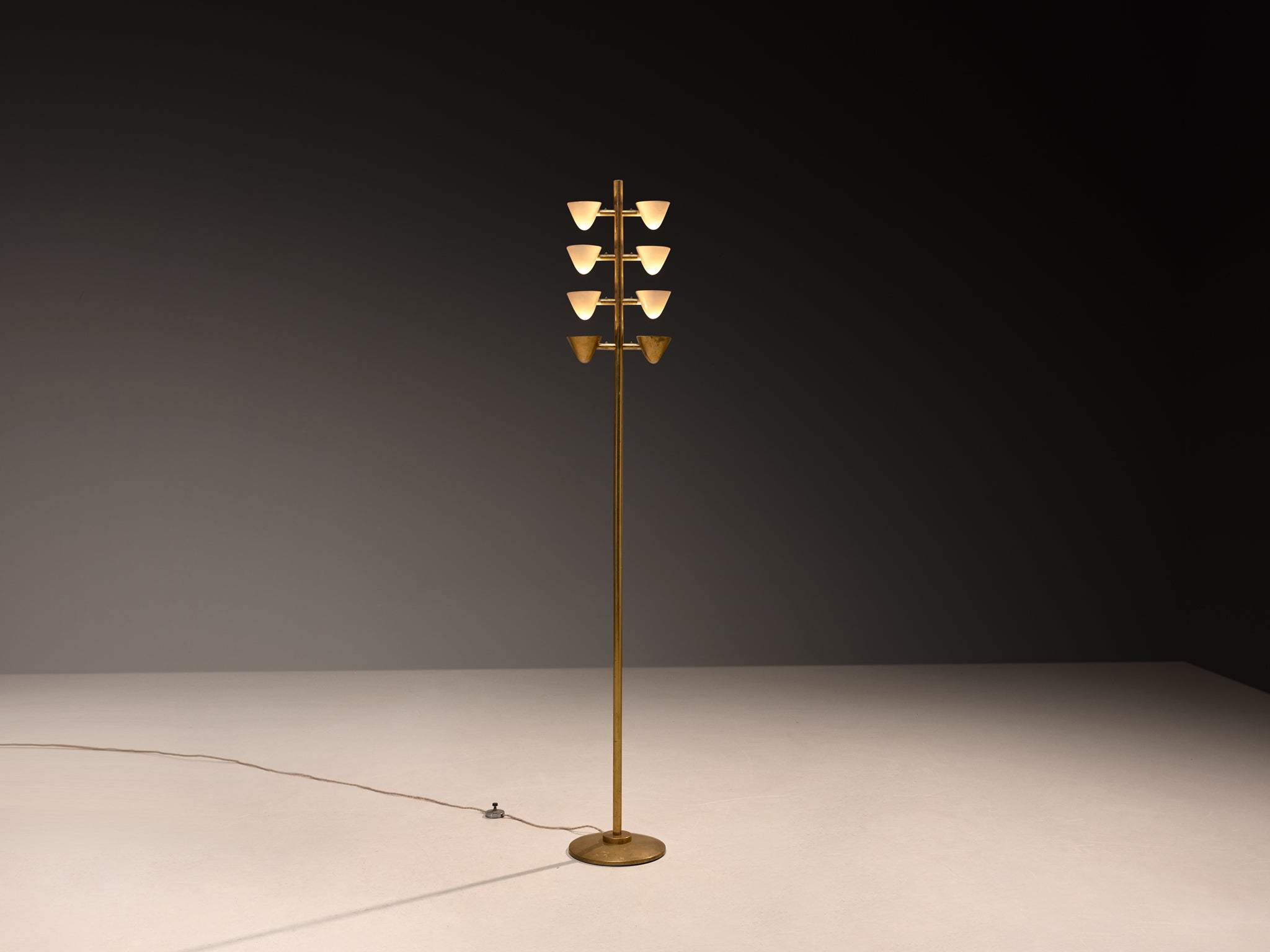
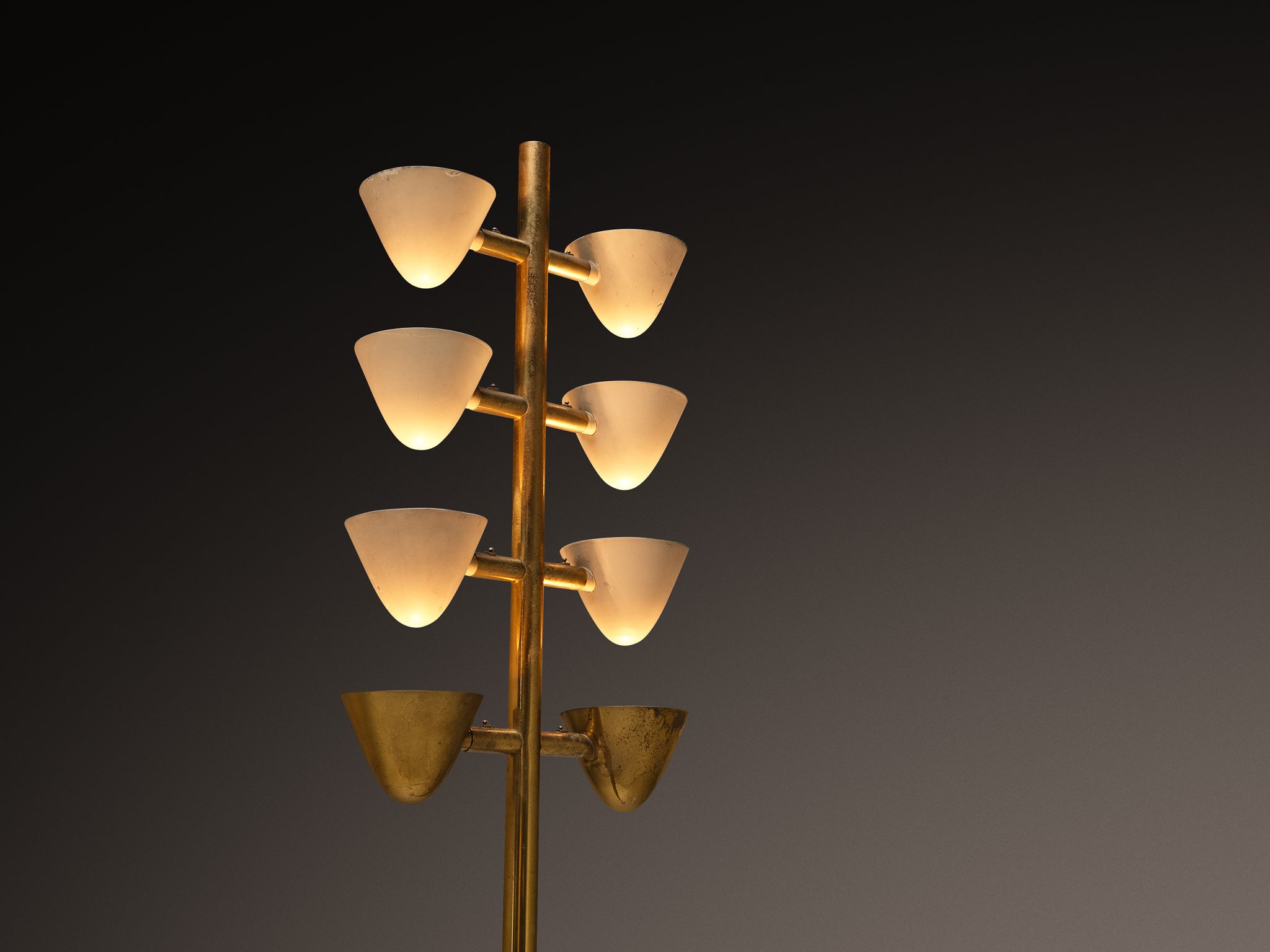
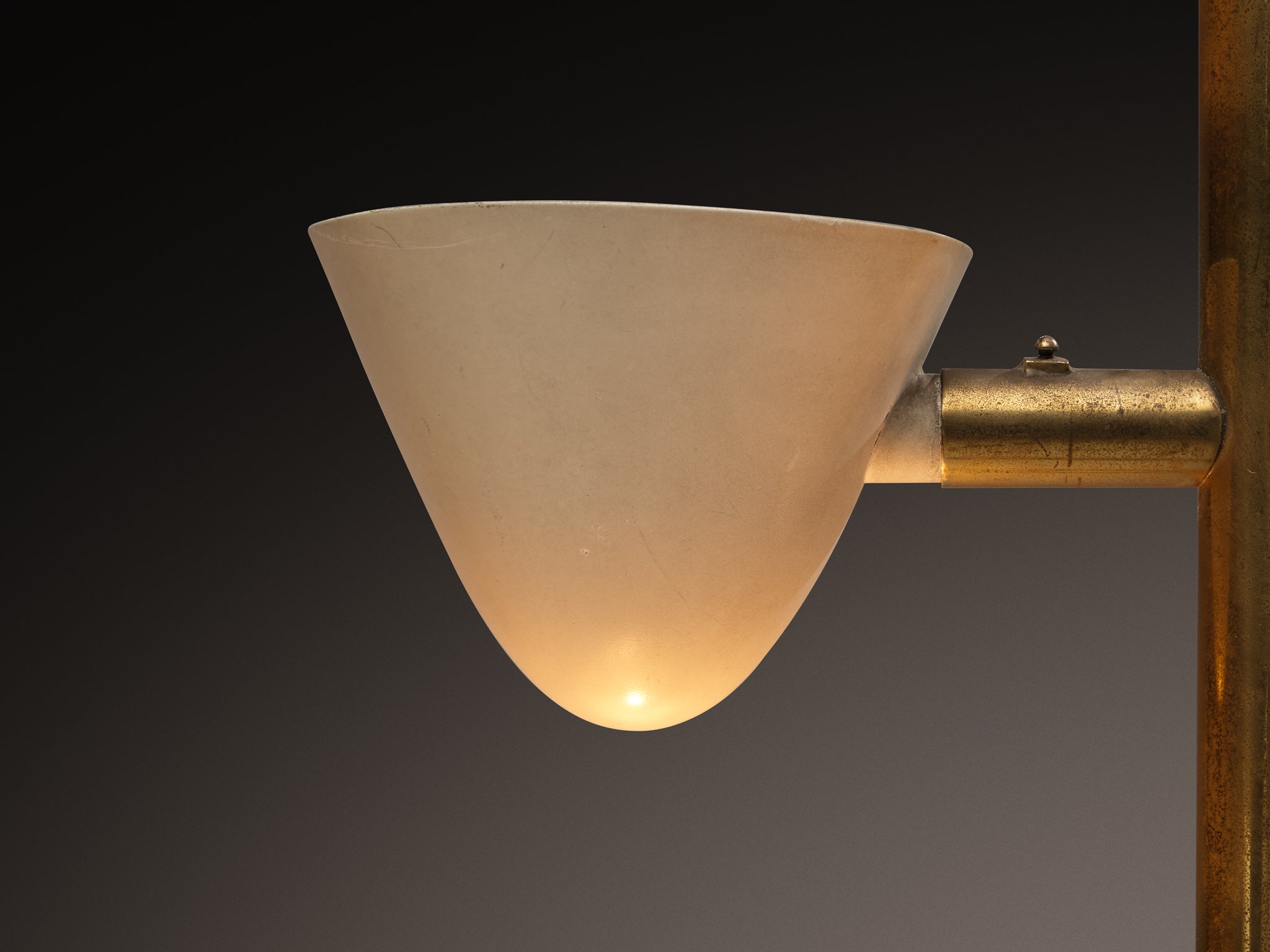
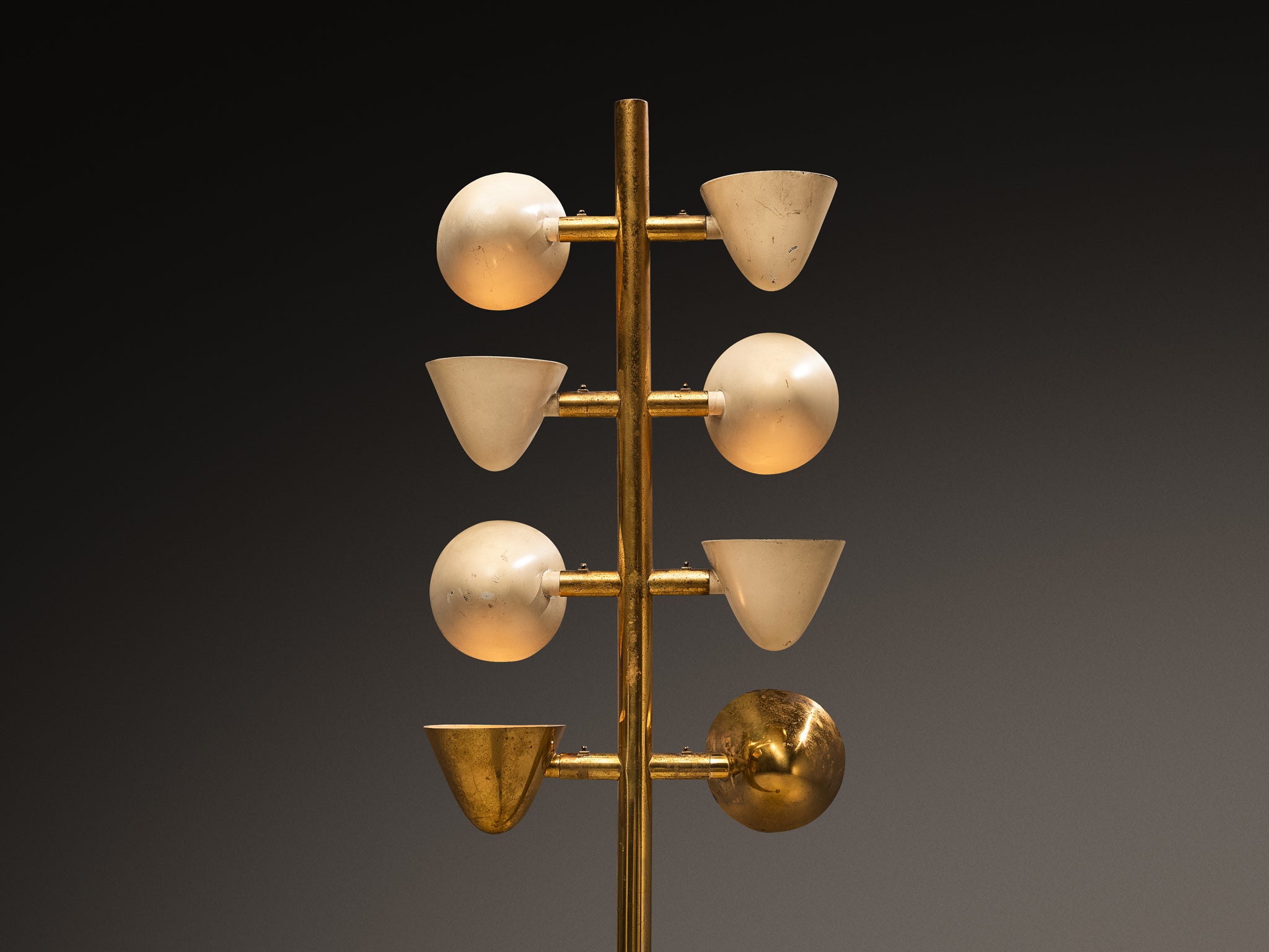
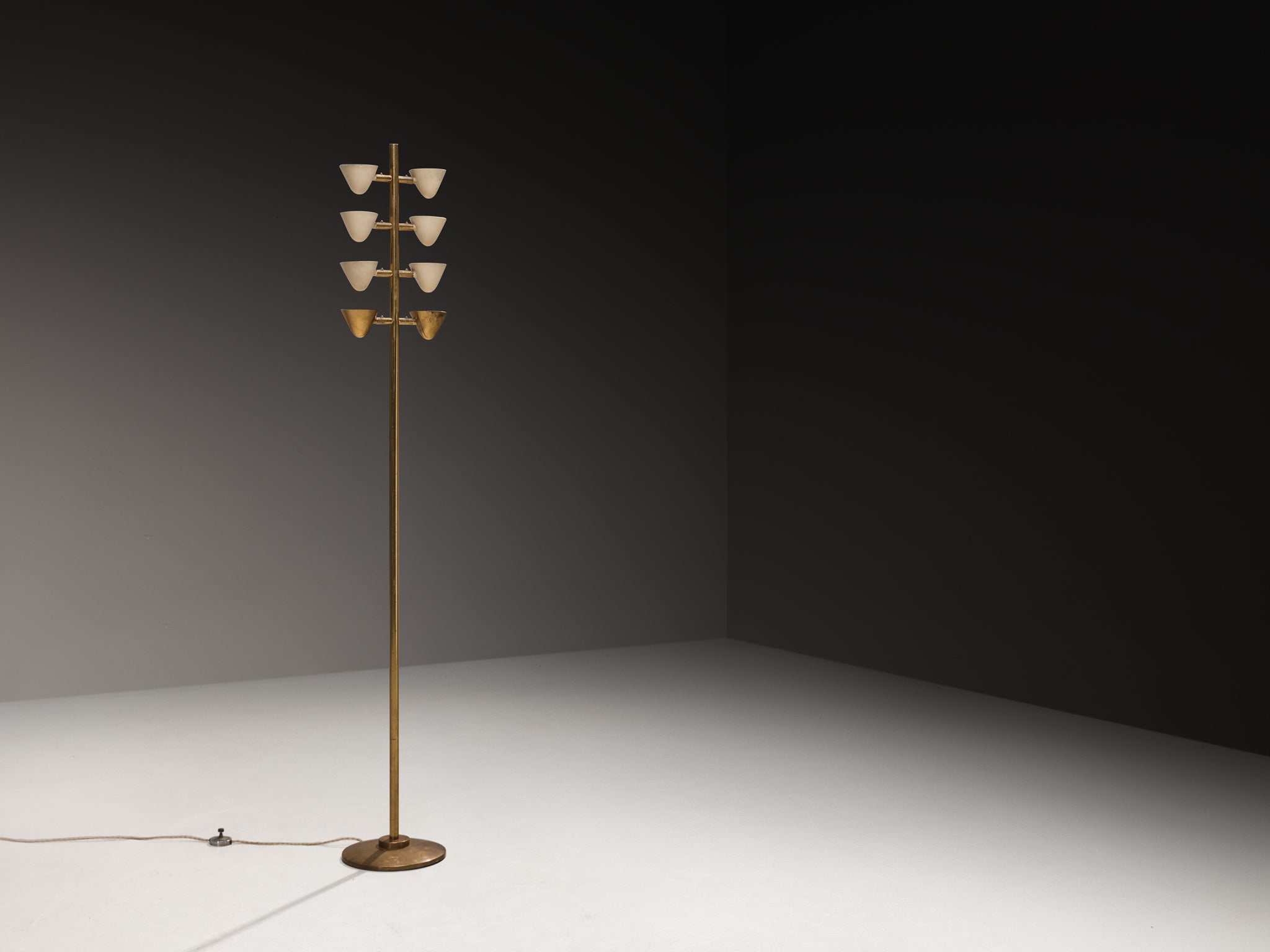
Pietro Chiesa for Fontana Arte, floor lamp, model '1098', brass, lacquered aluminum, Italy, 1938
A Lamp Praised by Ponti
This floor lamp was designed by Pietro Chiesa in 1938, the co-founder and artistic director of Fontana Arte. Considered one of his most recognizable and important works, it was documented several times in Domus. The lamp so impressed Gio Ponti that he described it as an object of unparalleled radiating perfection and purity.
A Composition of Light and Form
A slender rod rises from a round base and holds conical shades that resemble bellflowers. Each shade can be repositioned interchangeably, allowing the lamp to create either indirect or direct light while playing with its geometric composition.
From Law Student to Master Craftsman
Born into a family with strong artistic roots, Pietro Chiesa initially received little encouragement from his father to pursue a career in the arts and therefore studied law. After the First World War, however, he decided to follow his true passion. Despite his father’s objections and with no formal artistic training, Chiesa began an apprenticeship in 1919 at the workshops of Giovan Battista Gianotti, specializing in cabinet-making and stained glass.
During these formative years he developed a deep fascination for glass and wood, exploring both materials in their most refined and expressive applications while learning the craftsmanship required to achieve exceptional quality. After several years of training, and confident in his own abilities, he established his own workshop in 1921: the Bottega di Pietro Chiesa. There he worked alongside a group of highly skilled craftsmen who would remain collaborators for many years and would later join him in the creation of Fontana Arte.
The Making of Fontana Arte
Following the merger between Luigi Fontana SA and Chiesa’s bottega, Fontana Arte was formed, with both Chiesa and Ponti as artistic directors. Together they introduced some of the most significant and innovative developments in modern lighting design. During this period Chiesa created numerous lighting models that combined technical mastery with a distinctive sculptural elegance.
The 1098 floor lamp was exhibited at the landmark Decorative Arts Exhibition held in Buenos Aires in 1938, a pivotal event in the international promotion of Italian applied arts. Pietro Chiesa was responsible not only for Fontana Arte's displays but the entire Italian section, creating exhibition spaces celebrated for their restraint and elegance. The exhibition became one of the most significant moments in Fontana Arte's early history and contributed greatly to the growing international recognition of modern Italian design.
A Designer of Modern Interiors
Alongside his role at Fontana Arte, Chiesa was also highly regarded as an interior designer. He collaborated with leading architectural studios on prestigious commissions for public buildings, corporate headquarters, and refined private residences. His work also included designing furnishings for Italian embassies in cities such as Berlin, Lisbon, and Stockholm.
About Fontana Arte (1932)
Fontana Arte played a significant role in the development of applied arts in the 20th century, not just in Italy but internationally. Through its innovative use of crystal in lighting and furniture design, the company became a leading force in the field over the course of three decades. This success was driven by a fusion of modern design principles and outstanding craftsmanship. At the heart of its evolution were three artistic directors – Gio Ponti, Pietro Chiesa, and Max Ingrand – whose leadership played a significant role in shaping Fontana Arte’s creative vision and long-lasting influence on the industry.
The origins of Fontana Arte can be traced back to 1881, when the 27-year-old Milanese Luigi Fontana (1892-1948) established Luigi Fontana & C., a glass manufacturing company in Milan. Initially, the firm specialized in plate glass and construction materials. It supplied both functional and decorative glass elements for architectural and interior design applications. In addition to selling glass sheets, the company expanded its operations to include cutting, grinding, silvering, decorating, and binding. These processes had previously been outsourced abroad, as there were no highly specialized firms in Italy at the time capable of carrying out such work. As a result, the company quickly established itself as a leading force in industrial glass production.
A pivotal moment in the company's history occurred in 1930, when Luigi Fontana formed a partnership with the esteemed architect and designer Gio Ponti (1897-1979). Recognized as a visionary in architecture, as well as in the decorative and applied arts, Ponti sought to expand the role of glass beyond its traditional utilitarian functions. Under the brand Luigi Fontana SA, the company began producing its first collections of light fixtures and furniture. In 1932, further transformation took place with the acquisition of Bottega, a small Milanese artisan workshop founded by Pietro Chiesa, primarily known for the production of artistic stained glass. This acquisition, coupled with Ponti’s artistic leadership, led to the official establishment of Fontana Arte as a design-focused subsidiary that would elevate glass to an artistic and functional medium.
The collaboration between Gio Ponti, Pietro Chiesa, and Luigi Fontana fostered an extraordinary synergy, positioning Fontana Arte as a pioneering force in avant-garde design. The company became a rare example of a design-driven enterprise where highly skilled artisans and visionary designers worked in unison to produce an extensive range of objects, including furniture, mirrors, portrait frames, decorative boxes, sculptures, and stained-glass windows. Fontana Arte distinguished itself particularly in the field of lighting design, where it seamlessly integrated rationalist principles with innovative glassworking techniques. This fusion of artistic vision and technical mastery resulted in exceptional, forward-thinking creations that redefined the aesthetic and functional possibilities of glass in modern design.
Within a decade, Fontana Arte had established itself as a global leader in the production of high-quality glass objects. However, despite its international acclaim and significant commercial success, the company's profitability was constrained by the exceptionally high costs associated with its artistic production processes.
The outbreak of World War II brought further challenges, leading to a severe disruption in manufacturing. The economic and material constraints imposed by the war resulted in a dramatic decline in glass sales, with sales coming to a near standstill.
Fontana Arte was born from the creative vision of Ponti and Chiesa, initially producing unique, one-off pieces. Their commercial success led the company to transition from artisanal to semi-industrial production while maintaining exceptional – though costly – quality standards. As the market evolved and retail stores multiplied, demand shifted toward repeatable designs, which were easier to sell than the exclusive one-offs of the past.
Following the unexpected death of Pietro Chiesa in 1948, who had served as artistic director since 1934, Fontana Arte struggled to find a suitable successor. After several unsuccessful attempts, Gio Ponti proposed the acclaimed French glassmaker and decorator Max Ingrand (1908-1969) for the role in 1954. Ingrand was an ideal choice, sharing Chiesa’s background in formal training and expertise in art glass, along with a deep appreciation for fine craftsmanship and a keen interest in all aspects of lighting design; still the driving force behind the Milan-based company.
A close examination of the first designs introduced under Ingrand’s direction reveals a clear evolution in style. While remaining faithful to Fontana Arte’s legacy, his work showcased a masterful fusion of metal and glass, along with a refined artistry that reflected the era’s emerging aesthetic trends. His innovative approach brought a fresh dynamism to the brand, marking the end of a distinct chapter in Fontana Arte’s history – one that had been largely shaped by the influences of Gio Ponti and Pietro Chiesa.
In 1967, Max Ingrand's tenure as artistic director came to an end, and Gio Ponti briefly resumed the role. However, conflicts arose when company leadership shifted its focus toward mass-market appeal, a direction Ponti saw as a betrayal of its long-standing commitment to excellence and innovation. As a result, he chose to sever all ties with the brand. Following Ingrand’s departure, Fontana Arte underwent several transformations, evolving from his signature decorative modernist aesthetic to a postmodern approach under Gae Aulenti, who became artistic director in 1979. Over the years, the company further embraced contemporary, minimalist, and high-tech innovations in both lighting and furniture. Despite these changes, the company continues to honor its legacy of glass artistry and Italian craftsmanship, solidifying its status as a global leader in luxury lighting design.
A Lamp Praised by Ponti
This floor lamp was designed by Pietro Chiesa in 1938, the co-founder and artistic director of Fontana Arte. Considered one of his most recognizable and important works, it was documented several times in Domus. The lamp so impressed Gio Ponti that he described it as an object of unparalleled radiating perfection and purity.
A Composition of Light and Form
A slender rod rises from a round base and holds conical shades that resemble bellflowers. Each shade can be repositioned interchangeably, allowing the lamp to create either indirect or direct light while playing with its geometric composition.
From Law Student to Master Craftsman
Born into a family with strong artistic roots, Pietro Chiesa initially received little encouragement from his father to pursue a career in the arts and therefore studied law. After the First World War, however, he decided to follow his true passion. Despite his father’s objections and with no formal artistic training, Chiesa began an apprenticeship in 1919 at the workshops of Giovan Battista Gianotti, specializing in cabinet-making and stained glass.
During these formative years he developed a deep fascination for glass and wood, exploring both materials in their most refined and expressive applications while learning the craftsmanship required to achieve exceptional quality. After several years of training, and confident in his own abilities, he established his own workshop in 1921: the Bottega di Pietro Chiesa. There he worked alongside a group of highly skilled craftsmen who would remain collaborators for many years and would later join him in the creation of Fontana Arte.
The Making of Fontana Arte
Following the merger between Luigi Fontana SA and Chiesa’s bottega, Fontana Arte was formed, with both Chiesa and Ponti as artistic directors. Together they introduced some of the most significant and innovative developments in modern lighting design. During this period Chiesa created numerous lighting models that combined technical mastery with a distinctive sculptural elegance.
The 1098 floor lamp was exhibited at the landmark Decorative Arts Exhibition held in Buenos Aires in 1938, a pivotal event in the international promotion of Italian applied arts. Pietro Chiesa was responsible not only for Fontana Arte's displays but the entire Italian section, creating exhibition spaces celebrated for their restraint and elegance. The exhibition became one of the most significant moments in Fontana Arte's early history and contributed greatly to the growing international recognition of modern Italian design.
A Designer of Modern Interiors
Alongside his role at Fontana Arte, Chiesa was also highly regarded as an interior designer. He collaborated with leading architectural studios on prestigious commissions for public buildings, corporate headquarters, and refined private residences. His work also included designing furnishings for Italian embassies in cities such as Berlin, Lisbon, and Stockholm.
About Fontana Arte (1932)
Fontana Arte played a significant role in the development of applied arts in the 20th century, not just in Italy but internationally. Through its innovative use of crystal in lighting and furniture design, the company became a leading force in the field over the course of three decades. This success was driven by a fusion of modern design principles and outstanding craftsmanship. At the heart of its evolution were three artistic directors – Gio Ponti, Pietro Chiesa, and Max Ingrand – whose leadership played a significant role in shaping Fontana Arte’s creative vision and long-lasting influence on the industry.
The origins of Fontana Arte can be traced back to 1881, when the 27-year-old Milanese Luigi Fontana (1892-1948) established Luigi Fontana & C., a glass manufacturing company in Milan. Initially, the firm specialized in plate glass and construction materials. It supplied both functional and decorative glass elements for architectural and interior design applications. In addition to selling glass sheets, the company expanded its operations to include cutting, grinding, silvering, decorating, and binding. These processes had previously been outsourced abroad, as there were no highly specialized firms in Italy at the time capable of carrying out such work. As a result, the company quickly established itself as a leading force in industrial glass production.
A pivotal moment in the company's history occurred in 1930, when Luigi Fontana formed a partnership with the esteemed architect and designer Gio Ponti (1897-1979). Recognized as a visionary in architecture, as well as in the decorative and applied arts, Ponti sought to expand the role of glass beyond its traditional utilitarian functions. Under the brand Luigi Fontana SA, the company began producing its first collections of light fixtures and furniture. In 1932, further transformation took place with the acquisition of Bottega, a small Milanese artisan workshop founded by Pietro Chiesa, primarily known for the production of artistic stained glass. This acquisition, coupled with Ponti’s artistic leadership, led to the official establishment of Fontana Arte as a design-focused subsidiary that would elevate glass to an artistic and functional medium.
The collaboration between Gio Ponti, Pietro Chiesa, and Luigi Fontana fostered an extraordinary synergy, positioning Fontana Arte as a pioneering force in avant-garde design. The company became a rare example of a design-driven enterprise where highly skilled artisans and visionary designers worked in unison to produce an extensive range of objects, including furniture, mirrors, portrait frames, decorative boxes, sculptures, and stained-glass windows. Fontana Arte distinguished itself particularly in the field of lighting design, where it seamlessly integrated rationalist principles with innovative glassworking techniques. This fusion of artistic vision and technical mastery resulted in exceptional, forward-thinking creations that redefined the aesthetic and functional possibilities of glass in modern design.
Within a decade, Fontana Arte had established itself as a global leader in the production of high-quality glass objects. However, despite its international acclaim and significant commercial success, the company's profitability was constrained by the exceptionally high costs associated with its artistic production processes.
The outbreak of World War II brought further challenges, leading to a severe disruption in manufacturing. The economic and material constraints imposed by the war resulted in a dramatic decline in glass sales, with sales coming to a near standstill.
Fontana Arte was born from the creative vision of Ponti and Chiesa, initially producing unique, one-off pieces. Their commercial success led the company to transition from artisanal to semi-industrial production while maintaining exceptional – though costly – quality standards. As the market evolved and retail stores multiplied, demand shifted toward repeatable designs, which were easier to sell than the exclusive one-offs of the past.
Following the unexpected death of Pietro Chiesa in 1948, who had served as artistic director since 1934, Fontana Arte struggled to find a suitable successor. After several unsuccessful attempts, Gio Ponti proposed the acclaimed French glassmaker and decorator Max Ingrand (1908-1969) for the role in 1954. Ingrand was an ideal choice, sharing Chiesa’s background in formal training and expertise in art glass, along with a deep appreciation for fine craftsmanship and a keen interest in all aspects of lighting design; still the driving force behind the Milan-based company.
A close examination of the first designs introduced under Ingrand’s direction reveals a clear evolution in style. While remaining faithful to Fontana Arte’s legacy, his work showcased a masterful fusion of metal and glass, along with a refined artistry that reflected the era’s emerging aesthetic trends. His innovative approach brought a fresh dynamism to the brand, marking the end of a distinct chapter in Fontana Arte’s history – one that had been largely shaped by the influences of Gio Ponti and Pietro Chiesa.
In 1967, Max Ingrand's tenure as artistic director came to an end, and Gio Ponti briefly resumed the role. However, conflicts arose when company leadership shifted its focus toward mass-market appeal, a direction Ponti saw as a betrayal of its long-standing commitment to excellence and innovation. As a result, he chose to sever all ties with the brand. Following Ingrand’s departure, Fontana Arte underwent several transformations, evolving from his signature decorative modernist aesthetic to a postmodern approach under Gae Aulenti, who became artistic director in 1979. Over the years, the company further embraced contemporary, minimalist, and high-tech innovations in both lighting and furniture. Despite these changes, the company continues to honor its legacy of glass artistry and Italian craftsmanship, solidifying its status as a global leader in luxury lighting design.

Choose options
Pietro Chiesa for Fontana Arte '1098' Floor Lamp
Sale price$80,000.00
Regular price
Tearsheet
×
Receive a copy in your email or download directly:
I accept emails from Morentz.
Product Details
VAT within the EU: When buying or delivering an item within the EU, VAT usually applies and will be added.