
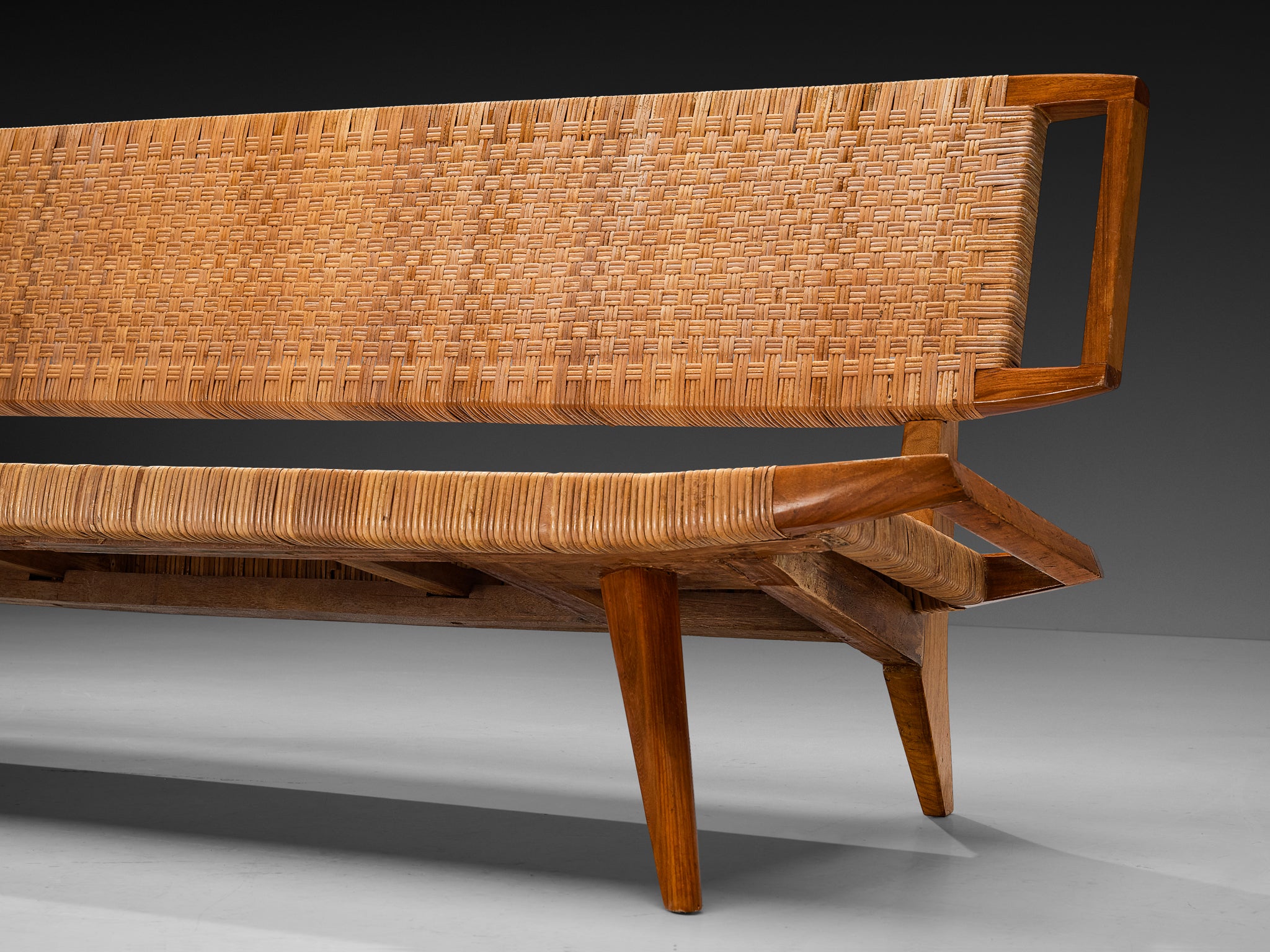
Paul Láslzó Bench in Mahogany and Cane
 Open here
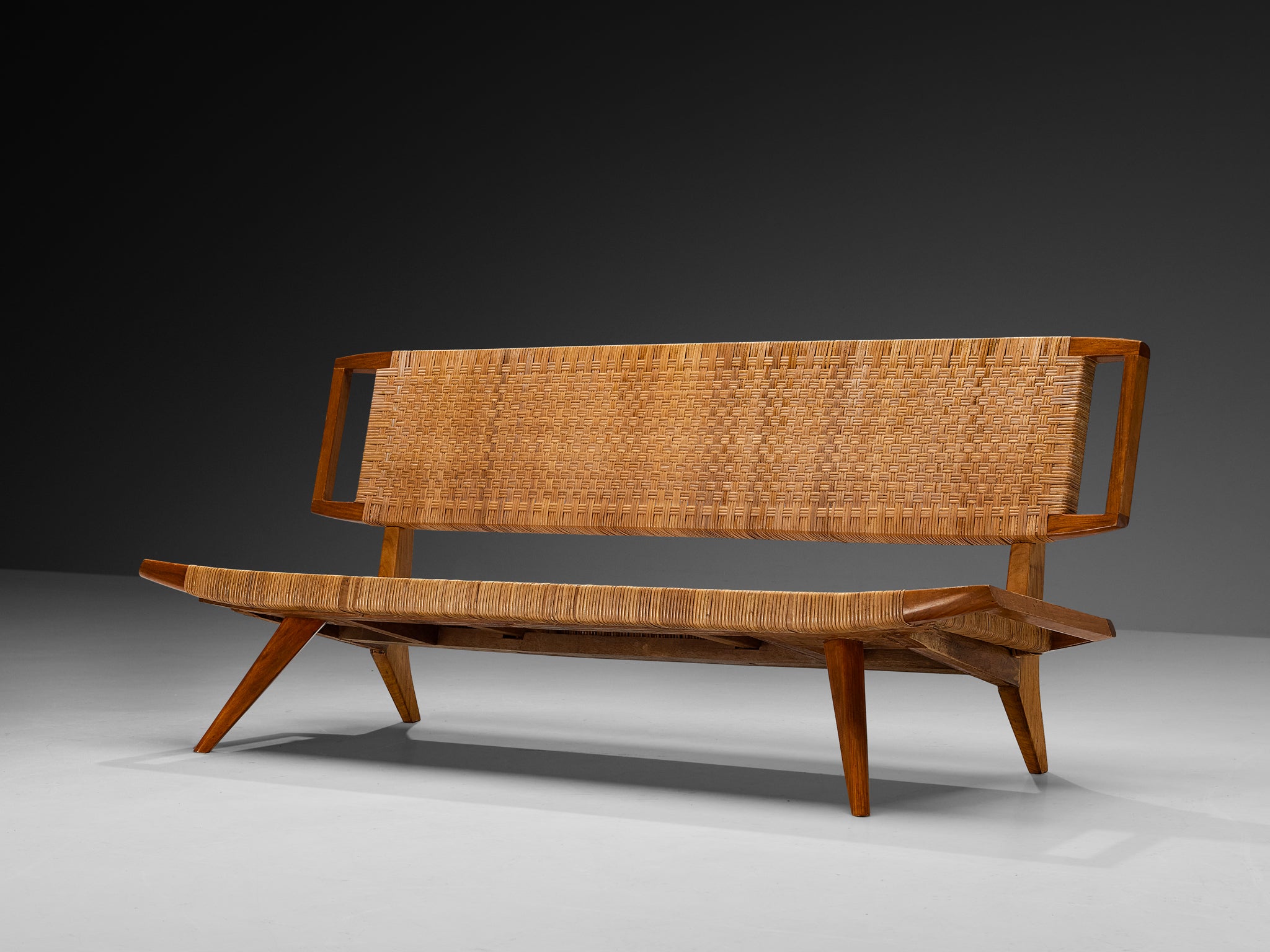
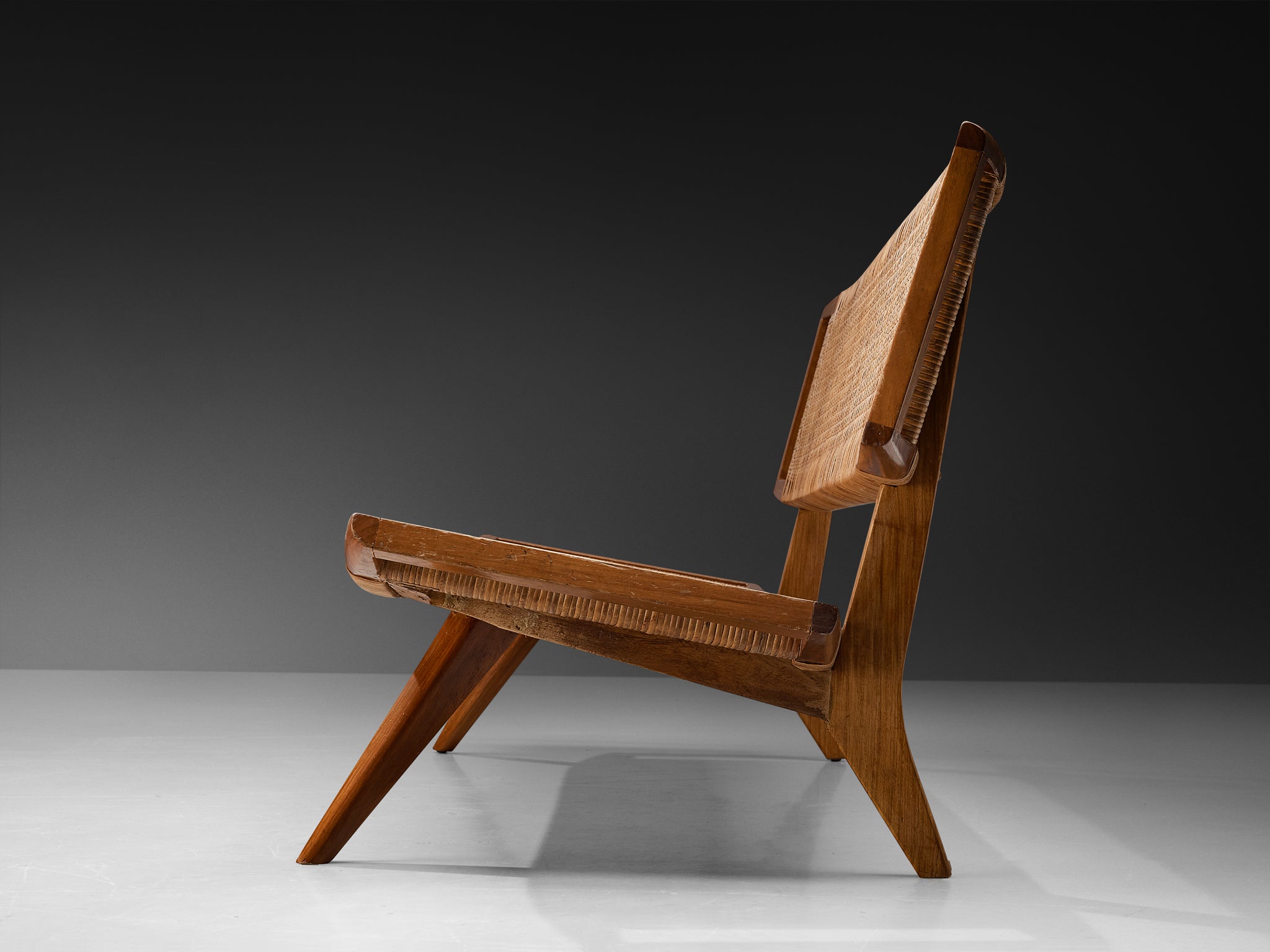
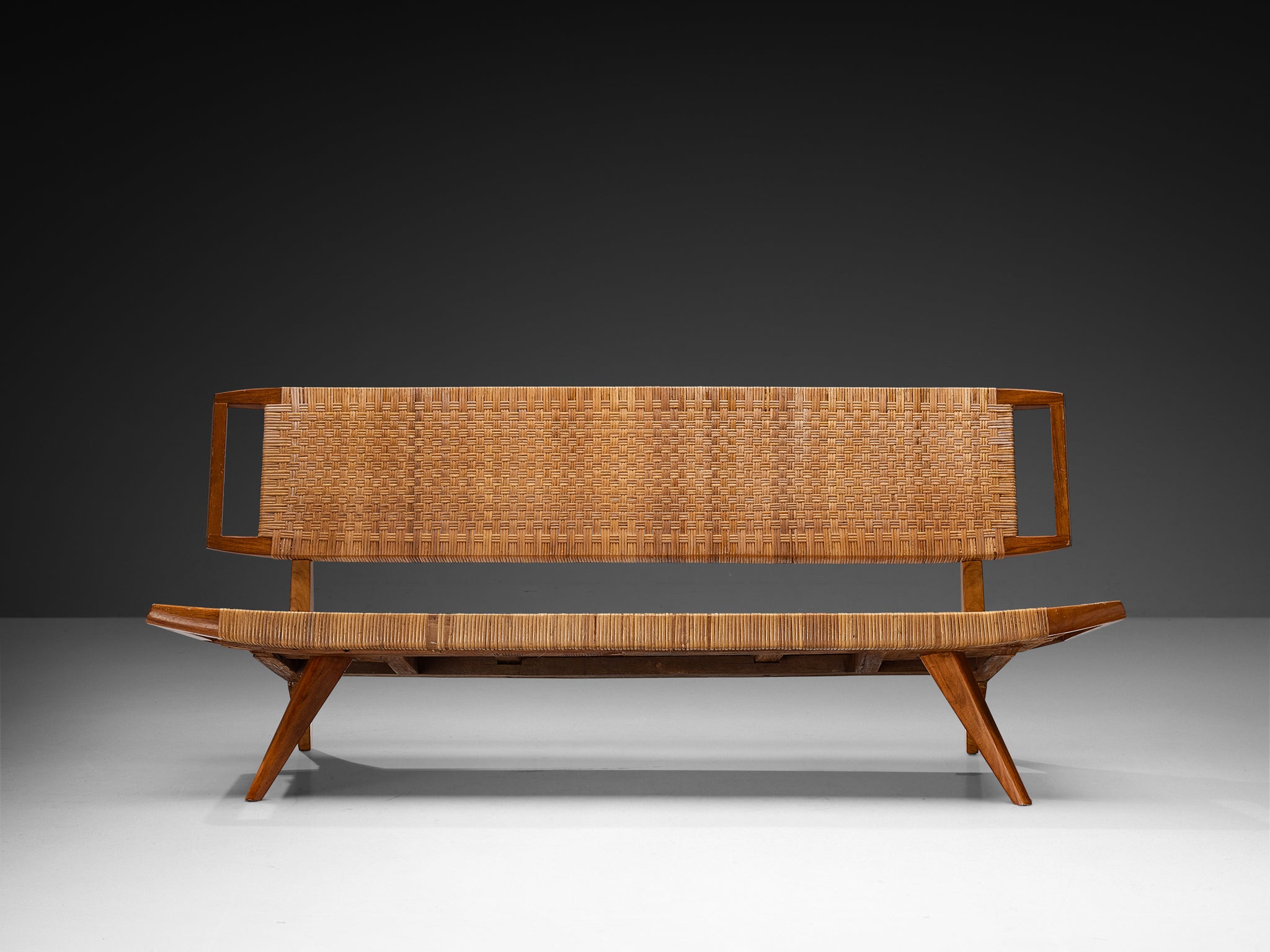
Paul László for Glenn of California, bench or sofa, mahogany, cane, United States, 1950
Designed in 1950, this rare bench sofa occupies a significant position within Paul László’s postwar furniture production and the broader context of American mid-century modern design. Trained in Europe and deeply informed by early twentieth-century modernism, László brought a distinctly architectural sensibility to his work in the United States, where he became a central figure in shaping a refined, West Coast–inflected modernism.
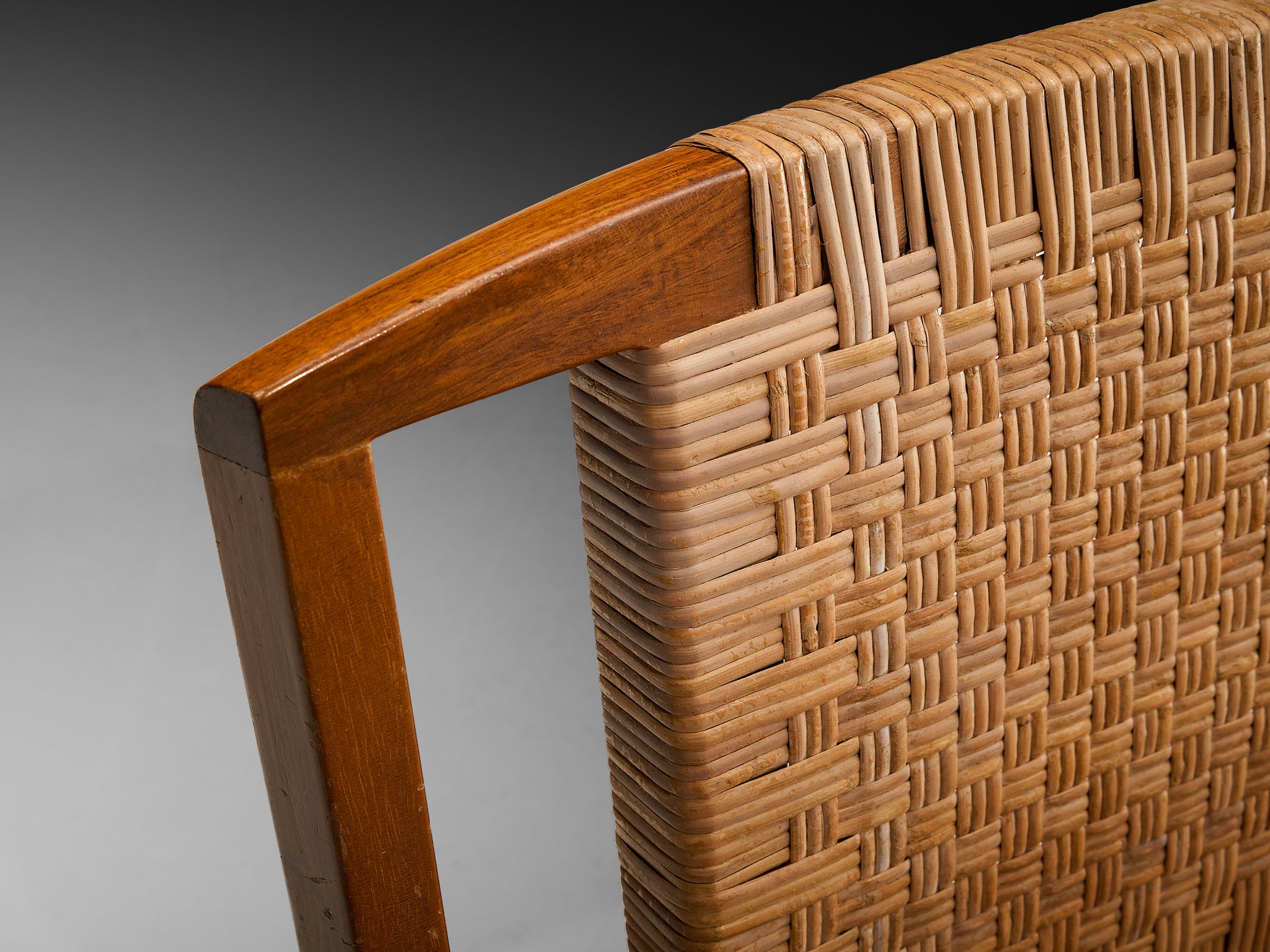
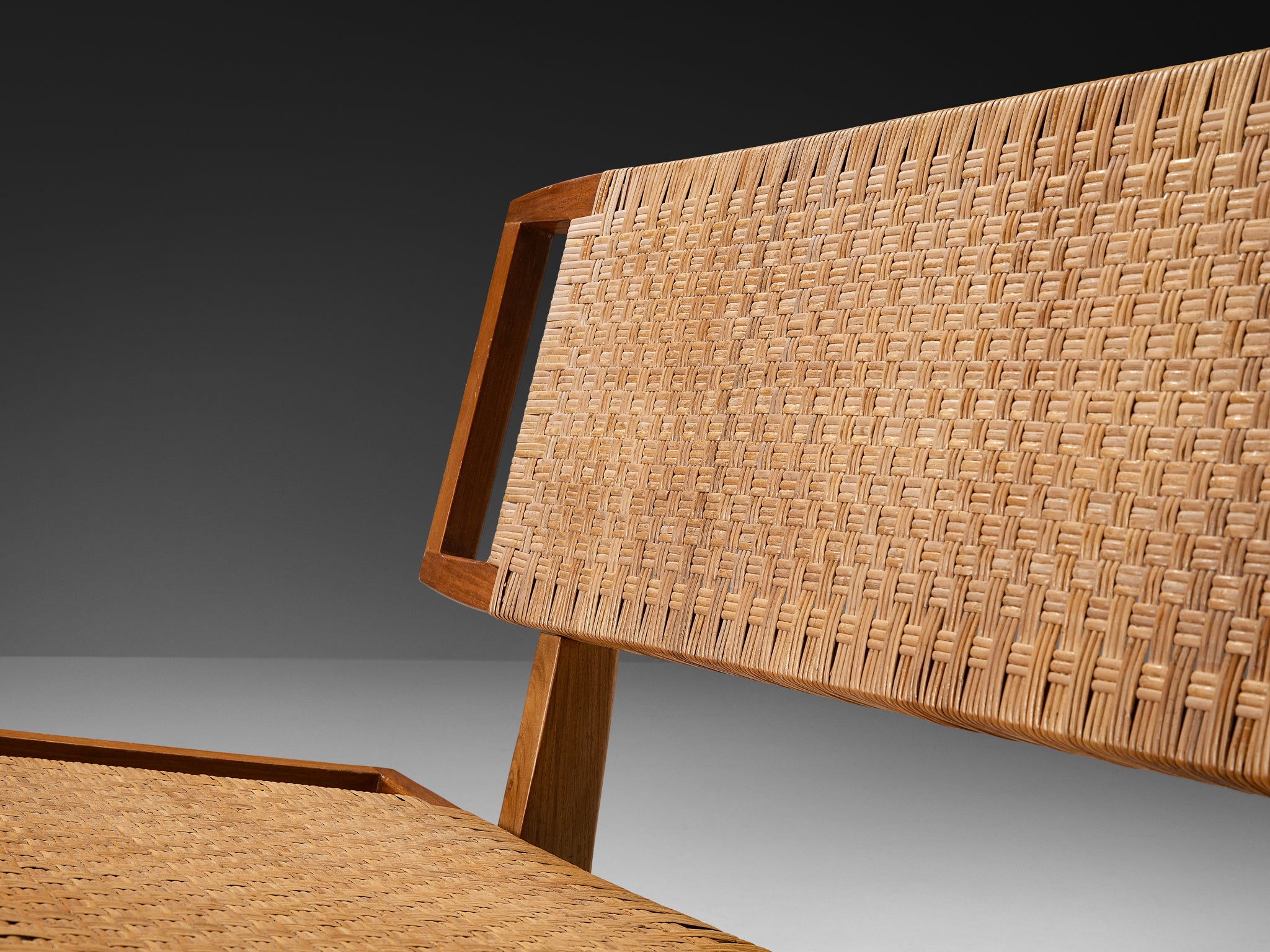
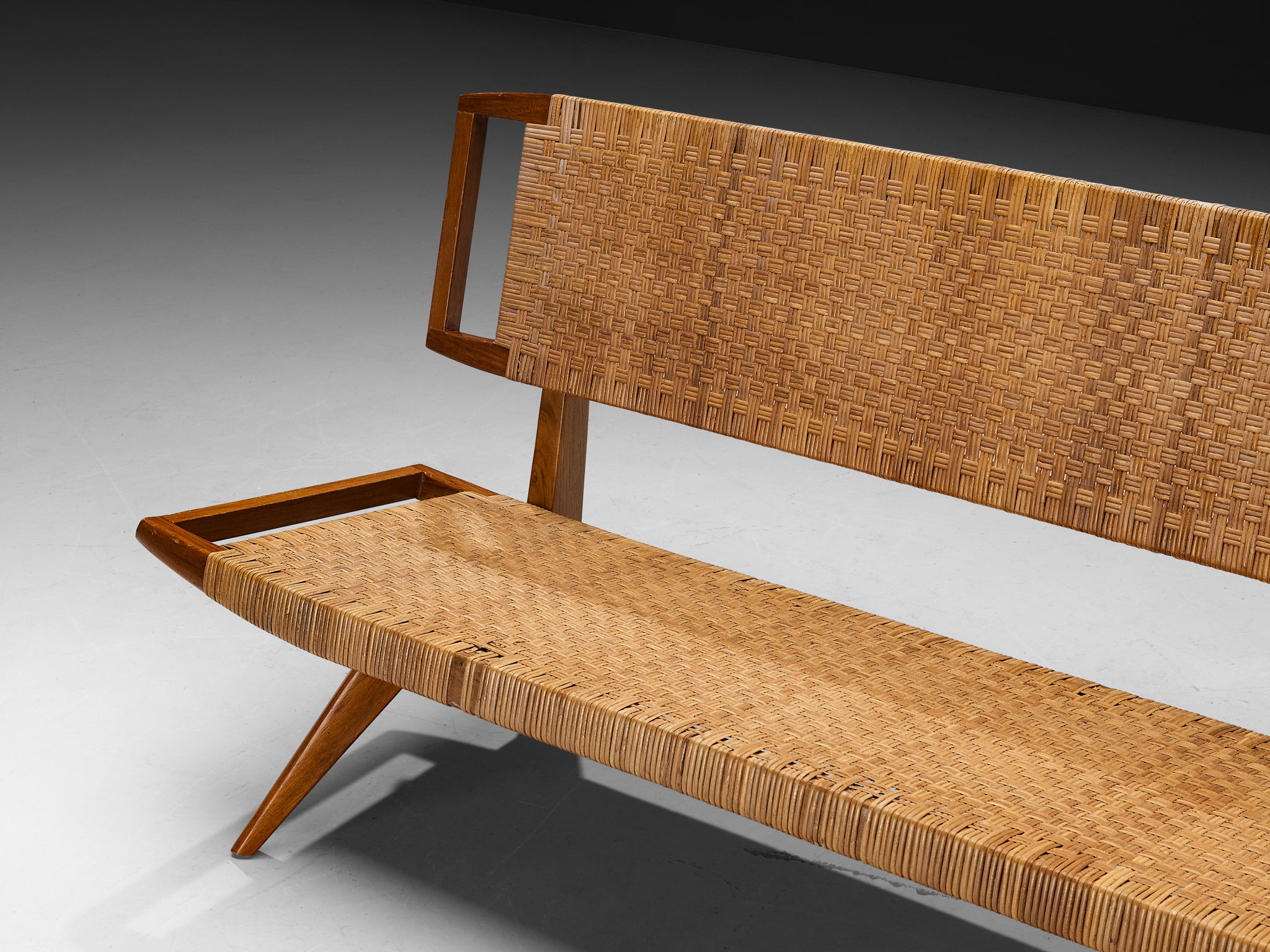
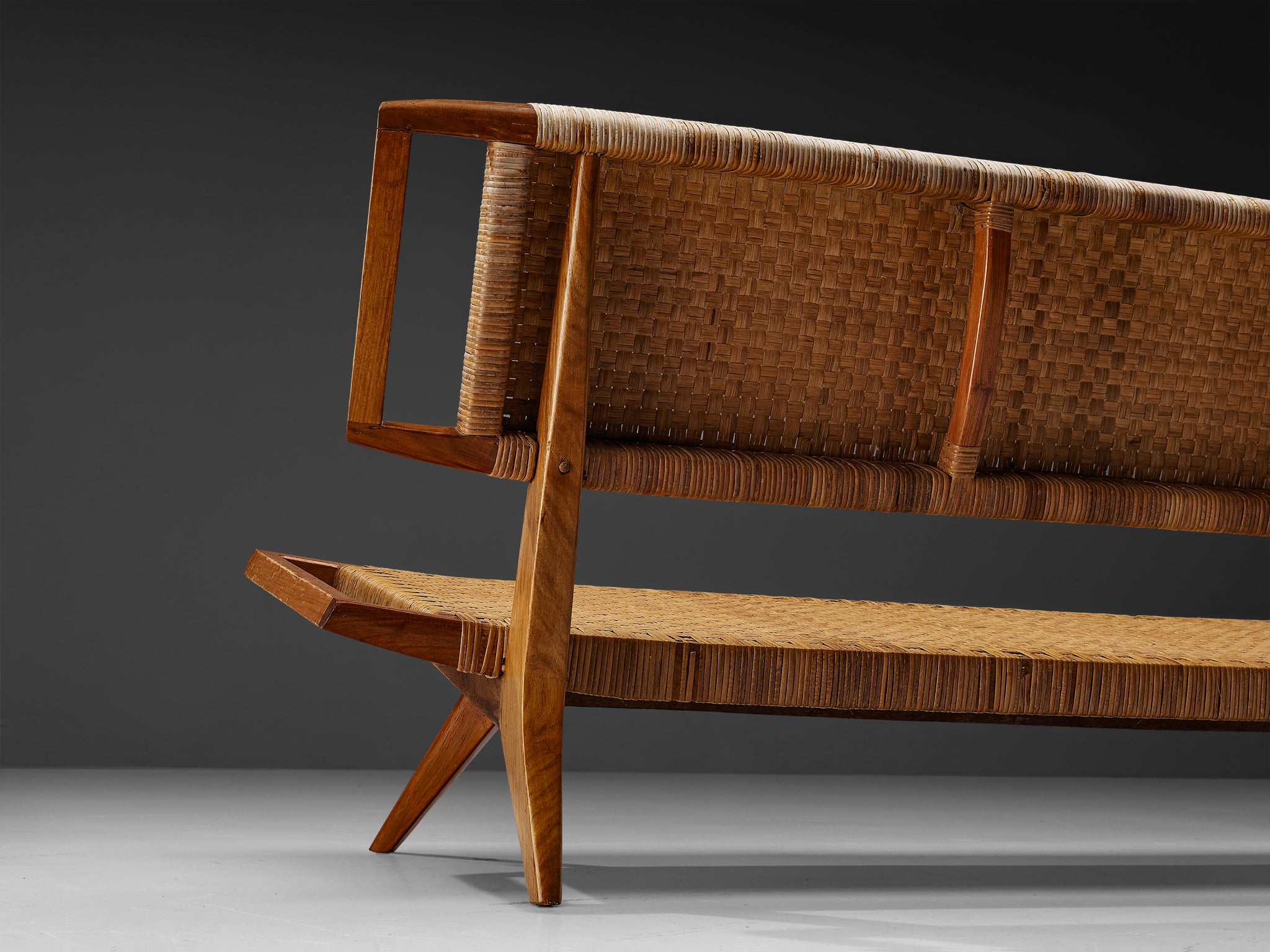
The use of cane for both seat and back reflects a renewed postwar interest in natural materials and traditional craft techniques, reinterpreted through a modernist lens. Cane offered lightness, ventilation, and visual transparency. These qualities aligned with contemporary ideals of informality and openness in domestic interiors. In contrast, the mahogany frame asserts a clear structural order, grounding the design in precision and permanence.
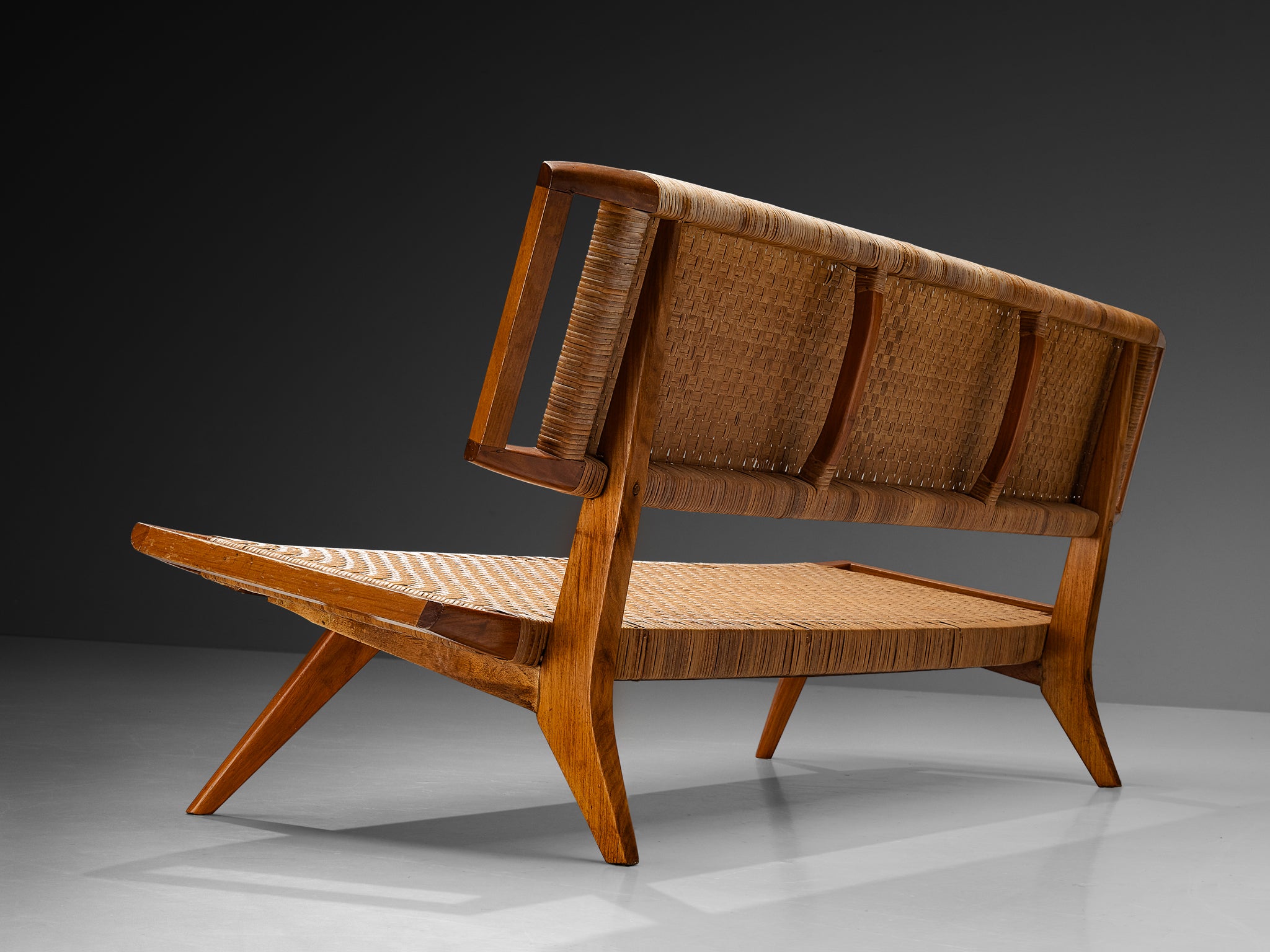
Formally, the sofa demonstrates László’s commitment to rational construction and legible structure, principles rooted in European modernism but adapted to American tastes and lifestyles. The open arm construction and splayed legs recall earlier modernist experiments with exposed frameworks, while the generous bench format anticipates the more relaxed modes of seating that would come to define mid-century domestic environments.
Paul László (1900–1993) was a Hungarian-born American architect, interior designer, and furniture designer whose work played a significant role in shaping mid-twentieth-century American modernism. Born in Hungary into a family of cabinetmakers, László was exposed at an early age to fine craftsmanship, an influence that would remain evident throughout his career. At the age of twenty-five, he established his own design practice in Stuttgart, where he developed a distinctive modernist language characterized by architectural clarity and refined material use. During this early period, his work attracted international attention and was noted by leading figures of the modern movement, including George Nelson.
In 1936, amid the rising threat of the Nazi regime, László left Europe and emigrated to the United States, where he opened a design studio in New York. He soon became a sought-after designer among an elite clientele, creating interiors and furnishings for prominent cultural and public figures such as Elizabeth Taylor, Barbara Stanwyck, and Ronald Reagan. László’s work is now regarded as emblematic of Californian Modernism, a style he helped define through a sophisticated synthesis of influences. His designs merge the disciplined formal principles of the Viennese classical tradition and European modernism with the comfort, elegance, and generous proportions associated with American luxury and lifestyle. This distinctive fusion secured his reputation as one of the most influential designers working in the United States during the mid-century period.
Designed in 1950, this rare bench sofa occupies a significant position within Paul László’s postwar furniture production and the broader context of American mid-century modern design. Trained in Europe and deeply informed by early twentieth-century modernism, László brought a distinctly architectural sensibility to his work in the United States, where he became a central figure in shaping a refined, West Coast–inflected modernism.
The use of cane for both seat and back reflects a renewed postwar interest in natural materials and traditional craft techniques, reinterpreted through a modernist lens. Cane offered lightness, ventilation, and visual transparency. These qualities aligned with contemporary ideals of informality and openness in domestic interiors. In contrast, the mahogany frame asserts a clear structural order, grounding the design in precision and permanence.
Formally, the sofa demonstrates László’s commitment to rational construction and legible structure, principles rooted in European modernism but adapted to American tastes and lifestyles. The open arm construction and splayed legs recall earlier modernist experiments with exposed frameworks, while the generous bench format anticipates the more relaxed modes of seating that would come to define mid-century domestic environments.
Paul László (1900–1993) was a Hungarian-born American architect, interior designer, and furniture designer whose work played a significant role in shaping mid-twentieth-century American modernism. Born in Hungary into a family of cabinetmakers, László was exposed at an early age to fine craftsmanship, an influence that would remain evident throughout his career. At the age of twenty-five, he established his own design practice in Stuttgart, where he developed a distinctive modernist language characterized by architectural clarity and refined material use. During this early period, his work attracted international attention and was noted by leading figures of the modern movement, including George Nelson.
In 1936, amid the rising threat of the Nazi regime, László left Europe and emigrated to the United States, where he opened a design studio in New York. He soon became a sought-after designer among an elite clientele, creating interiors and furnishings for prominent cultural and public figures such as Elizabeth Taylor, Barbara Stanwyck, and Ronald Reagan. László’s work is now regarded as emblematic of Californian Modernism, a style he helped define through a sophisticated synthesis of influences. His designs merge the disciplined formal principles of the Viennese classical tradition and European modernism with the comfort, elegance, and generous proportions associated with American luxury and lifestyle. This distinctive fusion secured his reputation as one of the most influential designers working in the United States during the mid-century period.

Choose options
Paul Láslzó Bench in Mahogany and Cane
Sale price$22,000.00
Regular price
Product Details
VAT within the EU: When buying or delivering an item within the EU, VAT usually applies and will be added.