

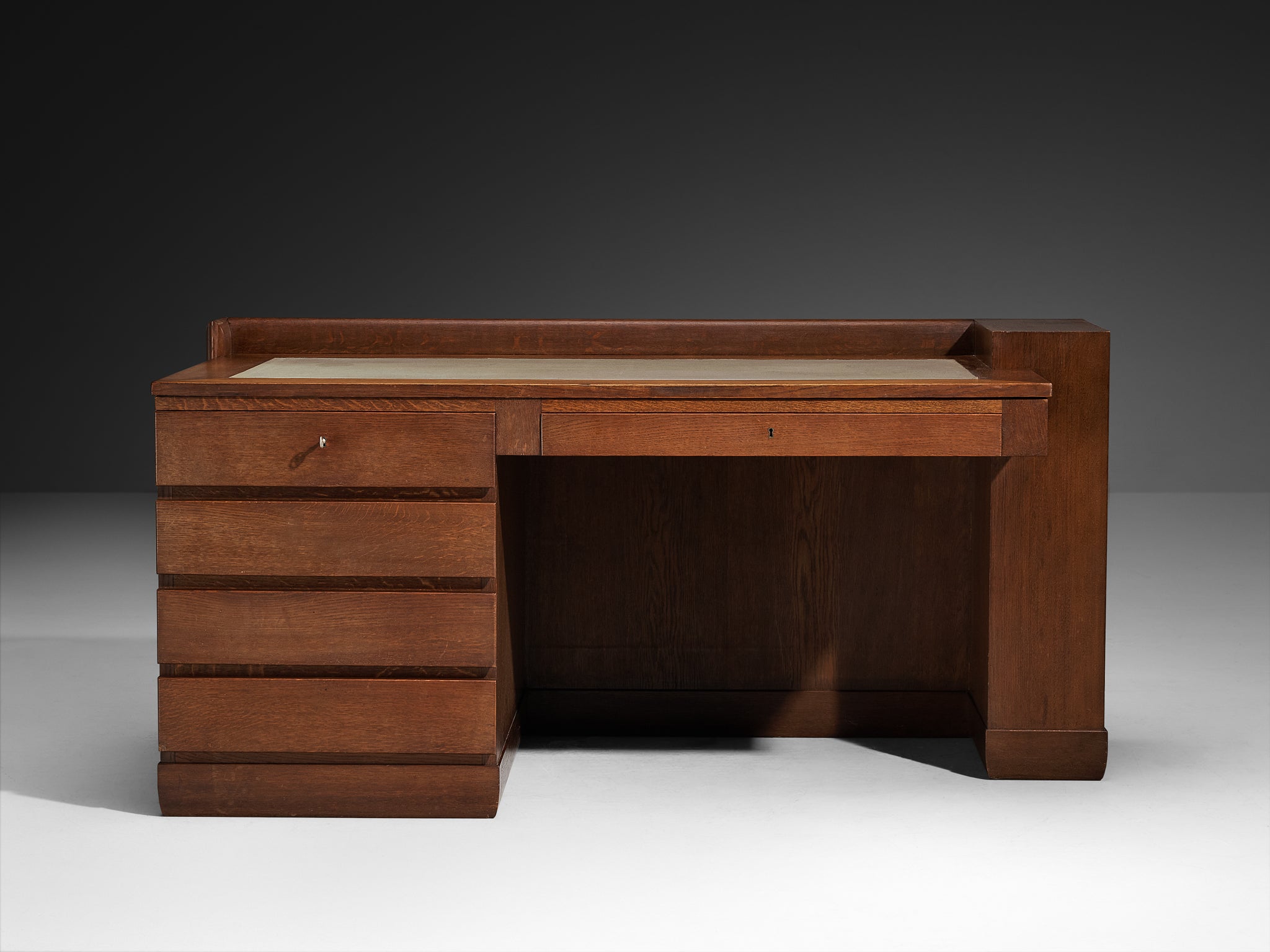




Paul Bromberg for H. Pander & Zonen Free-Standing Desk in Solid Oak
Tearsheet
×
Receive a copy in your email or download directly:
I accept emails from Morentz.
 Open here
Paul Bromberg for H. Pander & Zonen, executive desk, oak, the Netherlands, 1927
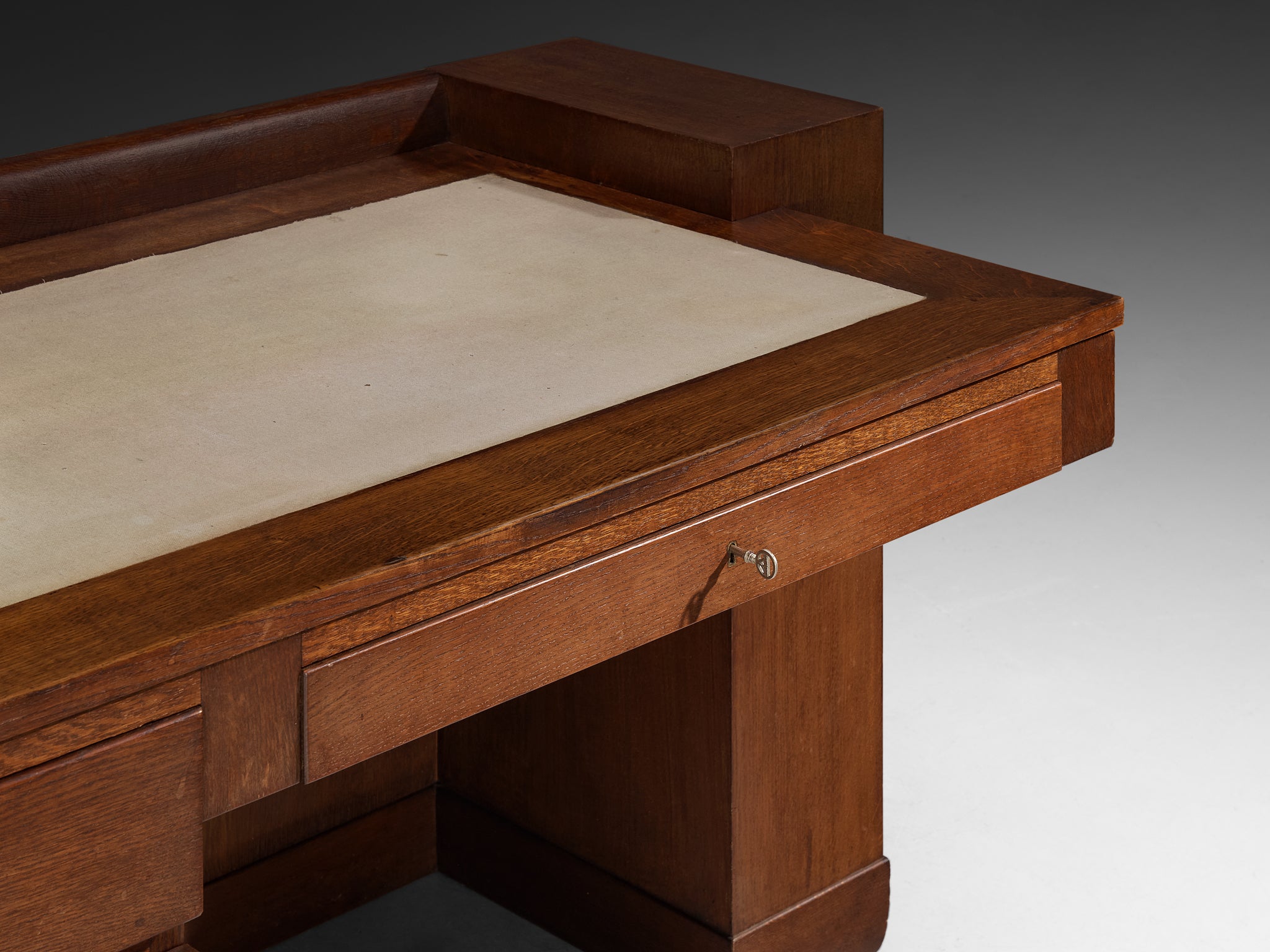
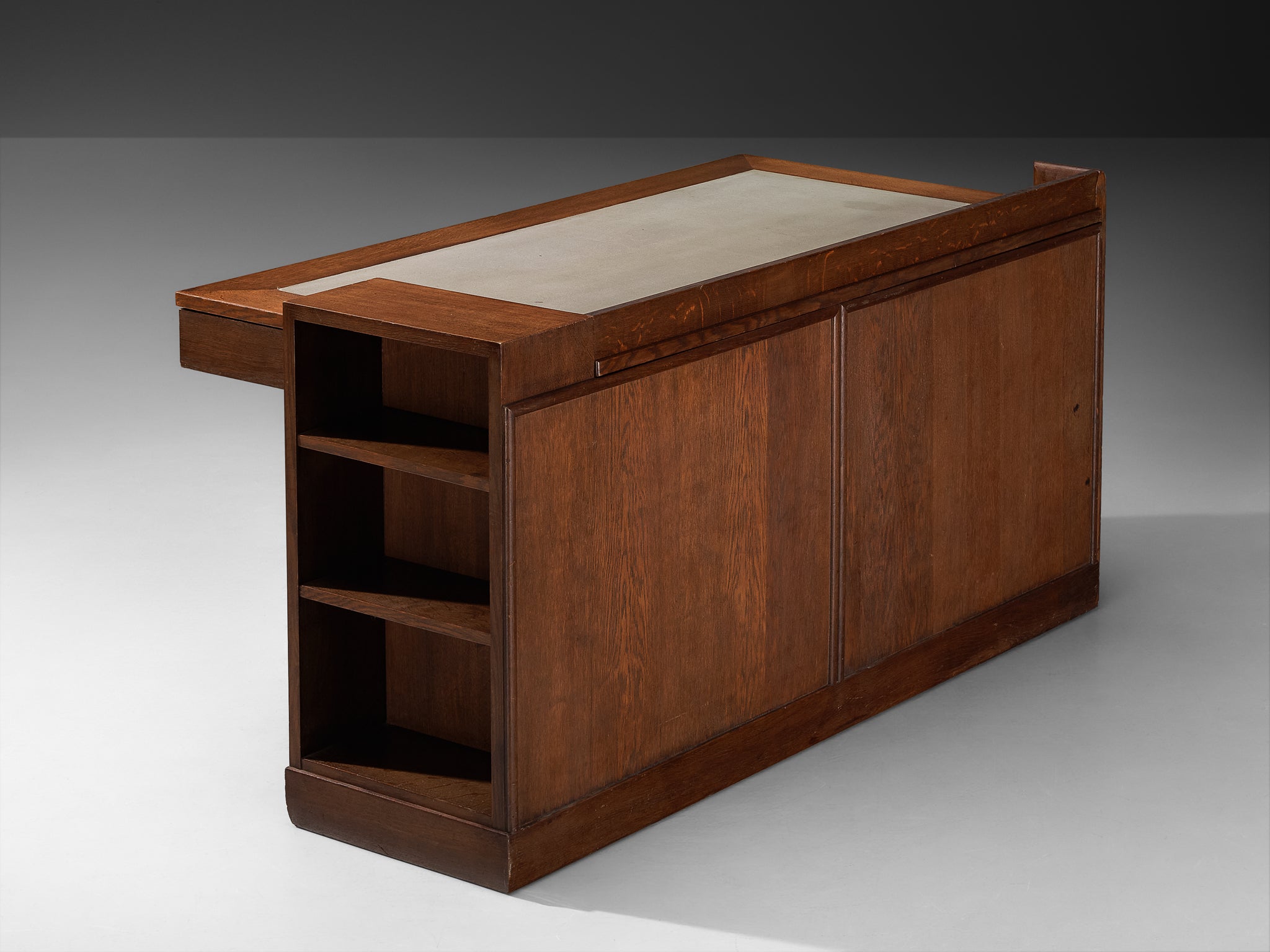
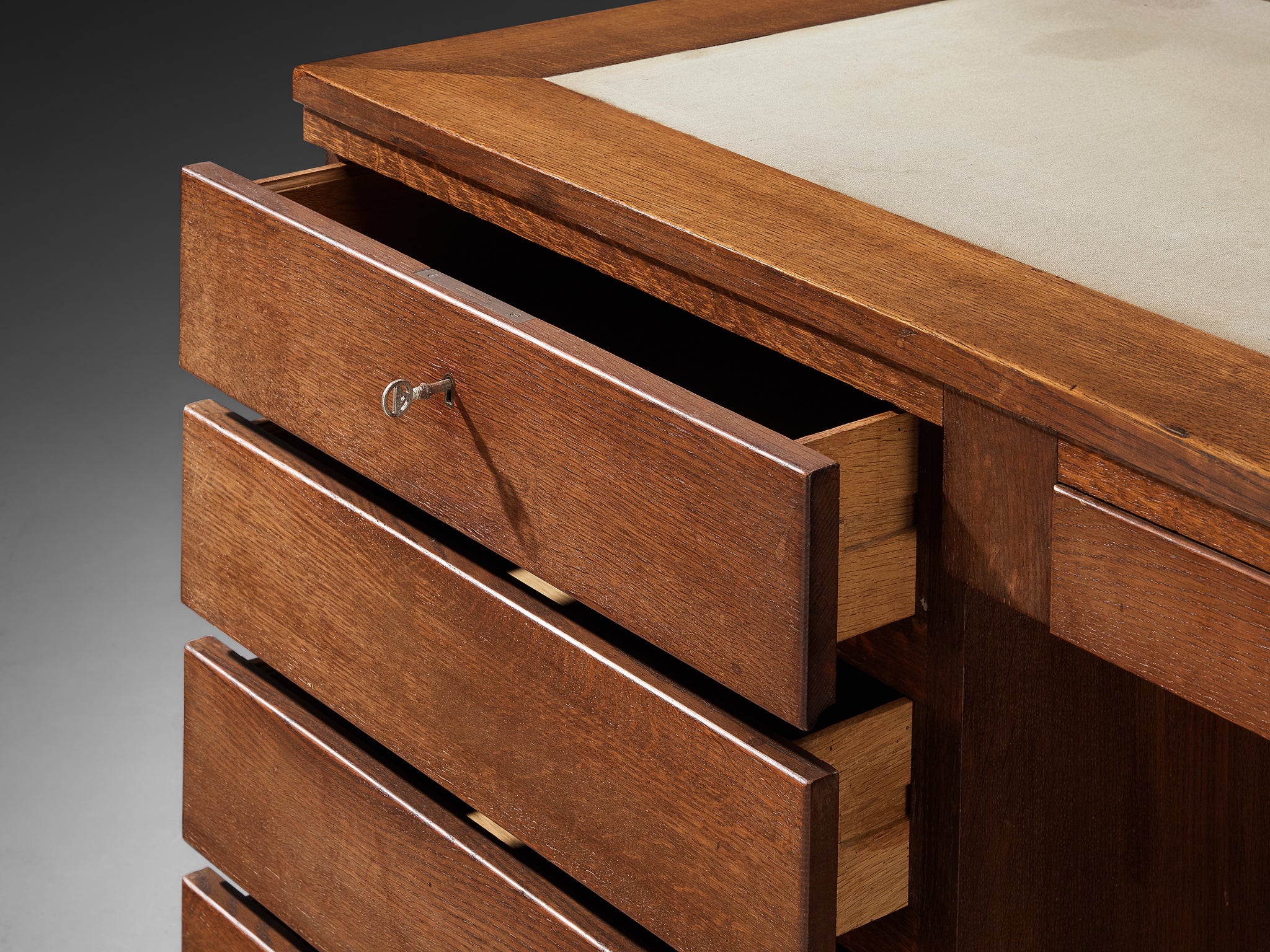
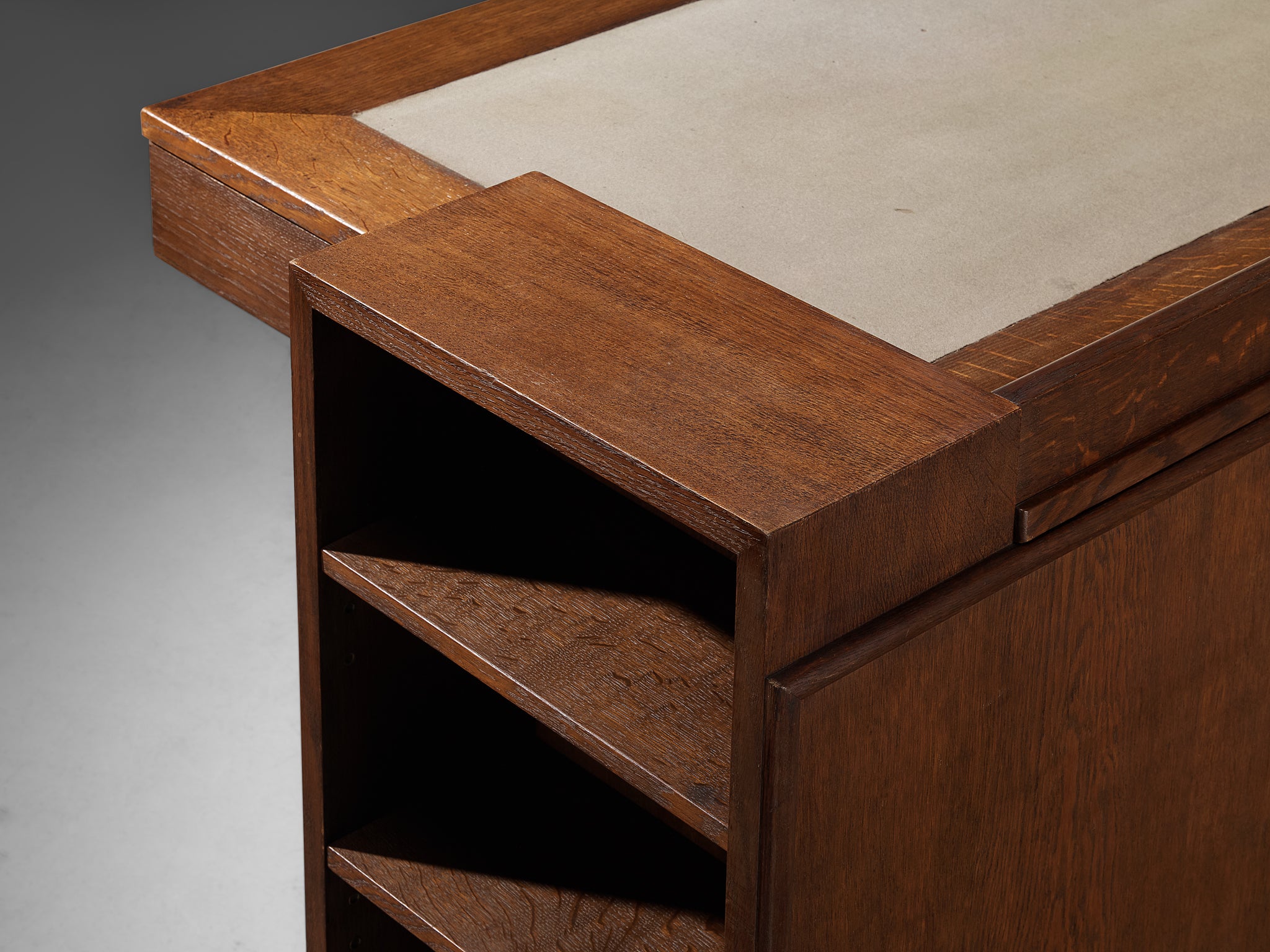
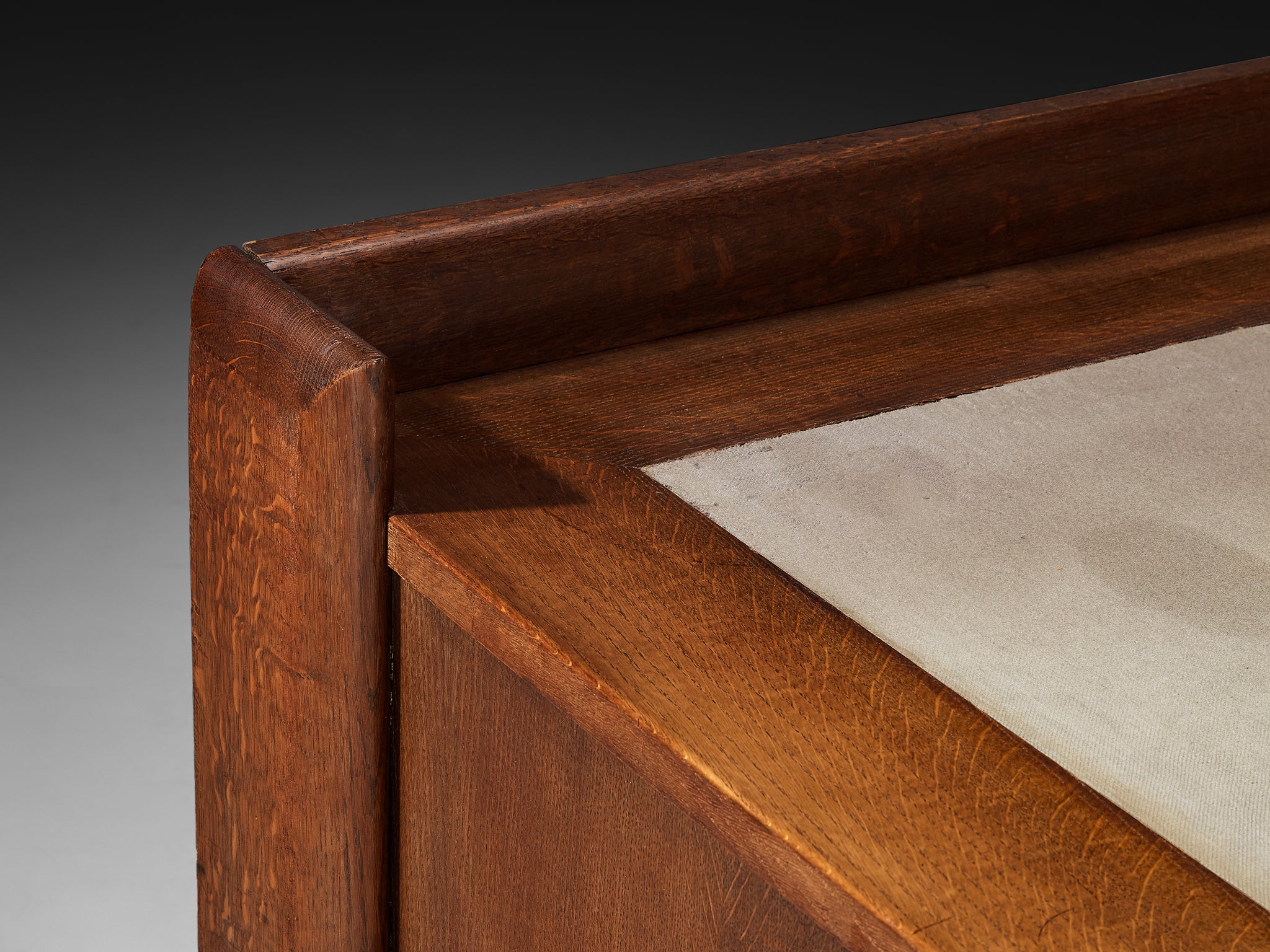
This free-standing desk, designed by Paul Bromberg in 1927, stands as an example of early 20th-century rationalist furniture design. Its shape defies traditional symmetry in favor of a more functional, asymmetrical layout. On the left, a vertical stack of flat-front drawers grounds the piece, while the right side branches out into an integrated shelving unit; open, modest, and direct. The desktop itself is bordered by raised wooden edges, which subtly reinforces the geometry and adds a layer of containment without ornamentation. This deliberate deviation from the standard bilateral desk form was not a mere stylistic choice but a considered response to the spatial and practical needs of interior environments. Bromberg’s design embraces asymmetry not as a gesture of novelty, but as a solution to efficiency and integration within a room. By merging desk and bookcase into a single unit, he anticipates ideas of modular and space-saving furniture that would become crucial in modernist interiors.
Paul Bromberg, who began his career as an interior architect in Amsterdam at the age of twenty, brought with him not only experience from his father’s furniture business but also a formative period of study in Germany and under the Dutch architect J.L. van Ishoven. Bromberg emphasized the expressive potential of structure itself; avoiding superfluous decoration in favor of clarity and purpose. His early works already revealed a preoccupation with clean lines, honest materials, and the architectural logic of furniture. During his tenure at Metz & Co (1918–1924), Bromberg helped transform the firm into a hub of contemporary design. Before his arrival, Metz had no in-house designers; under his leadership, the company developed its own modern collection, reflecting the broader movement toward applied arts as serious, forward-looking design practices. From 1924 onward, Bromberg continued this trajectory at H. Pander & Zonen, a company known more traditionally for its high-quality stylistic interiors led by the Dutch architect Hendrik Wouda. Here, he created furniture that echoed his earlier rationalist tendencies. Though the plasticity of his forms occasionally resonated with the more expressive designers of the Amsterdam School – such as Piet Kramer and Hildo Krop – Bromberg’s style remained notably restrained. Ornamentation was eschewed. Form always followed function. The 1927 desk embodies this ethos. Its asymmetry is not decorative but organizational. Its integration of desk and shelving addresses the realities of space and use. It represents a quiet but intelligent shift away from the ceremonial grandeur of traditional desks toward something more fluid and embedded in daily life. Bromberg’s work, like this piece, invites us to consider furniture not as static sculpture, but as part of a living interior landscape: rational, efficient, and quietly elegant.
Kindly be advised that the fabric top of this item can be tailored to specific wishes of our clients. We kindly ask you to contact our design experts to discuss your wishes regarding finishing. Your special requests can be realized by the experienced craftspeople in our own in-house restoration and upholstery atelier. With high attention to the original, they make sure every piece retains its value and is ready for the many years to come.
This free-standing desk, designed by Paul Bromberg in 1927, stands as an example of early 20th-century rationalist furniture design. Its shape defies traditional symmetry in favor of a more functional, asymmetrical layout. On the left, a vertical stack of flat-front drawers grounds the piece, while the right side branches out into an integrated shelving unit; open, modest, and direct. The desktop itself is bordered by raised wooden edges, which subtly reinforces the geometry and adds a layer of containment without ornamentation. This deliberate deviation from the standard bilateral desk form was not a mere stylistic choice but a considered response to the spatial and practical needs of interior environments. Bromberg’s design embraces asymmetry not as a gesture of novelty, but as a solution to efficiency and integration within a room. By merging desk and bookcase into a single unit, he anticipates ideas of modular and space-saving furniture that would become crucial in modernist interiors.
Paul Bromberg, who began his career as an interior architect in Amsterdam at the age of twenty, brought with him not only experience from his father’s furniture business but also a formative period of study in Germany and under the Dutch architect J.L. van Ishoven. Bromberg emphasized the expressive potential of structure itself; avoiding superfluous decoration in favor of clarity and purpose. His early works already revealed a preoccupation with clean lines, honest materials, and the architectural logic of furniture. During his tenure at Metz & Co (1918–1924), Bromberg helped transform the firm into a hub of contemporary design. Before his arrival, Metz had no in-house designers; under his leadership, the company developed its own modern collection, reflecting the broader movement toward applied arts as serious, forward-looking design practices. From 1924 onward, Bromberg continued this trajectory at H. Pander & Zonen, a company known more traditionally for its high-quality stylistic interiors led by the Dutch architect Hendrik Wouda. Here, he created furniture that echoed his earlier rationalist tendencies. Though the plasticity of his forms occasionally resonated with the more expressive designers of the Amsterdam School – such as Piet Kramer and Hildo Krop – Bromberg’s style remained notably restrained. Ornamentation was eschewed. Form always followed function. The 1927 desk embodies this ethos. Its asymmetry is not decorative but organizational. Its integration of desk and shelving addresses the realities of space and use. It represents a quiet but intelligent shift away from the ceremonial grandeur of traditional desks toward something more fluid and embedded in daily life. Bromberg’s work, like this piece, invites us to consider furniture not as static sculpture, but as part of a living interior landscape: rational, efficient, and quietly elegant.
Kindly be advised that the fabric top of this item can be tailored to specific wishes of our clients. We kindly ask you to contact our design experts to discuss your wishes regarding finishing. Your special requests can be realized by the experienced craftspeople in our own in-house restoration and upholstery atelier. With high attention to the original, they make sure every piece retains its value and is ready for the many years to come.

Choose options
Paul Bromberg for H. Pander & Zonen Free-Standing Desk in Solid Oak
Sale price$18,700.00
Regular price
Tearsheet
×
Receive a copy in your email or download directly:
I accept emails from Morentz.
Product Details
VAT within the EU: When buying or delivering an item within the EU, VAT usually applies and will be added.