
Paolo Buffa Rare Dining Set with Table, Chairs and Corner Bench in Cherry Wood
Tearsheet
×
Receive a copy in your email or download directly:
I accept emails from Morentz.
 Open here
Paolo Buffa, dining set consisting of a table, bench, and chairs, cherry, cane, Italy, 1940s
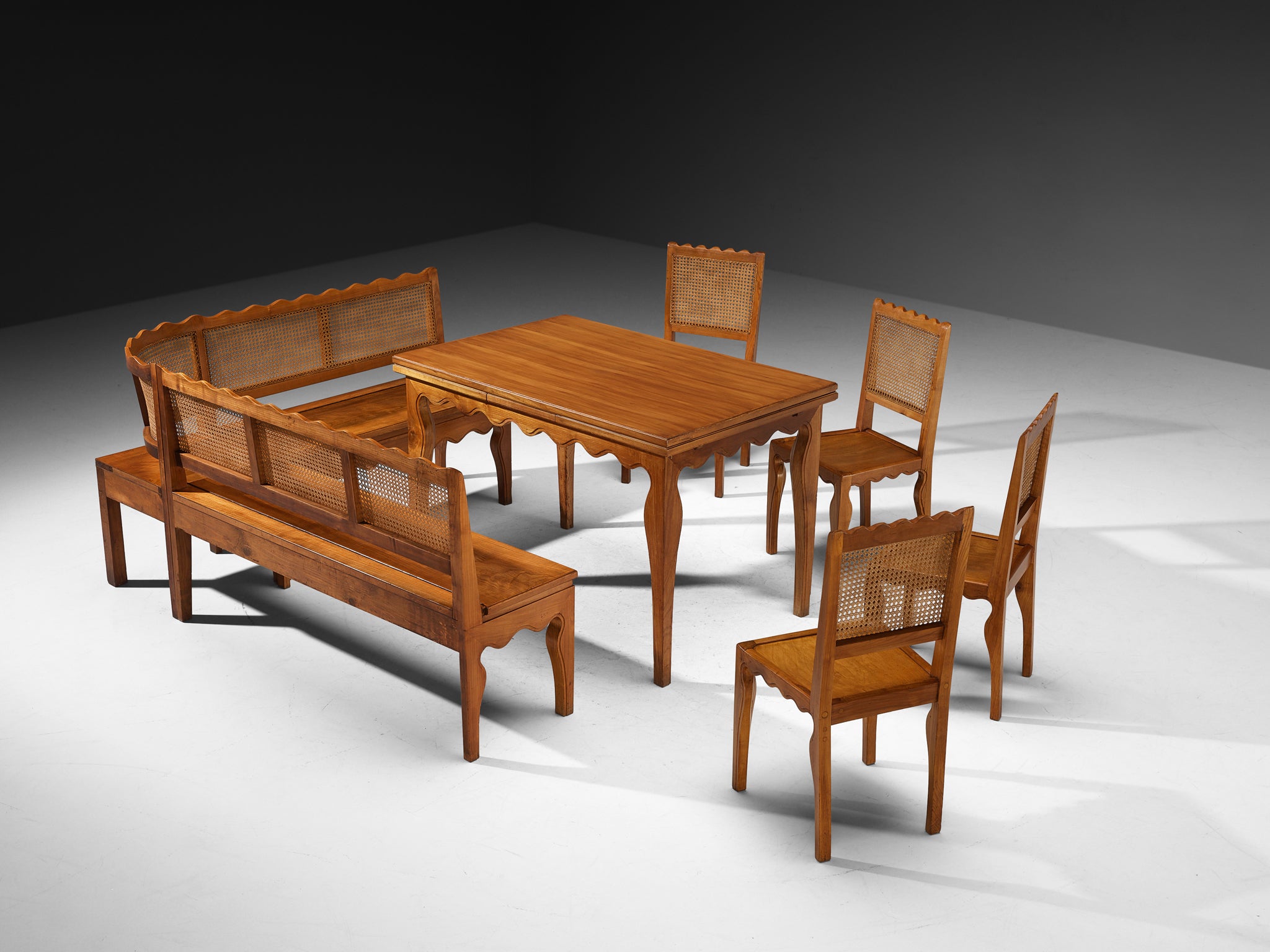
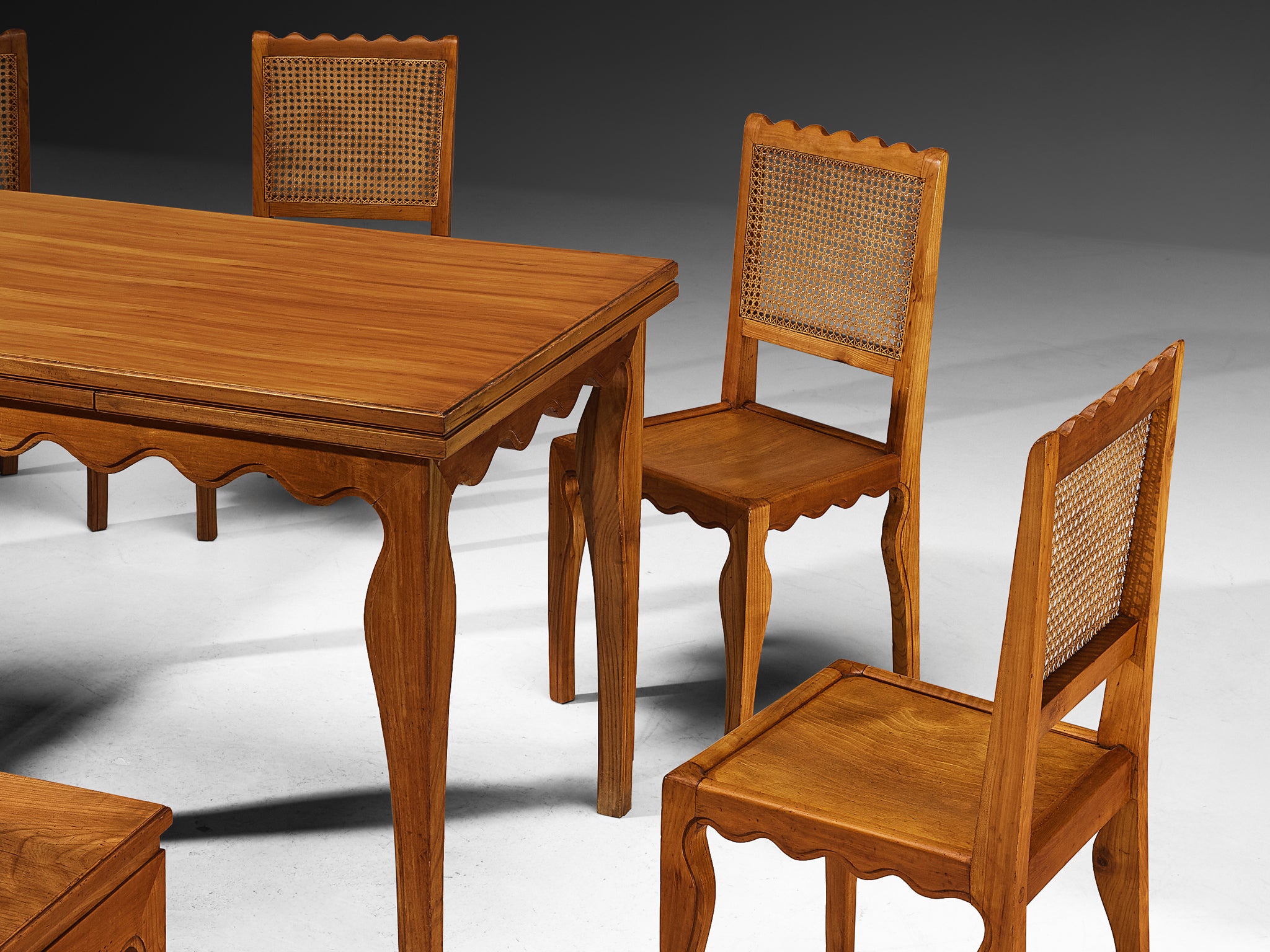
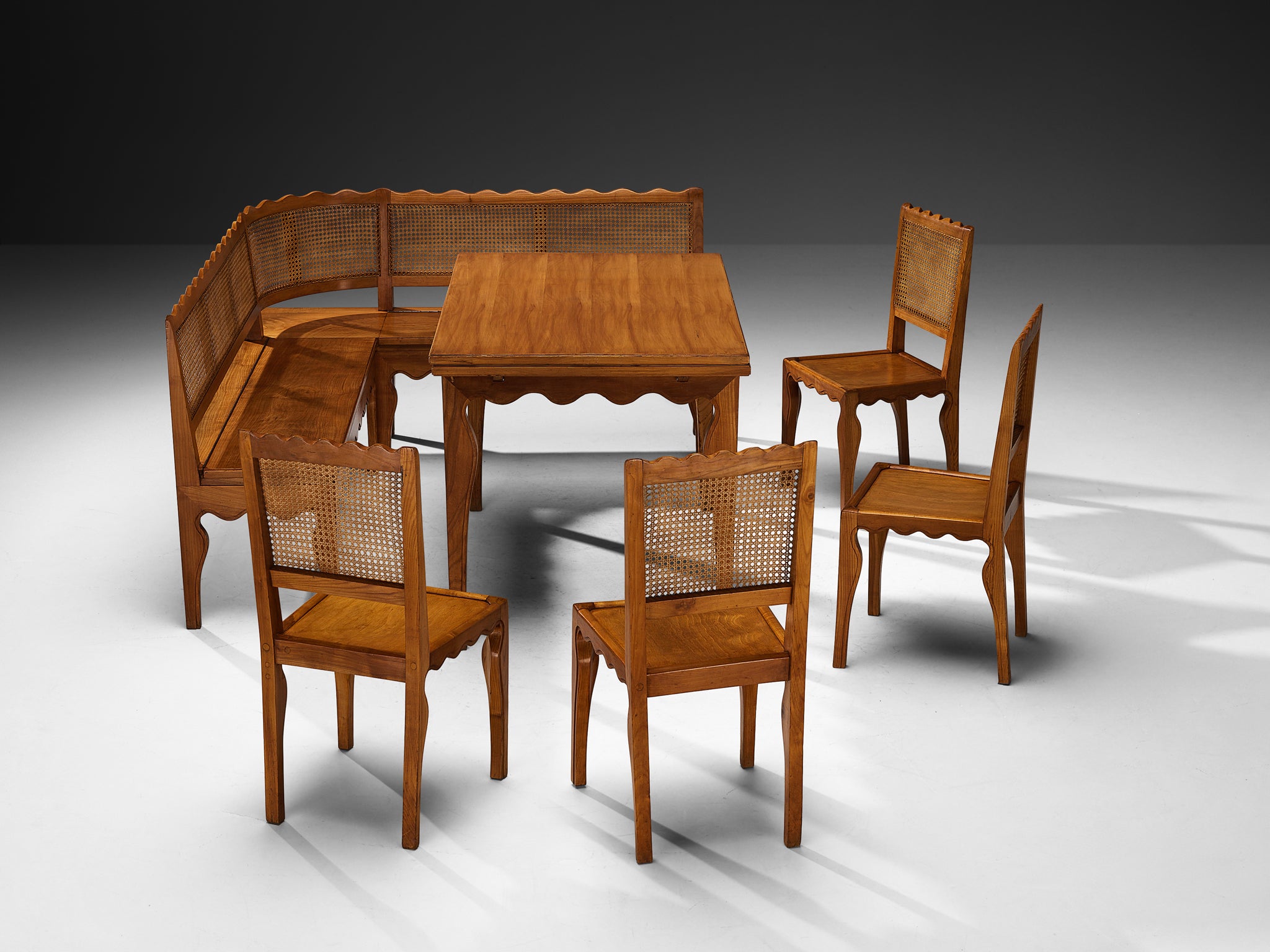
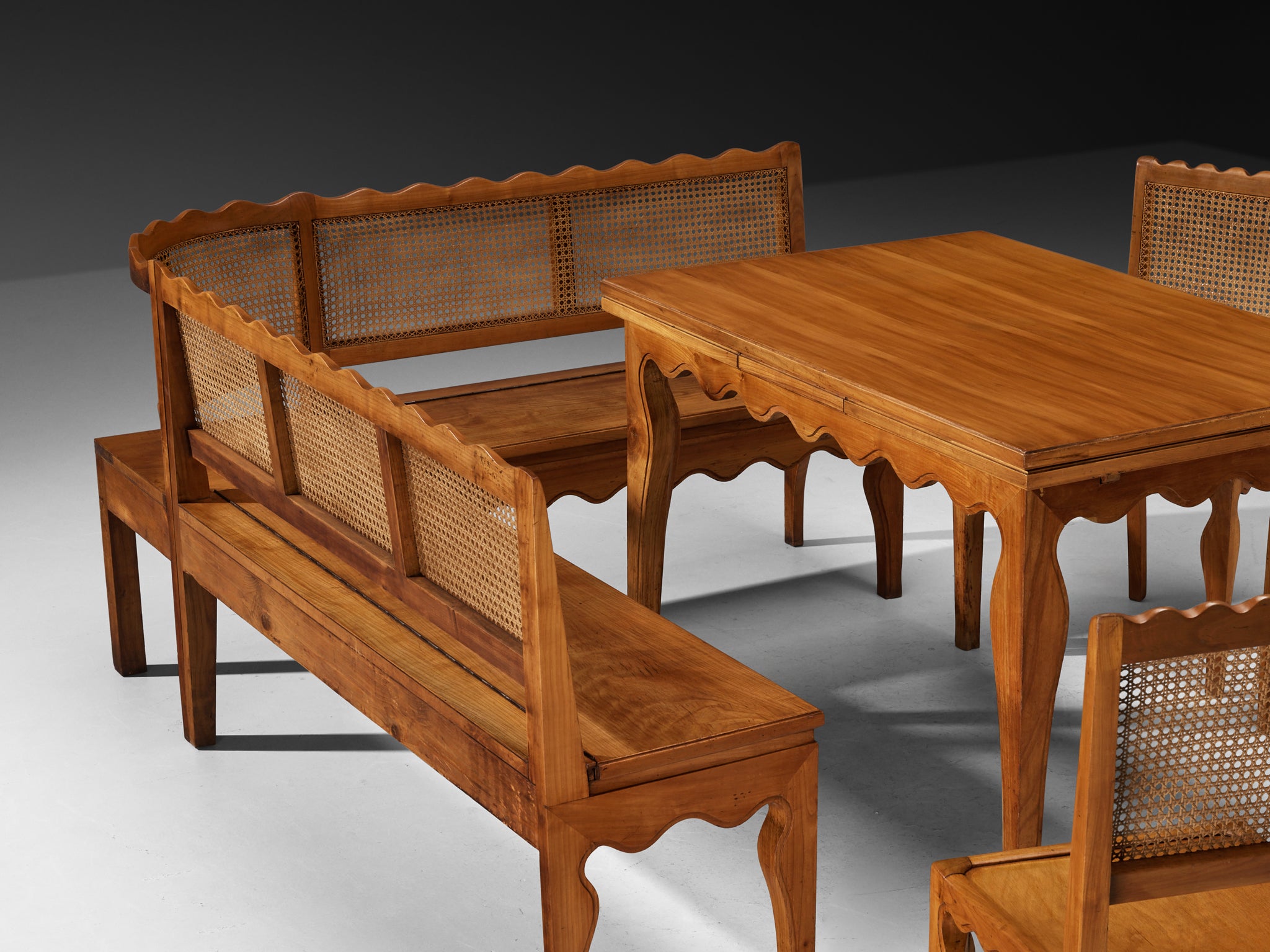
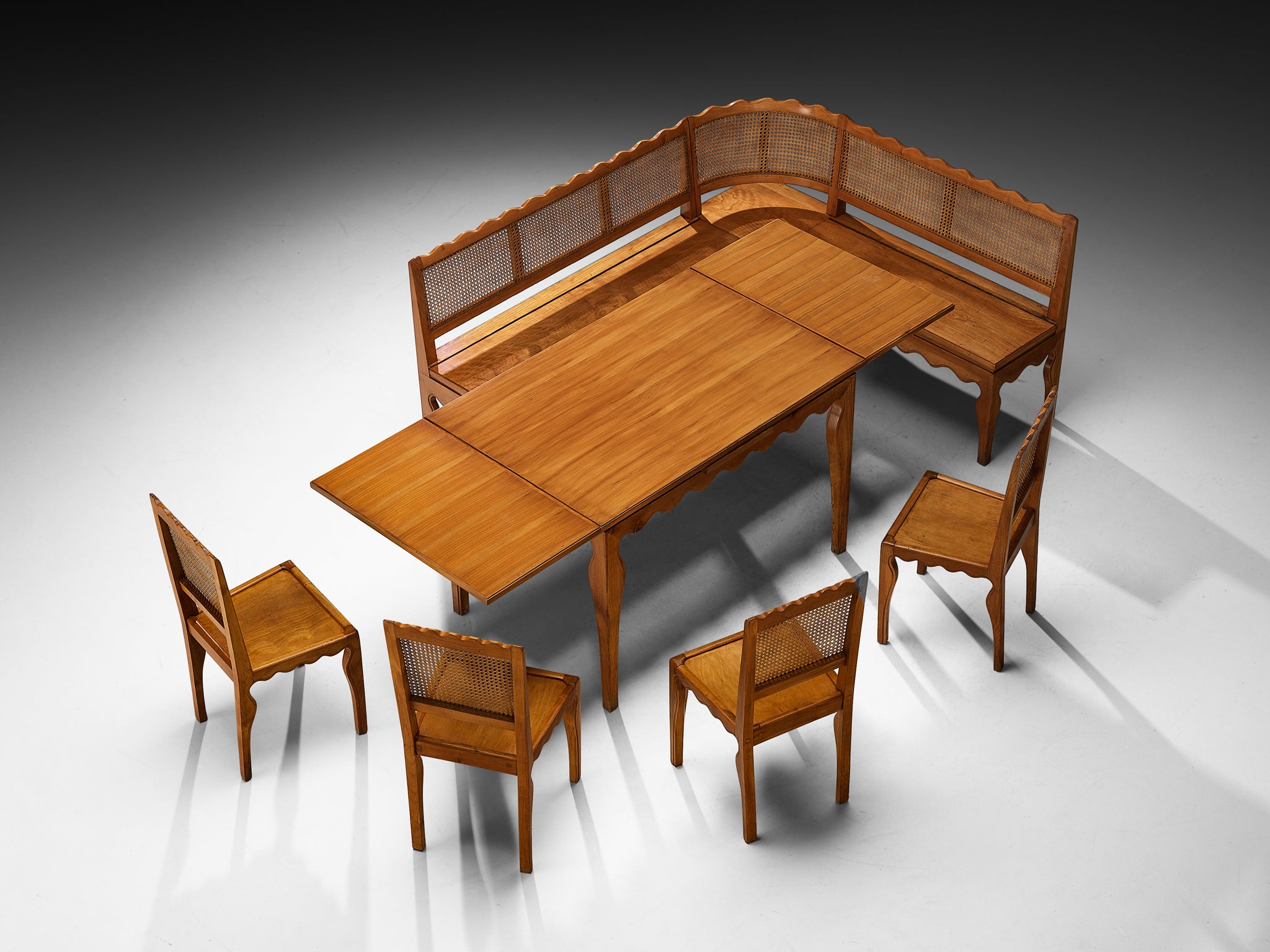
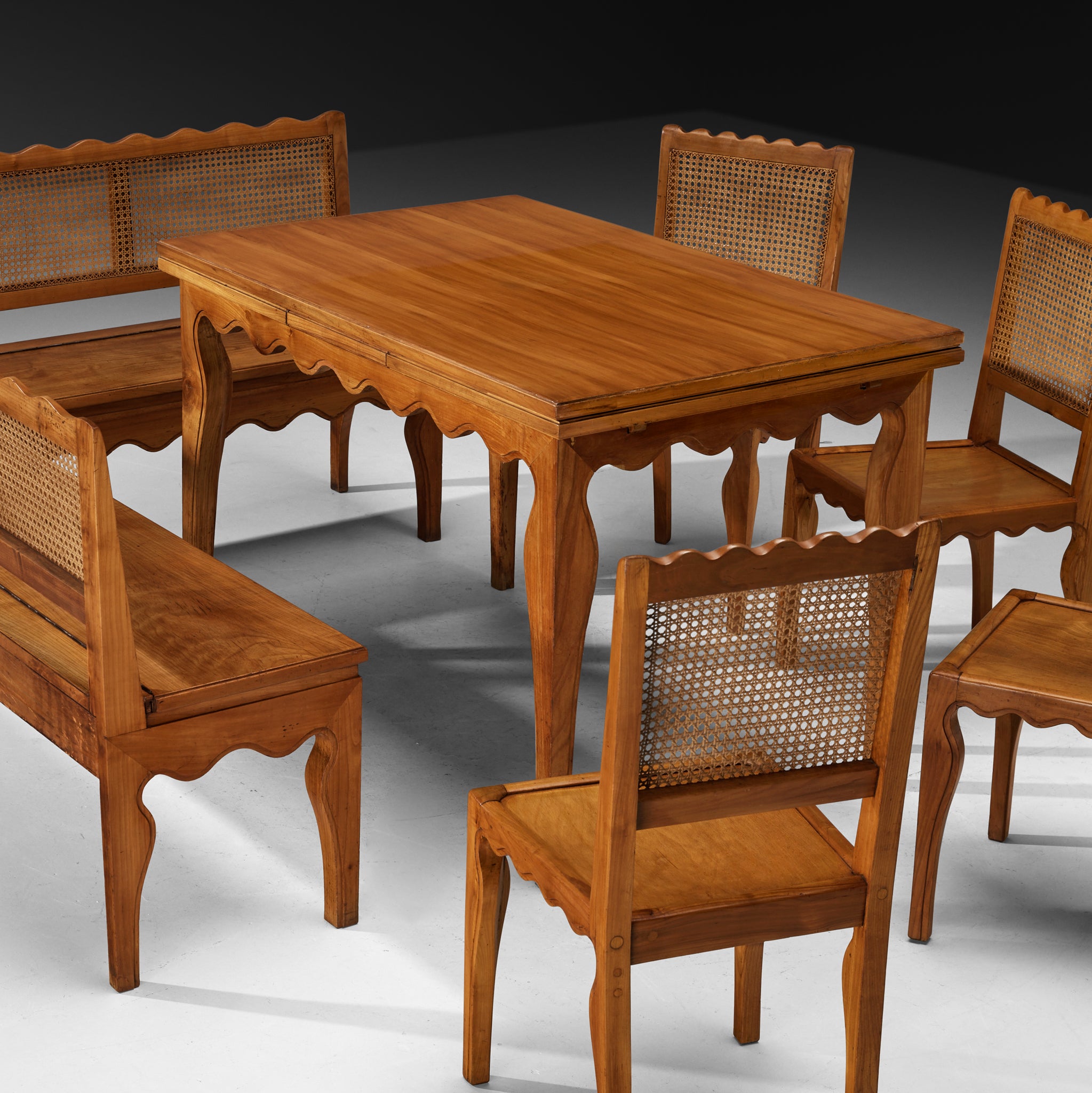
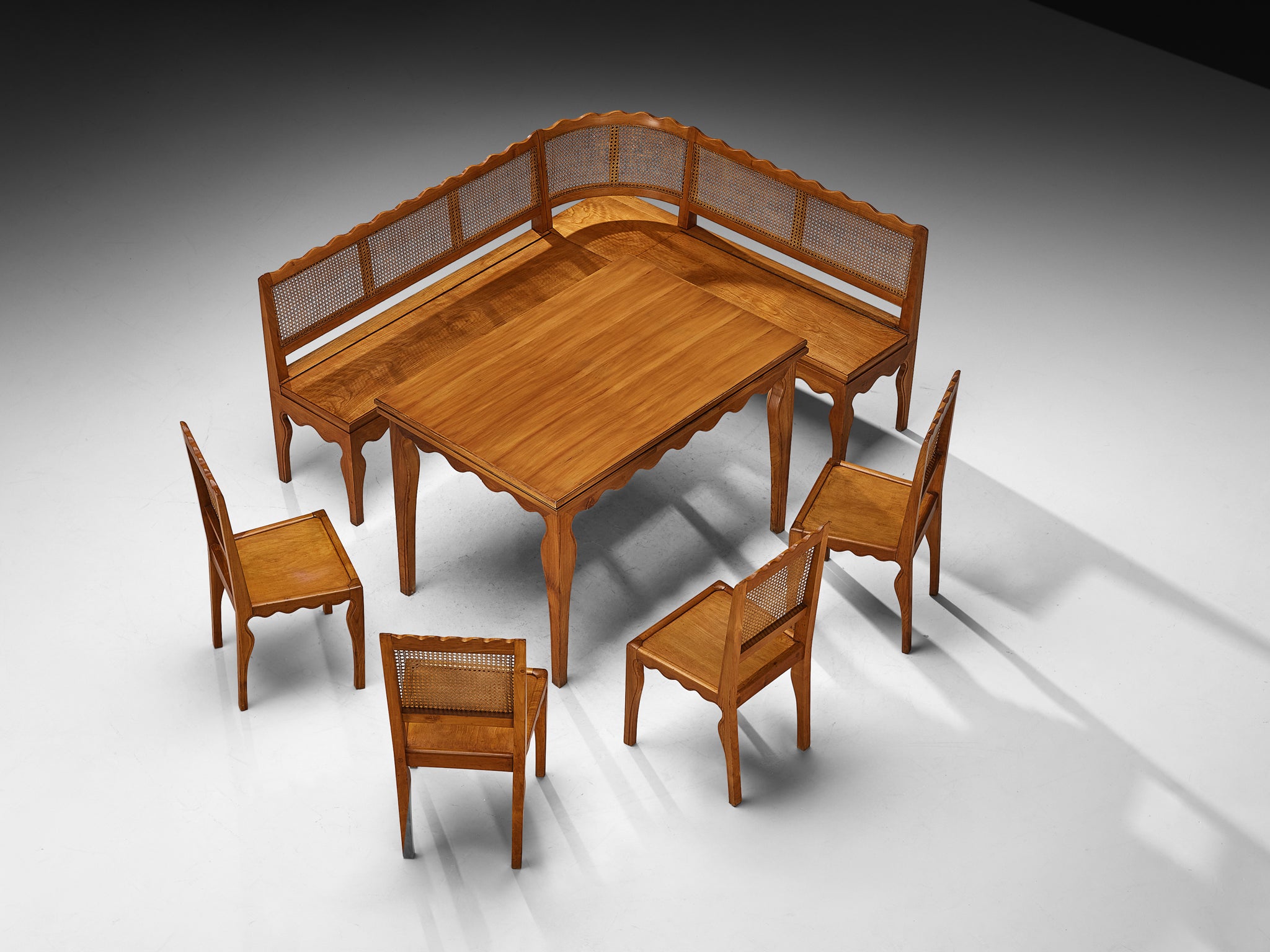
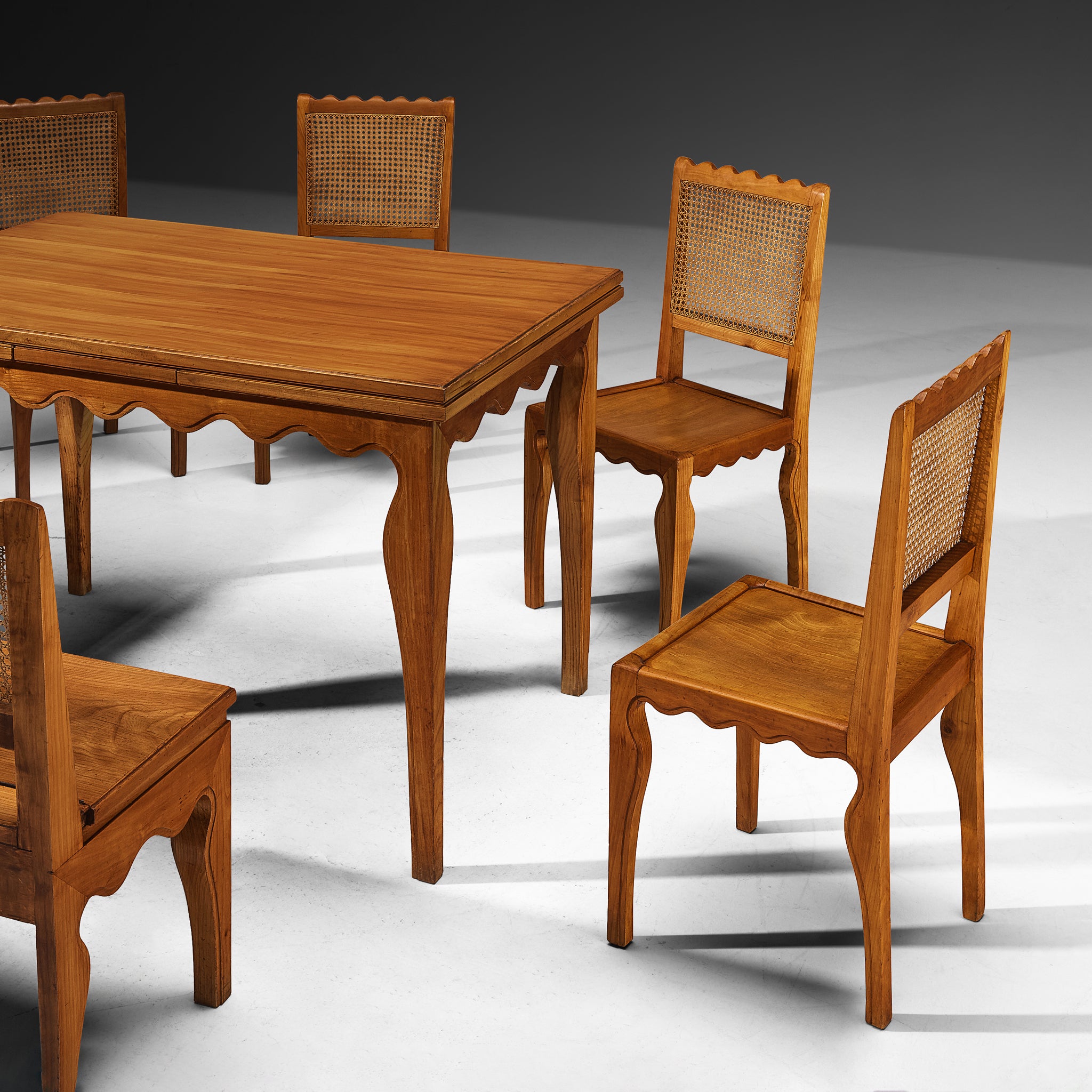
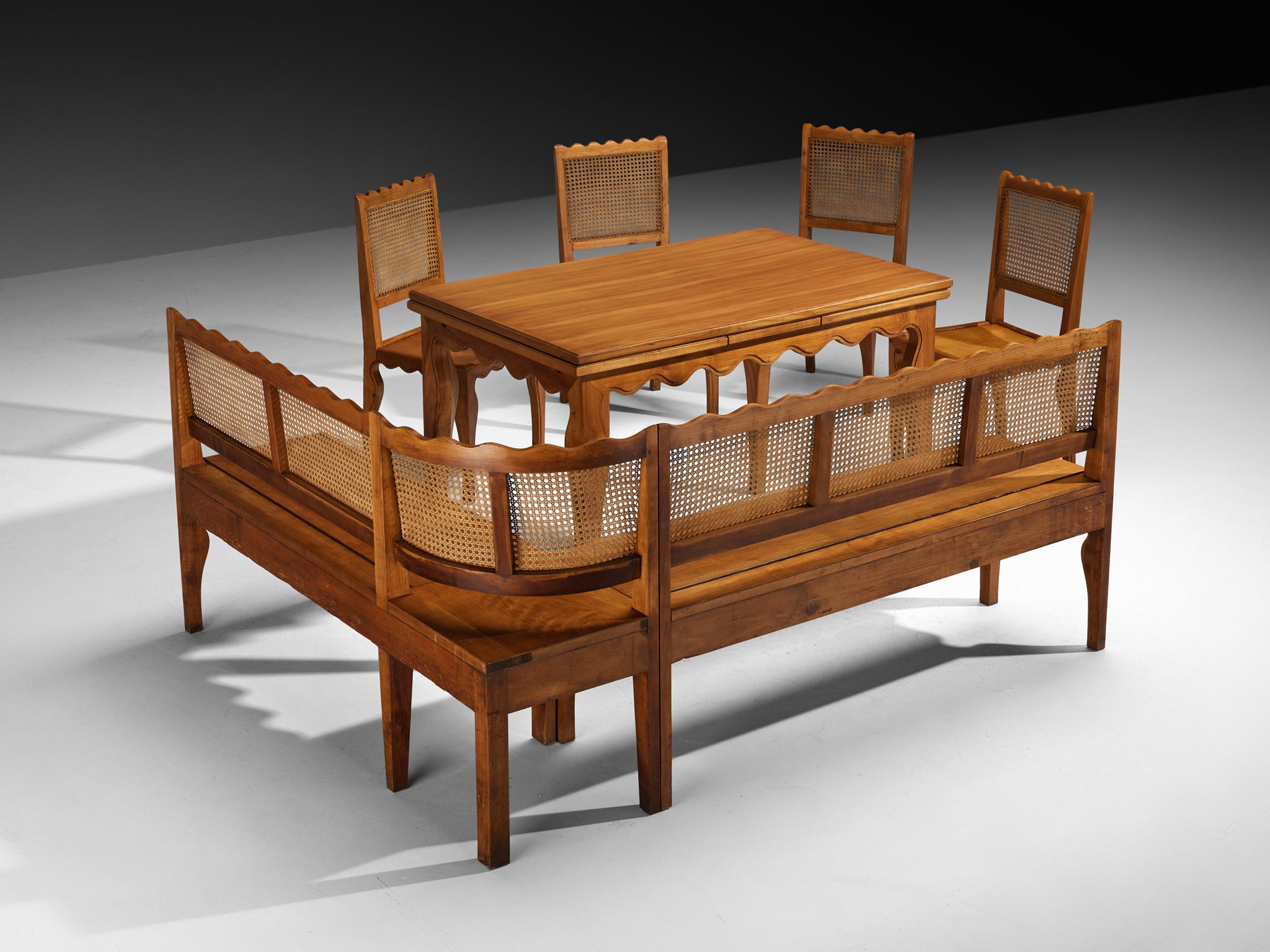
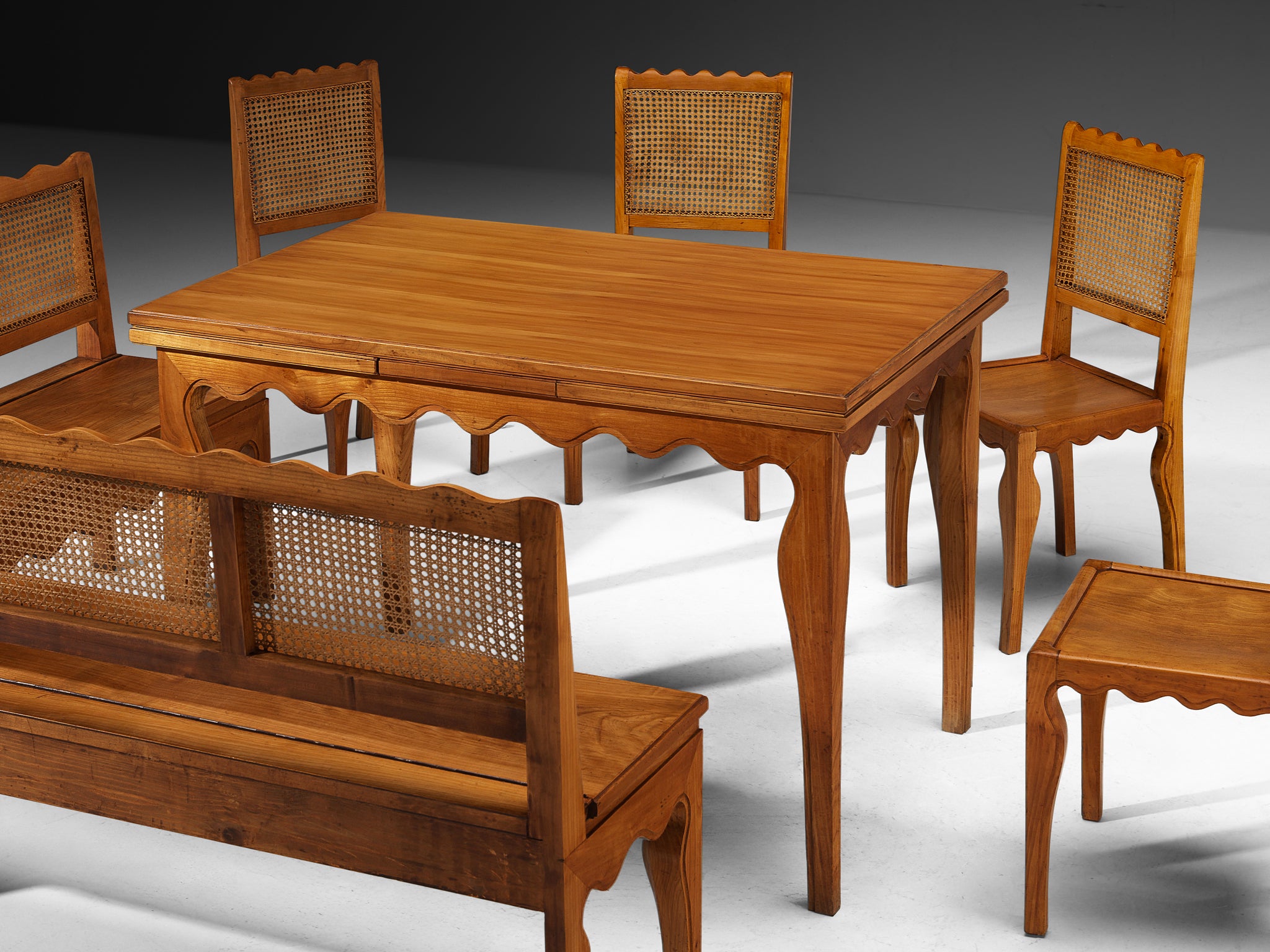
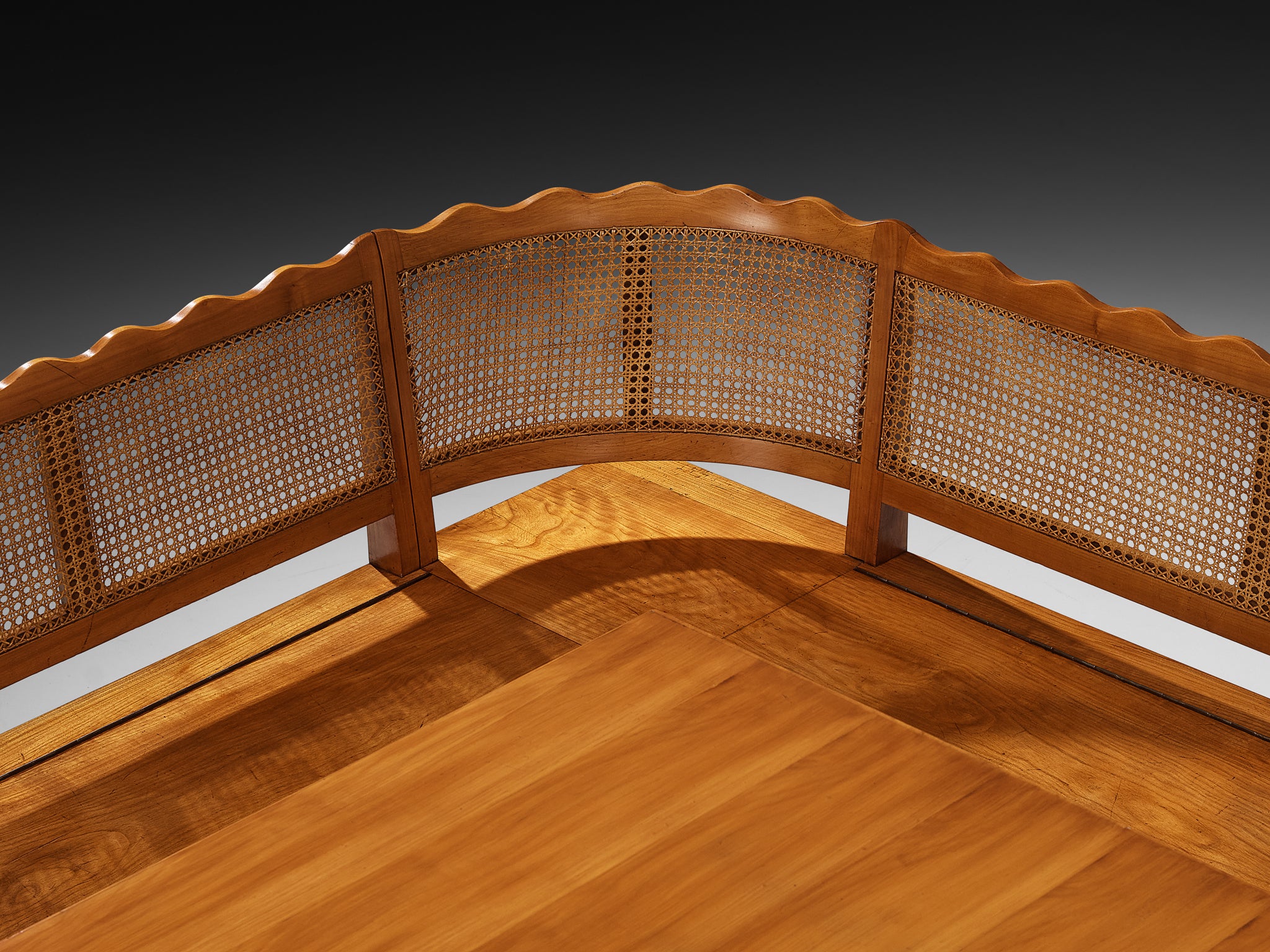
Crafted by the visionary Italian designer and architect Paolo Buffa (1903–1970), this rare dining ensemble exemplifies his refined decorative sensibility and the modern spirit of the 1940s. Comprising a rectangular table, a corner bench, and four chairs, the set radiates both elegance and functional harmony. Each element is united by Buffa’s signature motifs: scalloped aprons that evoke undulating wave patterns and subtly curved legs that balance sturdiness with grace. The high-backed bench and chairs, finished with finely caned panels, highlight Buffa’s mastery in merging comfort with decorative restraint. Fashioned from cherry wood, the ensemble reveals a striking naturalistic grain, glowing with an age-acquired patina that enhances its warmth and authenticity. The careful detailing, at once understated and ornamental, attest to Buffa’s gift for transforming everyday furniture into objects of refined beauty. In its thoughtful proportions and decorative flourishes, this dining set encapsulates the very essence of Italian design in the 1940s, where tradition and modernity were brought into exquisite dialogue.
Paolo Buffa (born 1903, Milan – died 1970, Milan), a distinguished figure in the world of Italian furniture design and architecture, graced the scene with his unmistakable style for a span of almost fifty years. Buffa’s artistic repertoire is notably distinguished by his expert fusion of neoclassical and sleek Art Deco formal elements. Crafted with finesse and elegance, Buffa’s premium-quality pieces were fashioned from refined materials, with the explicit purpose of furnishing the homes of a discerning and affluent clientele. These furniture creations were tailored to meet the demands of individuals who were inclined towards contemporary aesthetics, functionalism, and comfort. Buffa’s creative repertoire extended beyond furniture design to architecture, and he undertook an array of commissions that spanned public buildings, as well as villas and country homes.
Paolo Buffa’s formative years were spent amidst an artistic milieu, having been born to Giovanni Buffa, a renowned draftsman of ex- ceptional talent. Giovanni Buffa shared ownership of a highly pros- perous workshop dedicated to the creation of exquisite stained glass artistry. Among his notable works are the stained glass windows of the illustrious Duomo di Milano, a historic cathedral located in Milan. Such a creative household fostered an environ- ment of artistic excellence, which undoubtedly played a crucial role in shaping Paolo Buffa’s artistic sensibilities.
Buffa’s artistic training commenced at the prestigious Accademia di Belle Arti di Brera, and he eventually obtained his degree from the Politecnico di Milano in 1927. After gaining experience working in his father’s studio, Buffa went on to work as an apprentice at the Ponti e Lancia studio, which was jointly owned by the celebrated architects Gio Ponti (1891- 1979) and Emilio Lancia (1890-1973). This experience proved to be a significant turning point in Buffa’s career, as he drew inspiration from Lombard Neoclassicism and was exposed to the ideas and concepts of some of the most prominent architects of the region. He assimilated these teachings and employed them in his own work, which was characterized by a fusion of traditional Lombard woodworking techniques and modern design aesthetics.
In 1928, Paolo Buffa founded his own design studio in Milan in partner- ship with architect Antonio Cassi Ramelli (1905-1980). Here, they pro- duced an extensive collection of furniture designs that drew inspiration from the classical revival style, albeit with a softened touch. In 1936, Buffa branched out on his own to establish an independent studio. He made a name for himself by showcasing his work at exhibitions, including the prestigious Triennale di Milano. Buffa’s furnishings were numerous and varied, but always tailored to the specific needs and desires of his discerning clients. Each piece was crafted to perfection by highly skilled artisans, such as cabinetmakers Turri Mosè, Fratelli Lietti, Quarti, Serafino Arrighi, Colico, and Angelo Marelli. Buffa’s passion for design persisted throughout his life, and he remained actively engaged in the field until his death in 1970.
Crafted by the visionary Italian designer and architect Paolo Buffa (1903–1970), this rare dining ensemble exemplifies his refined decorative sensibility and the modern spirit of the 1940s. Comprising a rectangular table, a corner bench, and four chairs, the set radiates both elegance and functional harmony. Each element is united by Buffa’s signature motifs: scalloped aprons that evoke undulating wave patterns and subtly curved legs that balance sturdiness with grace. The high-backed bench and chairs, finished with finely caned panels, highlight Buffa’s mastery in merging comfort with decorative restraint. Fashioned from cherry wood, the ensemble reveals a striking naturalistic grain, glowing with an age-acquired patina that enhances its warmth and authenticity. The careful detailing, at once understated and ornamental, attest to Buffa’s gift for transforming everyday furniture into objects of refined beauty. In its thoughtful proportions and decorative flourishes, this dining set encapsulates the very essence of Italian design in the 1940s, where tradition and modernity were brought into exquisite dialogue.
Paolo Buffa (born 1903, Milan – died 1970, Milan), a distinguished figure in the world of Italian furniture design and architecture, graced the scene with his unmistakable style for a span of almost fifty years. Buffa’s artistic repertoire is notably distinguished by his expert fusion of neoclassical and sleek Art Deco formal elements. Crafted with finesse and elegance, Buffa’s premium-quality pieces were fashioned from refined materials, with the explicit purpose of furnishing the homes of a discerning and affluent clientele. These furniture creations were tailored to meet the demands of individuals who were inclined towards contemporary aesthetics, functionalism, and comfort. Buffa’s creative repertoire extended beyond furniture design to architecture, and he undertook an array of commissions that spanned public buildings, as well as villas and country homes.
Paolo Buffa’s formative years were spent amidst an artistic milieu, having been born to Giovanni Buffa, a renowned draftsman of ex- ceptional talent. Giovanni Buffa shared ownership of a highly pros- perous workshop dedicated to the creation of exquisite stained glass artistry. Among his notable works are the stained glass windows of the illustrious Duomo di Milano, a historic cathedral located in Milan. Such a creative household fostered an environ- ment of artistic excellence, which undoubtedly played a crucial role in shaping Paolo Buffa’s artistic sensibilities.
Buffa’s artistic training commenced at the prestigious Accademia di Belle Arti di Brera, and he eventually obtained his degree from the Politecnico di Milano in 1927. After gaining experience working in his father’s studio, Buffa went on to work as an apprentice at the Ponti e Lancia studio, which was jointly owned by the celebrated architects Gio Ponti (1891- 1979) and Emilio Lancia (1890-1973). This experience proved to be a significant turning point in Buffa’s career, as he drew inspiration from Lombard Neoclassicism and was exposed to the ideas and concepts of some of the most prominent architects of the region. He assimilated these teachings and employed them in his own work, which was characterized by a fusion of traditional Lombard woodworking techniques and modern design aesthetics.
In 1928, Paolo Buffa founded his own design studio in Milan in partner- ship with architect Antonio Cassi Ramelli (1905-1980). Here, they pro- duced an extensive collection of furniture designs that drew inspiration from the classical revival style, albeit with a softened touch. In 1936, Buffa branched out on his own to establish an independent studio. He made a name for himself by showcasing his work at exhibitions, including the prestigious Triennale di Milano. Buffa’s furnishings were numerous and varied, but always tailored to the specific needs and desires of his discerning clients. Each piece was crafted to perfection by highly skilled artisans, such as cabinetmakers Turri Mosè, Fratelli Lietti, Quarti, Serafino Arrighi, Colico, and Angelo Marelli. Buffa’s passion for design persisted throughout his life, and he remained actively engaged in the field until his death in 1970.
,%20this%20rare%20dining%20ensembl...)
Choose options
Paolo Buffa Rare Dining Set with Table, Chairs and Corner Bench in Cherry Wood
Sale price$64,000.00
Regular price
Tearsheet
×
Receive a copy in your email or download directly:
I accept emails from Morentz.
VAT within the EU: When buying or delivering an item within the EU, VAT usually applies and will be added.
Product Details