
Osvaldo Borsani for Tecno ‘T96’ Executive Corner Desk in Black Lacquered Wood
 Open here
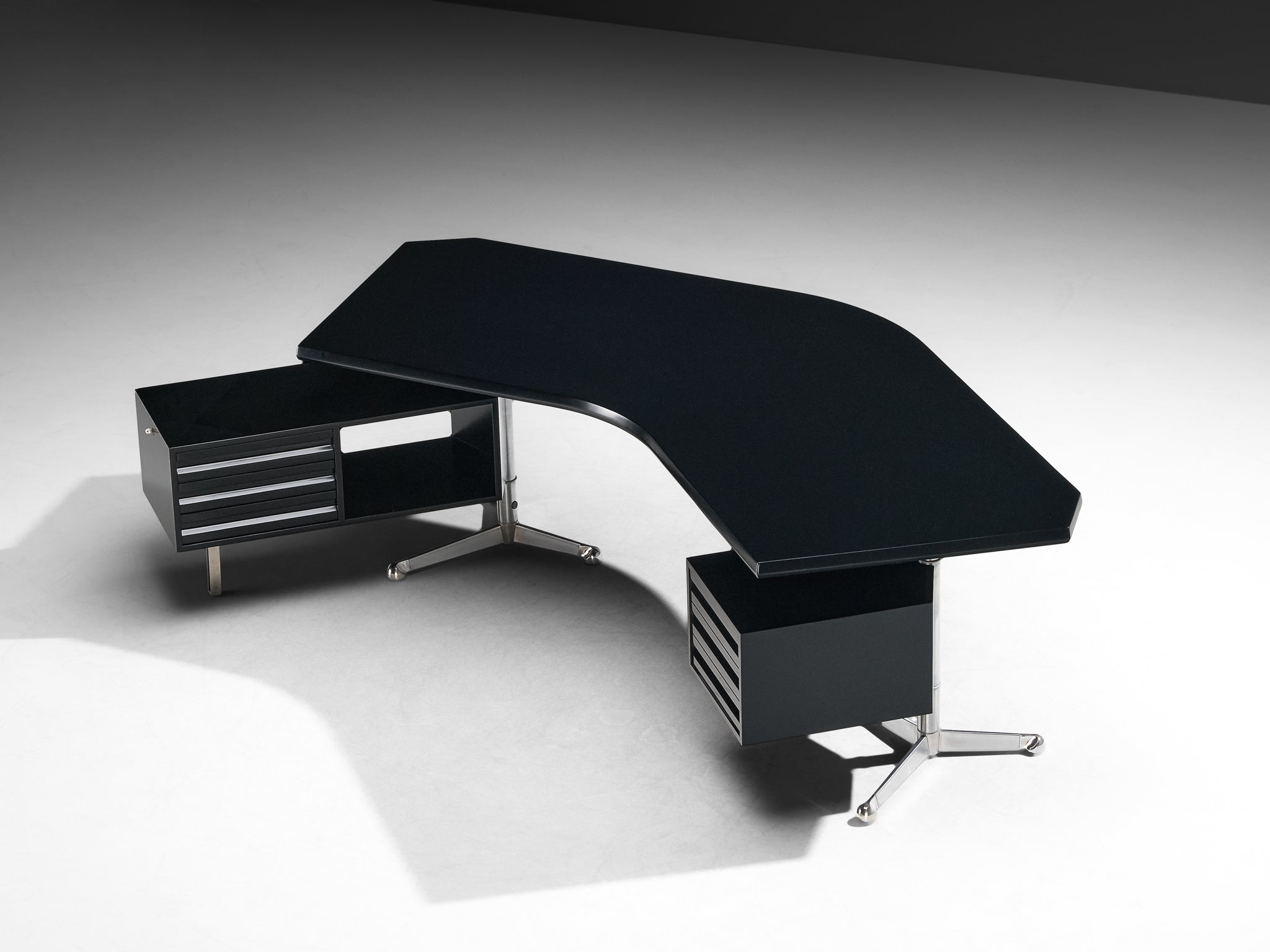
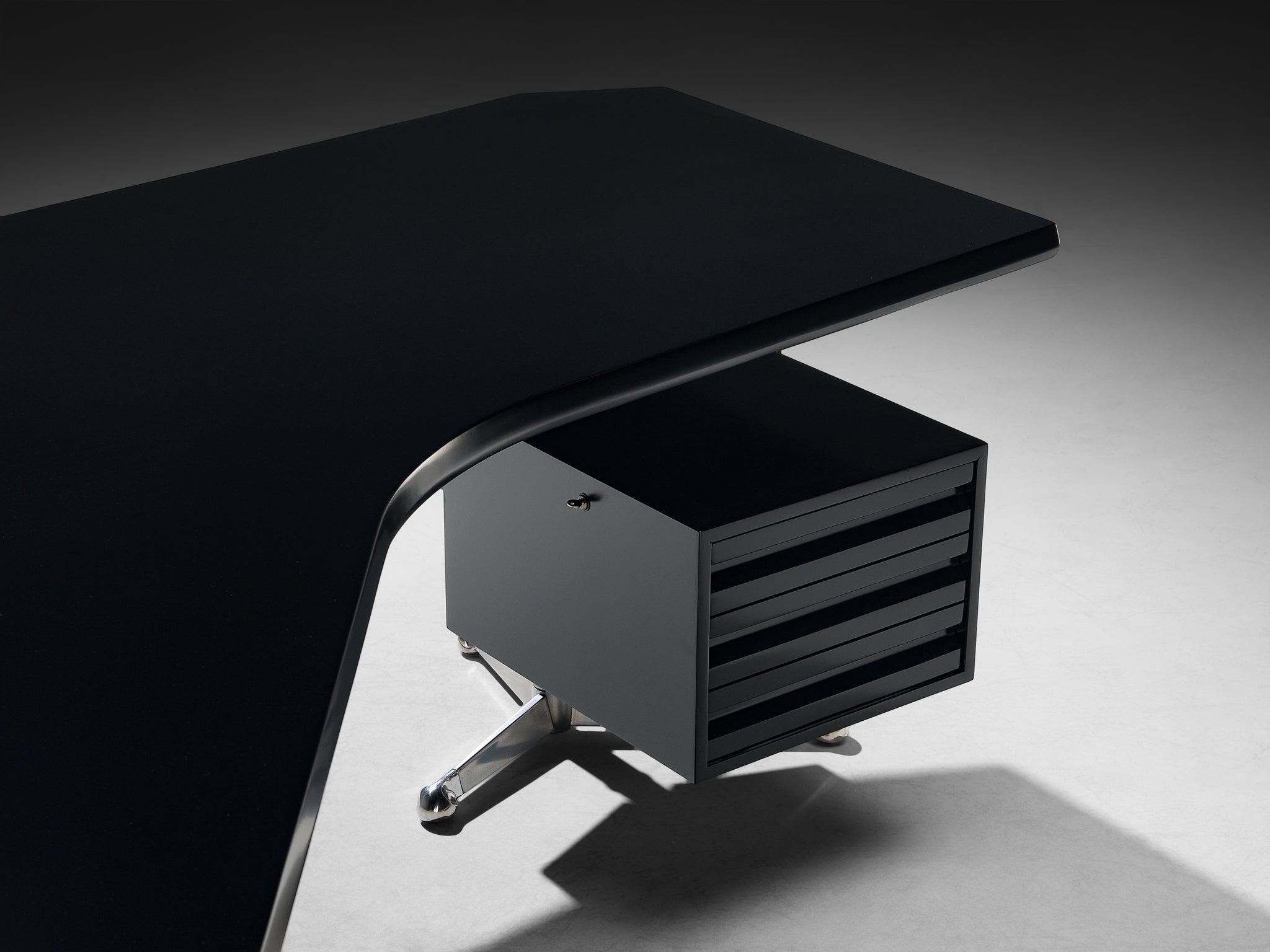
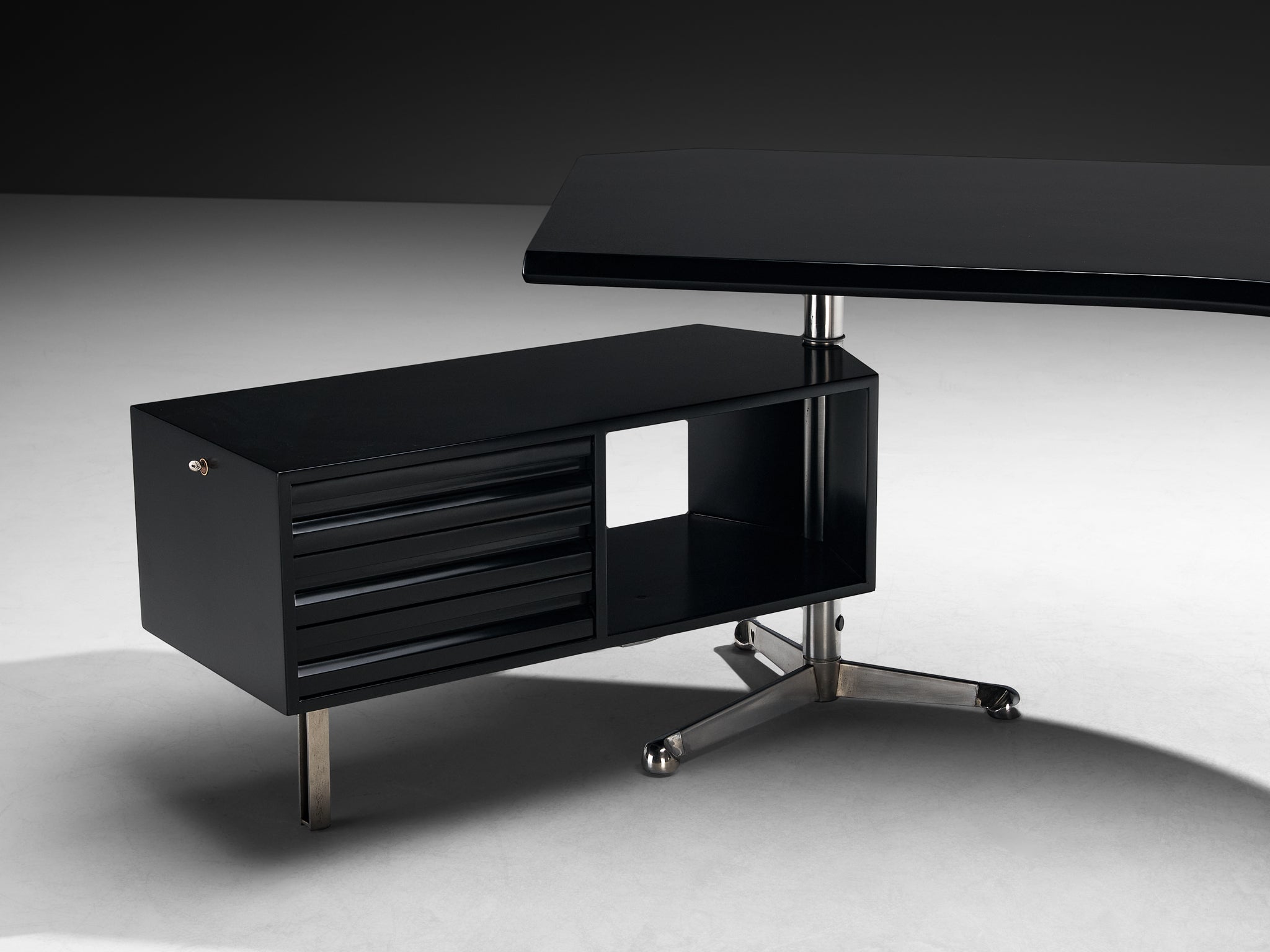
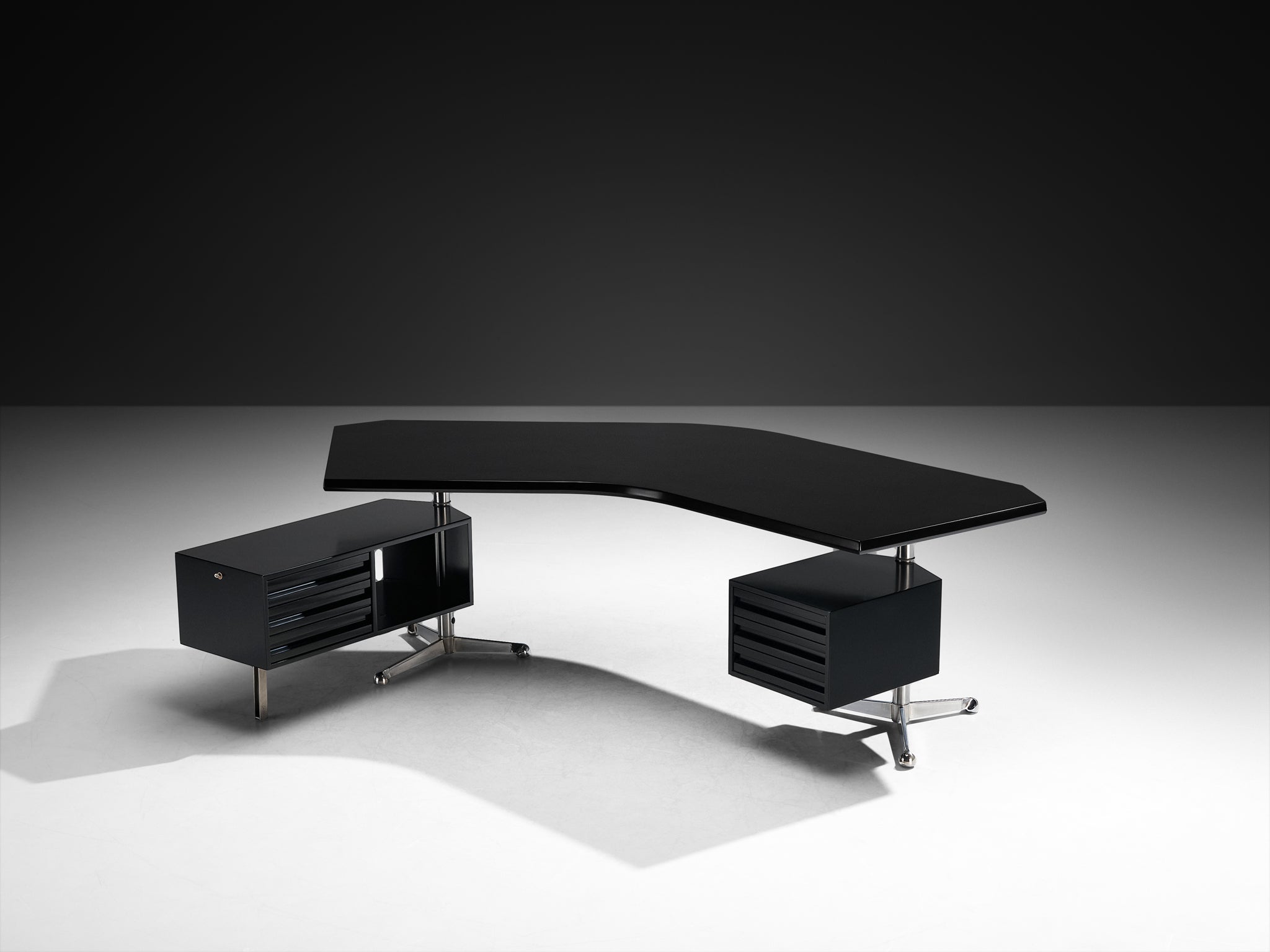
Osvaldo Borsani for Tecno, executive desk, model ‘T96’, lacquered wood, steel, chromed metal, Italy, design 1956, produced 1958
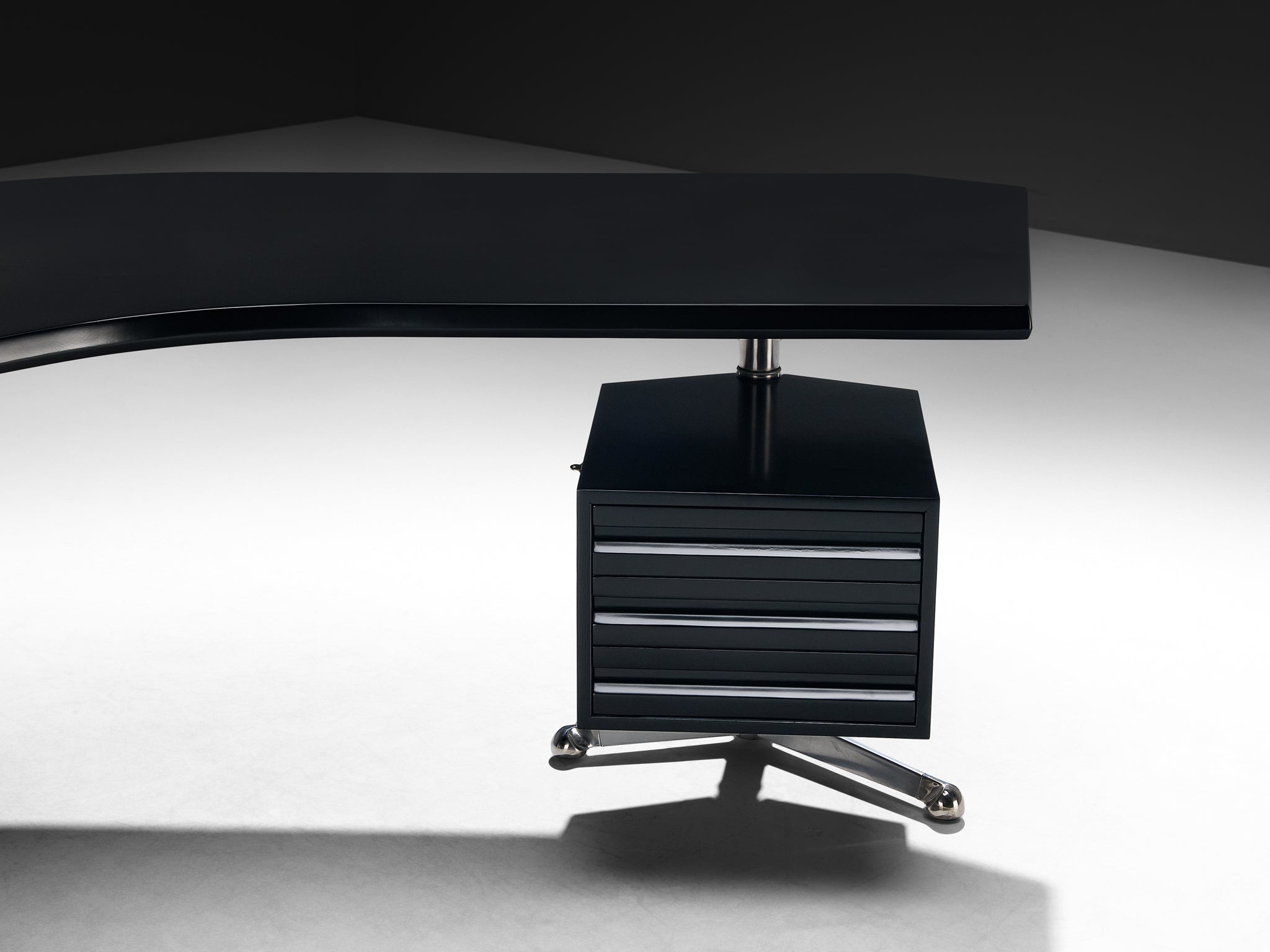
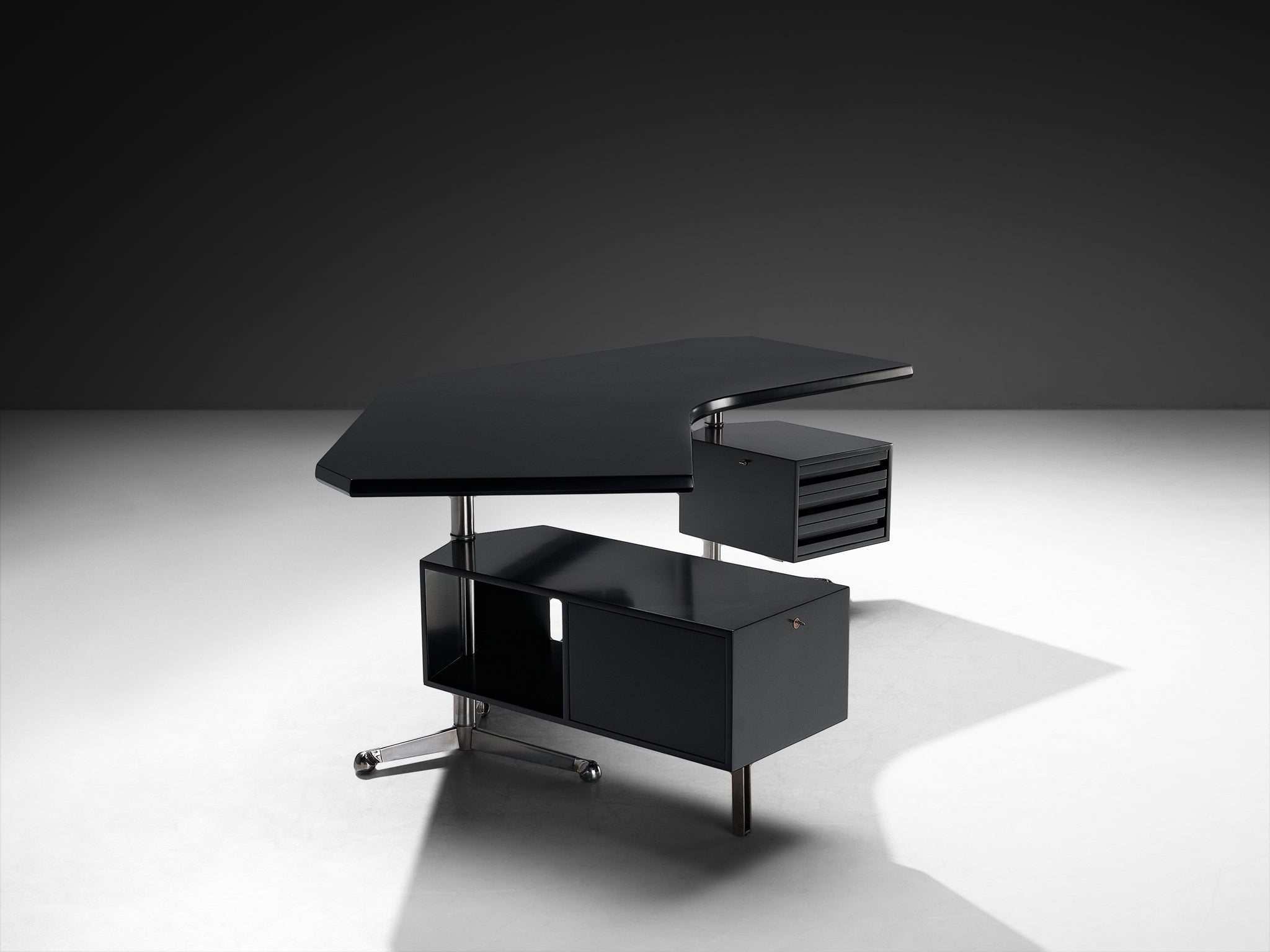
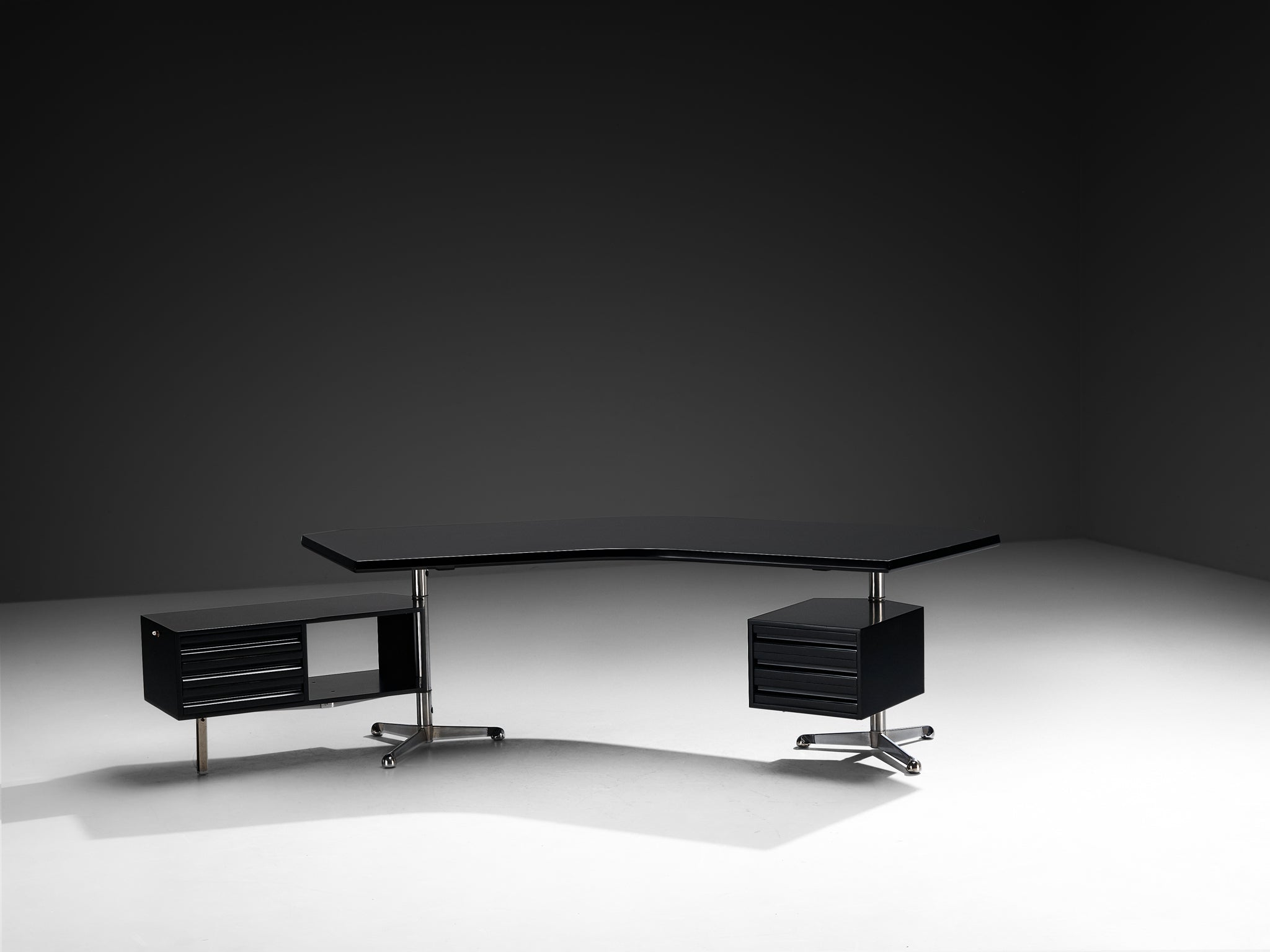
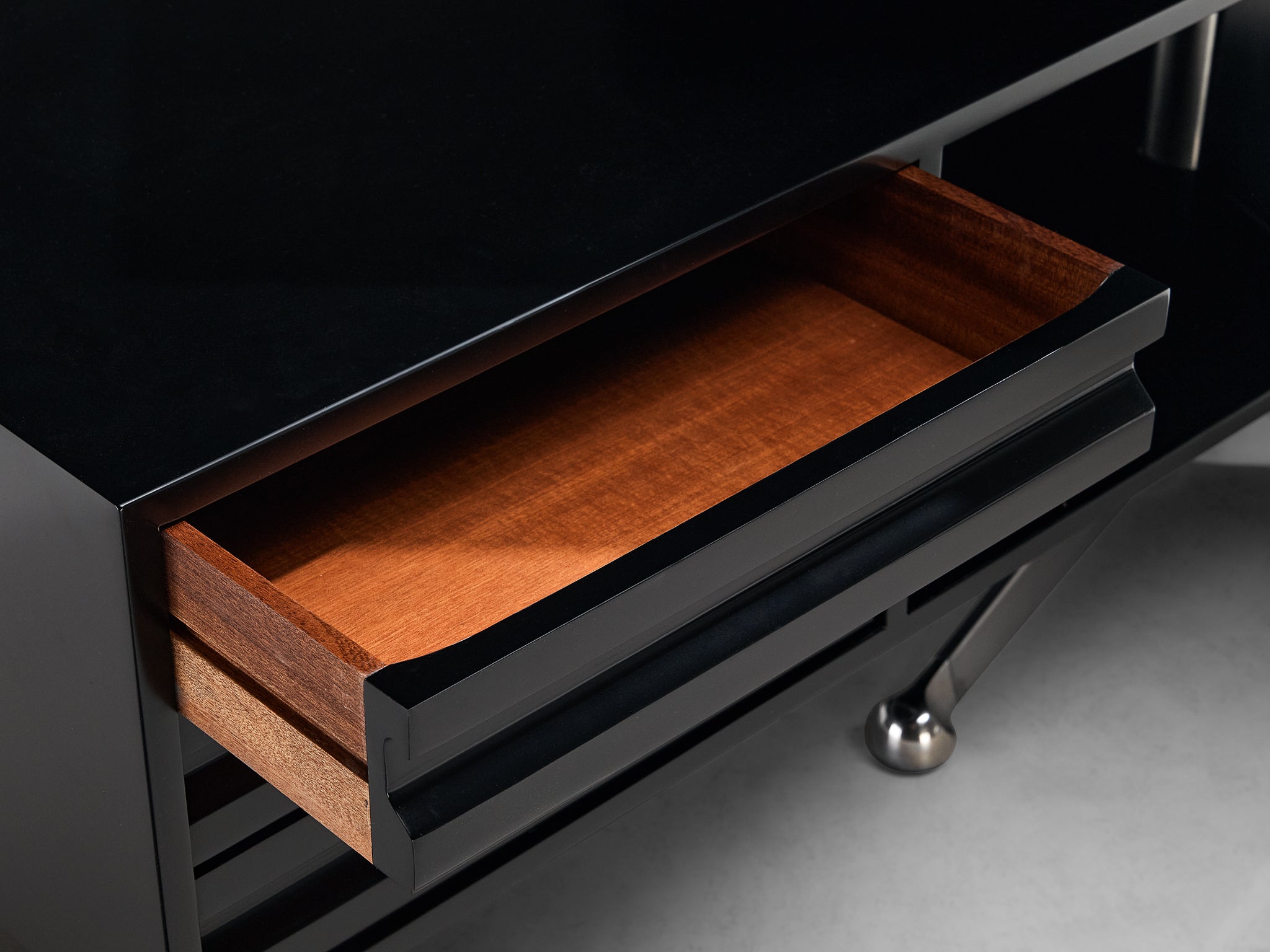
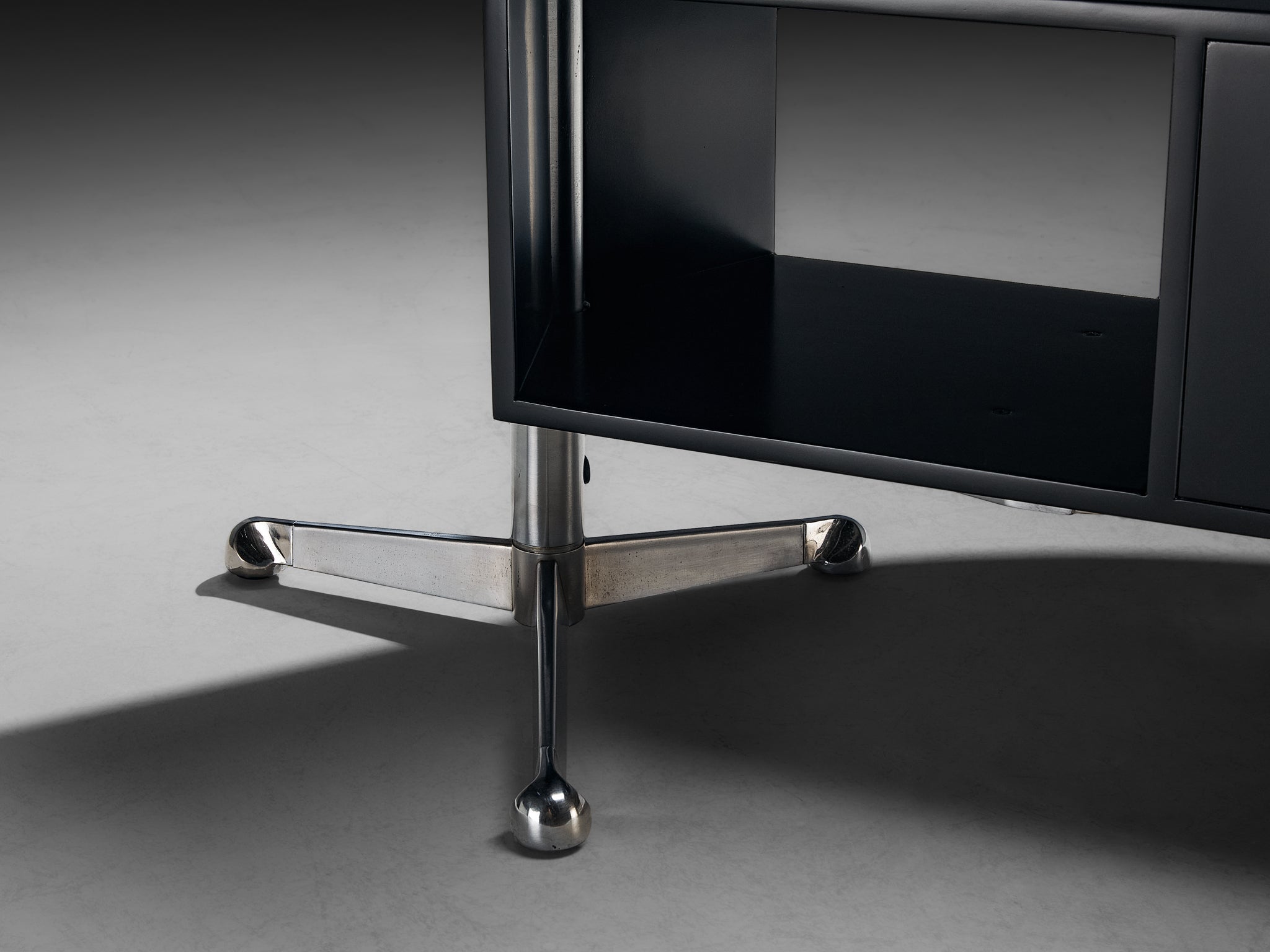
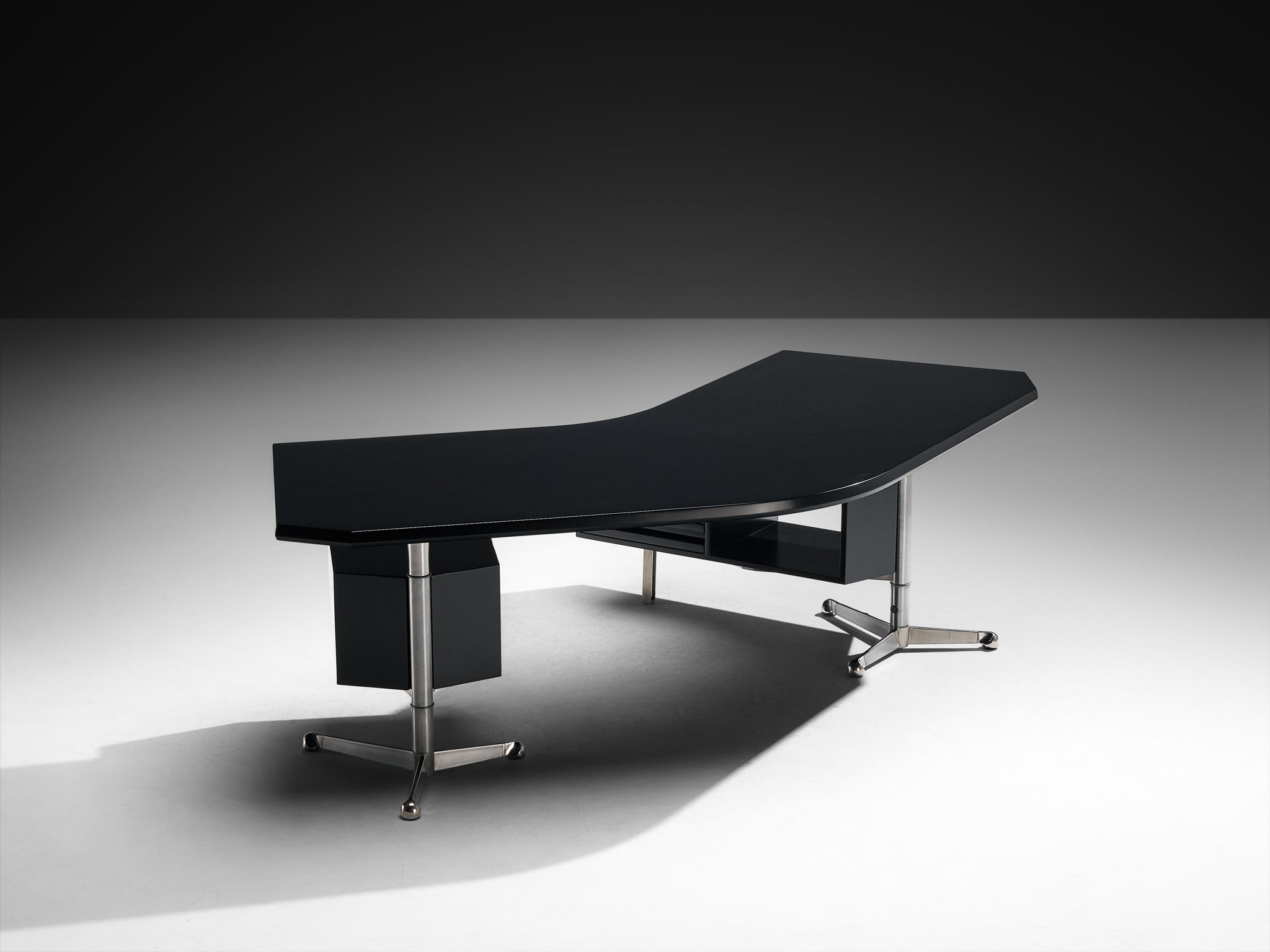
This ‘T96’ executive desk is designed by Osvaldo Borsani in 1956 and produced by Tecno in 1958. The model was initially part of the coordinated furniture for the ENI building in San Donato Milanese. The original angled shape of the top was influenced by the hexagonal floor plan of the building, designed by Marcello Nizzoli and Mario Oliveri. The T96 desk's form was less rigid and more dynamic, making it appealing. Its swiveling drawer units made it an innovative model that met the growing needs of modern offices, prioritizing practicality, utility, and interaction over prestige. The tabletop resembles the shape of a boomerang and is supported by tripod legs. The drawer compartments are attached to the feet with a swivel function, allowing the user to change the position of the units. In addition, the cabinets can be interchanged. The black lacquered wood gives the desk its defining, distinctive look. Whatever perspective you take on it, every angle provides a different visual excitement, and, therefore, this desk can be placed freely in the room.
The desk has been completely restored by our experienced craftspeople in our own in-house restoration atelier. With high attention for the original, they make sure every piece retains its value and is ready for the many years to come.
Osvaldo Borsani (1911-1985) was an Italian designer and architect, raised by a family of fine furniture makers in Varedo. At the age of 16, he joined his father’s furniture shop, the Atelier di Varedo, which was fully engaged in designing and furnishing homes inspired by the Italian Art Deco movement. The designer of the atelier was the Italian architect Gino Maggioni (1898-1955) who was known for his Viennese Jugendstil orientation of the early 20th century. In the 1930s, he graduated from the Accademia di Belle Arti di Brera and Politecnico di Milano, where he studied Fine Arts and Architecture respectively. In 1932, the family company was renamed ‘Arredamenti Borsani’ and opened its first studio in Milan. During this period, he encountered Avant-Garde artists of various artistic disciplines like Lucio Fontana (1899-1968), Agenore Fabbri (1911-1998), Aligi Sassu (1912-2000), Roberto Crippa (1921-1972), Fausto Melotti (1901-1986), Arnaldo Pomodoro (1926-) and Giò Pomodoro (1930-2002). These collaborations resulted in the creation of furniture and interior design projects with a high-level of craftsmanship and artistry. In 1953, Borsani founded together with his twin brother Fulgenzio Borsani ‘Tecno’, a design and manufacturing company that produced items based on mechanical innovations and refined technicality. The ‘P40’ adjustable lounge chair (1953) has become the ideological manifesto of Borsani's Tecno program, and still remains the best known, exemplary piece in the Tecno catalogue. Other iconic works that were produced by Tecno were created by Gio Ponti (1891-1979), Vico Magistretti (1920-2006), Carlo de Carli (1910-1999), Gae Aulenti (1927-2012), and many other influential Italian designers. Osvaldo Borsani died in 1985 in Milan. His diverse and sophisticated oeuvre is to be found in permanent collections, such as of the Museum of Modern Art (MoMA) in New York, the Victoria & Albert Museum in London, Neue Sammlung in Munich, the Centre Pompidou in Paris, and the Trienalle di Milano Museum.
This ‘T96’ executive desk is designed by Osvaldo Borsani in 1956 and produced by Tecno in 1958. The model was initially part of the coordinated furniture for the ENI building in San Donato Milanese. The original angled shape of the top was influenced by the hexagonal floor plan of the building, designed by Marcello Nizzoli and Mario Oliveri. The T96 desk's form was less rigid and more dynamic, making it appealing. Its swiveling drawer units made it an innovative model that met the growing needs of modern offices, prioritizing practicality, utility, and interaction over prestige. The tabletop resembles the shape of a boomerang and is supported by tripod legs. The drawer compartments are attached to the feet with a swivel function, allowing the user to change the position of the units. In addition, the cabinets can be interchanged. The black lacquered wood gives the desk its defining, distinctive look. Whatever perspective you take on it, every angle provides a different visual excitement, and, therefore, this desk can be placed freely in the room.
The desk has been completely restored by our experienced craftspeople in our own in-house restoration atelier. With high attention for the original, they make sure every piece retains its value and is ready for the many years to come.
Osvaldo Borsani (1911-1985) was an Italian designer and architect, raised by a family of fine furniture makers in Varedo. At the age of 16, he joined his father’s furniture shop, the Atelier di Varedo, which was fully engaged in designing and furnishing homes inspired by the Italian Art Deco movement. The designer of the atelier was the Italian architect Gino Maggioni (1898-1955) who was known for his Viennese Jugendstil orientation of the early 20th century. In the 1930s, he graduated from the Accademia di Belle Arti di Brera and Politecnico di Milano, where he studied Fine Arts and Architecture respectively. In 1932, the family company was renamed ‘Arredamenti Borsani’ and opened its first studio in Milan. During this period, he encountered Avant-Garde artists of various artistic disciplines like Lucio Fontana (1899-1968), Agenore Fabbri (1911-1998), Aligi Sassu (1912-2000), Roberto Crippa (1921-1972), Fausto Melotti (1901-1986), Arnaldo Pomodoro (1926-) and Giò Pomodoro (1930-2002). These collaborations resulted in the creation of furniture and interior design projects with a high-level of craftsmanship and artistry. In 1953, Borsani founded together with his twin brother Fulgenzio Borsani ‘Tecno’, a design and manufacturing company that produced items based on mechanical innovations and refined technicality. The ‘P40’ adjustable lounge chair (1953) has become the ideological manifesto of Borsani's Tecno program, and still remains the best known, exemplary piece in the Tecno catalogue. Other iconic works that were produced by Tecno were created by Gio Ponti (1891-1979), Vico Magistretti (1920-2006), Carlo de Carli (1910-1999), Gae Aulenti (1927-2012), and many other influential Italian designers. Osvaldo Borsani died in 1985 in Milan. His diverse and sophisticated oeuvre is to be found in permanent collections, such as of the Museum of Modern Art (MoMA) in New York, the Victoria & Albert Museum in London, Neue Sammlung in Munich, the Centre Pompidou in Paris, and the Trienalle di Milano Museum.

Choose options
Osvaldo Borsani for Tecno ‘T96’ Executive Corner Desk in Black Lacquered Wood
Sale price$18,700.00
Regular price
Product Details
VAT within the EU: When buying or delivering an item within the EU, VAT usually applies and will be added.