


Nerone Giovanni Ceccarelli 'Hermes' Coffee Table in Wood and Glass
Tearsheet
×
Receive a copy in your email or download directly:
I accept emails from Morentz.
 Open here
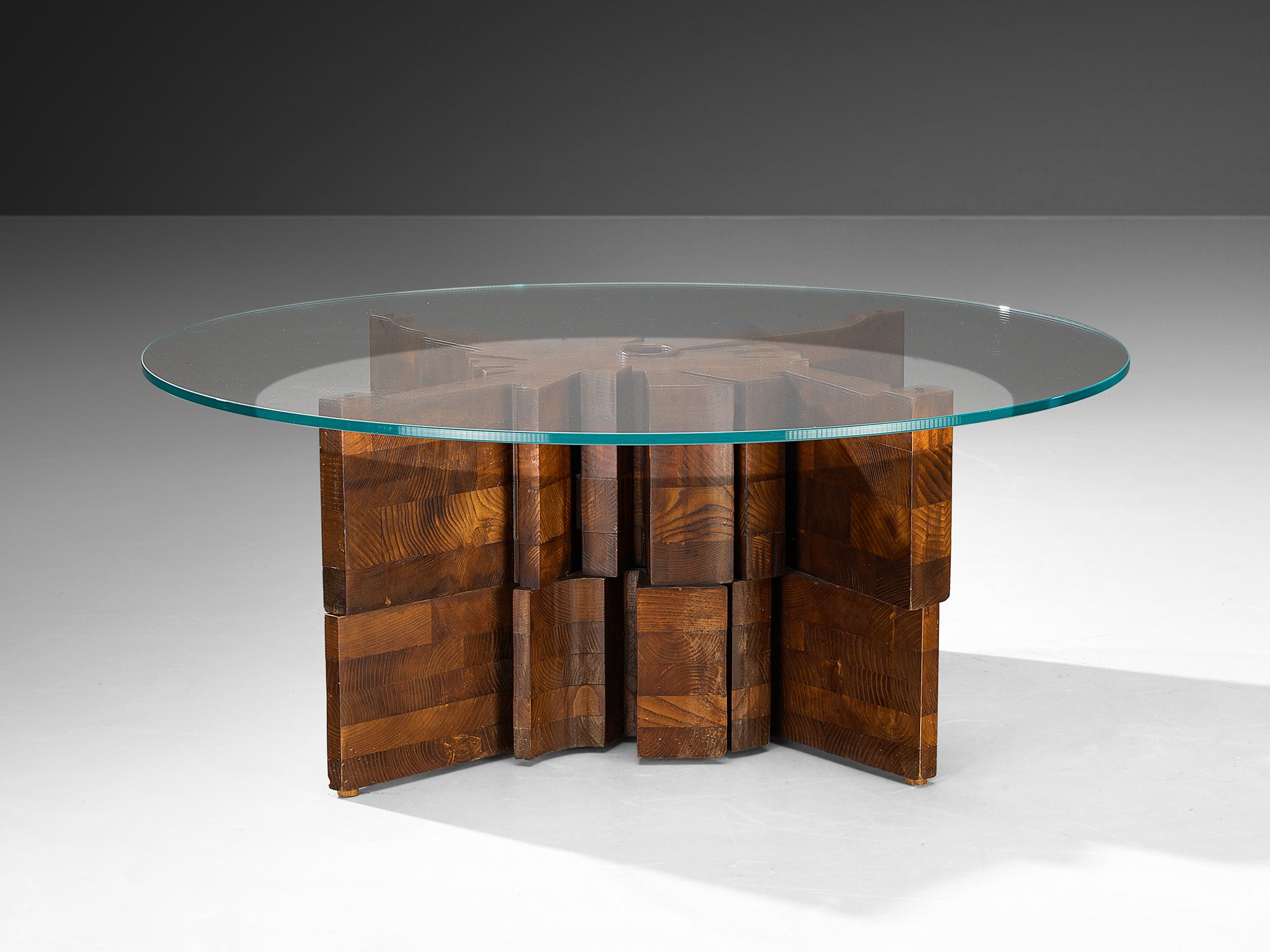
Nerone Giovanni Ceccarelli, coffee table model 'Hermes', wood, glass, Italy, 1970s
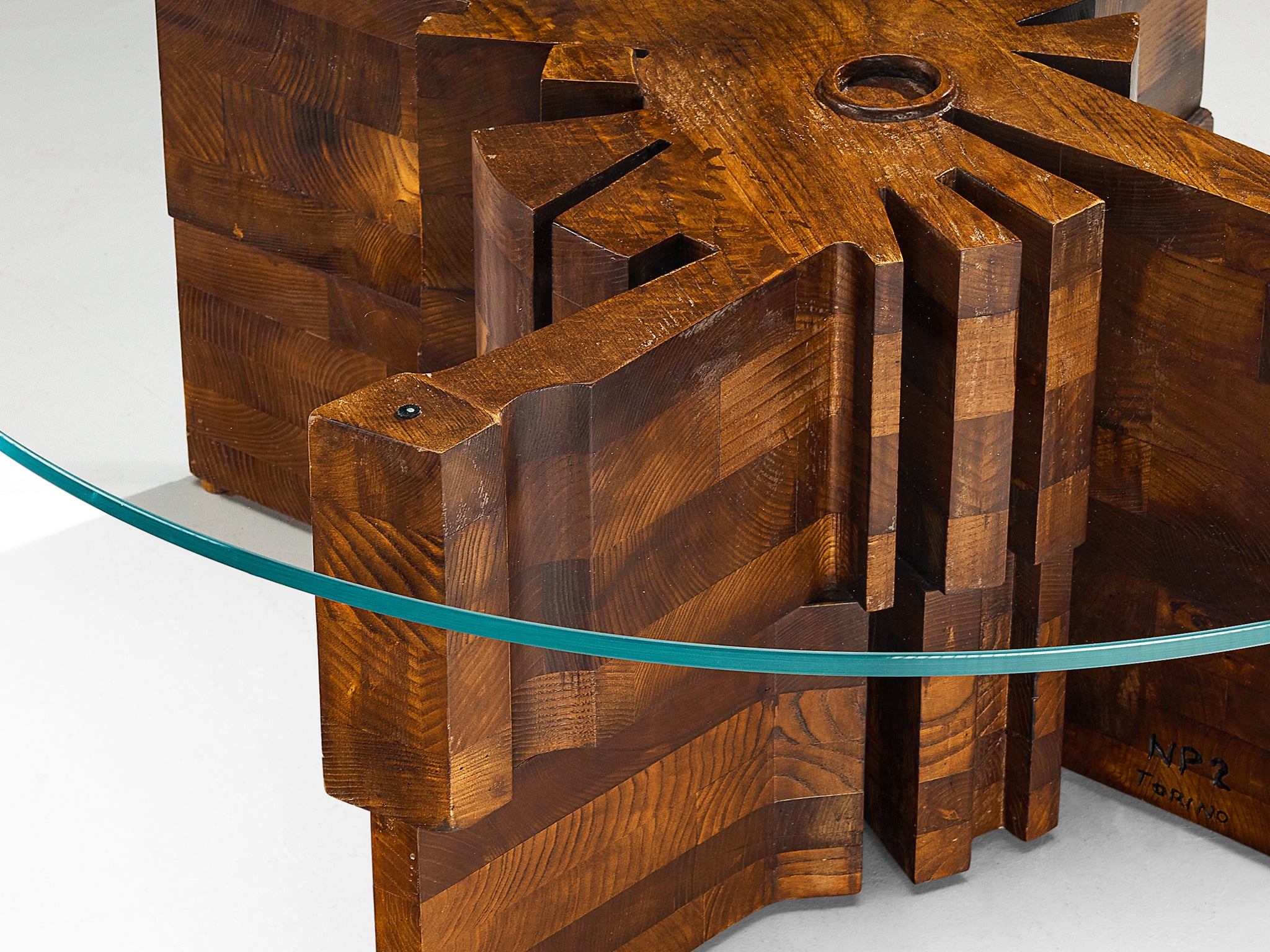
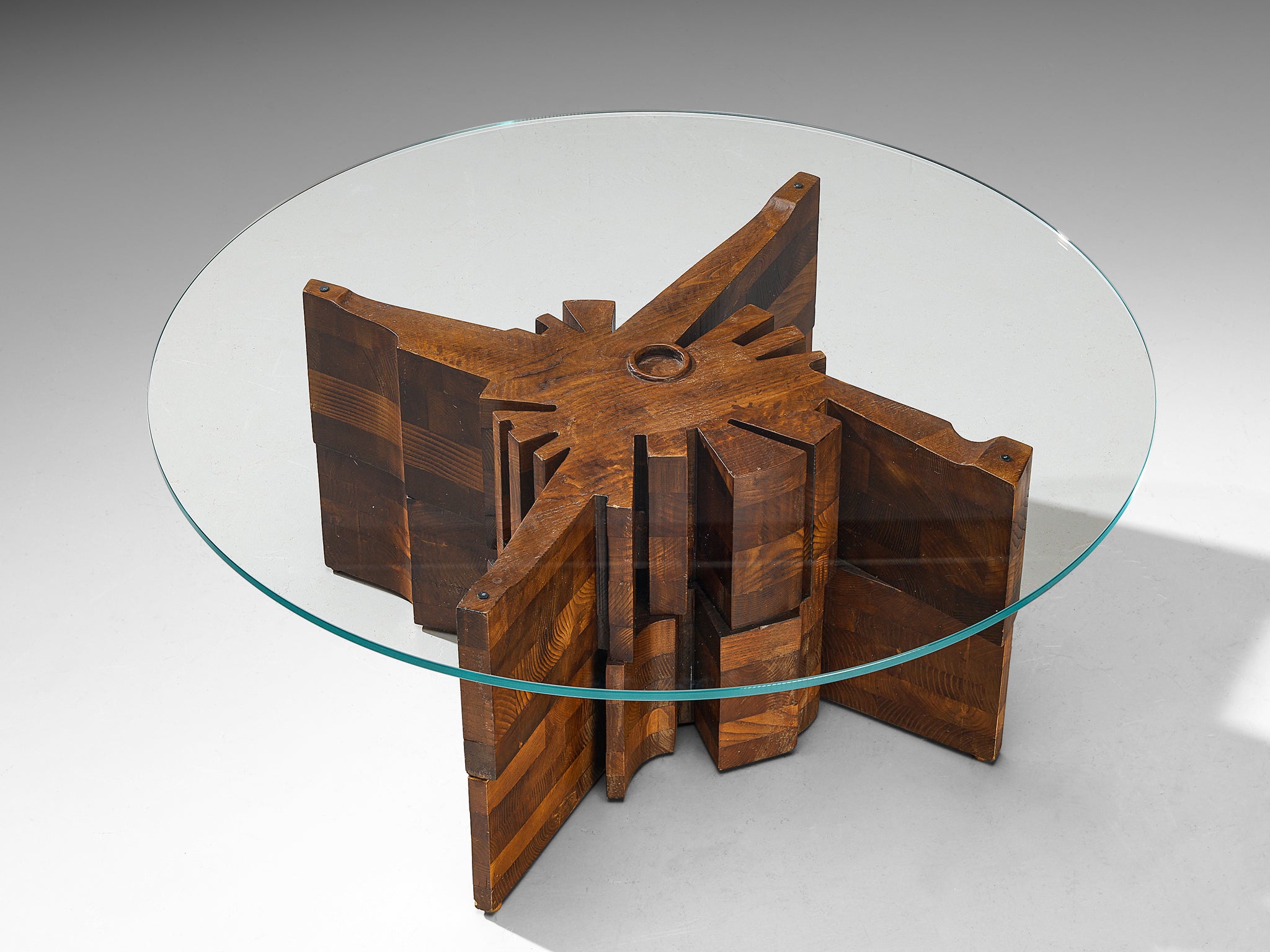
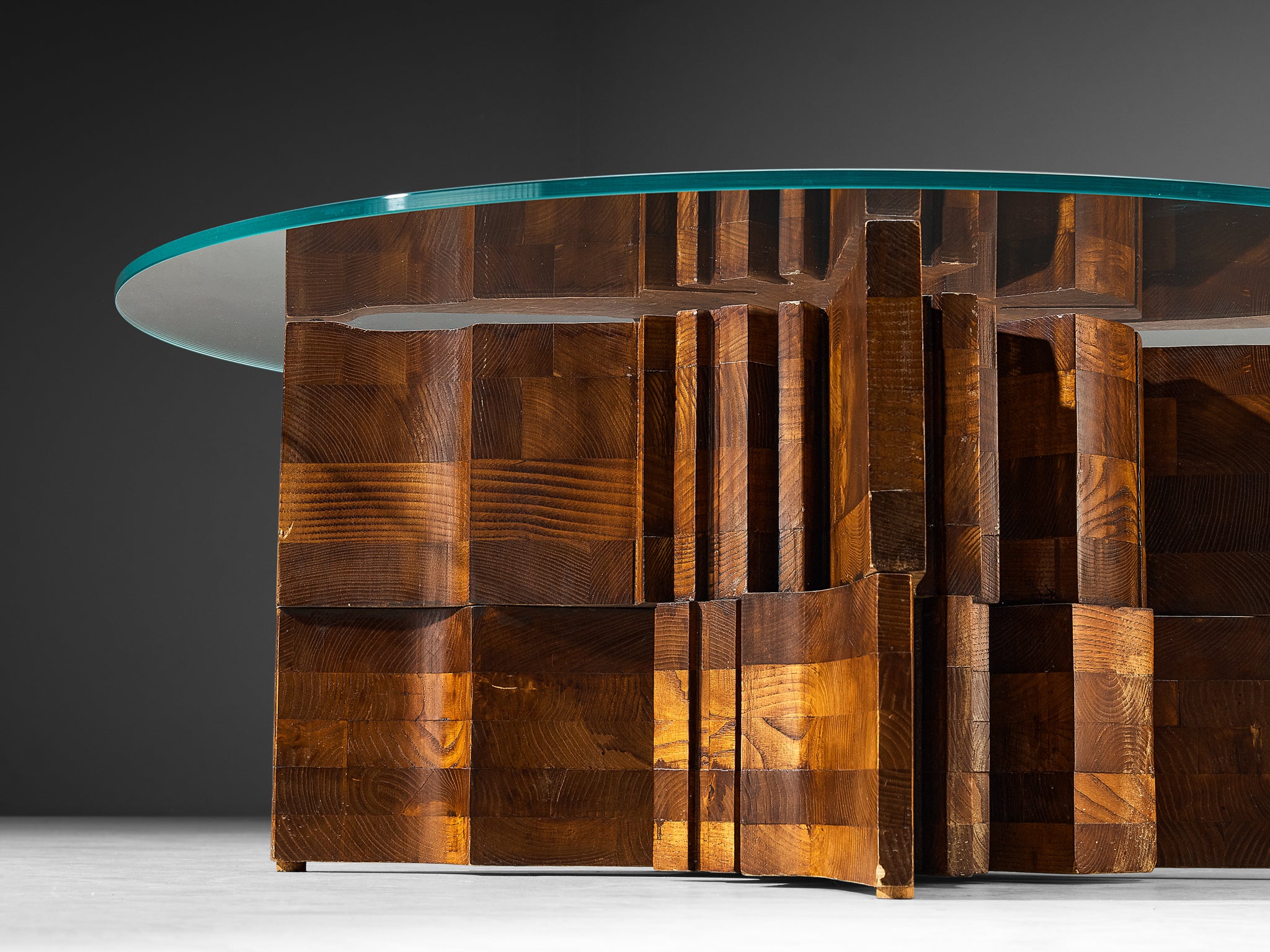
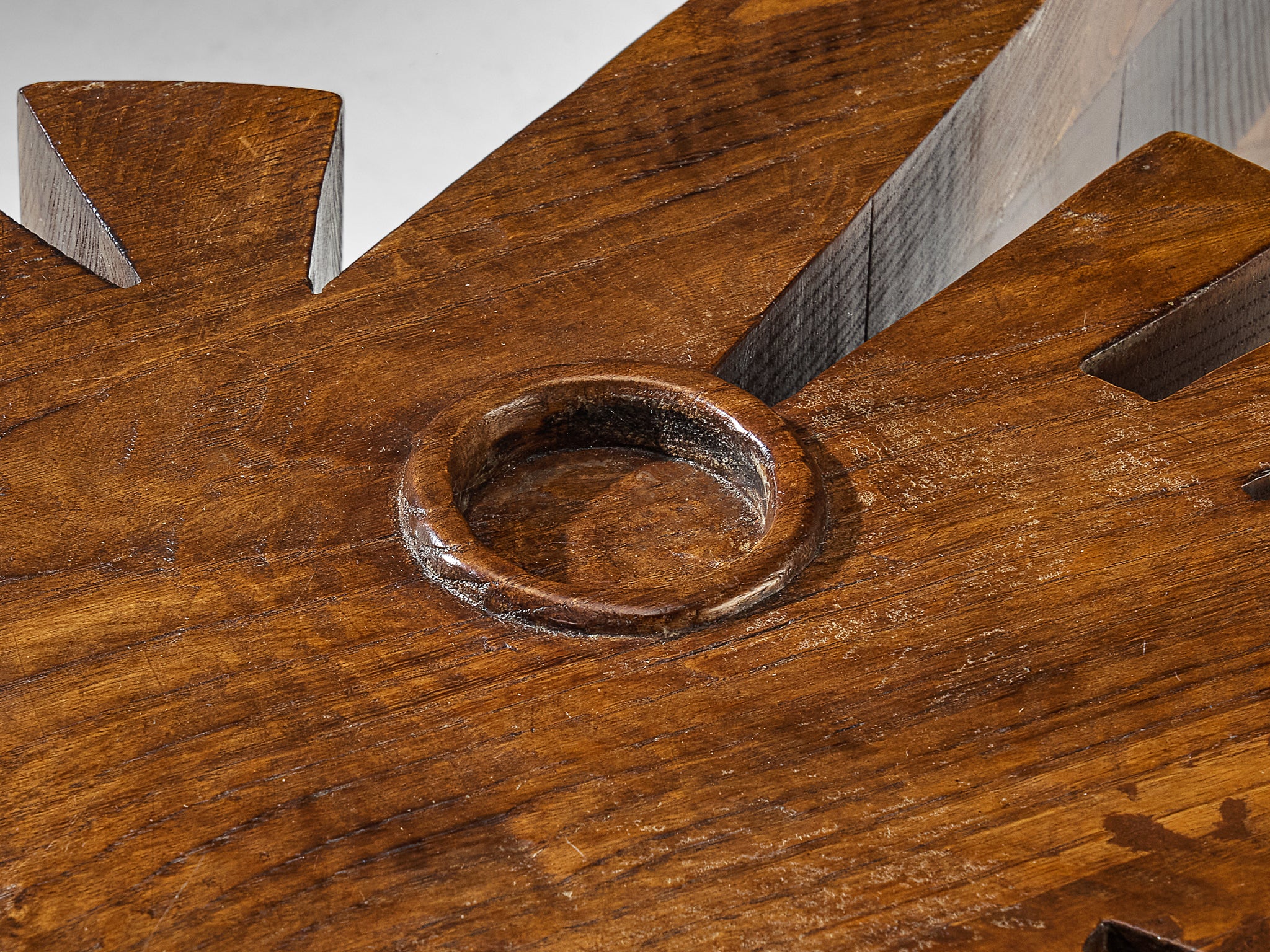
A stunning coffee table, masterfully crafted, exuding a sense of extraordinary design. Designed by Nerone Ceccarelli in 1975, the Hermes table draws inspiration from a classical Greek column, sliced and transformed into an expressive, sculptural form. The base is crafted from carved wood and treated with fire, adding depth and texture to its bold silhouette. Topped with a round glass surface, the design highlights the striking interplay between material, form, and transparency.
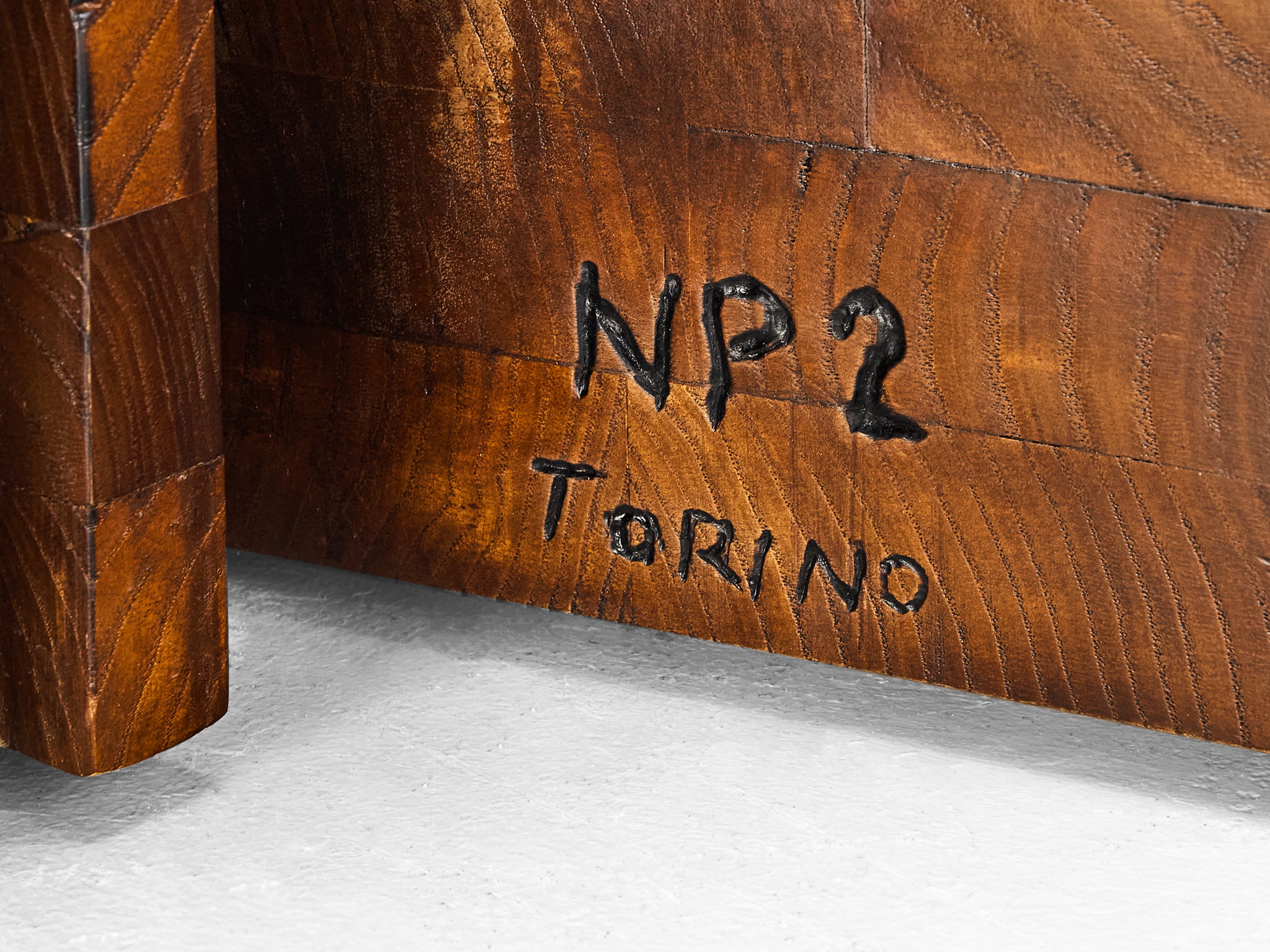
As a young man of only twenty years old, Nerone moved from Pisa to Turin in 1957, after attending the Academy of Fine Arts in Venice and Florence. During the 1950s and 1960s, the lively contemporary artistic climate of Turin inspired Nerone to discover who he was as an artist. It was in this city that he studied the work of the Bauhaus movement and developed a particular affinity for the work of Oscar Schlemmer and Lászlò Moholy-Nagy. His passion for Bauhaus architecture and interiors would play an important role in the way he perceived his own work: as a more personal version of the Modernist Constructivist art of the 1930s. It was also the ideas of Bauhaus that inspired his aim to integrate art into architecture as much as possible. In 1962, together with his friend, fellow student and from then on associate Giancarlo Patuzzi, he founded Gruppo NP2: a collective named after both their initials. Many Turin based artist joined, and it was their combined ambition to resist the French notion of ‘l’art pour l’art’ and create art that was a true part of the home, and therefore an important part of daily life.
Many of his works were designed for private homes in the region of Turin, Nerone’s hometown. Expressive wall panels were created during prolific years of his individual career, when he had established himself fully as an artist and had received international recognition and prizes. It was for instance during the 1970s that he was asked to create an immense wall panel for the European Parliament in Luxembourg.
In 1973, Giancarlo Patuzzi left the group, but Nerone kept the name. Het transformed Gruppo NP2 into an individual company. From that time on, Nerone was developing his own path as an artist. This panel holds all the distinctive features of a true artwork of Ceccarelli: a strong and sculptural composition with different textural approaches to the surface. Nerone highly enjoyed carving in metal and wood and was always experimenting with ways to treat the surfaces of his wall sculptures. Sometimes his wooden sculptures would have to ‘face’ fire as well. Giovanni Ceccarelli, as Nerone was originally called, was known to be quite a curious and hot-tempered child. He received the nickname Nerone, after he had set fire to a wooden shed near his school. His curiosity and love for playing with fire would remain part of his artistry as well, as many of his wooden sculptures have partly burnt surfaces. He always stayed curious and loved discovering new techniques. Nerone never stopped creating his own work and, up until his death in 1996, he constructed panels and sculptures.
A stunning coffee table, masterfully crafted, exuding a sense of extraordinary design. Designed by Nerone Ceccarelli in 1975, the Hermes table draws inspiration from a classical Greek column, sliced and transformed into an expressive, sculptural form. The base is crafted from carved wood and treated with fire, adding depth and texture to its bold silhouette. Topped with a round glass surface, the design highlights the striking interplay between material, form, and transparency.
As a young man of only twenty years old, Nerone moved from Pisa to Turin in 1957, after attending the Academy of Fine Arts in Venice and Florence. During the 1950s and 1960s, the lively contemporary artistic climate of Turin inspired Nerone to discover who he was as an artist. It was in this city that he studied the work of the Bauhaus movement and developed a particular affinity for the work of Oscar Schlemmer and Lászlò Moholy-Nagy. His passion for Bauhaus architecture and interiors would play an important role in the way he perceived his own work: as a more personal version of the Modernist Constructivist art of the 1930s. It was also the ideas of Bauhaus that inspired his aim to integrate art into architecture as much as possible. In 1962, together with his friend, fellow student and from then on associate Giancarlo Patuzzi, he founded Gruppo NP2: a collective named after both their initials. Many Turin based artist joined, and it was their combined ambition to resist the French notion of ‘l’art pour l’art’ and create art that was a true part of the home, and therefore an important part of daily life.
Many of his works were designed for private homes in the region of Turin, Nerone’s hometown. Expressive wall panels were created during prolific years of his individual career, when he had established himself fully as an artist and had received international recognition and prizes. It was for instance during the 1970s that he was asked to create an immense wall panel for the European Parliament in Luxembourg.
In 1973, Giancarlo Patuzzi left the group, but Nerone kept the name. Het transformed Gruppo NP2 into an individual company. From that time on, Nerone was developing his own path as an artist. This panel holds all the distinctive features of a true artwork of Ceccarelli: a strong and sculptural composition with different textural approaches to the surface. Nerone highly enjoyed carving in metal and wood and was always experimenting with ways to treat the surfaces of his wall sculptures. Sometimes his wooden sculptures would have to ‘face’ fire as well. Giovanni Ceccarelli, as Nerone was originally called, was known to be quite a curious and hot-tempered child. He received the nickname Nerone, after he had set fire to a wooden shed near his school. His curiosity and love for playing with fire would remain part of his artistry as well, as many of his wooden sculptures have partly burnt surfaces. He always stayed curious and loved discovering new techniques. Nerone never stopped creating his own work and, up until his death in 1996, he constructed panels and sculptures.

Choose options
Nerone Giovanni Ceccarelli 'Hermes' Coffee Table in Wood and Glass
Sale price$38,500.00
Regular price
Tearsheet
×
Receive a copy in your email or download directly:
I accept emails from Morentz.
Product Details
VAT within the EU: When buying or delivering an item within the EU, VAT usually applies and will be added.