
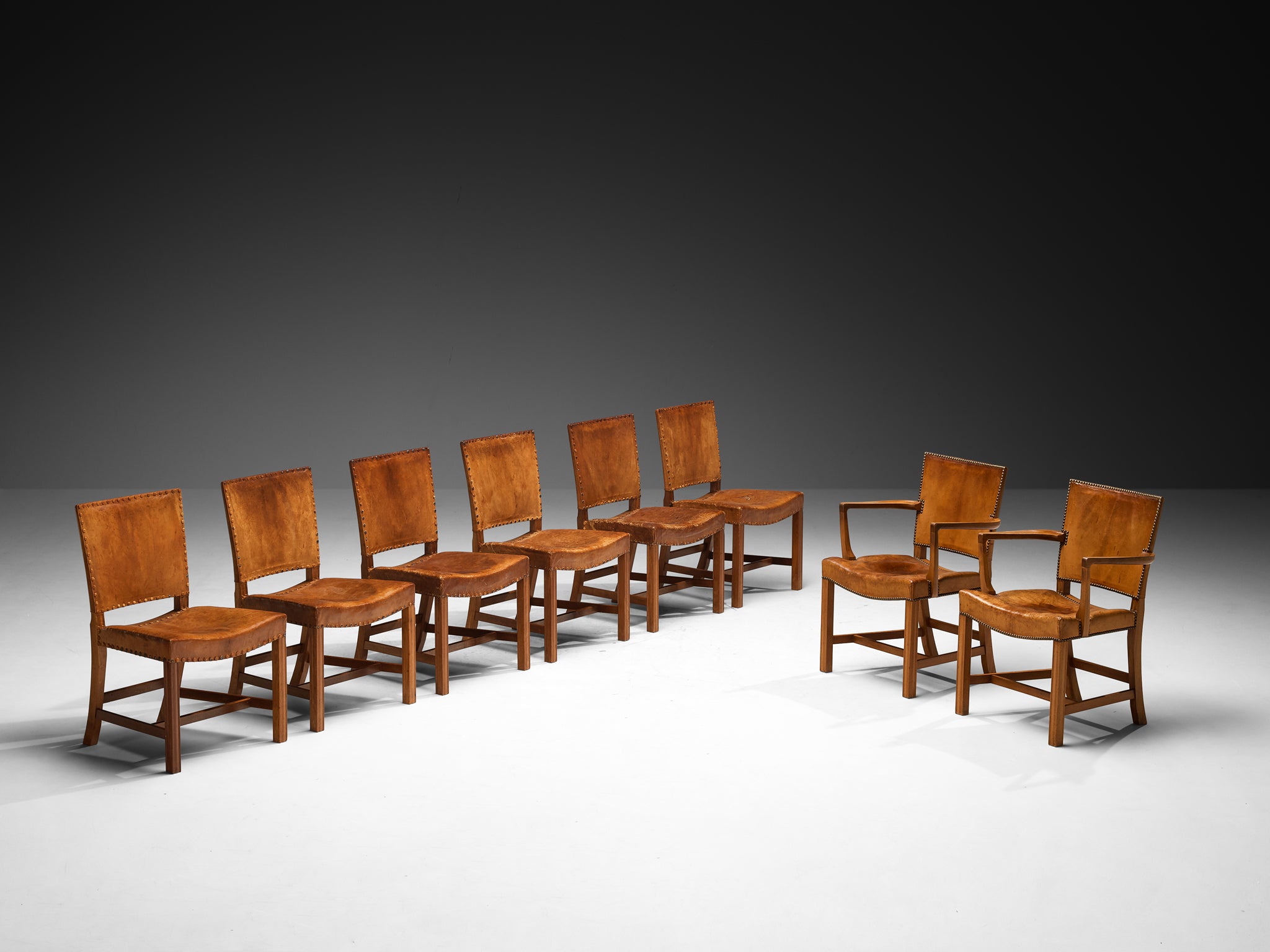
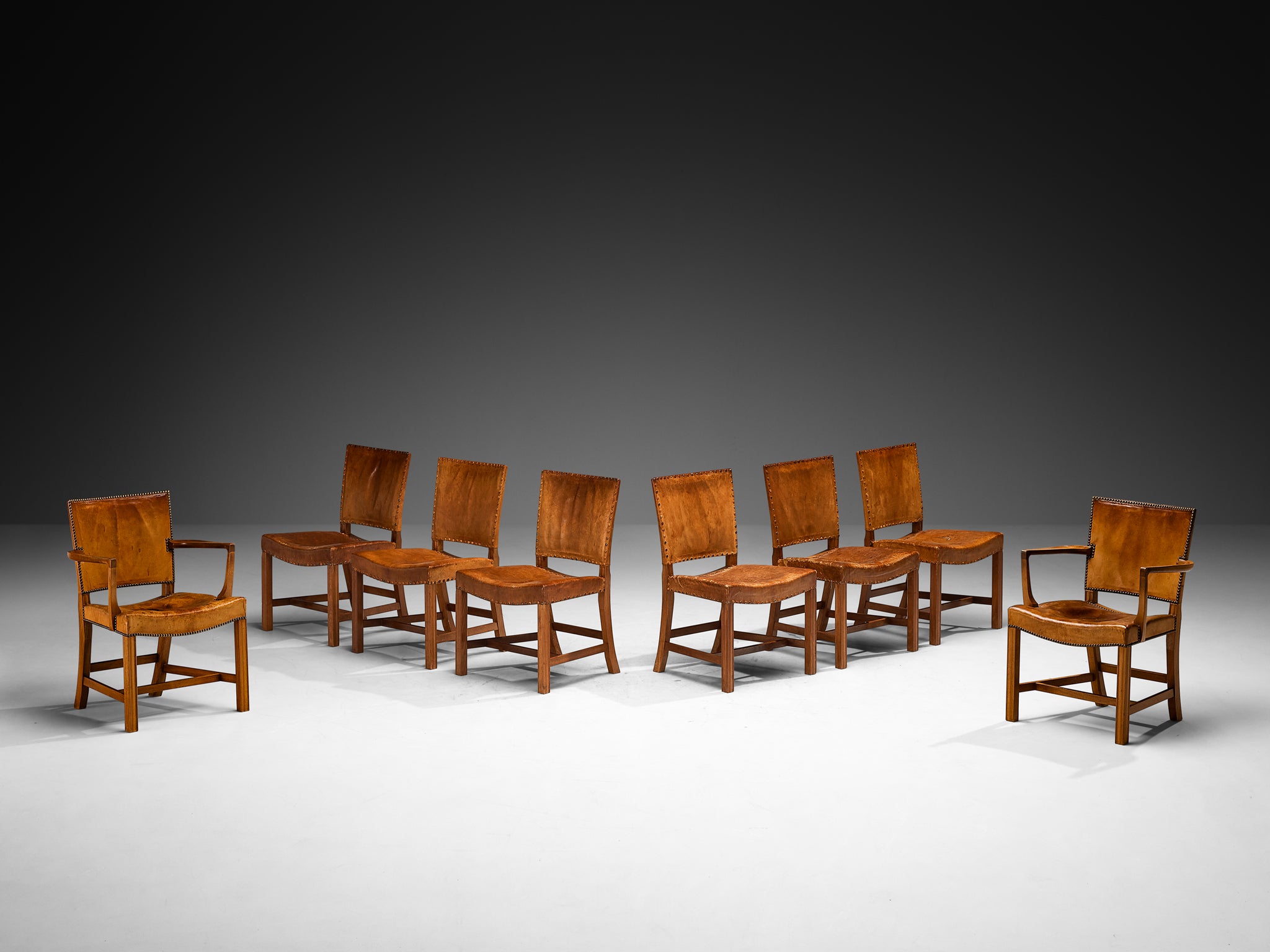
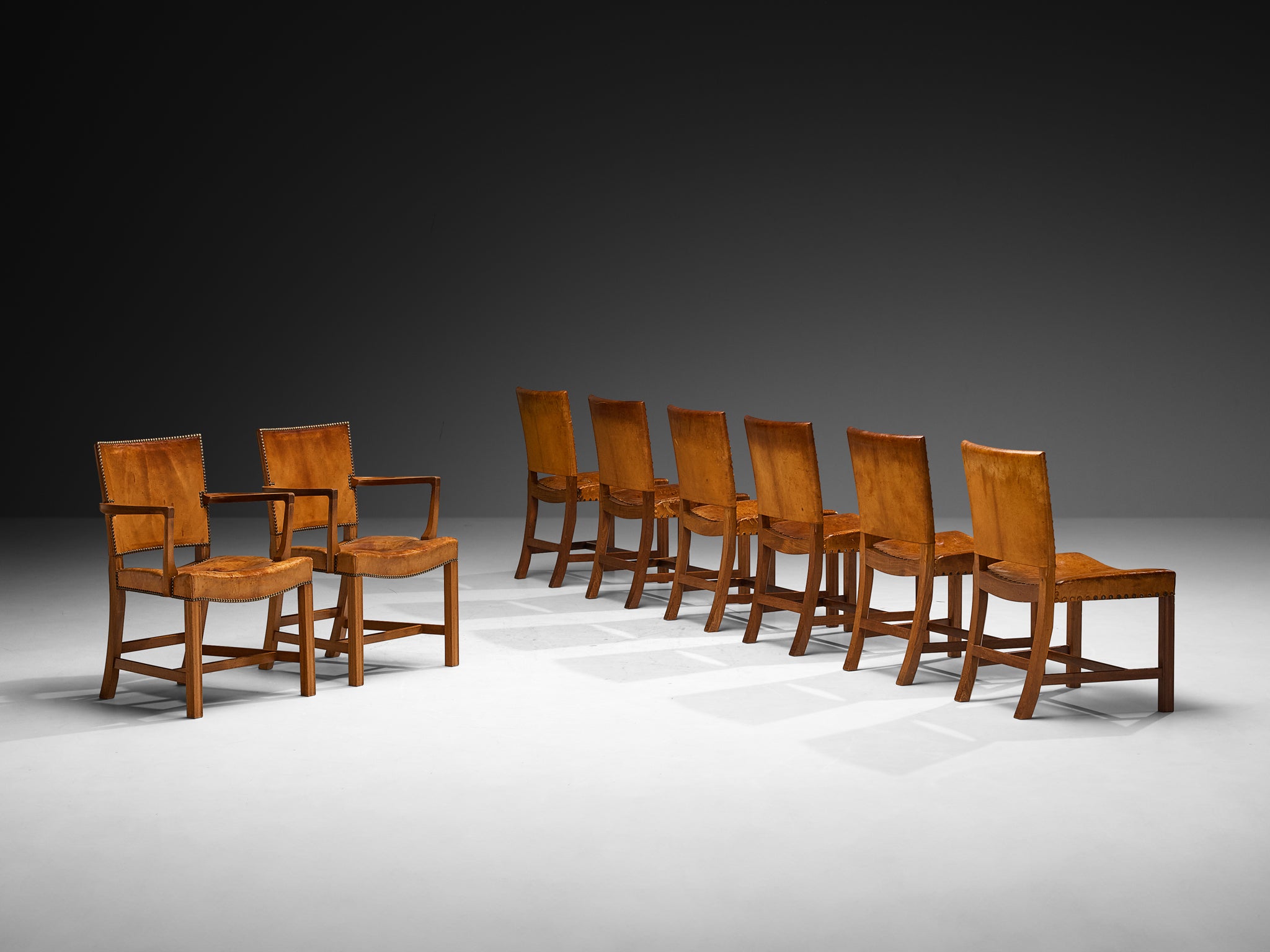
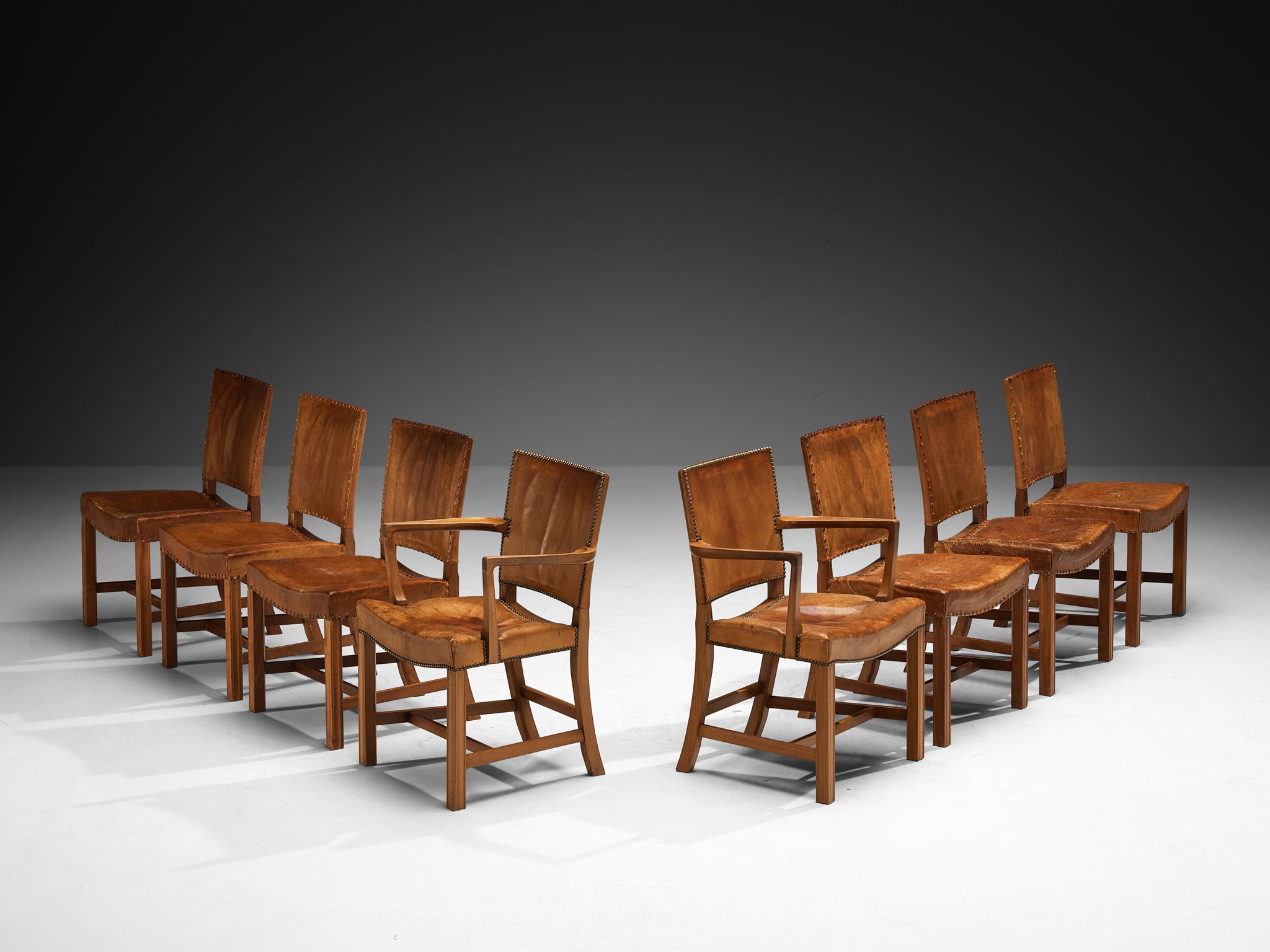
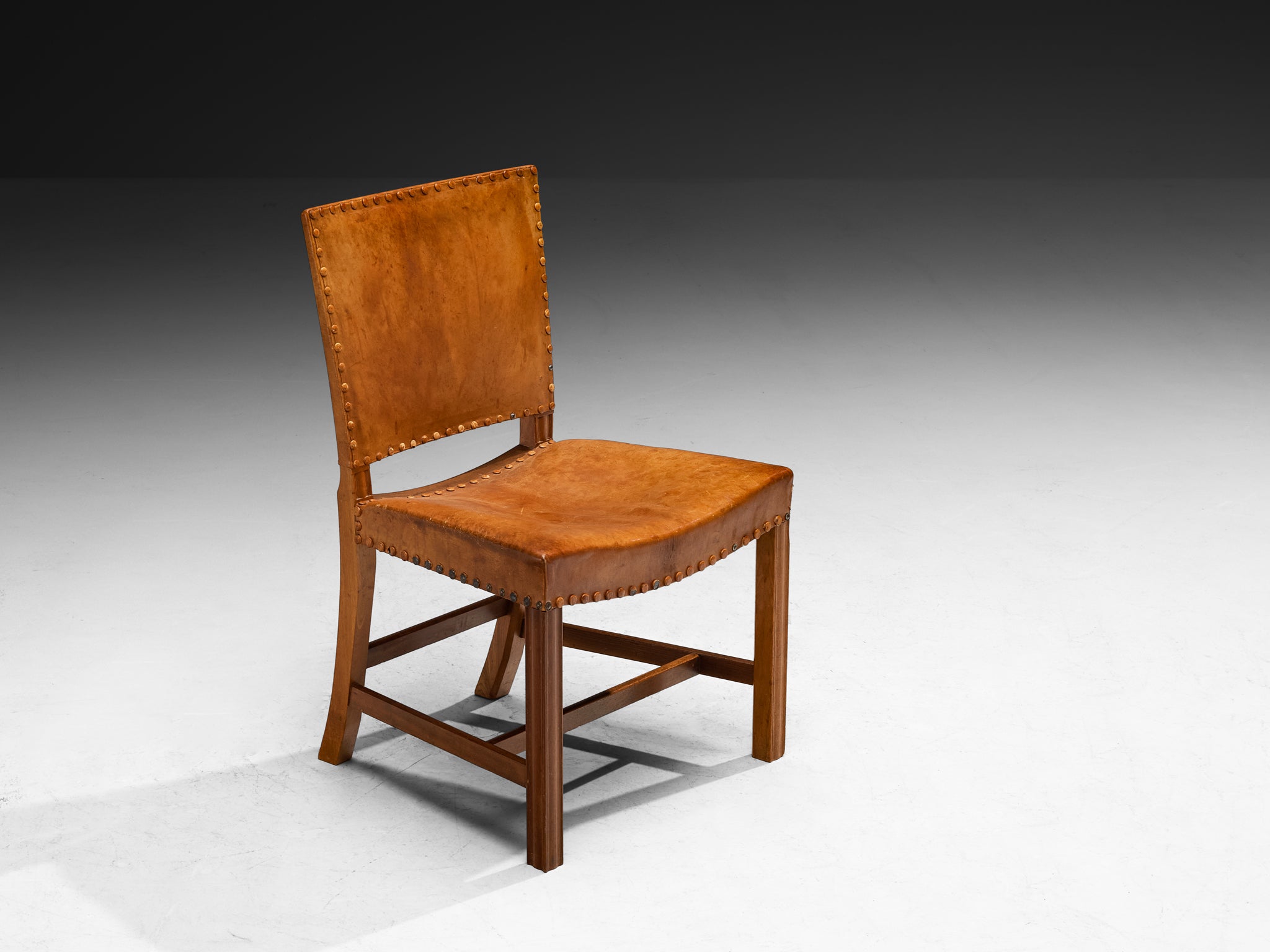
Kaare Klint Rare Set of Eight Dining Chairs in Niger Leather and Mahogany
Tearsheet
×
Receive a copy in your email or download directly:
I accept emails from Morentz.
 Open here
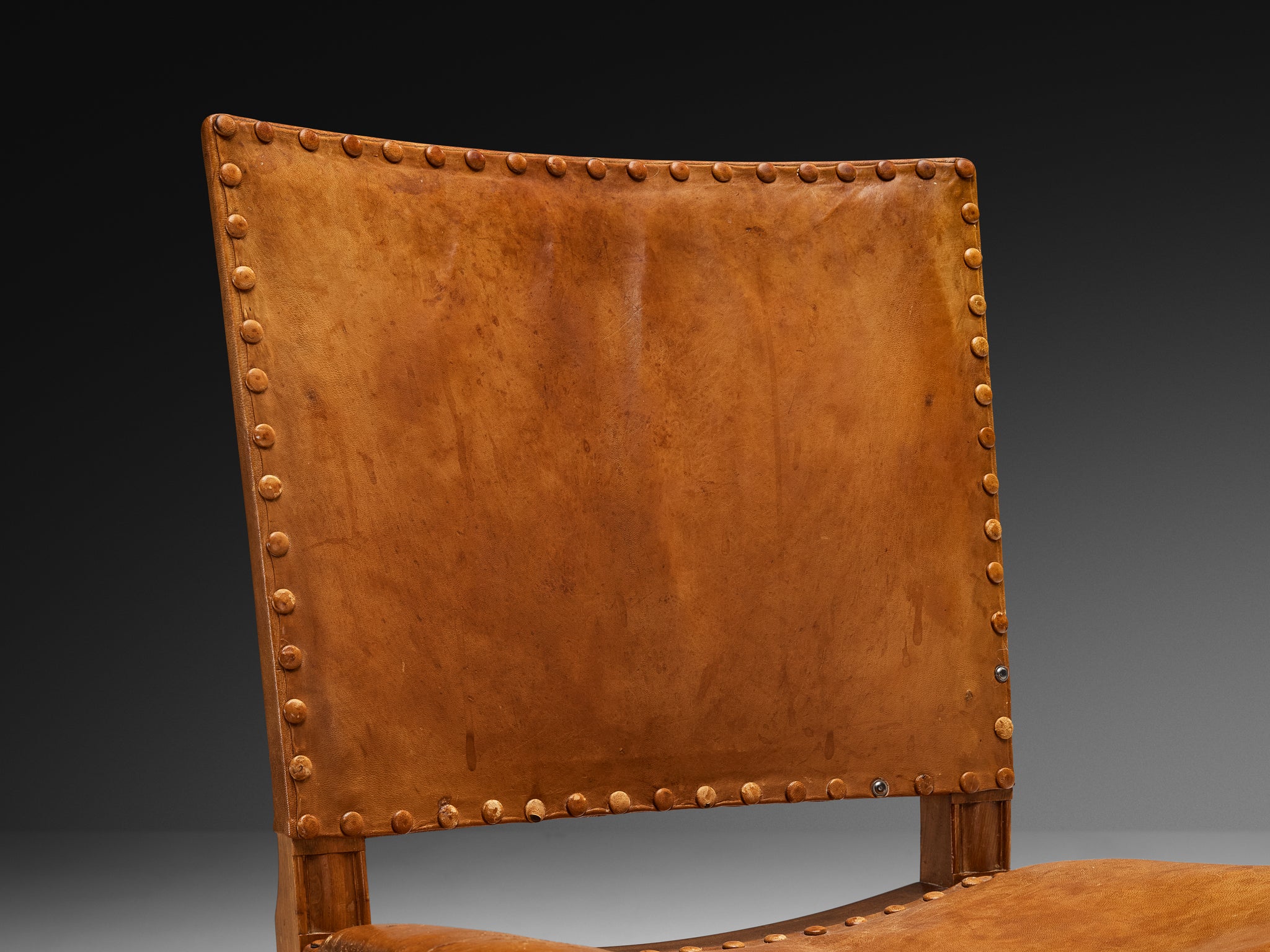
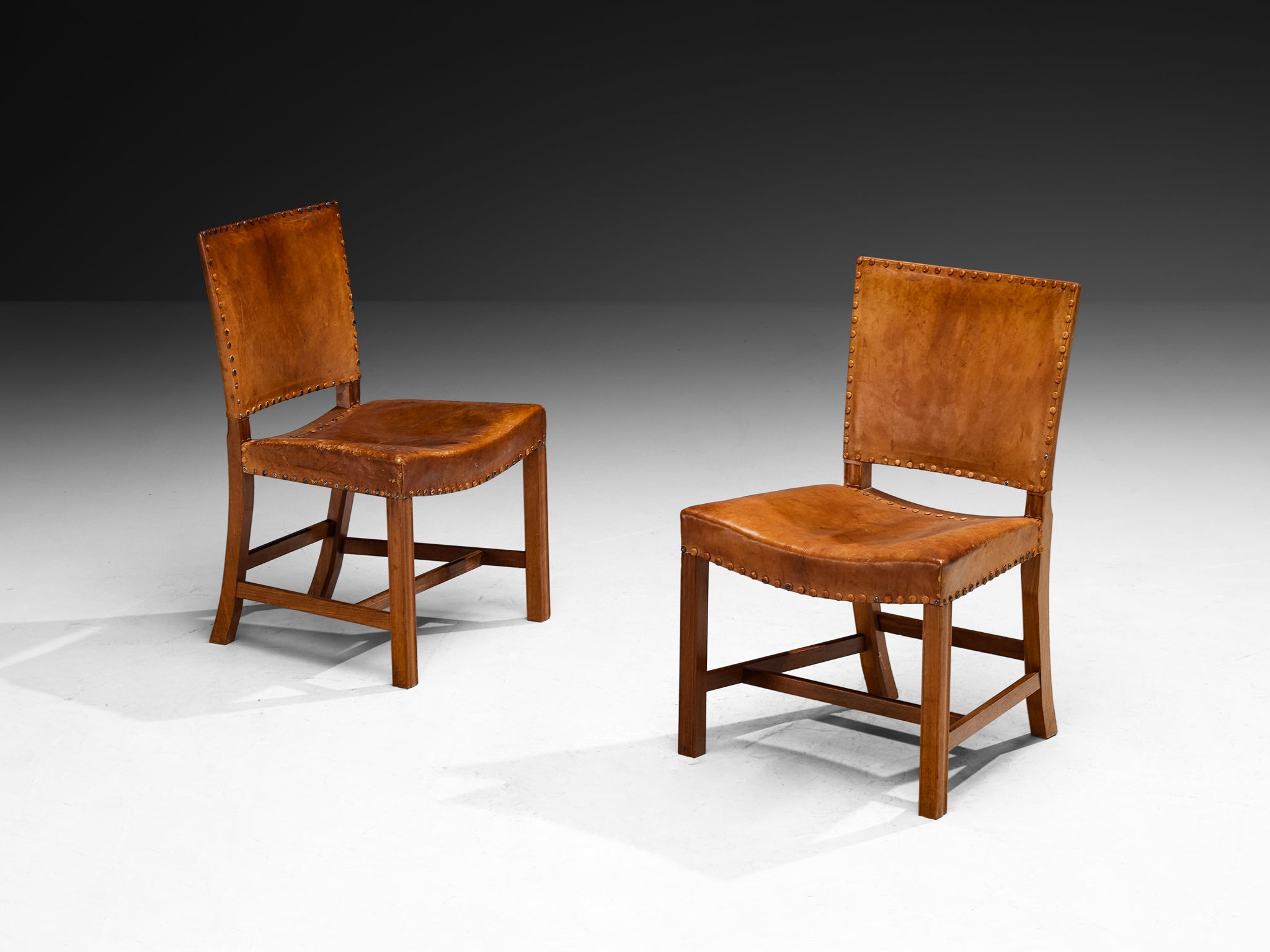
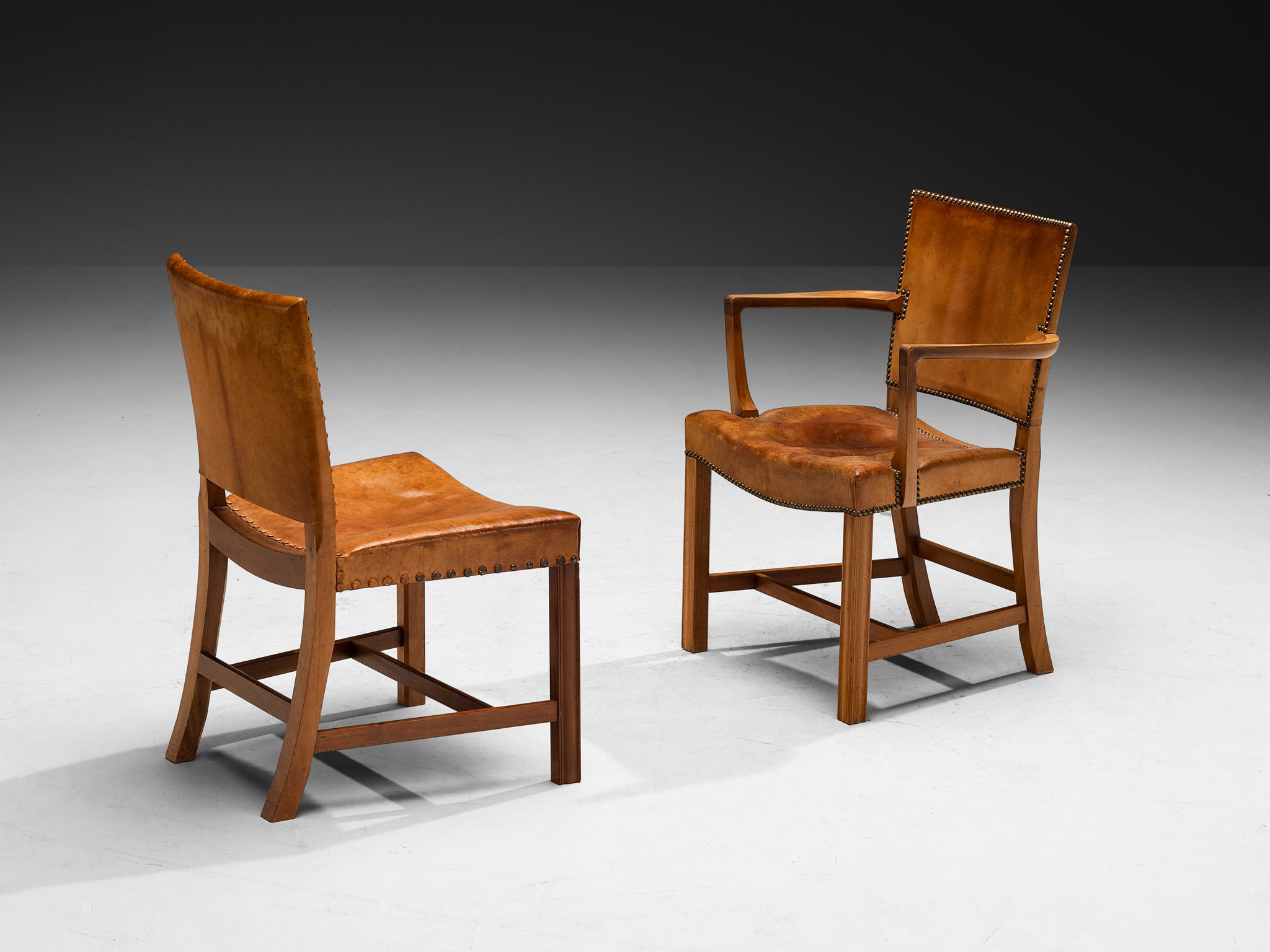
Kaare Klint for Rud. Rasmussens Snedkerier, set of eight dining chairs, model 3758 and 3758A Niger leather, mahogany, brass, Denmark, design 1927 and 1930, made 1930s and 1950s/60s
An extraordinary dining ensemble by Kaare Klint for Rud. Rasmussens Snedkerier, featuring the early and rare armless dining chairs, paired with a set of armchairs designed in 1927 and 1930, and crafted in the 1930s and 1950s/60s, respectively.
Referred to as the Red Chair, the first chairs without armrests were originally conceived for the lecture hall of the Danish Art and Design Museum. Gustav Falck, the director of the National Gallery of Denmark, possessed a collection of antique English chairs in the Chippendale style dating back to circa 1750-1760. In September, the museum borrowed the "finest" chair from Falck's collection, that Ole Wanscher would examine. This research served as inspiration, leading to the completion of the design and the final model by Rud. Rasmussens Snedkerier in November 1927. Subsequently, Klint adapted the chair for his sectional tables, stimulating the need for smaller variations, available in three sizes and with or without arms. In 1930, Klint came with an armchair version, specifically designed for the office of the Prime Minister Thorvald Stauning.
Furthermore, these chairs gained international acclaim when they were exhibited at the World Exposition in Barcelona, earning the prestigious grand prix medal in 1929. As a result of this recognition, they became known as the 'Barcelona Chair.'
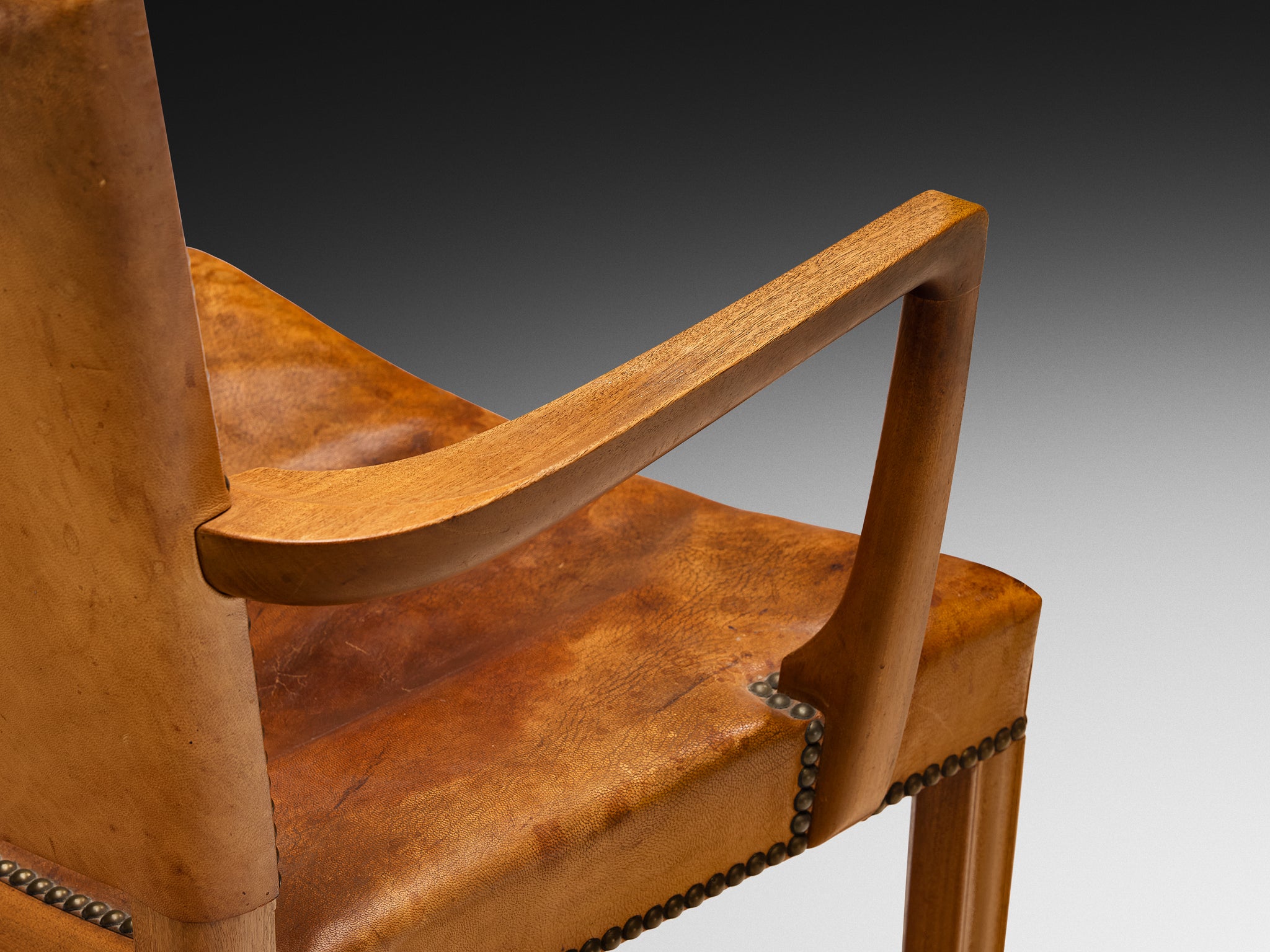
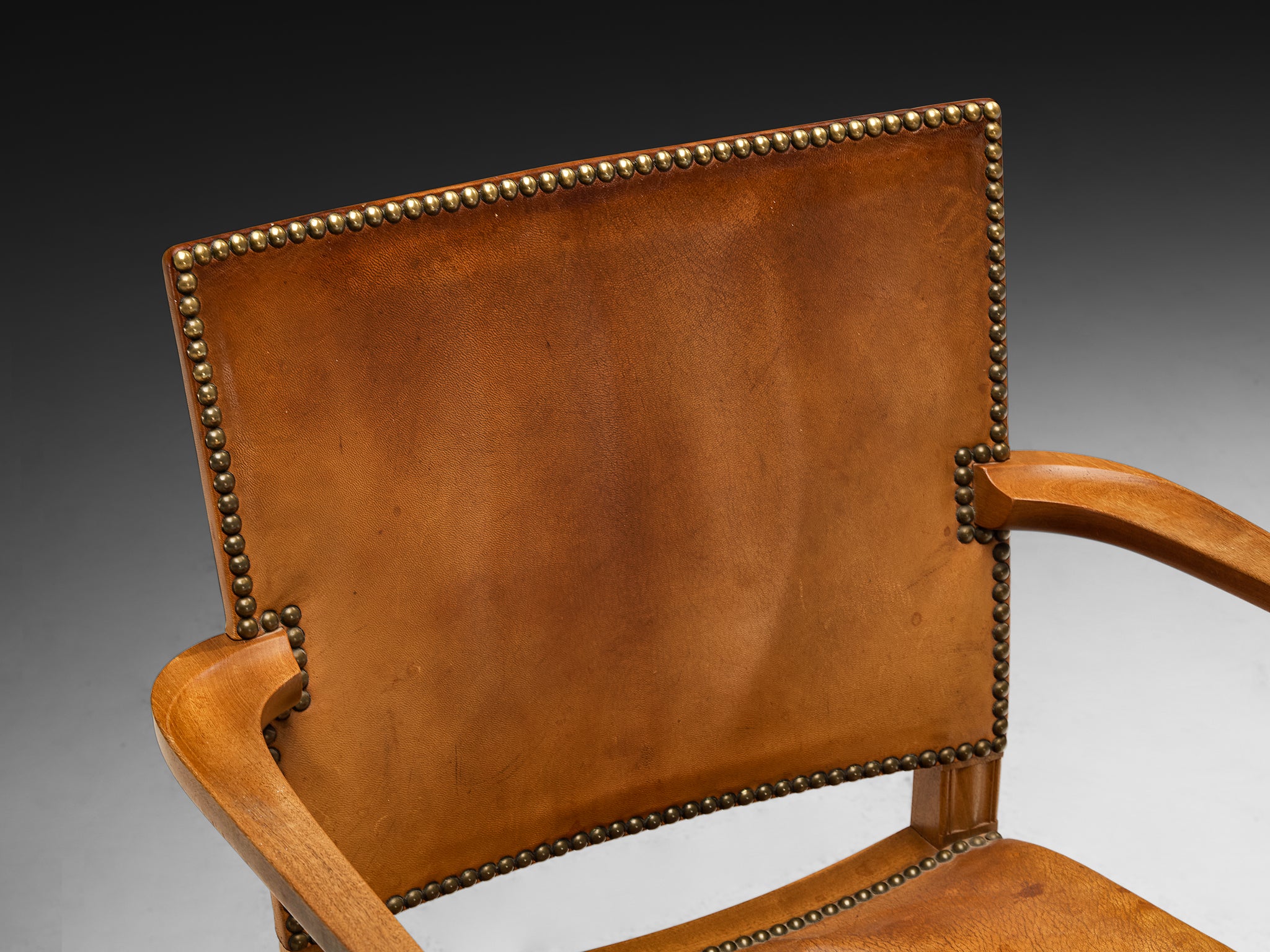
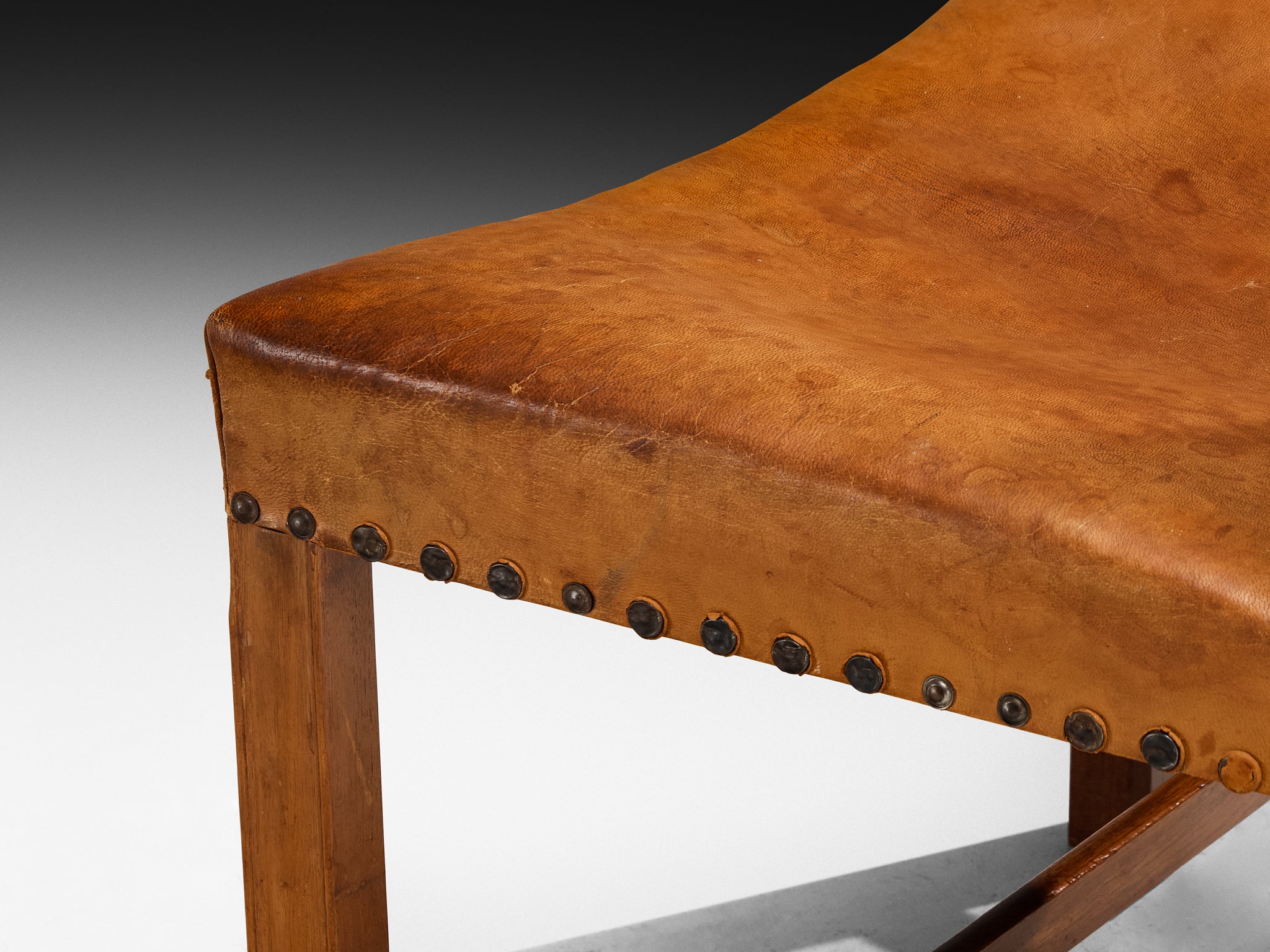
The origin of the Red Chair stems from its Niger goatskin, which was tanned and dyed red using earth dyes by local villagers. For Klint, this chair marked the beginning of his exploration into firm padding, accompanied by the essential use of upholstery nails. These nails, meticulously spaced at a width akin to that of a nail, serve as a deliberate visual representation of the skin's attachment. Simultaneously, the rows accentuate and define the chair's inherent lines and form. This detail is a clear example that fits well with Klint's idea on structure in his other work, showing how things fit together simply and clearly.
Kaare Klint (1888-1954), born in 1988 in Frederiksburg, Denmark, was a Danish architect and furniture designer. From a young age, Klint was immersed in architecture. His father was the well-known architect Peder Vilhelm Jensen-Klint, who is mainly known for designing the Grundtvigs church in Copenhagen. After studying at the P.S. Krøyer’s Art School from 1907, Klint made his debut as a designer. That year, the Association of Furniture Manufacturers in Copenhagen announced that they would hold a competition for designer furniture. Klint submitted, together with Ivar Bentsen, under a code name and together they received first price. In 1924, Klint helped establishing the Department of Furniture Design at the Royal Danish Academy of fine Arts. As associate professor, and later professor, he inspired some of the greatest and most well-known Danish designers, including Hans J. Wegner and Arne Jacobsen. Klint worked and thought along a few strong principles being the importance of former styles. He believed that the only way forward was to have a deep knowledge of craftsmanship. One of his other core principles was to research functionality and have an outstanding sense of proportion, space and the human body. Overall, Klint drew inspiration from the Shakers, Chippendale and Biedermeier. Kaare Klint's style from the 20s and 30s has had a lot of influence on other designers in both Europe and the United States. Amongst others Børge Mogensen, Finn Juhl and Poul Kjærholm have taken influence from Klint. Therefore, Kaare Klint can be seen as the father of Danish midcentury design.
An extraordinary dining ensemble by Kaare Klint for Rud. Rasmussens Snedkerier, featuring the early and rare armless dining chairs, paired with a set of armchairs designed in 1927 and 1930, and crafted in the 1930s and 1950s/60s, respectively.
Referred to as the Red Chair, the first chairs without armrests were originally conceived for the lecture hall of the Danish Art and Design Museum. Gustav Falck, the director of the National Gallery of Denmark, possessed a collection of antique English chairs in the Chippendale style dating back to circa 1750-1760. In September, the museum borrowed the "finest" chair from Falck's collection, that Ole Wanscher would examine. This research served as inspiration, leading to the completion of the design and the final model by Rud. Rasmussens Snedkerier in November 1927. Subsequently, Klint adapted the chair for his sectional tables, stimulating the need for smaller variations, available in three sizes and with or without arms. In 1930, Klint came with an armchair version, specifically designed for the office of the Prime Minister Thorvald Stauning.
Furthermore, these chairs gained international acclaim when they were exhibited at the World Exposition in Barcelona, earning the prestigious grand prix medal in 1929. As a result of this recognition, they became known as the 'Barcelona Chair.'
The origin of the Red Chair stems from its Niger goatskin, which was tanned and dyed red using earth dyes by local villagers. For Klint, this chair marked the beginning of his exploration into firm padding, accompanied by the essential use of upholstery nails. These nails, meticulously spaced at a width akin to that of a nail, serve as a deliberate visual representation of the skin's attachment. Simultaneously, the rows accentuate and define the chair's inherent lines and form. This detail is a clear example that fits well with Klint's idea on structure in his other work, showing how things fit together simply and clearly.
Kaare Klint (1888-1954), born in 1988 in Frederiksburg, Denmark, was a Danish architect and furniture designer. From a young age, Klint was immersed in architecture. His father was the well-known architect Peder Vilhelm Jensen-Klint, who is mainly known for designing the Grundtvigs church in Copenhagen. After studying at the P.S. Krøyer’s Art School from 1907, Klint made his debut as a designer. That year, the Association of Furniture Manufacturers in Copenhagen announced that they would hold a competition for designer furniture. Klint submitted, together with Ivar Bentsen, under a code name and together they received first price. In 1924, Klint helped establishing the Department of Furniture Design at the Royal Danish Academy of fine Arts. As associate professor, and later professor, he inspired some of the greatest and most well-known Danish designers, including Hans J. Wegner and Arne Jacobsen. Klint worked and thought along a few strong principles being the importance of former styles. He believed that the only way forward was to have a deep knowledge of craftsmanship. One of his other core principles was to research functionality and have an outstanding sense of proportion, space and the human body. Overall, Klint drew inspiration from the Shakers, Chippendale and Biedermeier. Kaare Klint's style from the 20s and 30s has had a lot of influence on other designers in both Europe and the United States. Amongst others Børge Mogensen, Finn Juhl and Poul Kjærholm have taken influence from Klint. Therefore, Kaare Klint can be seen as the father of Danish midcentury design.

Choose options
Kaare Klint Rare Set of Eight Dining Chairs in Niger Leather and Mahogany
Sale price$164,000.00
Regular price
Tearsheet
×
Receive a copy in your email or download directly:
I accept emails from Morentz.
VAT within the EU: When buying or delivering an item within the EU, VAT usually applies and will be added.
Product Details