





Kaare Klint for Rud Rasmussen 'Red Chairs' in Niger Leather and Mahogany
 Open here
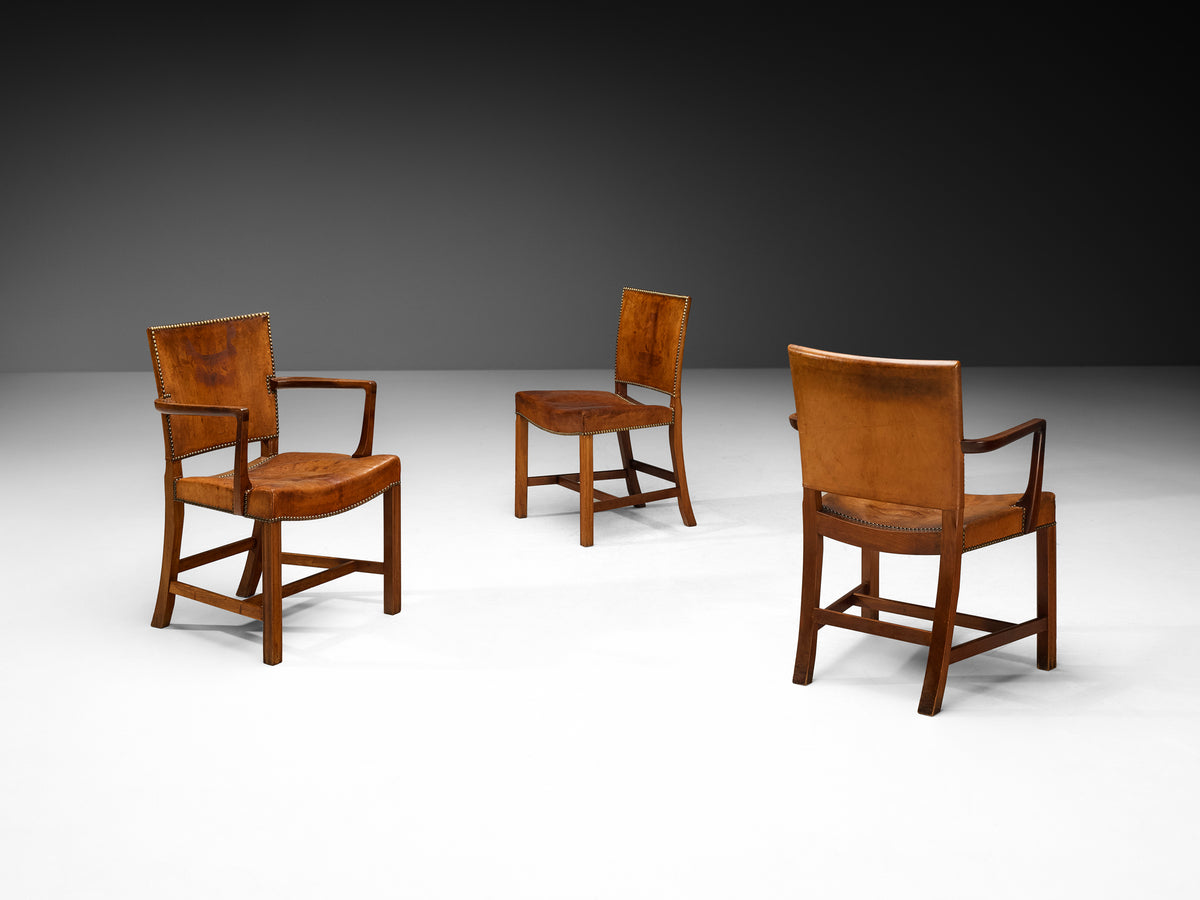
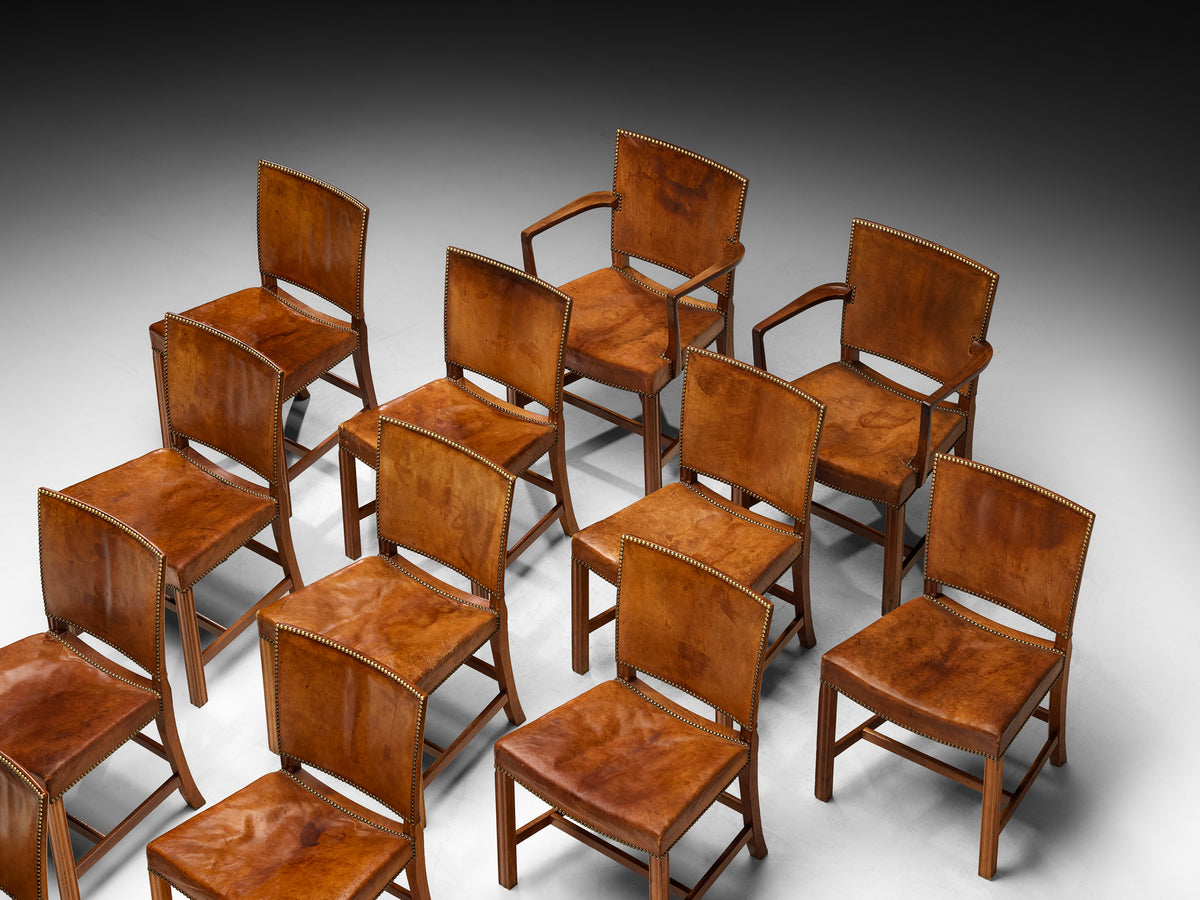
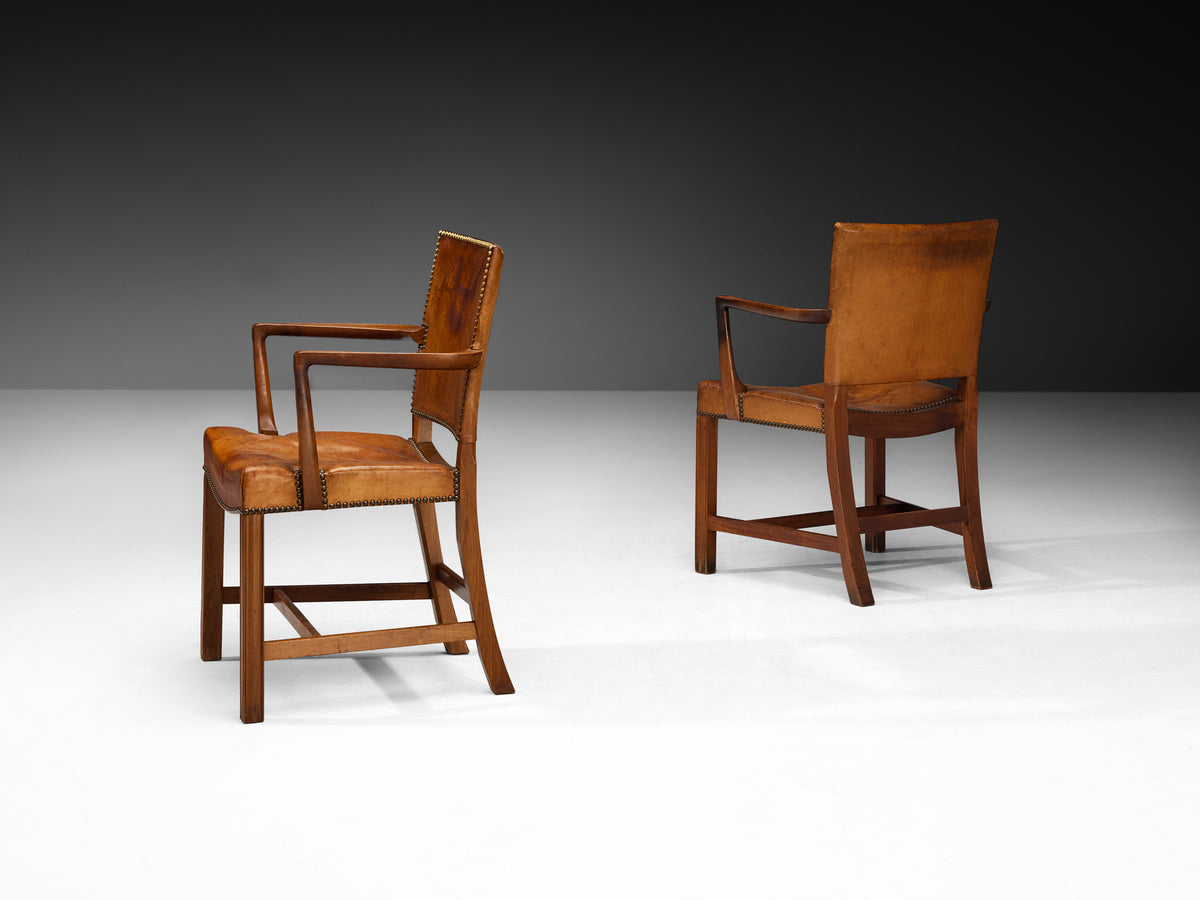
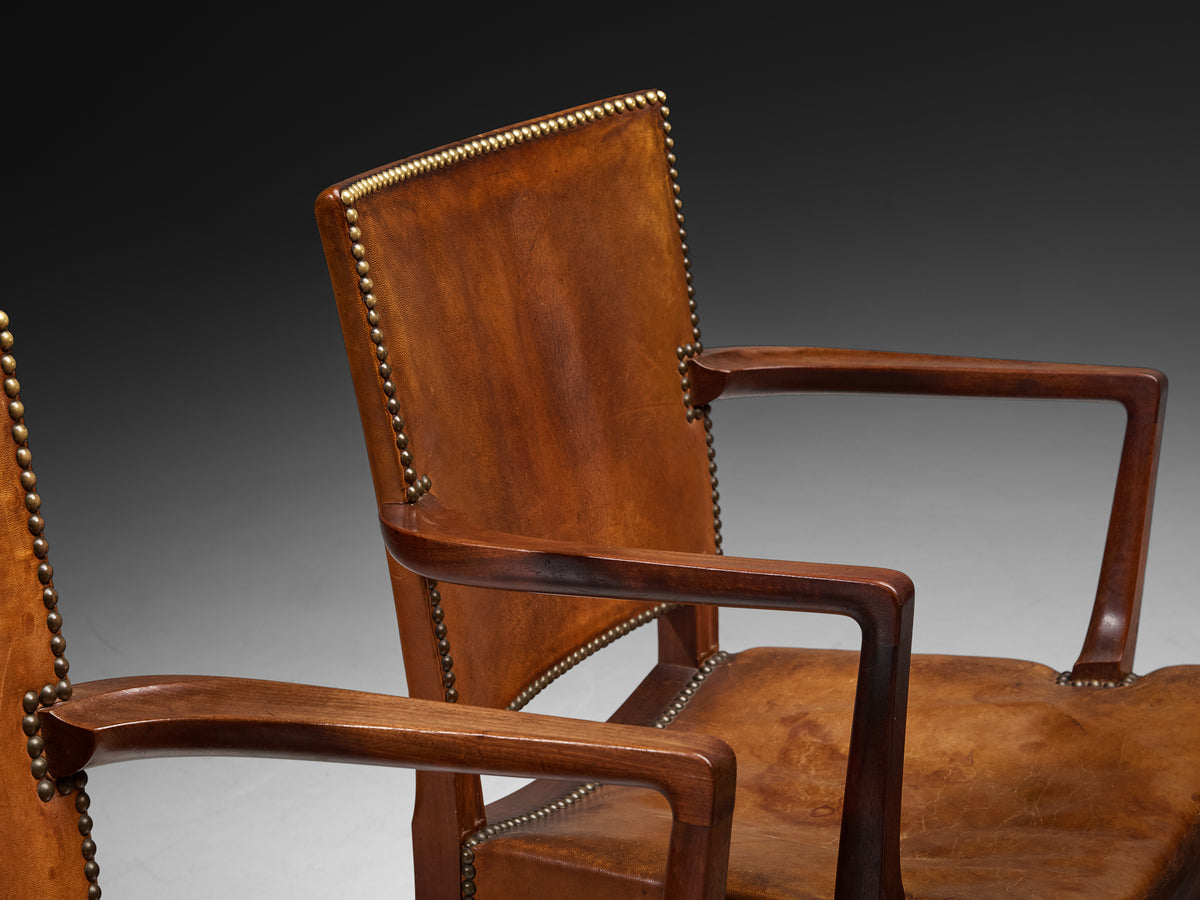
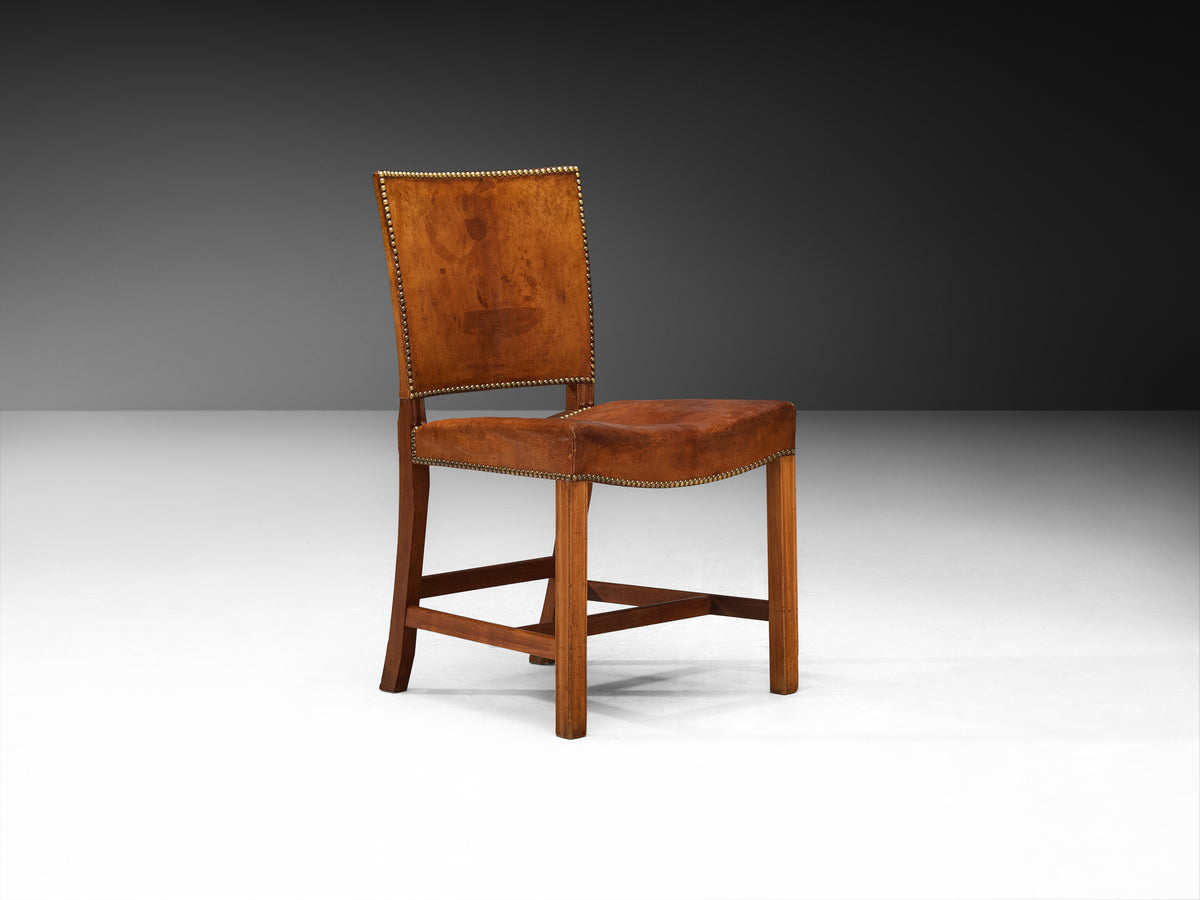
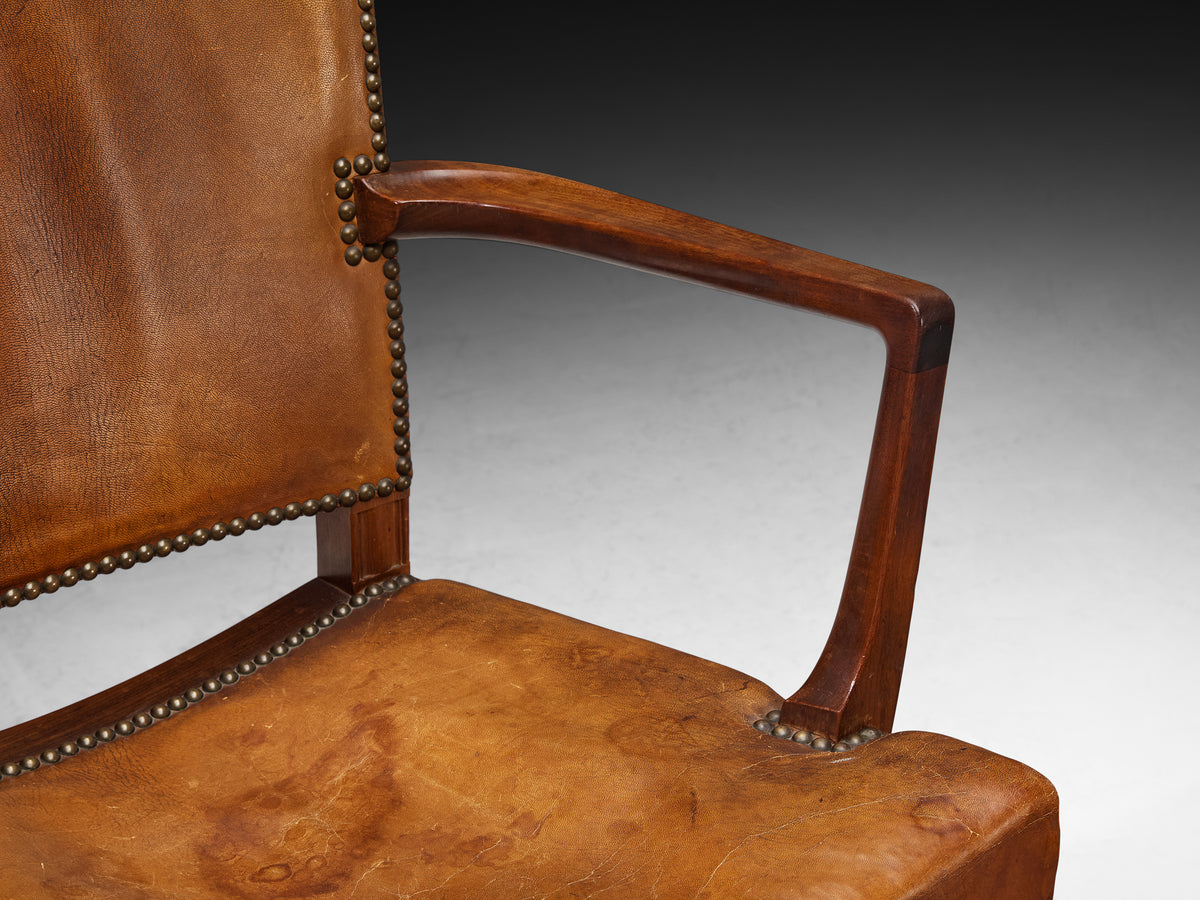
Kaare Klint for Rud. Rasmussens Snedkerier, set of ten dining chairs model '4751', and two armchairs model '3758A', Niger leather, mahogany, brass, Denmark, design 1930 and 1933, made 1930s
A large ensemble of dining chairs and armchairs in cognac leather and mahogany, designed in 1930 and 1933, and made in the 1930s. Referred to as the Red Chair, they were originally conceived for the lecture hall of the Danish Art and Design Museum. Gustav Falck, the director of the National Gallery of Denmark, possessed a collection of antique English chairs in the Chippendale style dating back to circa 1750-1760. In September, the museum borrowed the "finest" chair from Falck's collection, that Ole Wanscher would examine. This research served as inspiration, leading to the completion of the design and the final model by Rud. Rasmussens Snedkerier in November 1927. Subsequently, Klint adapted the chair for his sectional tables, stimulating the need for smaller variations, available in three sizes and with or without arms. Furthermore, these chairs gained international acclaim when they were exhibited at the World Exposition in Barcelona, earning the prestigious grand prix medal in 1929. As a result of this recognition, they became known as the 'Barcelona Chair.'
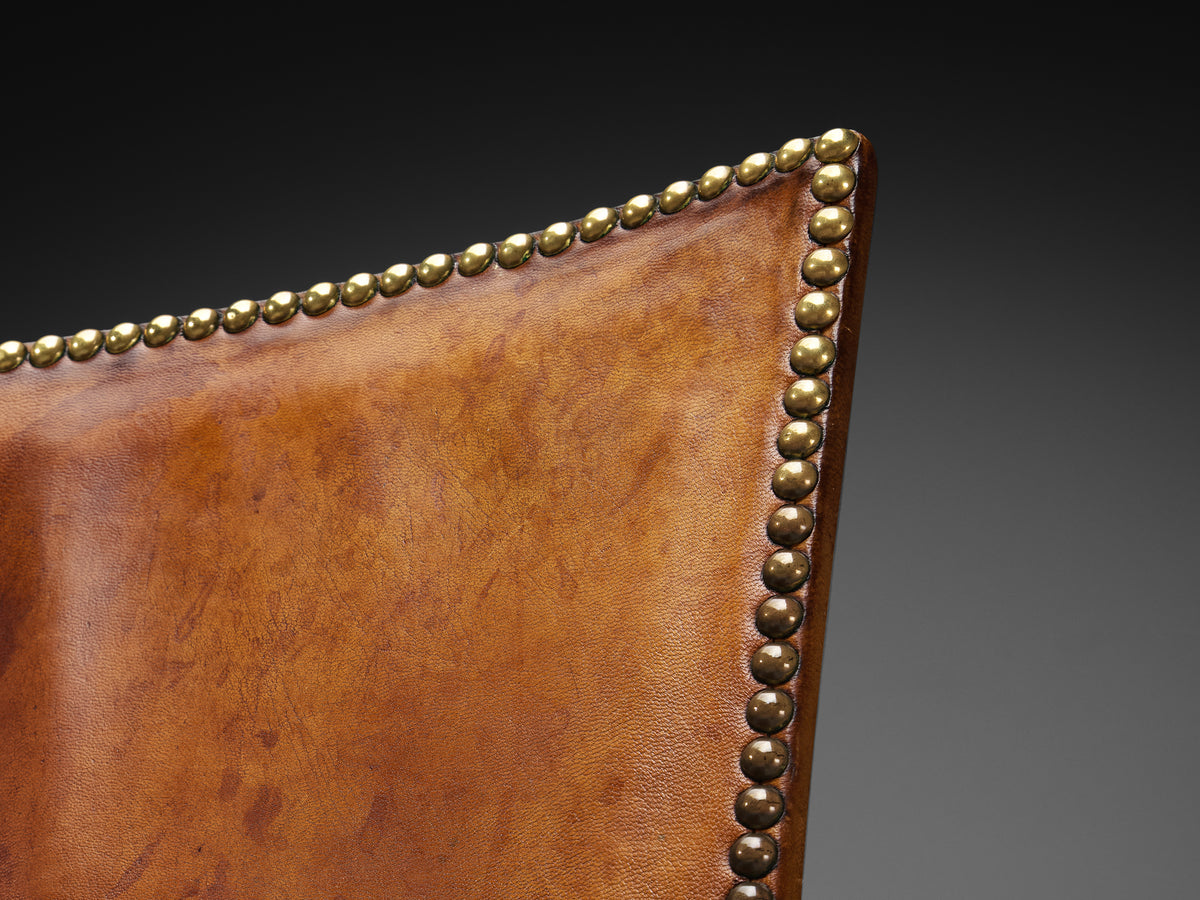
The origin of the Red Chair stems from its Niger goatskin, which was tanned and dyed red using earth dyes by local villagers. For Klint, this chair marked the beginning of his exploration into firm padding, accompanied by the essential use of upholstery nails. These nails, evenly and meticulously spaced, serve as a deliberate visual representation of the skin's attachment. Simultaneously, the rows accentuate and define the chair's inherent lines and form. This detail is a clear example that fits well with Klint's idea on structure in his other work, showing how things fit together simply and clearly.

Choose options
Kaare Klint for Rud Rasmussen 'Red Chairs' in Niger Leather and Mahogany
Sale price$249,000.00
Regular price
Product Details
VAT within the EU: When buying or delivering an item within the EU, VAT usually applies and will be added.