
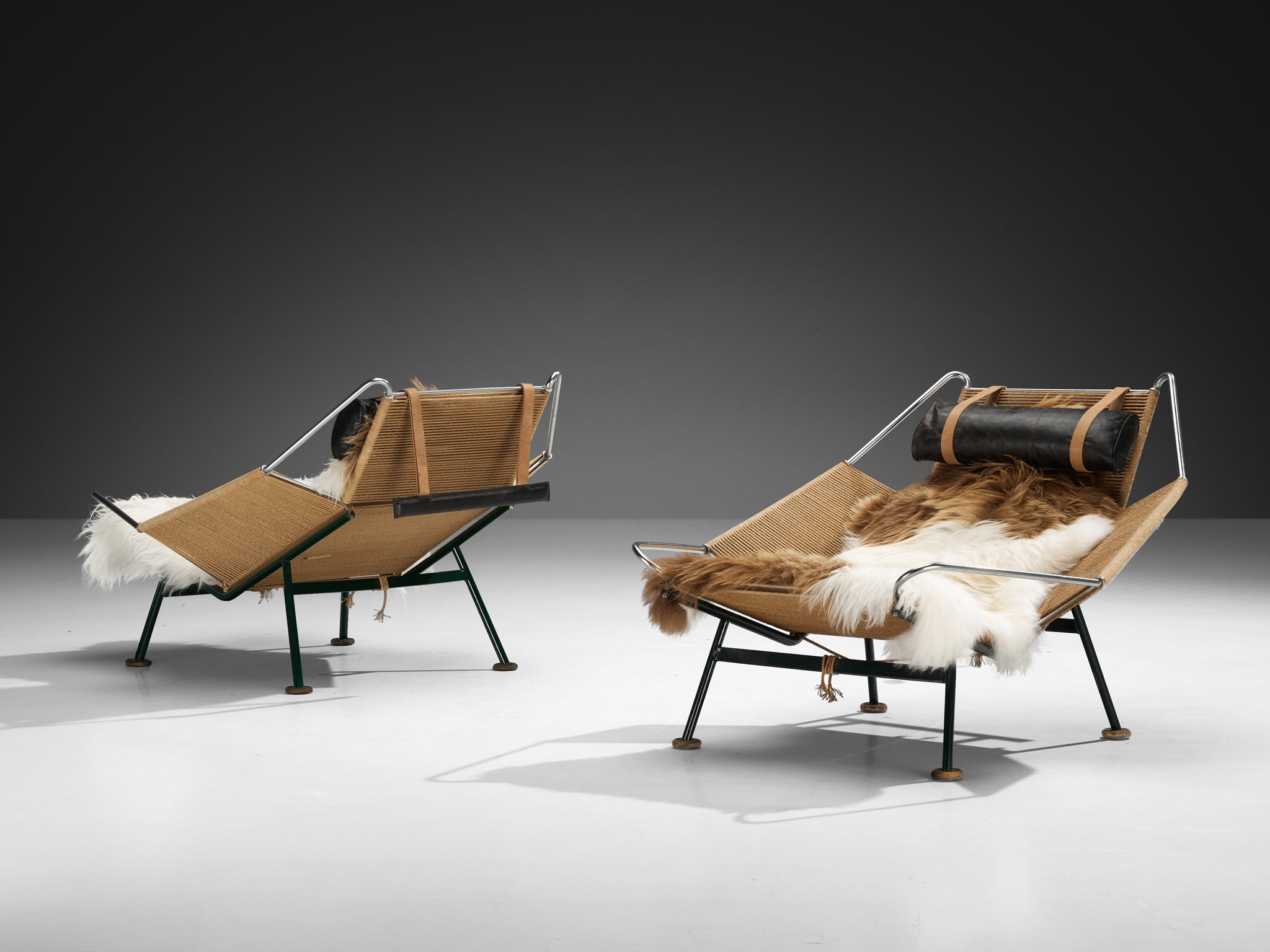
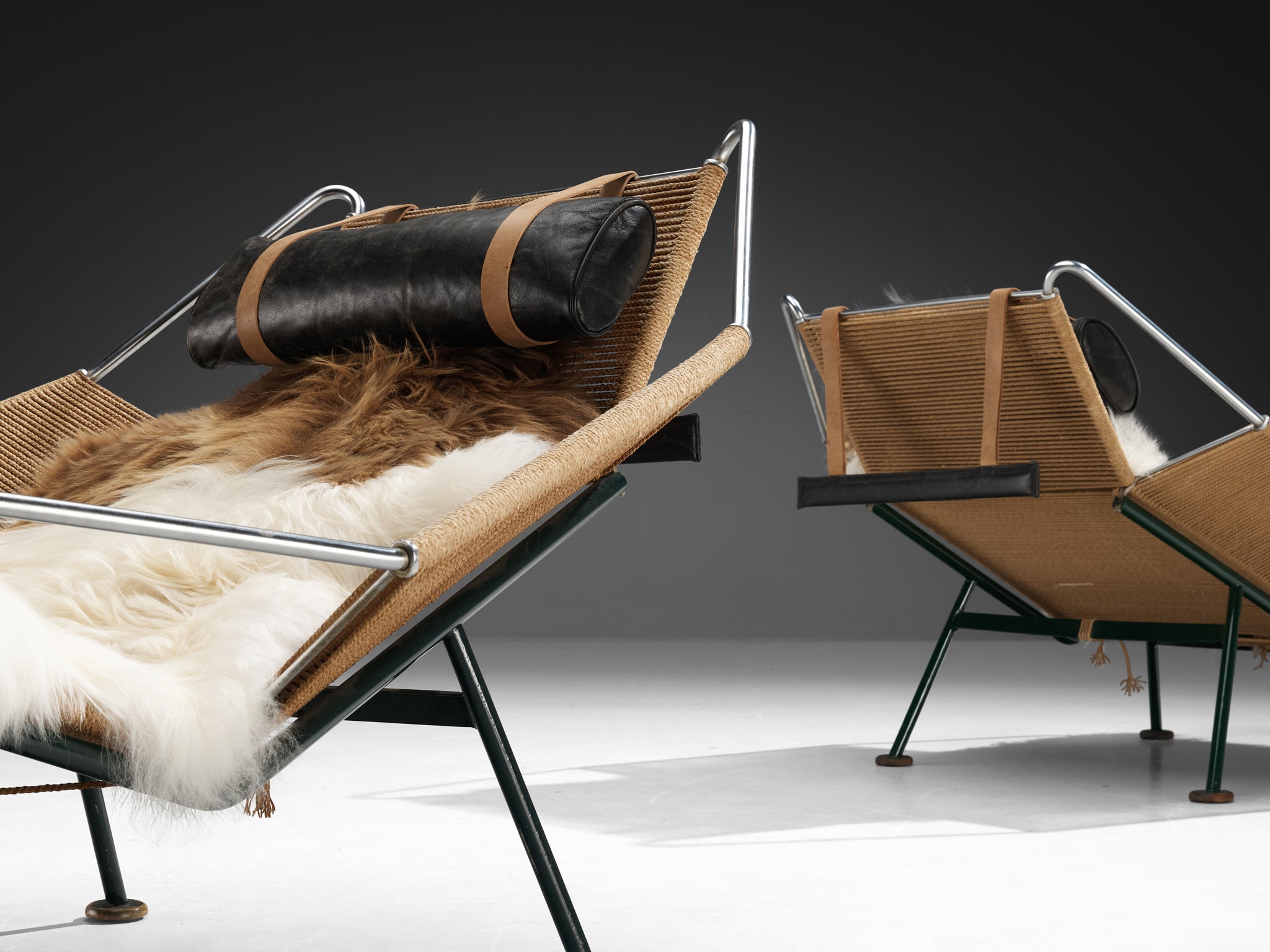
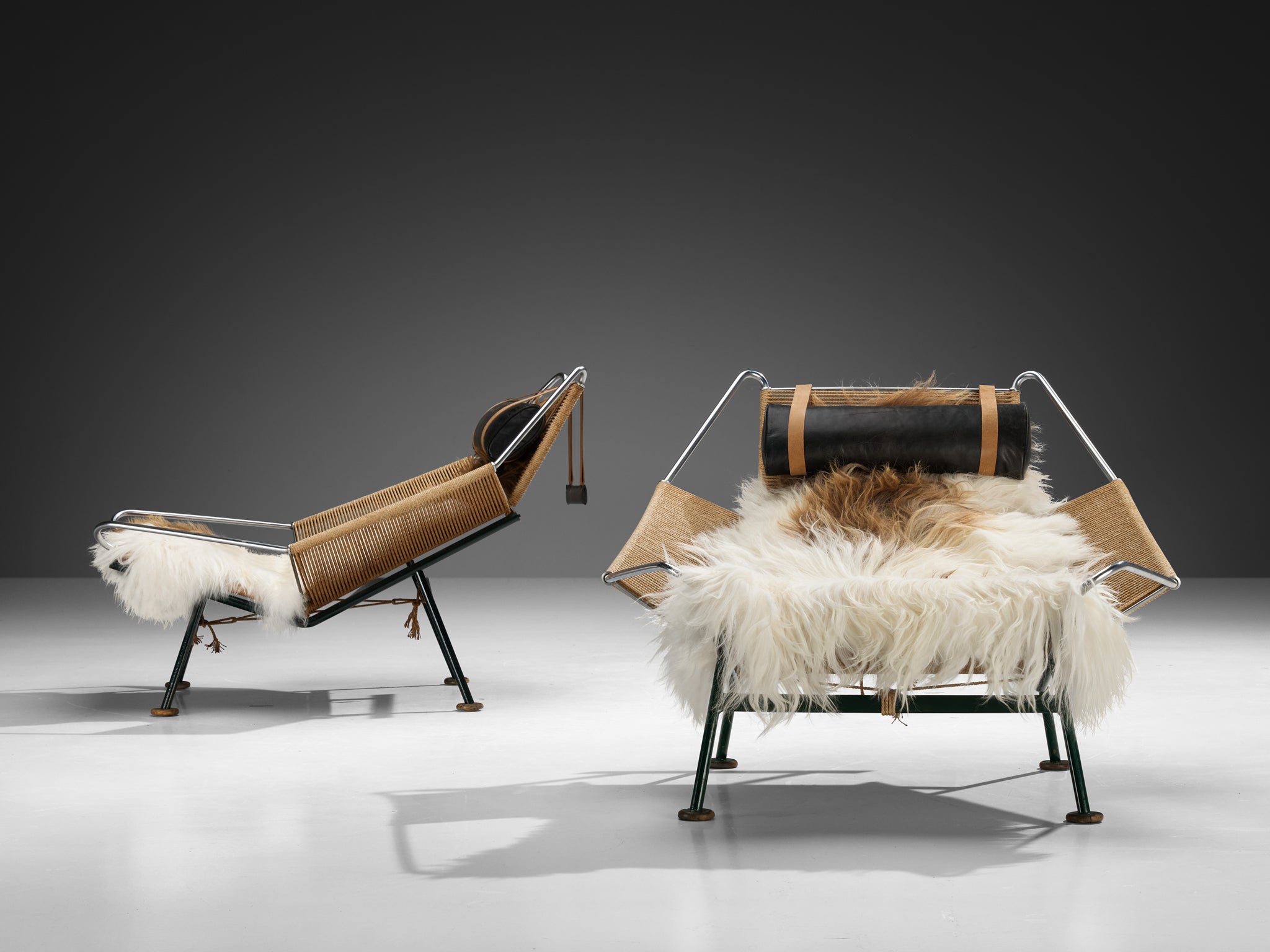
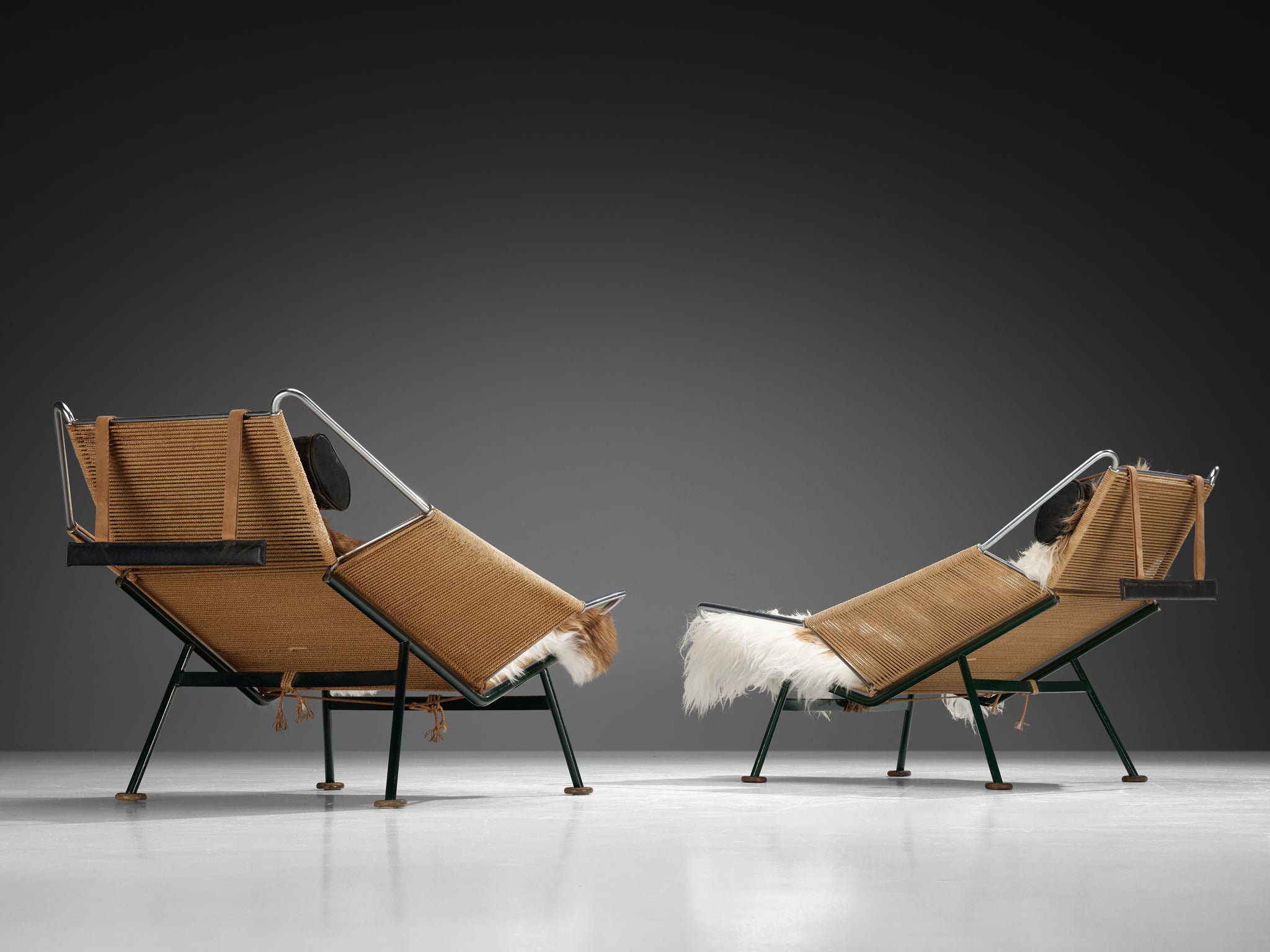
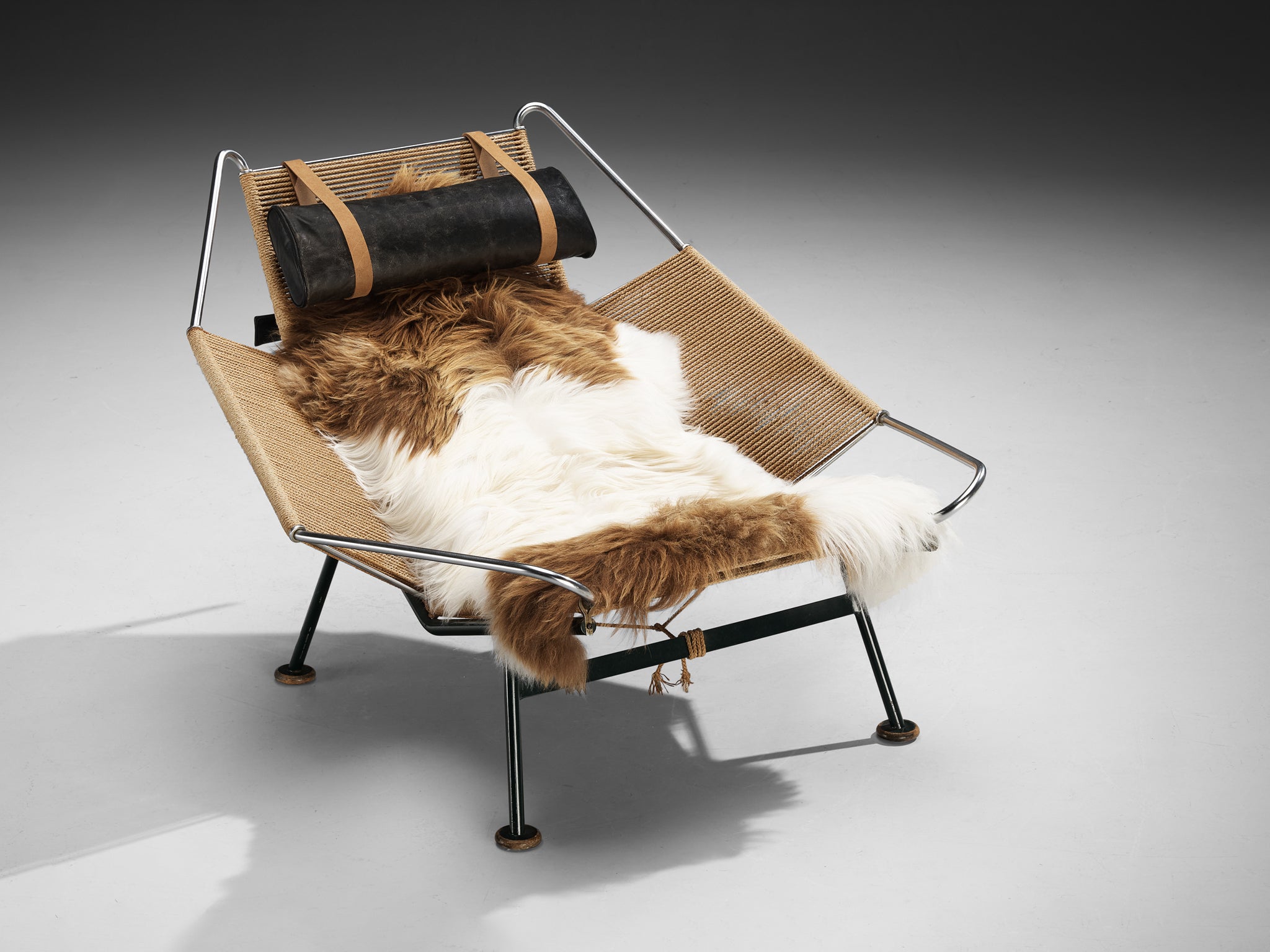
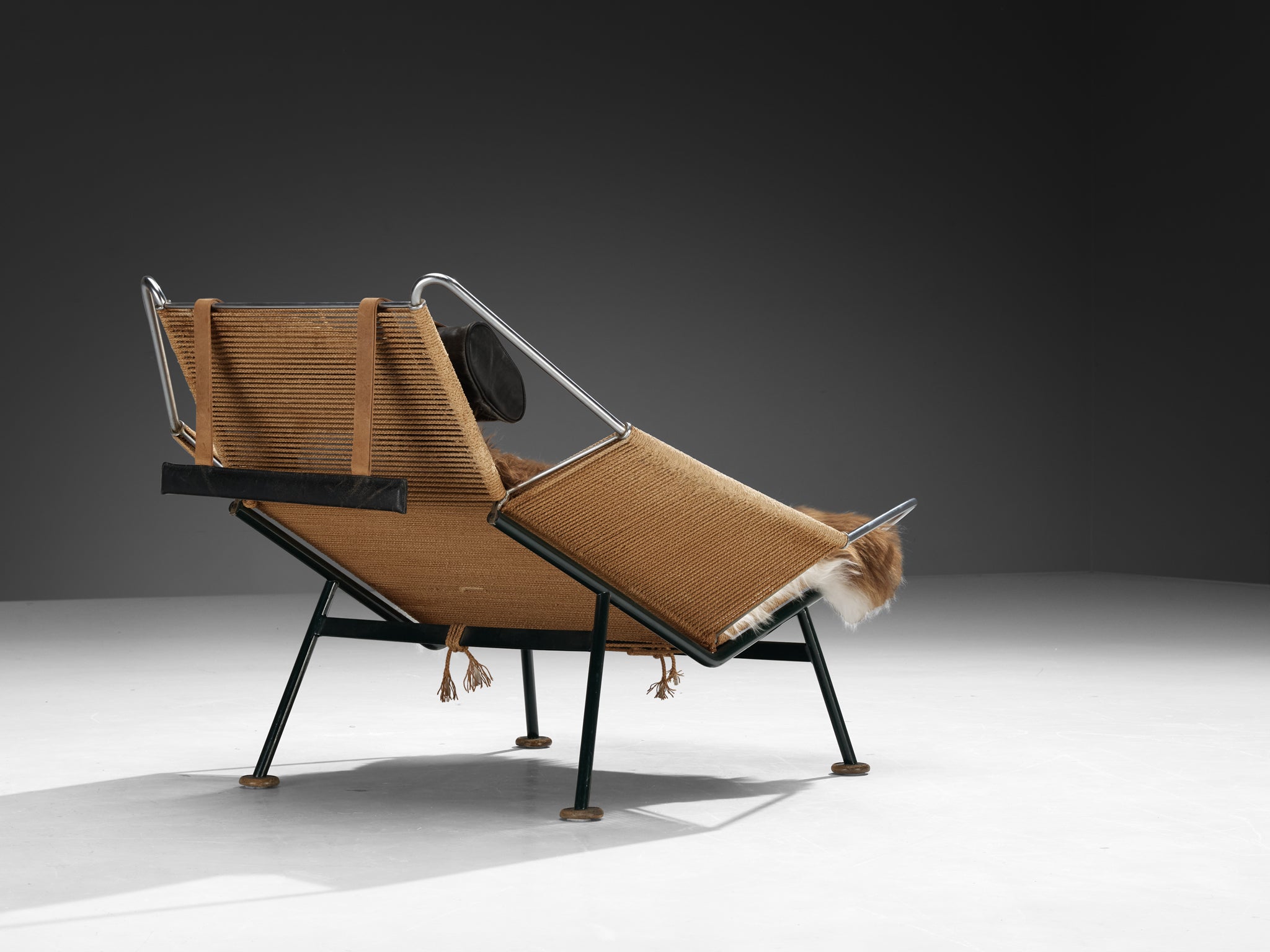
Iconic Hans Wegner ‘Flag Halyard’ Lounge Chairs Early Edition Model GE225
 Open here
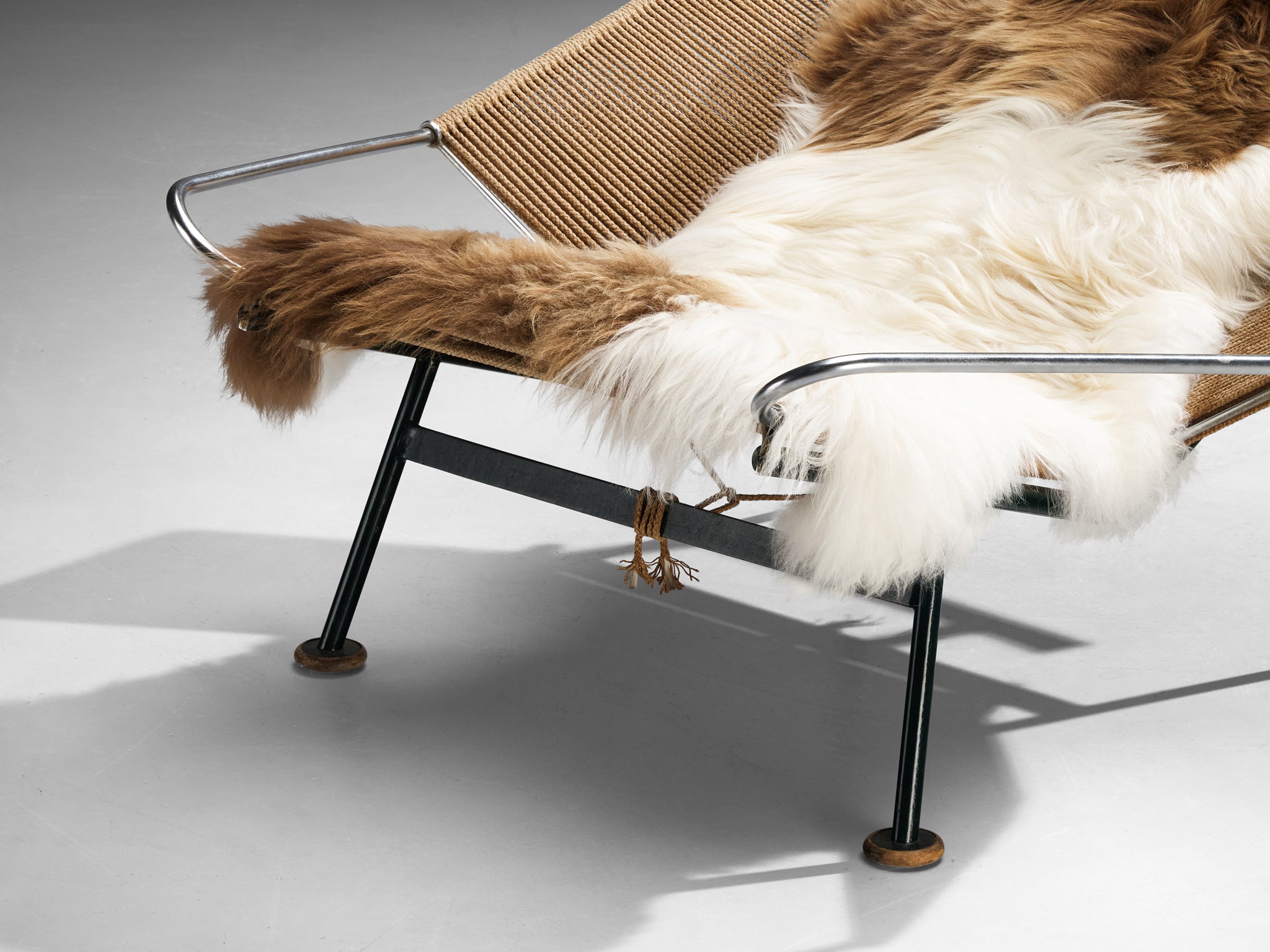
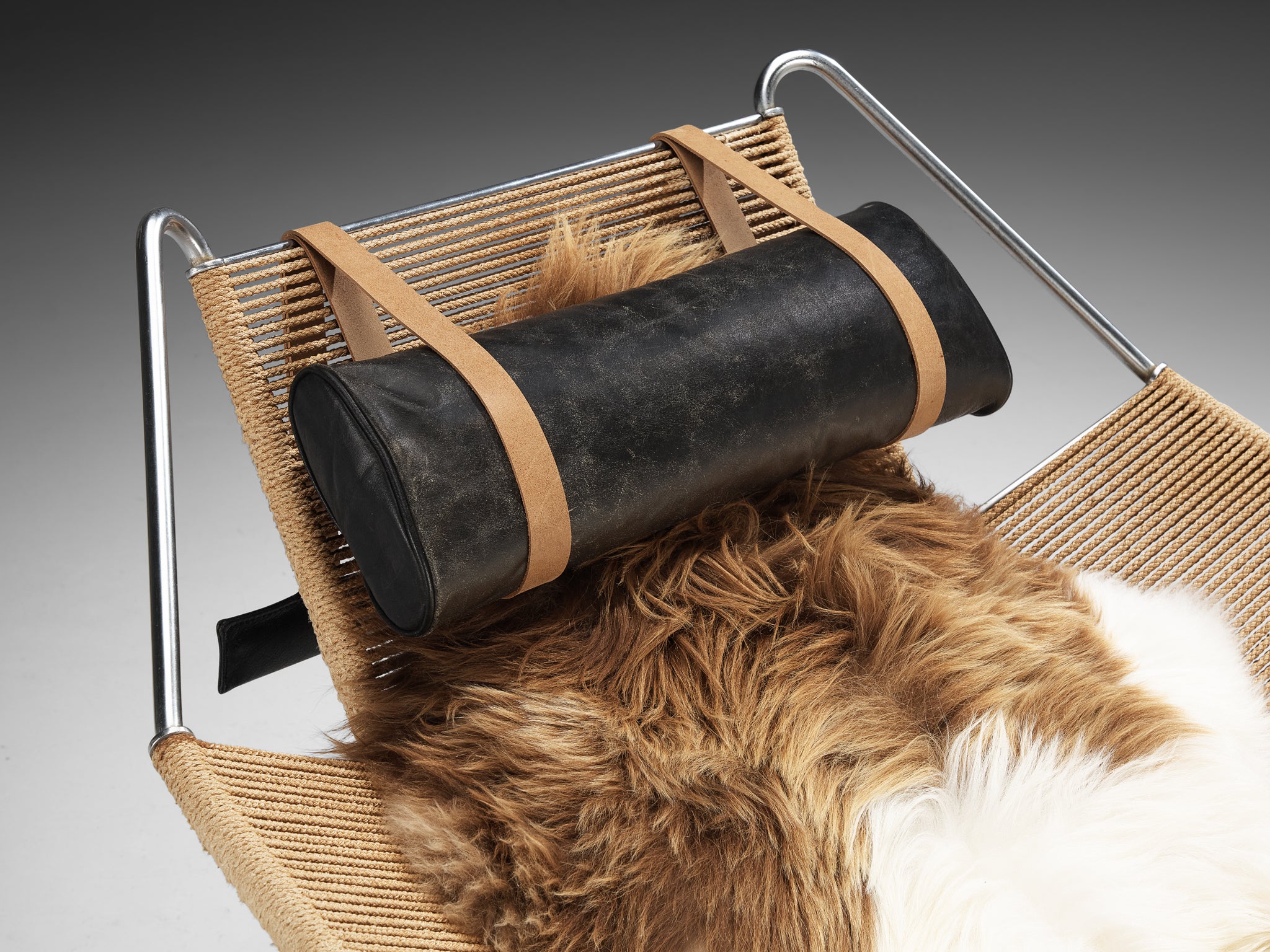
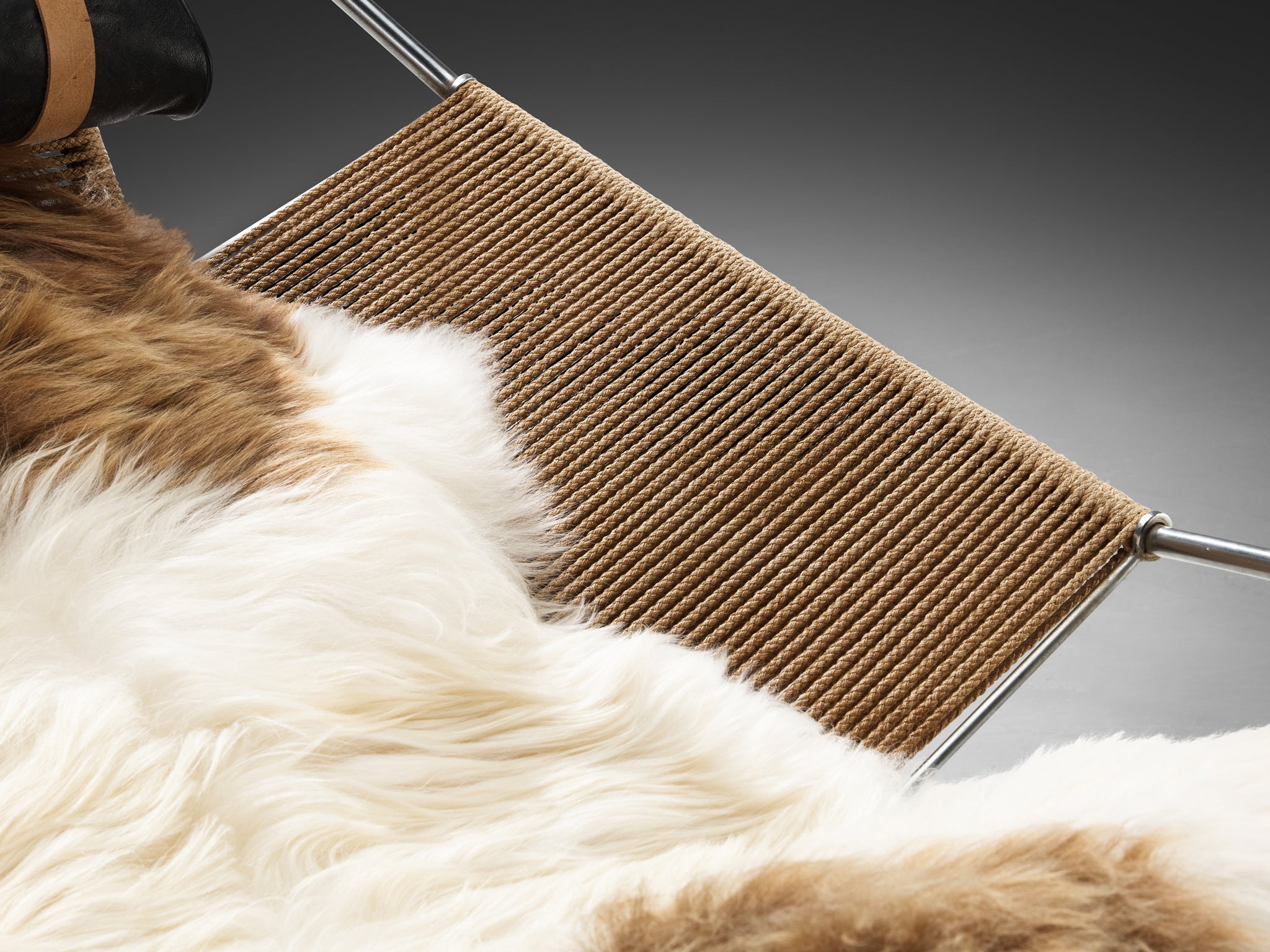
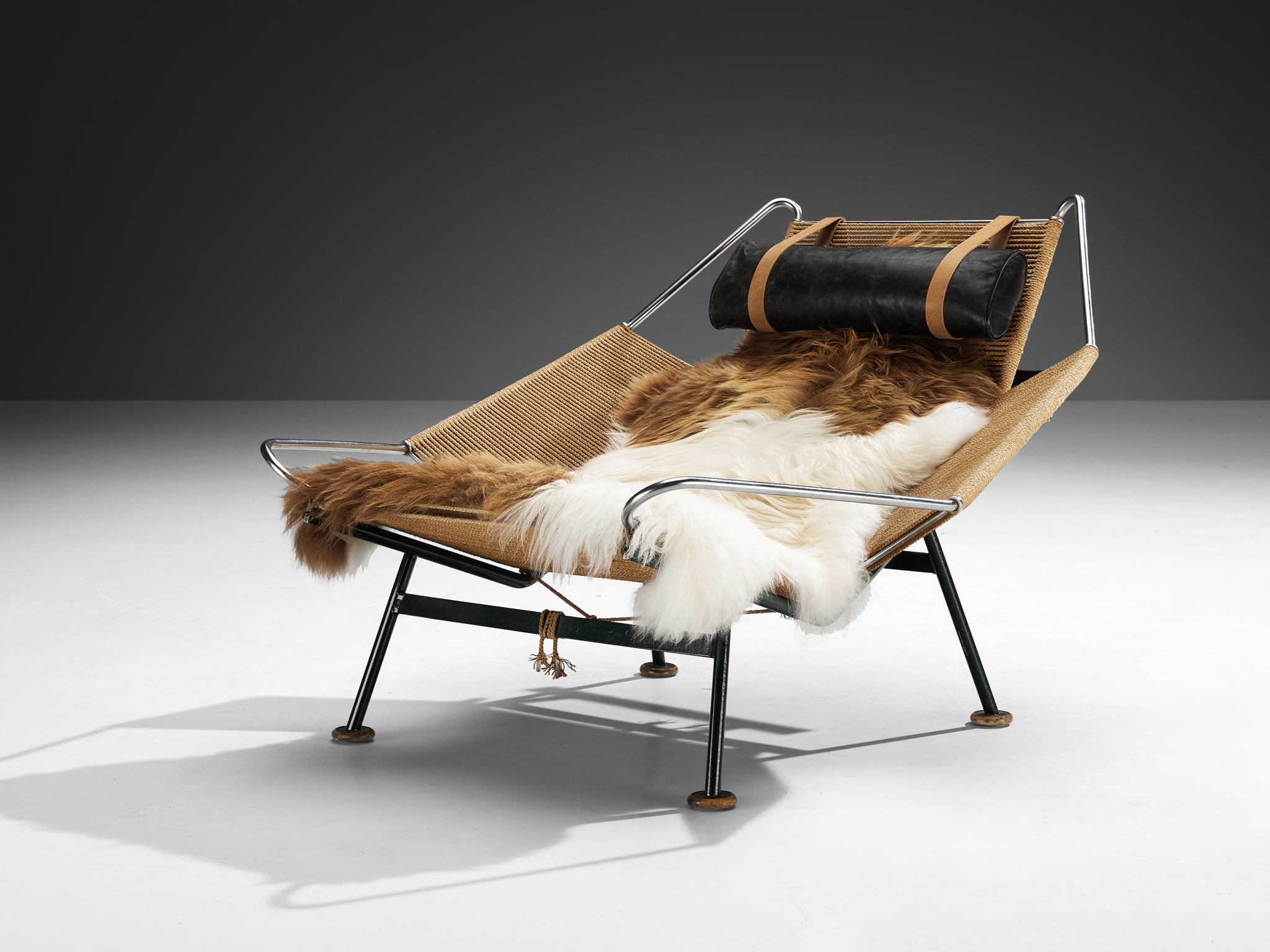
This iconic chair, made with 250 metres of rope, is designed by the Danish designer Hans Wegner. The name ‘Flag Halyard’ refers to the innovative material that Wegner uses: the rope Wegner selected to create the seat was usually used to lift a flag. Wegner claims that the ‘Flag Halyard’ was designed when he and his family were on summer holiday. He dug a pit in the sand to create the perfect sitting or lying position to still enjoy the surroundings. Here he made the first sketches for this chair. In the very first versions, the frame was coloured white. Since Wegner wanted the constructive details to be more visible, he changed the colour to dark green, like in this example. The way the frame stands on wooden feet, indicates the early edition of the chair since Wegner later changed this part to be made in plastic. In addition to the attached leather head cushion, a sheepskin can be put on the seat to create more comfort and warmth.
Hans Wegner (1914-2007) is one of the most prolific furniture designers of the world. Wegner's furniture was designed with the greatest understanding of materials, construction techniques and use. Wegner is known to be an excellent cabinet maker with thorough understanding of the materials he worked with, yet his greatest aim was to create expressive and exciting design. Although Wegner was a functionalist, he was not a rational dogmatist such as Kaare Klint, of whom he was a student. Instead, his designs sparkle with inventiveness and sculptural sense. But this never meant that his organic and sensuous forms left the strict rules of functionalism. At heart, Wegner was an idealist. He was relentless in his quest for the best chair: 'there is never one damn thing that cannot be made better'. But Wegner was aware of the fact that you cannot design the 'perfect' chair, which gave him the freedom to produce as much as possible. He left behind more than 3500 drawings and about 500 of his designs went into production. His designs feature in the UN Building and Seagram Building in New York, UNESCO's headquarters. NATO's headquarters in Paris and several buildings by the architects Skidmore, Owings & Merrill.
The listed price is per item.

Choose options
Product Details

From an apprenticeship in Tønder to 'The Chair'
Born in the southern Danish town of Tønder, the son of a shoemaker, Wegner began training as a cabinetmaker at fourteen and had completed four years under master H.F. Stahlberg by the time he turned eighteen. He moved to Copenhagen to study at the School of Arts and Crafts from 1936 to 1938, then joined architects Arne Jacobsen and Erik Møller in Aarhus to design furniture for the new Aarhus City Hall — his first serious commission.
It was in this period that master joiner Johannes Hansen began following Wegner's progress; their collaboration, formalised through the 1940s, produced showpieces built for Copenhagen's Cabinetmakers' Guild exhibitions, among them the Round Chair of 1949, developed from Wegner's studies of Ming dynasty portrait chairs. In 1950, a separate partnership with Carl Hansen & Søn brought the related Wishbone Chair (CH24) into continuous production, a chair still made to Wegner's original drawings today.
VAT within the EU: When buying or delivering an item within the EU, VAT usually applies and will be added.