
Guglielmo Ulrich for Ar.Ca Milano Bar Cabinet in Parchment and Wood
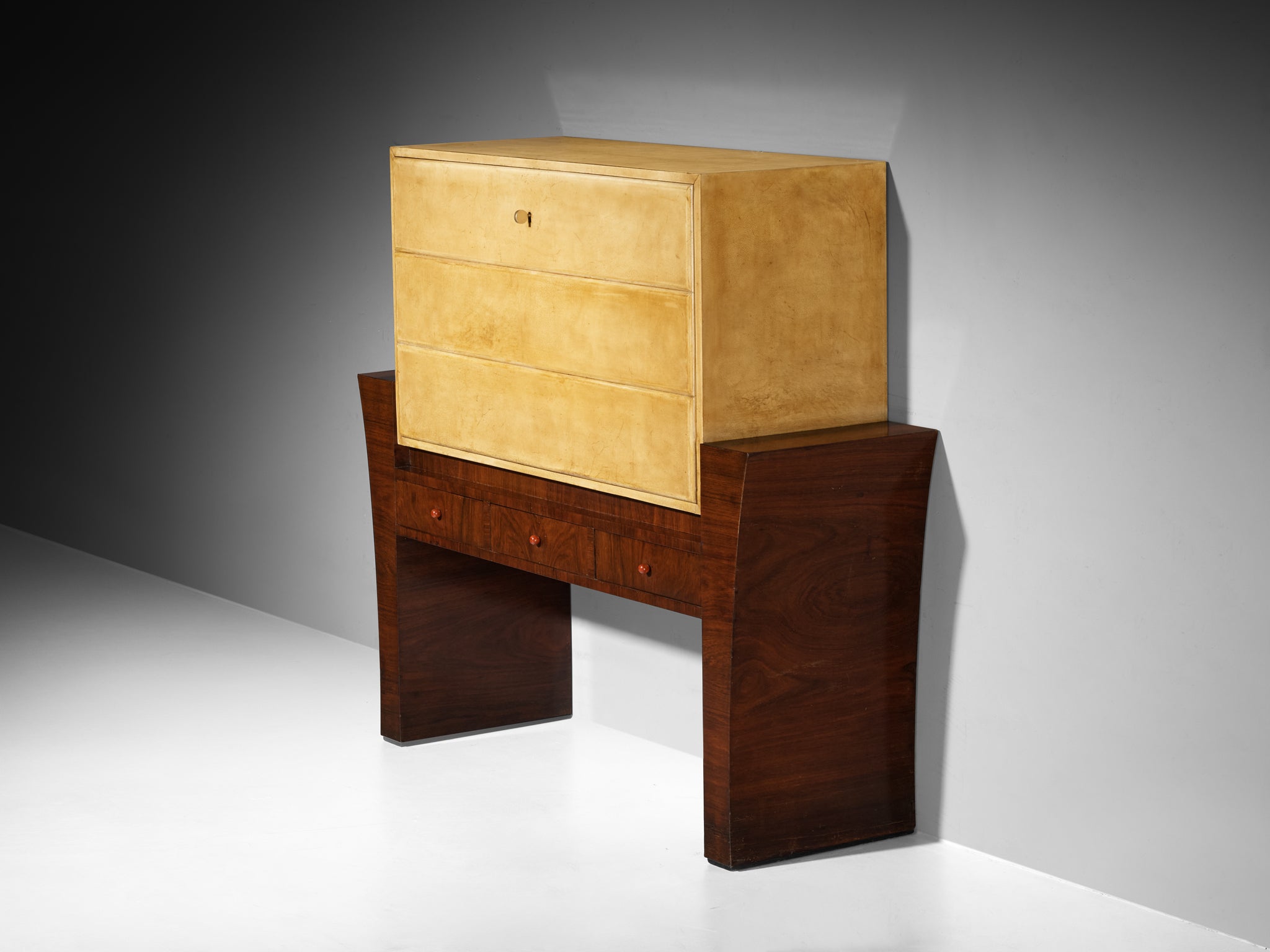
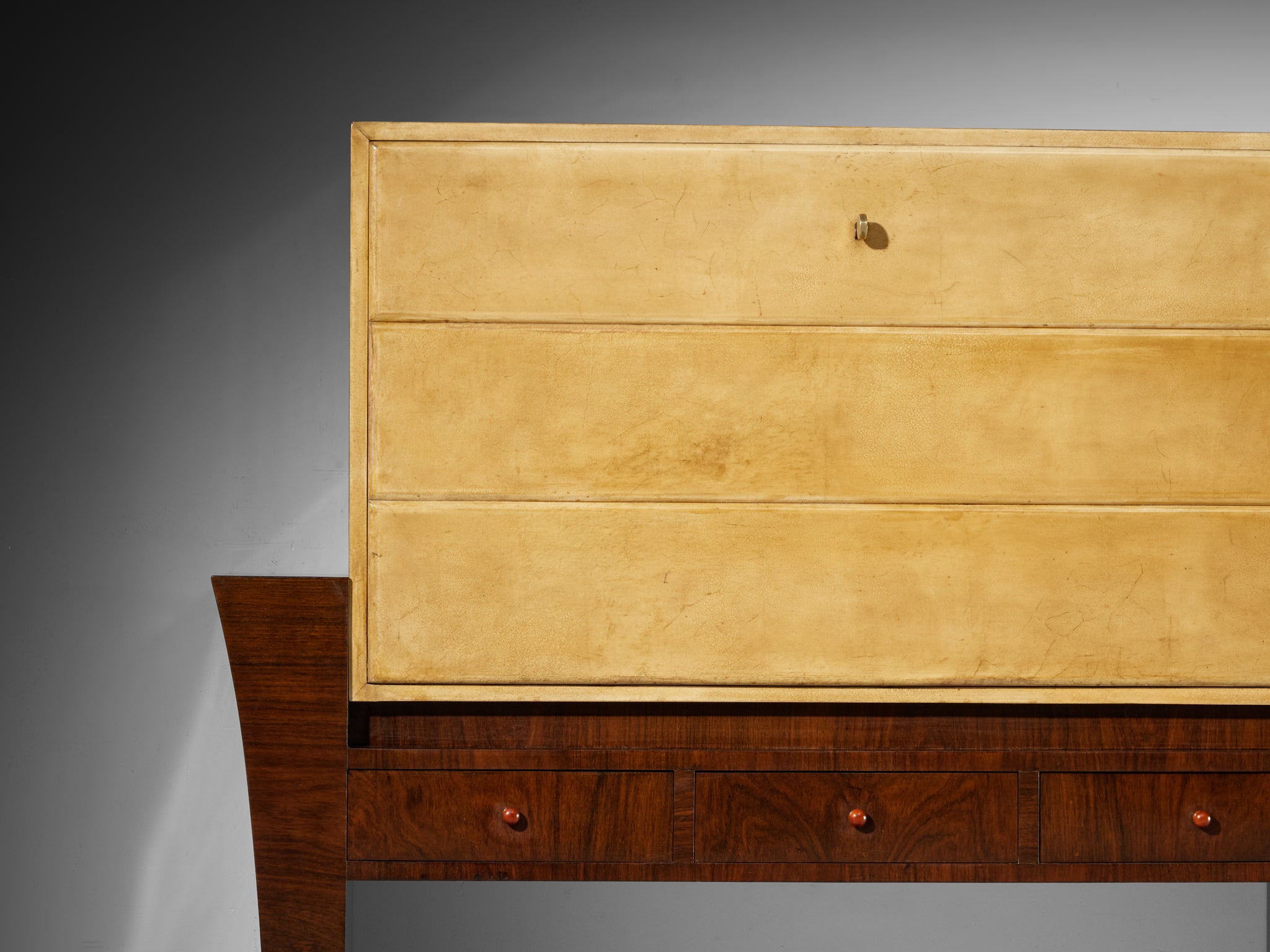
Guglielmo Ulrich for Ar.Ca, chest of drawers, parchment, wood, birdseye maple, Italy, early 1930s
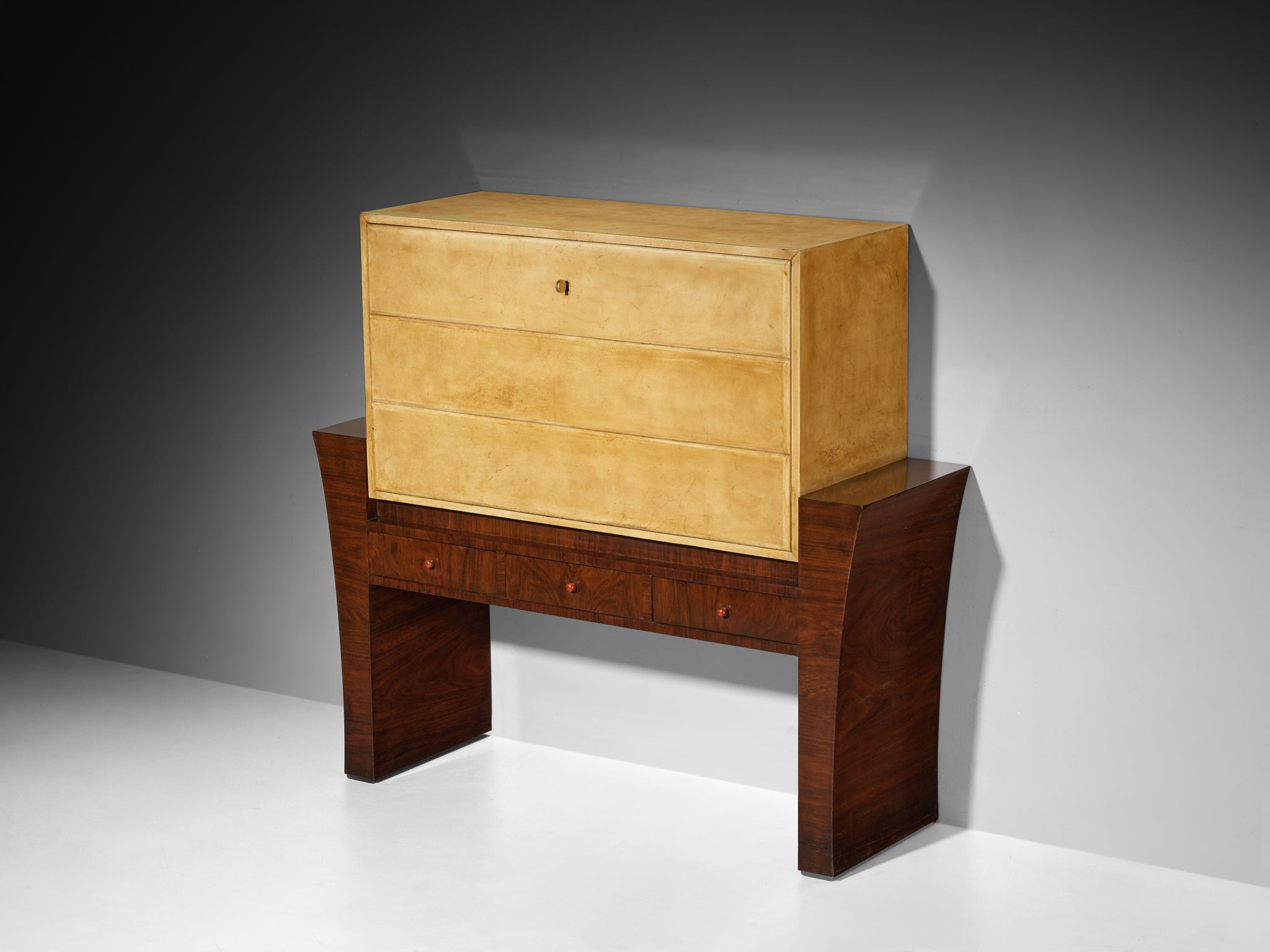
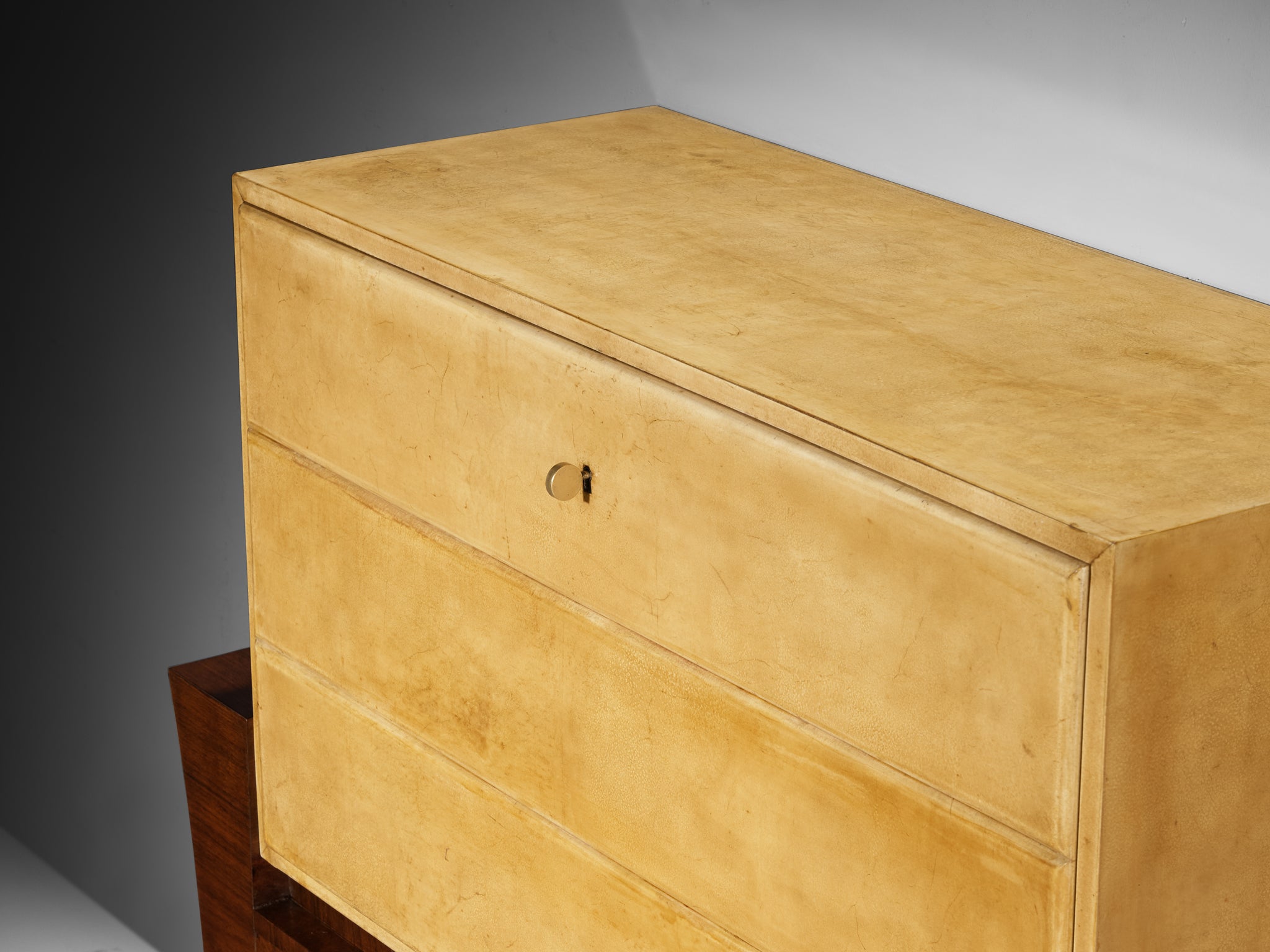
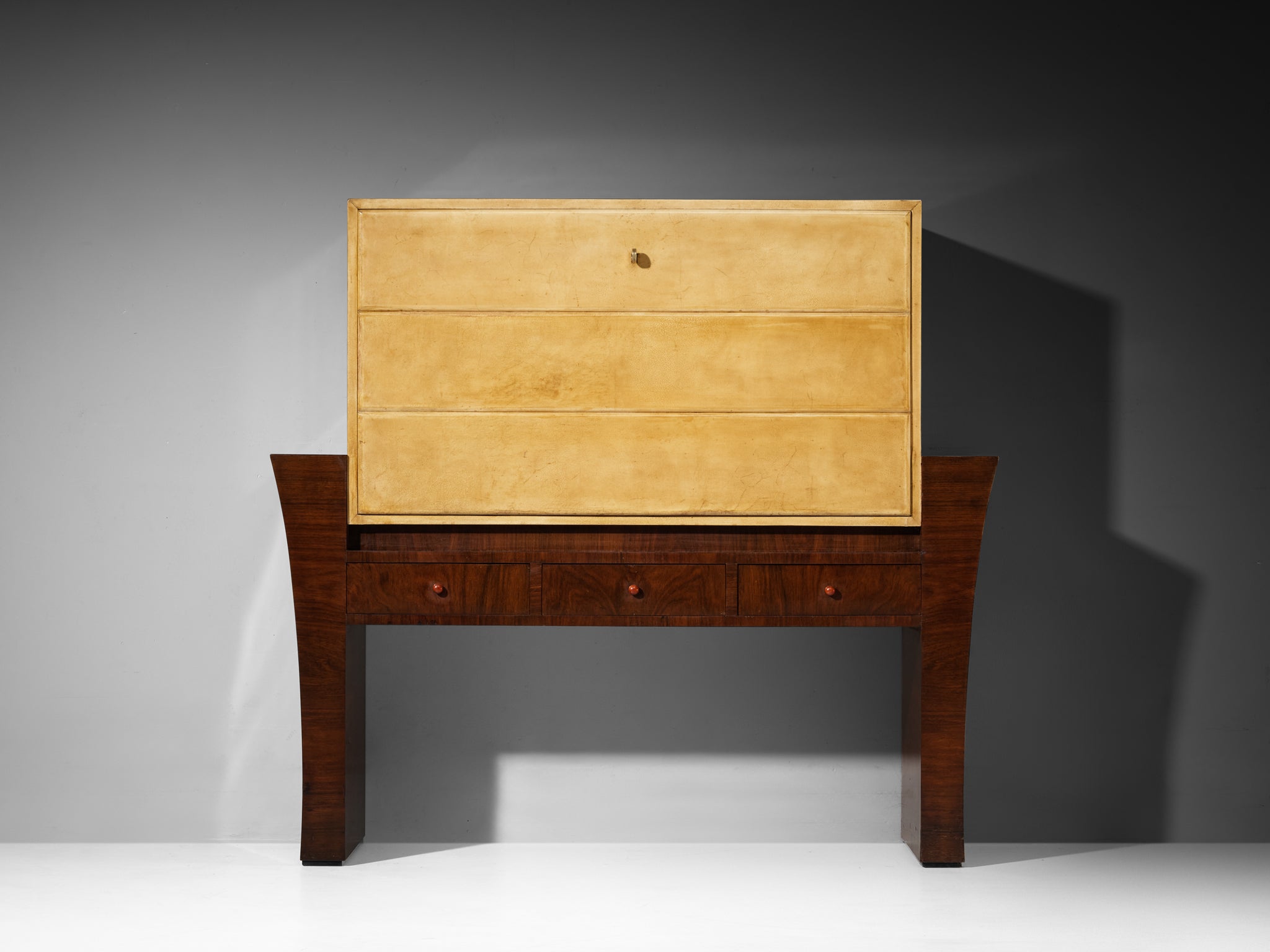
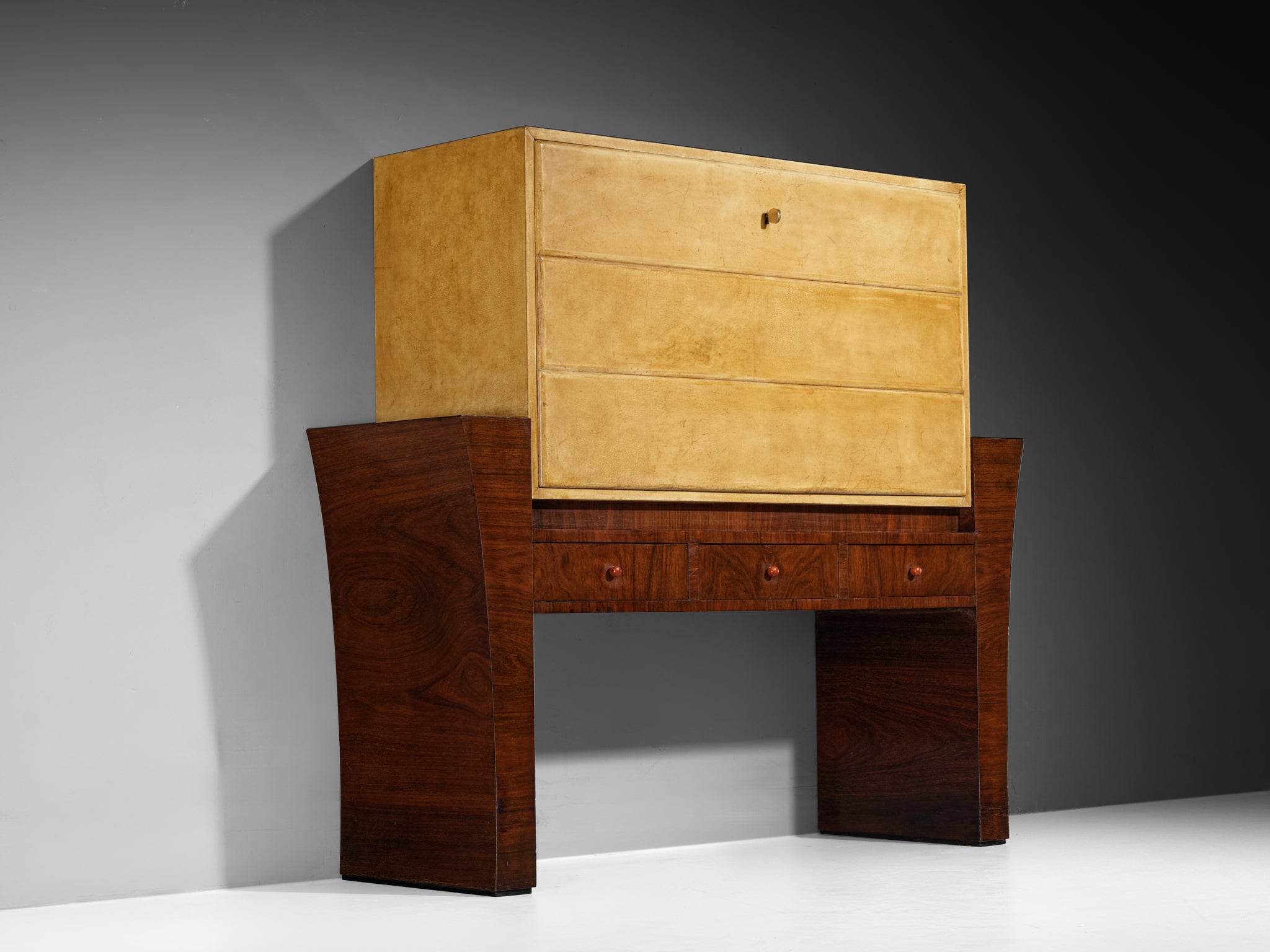
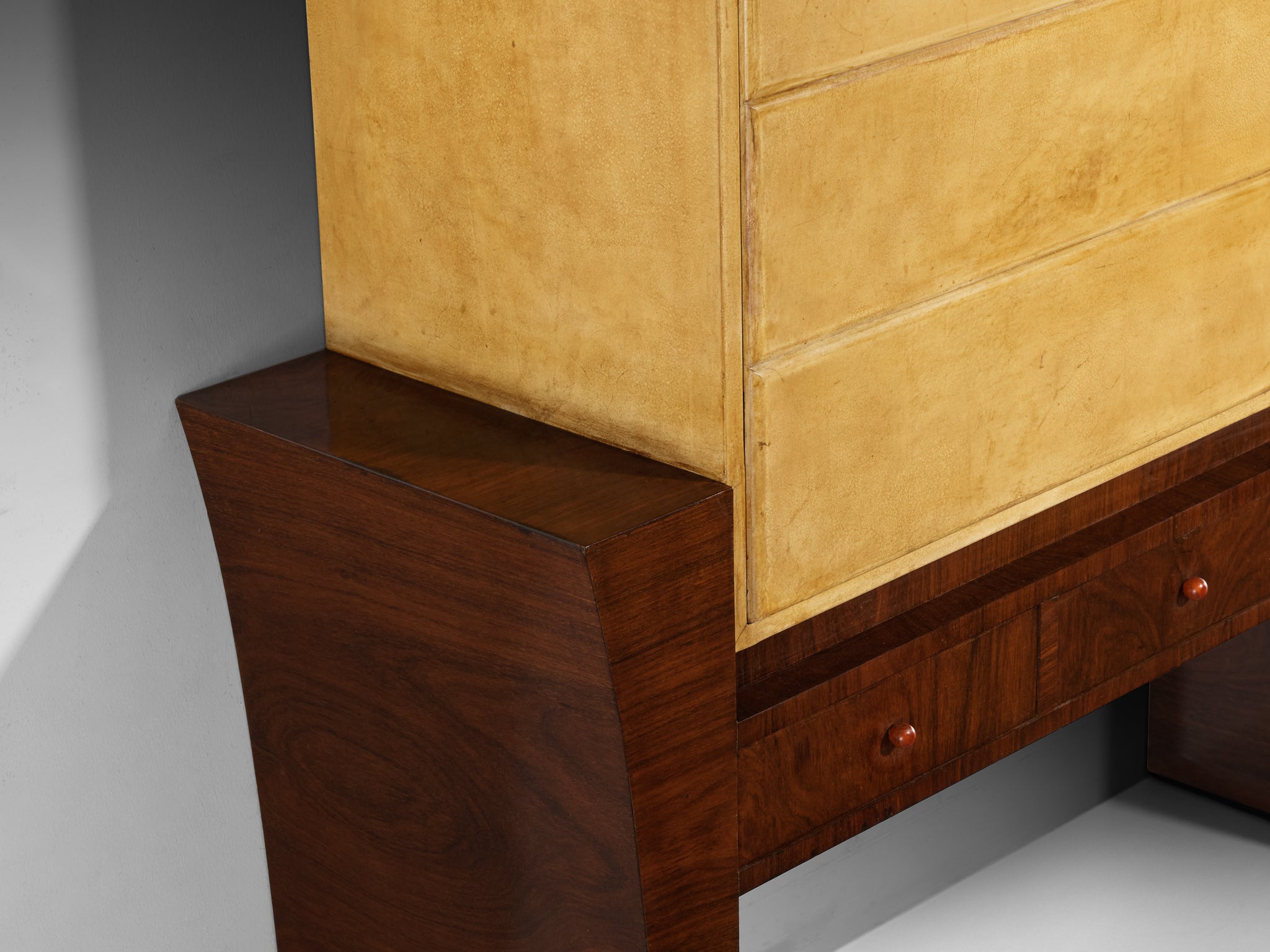
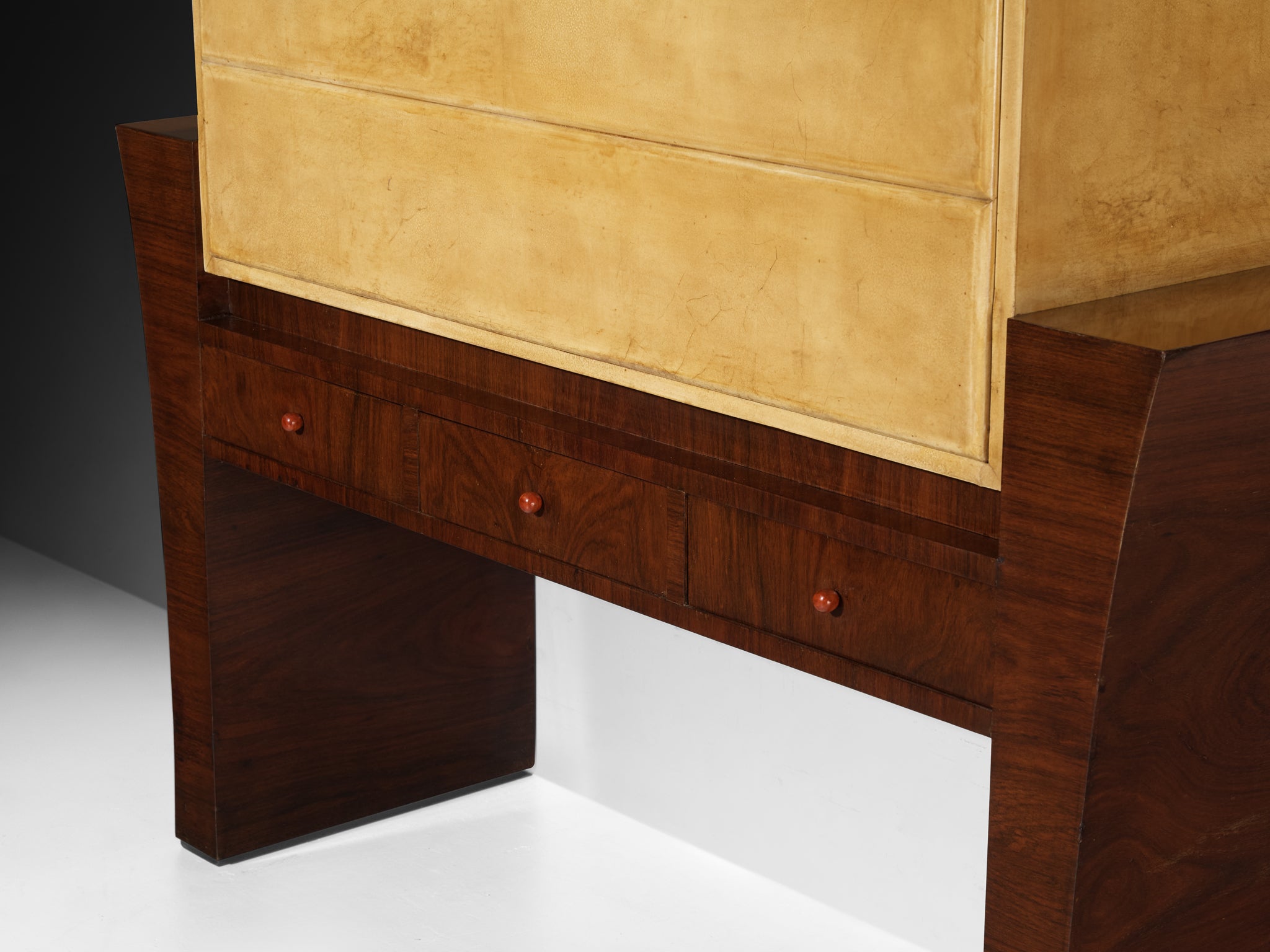
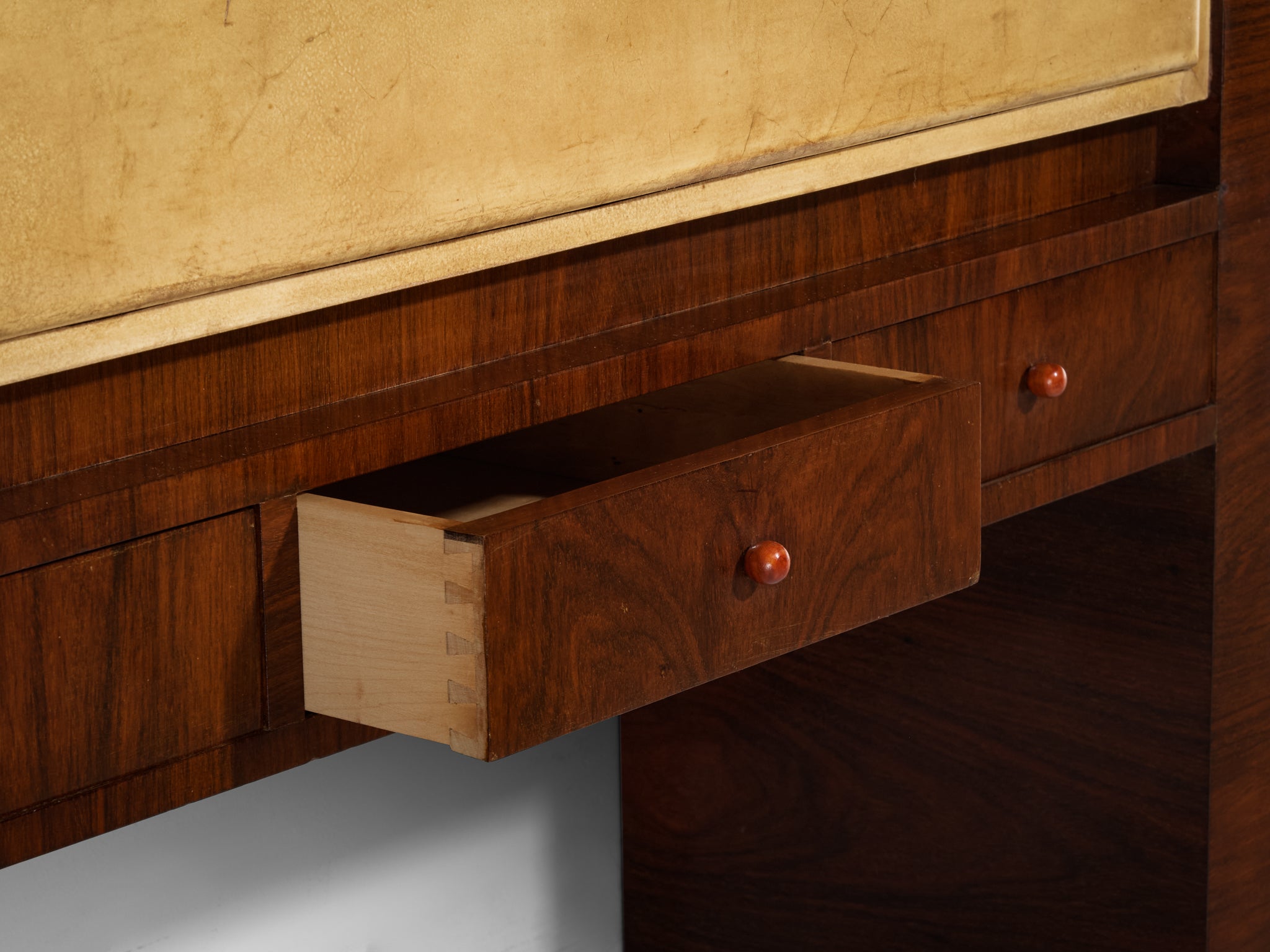
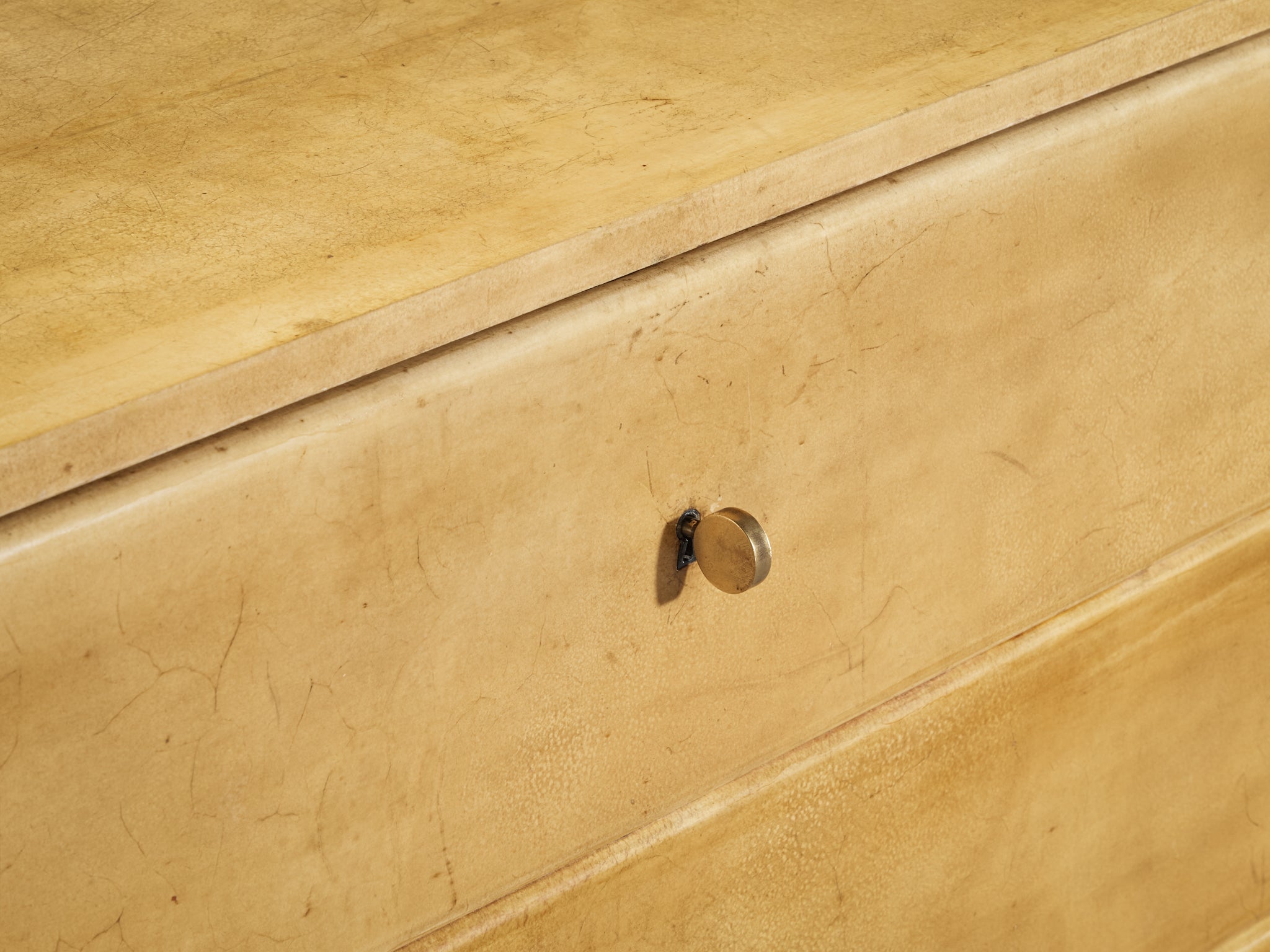
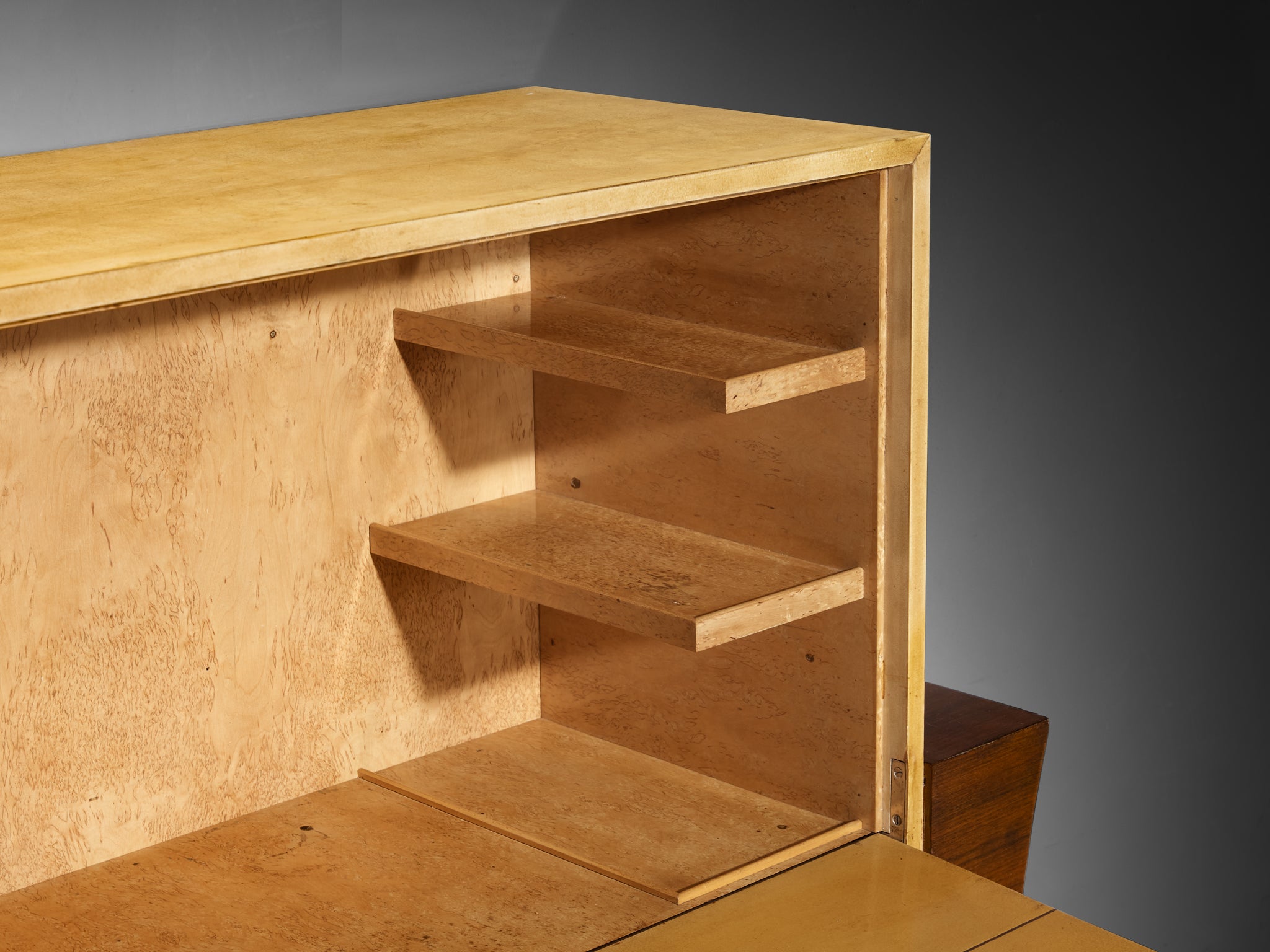
This exceptional bar cabinet by Guglielmo Ulrich for Ar.Ca Milano exemplifies the refined Italian modernism of the 1930s, where elegance meets impeccable craftsmanship. The piece features a striking architectural composition and use of materials. The body of this cabinet is executed in parchment, and with its warm, tactile appearance, it adds both interest and refinement. The dark wood base introduces depth and contrast through its natural grain and sculptural silhouette. Inside, the cabinet reveals a finely crafted maple interior, creating a beautiful yet subtle contrast to the parchment exterior while remaining within the same color palette. A perfect harmony of geometry, proportion, and material, this piece captures Ulrich’s distinctive approach, merging neoclassical restraint with modernist clarity.
This sideboard, like many of Ulrich’s pieces, would have appealed to the growing bourgeoisie of 1930s Italy, who desired furniture that reflected their taste for quality and modernity. Additionally, its inclusion of innovative materials such as parchment further underscores Ar.Ca’s forward-thinking approach to design and production. Ulrich successfully created a piece that embodies elegance without compromising on practicality.
In 1930, architect, furniture designer, and writer Guglielmo Ulrich (1904-1977) founded the home furniture company Ar.Ca (Arredamento Casa) in Milan, Italy. He established the firm alongside Renato Wild, a cultured furniture maker and dealer, and Baron Attilio Scaglia, an entrepreneur and owner of a furniture shop. Together, they envisioned a company that would not only design but also produce and sell high-quality furniture, blending artisanal craftsmanship with the emerging industrial production methods of the time. Ulrich, who also served as the company’s artistic director, played a pivotal role in creating a distinctive line of furniture that reflected the evolving tastes and cultural shifts of the early 20th century.
A key aspect of Ar.Ca’s rise to prominence in the Italian furniture industry was its close relationship with Domus, the influential Italian design magazine founded by Gio Ponti. In 1932, just two years after its establishment, Ar.Ca began advertising consistently in Domus. Ulrich’s furniture designs, known for their luxury and modernity, were featured in the magazine five times that year, which positioned Ar.Ca as a leading force in contemporary furniture design.
Gio Ponti, as the editor of Domus, was instrumental in promoting Ar.Ca’s work, recognizing its ability to bridge the gap between high design and mass appeal. Ponti’s goal was to demonstrate that luxury furniture could have a broader cultural and educational role, influencing trends in the way people lived and thought about their surroundings. By showcasing Ar.Ca’s work, Ponti hoped to inspire a shift within the Italian furniture industry, encouraging other designers and manufacturers to elevate the quality of their products. This collaboration aimed to enhance Italy’s reputation in the international design community, particularly against strong competitors like France and Austria.
The balance between handcrafted luxury and industrial efficiency became a defining feature of Ulrich’s work at Ar.Ca. His ability to maintain this balance while meeting the growing demand for high-quality, accessible furniture was one of the reasons for his lasting success. The Ar.Ca operation was a model of how a company could thrive by merging artistic vision with practical production techniques. By controlling both the design and production processes, Ulrich ensured that the furniture maintained the highest standards of craftsmanship, even as the company expanded its reach.
This exceptional bar cabinet by Guglielmo Ulrich for Ar.Ca Milano exemplifies the refined Italian modernism of the 1930s, where elegance meets impeccable craftsmanship. The piece features a striking architectural composition and use of materials. The body of this cabinet is executed in parchment, and with its warm, tactile appearance, it adds both interest and refinement. The dark wood base introduces depth and contrast through its natural grain and sculptural silhouette. Inside, the cabinet reveals a finely crafted maple interior, creating a beautiful yet subtle contrast to the parchment exterior while remaining within the same color palette. A perfect harmony of geometry, proportion, and material, this piece captures Ulrich’s distinctive approach, merging neoclassical restraint with modernist clarity.
This sideboard, like many of Ulrich’s pieces, would have appealed to the growing bourgeoisie of 1930s Italy, who desired furniture that reflected their taste for quality and modernity. Additionally, its inclusion of innovative materials such as parchment further underscores Ar.Ca’s forward-thinking approach to design and production. Ulrich successfully created a piece that embodies elegance without compromising on practicality.
In 1930, architect, furniture designer, and writer Guglielmo Ulrich (1904-1977) founded the home furniture company Ar.Ca (Arredamento Casa) in Milan, Italy. He established the firm alongside Renato Wild, a cultured furniture maker and dealer, and Baron Attilio Scaglia, an entrepreneur and owner of a furniture shop. Together, they envisioned a company that would not only design but also produce and sell high-quality furniture, blending artisanal craftsmanship with the emerging industrial production methods of the time. Ulrich, who also served as the company’s artistic director, played a pivotal role in creating a distinctive line of furniture that reflected the evolving tastes and cultural shifts of the early 20th century.
A key aspect of Ar.Ca’s rise to prominence in the Italian furniture industry was its close relationship with Domus, the influential Italian design magazine founded by Gio Ponti. In 1932, just two years after its establishment, Ar.Ca began advertising consistently in Domus. Ulrich’s furniture designs, known for their luxury and modernity, were featured in the magazine five times that year, which positioned Ar.Ca as a leading force in contemporary furniture design.
Gio Ponti, as the editor of Domus, was instrumental in promoting Ar.Ca’s work, recognizing its ability to bridge the gap between high design and mass appeal. Ponti’s goal was to demonstrate that luxury furniture could have a broader cultural and educational role, influencing trends in the way people lived and thought about their surroundings. By showcasing Ar.Ca’s work, Ponti hoped to inspire a shift within the Italian furniture industry, encouraging other designers and manufacturers to elevate the quality of their products. This collaboration aimed to enhance Italy’s reputation in the international design community, particularly against strong competitors like France and Austria.
The balance between handcrafted luxury and industrial efficiency became a defining feature of Ulrich’s work at Ar.Ca. His ability to maintain this balance while meeting the growing demand for high-quality, accessible furniture was one of the reasons for his lasting success. The Ar.Ca operation was a model of how a company could thrive by merging artistic vision with practical production techniques. By controlling both the design and production processes, Ulrich ensured that the furniture maintained the highest standards of craftsmanship, even as the company expanded its reach.

Choose options
Guglielmo Ulrich for Ar.Ca Milano Bar Cabinet in Parchment and Wood
Sale price$38,500.00
Regular price
Product Details
VAT within the EU: When buying or delivering an item within the EU, VAT usually applies and will be added.