
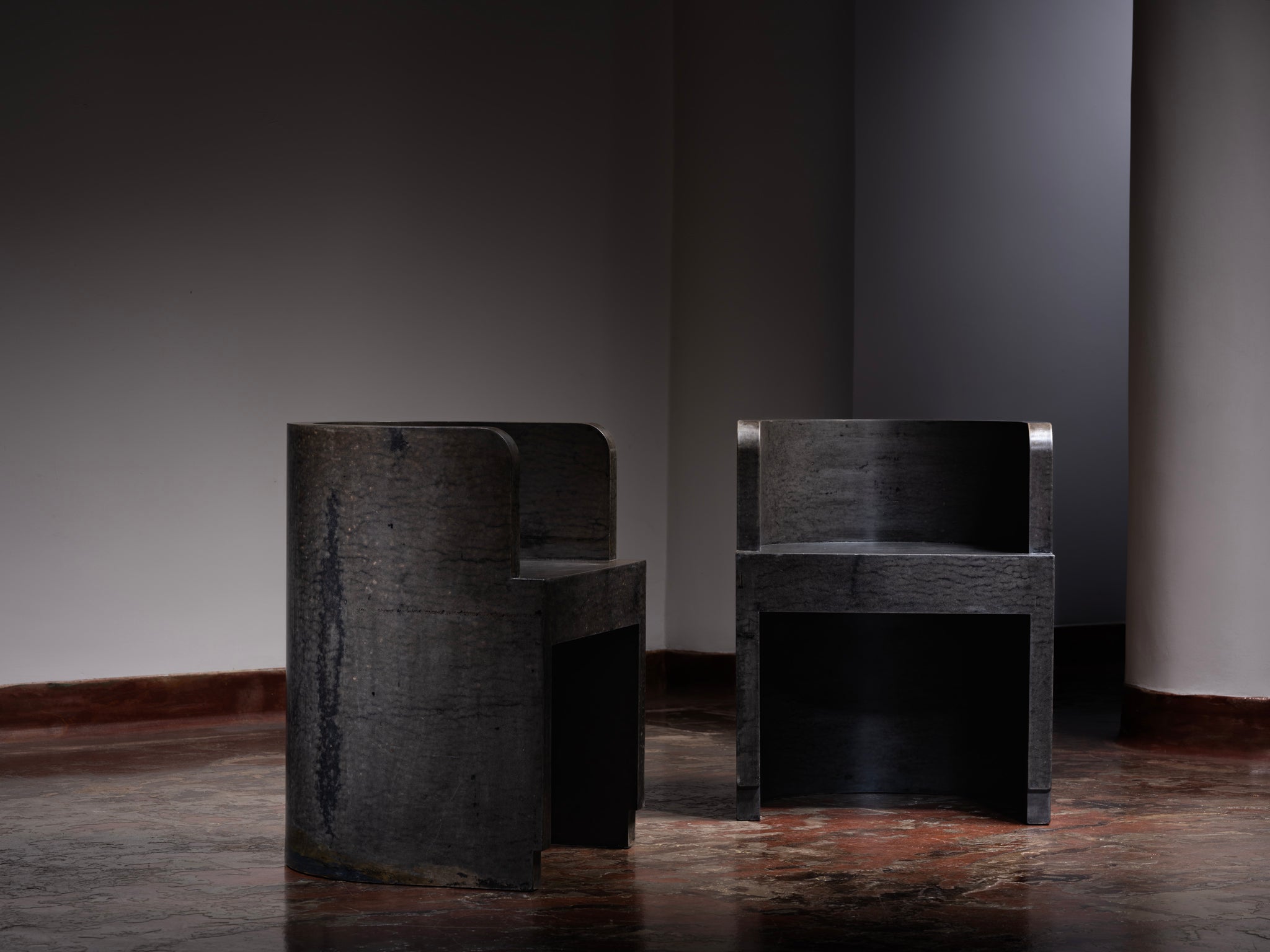
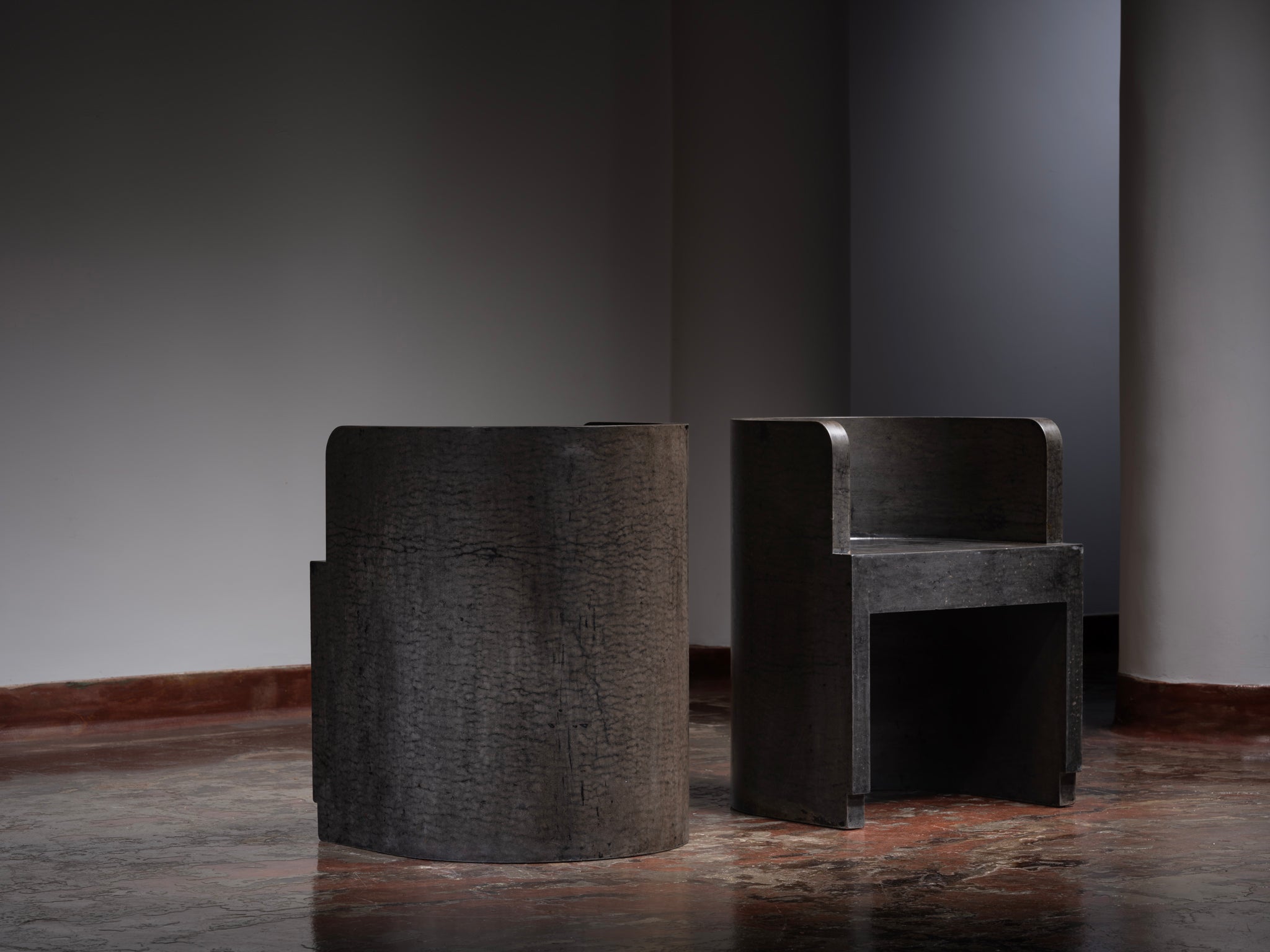
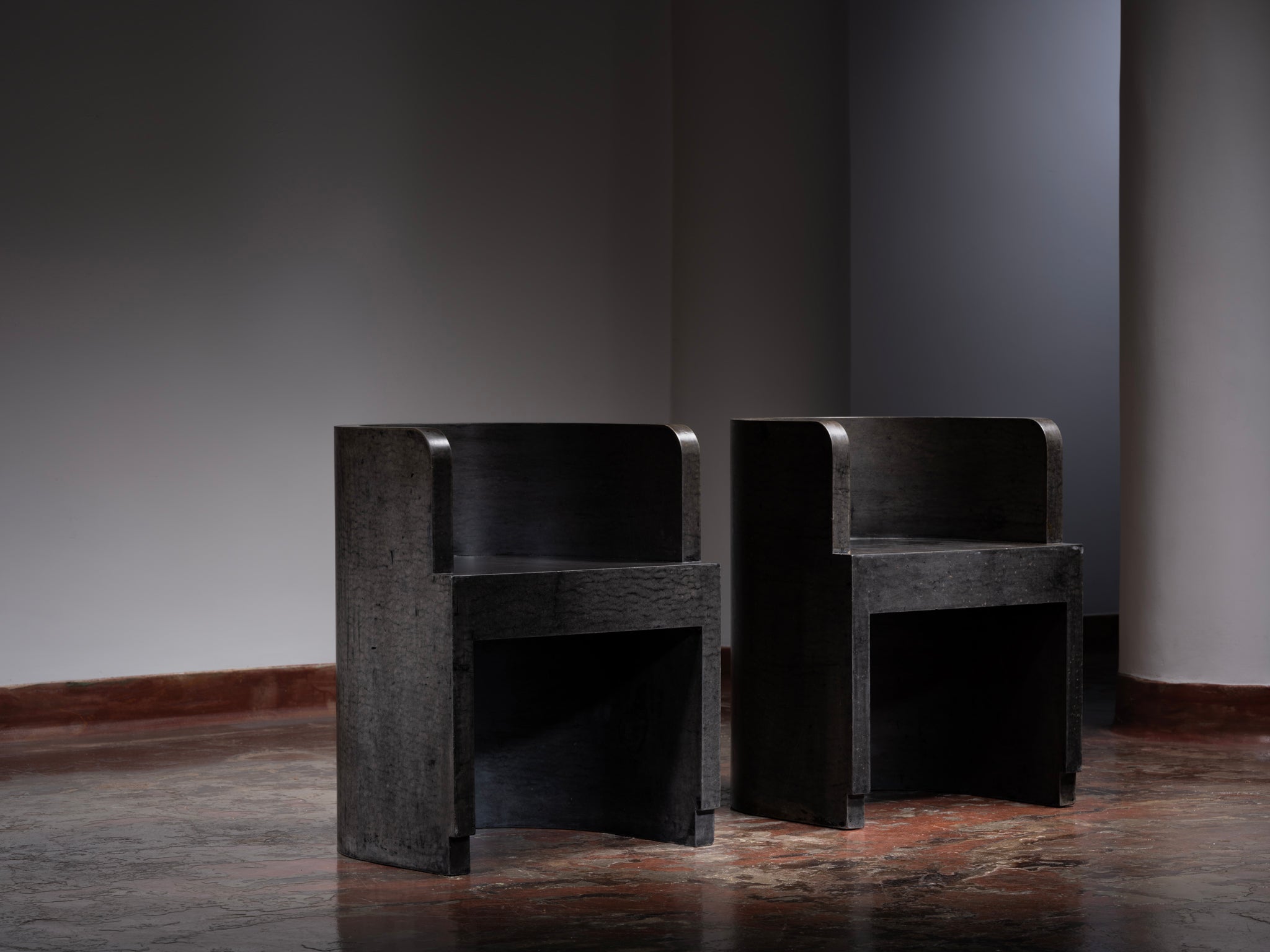
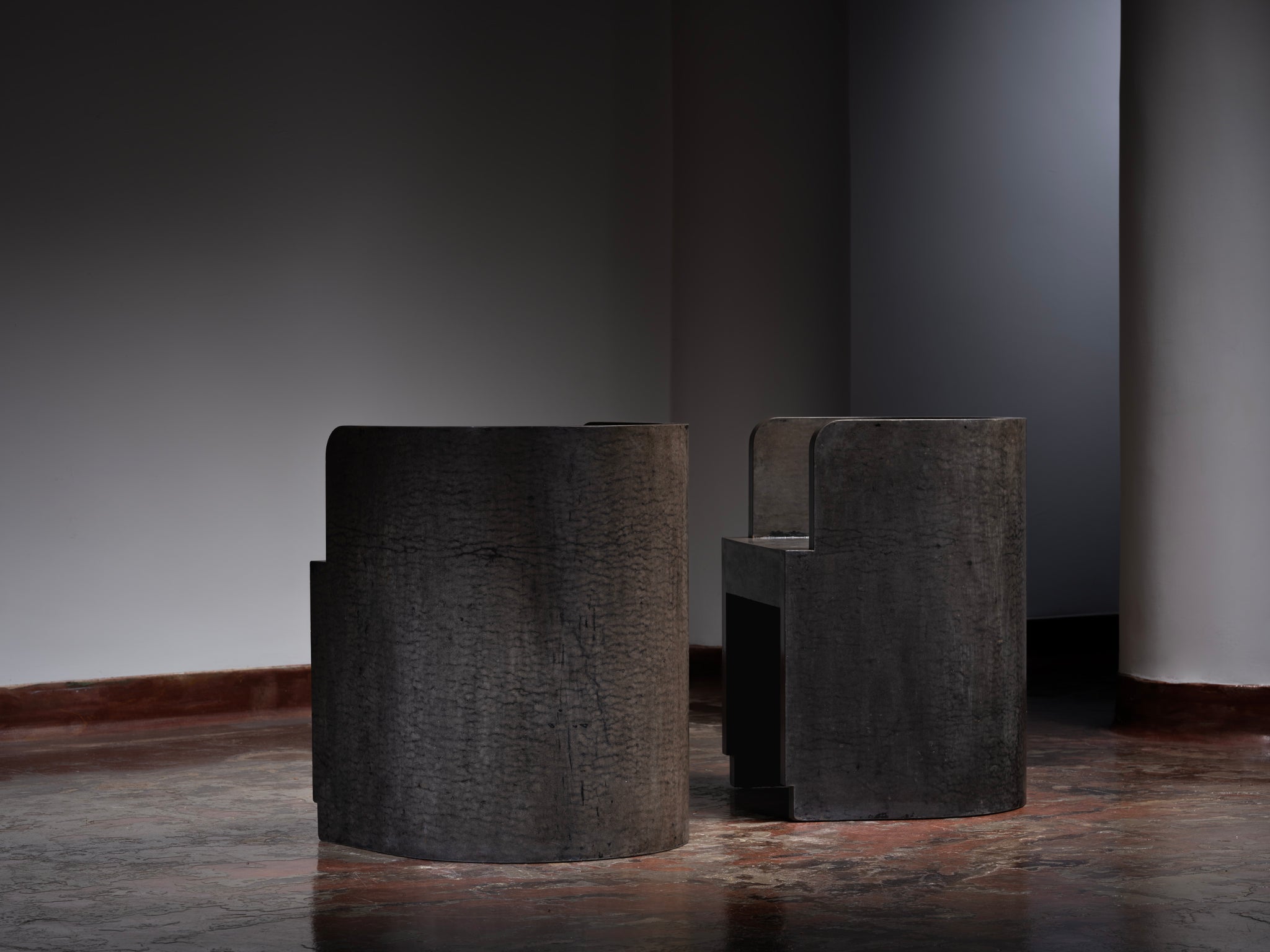
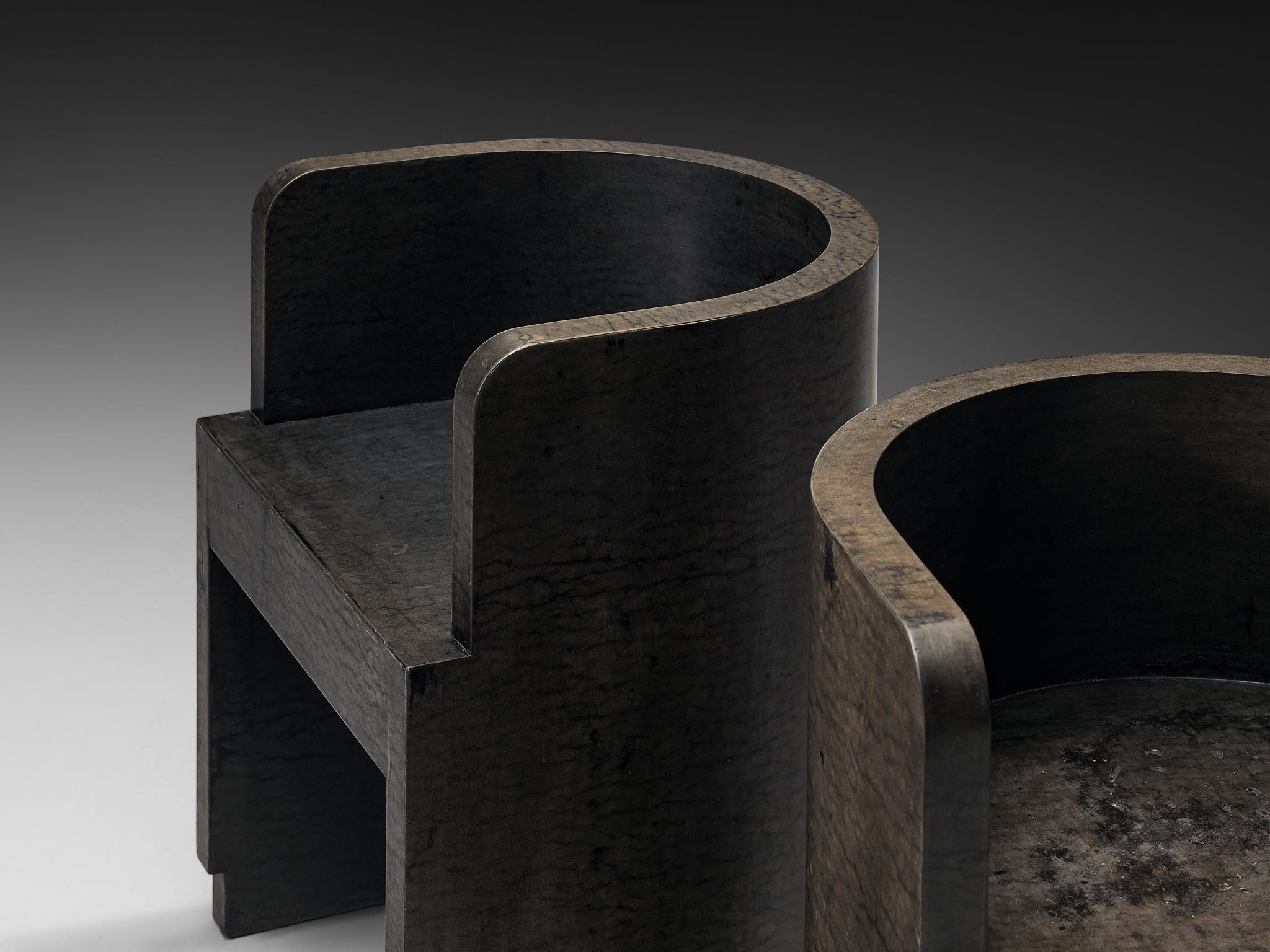
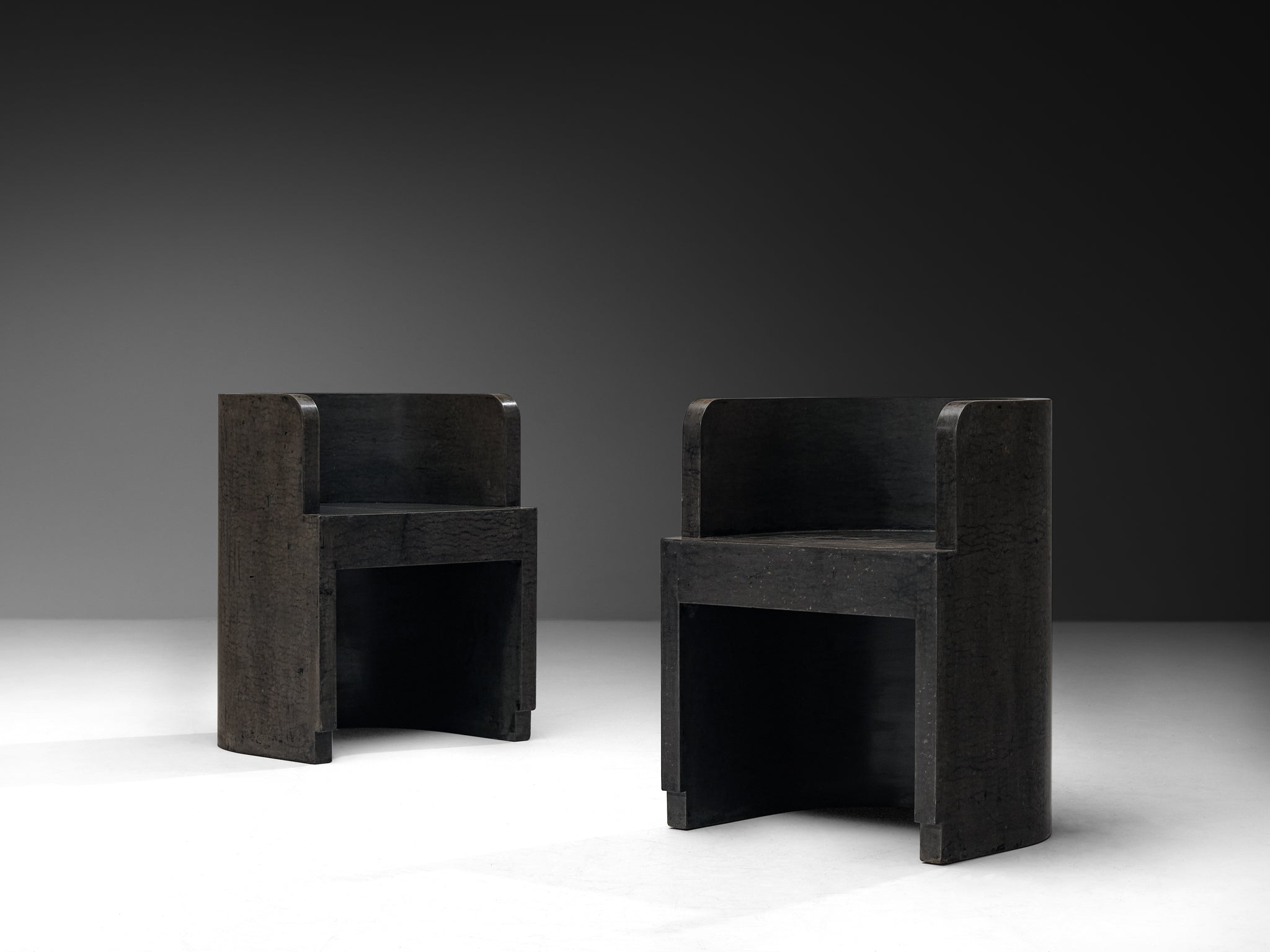
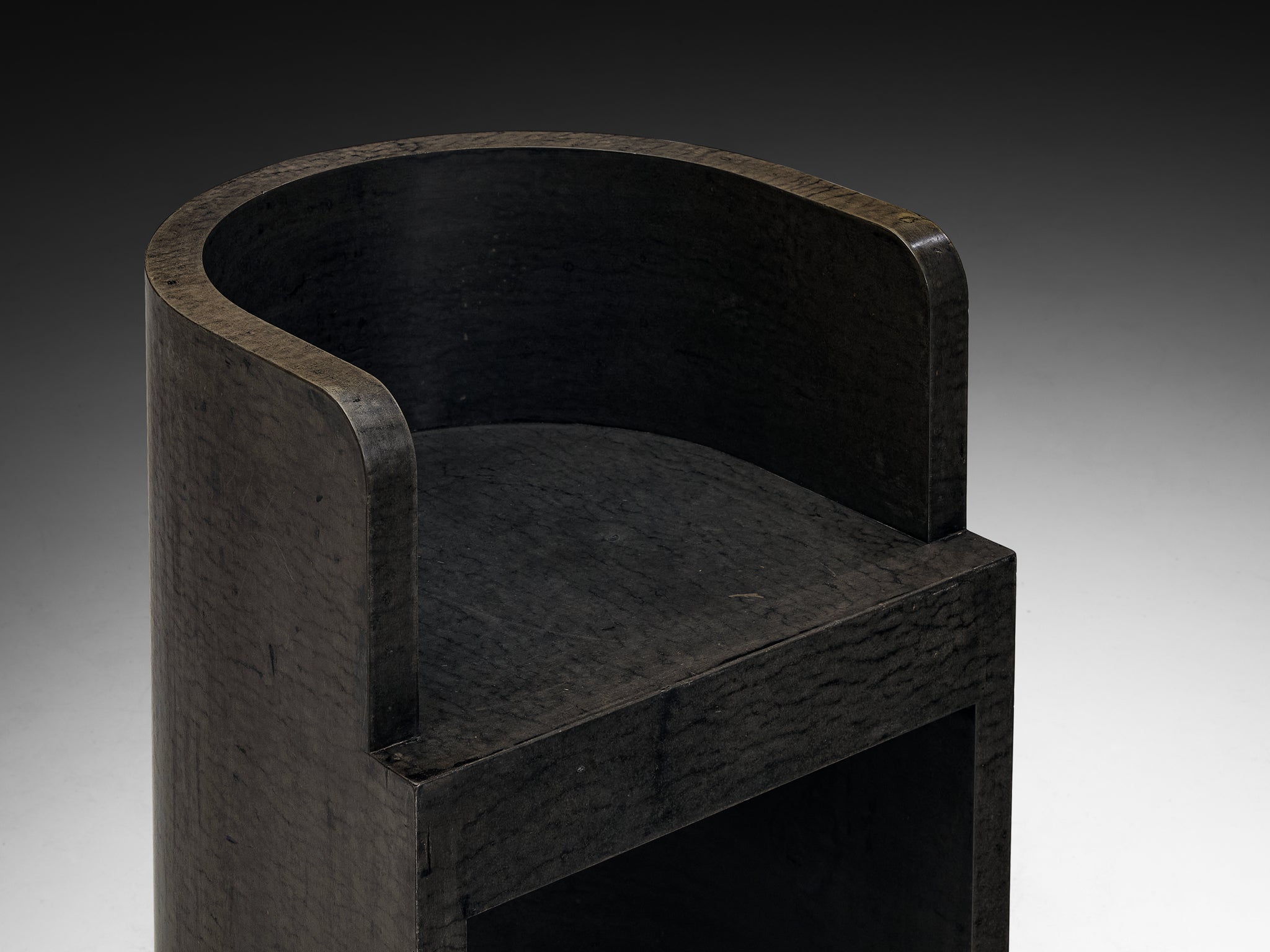
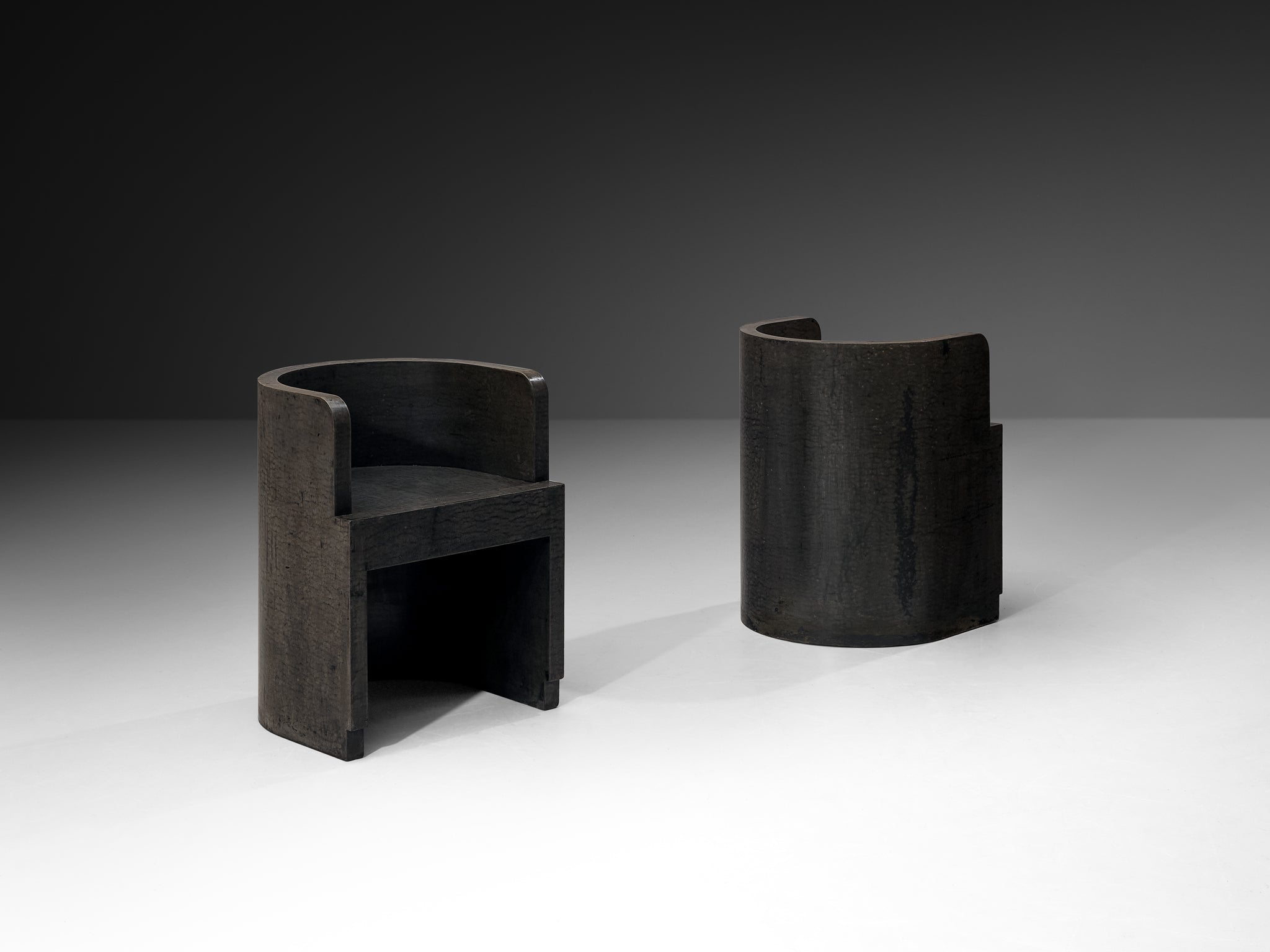
Giuseppe Pagano Pogatschnig & Gino Levi Montalcini for F.I.P. Curved Chairs in Black Buxus
 Open here
Giuseppe Pagano Pogatschnig and Gino Levi Montalcini for F.I.P., curved chairs, buxus, Italy, 1928-1929
A Design Ahead of Its Time
These monumental armchairs rank among the most iconic furniture designs of Italian Rationalism. Conceived by the architect-designers Giuseppe Pagano Pogatschnig (1896-1945) and Gino Levi Montalcini (1902-1974) for the prestigious Palazzo Gualino in Turin, they represent a rare surviving example of a total design approach in which architecture, interiors, and furnishings were conceived as a unified whole.
Upon completion, Palazzo Gualino was immediately hailed as a milestone in Italian architecture. The origins of the design phase can be traced to September 1928, situating Pagano and Levi's work at the forefront of Italian modernist thinking and perhaps even ahead of prevailing trends in furniture design. The influential design magazine Domus devoted an entire issue to the project in 1930. More remarkably, the commission anticipated the integrated design philosophy later associated with the collaboration between B.B.P.R. and Olivetti in the 1950s. Long before corporate identity became a defining feature of modern industry, Pagano and Levi Montalcini conceived Palazzo Gualino as a complete environment in which architecture, furnishings, materials, lighting, and colour formed a unified expression of the company's progressive vision. Within the oeuvre of the two architects, the furnishings created for Palazzo Gualino remain among the most coherent, innovative, and forward-looking designs of their generation.
Leading Figures of Italian Modernism
Giuseppe Pagano Pogatschnig and Gino Levi Montalcini can be regarded as pivotal figures in the architectural and design landscape of Italy. Throughout the 1930s, both architects played a central role in the development of Italian Rationalism. Pagano, in particular, combined architectural practice with an influential editorial career as director of Casabella, one of the leading platforms for modern architectural discourse in Italy. Among his most significant projects were the Physics Institute at the University of Rome, the experimental Steel Structure House presented at the Fifth Milan Triennale and created in collaboration with Franco Albini, Mario Palanti, Renato Camus, Gian Carlo Palanti, Giuseppe Mazzoleni, and Giulio Minoletti, and the celebrated Bocconi University building in Milan.
Montalcini developed a prolific practice centered in Turin, where he distinguished himself through an exceptional range of architectural, interior, and exhibition designs. Between the late 1920s and the outbreak of the Second World War, he produced more than 140 projects, many of which reveal a particular sensitivity to the relationship between architecture, furnishings, materials, and display. His work on shops, cafés, exhibition pavilions, and private residences closely aligned with the ideals of the modern movement.
Palazzo Gualino: A Manifesto of Modernity
Constructed between 1928 and 1929 as the headquarters of industrialist Riccardo Gualino’s SALPA company (known for producing innovative synthetic leather), Palazzo Gualino is today recognized as one of the earliest and most significant achievements of Rationalist architecture in Italy. Every detail, from the building itself to its furnishings, was designed according to principles of functionality, efficiency, and formal clarity. They designed a total of sixty-seven furniture models, all conceived within a coherent design language, including chairs, desks, filing cabinets, telephone stands, shelves, tables, and armchairs.
The Material Buxus and F.I.P.
The chairs are clad in Buxus, an innovative cellulose-based material developed by the Cartiere Giacomo Bosso paper mills, near Turin. Despite its name, Buxus is not boxwood but a technologically advanced surfacing material celebrated for its exceptional tensile strength, plasticity, and a refined surface reminiscent of marble veining and the grain patterns of briarwood. It enabled the creation of sharp edges, smooth curves, and flawless surfaces – qualities that were essential to the Rationalist aesthetic. The production of all furniture for Palazzo Gualino was entrusted to F.I.P. (Fabbrica Italiana Pianoforti), a Turin-based manufacturer whose technical expertise made these ambitious designs possible. Each piece was constructed around a wooden framework, covered with plywood, and finally finished with a layer of Buxus. The furniture pieces are crafted with extraordinary precision. Paradoxically, their formal simplicity made this level of execution particularly challenging, requiring perfect joints, precise geometric curves, and seamlessly smooth surfaces.
Rarity
Only a limited number of furnishings from the original Palazzo Gualino interiors have survived. As a result, these armchairs are among the rarest surviving witnesses to a project considered a cornerstone of Italian Modernism. Their sculptural presence, historical significance, and exceptional provenance place them among the most desirable and important collectible design objects of the period.
Kindly note that the price listed is per item.
A Design Ahead of Its Time
These monumental armchairs rank among the most iconic furniture designs of Italian Rationalism. Conceived by the architect-designers Giuseppe Pagano Pogatschnig (1896-1945) and Gino Levi Montalcini (1902-1974) for the prestigious Palazzo Gualino in Turin, they represent a rare surviving example of a total design approach in which architecture, interiors, and furnishings were conceived as a unified whole.
Upon completion, Palazzo Gualino was immediately hailed as a milestone in Italian architecture. The origins of the design phase can be traced to September 1928, situating Pagano and Levi's work at the forefront of Italian modernist thinking and perhaps even ahead of prevailing trends in furniture design. The influential design magazine Domus devoted an entire issue to the project in 1930. More remarkably, the commission anticipated the integrated design philosophy later associated with the collaboration between B.B.P.R. and Olivetti in the 1950s. Long before corporate identity became a defining feature of modern industry, Pagano and Levi Montalcini conceived Palazzo Gualino as a complete environment in which architecture, furnishings, materials, lighting, and colour formed a unified expression of the company's progressive vision. Within the oeuvre of the two architects, the furnishings created for Palazzo Gualino remain among the most coherent, innovative, and forward-looking designs of their generation.
Leading Figures of Italian Modernism
Giuseppe Pagano Pogatschnig and Gino Levi Montalcini can be regarded as pivotal figures in the architectural and design landscape of Italy. Throughout the 1930s, both architects played a central role in the development of Italian Rationalism. Pagano, in particular, combined architectural practice with an influential editorial career as director of Casabella, one of the leading platforms for modern architectural discourse in Italy. Among his most significant projects were the Physics Institute at the University of Rome, the experimental Steel Structure House presented at the Fifth Milan Triennale and created in collaboration with Franco Albini, Mario Palanti, Renato Camus, Gian Carlo Palanti, Giuseppe Mazzoleni, and Giulio Minoletti, and the celebrated Bocconi University building in Milan.
Montalcini developed a prolific practice centered in Turin, where he distinguished himself through an exceptional range of architectural, interior, and exhibition designs. Between the late 1920s and the outbreak of the Second World War, he produced more than 140 projects, many of which reveal a particular sensitivity to the relationship between architecture, furnishings, materials, and display. His work on shops, cafés, exhibition pavilions, and private residences closely aligned with the ideals of the modern movement.
Palazzo Gualino: A Manifesto of Modernity
Constructed between 1928 and 1929 as the headquarters of industrialist Riccardo Gualino’s SALPA company (known for producing innovative synthetic leather), Palazzo Gualino is today recognized as one of the earliest and most significant achievements of Rationalist architecture in Italy. Every detail, from the building itself to its furnishings, was designed according to principles of functionality, efficiency, and formal clarity. They designed a total of sixty-seven furniture models, all conceived within a coherent design language, including chairs, desks, filing cabinets, telephone stands, shelves, tables, and armchairs.
The Material Buxus and F.I.P.
The chairs are clad in Buxus, an innovative cellulose-based material developed by the Cartiere Giacomo Bosso paper mills, near Turin. Despite its name, Buxus is not boxwood but a technologically advanced surfacing material celebrated for its exceptional tensile strength, plasticity, and a refined surface reminiscent of marble veining and the grain patterns of briarwood. It enabled the creation of sharp edges, smooth curves, and flawless surfaces – qualities that were essential to the Rationalist aesthetic. The production of all furniture for Palazzo Gualino was entrusted to F.I.P. (Fabbrica Italiana Pianoforti), a Turin-based manufacturer whose technical expertise made these ambitious designs possible. Each piece was constructed around a wooden framework, covered with plywood, and finally finished with a layer of Buxus. The furniture pieces are crafted with extraordinary precision. Paradoxically, their formal simplicity made this level of execution particularly challenging, requiring perfect joints, precise geometric curves, and seamlessly smooth surfaces.
Rarity
Only a limited number of furnishings from the original Palazzo Gualino interiors have survived. As a result, these armchairs are among the rarest surviving witnesses to a project considered a cornerstone of Italian Modernism. Their sculptural presence, historical significance, and exceptional provenance place them among the most desirable and important collectible design objects of the period.
Kindly note that the price listed is per item.

Choose options
Giuseppe Pagano Pogatschnig & Gino Levi Montalcini for F.I.P. Curved Chairs in Black Buxus
Sale price$22,500.00
Regular price
Product Details
VAT within the EU: When buying or delivering an item within the EU, VAT usually applies and will be added.