
George Nakashima 'Slab' Coffee Table in English Walnut
 Open here
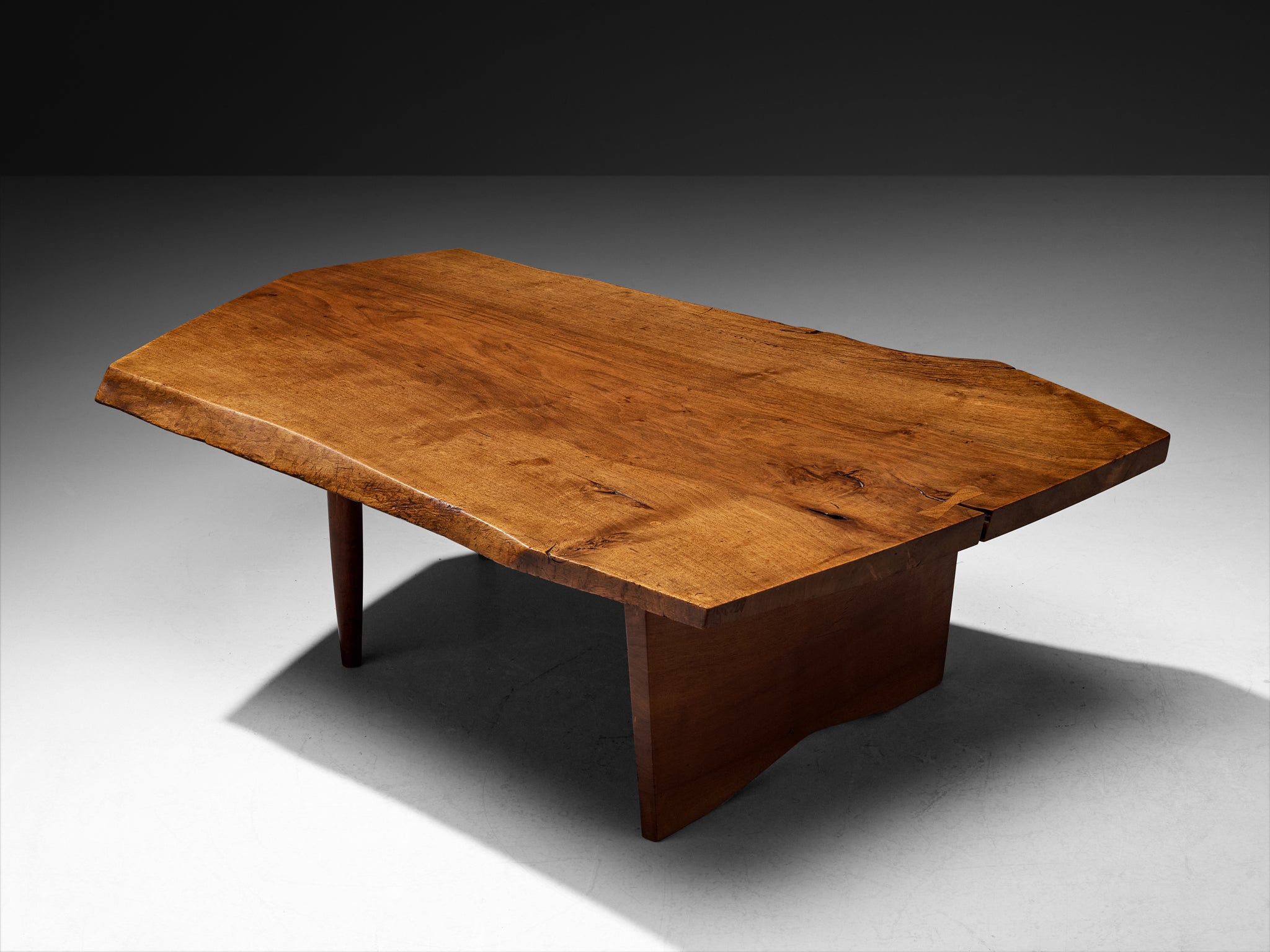
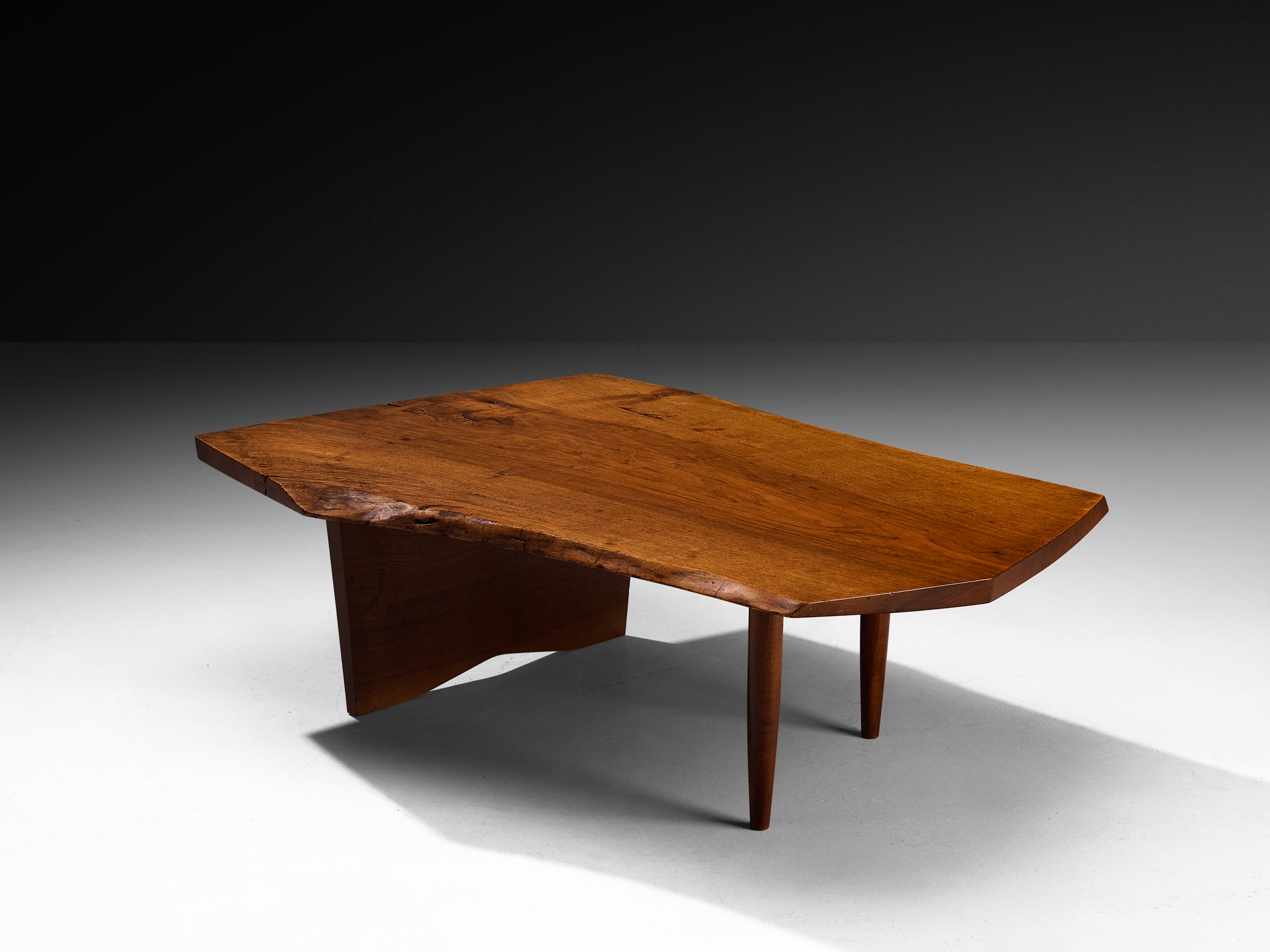
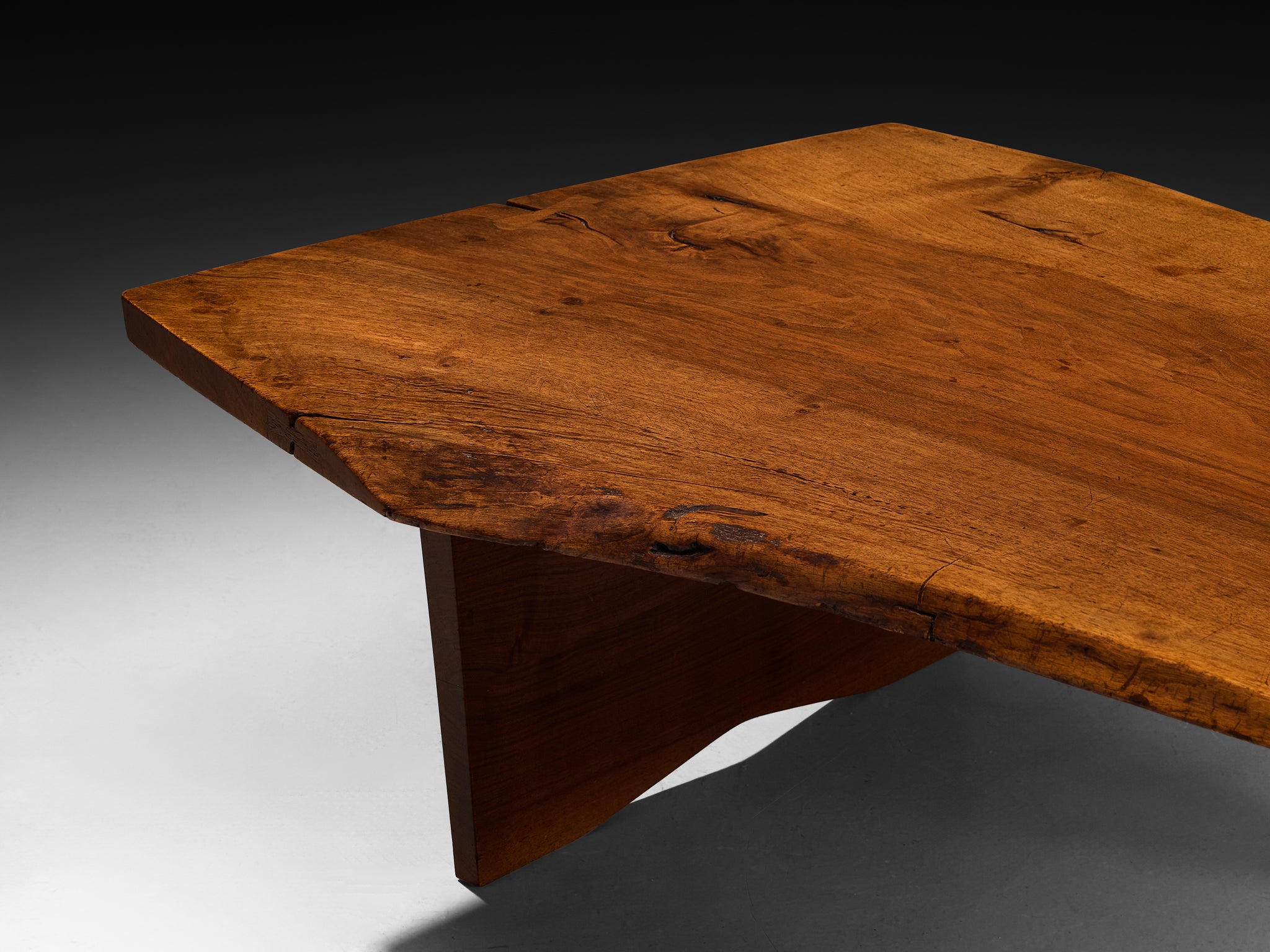
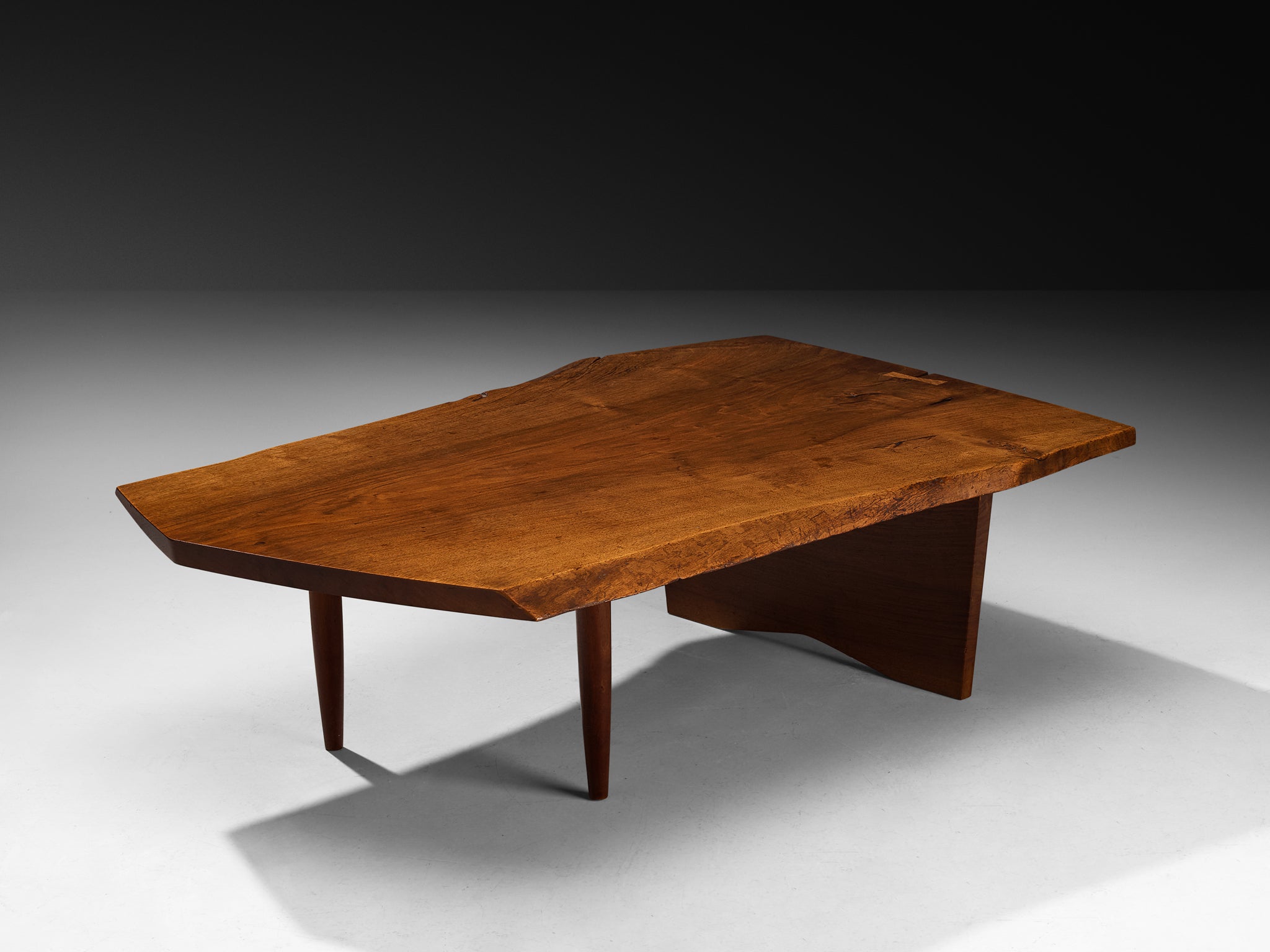
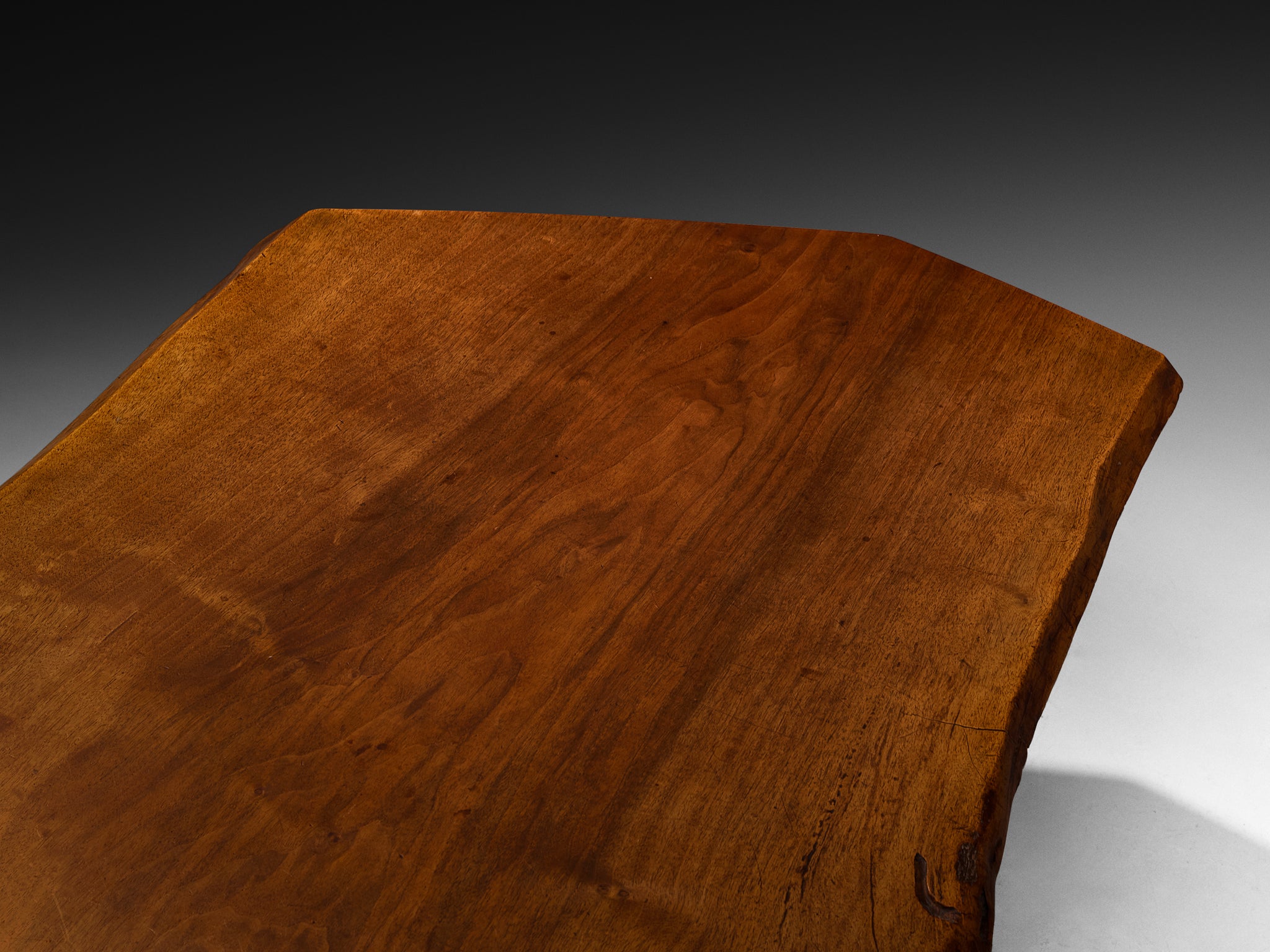
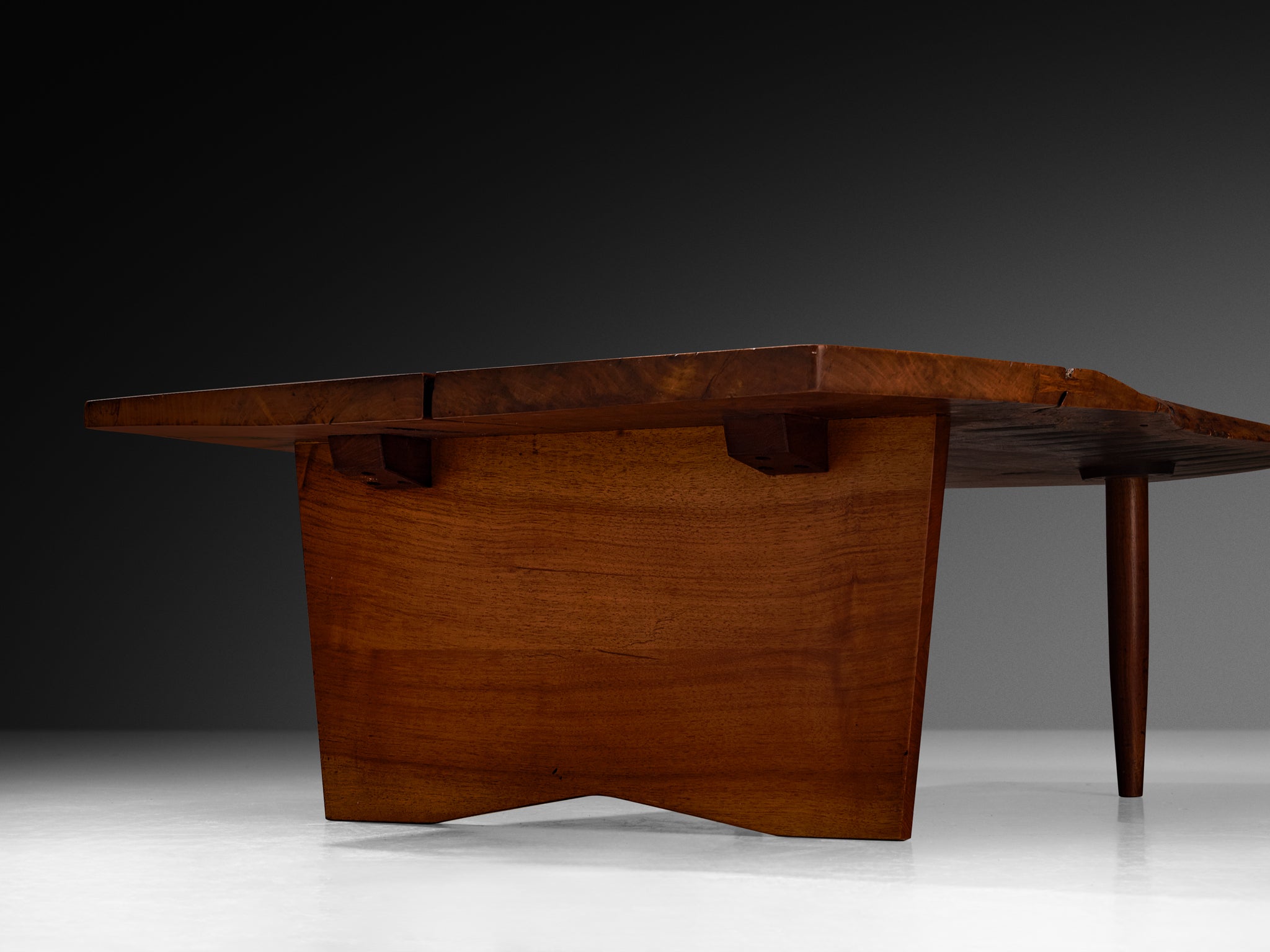
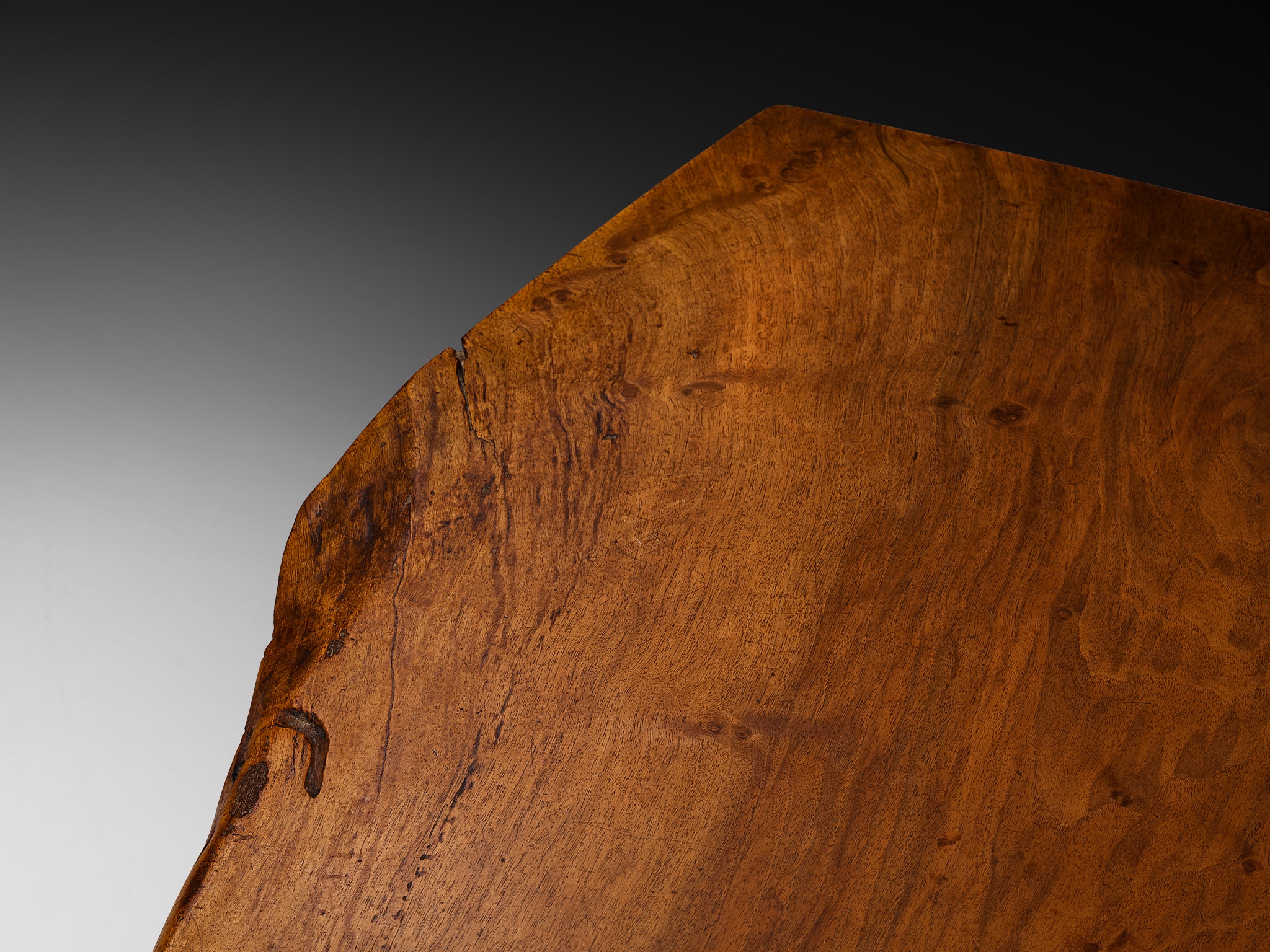
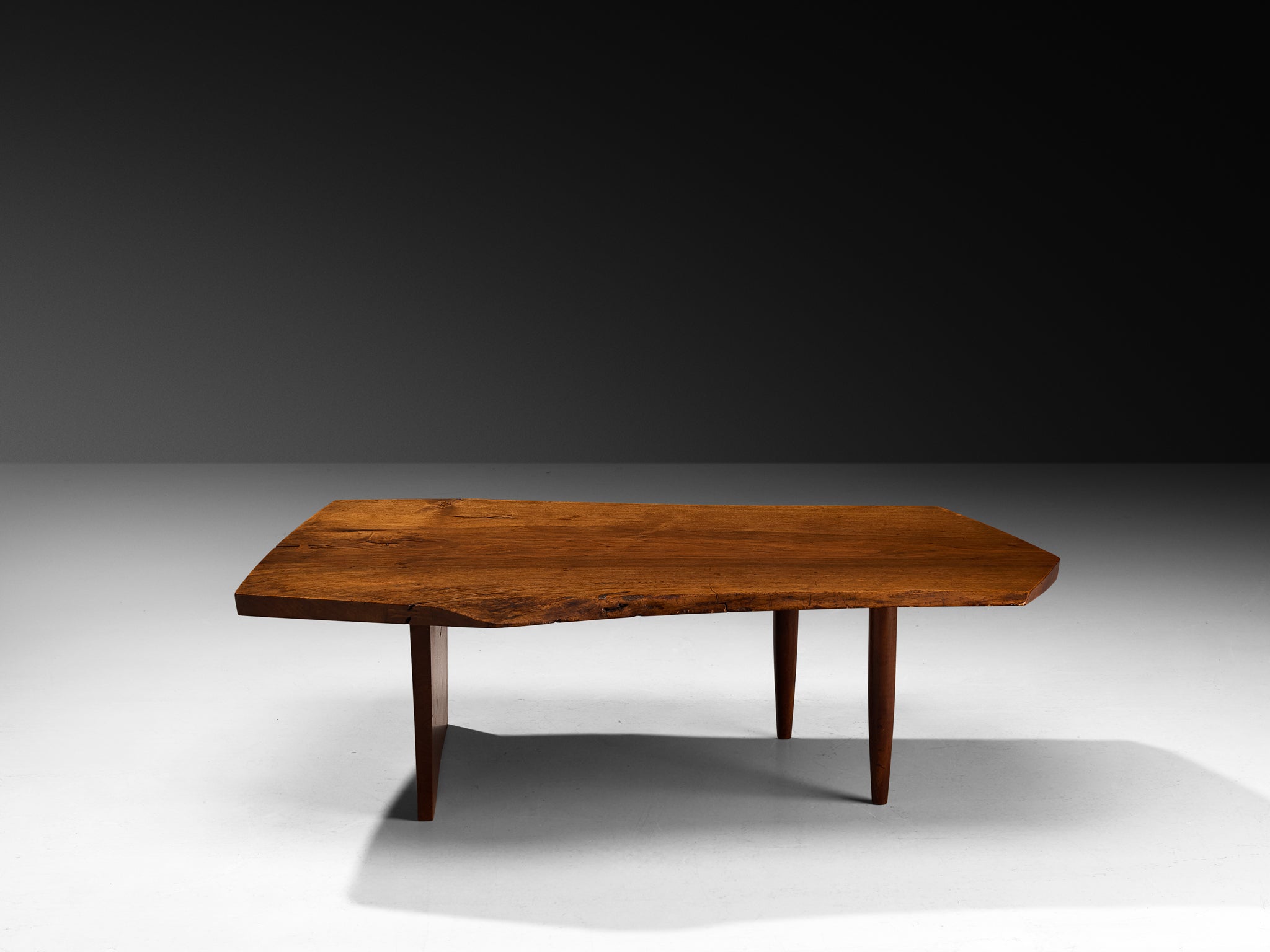
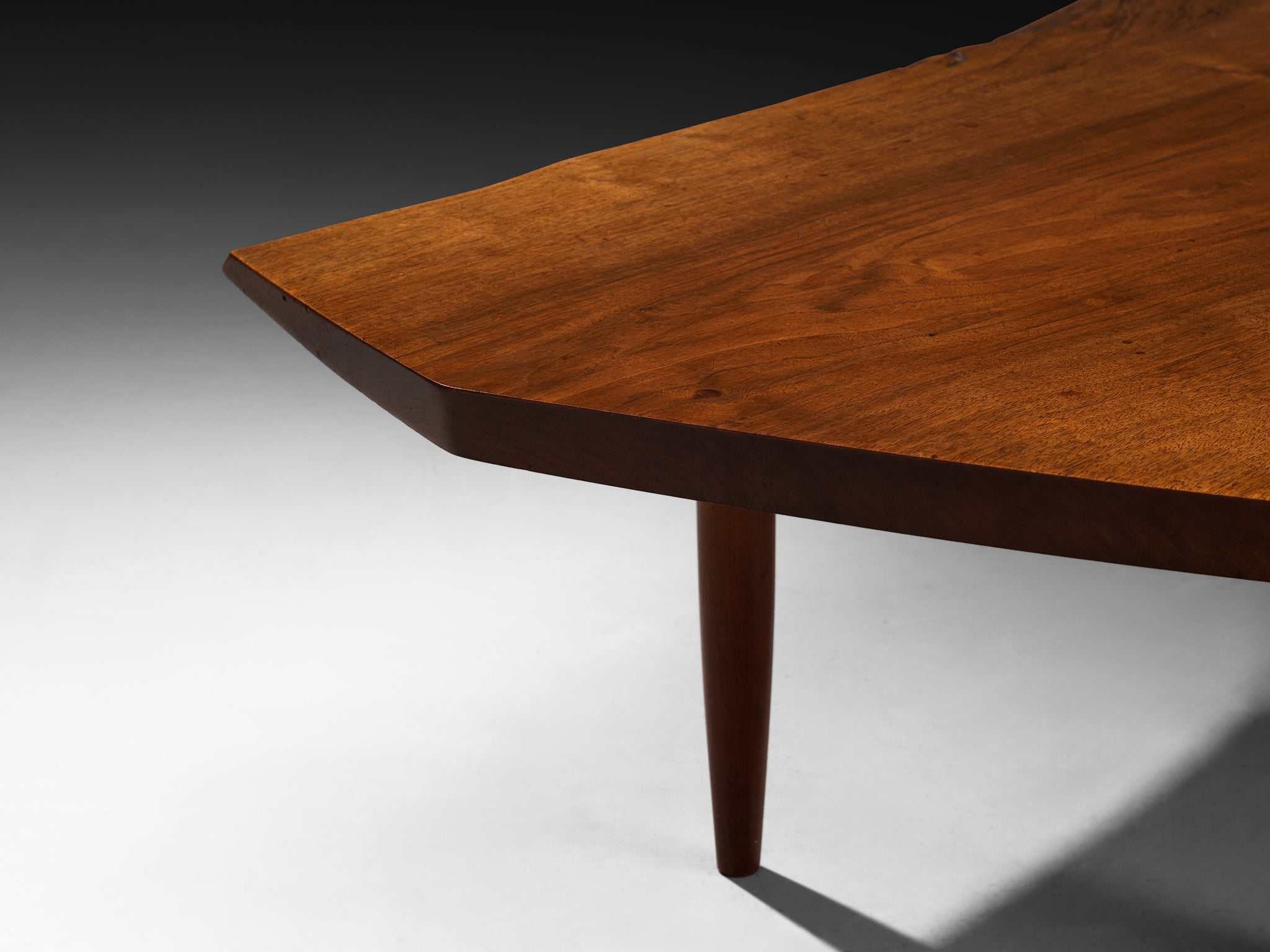
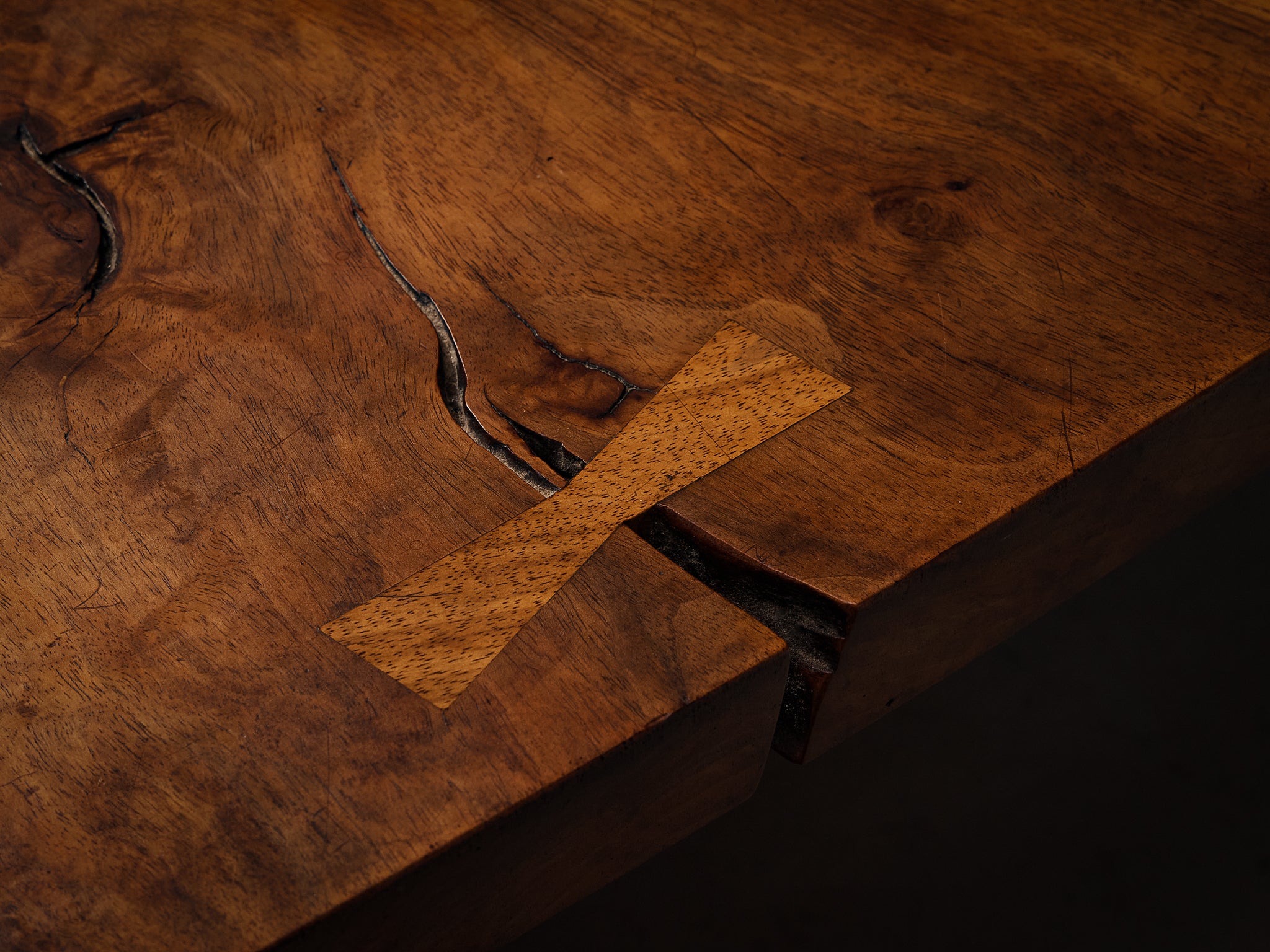
American woodworker and designer George Nakashima demonstrates his mastery of craft with this quintessential coffee table. Created as a custom piece in 1964, the table is designed to celebrate the unique character of the wooden slab that forms its top. Executed in English walnut – a rarely used material within his practice – the table emphasizes the distinctive character of the slab through its free-flowing edges. The grain is more subtle and the tone of the wood is more even, giving it a more serene expression. The top itself is also more linear compared to other pieces by Nakashima, which often feature more pronounced organic edges. Therefore, the top merges elegantly with the base’s stark simplicity. The asymmetrical composition further enhances the piece’s visual strength and timeless appeal.
Biography
George Nakashima (1905-1990) was a well-known woodworker, architect and furniture designer from Japanese descendants. He was born in Spokane, Washington and enrolled in the University of Washington program in architecture. After his graduation in 1931, he decided to live his life as a bohemian in France. Afterwards, he spent some time in North Africa and eventually settled in Japan for some time. There, he started working for Antonin Raymond, who was an American architect. While working for Raymond, Nakashima extensively toured Japan while trying to understand the Japanese architecture and design. Around 1940, Nakashima decided to leave Japan and returned to the US. However, like many others with a Japanese ancestry, he was interned during World War Two and sent to Camp Minidoka in Idaho. There, Nakashima met a master woodcarver who tutored him in Japanese crafting techniques. From him, he learned to master traditional Japanese hand tools and joinery techniques. From here onwards, he began to use woodworking with discipline and patience, striving towards perfection in his designs. In 1943, he was released from the camp and invited by Antonin Raymond to live in his farm in New Hope, Pennsylvania. During this period, New Hope formed the home port for many great designers such as Phillip Lloyd Powell and Paul Evans. Nakashima was a very spiritual and philosophical designer. The basis of Nakashima's work was derived from his practice of integral yoga. Therefore, primary goal of Nakashima's work was to live in harmony with nature rather than to destroy it for their own use. Above all, Nakashima wanted to embody a message to all modern societies that we must constantly remember the eternal in all that we do. He often said of his own work that he gave trees a second life. His designs are known for their exquisite craftsmanship and are often 'signed' with dovetails and butterfly connections. With these ideas in mind, Nakashima created his own style based on Japanese designs and shop practices, combined with the American and International Modern Styles. Therefore, he became one of the best 20th century American Art furniture designers.

Choose options
Product Details

From an internment camp to a workshop in the Pennsylvania woods
Nakashima studied forestry and architecture at the University of Washington, spent a scholarship year at the École Américaine des Beaux-Arts in Fontainebleau, and earned a master's degree in architecture at MIT around 1929–30. He then worked in Tokyo for Antonin Raymond — Frank Lloyd Wright's collaborator on the Imperial Hotel — before serving as on-site architect for a dormitory at the Sri Aurobindo Ashram in Pondicherry, India, the country's first reinforced-concrete building. It was in India that he first turned seriously to furniture.
Back in the United States, Nakashima and his family were interned at the Minidoka Relocation Center in Idaho in 1942 as Japanese Americans. There he learned traditional Japanese carpentry from fellow internee Gentauro Hikogawa. Sponsored out of the camp in 1943 by Antonin Raymond, the family settled on Raymond's farm in New Hope, Pennsylvania, where Nakashima built his home, studio and workshop largely by hand — a complex now protected as a National Historic Landmark.
VAT within the EU: When buying or delivering an item within the EU, VAT usually applies and will be added.