
Ernesto Valabrega Grand Extendable Dining or Conference Table in Oak
 Open here
Ernesto Valabrega for Vittorio Valabrega, extendable dining or conference table, oak, Italy, 1930s
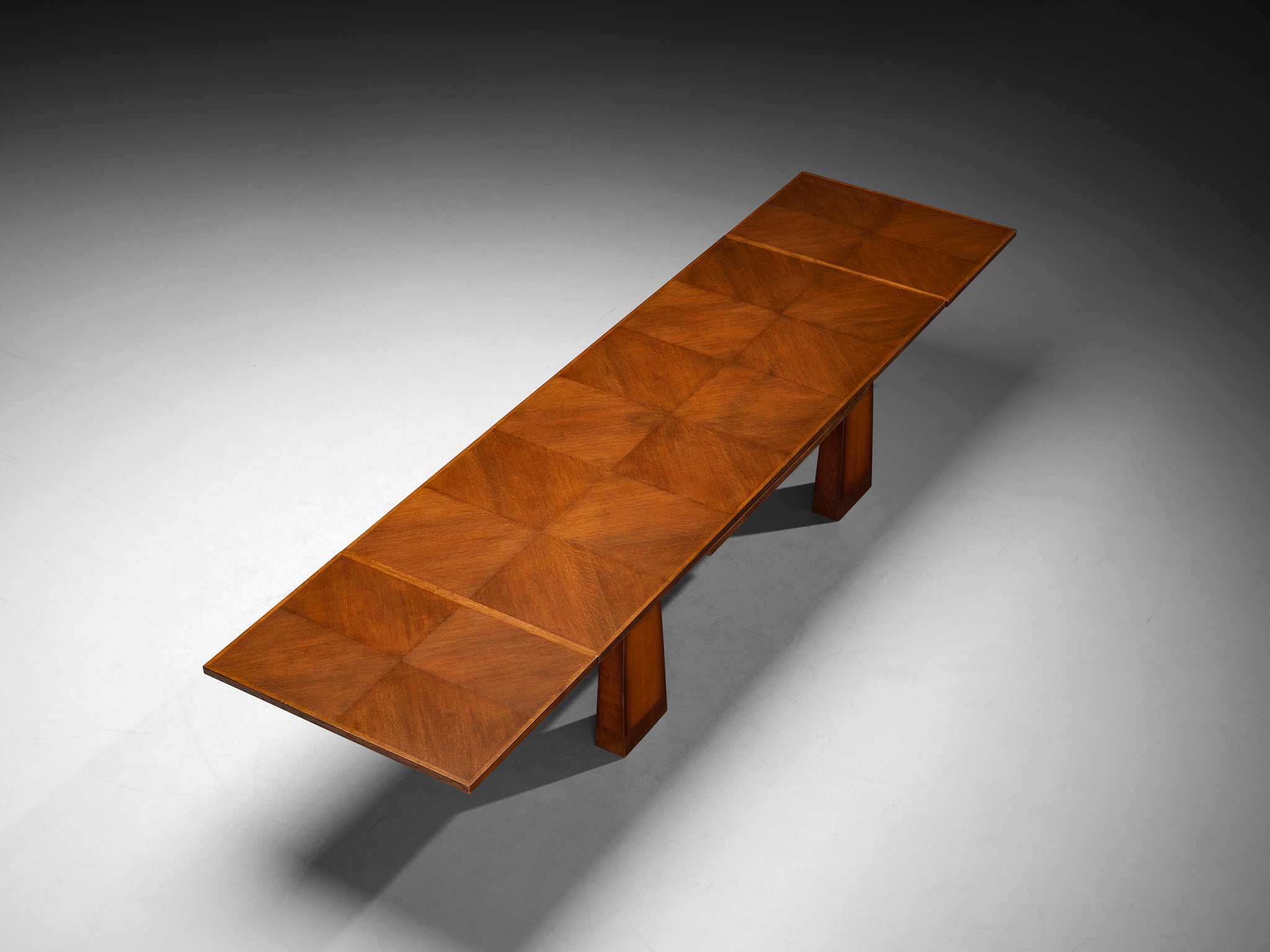
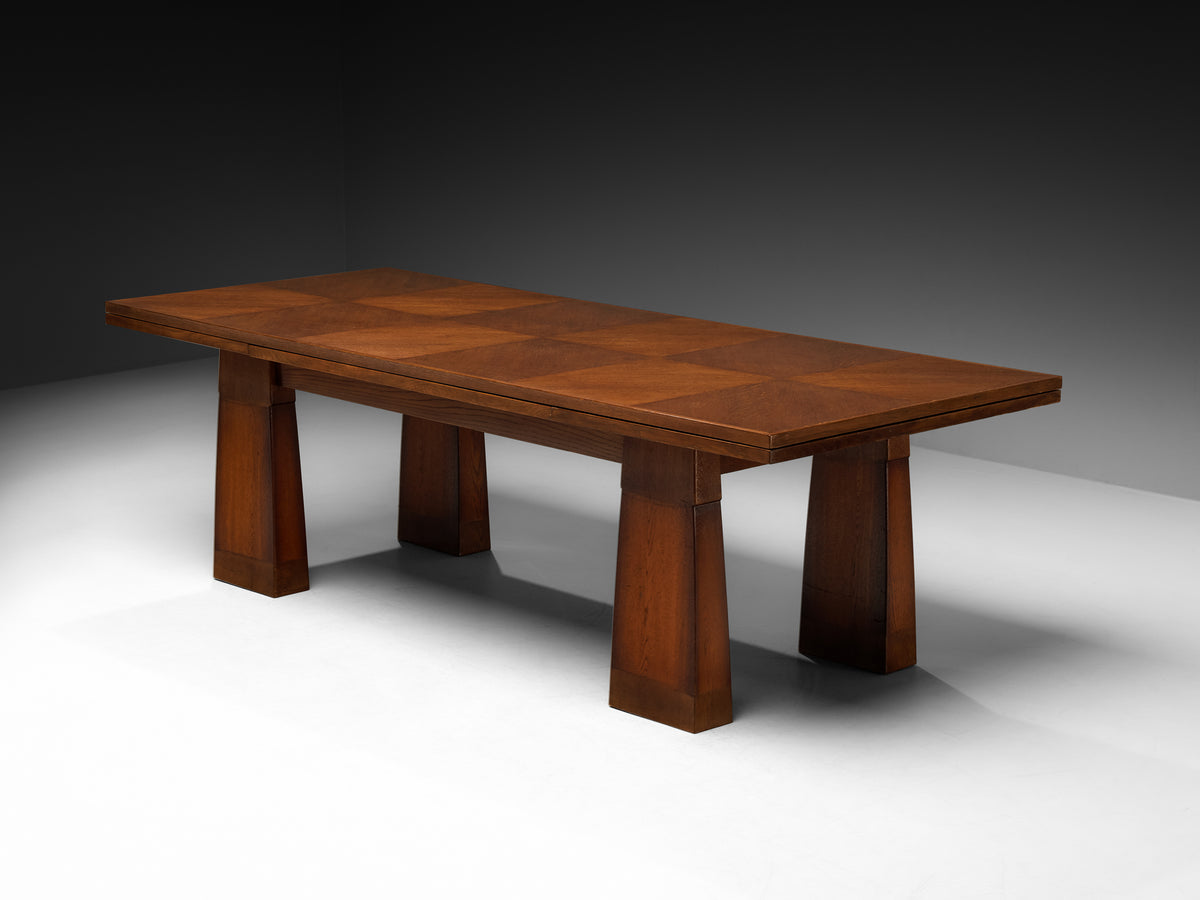
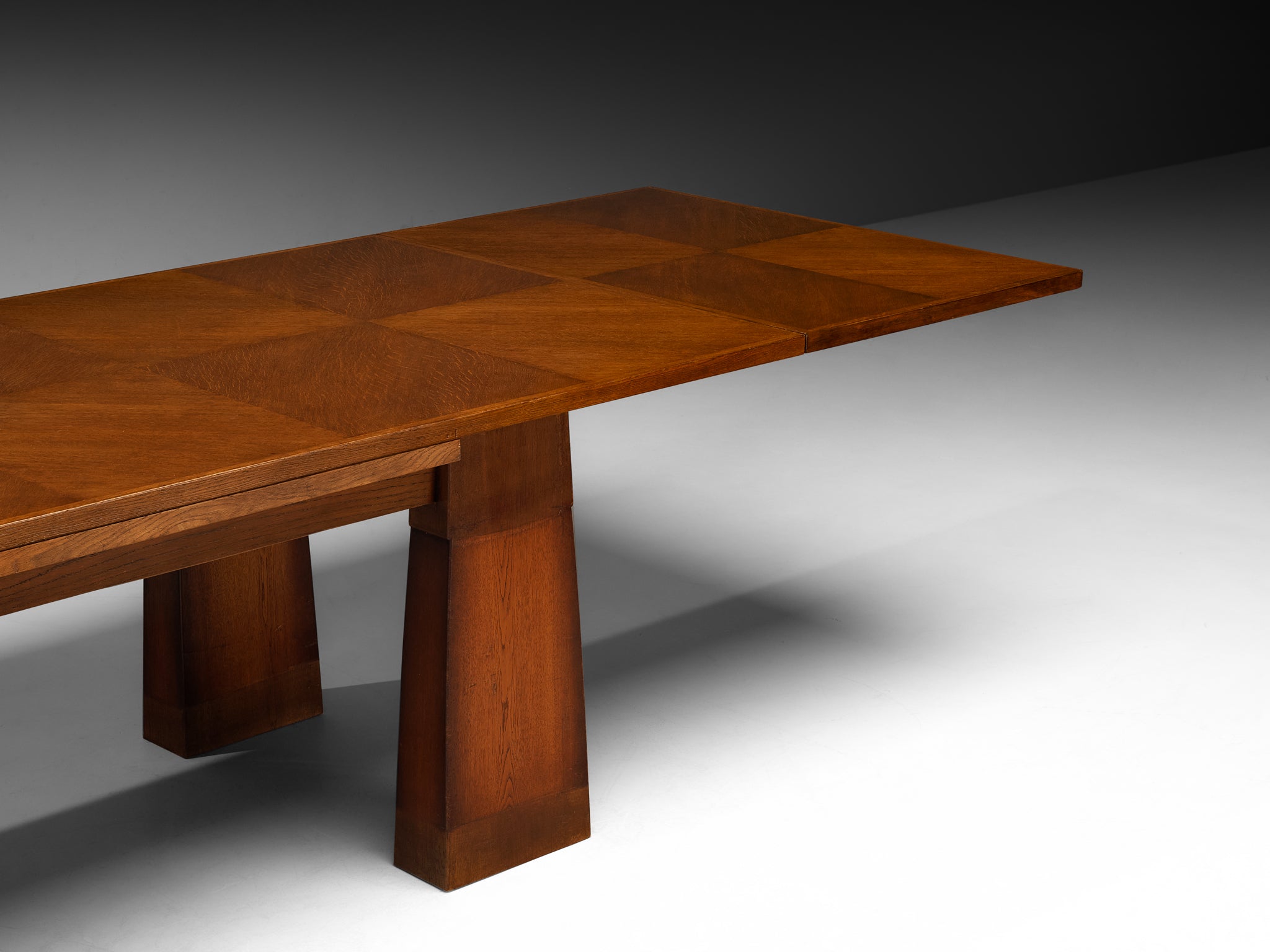
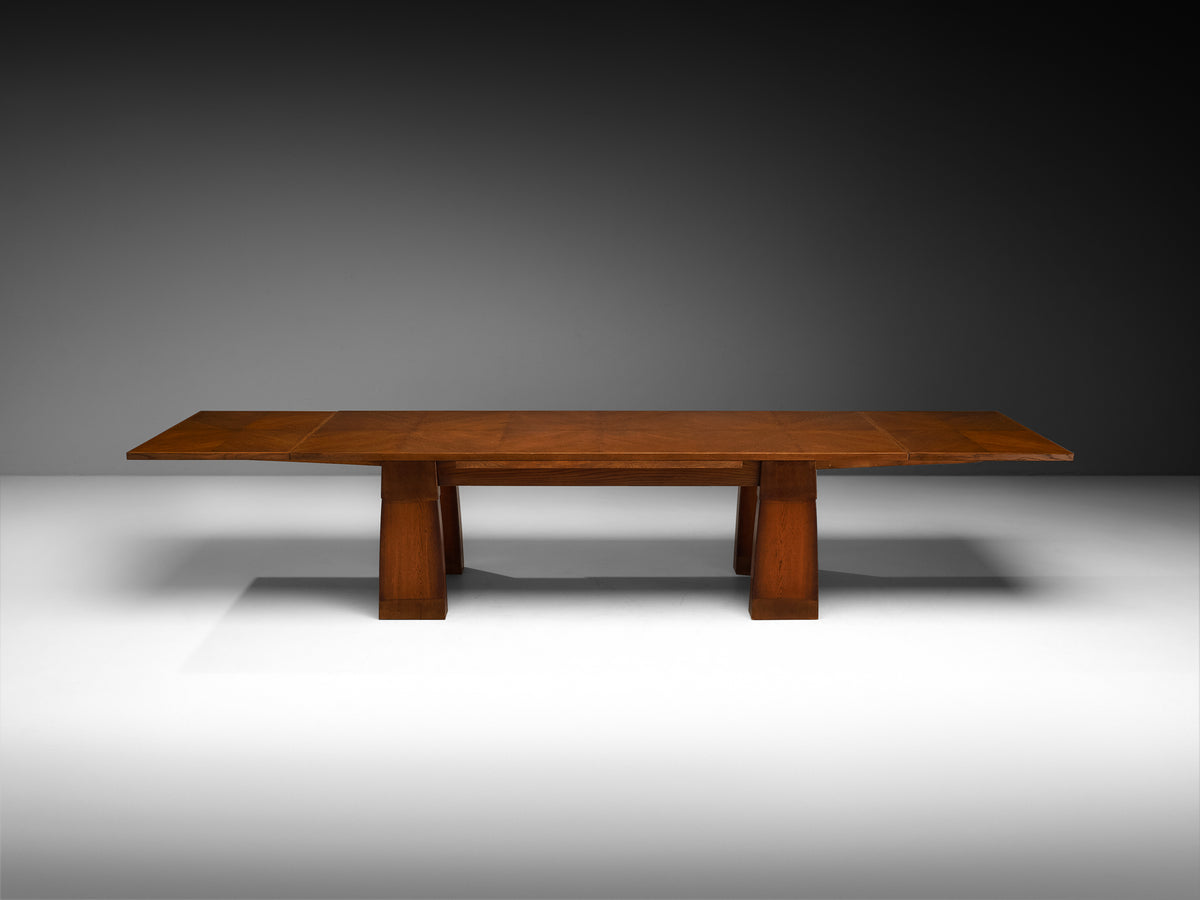
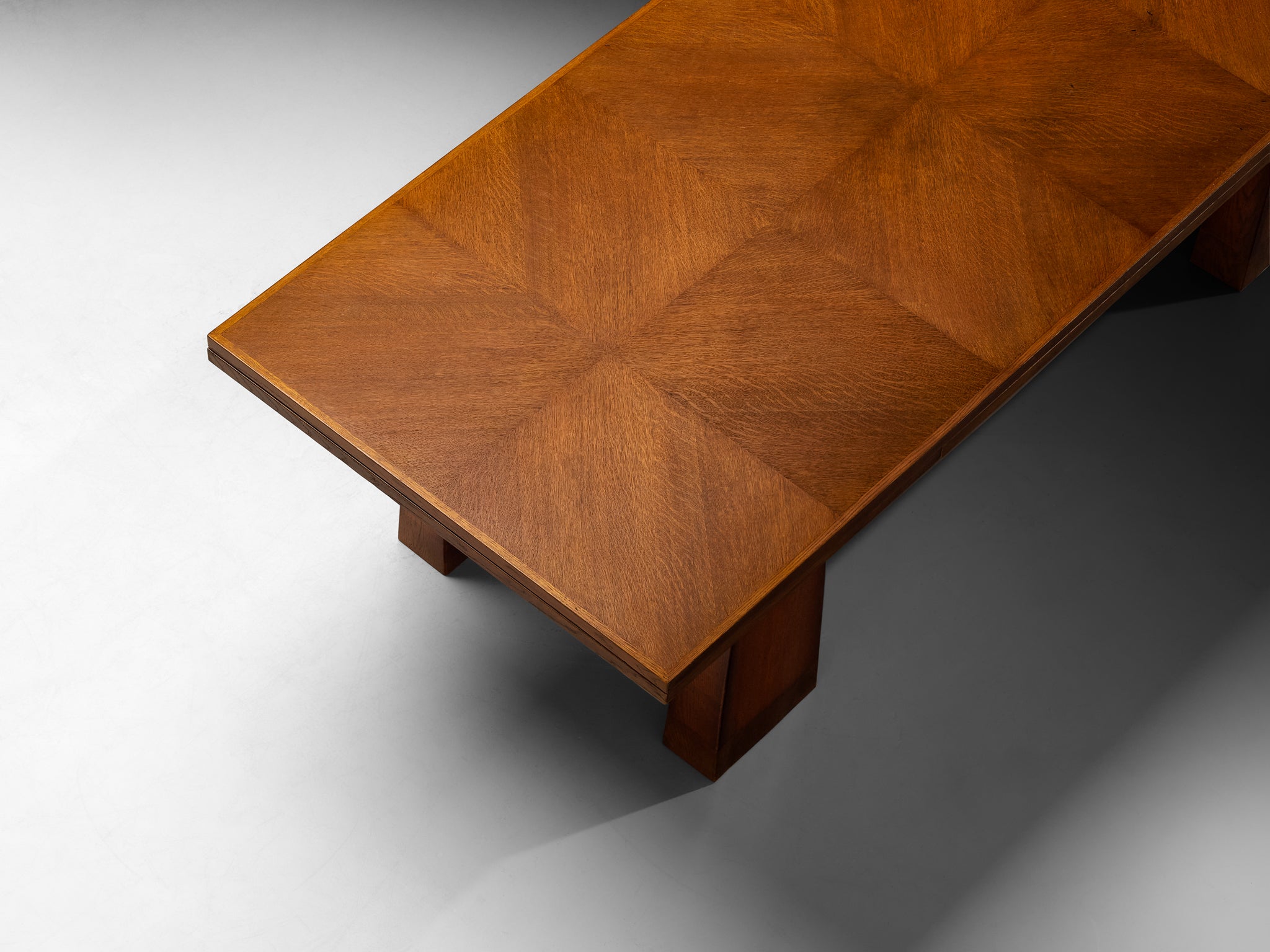
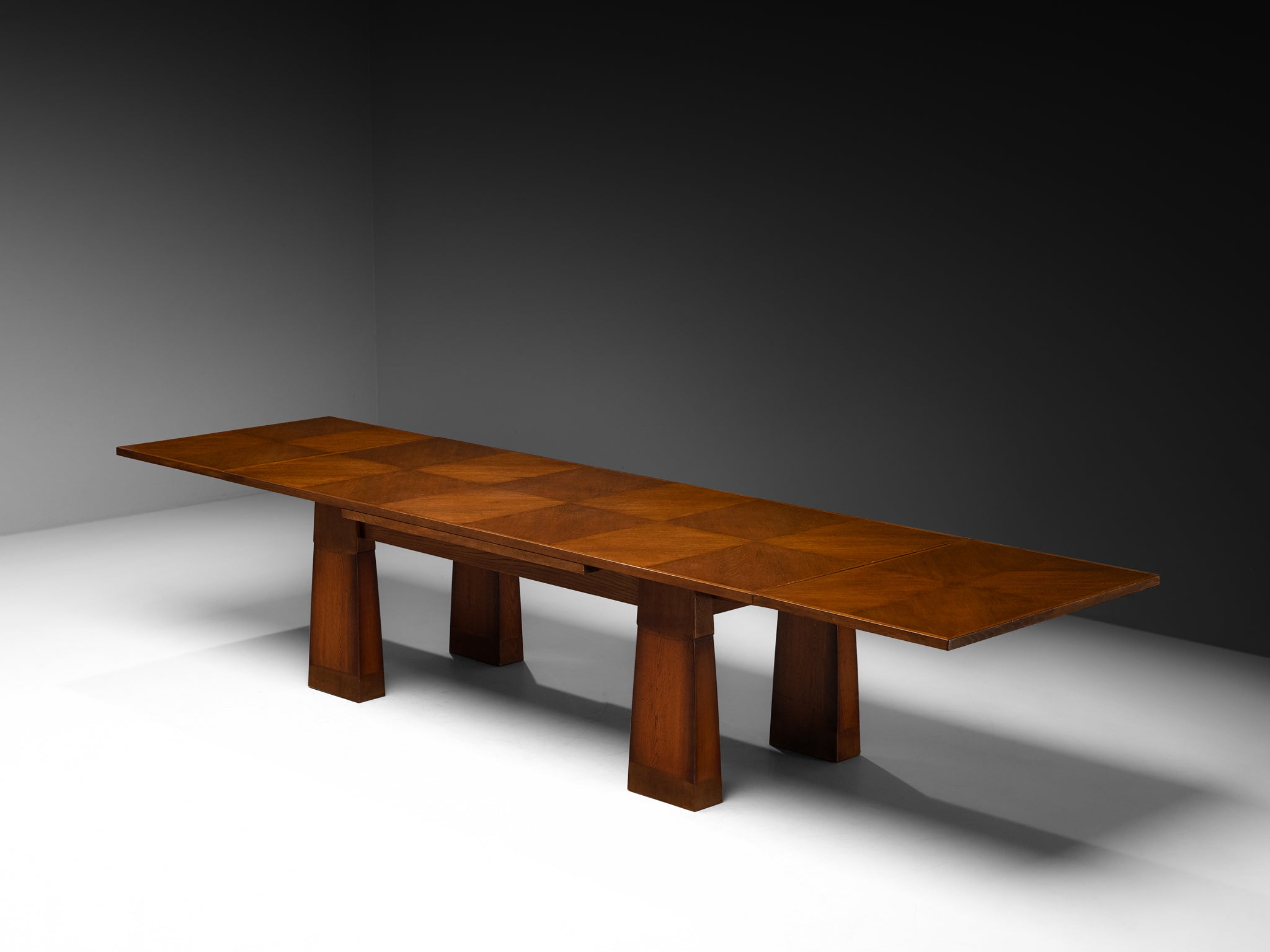
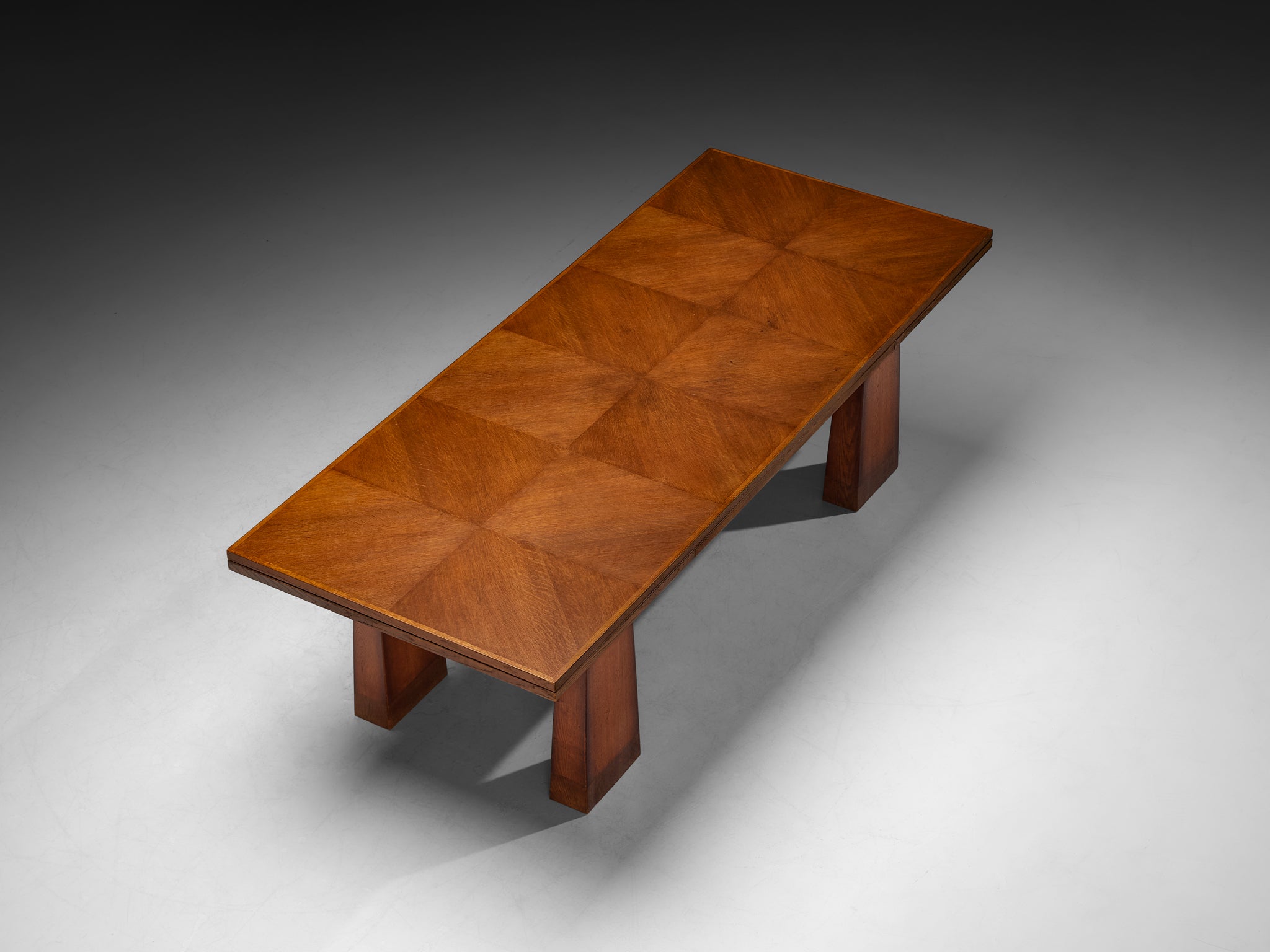
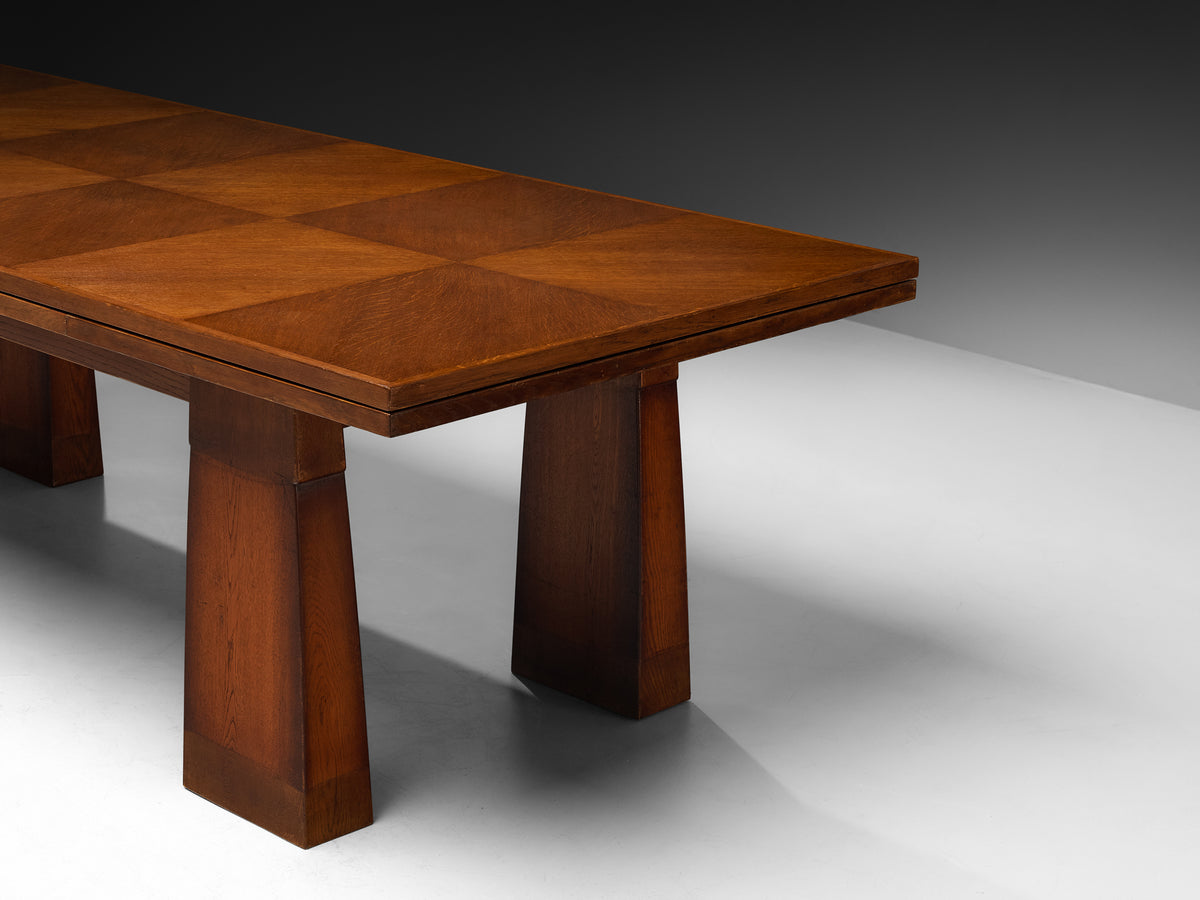
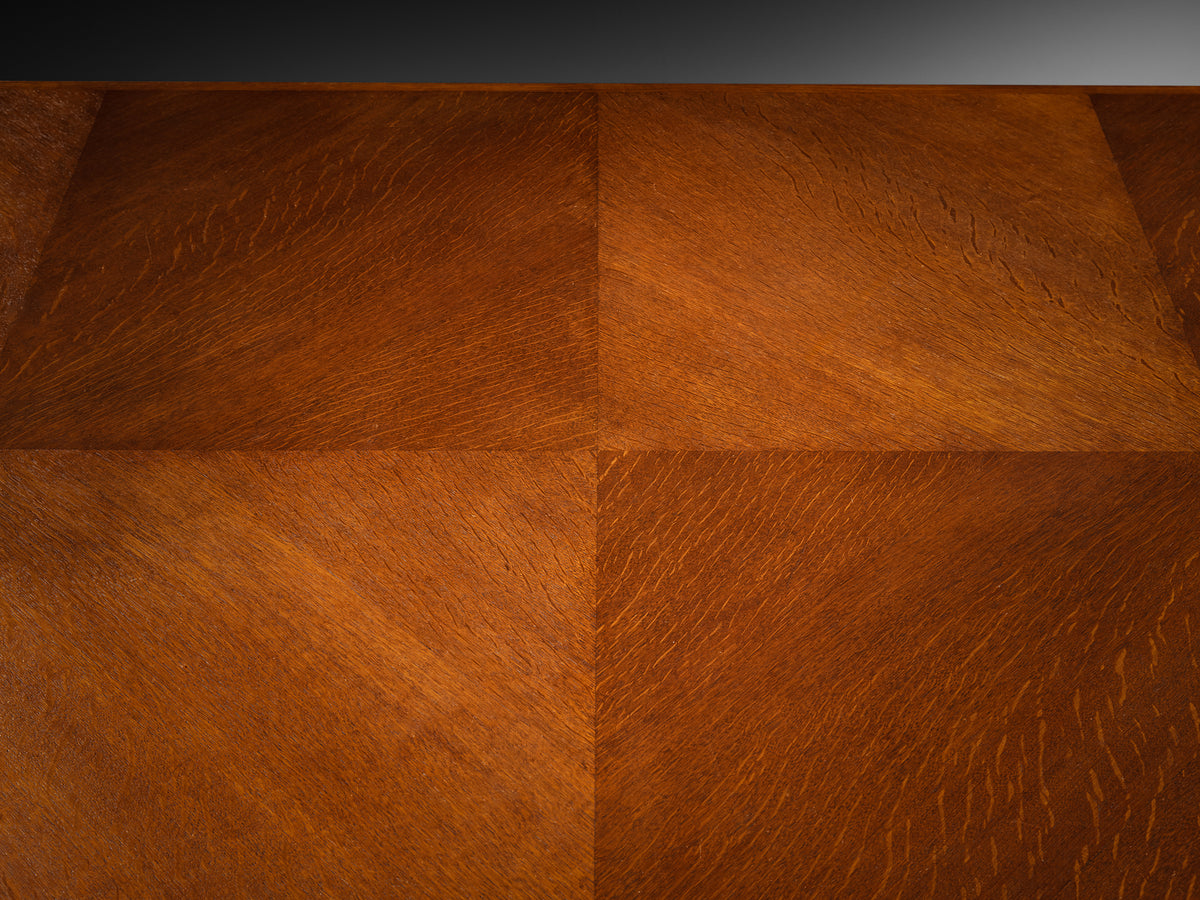
This extendable table was designed by Ernesto Valabrega for Vittorio Valabrega in Italy during the 1930s. Executed in oak, the tabletop features geometric veneered panels arranged in a striking radial pattern, bringing depth and rhythm to the surface. Four broad, tapered supports give the table a strong architectural presence while retaining an elegant and balanced appearance.
In its smaller configuration, the table has well-balanced proportions suited to use as a dining table. When fully extended, it transforms into an exceptionally long table that can also serve as an impressive conference table. The refined veneer work, restrained detailing and solid construction reflect the exceptional quality of Italian craftsmanship of the period.
Biography
Italian designer Ernesto Valabrega (1901-1944) was born in Turin, as the son of celebrated designer and cabinetmaker Vittorio Valabrega (1861-1952). His father Vittorio was, together with his brother, the founder of Fratelli Valabrega (Valabrega Brothers Company, since 1884) that was situated in Turin. During the 1890s, Vittorio became the sole owner of the company and had great success with his refined wooden furniture. Vittorio Valabrega became well-known for his furniture in the floral Art Nouveau style, but as a true child of the 19th century, his company also manufactured furniture in Neo-Renaissance and the French Rococo Louis XV-style. His designs received positive attention and were awarded at World Exhibitions. At the famous exhibition in Paris in 1900, Vittorio even received a gold medal.
It was at the age of twenty-four that Ernesto got on board with his father’s business. His involvement from 1925 onwards had a great impact on the company. Ernesto decided to change the company’s name to Mobilart in 1928 and radically redirected the course. Whereas Vittorio was inspired by a variety of contemporary and historic styles, Ernesto chose for a different approach. He renounced the 19th century mixture of styles and approached furniture design in the same manner as the highly influential William Morris of the English Arts and Crafts movement. Their reform was an artistic reaction to the widespread industrialization of the 19th century.
Ernesto despised products of poor quality and chose high quality materials that would last a lifetime. The furniture he created in the late 1920s and 1930s are a true testament to his beliefs. With his irregular carvings of oakwood, the hammered hinges, flowing edges, embossed surfaces his furniture shows quality, attention to detail and ultimate craftsmanship.
This extendable table was designed by Ernesto Valabrega for Vittorio Valabrega in Italy during the 1930s. Executed in oak, the tabletop features geometric veneered panels arranged in a striking radial pattern, bringing depth and rhythm to the surface. Four broad, tapered supports give the table a strong architectural presence while retaining an elegant and balanced appearance.
In its smaller configuration, the table has well-balanced proportions suited to use as a dining table. When fully extended, it transforms into an exceptionally long table that can also serve as an impressive conference table. The refined veneer work, restrained detailing and solid construction reflect the exceptional quality of Italian craftsmanship of the period.
Biography
Italian designer Ernesto Valabrega (1901-1944) was born in Turin, as the son of celebrated designer and cabinetmaker Vittorio Valabrega (1861-1952). His father Vittorio was, together with his brother, the founder of Fratelli Valabrega (Valabrega Brothers Company, since 1884) that was situated in Turin. During the 1890s, Vittorio became the sole owner of the company and had great success with his refined wooden furniture. Vittorio Valabrega became well-known for his furniture in the floral Art Nouveau style, but as a true child of the 19th century, his company also manufactured furniture in Neo-Renaissance and the French Rococo Louis XV-style. His designs received positive attention and were awarded at World Exhibitions. At the famous exhibition in Paris in 1900, Vittorio even received a gold medal.
It was at the age of twenty-four that Ernesto got on board with his father’s business. His involvement from 1925 onwards had a great impact on the company. Ernesto decided to change the company’s name to Mobilart in 1928 and radically redirected the course. Whereas Vittorio was inspired by a variety of contemporary and historic styles, Ernesto chose for a different approach. He renounced the 19th century mixture of styles and approached furniture design in the same manner as the highly influential William Morris of the English Arts and Crafts movement. Their reform was an artistic reaction to the widespread industrialization of the 19th century.
Ernesto despised products of poor quality and chose high quality materials that would last a lifetime. The furniture he created in the late 1920s and 1930s are a true testament to his beliefs. With his irregular carvings of oakwood, the hammered hinges, flowing edges, embossed surfaces his furniture shows quality, attention to detail and ultimate craftsmanship.

Choose options
Ernesto Valabrega Grand Extendable Dining or Conference Table in Oak
Sale price$54,000.00
Regular price
Product Details
VAT within the EU: When buying or delivering an item within the EU, VAT usually applies and will be added.