


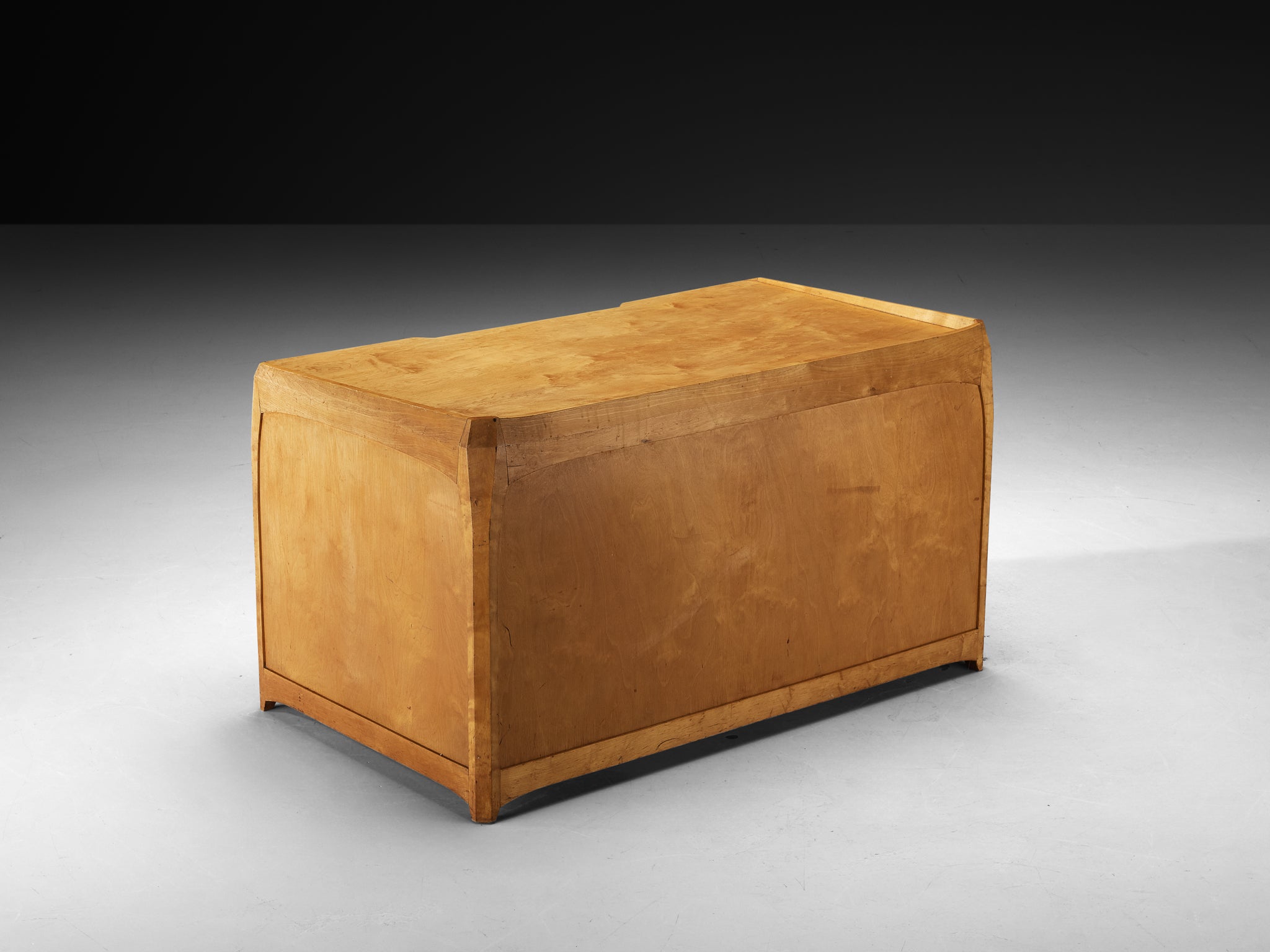
Dornach School Anthroposophical Desk in Birch, circa 1930
 Open here
Dornach school desk, birch, Germany, 1930s
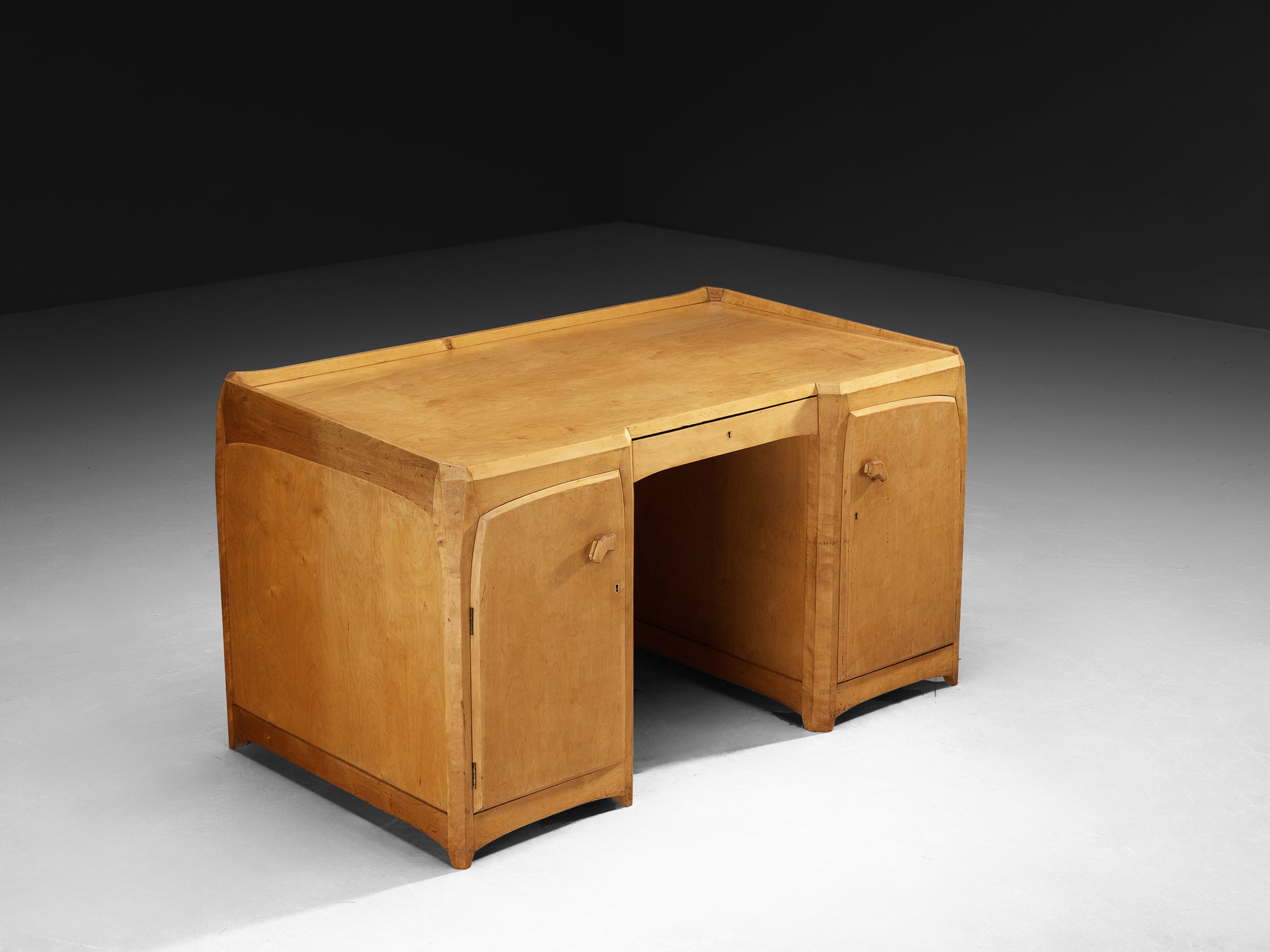
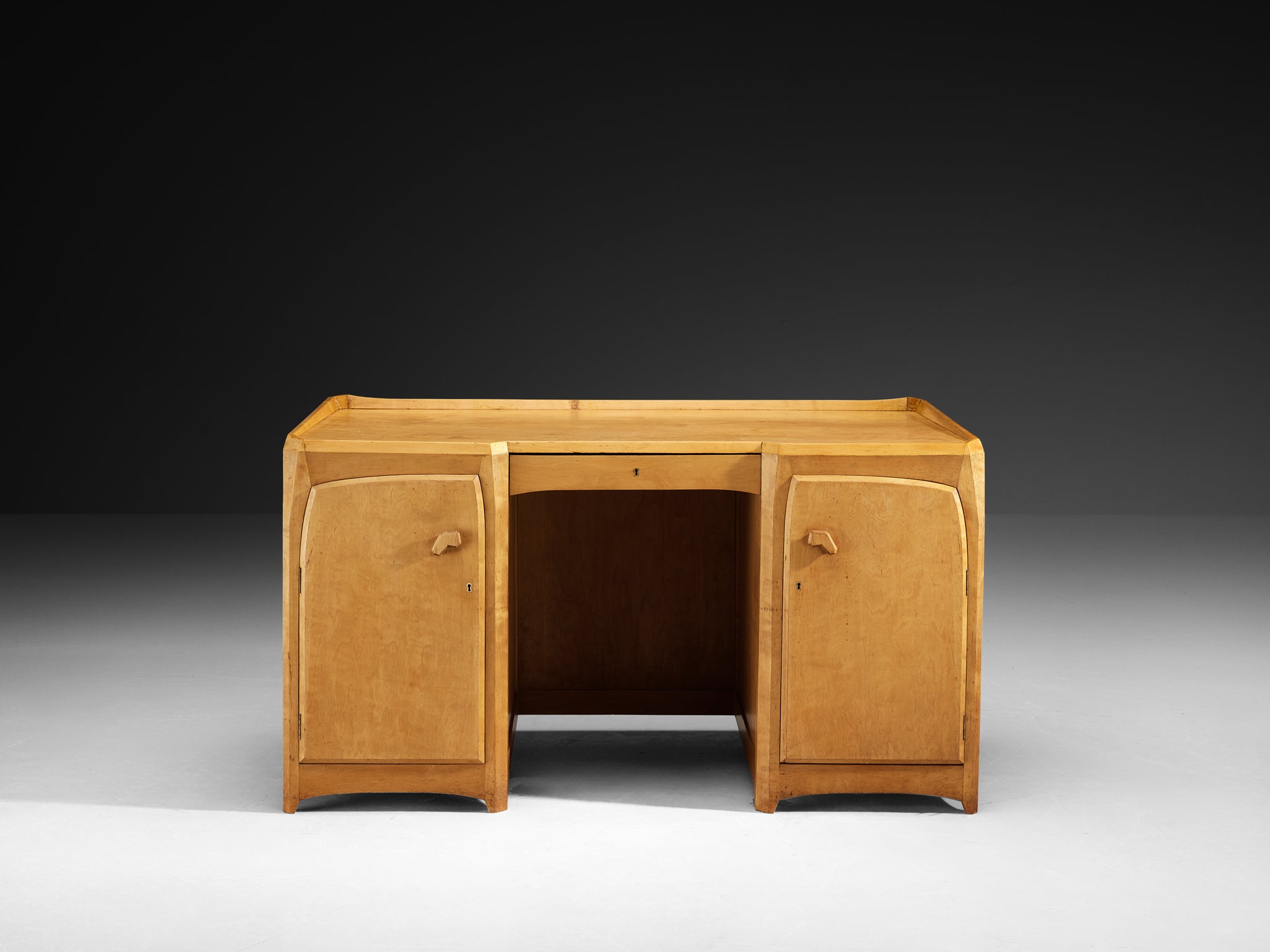
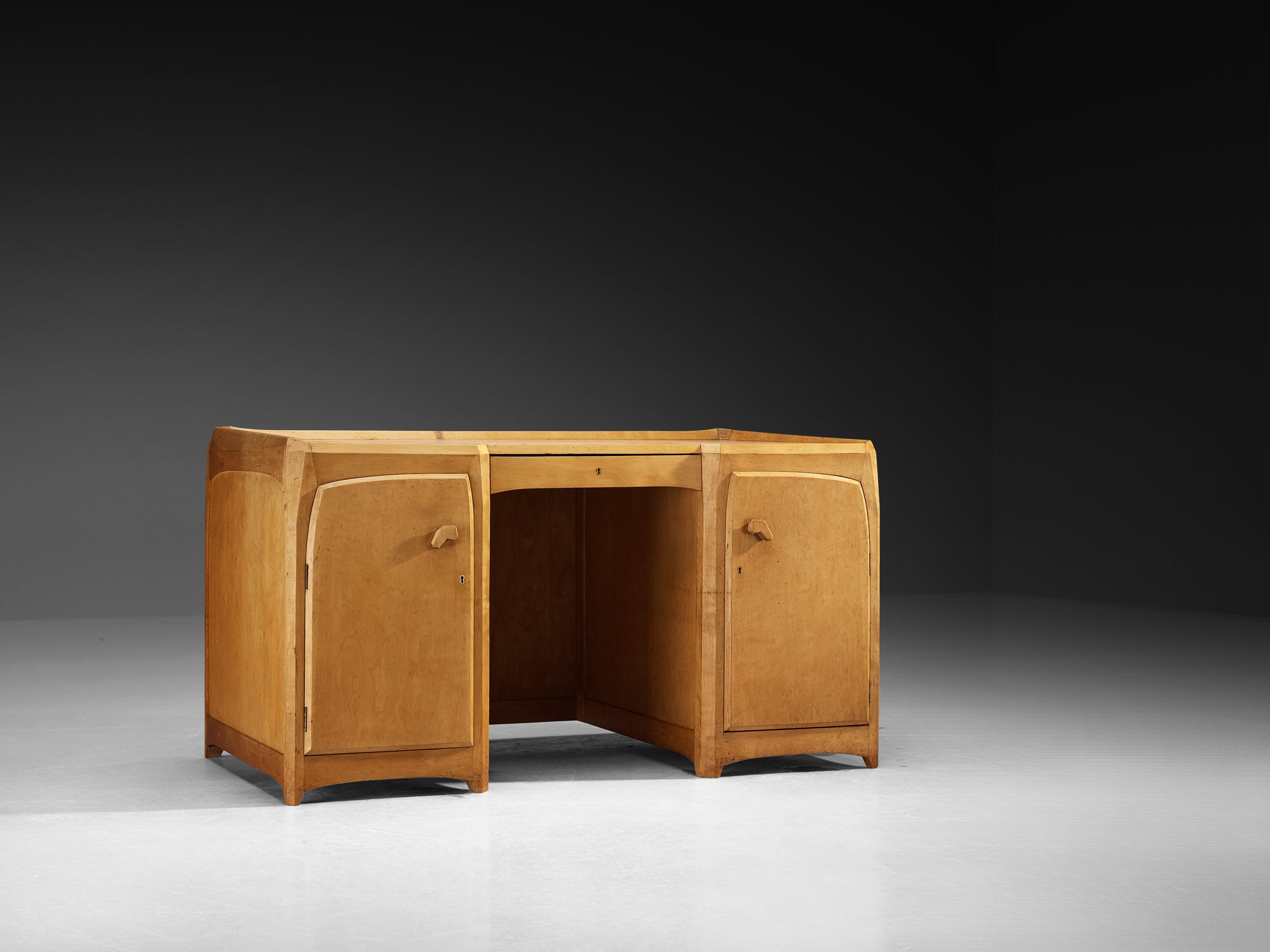
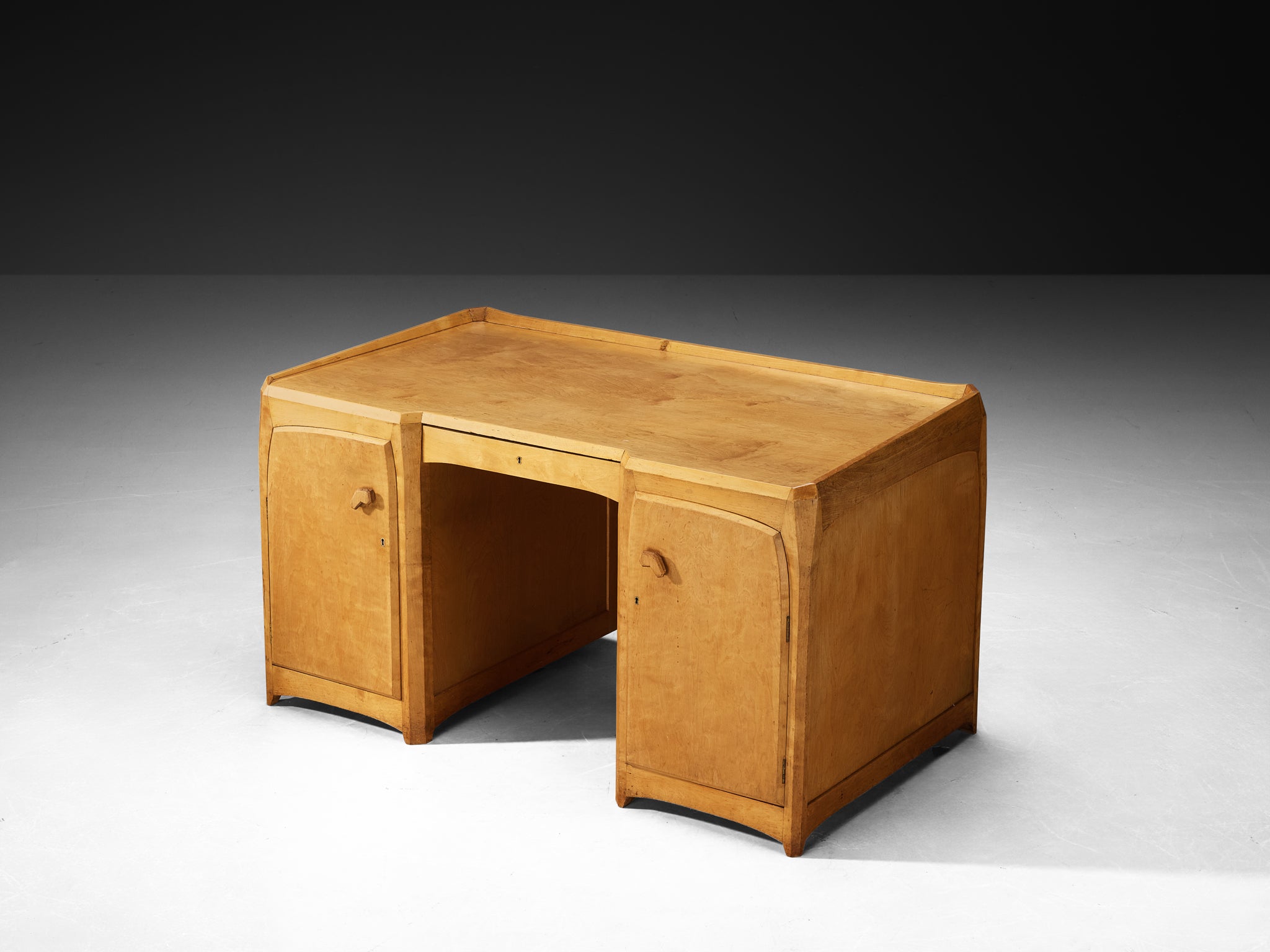
This elegant desk reflects the spiritual-functional design principles rooted in the Dornach School tradition of the 1930s.
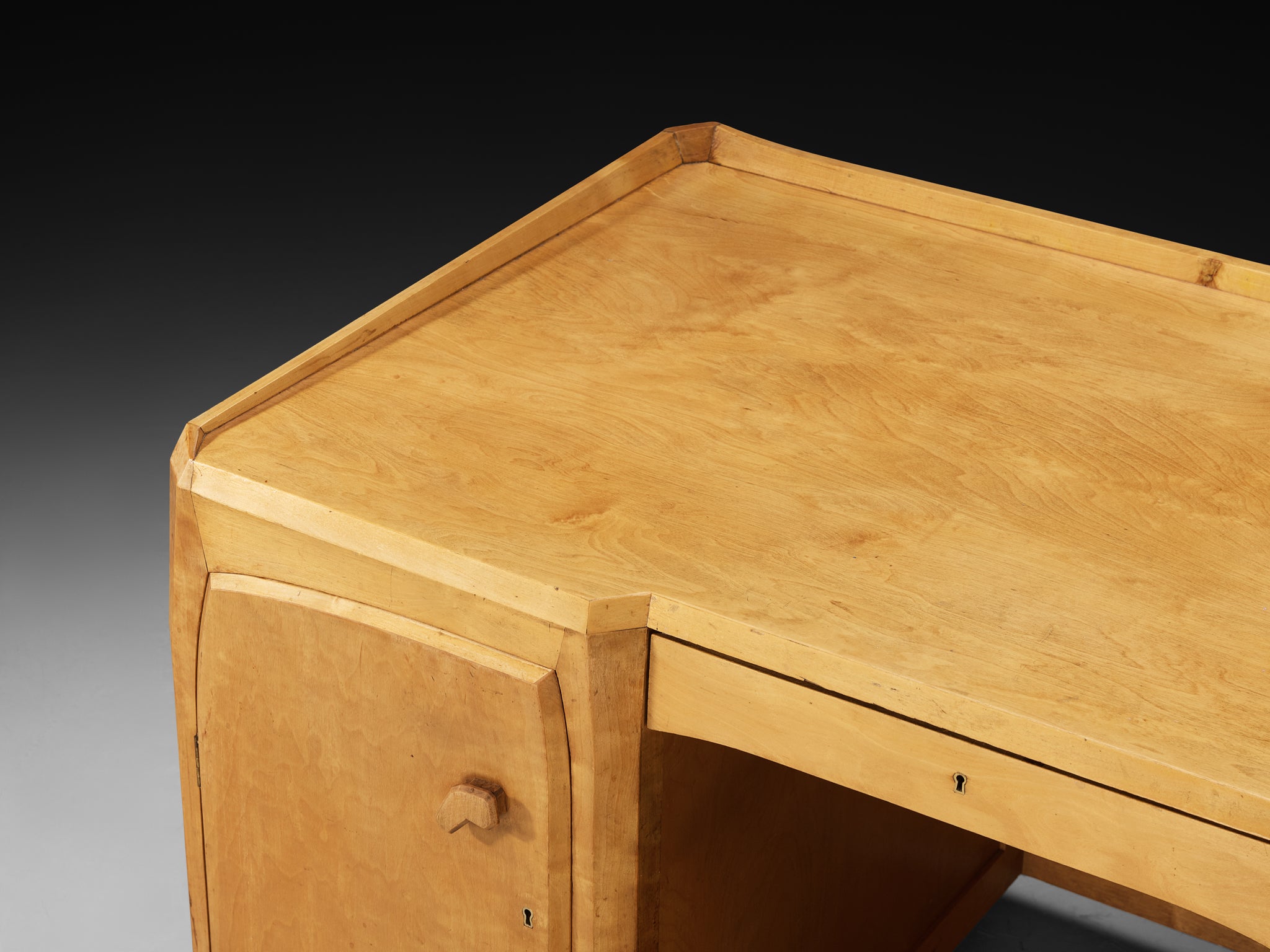
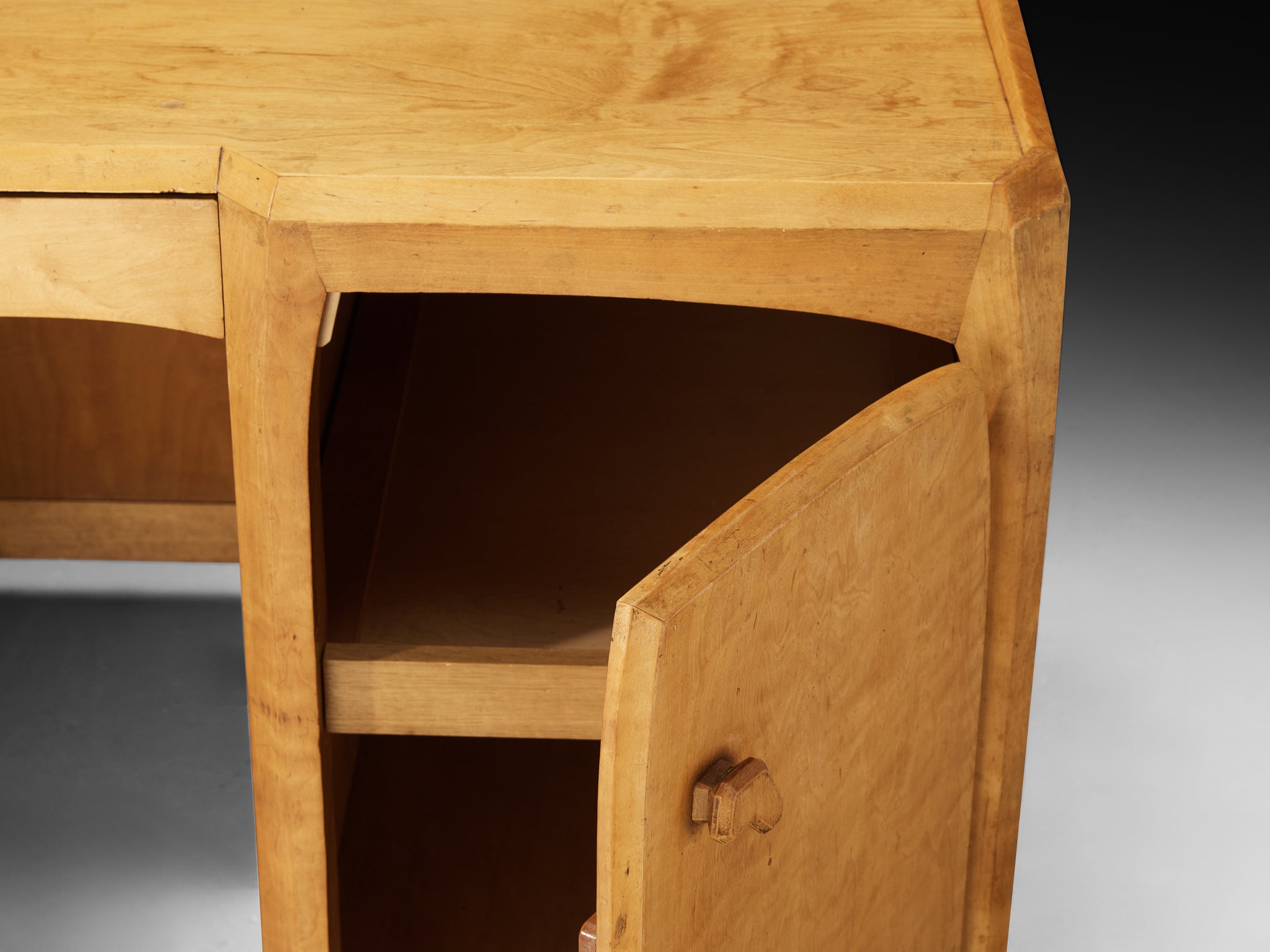
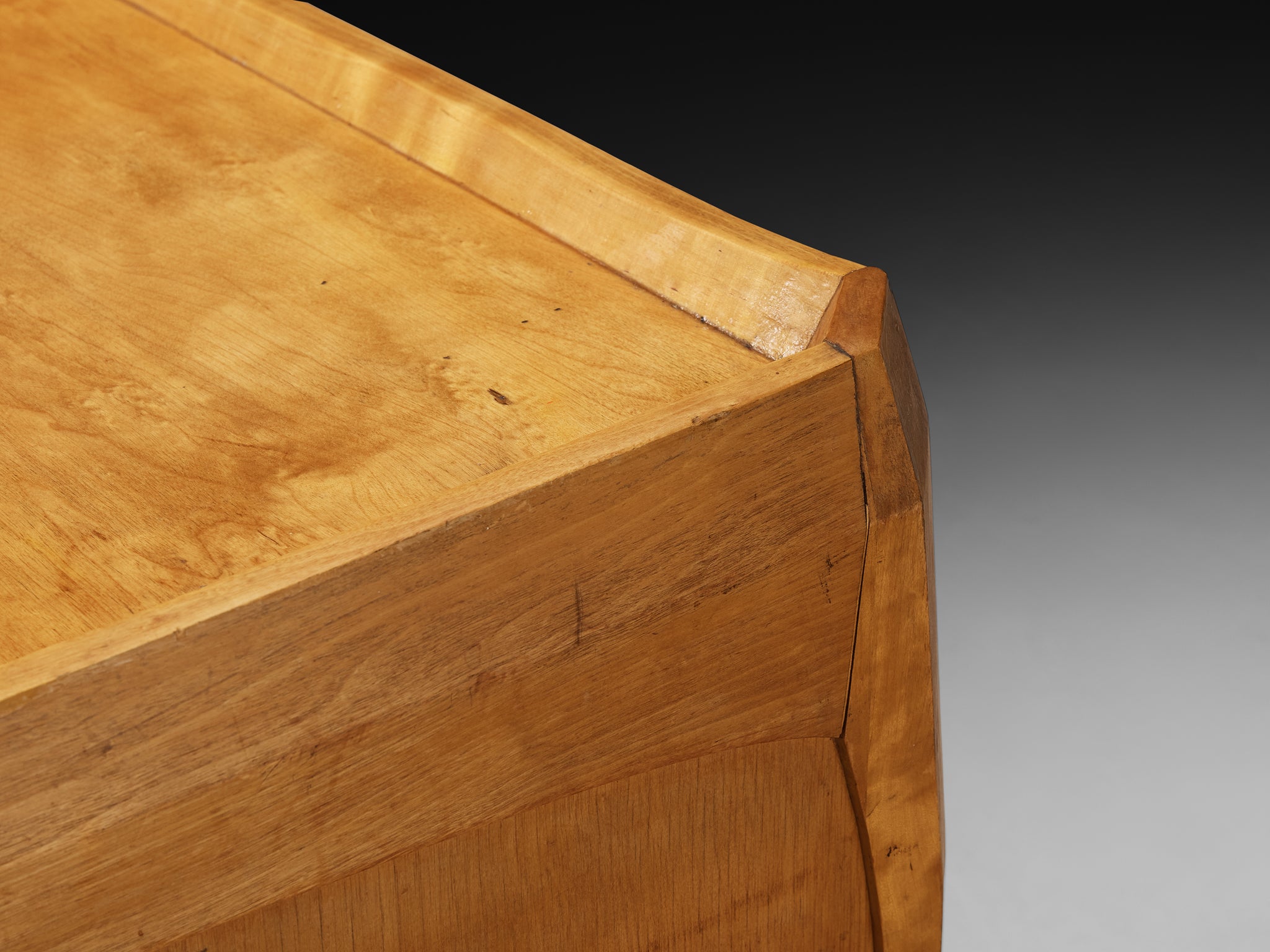
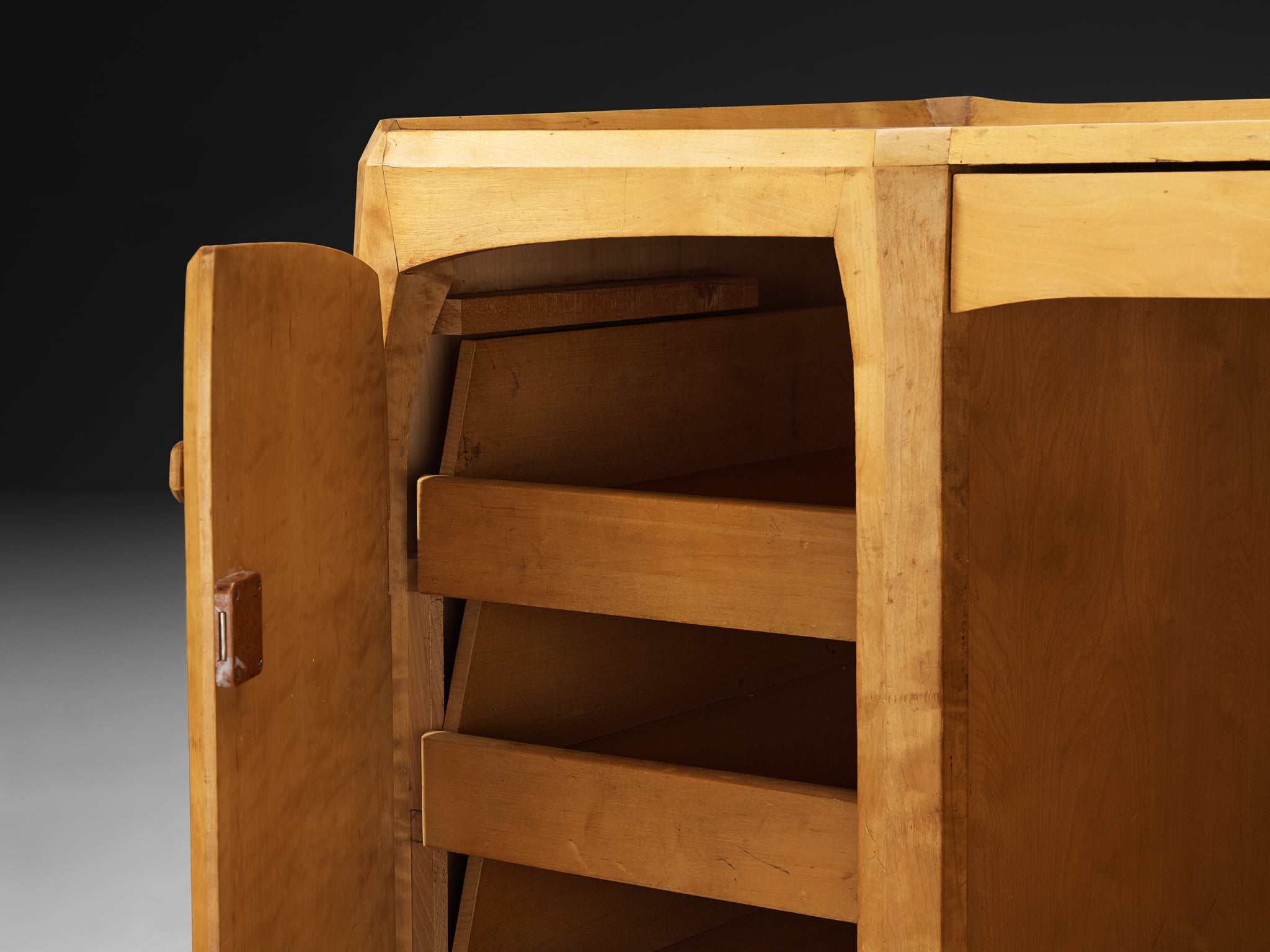
Softly rounded edges, subtly arched base elements, and fluid, continuous surfaces replace conventional straight lines and symmetry, radiating a warm and dreamy presence. The proportions and curves of this design create a sense of calm and intention, not just serving as furniture but a supportive element in ones environment and life, resonating with the anthroposophical way of living. True to anthroposophical design principles, this piece avoids straight lines altogether, embracing asymmetry and mirroring the organic rhythms of nature.
While the exact maker remains unconfirmed, the work bears a strong stylistic affinity to the designs of Siegfried Pütz (1907–1979), Felix Kayser (1892–1980), or Fritz Schuy (1891–1952), all prominent figures associated with the Dornach School.
Dornach school or Dornach design is a comprehensive exploration of anthroposophical furniture and interior design, spanning a century starting 1911. This term is closely associated with the Swiss town of Dornach, home to the Goetheanum, which is the world center for the anthroposophical movement founded by Rudolf Steiner. Dornach school focuses on handcrafted, sculptural furniture that integrates artistic expression with spiritual purpose. This approach has influenced various artists and designers, including Wharton Esherick, a pioneer of the American Studio Craft movement.
This elegant desk reflects the spiritual-functional design principles rooted in the Dornach School tradition of the 1930s.
Softly rounded edges, subtly arched base elements, and fluid, continuous surfaces replace conventional straight lines and symmetry, radiating a warm and dreamy presence. The proportions and curves of this design create a sense of calm and intention, not just serving as furniture but a supportive element in ones environment and life, resonating with the anthroposophical way of living. True to anthroposophical design principles, this piece avoids straight lines altogether, embracing asymmetry and mirroring the organic rhythms of nature.
While the exact maker remains unconfirmed, the work bears a strong stylistic affinity to the designs of Siegfried Pütz (1907–1979), Felix Kayser (1892–1980), or Fritz Schuy (1891–1952), all prominent figures associated with the Dornach School.
Dornach school or Dornach design is a comprehensive exploration of anthroposophical furniture and interior design, spanning a century starting 1911. This term is closely associated with the Swiss town of Dornach, home to the Goetheanum, which is the world center for the anthroposophical movement founded by Rudolf Steiner. Dornach school focuses on handcrafted, sculptural furniture that integrates artistic expression with spiritual purpose. This approach has influenced various artists and designers, including Wharton Esherick, a pioneer of the American Studio Craft movement.

Choose options
Dornach School Anthroposophical Desk in Birch, circa 1930
Sale price$12,700.00
Regular price
Product Details
VAT within the EU: When buying or delivering an item within the EU, VAT usually applies and will be added.