


Dom Hans van der Laan Table or Console in Pine and Copper
 Open here
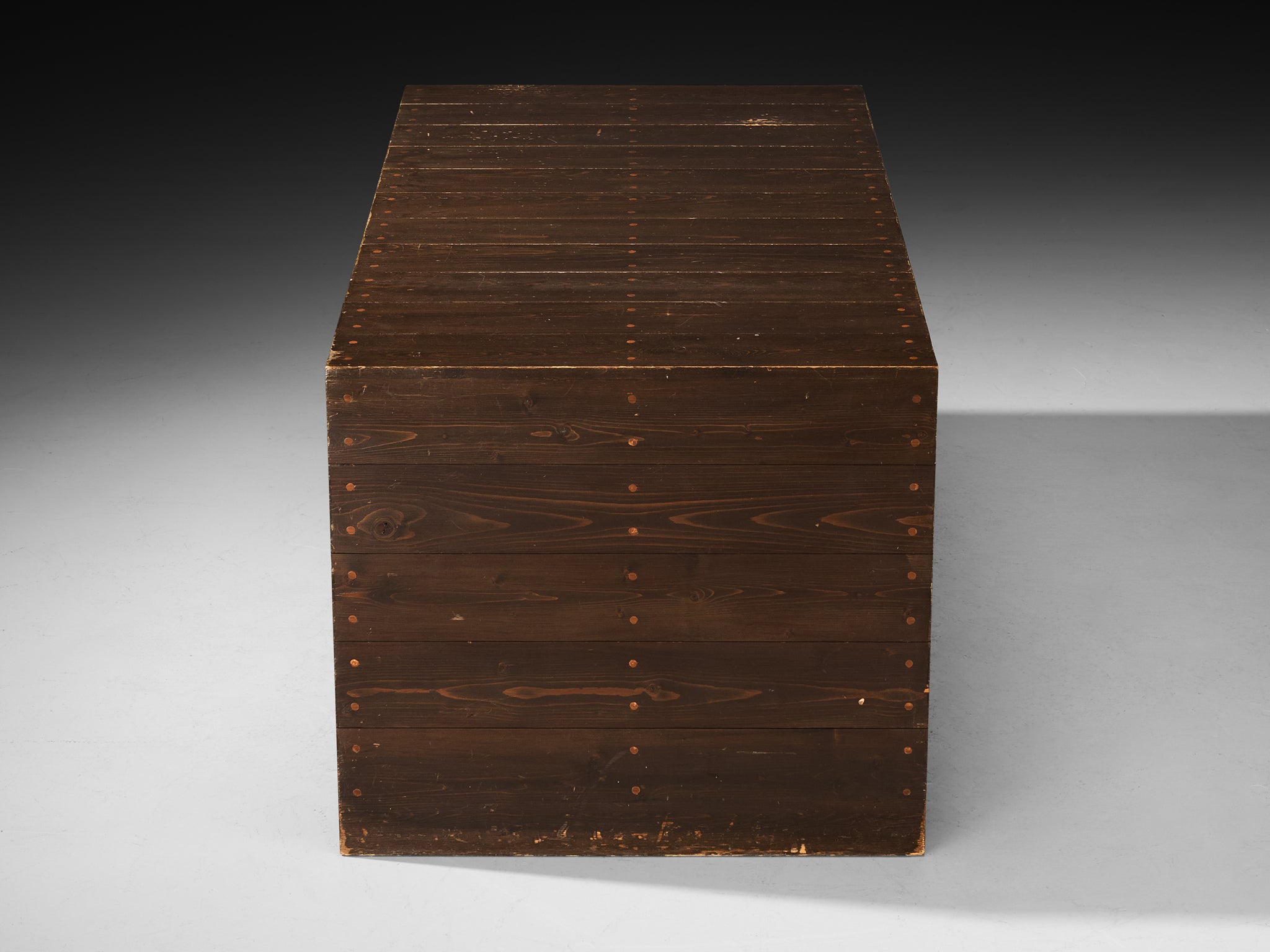
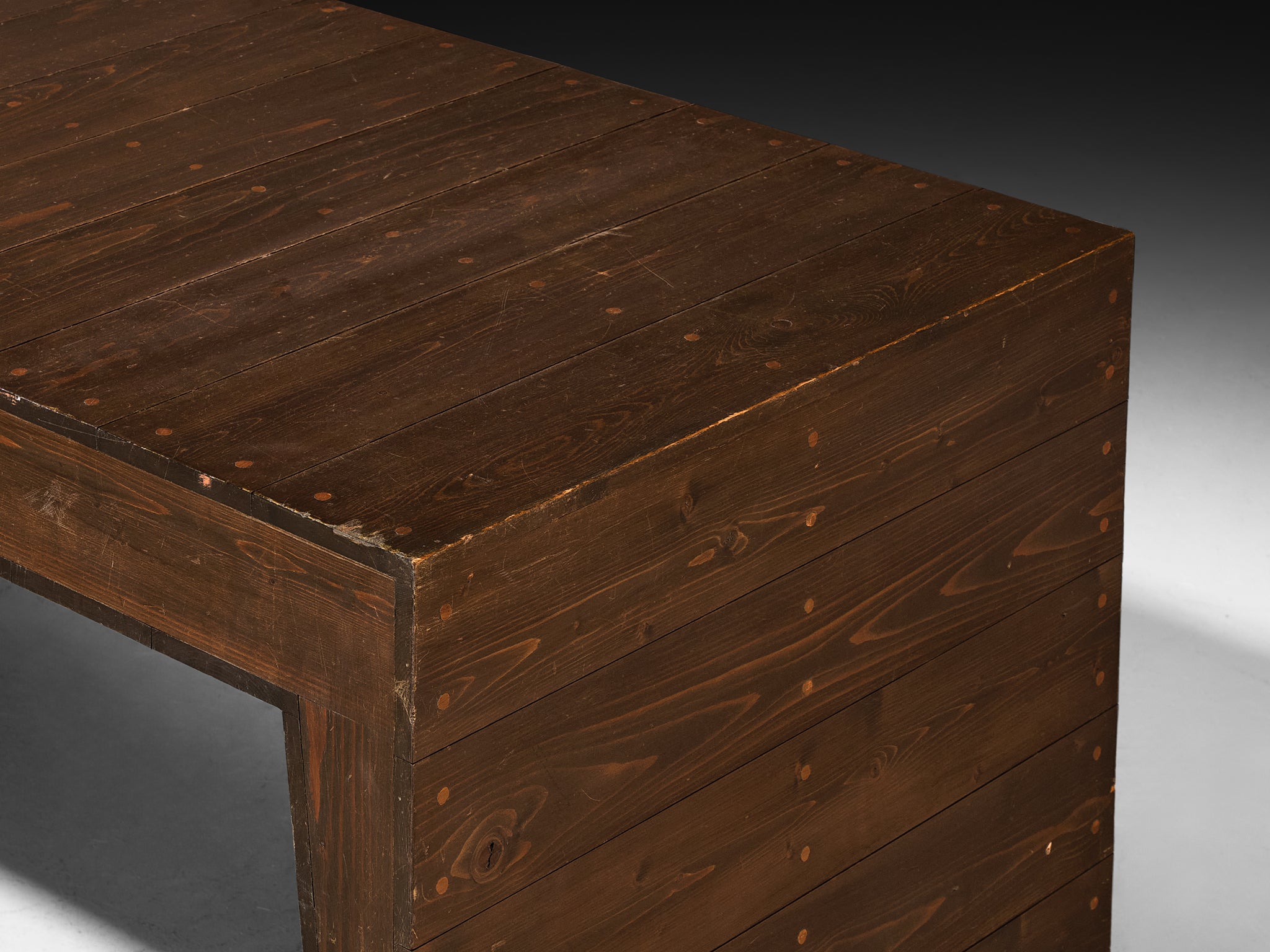
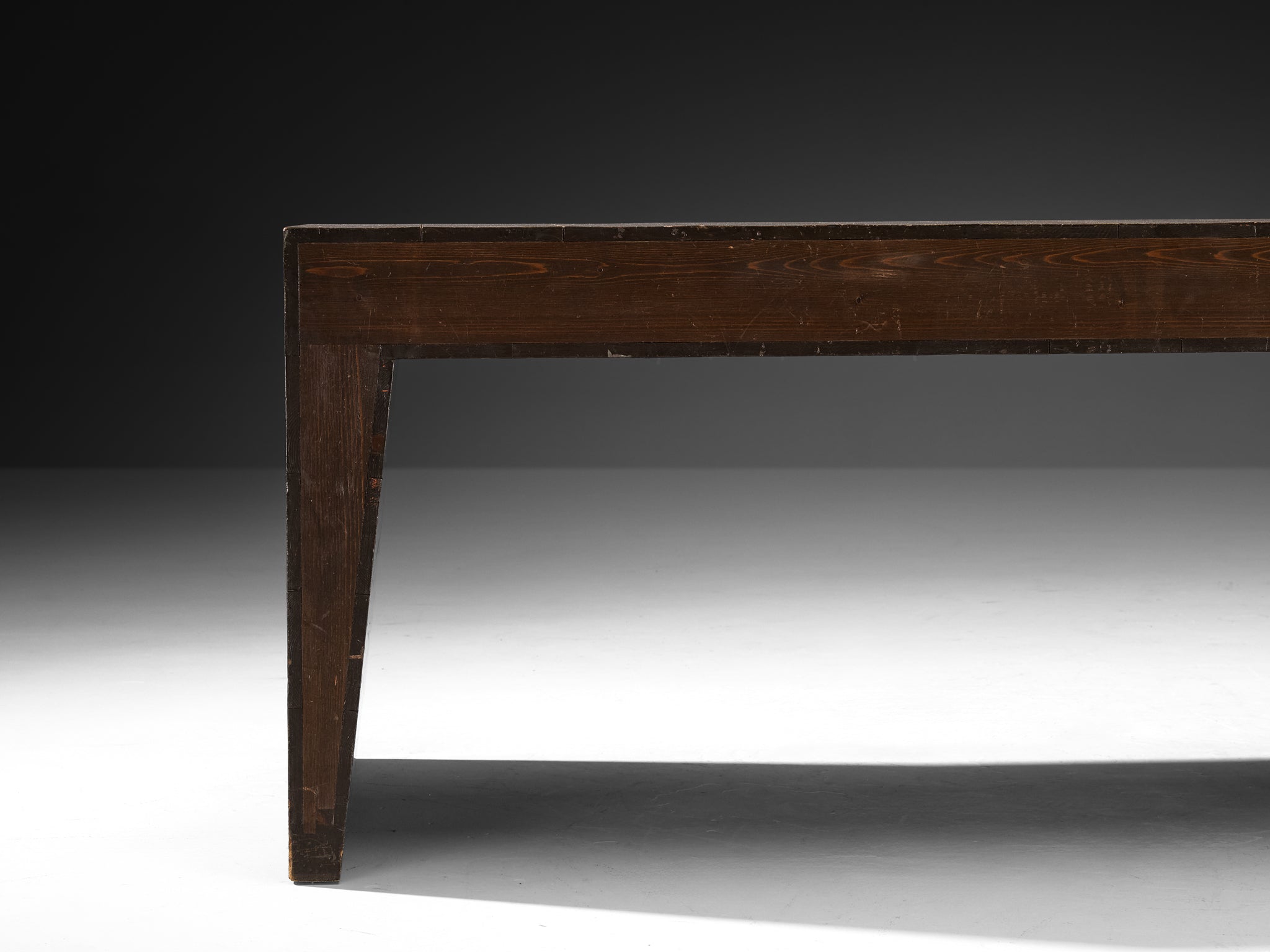
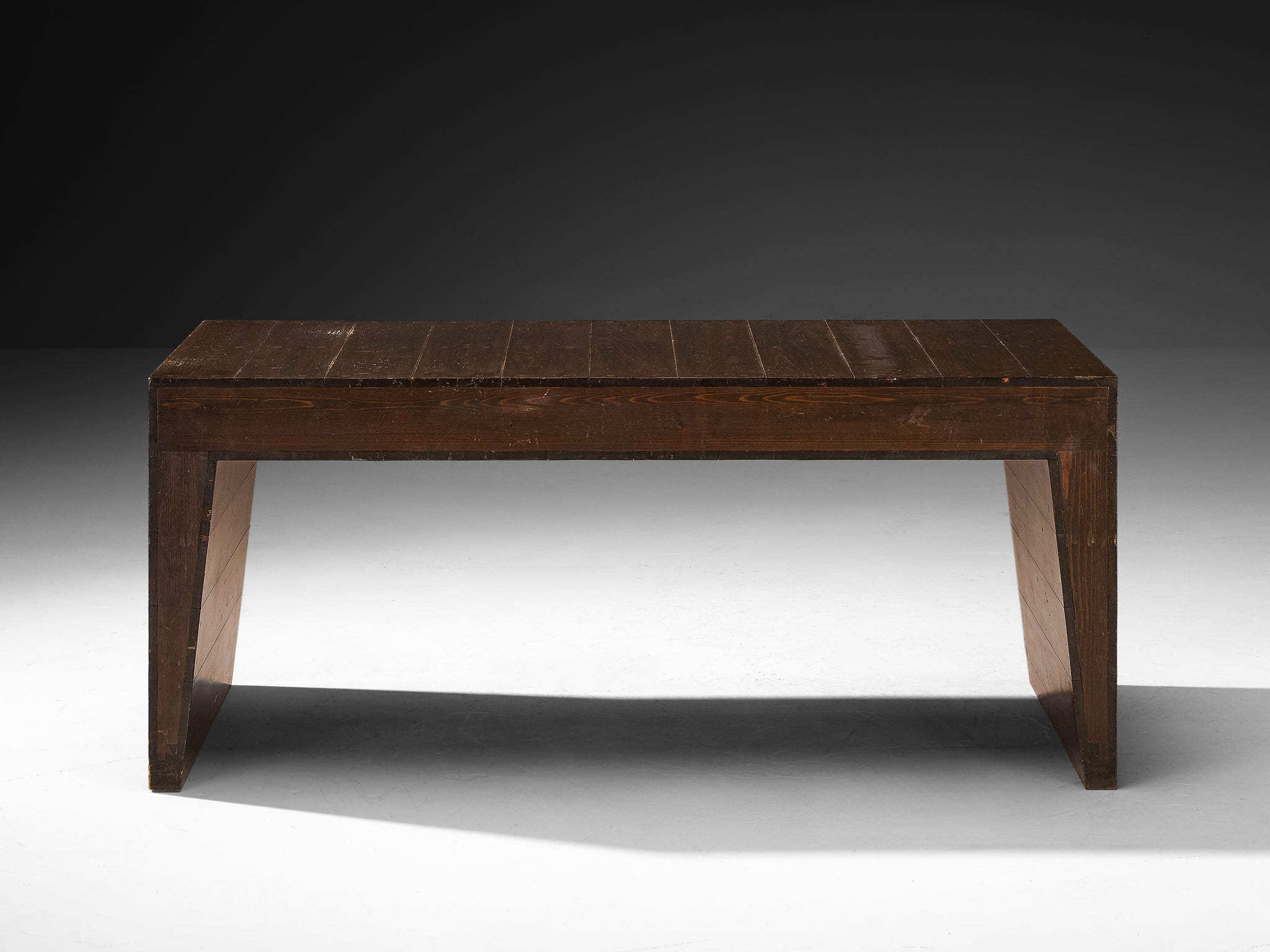
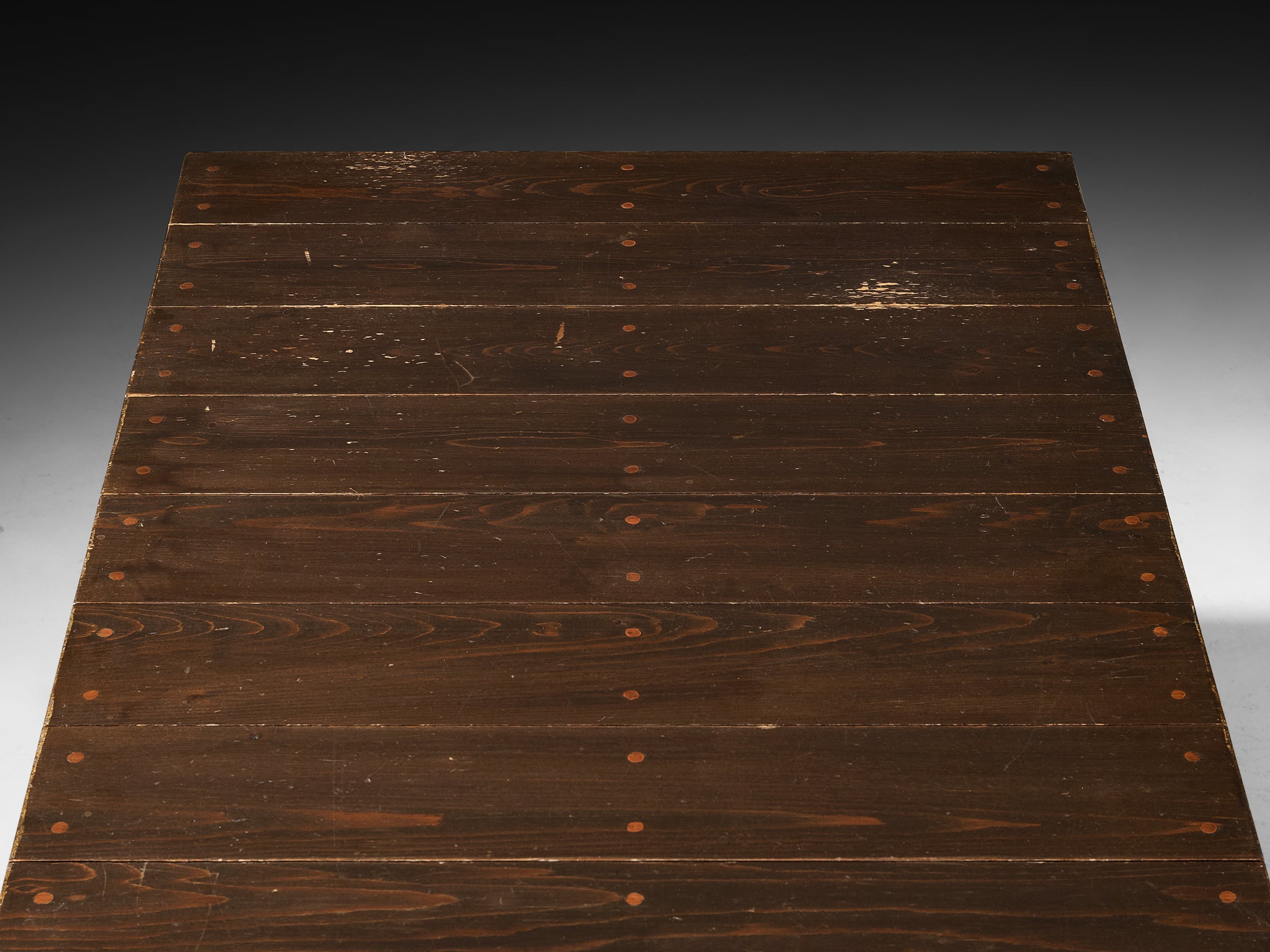
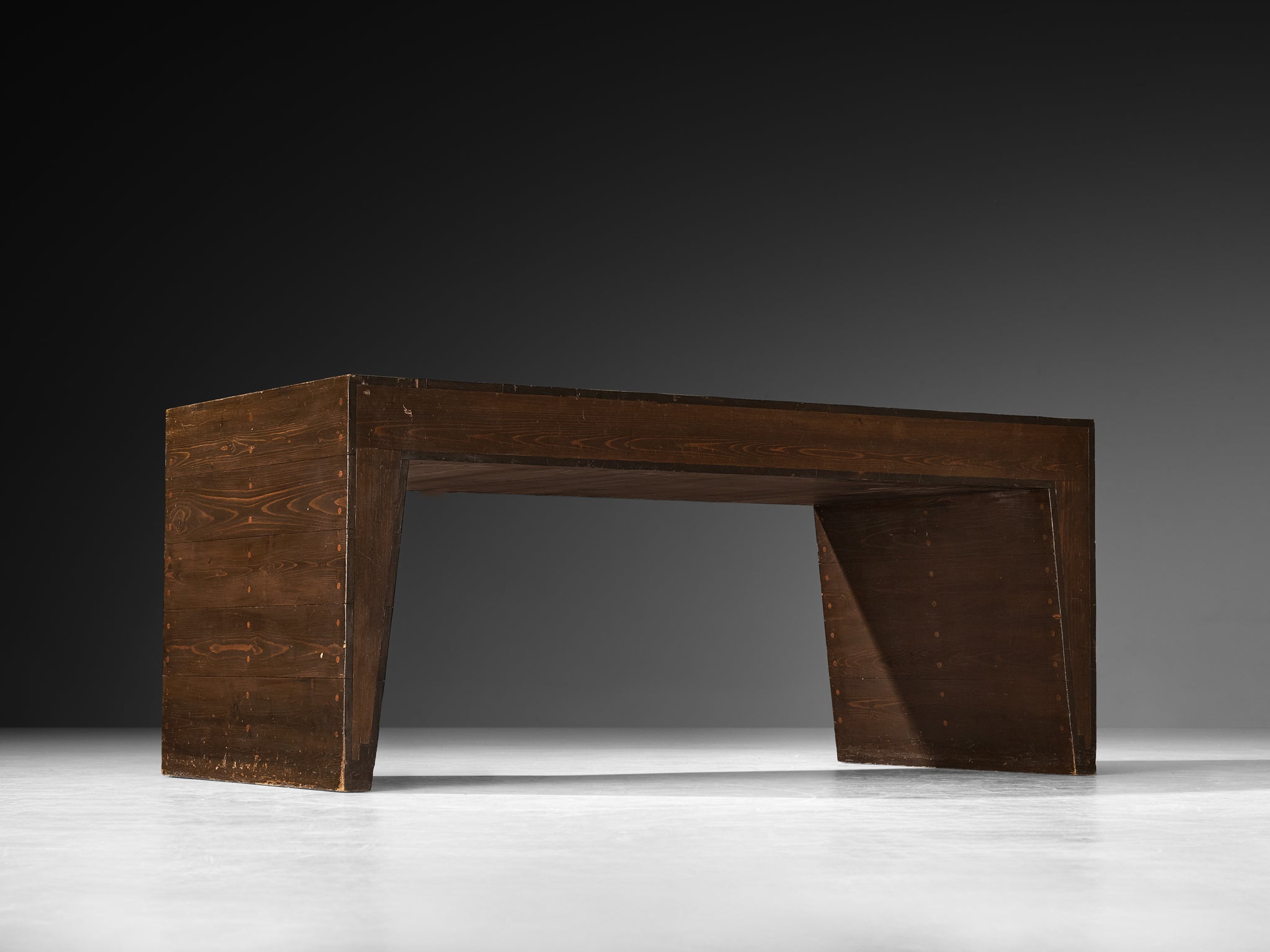
Dom Hans van der Laan, table or console, lacquered pine, copper, the Netherlands, 1975
This piece – originally intended as a table – was conceived in 1975 by Dutch Benedictine monk and architect Dom Hans van der Laan for a private home he designed himself. Aligned with his theoretical pursuits, he valued both the design of individual objects and architecture equally. His approach centers on perceiving liturgy as a transformative process, elevating ordinary actions to a sacred realm. With its restrained character and ascetic formal language, the furniture and liturgical items seamlessly integrate into the comprehensive design of the buildings.
Since the 1940s, van der Laan has been meticulously crafting liturgical objects for churches, consistently adhering to the principles of the plastic number. Each piece of furniture is not only intricately sketched and designed but is also assigned a specific place within the interior. The furniture is crafted based on a foundational system first implemented by him in Vaals in the onset of the 1960s.
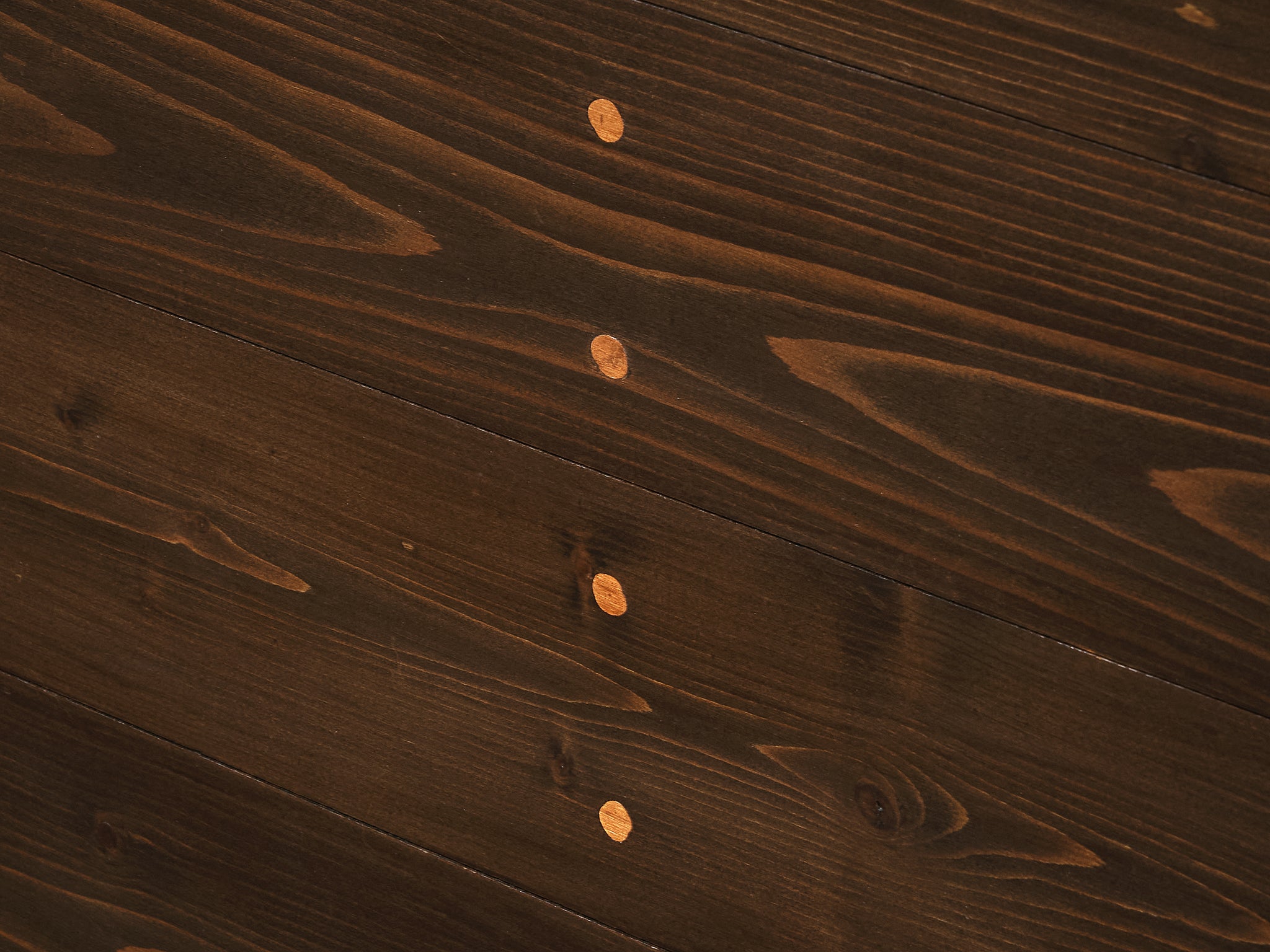
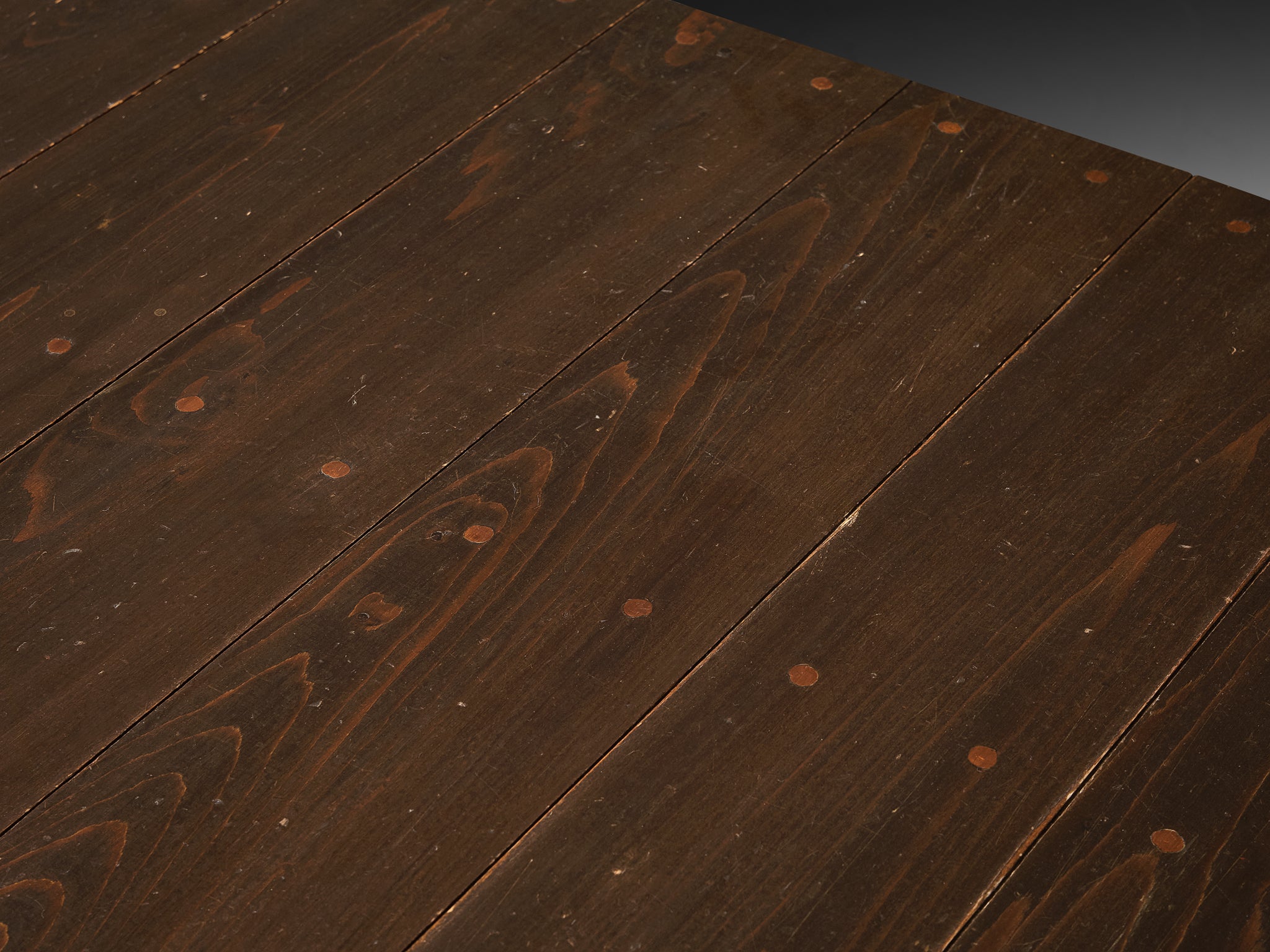
Each furniture piece is centered around a common U-profile, extending in various directions. A cabinet adopts a horizontal U-profile, extending upward, while benches, tables and stools feature a vertical U-profile elongated lengthwise. Other tables and chairs consist of extruded compositions of U-profiles. The outer edges of the foundation exhibit straight corners, whereas the inner edges are added with beveled contours. All the furniture is constructed from wooden planks, primarily pine, fastened using hinge nails thoughtfully placed following the 'extrusion' pattern. When viewed from the side, the ending of the planks and the foundational wood to which they are affixed are both visible. The furniture is predominantly painted in an array of earthy tones like brown and grey, with the occasional use of maroon and blue.
Biography
In 1904, Hans van der Laan was born into a family of architects in Leiden. His father and brothers, Jan and Nico, were also architects. Between 1923 and 1926, he pursued his architectural studies in Delft under the guidance of M.J. Granpré Molière (1883-1972), a leading figure among Dutch Catholic architects of that era. However, van der Laan discontinued his work in Delft within a few years, dissatisfied with the lack of fulfillment in his quest for the 'essence of architecture.'. In 1926, he sought a deeper spiritual connection and chose to become a monk at St. Paul's Abbey in Oosterhout. In 1934, he was ordained as a priest and became increasingly immersed in the realms of liturgical design and architecture.
After the Second World War came to an end, Hans van der Laan, accompanied by his brother Nico, was enlisted to lead and guide the reconstruction in Catholic architecture. In 's-Hertogenbosch, he directed the Ecclesiastical Architecture course, specifically dedicated to the construction of churches. This initiative laid the foundation for the 'Bossche School,' where van der Laan played a crucial role as the primary architect and theoretician. Under his leadership, the primary focus was placed on the fundamental essence of all architecture: Well-proportioned and human-scale dimensions.
In the realm of 20th-century architectural history, the monk-architect held a distinctive position. Amidst the conflict between traditionalists and modernists in The Netherlands, van der Laan formulated his unique perspectives and formal language. His buildings and writings alike reflect a dedicated exploration of the laws of architecture and the connection between humanity and nature. The legacy left by the architect comprises a modest yet significant collection, encompassing seven buildings, including several monasteries, a chapel, and a church library.
As a theorist, van der Laan dedicated a significant portion of his life to contemplating form, proportion, and the human experience within architectural spaces. His focus centered on exploring the essence of architecture, leading him to formulate a comprehensive theory involving space, shape, and size. Central to his ideas was the plastic number, a three-dimensional extension of the golden ratio. This numerical concept sheds light on the proportional relationship between the thickness, length, and width of architectural elements. Apart from architectural creations, van der Laan applied the principles of the plastic number to design liturgical items, notebooks, uniforms, and furniture, resulting in a subtly impactful body of work.
Dom Hans van der Laan, a Dutch Benedictine monk and architect, played a pivotal role as a key figure in the Bossche School. Renowned for his influential theories on numerical proportions in architecture, his ideas continue to be explored and shared. On August 19, 1991, Hans van der Laan passed away at the St. Benedictusberg Abbey near Vaals.
This piece – originally intended as a table – was conceived in 1975 by Dutch Benedictine monk and architect Dom Hans van der Laan for a private home he designed himself. Aligned with his theoretical pursuits, he valued both the design of individual objects and architecture equally. His approach centers on perceiving liturgy as a transformative process, elevating ordinary actions to a sacred realm. With its restrained character and ascetic formal language, the furniture and liturgical items seamlessly integrate into the comprehensive design of the buildings.
Since the 1940s, van der Laan has been meticulously crafting liturgical objects for churches, consistently adhering to the principles of the plastic number. Each piece of furniture is not only intricately sketched and designed but is also assigned a specific place within the interior. The furniture is crafted based on a foundational system first implemented by him in Vaals in the onset of the 1960s.
Each furniture piece is centered around a common U-profile, extending in various directions. A cabinet adopts a horizontal U-profile, extending upward, while benches, tables and stools feature a vertical U-profile elongated lengthwise. Other tables and chairs consist of extruded compositions of U-profiles. The outer edges of the foundation exhibit straight corners, whereas the inner edges are added with beveled contours. All the furniture is constructed from wooden planks, primarily pine, fastened using hinge nails thoughtfully placed following the 'extrusion' pattern. When viewed from the side, the ending of the planks and the foundational wood to which they are affixed are both visible. The furniture is predominantly painted in an array of earthy tones like brown and grey, with the occasional use of maroon and blue.
Biography
In 1904, Hans van der Laan was born into a family of architects in Leiden. His father and brothers, Jan and Nico, were also architects. Between 1923 and 1926, he pursued his architectural studies in Delft under the guidance of M.J. Granpré Molière (1883-1972), a leading figure among Dutch Catholic architects of that era. However, van der Laan discontinued his work in Delft within a few years, dissatisfied with the lack of fulfillment in his quest for the 'essence of architecture.'. In 1926, he sought a deeper spiritual connection and chose to become a monk at St. Paul's Abbey in Oosterhout. In 1934, he was ordained as a priest and became increasingly immersed in the realms of liturgical design and architecture.
After the Second World War came to an end, Hans van der Laan, accompanied by his brother Nico, was enlisted to lead and guide the reconstruction in Catholic architecture. In 's-Hertogenbosch, he directed the Ecclesiastical Architecture course, specifically dedicated to the construction of churches. This initiative laid the foundation for the 'Bossche School,' where van der Laan played a crucial role as the primary architect and theoretician. Under his leadership, the primary focus was placed on the fundamental essence of all architecture: Well-proportioned and human-scale dimensions.
In the realm of 20th-century architectural history, the monk-architect held a distinctive position. Amidst the conflict between traditionalists and modernists in The Netherlands, van der Laan formulated his unique perspectives and formal language. His buildings and writings alike reflect a dedicated exploration of the laws of architecture and the connection between humanity and nature. The legacy left by the architect comprises a modest yet significant collection, encompassing seven buildings, including several monasteries, a chapel, and a church library.
As a theorist, van der Laan dedicated a significant portion of his life to contemplating form, proportion, and the human experience within architectural spaces. His focus centered on exploring the essence of architecture, leading him to formulate a comprehensive theory involving space, shape, and size. Central to his ideas was the plastic number, a three-dimensional extension of the golden ratio. This numerical concept sheds light on the proportional relationship between the thickness, length, and width of architectural elements. Apart from architectural creations, van der Laan applied the principles of the plastic number to design liturgical items, notebooks, uniforms, and furniture, resulting in a subtly impactful body of work.
Dom Hans van der Laan, a Dutch Benedictine monk and architect, played a pivotal role as a key figure in the Bossche School. Renowned for his influential theories on numerical proportions in architecture, his ideas continue to be explored and shared. On August 19, 1991, Hans van der Laan passed away at the St. Benedictusberg Abbey near Vaals.

Choose options
Dom Hans van der Laan Table or Console in Pine and Copper
Sale price$12,700.00
Regular price
Product Details
VAT within the EU: When buying or delivering an item within the EU, VAT usually applies and will be added.