
Carlo Scarpa for Venini Rare '2226' Floor Lamp in Cordonato Cristallo Glass and Brass
 Open here
The Piece at a Glance
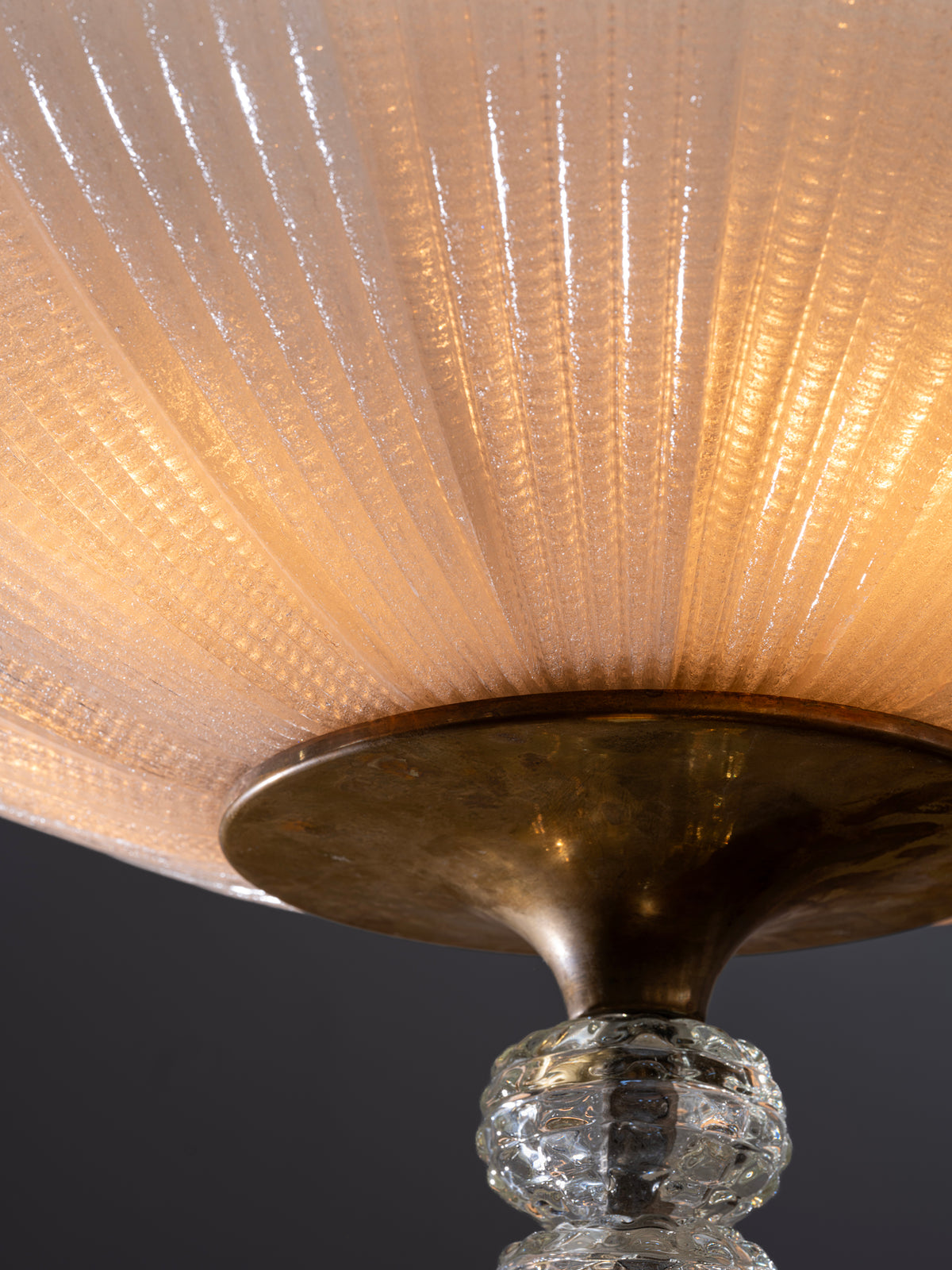
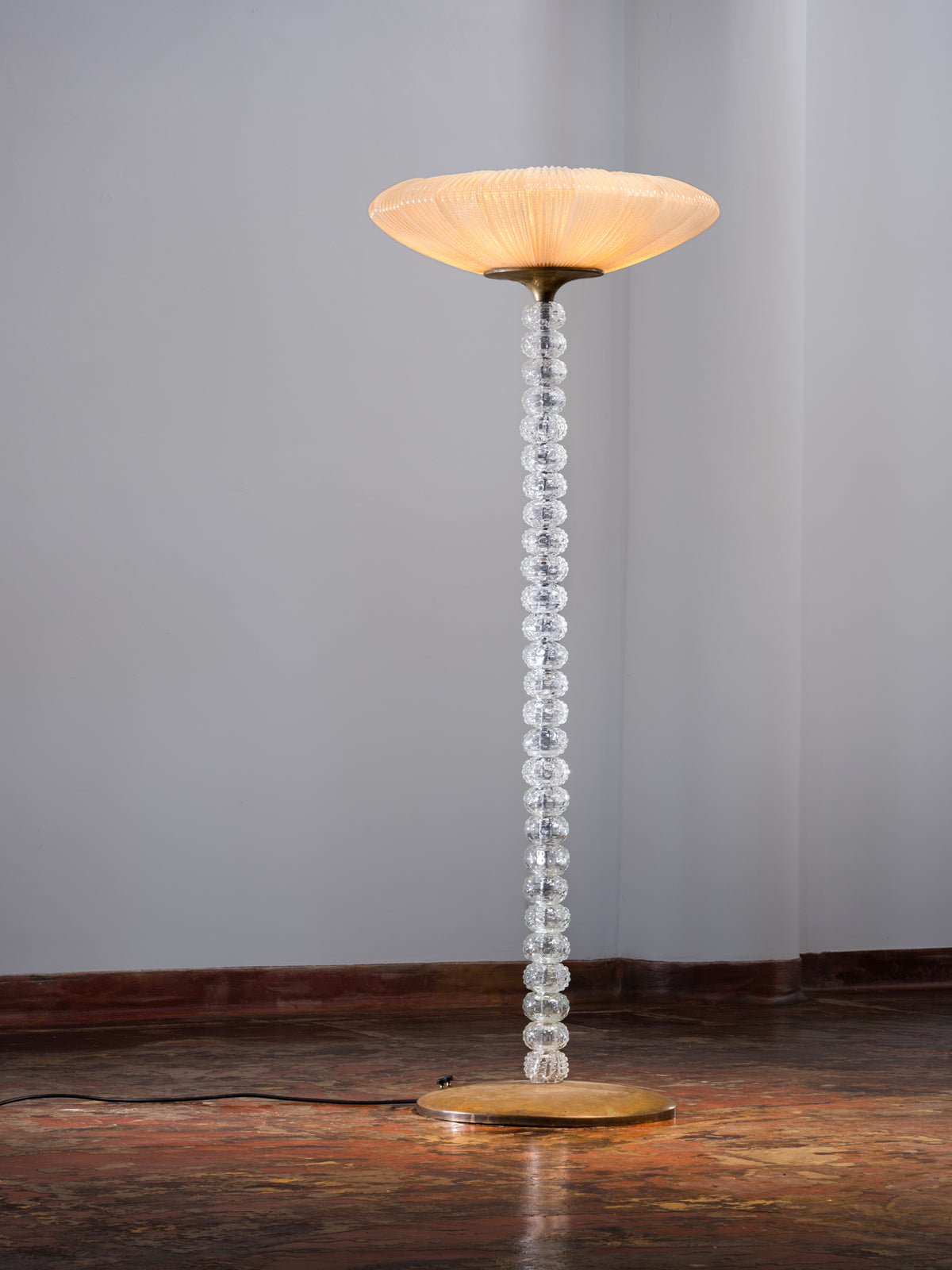
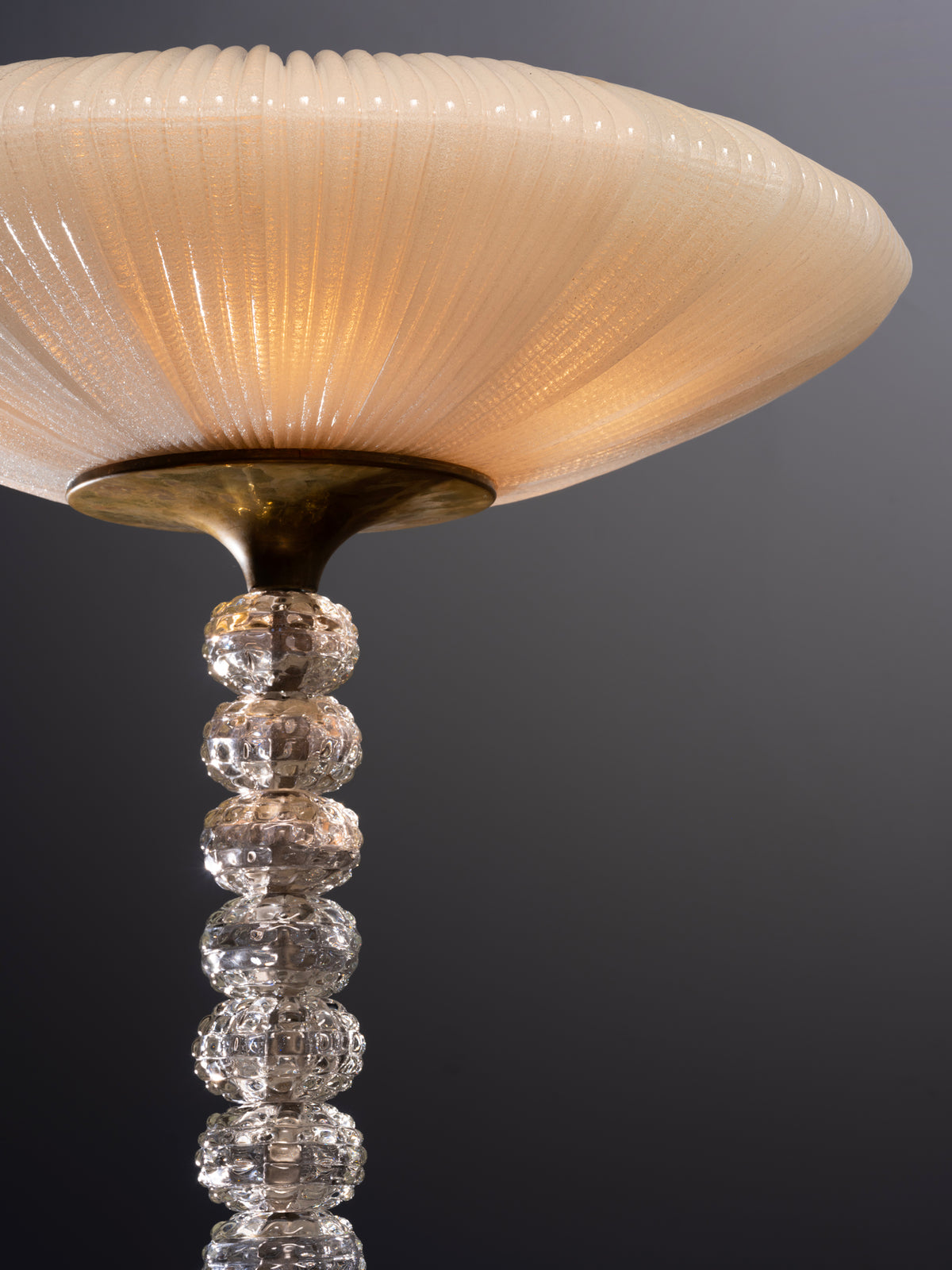
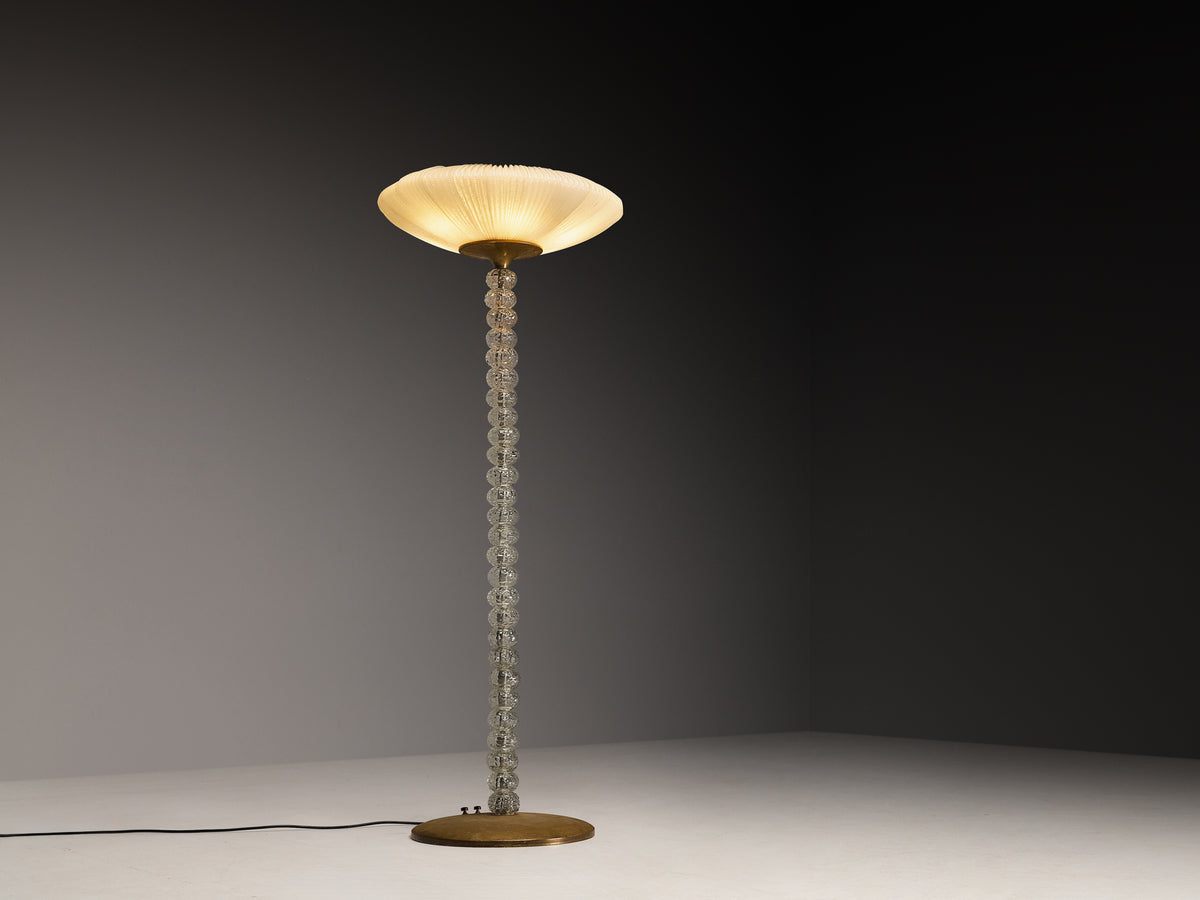
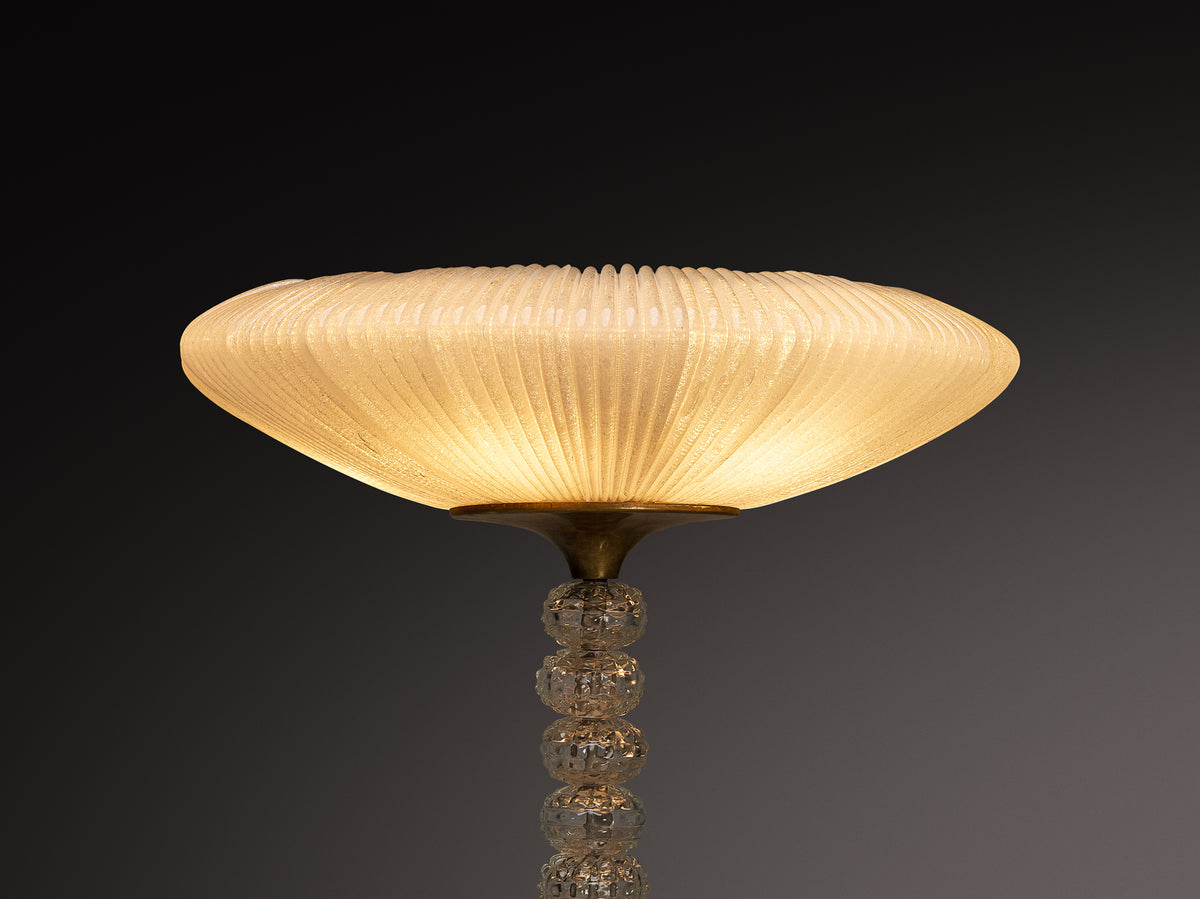
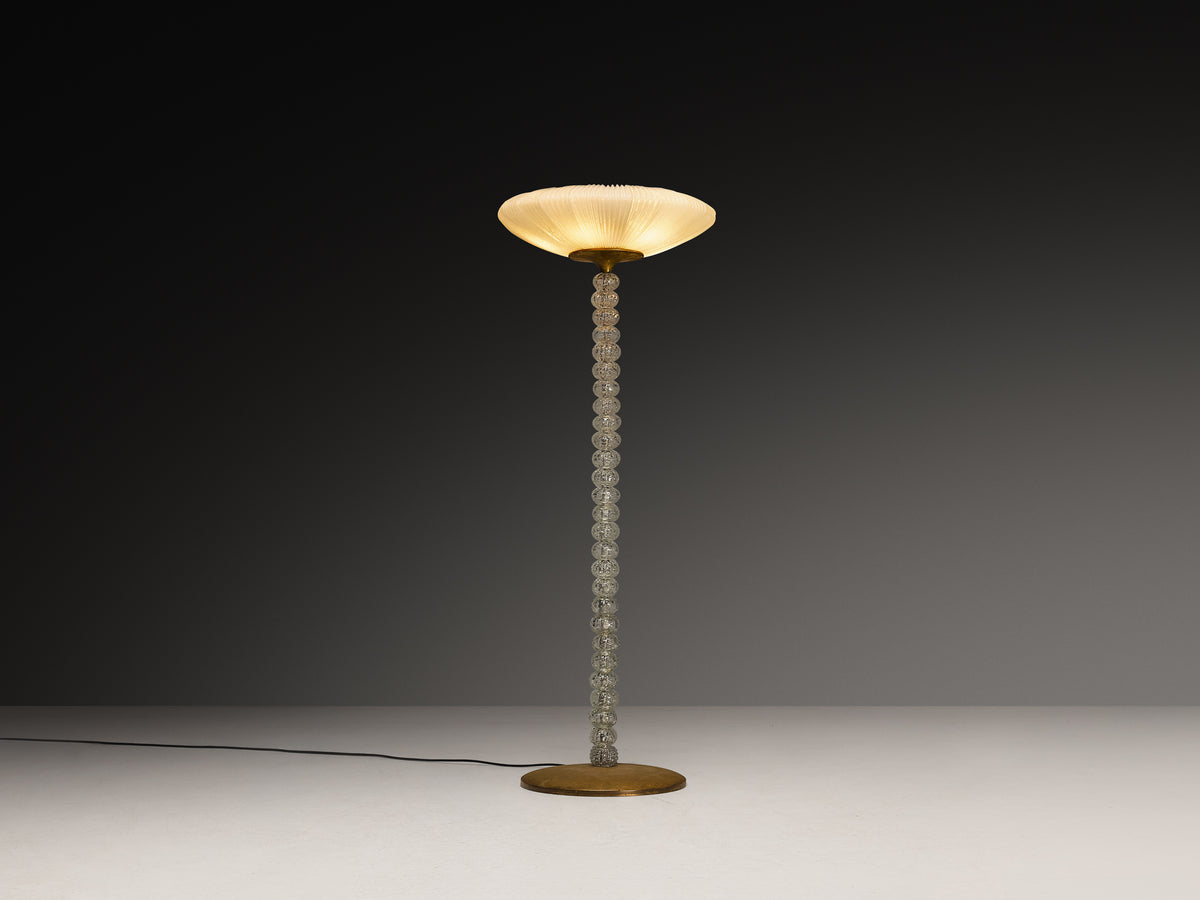
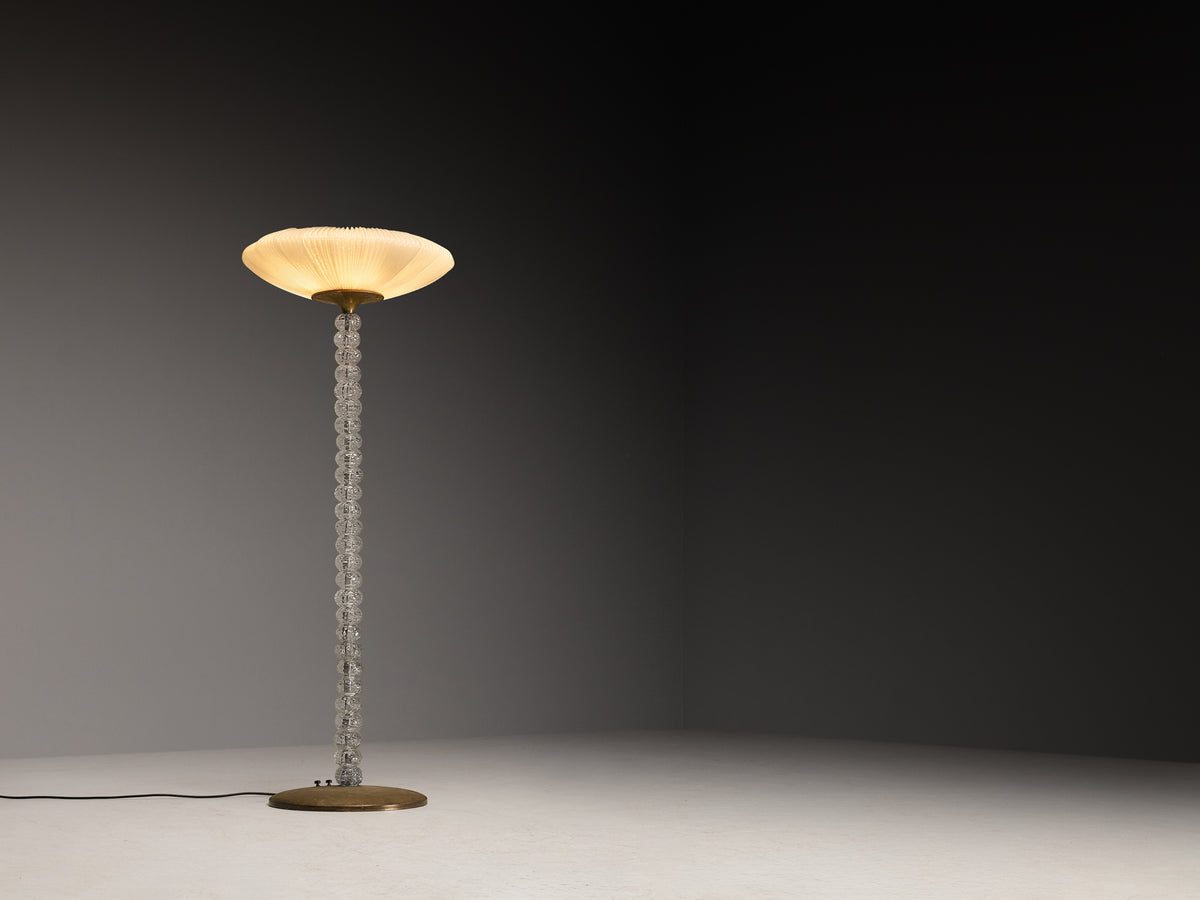
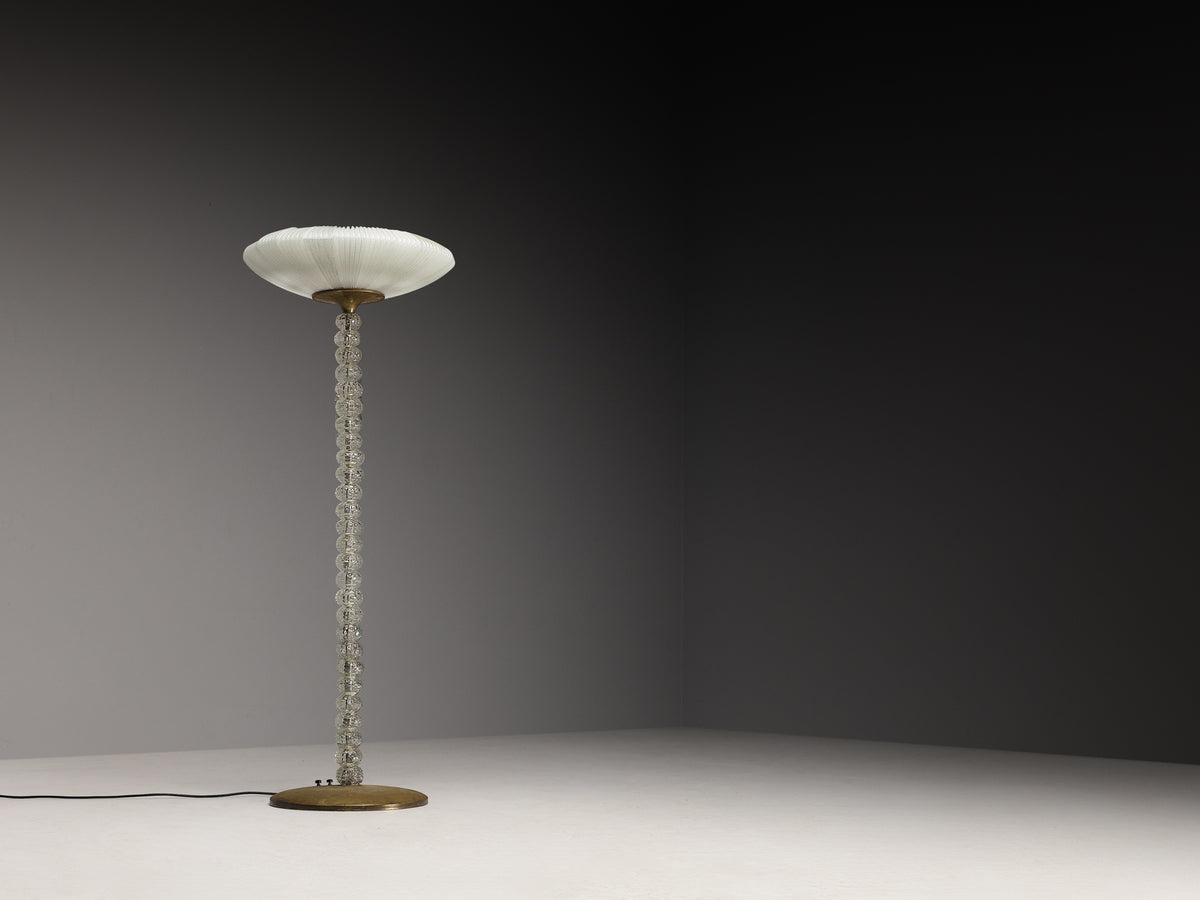
This exceptionally rare floor lamp, designed by Carlo Scarpa for Venini circa 1938 and documented in a Venini catalogue as model ‘2226’, is an outstanding example of the technical experimentation that defined their collaboration. Widely regarded as one of the most significant Italian architects of the twentieth century, Scarpa left an enduring mark on Italy’s architectural landscape through buildings and interiors that remain central to the history of modern design. His work for Venini formed an important early chapter in this development: between 1932 and 1947, he helped pioneer new techniques, forms, and colors that profoundly modernized the centuries-old tradition of Murano glassmaking. The lamp brings together several sophisticated glassmaking techniques within a single composition.
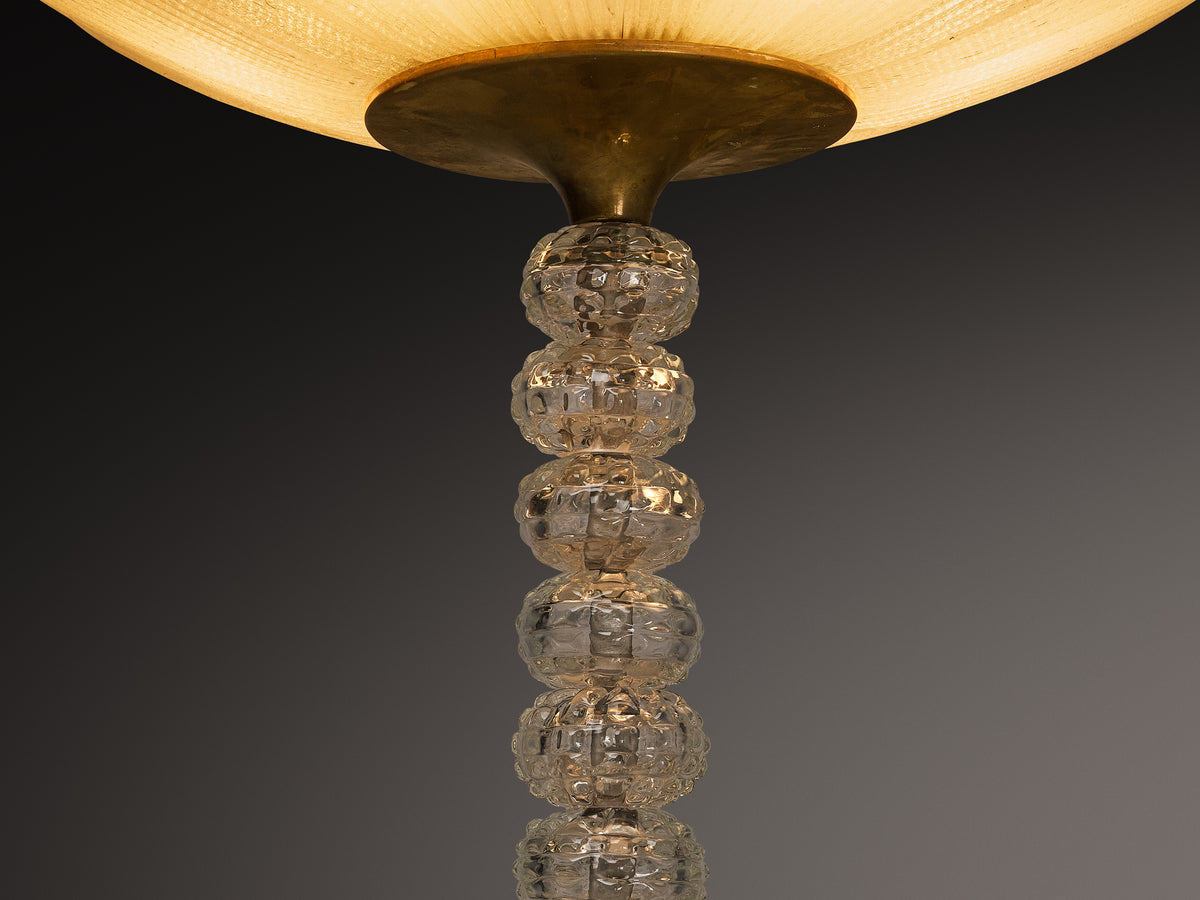
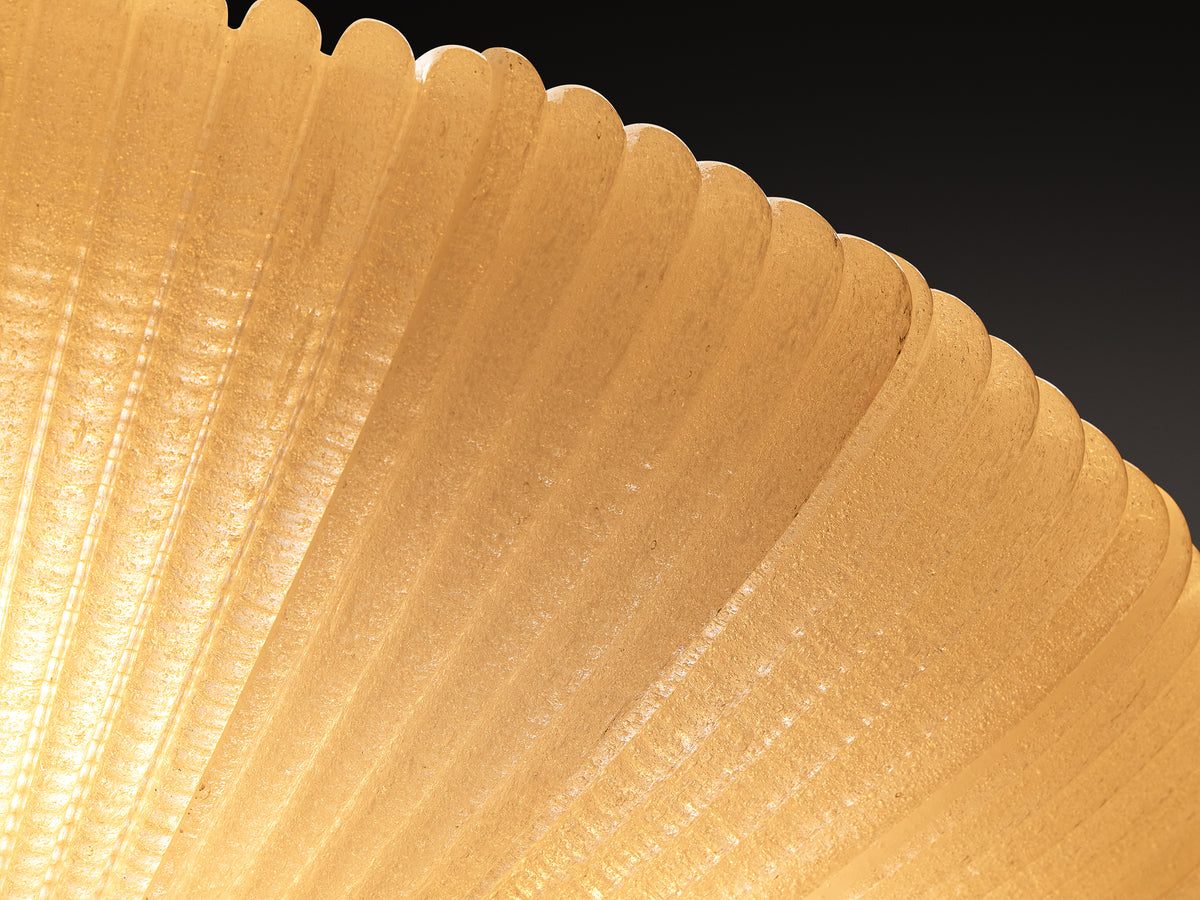
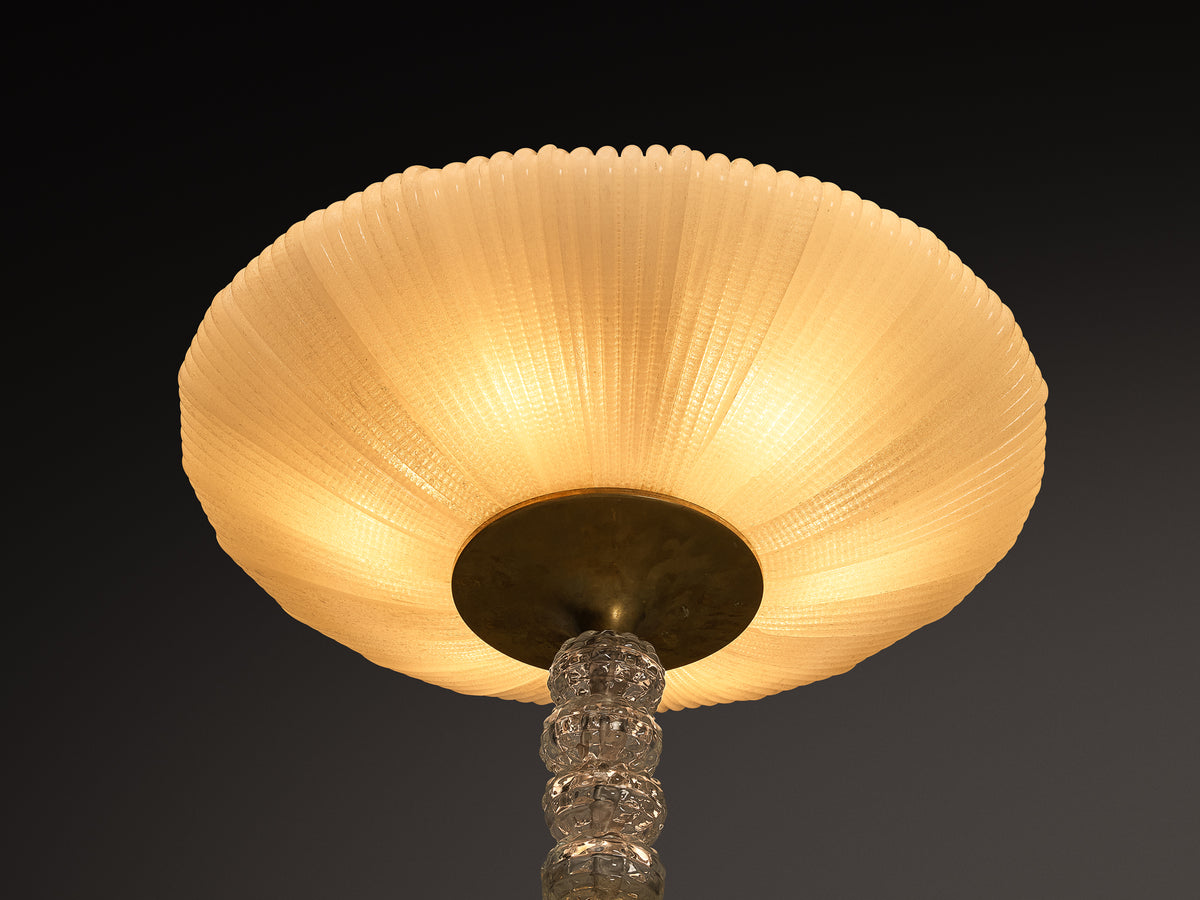
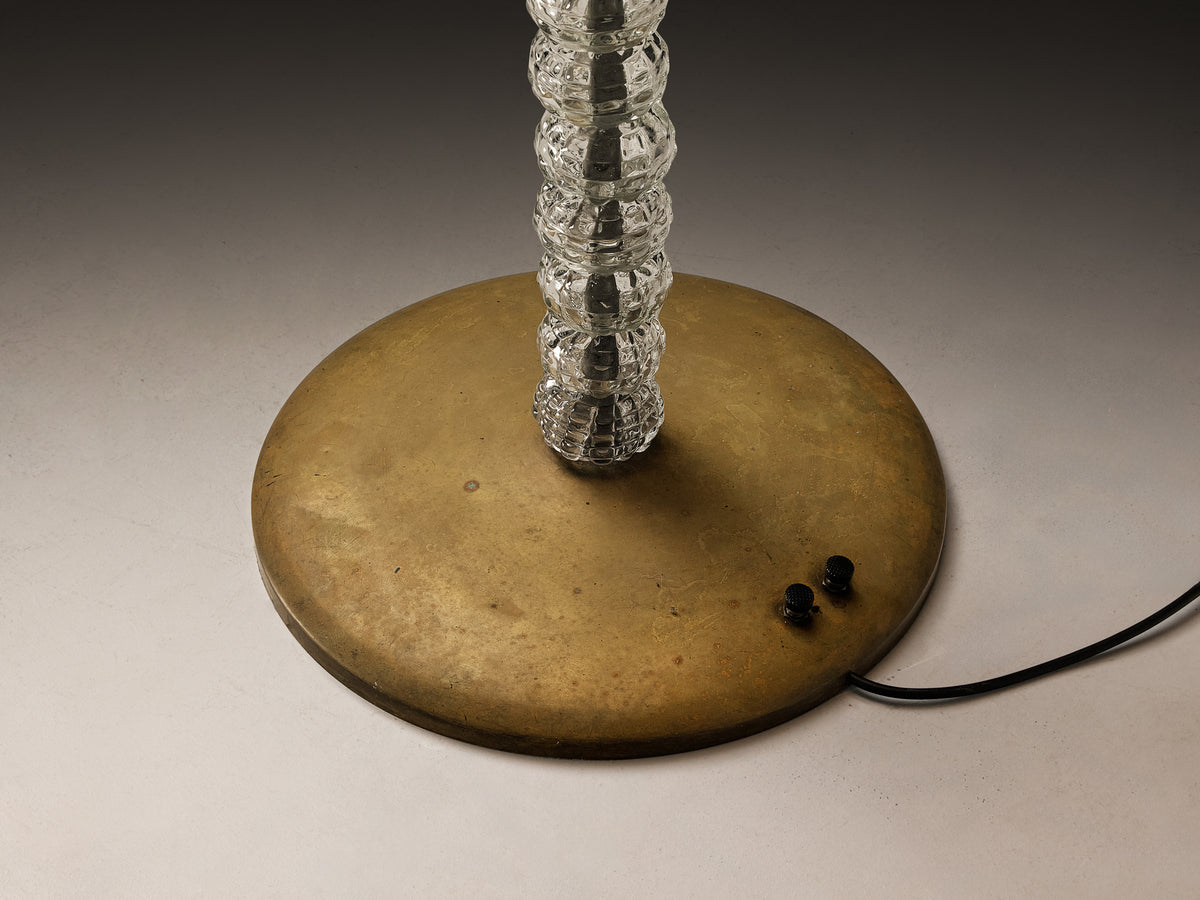
Its broad, shallow shade is constructed from curved cristallo Murano glass elements. Cristallo is a type of ultra-clear Murano glass developed in Venice around 1450 by the Murano glassmaker Angelo Barovier. This exceptionally clear glass combines cordonato rigato—a ribbed technique patented by Venini in 1935 under no. 333411—with pulegoso, characterized by countless irregular air bubbles suspended within the glass. The use of pulegoso is particularly noteworthy, as the technique was only rarely employed in lighting, making its presence here especially distinctive. The slender stem is equally remarkable, formed from a vertical succession of spherical elements executed in bugnato glass and set above a circular brass base. The bugnato technique was patented by Venini in 1931 under no. 297787.
Through these contrasting treatments, Scarpa explored how texture, transparency, and light could become integral to the form itself. The result demonstrates both his deep understanding of glass as a material and Venini’s exceptional technical expertise. Combining extreme rarity with a rich concentration of glass techniques, model ‘2226’ stands as a particularly refined expression of Venini’s pioneering approach to twentieth-century glass design.
A New Murano Tradition
In the July 1936 issue of Domus magazine, the influential design and architecture magazine directed by the visionary architect-designer Gio Ponti, he mentions that contemporary Murano glass should not be seen as a revival or modernization of the past, but as a new artistic phenomenon in its own right. Ponti argues that this production forms a “new and very lively Murano tradition,”one that continues the island’s historic splendor through an original modern language rather than through imitation. In this sense, the floor lamp should be understood as part of a broader moment in which Murano glass was recognized not only as local craftsmanship, but as a vital expression of modern Italian art and an important contribution to artistic glassmaking internationally.
Biography
Carlo Scarpa (1906–1978) was one of the most influential Italian architects and designers of the twentieth century. Born in Venice, he studied at the city's Academy of Fine Arts, where he developed a profound appreciation for craftsmanship, materiality, and detail – qualities that would define his entire career.
In the late 1920s, Scarpa began collaborating with Murano glassmakers, initiating a lifelong engagement with the artistic possibilities of glass. His relationship with Venini proved particularly significant. Between 1934 and 1947, he served as artistic director of the company, transforming its production through a series of innovative designs that bridged traditional Venetian craftsmanship and modern design. During these years, Scarpa helped establish Murano glass as a vital expression of contemporary Italian culture rather than a mere continuation of historical traditions.
Following the Second World War, Scarpa gained international recognition through a remarkable body of work that ranged from furniture and lighting to architecture and museum installations. Influenced by both Frank Lloyd Wright and Japanese aesthetics, he developed a highly personal design language characterized by exceptional attention to materials, construction, and spatial experience. Today, his work is widely regarded as one of the most sophisticated achievements of twentieth-century Italian design.

Choose options
Product Details
Biography
Born in Venice in 1906, Scarpa attended the Academy of Fine Arts, where he concentrated on architectural studies. After graduating he collaborated with the architect Francesco Rinaldo and began teaching architectural drawing at the Academy, a position he held until 1929. His own practice as an architect and designer took off in the same period.
International recognition came after the Second World War, along with the commissions that produced his major works. His work absorbed the influence of architects such as Frank Lloyd Wright and took inspiration from Japan. He died in 1978 after a fall from a flight of concrete stairs.
VAT within the EU: When buying or delivering an item within the EU, VAT usually applies and will be added.