


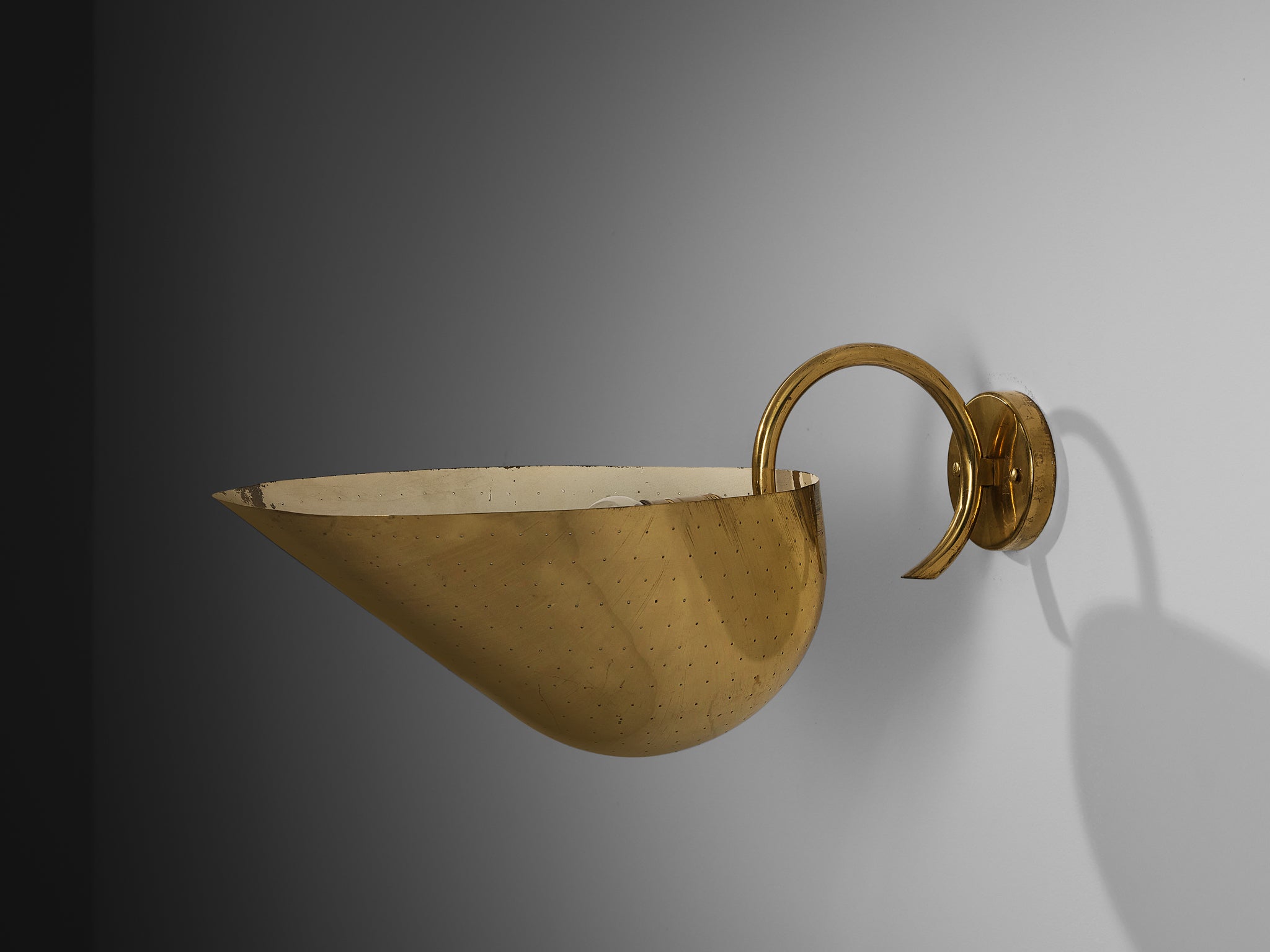
Carl-Axel Acking Wall Light in Perforated Brass
 Open here
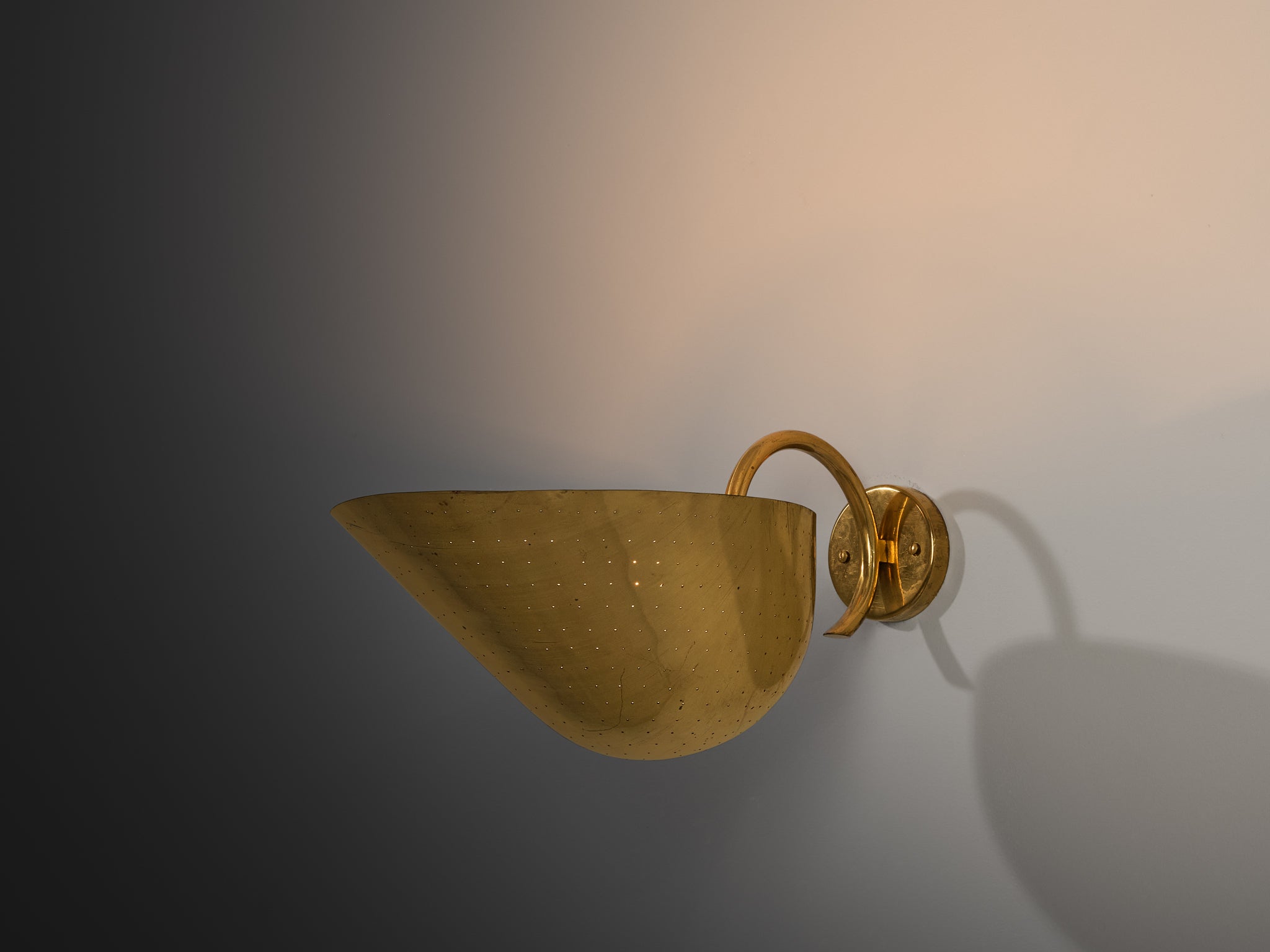
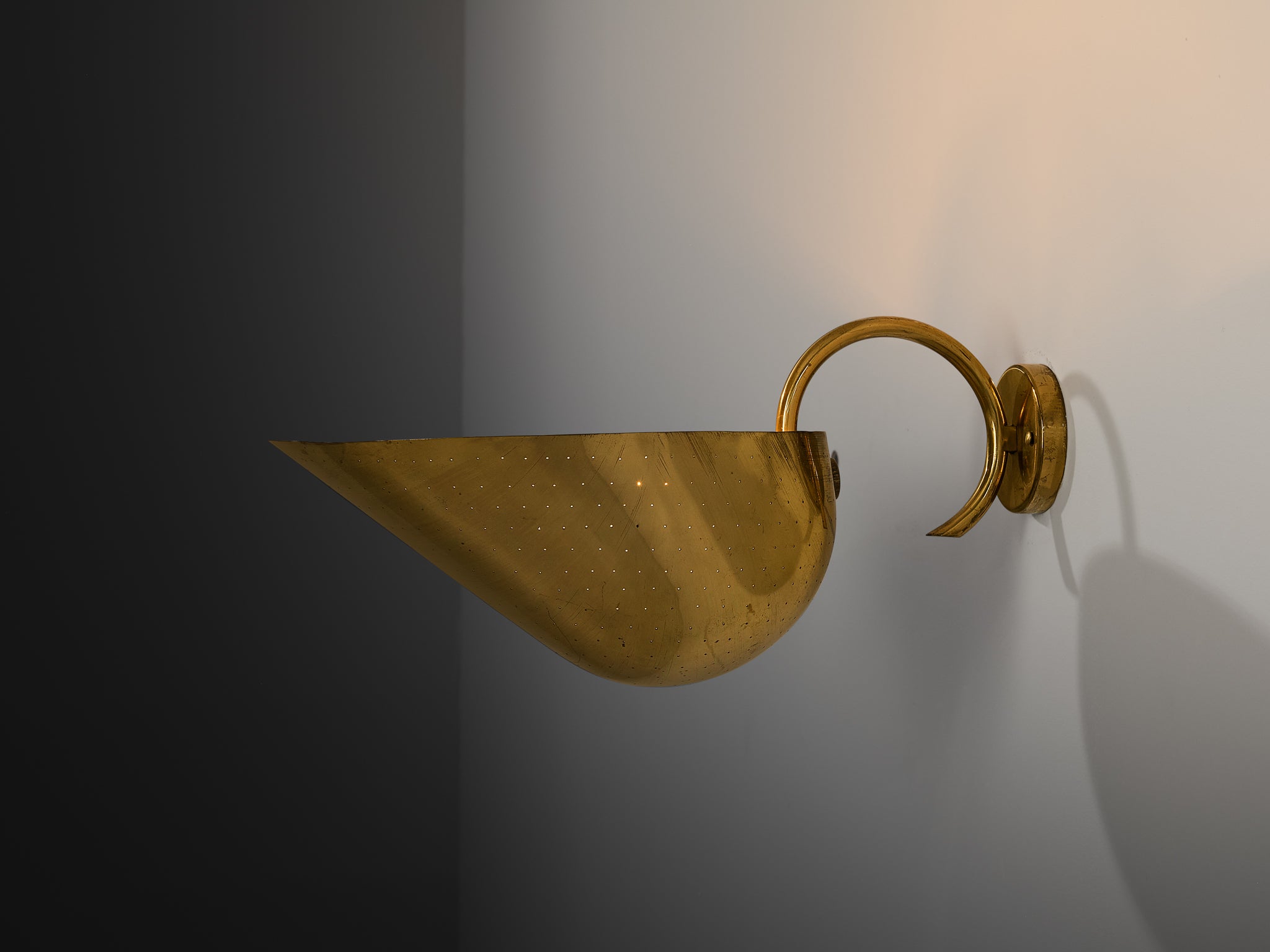
Carl-Axel Acking for Bröderna Malmströms Metallvarufabrik, wall light variation on model ‘5019’, brass, perforated brass, Sweden, 1939
In 1939, the young architect and designer Carl-Axel Acking (1910–2001) was entrusted with one of the most prestigious commissions of pre-war Swedish design: contributing to the Swedish Pavilion at the New York World’s Fair. The pavilion, inaugurated on April 30, 1939, was Sweden’s official showcase for its national identity. Designed by the architect Sven Markelius (1889-1972) with Folke Bernadotte as Commissioner General, the event involved some of the country’s most forward-thinking architects, designers, and manufacturers. Acking designed both furnishings and lighting fixtures for some of the pavilion’s representative spaces, including Bernadotte’s own office. It was here that the chandelier ‘958’, manufactured by Bröderna Malmströms Metallvarufabrik in Malmö, made its debut.
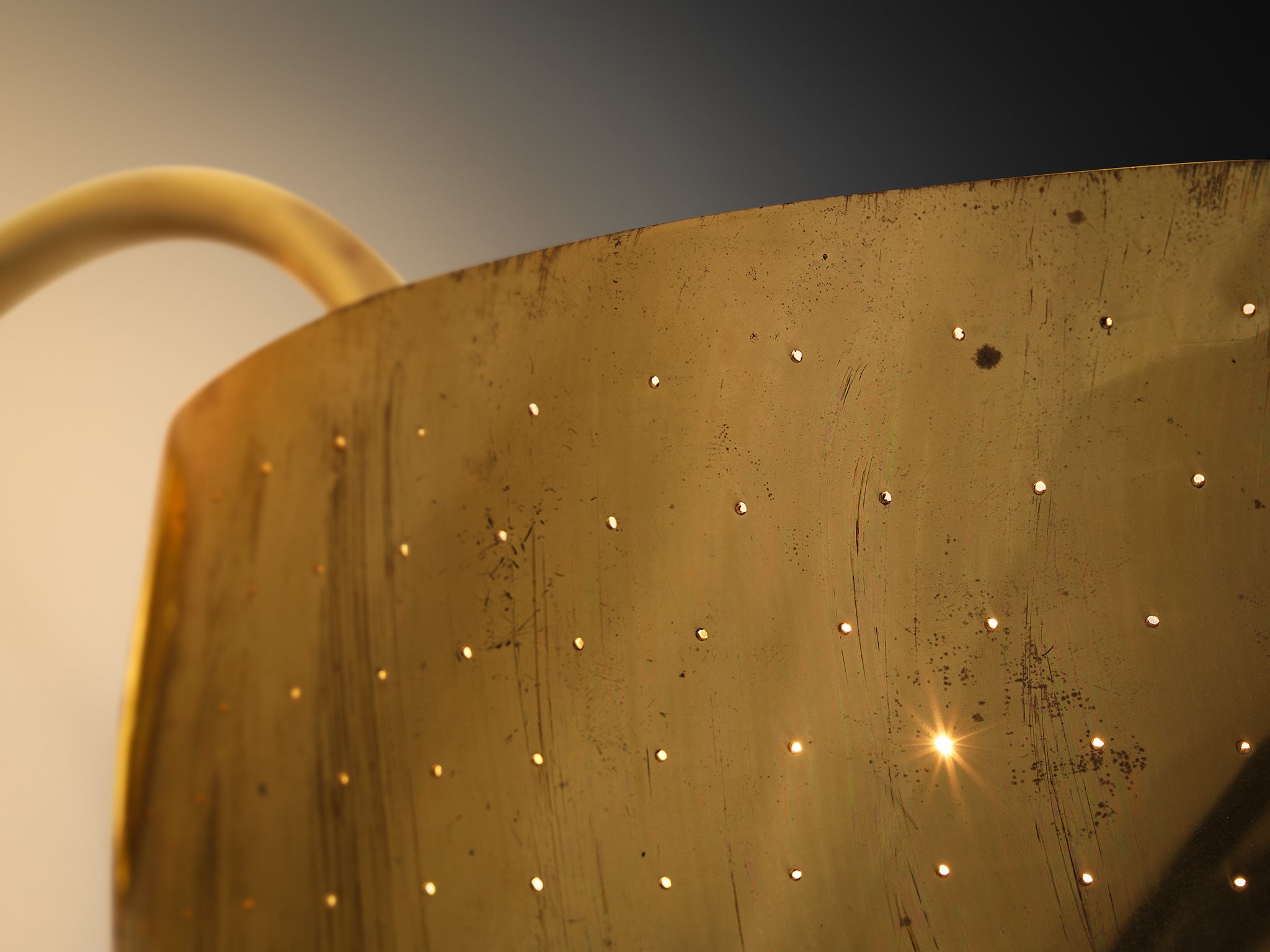
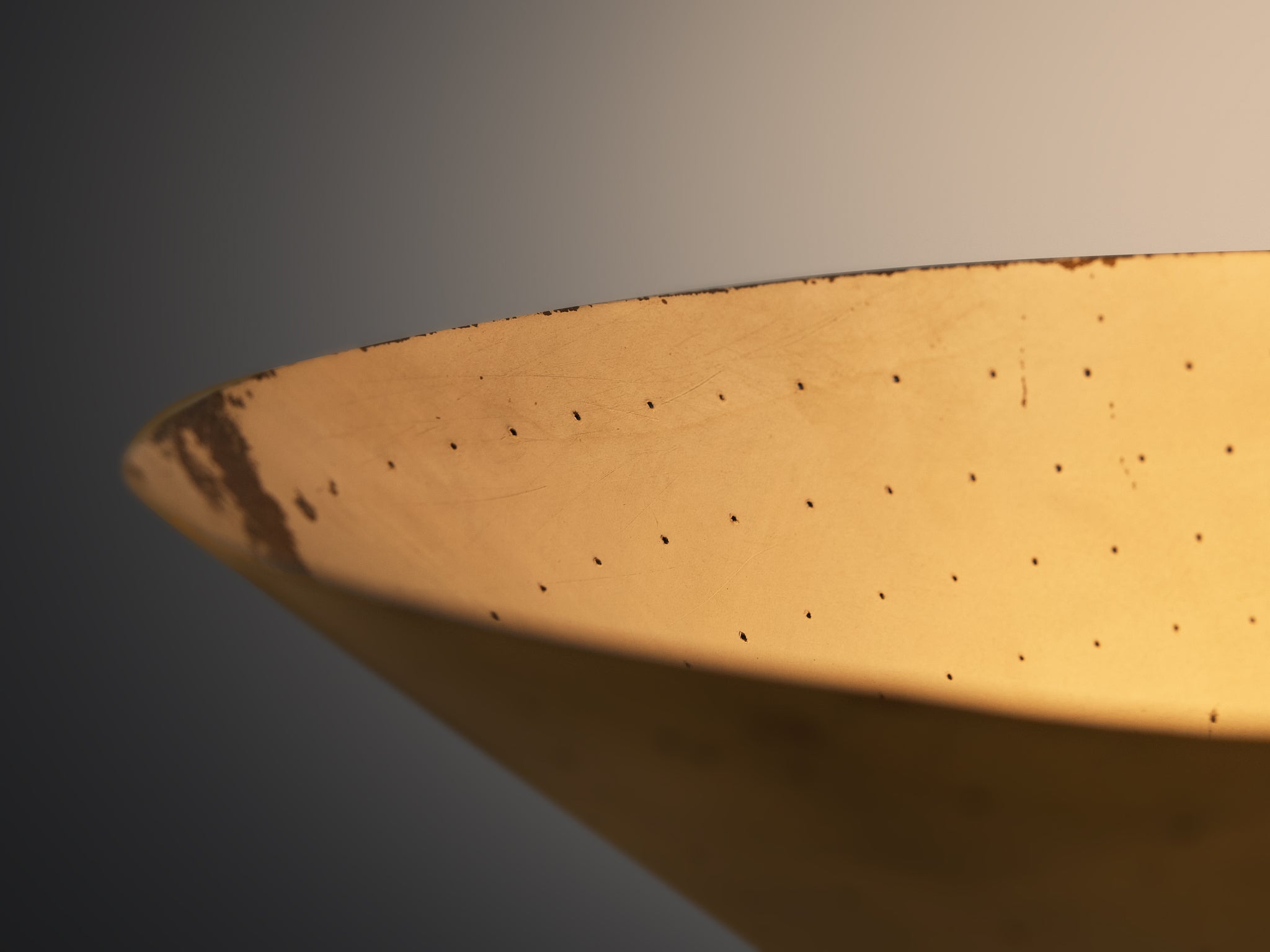
From that moment on, other designs followed, including this sconce, a variation of model 5019, a model that appears in the Bröderna catalogue from 1940. Variations such as this are significantly rarer than the standard 5019 model. The design features a rounded shade with a gracefully curved silhouette, attached to an inward-curving arm (in contrast to the undulating arm). The lamp casts light upward, creating a soft ambient glow, while fine streaks of light escape through the perforations of the shade.
Biography
Based in Malmö, Bröderna earned its place among other major players in the Swedish lighting industry, including Nordiska Kompaniet in Nyköping, Ateljé Lyktan in Åhus, and Böhlmarks in Stockholm. Together, these companies shaped not just the market but also the cultural identity of lighting design in Sweden during the 20th century. The company was known for its high-quality metal craftsmanship and its collaborations with leading Swedish designers and architects.
Carl-Axel Acking was part of a new generation of Swedish architects who shaped the character of Swedish Modern, a style that blended the simplicity of functionalism with the tactility of fine craftsmanship and softly shaped forms. Educated at the Royal Institute of Technology and what is now Konstfack in Stockholm, he combined technical precision with an acute sensitivity to materials and detail, working across the fields of architecture, custom furniture, interior design, and lighting. For Acking, lighting was never an afterthought but a vital architectural component; a medium through which structure, atmosphere, and function converged.
In 1939, the young architect and designer Carl-Axel Acking (1910–2001) was entrusted with one of the most prestigious commissions of pre-war Swedish design: contributing to the Swedish Pavilion at the New York World’s Fair. The pavilion, inaugurated on April 30, 1939, was Sweden’s official showcase for its national identity. Designed by the architect Sven Markelius (1889-1972) with Folke Bernadotte as Commissioner General, the event involved some of the country’s most forward-thinking architects, designers, and manufacturers. Acking designed both furnishings and lighting fixtures for some of the pavilion’s representative spaces, including Bernadotte’s own office. It was here that the chandelier ‘958’, manufactured by Bröderna Malmströms Metallvarufabrik in Malmö, made its debut.
From that moment on, other designs followed, including this sconce, a variation of model 5019, a model that appears in the Bröderna catalogue from 1940. Variations such as this are significantly rarer than the standard 5019 model. The design features a rounded shade with a gracefully curved silhouette, attached to an inward-curving arm (in contrast to the undulating arm). The lamp casts light upward, creating a soft ambient glow, while fine streaks of light escape through the perforations of the shade.
Biography
Based in Malmö, Bröderna earned its place among other major players in the Swedish lighting industry, including Nordiska Kompaniet in Nyköping, Ateljé Lyktan in Åhus, and Böhlmarks in Stockholm. Together, these companies shaped not just the market but also the cultural identity of lighting design in Sweden during the 20th century. The company was known for its high-quality metal craftsmanship and its collaborations with leading Swedish designers and architects.
Carl-Axel Acking was part of a new generation of Swedish architects who shaped the character of Swedish Modern, a style that blended the simplicity of functionalism with the tactility of fine craftsmanship and softly shaped forms. Educated at the Royal Institute of Technology and what is now Konstfack in Stockholm, he combined technical precision with an acute sensitivity to materials and detail, working across the fields of architecture, custom furniture, interior design, and lighting. For Acking, lighting was never an afterthought but a vital architectural component; a medium through which structure, atmosphere, and function converged.

Choose options
Carl-Axel Acking Wall Light in Perforated Brass
Sale price$20,700.00
Regular price
Product Details
VAT within the EU: When buying or delivering an item within the EU, VAT usually applies and will be added.