

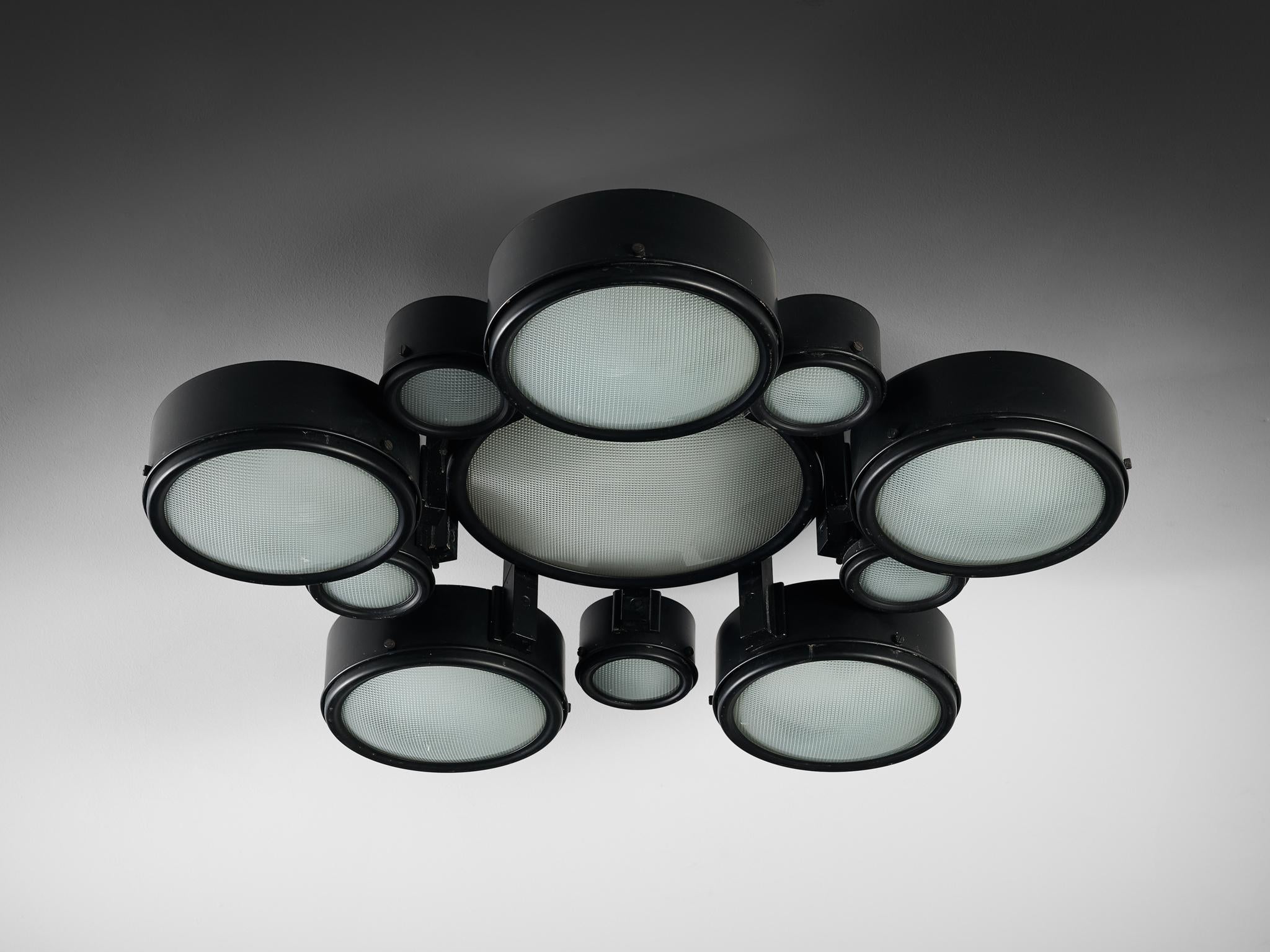
Studio B.B.P.R. for Arteluce Ceiling Light
Receive a copy in your email or download directly:
I accept emails from Morentz.
 Open here
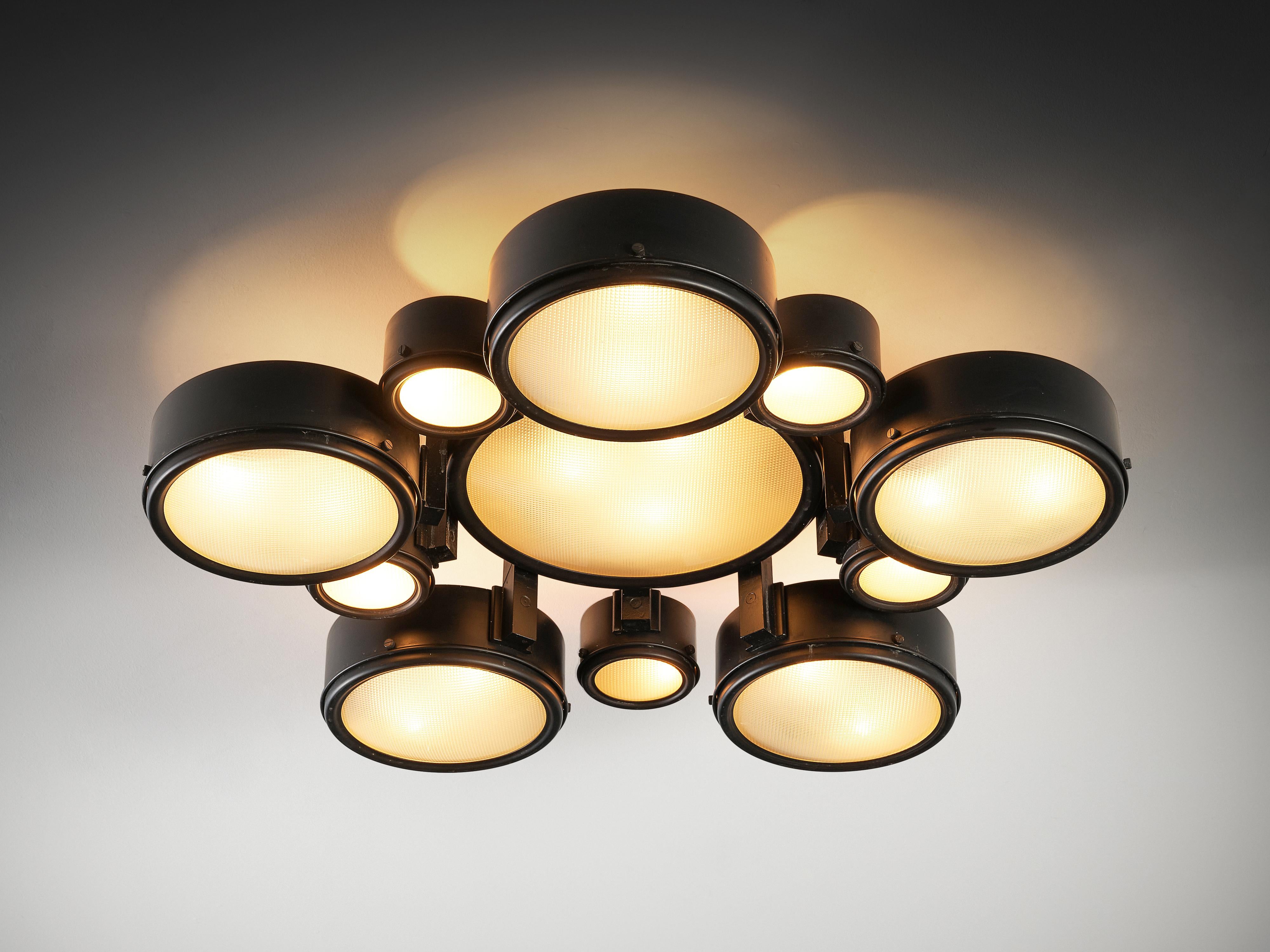
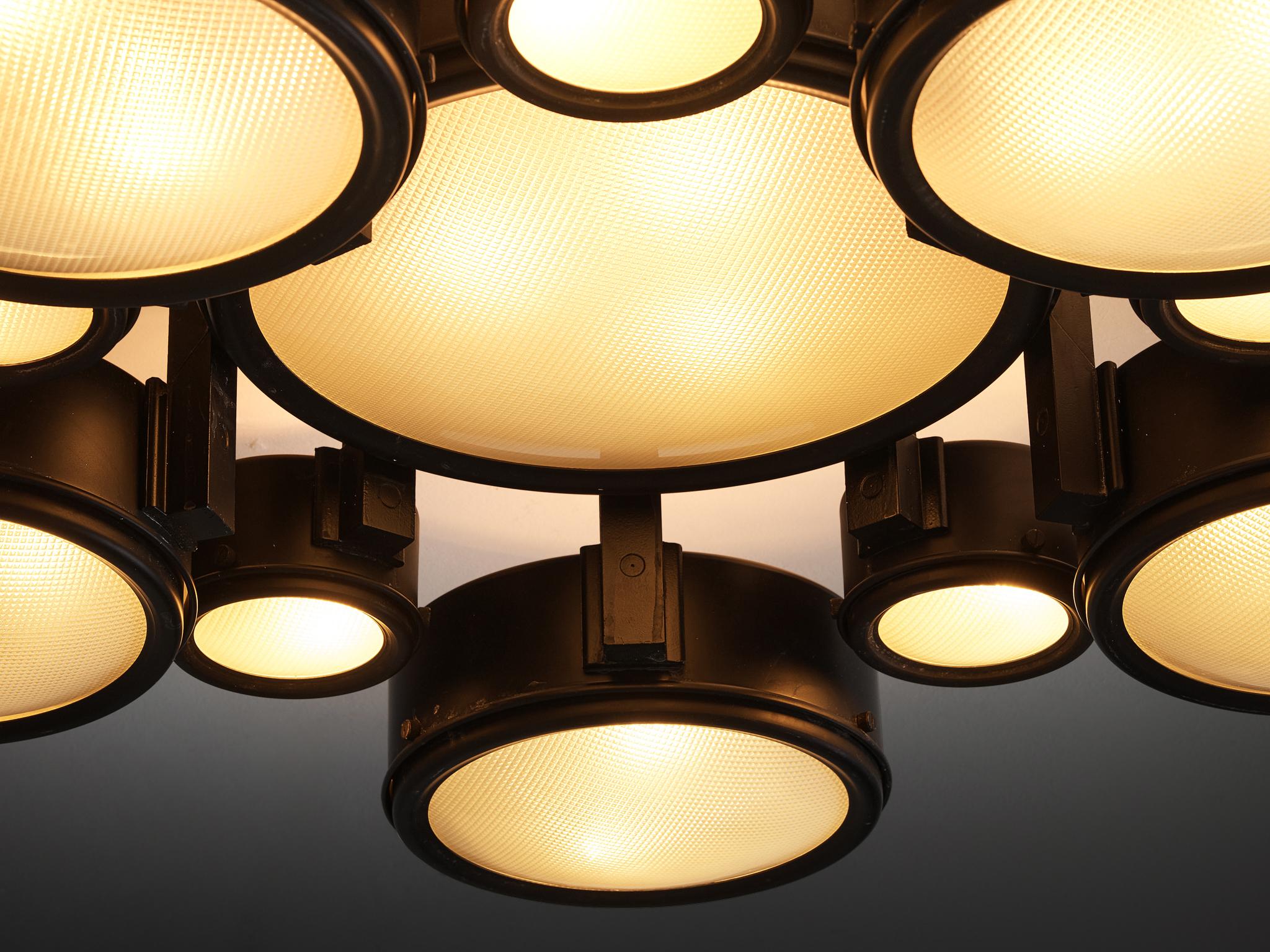
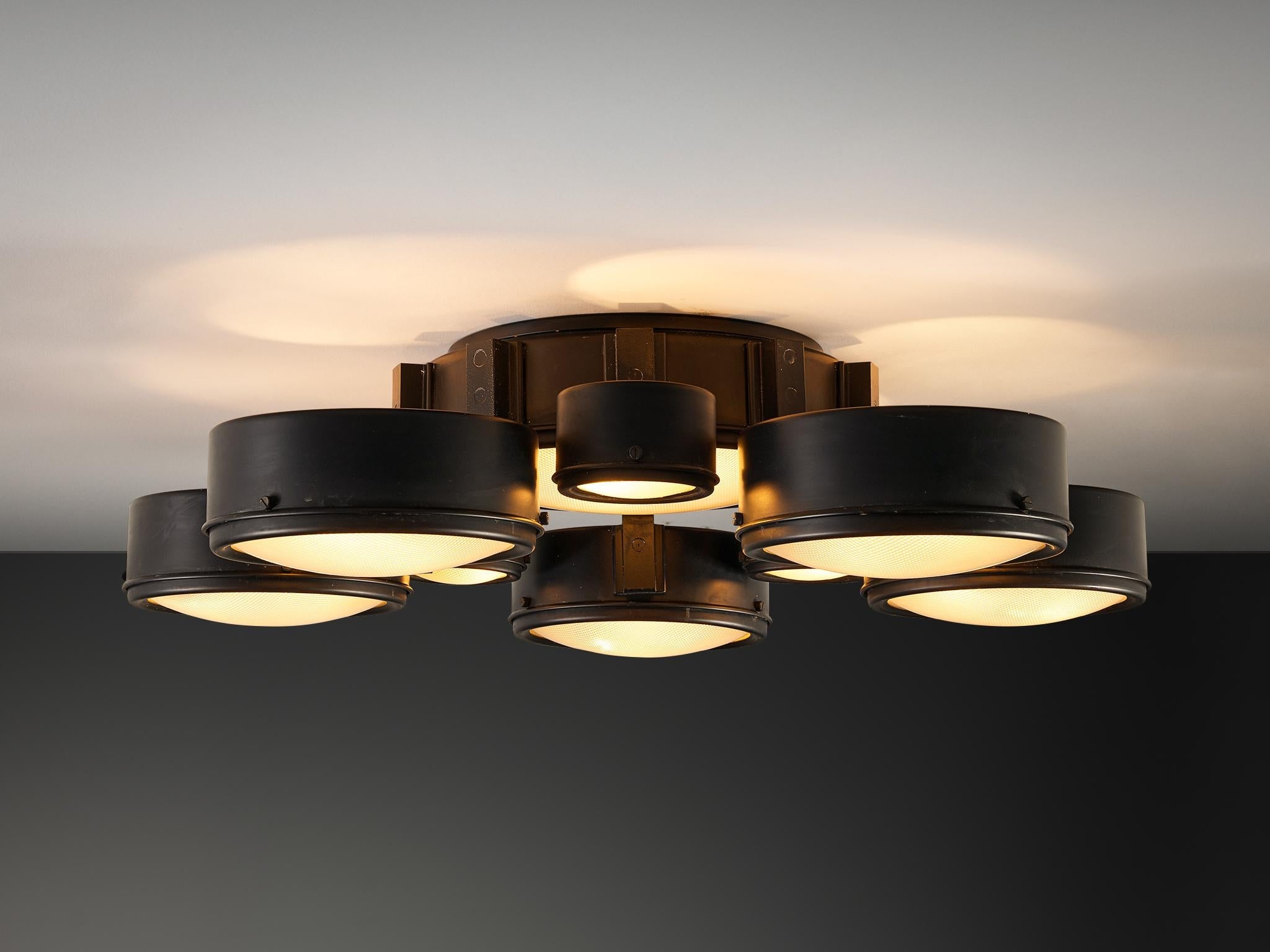
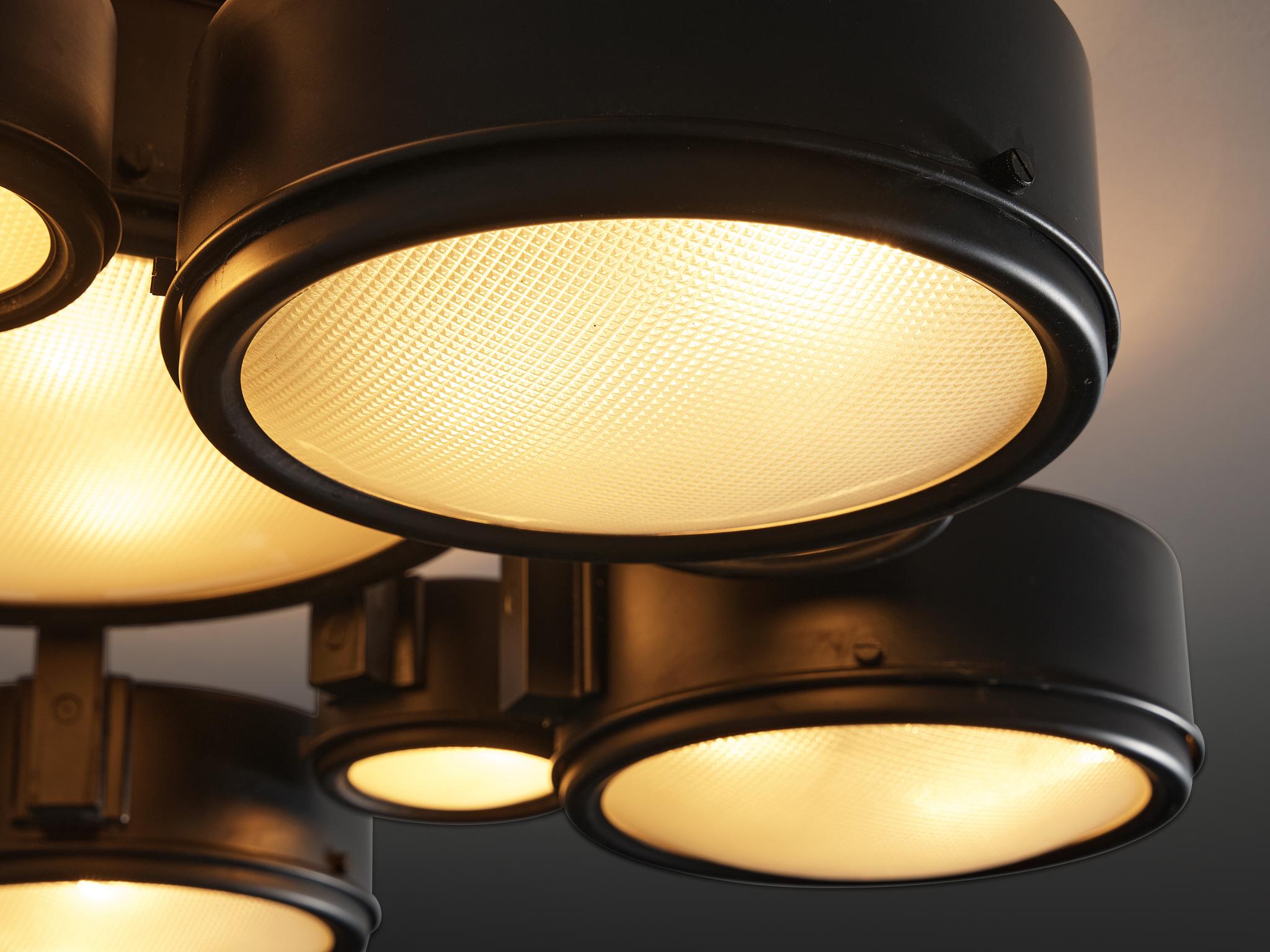
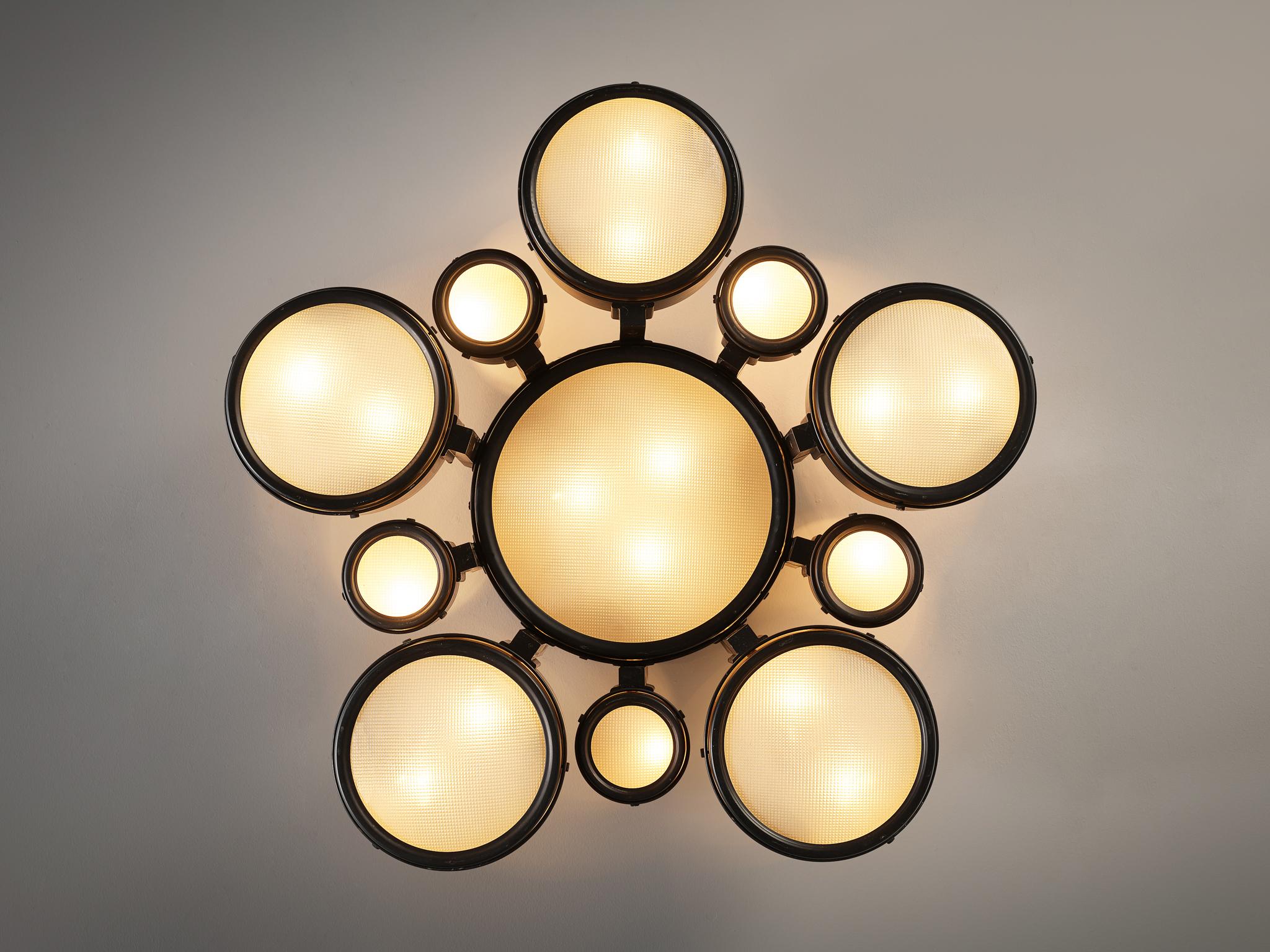
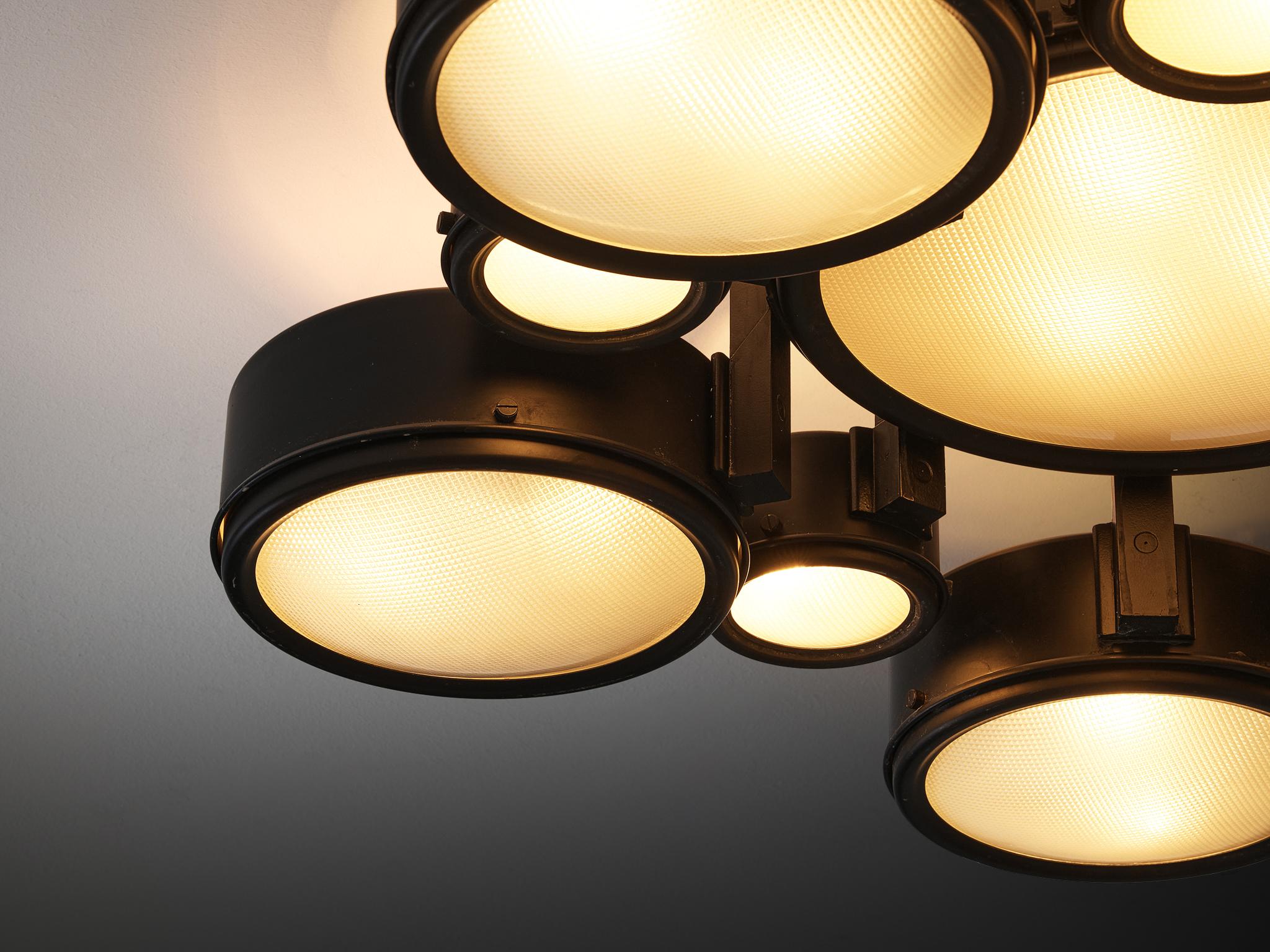
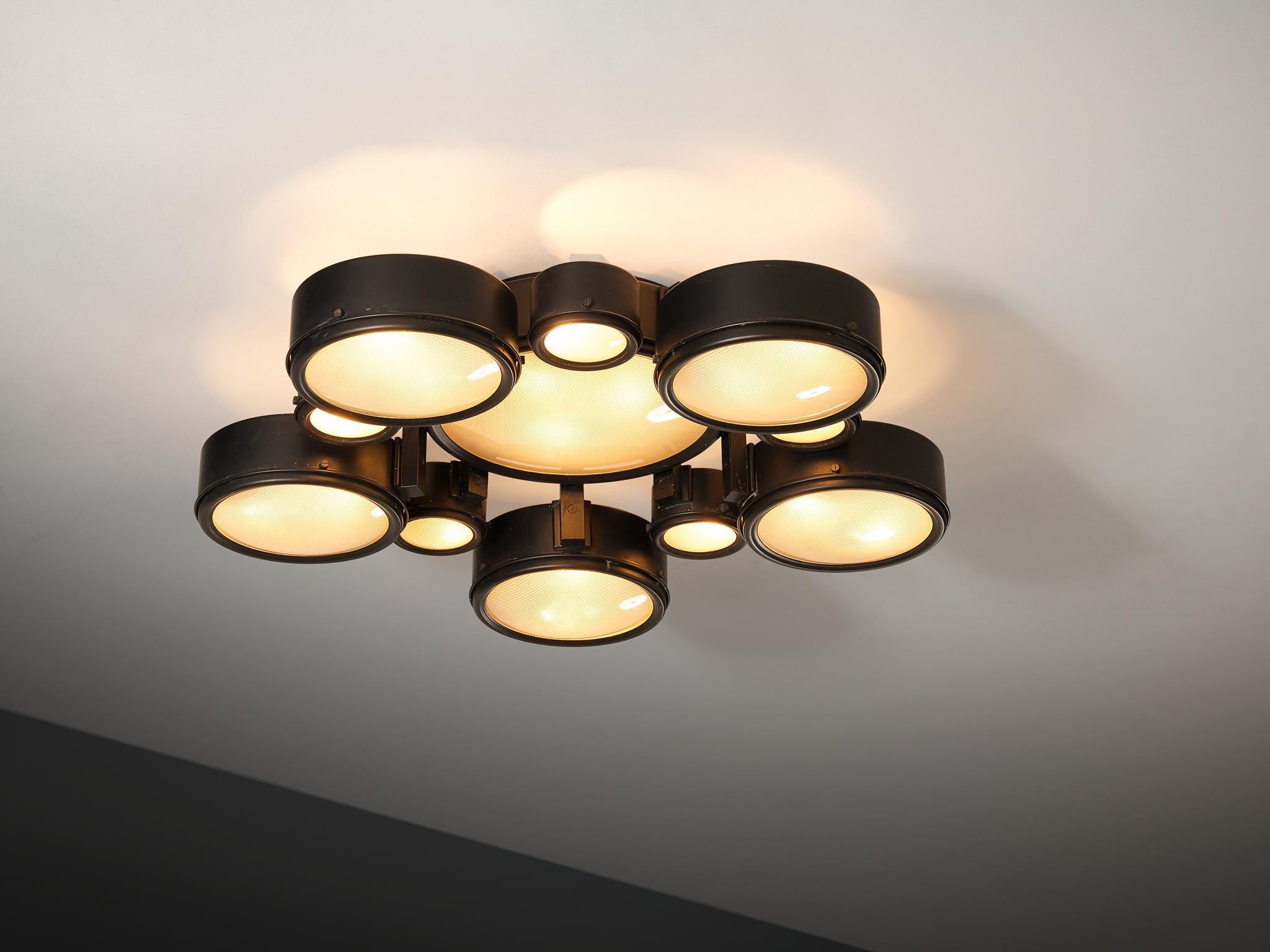
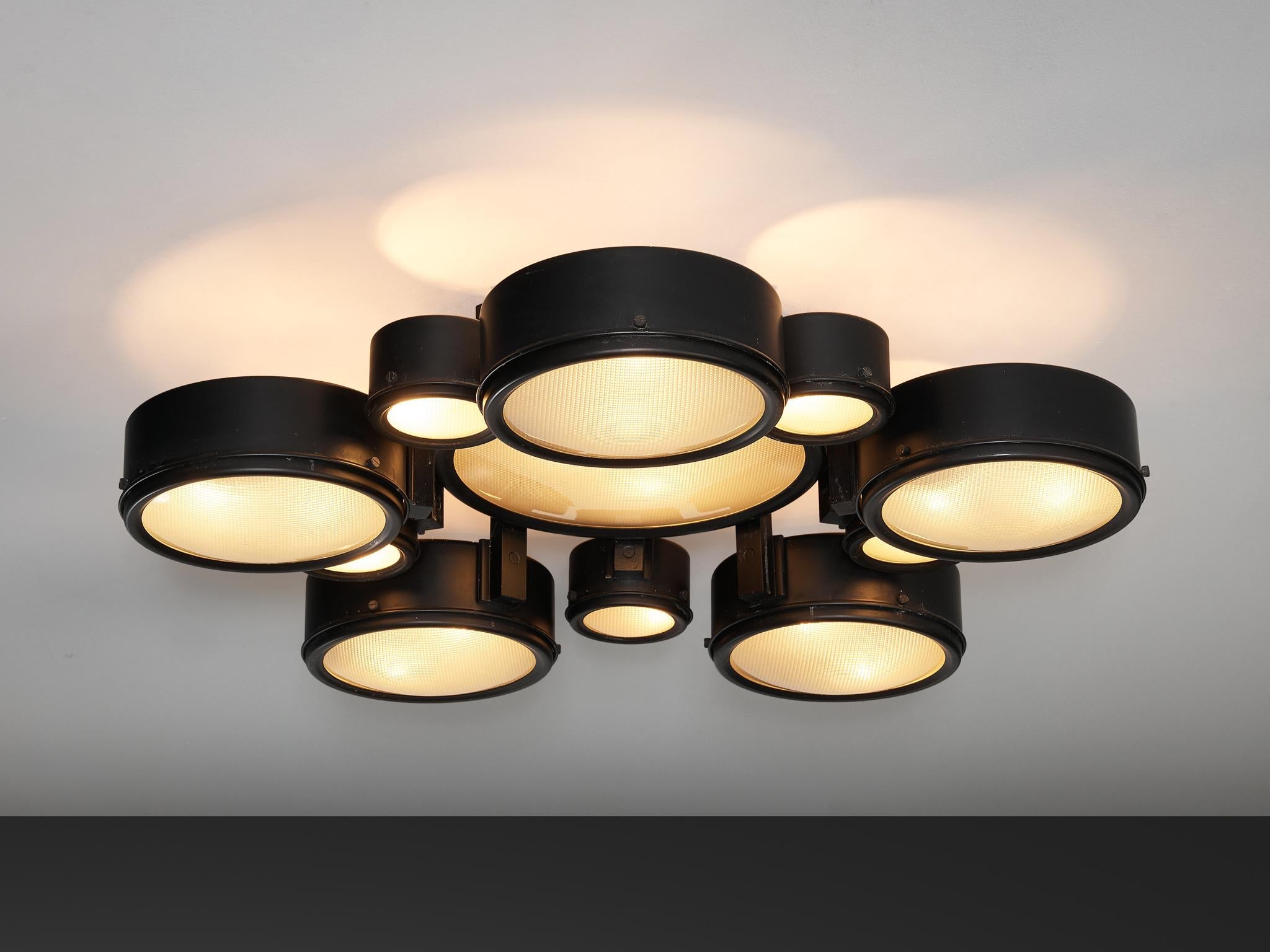
Studio B.B.P.R. for Arteluce, ceiling light, model ‘2045/p’, lacquered aluminum, acid-etched prismatic glass, Italy, 1962
This playful ceiling light is designed by Studio B.B.P.R. for the Italian lighting company Arteluce. The lighting system was conceived to allow for extensive customization, with components offered in various sizes and adaptable configurations. Writing in Domus in June 1963, the design was described as relying on a specialized joint that enables endless compositional possibilities, both symmetrical and asymmetrical.
The example we present features two cylindrical aluminum shades, finished in black, each of a different scale. The frame of each shade is constructed with an eye for detail; the rounded raised edge emphasizes the softness of its design, even though the use of the hard metal material. Each shade contains a prismatic glass diffuser with a visible, yet subtle square grid. As a result, the lamp offers a soft and warm light partition that will illuminate the space beautifully. The design is regarded as a rare example within the group’s oeuvre.
Studio B.B.P.R. was an Italian architectural partnership founded in Milan in 1932 by Gianluigi Banfi (1910-1945), Lodovico Barbiano di Belgiojoso (1909-2004), Enrico Peressutti (1908-1976) and Ernesto Nathan Rogers (1909-1969) who had studied at the Politecnico di Milano. B.B.P.R. was thus an acronym formed from the first letters of their family names. The architects found each other in their opposition to fascism in Italy in the 1930s and 1940s during Mussolini's autocratic regime. The architects therefore believed in developing a style that would have no references to contemporary politics. During the Second World War, they all joined the resistance. However, Rogers, a Jew, fled to Switzerland and both Belgiojoso and Banfi were deported to the Mauthausen concentration camp in Austria, where Banfi died in 1945. Despite the immense loss of Banfi, their architectural practice continued in the same name as before after the war. Especially during the 1950s, they created many of their great projects. With their designs, they strongly reacted against the International Style with its rectilinear forms and taut plane surfaces that have been completely stripped of applied ornamentation. Instead, the group enriched their buildings with medieval references. For B.B.P.R., their philosophy on art and architecture is somewhat between tradition and modernism; their use of post-beam structures and modular elements parallels with the constructive thinking of modern architects. However, as modernism rejects the existence of historical forms, B.B.P.R. reinterprets history's heritage and continues with respect for the work of their predecessors. Ernesto Nathan Rogers referred to it as “preesistenze ambientali” (the pre-existing environment) and adopt a “caso per caso” (case by case) interpretation to work with, instead of against, the surroundings. One of their well-known designs is the creation of the Torre Velasca in Milan, with strong references to medieval architecture. The architects were also frequently employed to create interior spaces altogether with furniture designs.
VAT within the EU: When buying or delivering an item within the EU, VAT usually applies and will be added.

Choose options
Receive a copy in your email or download directly:
I accept emails from Morentz.
VAT within the EU: When buying or delivering an item within the EU, VAT usually applies and will be added.
Product Details