
Rare Nikolay Diulgheroff Italian Mid-Century Modern Sideboard in Walnut
 Open here
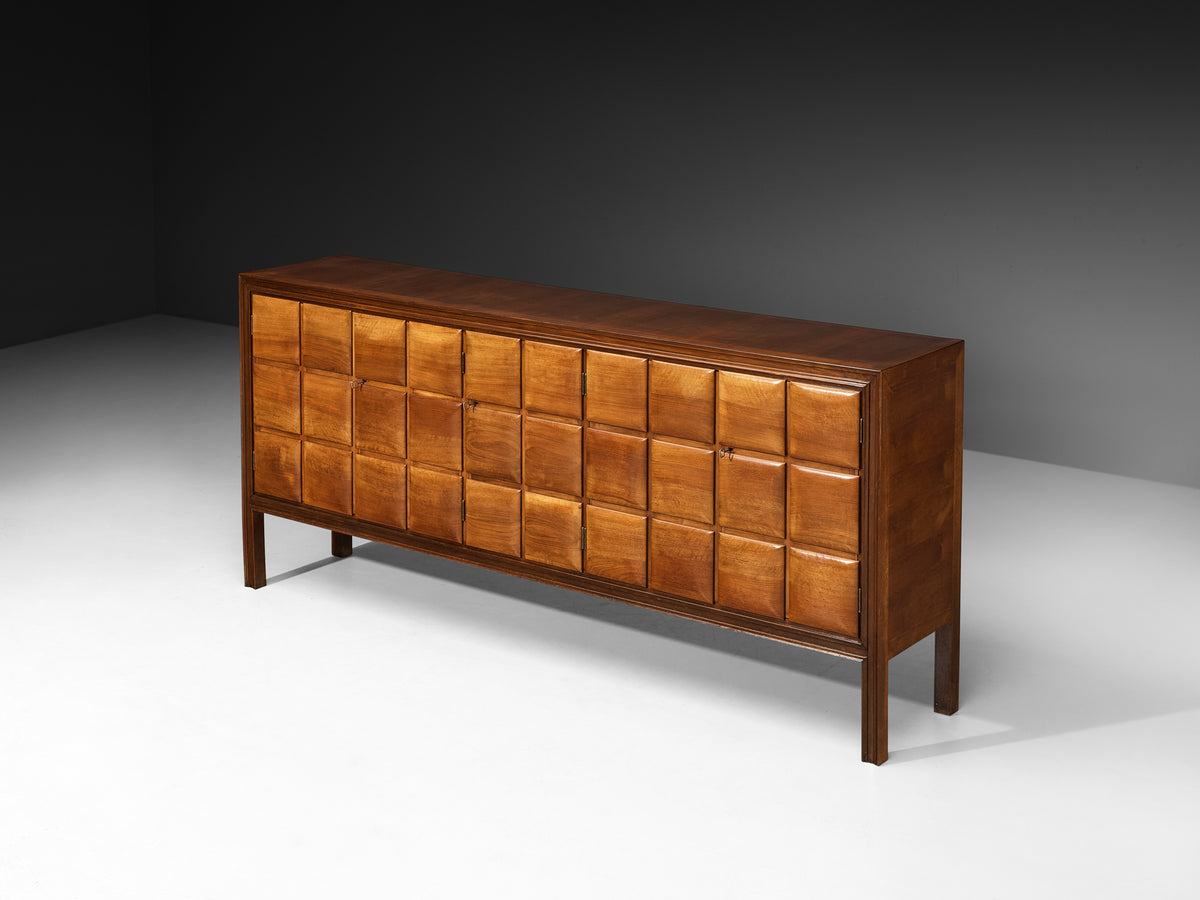
Nikolay Diulgheroff, sideboard, walnut, chestnut, Italy, design ca. 1945
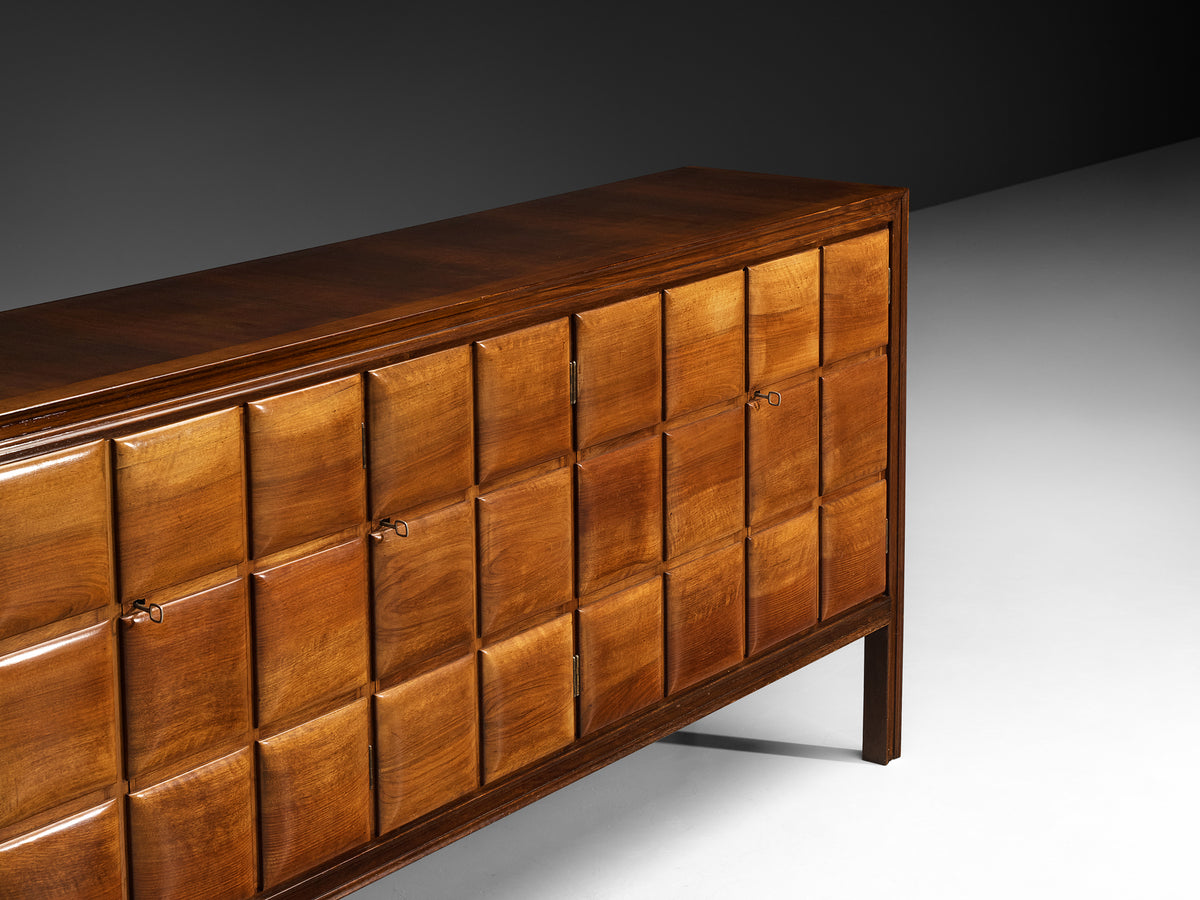
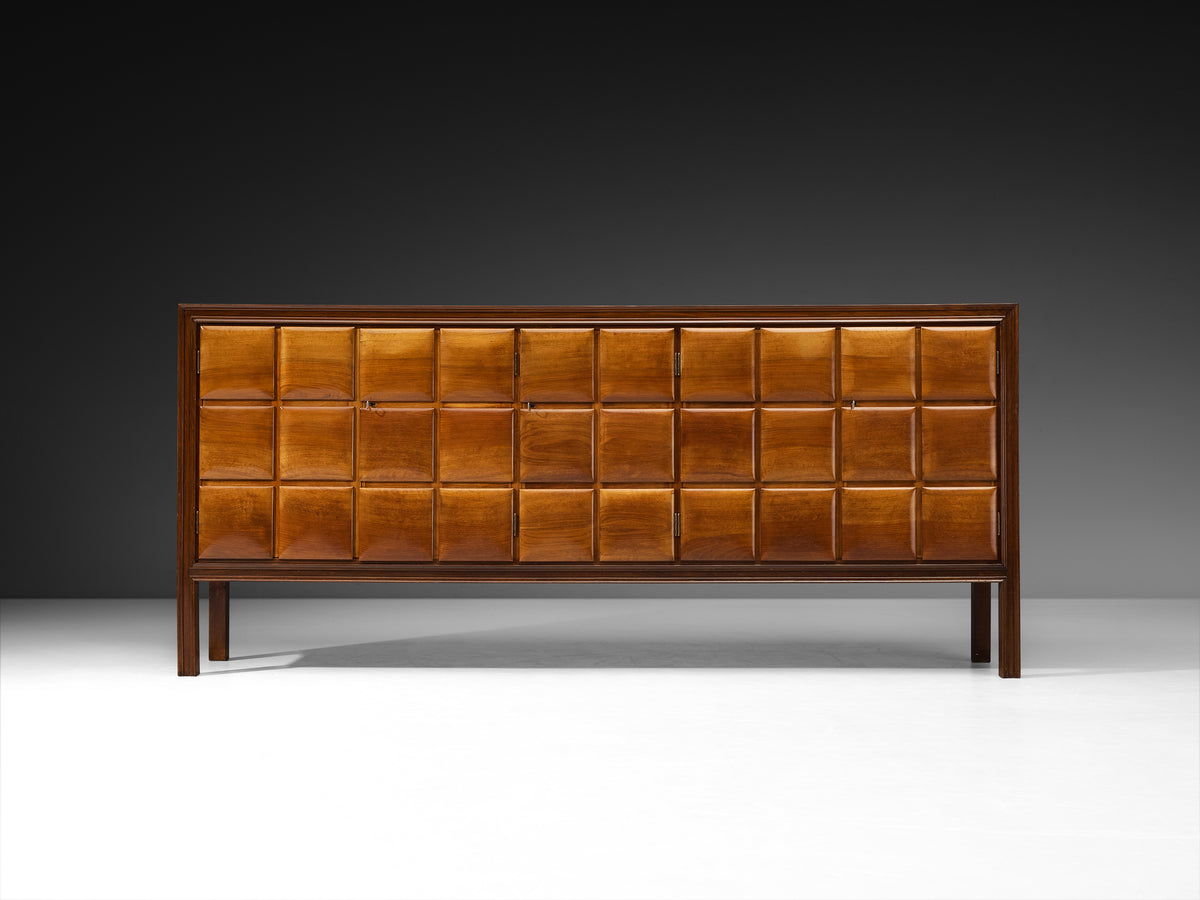
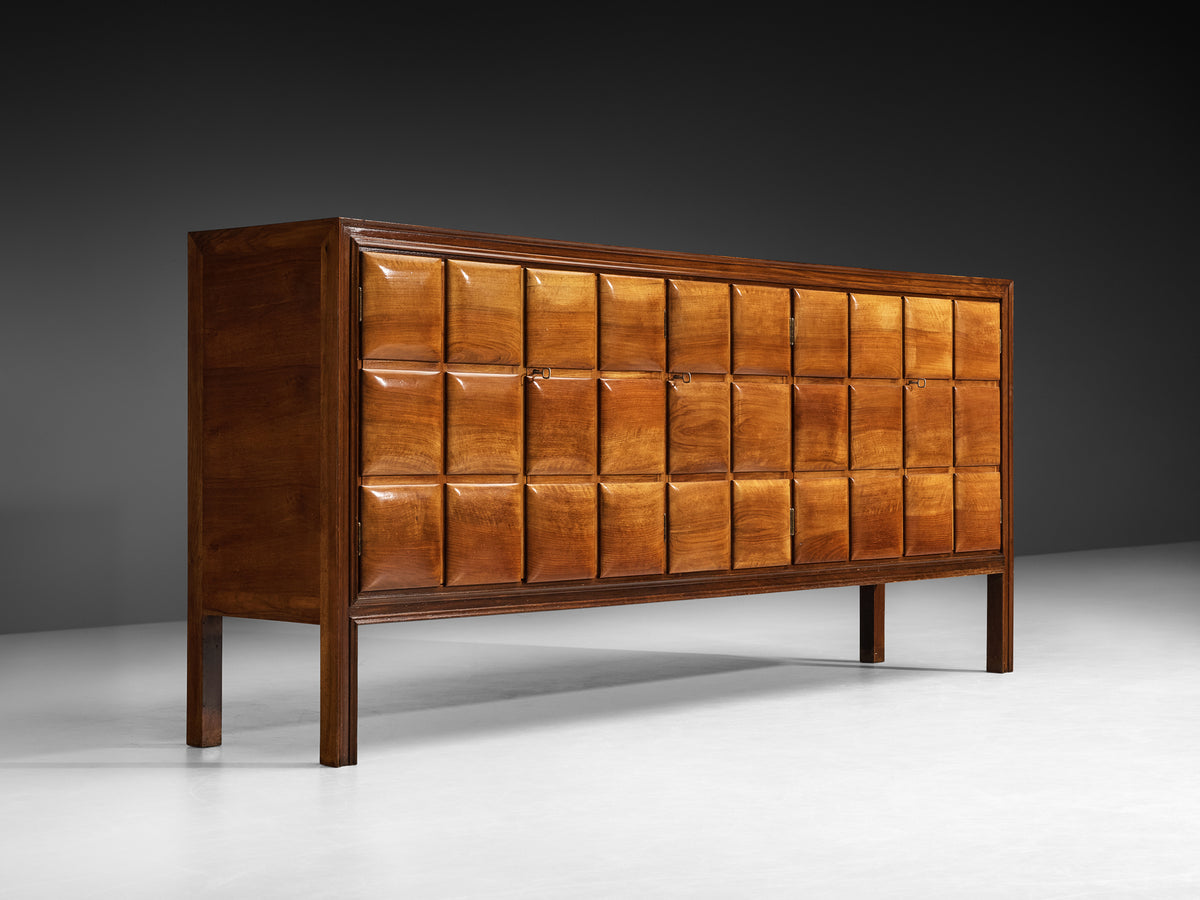
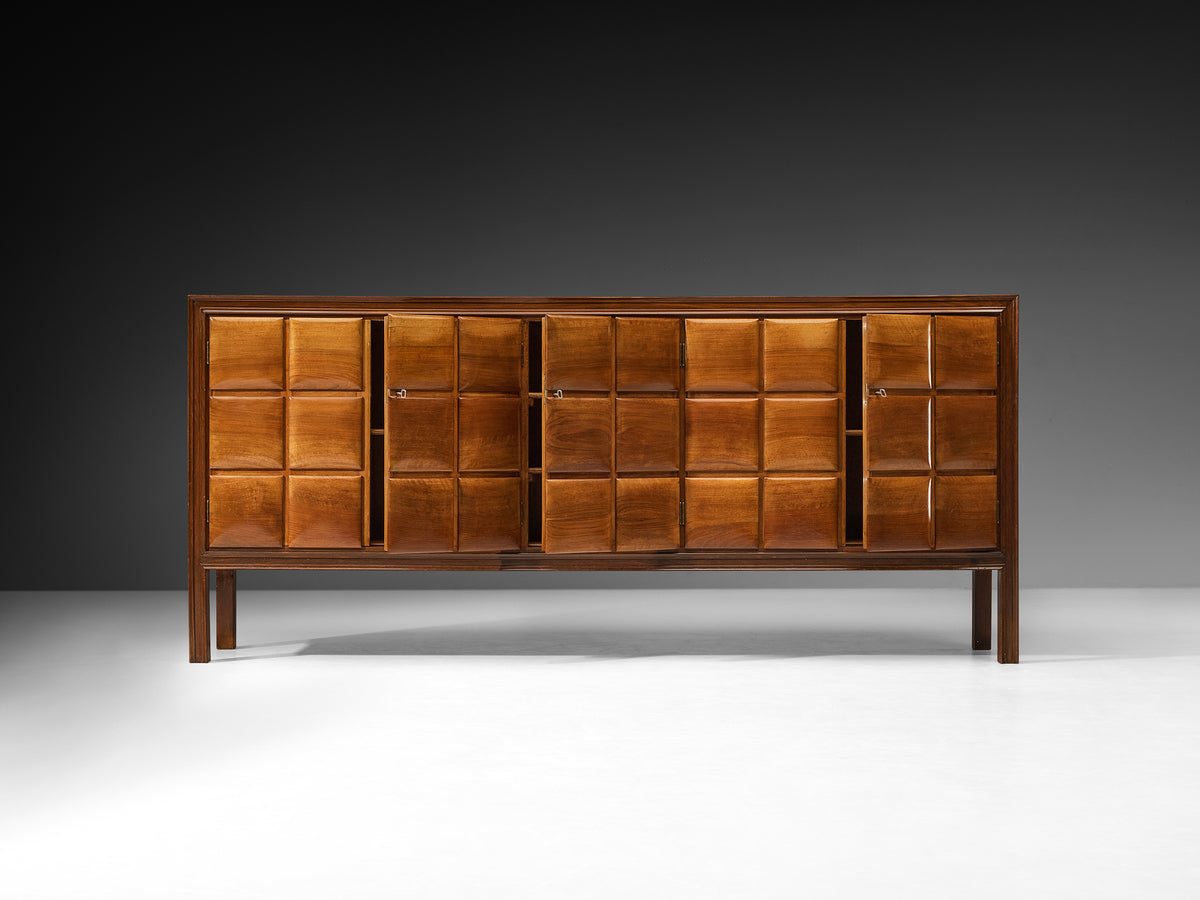
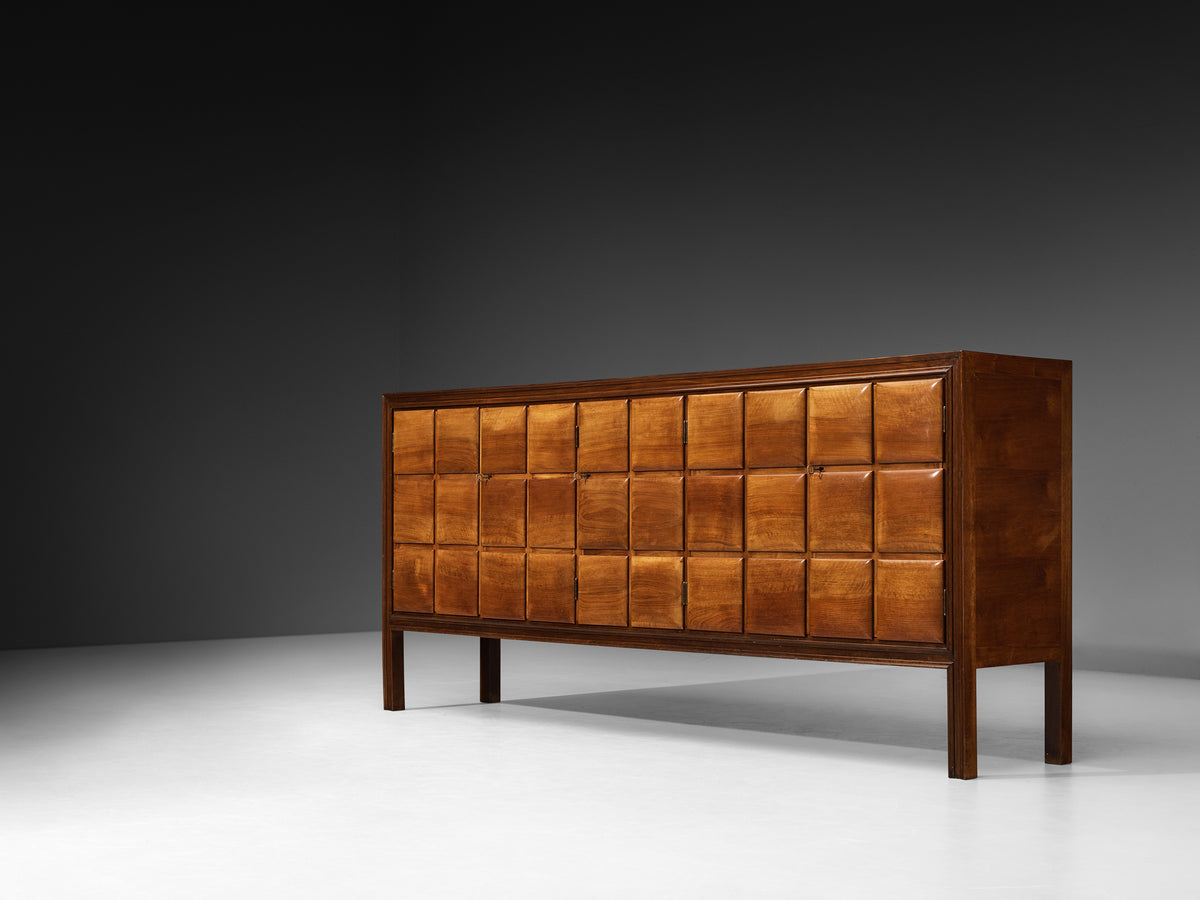
At first glance, this sideboard seems entirely at home in the elegant world of Italian interiors of the 1940s. The warm glow of the wood, the restrained proportions and the rhythmic grid of raised panels characterize the piece. Yet behind this refined appearance lies a designer with a remarkably avant-garde past: Nicolaj Diulgheroff (1901–1982), one of the distinctive figures of Italian Second Futurism.
Diulgheroff was born in Kyustendil, Bulgaria, in 1901. His path to Italy led him through the artistic avant-garde of the interwar years. After a brief period of study at the Bauhaus in 1923, he settled in Turin in 1926, having first encountered the city during his honeymoon. Turin proved to be a fertile environment for the young designer. Open to new ideas in art, architecture and design, the city brought him into close contact with the Futurist movement. Alongside his work as an architect and interior designer, Diulgheroff developed a strong graphic practice, producing posters and advertising designs, most notably for the Cora company, designing the offices located inside Palazzo Gualino by Giuseppe Pagano Pogatschnig & Gino Levi Montalcini.
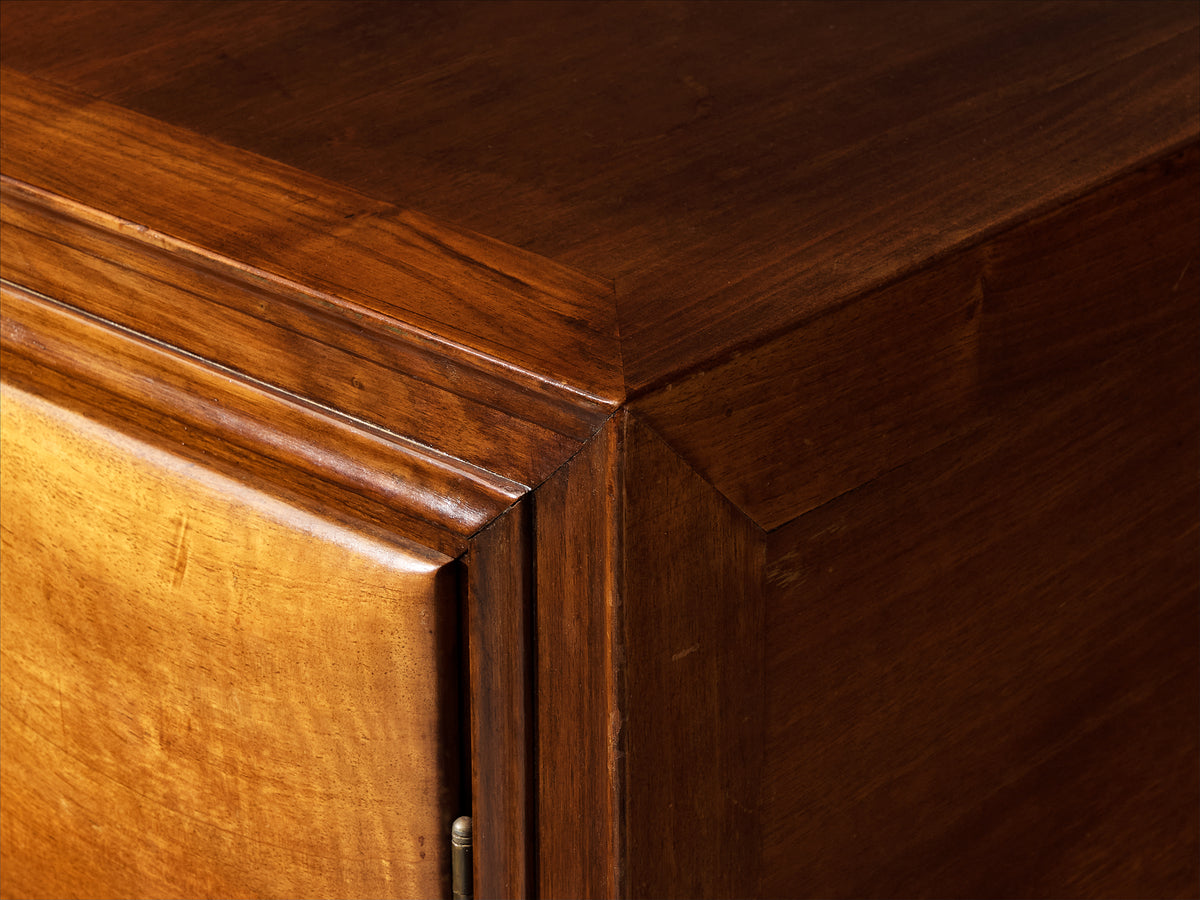
By the time this cabinet was designed, around 1945, the most radical phase of Futurism lay behind him. The language of the piece is quieter, richer and more closely attuned to the sophisticated domestic interiors of post-war Italy. Its rectangular form is softened by the warmth and depth of the timber, while the doors are animated by a carefully ordered pattern of gently projecting square panels. Its combination of traditional luxury, fine craftsmanship and abstract geometry recalls the work being produced in Milan by designers such as Paolo Buffa and Osvaldo Borsani.
A comparable example is known to have formed part of Diulgheroff’s own collection, suggesting that it was cherished within the family.
At first glance, this sideboard seems entirely at home in the elegant world of Italian interiors of the 1940s. The warm glow of the wood, the restrained proportions and the rhythmic grid of raised panels characterize the piece. Yet behind this refined appearance lies a designer with a remarkably avant-garde past: Nicolaj Diulgheroff (1901–1982), one of the distinctive figures of Italian Second Futurism.
Diulgheroff was born in Kyustendil, Bulgaria, in 1901. His path to Italy led him through the artistic avant-garde of the interwar years. After a brief period of study at the Bauhaus in 1923, he settled in Turin in 1926, having first encountered the city during his honeymoon. Turin proved to be a fertile environment for the young designer. Open to new ideas in art, architecture and design, the city brought him into close contact with the Futurist movement. Alongside his work as an architect and interior designer, Diulgheroff developed a strong graphic practice, producing posters and advertising designs, most notably for the Cora company, designing the offices located inside Palazzo Gualino by Giuseppe Pagano Pogatschnig & Gino Levi Montalcini.
By the time this cabinet was designed, around 1945, the most radical phase of Futurism lay behind him. The language of the piece is quieter, richer and more closely attuned to the sophisticated domestic interiors of post-war Italy. Its rectangular form is softened by the warmth and depth of the timber, while the doors are animated by a carefully ordered pattern of gently projecting square panels. Its combination of traditional luxury, fine craftsmanship and abstract geometry recalls the work being produced in Milan by designers such as Paolo Buffa and Osvaldo Borsani.
A comparable example is known to have formed part of Diulgheroff’s own collection, suggesting that it was cherished within the family.

Choose options
Rare Nikolay Diulgheroff Italian Mid-Century Modern Sideboard in Walnut
Sale price£36,482.40
Regular price
Product Details
VAT within the EU: When buying or delivering an item within the EU, VAT usually applies and will be added.