
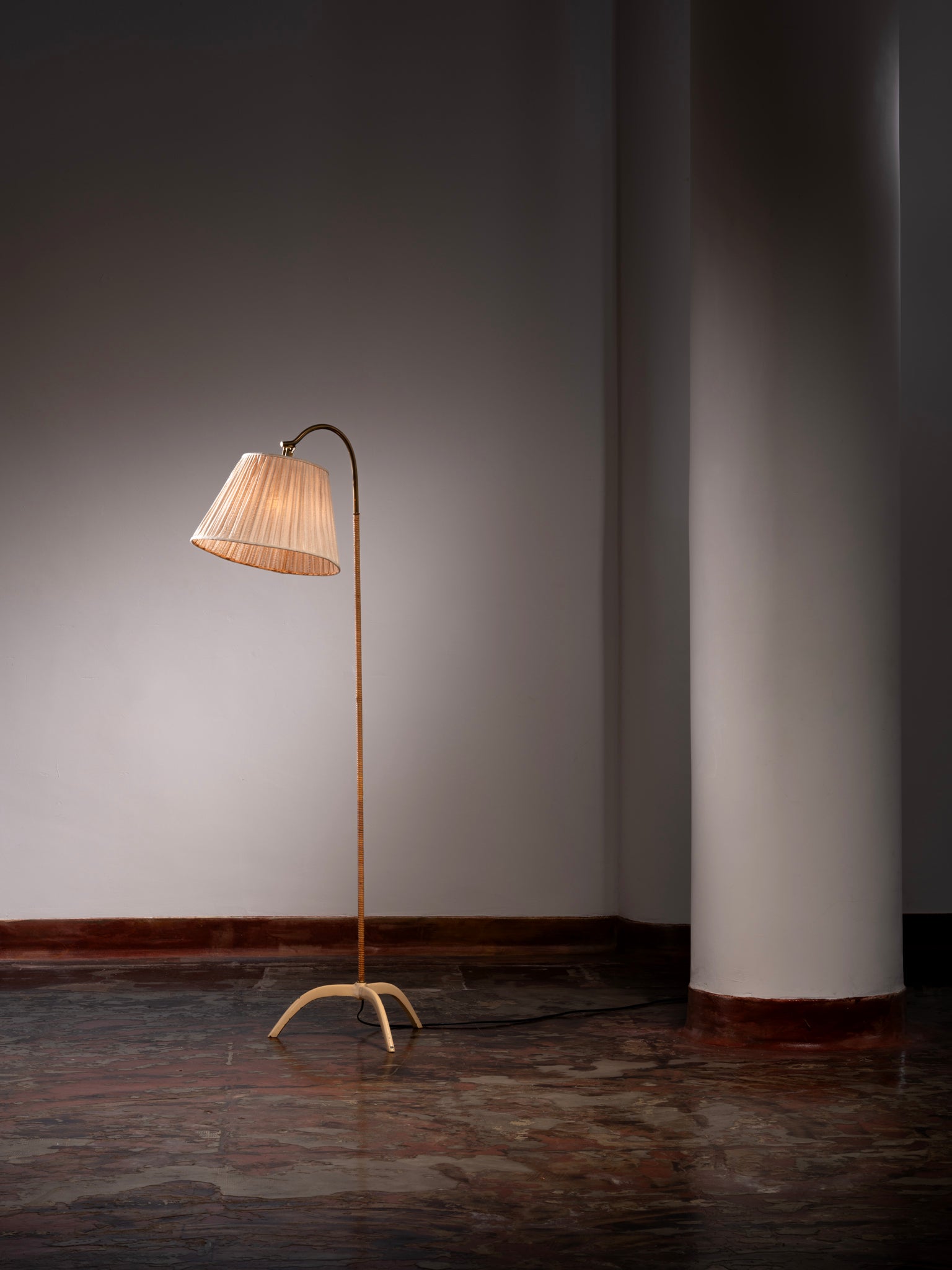
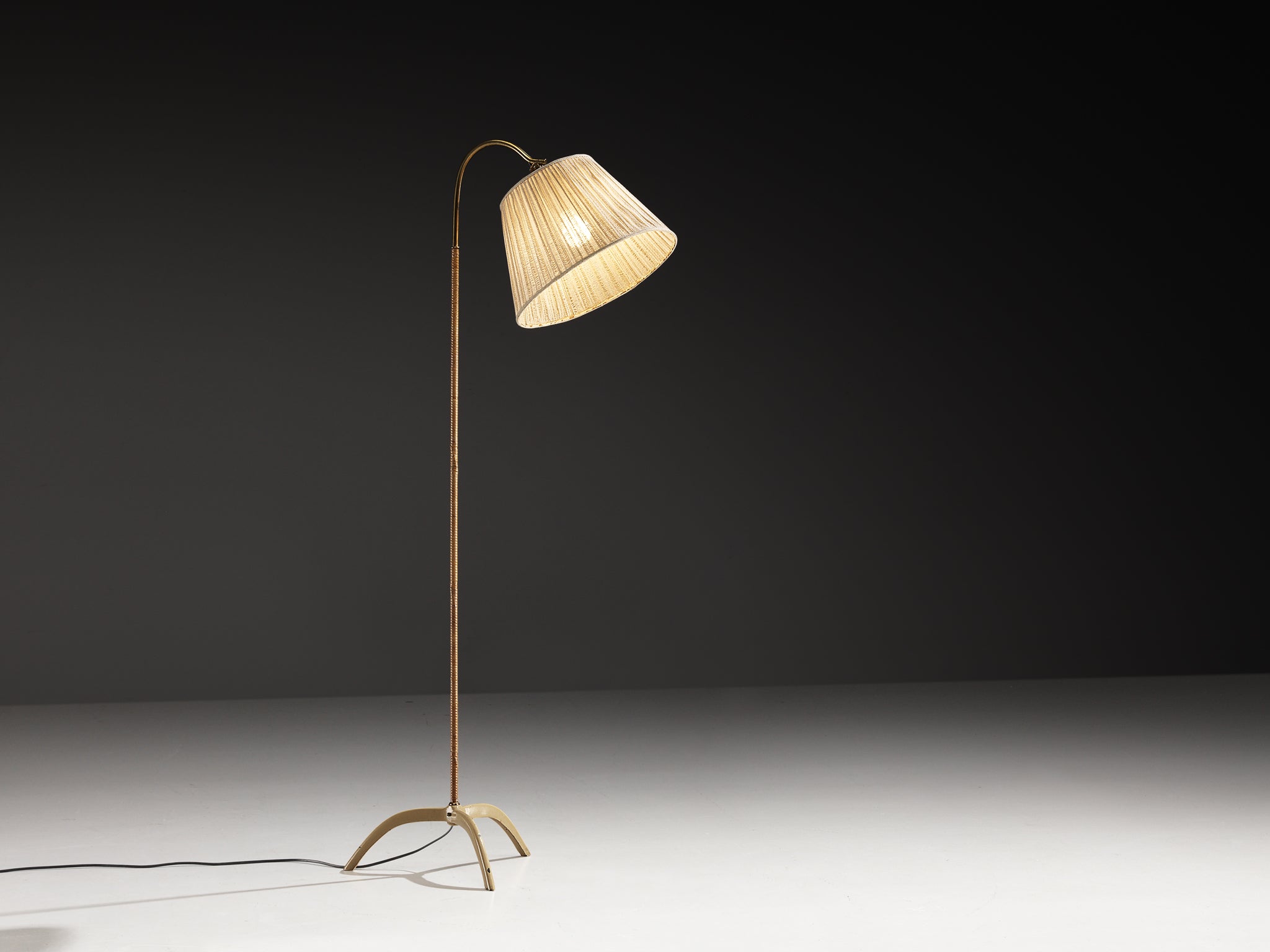
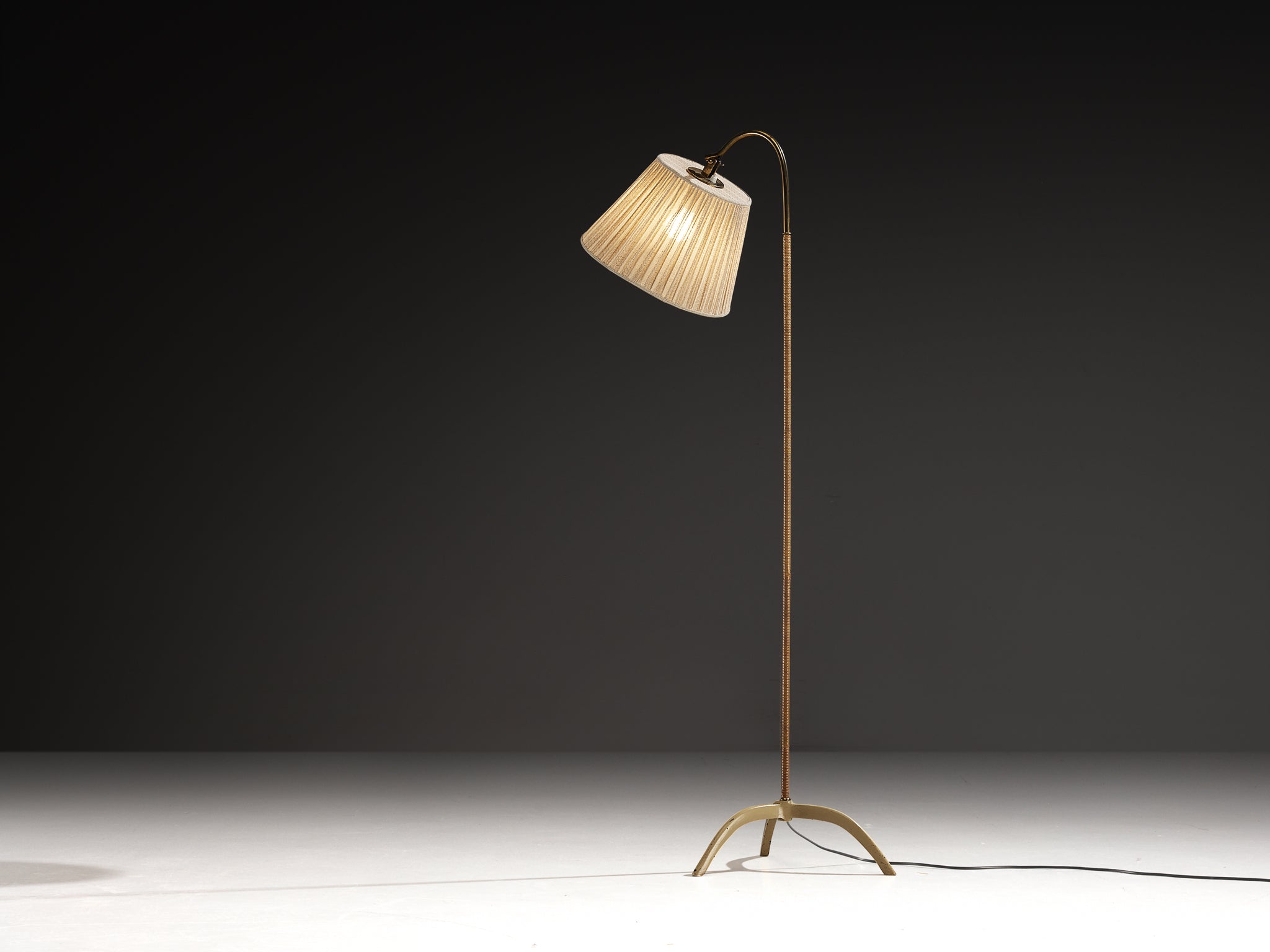
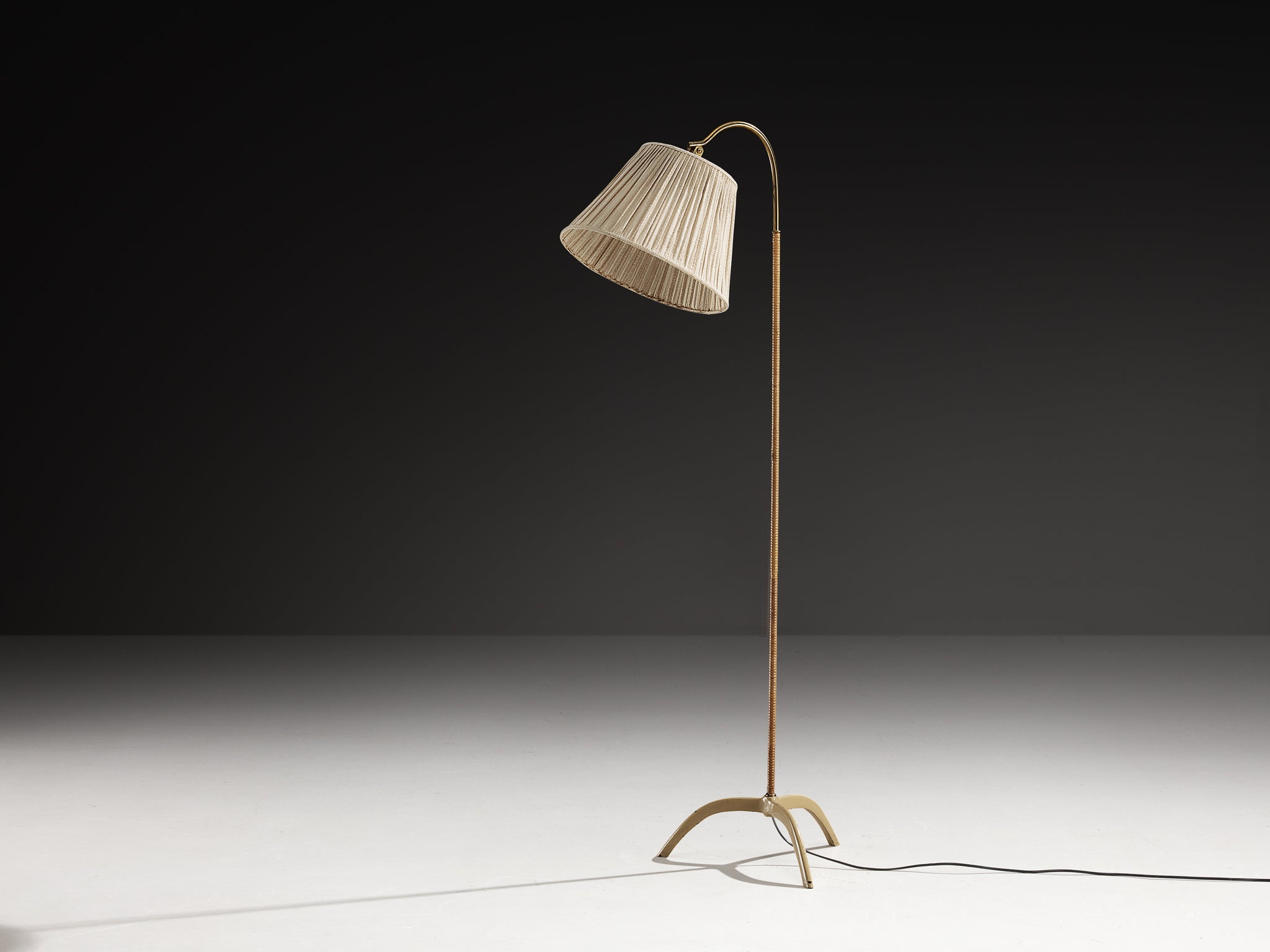
Paavo Tynell for Taito Oy ‘9609’ Floor Lamp in Brass and Cane
Tearsheet
×
Receive a copy in your email or download directly:
I accept emails from Morentz.
 Open here
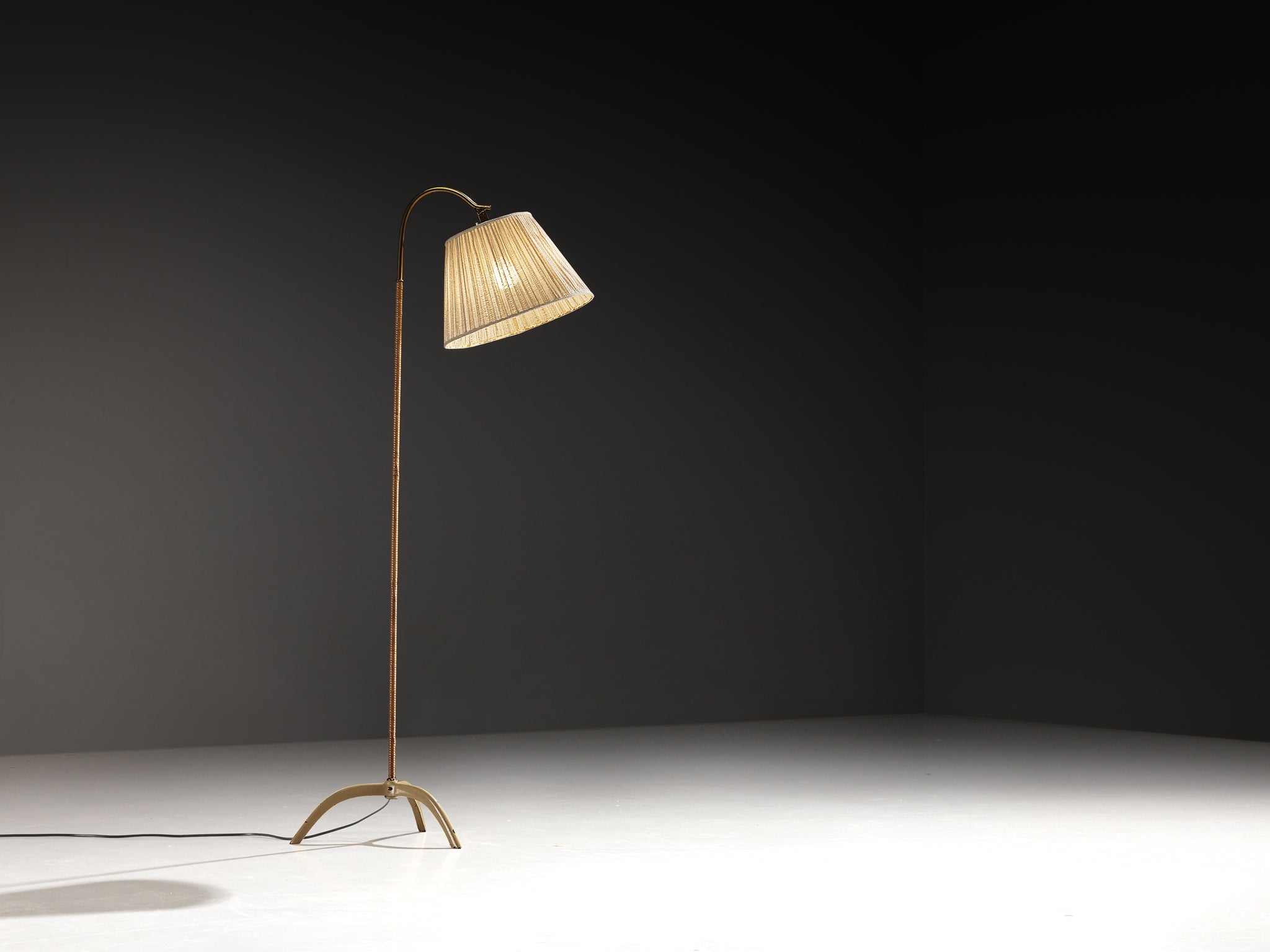
Paavo Tynell for Taito Oy, floor lamp, model '9609', fabric, cane, brass, lacquered steel, Finland, 1950s
The Man Who Illuminated Finland
Few designers have shaped the identity of a nation's lighting culture as profoundly as Paavo Tynell (1890–1973). Often referred to as “the man who illuminated Finland,” Tynell played a pivotal role in defining the visual language of Finnish modernism during the mid-twentieth century. Through his company Taito Oy and his collaborations with leading architects such as Alvar Aalto, he helped transform lighting from a purely functional necessity into an integral component of architectural experience.
The late 1940s to the 1950s marked the height of Tynell’s international success. During this period, his lighting designs found their way into prestigious public commissions and private residences alike, while the Finland House in New York introduced his work to an international audience. Among the designs that came to define this mature phase of his career, the model 9609 floor lamp occupies a particularly significant place. Today, it is regarded as an iconic expression of Tynell’s distinctive approach to lighting design.
The Human Face of Modernism
The 9609 embodies many of the qualities for which Tynell's work is celebrated. While firmly rooted in the language of modernism, the lamp avoids the severity often associated with the movement. Instead, it introduces warmth, tactility, and a sense of craftsmanship through an unusually refined combination of materials.
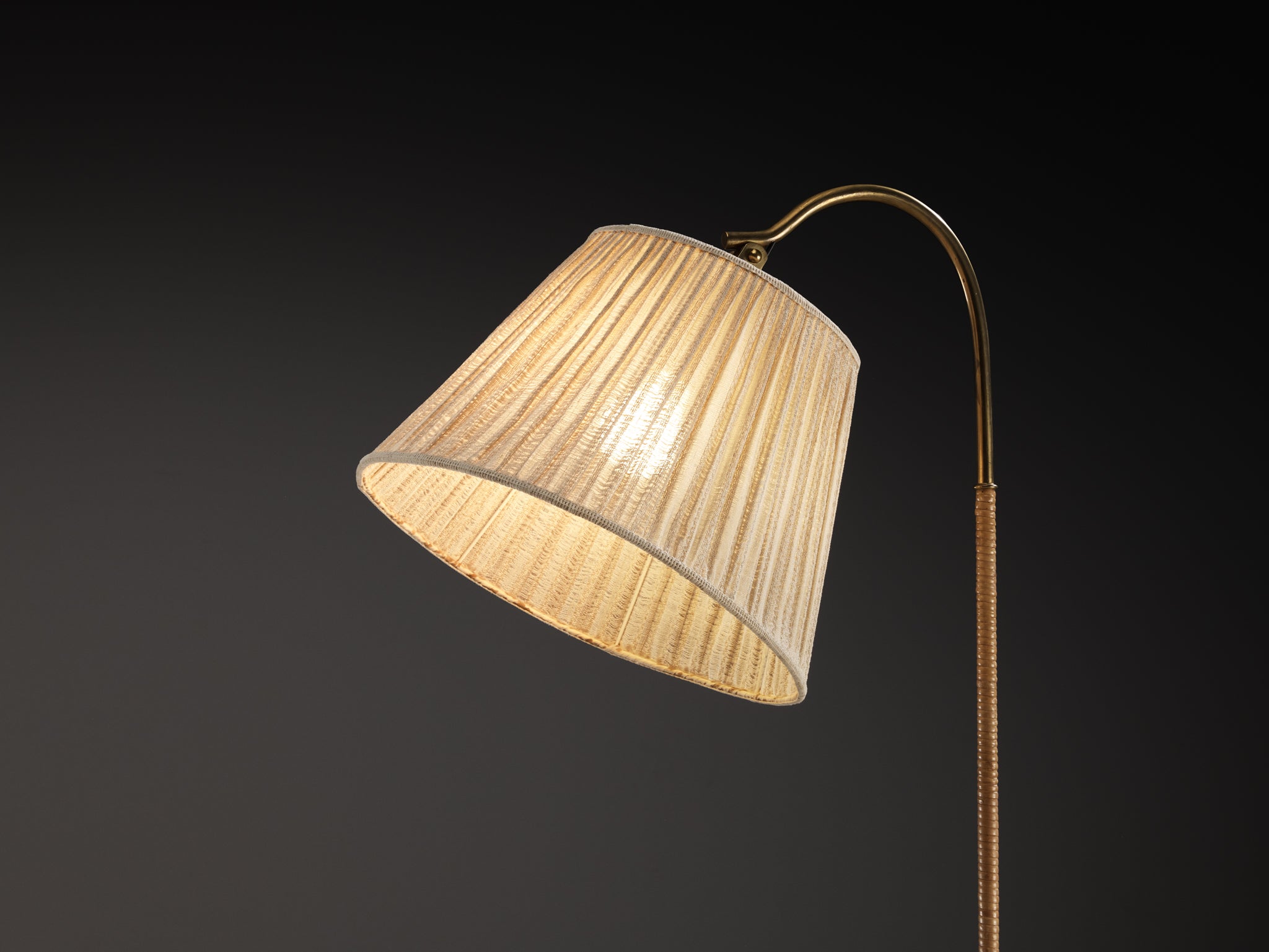
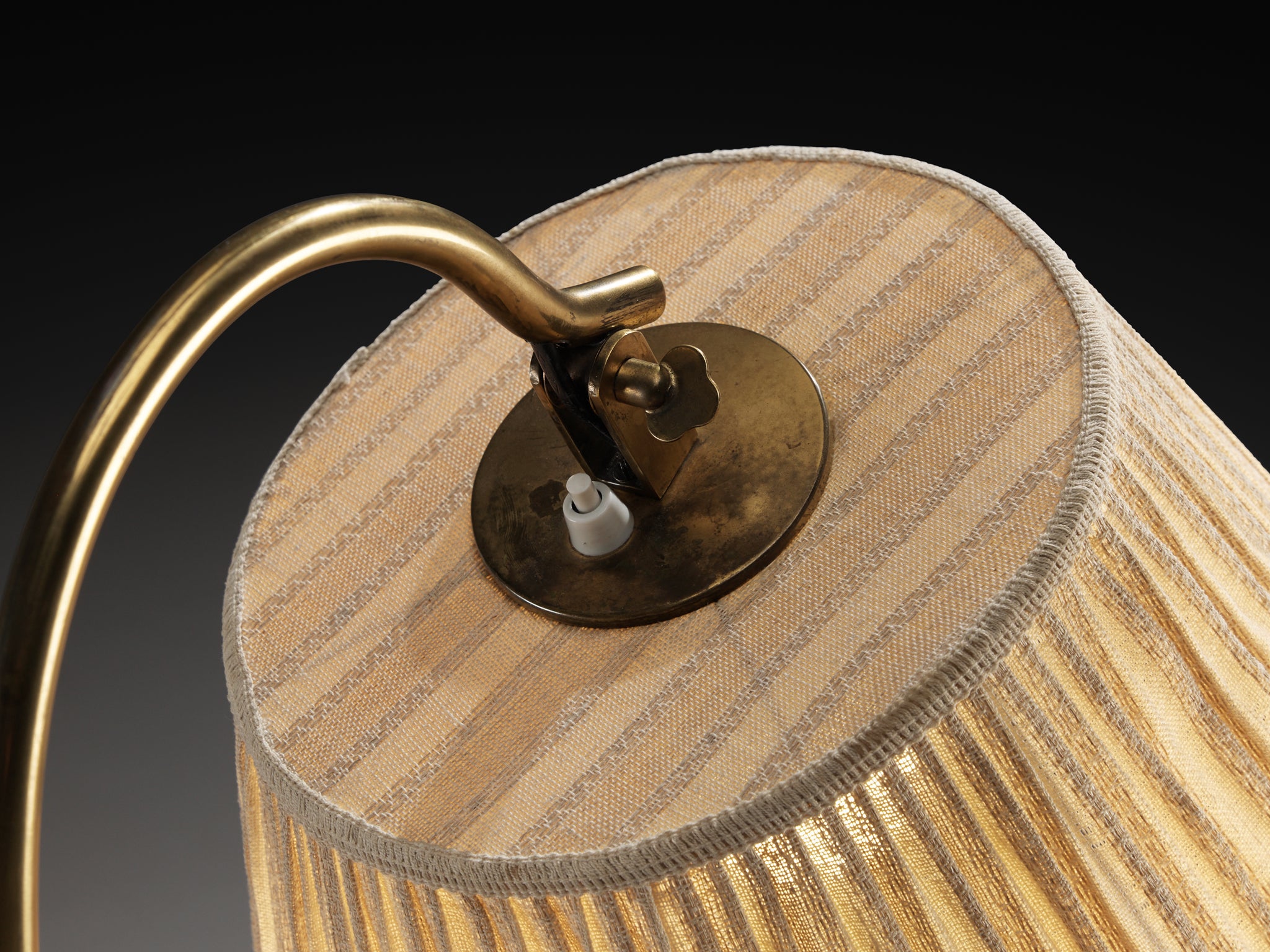
Its elegant tripod base, finished in a soft beige lacquer, supports a slender brass stem partially wrapped in cane. The use of woven natural material is particularly characteristic of Tynell, who frequently incorporated unexpected elements such as cane, straw, and perforated brass into his lighting designs. These details softened the appearance of metal and lent his work a distinctly human quality.
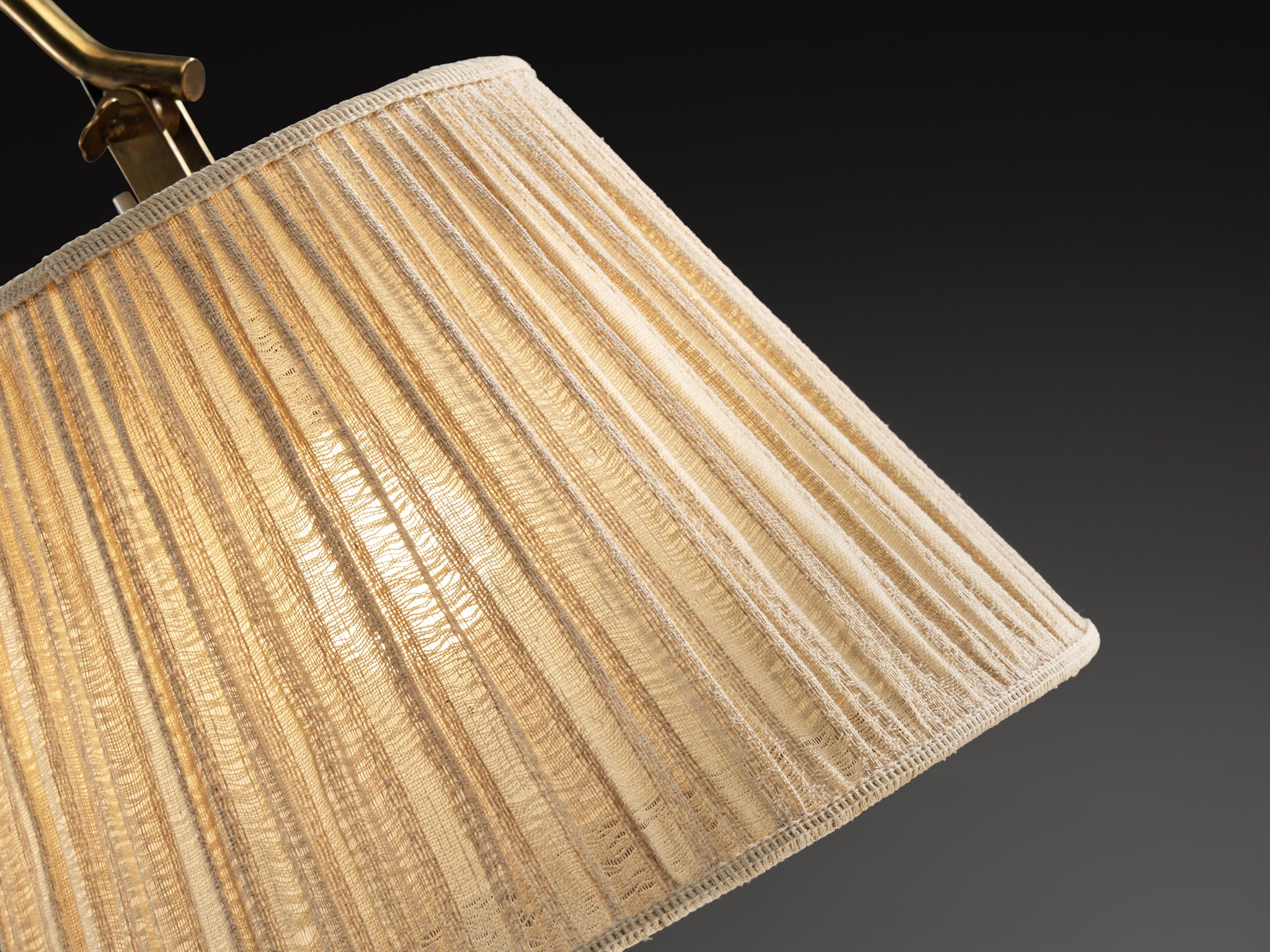
Above, a broad angular shade creates a striking counterpoint to the delicate verticality of the stem. The composition balances geometric clarity with organic warmth, resulting in an object that feels simultaneously sophisticated and inviting.
Craftsmanship and Material Innovation
Unlike many of his contemporaries, Tynell approached lighting from the perspective of a master craftsman. Trained as a metalsmith at Helsinki's Central School of Applied Arts, Tynell developed an exceptional understanding of metalworking techniques and material properties. This technical expertise became one of the defining strengths of his designs. The 9609 demonstrates this mastery through its meticulous detailing and carefully considered material palette. Brass, lacquer, and cane are combined with remarkable restraint, each element contributing to the lamp’s visual richness without overwhelming the overall composition. The result is a design that rewards close observation while maintaining an effortless elegance.
The Man Who Illuminated Finland
Few designers have shaped the identity of a nation's lighting culture as profoundly as Paavo Tynell (1890–1973). Often referred to as “the man who illuminated Finland,” Tynell played a pivotal role in defining the visual language of Finnish modernism during the mid-twentieth century. Through his company Taito Oy and his collaborations with leading architects such as Alvar Aalto, he helped transform lighting from a purely functional necessity into an integral component of architectural experience.
The late 1940s to the 1950s marked the height of Tynell’s international success. During this period, his lighting designs found their way into prestigious public commissions and private residences alike, while the Finland House in New York introduced his work to an international audience. Among the designs that came to define this mature phase of his career, the model 9609 floor lamp occupies a particularly significant place. Today, it is regarded as an iconic expression of Tynell’s distinctive approach to lighting design.
The Human Face of Modernism
The 9609 embodies many of the qualities for which Tynell's work is celebrated. While firmly rooted in the language of modernism, the lamp avoids the severity often associated with the movement. Instead, it introduces warmth, tactility, and a sense of craftsmanship through an unusually refined combination of materials.
Its elegant tripod base, finished in a soft beige lacquer, supports a slender brass stem partially wrapped in cane. The use of woven natural material is particularly characteristic of Tynell, who frequently incorporated unexpected elements such as cane, straw, and perforated brass into his lighting designs. These details softened the appearance of metal and lent his work a distinctly human quality.
Above, a broad angular shade creates a striking counterpoint to the delicate verticality of the stem. The composition balances geometric clarity with organic warmth, resulting in an object that feels simultaneously sophisticated and inviting.
Craftsmanship and Material Innovation
Unlike many of his contemporaries, Tynell approached lighting from the perspective of a master craftsman. Trained as a metalsmith at Helsinki's Central School of Applied Arts, Tynell developed an exceptional understanding of metalworking techniques and material properties. This technical expertise became one of the defining strengths of his designs. The 9609 demonstrates this mastery through its meticulous detailing and carefully considered material palette. Brass, lacquer, and cane are combined with remarkable restraint, each element contributing to the lamp’s visual richness without overwhelming the overall composition. The result is a design that rewards close observation while maintaining an effortless elegance.

Choose options
Paavo Tynell for Taito Oy ‘9609’ Floor Lamp in Brass and Cane
Sale price£30,233.47
Regular price
Tearsheet
×
Receive a copy in your email or download directly:
I accept emails from Morentz.
Product Details
VAT within the EU: When buying or delivering an item within the EU, VAT usually applies and will be added.