
Paavo Tynell for Taito Oy '9209' Table Lamp in Brass and Cane
 Open here
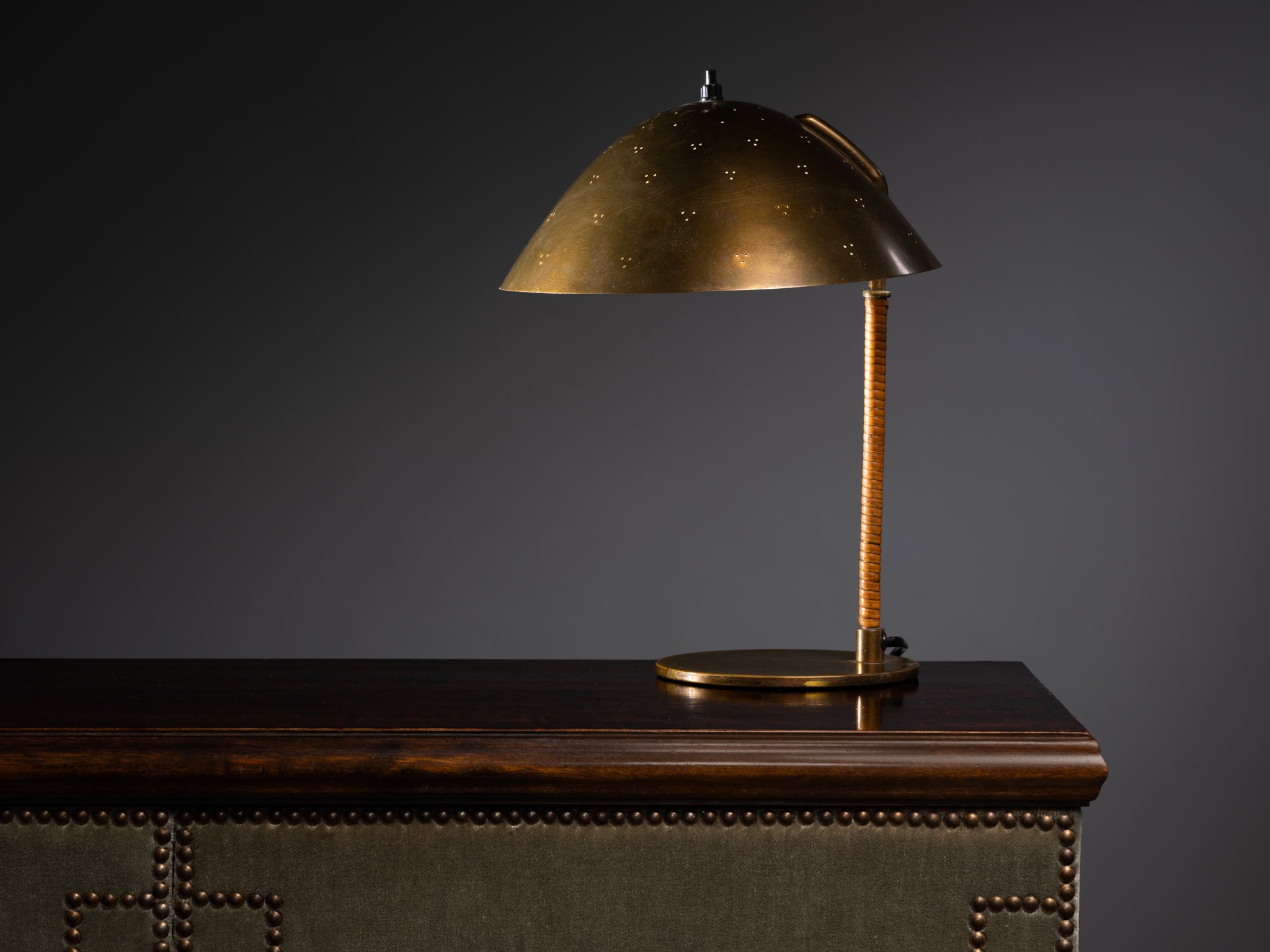
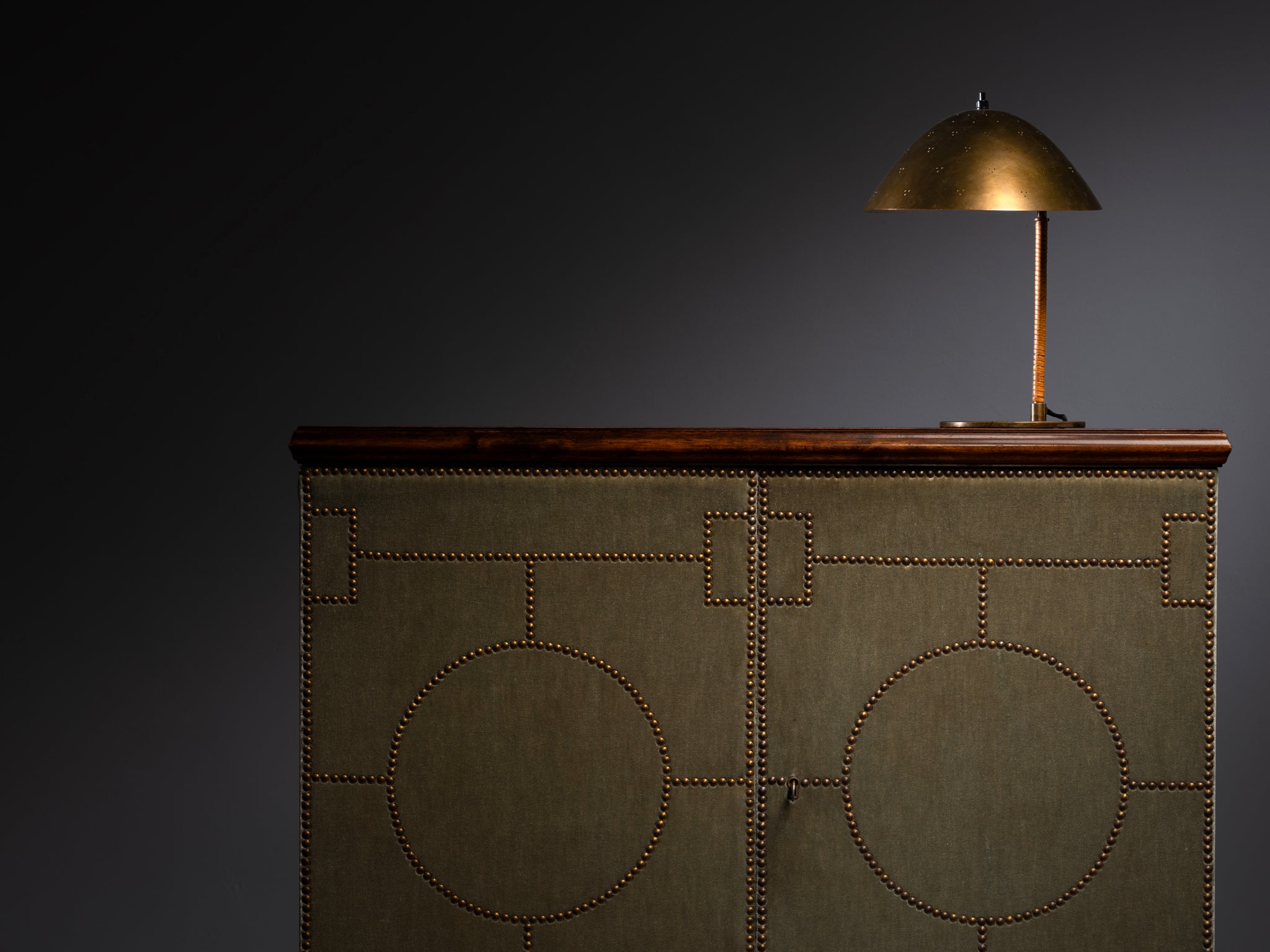
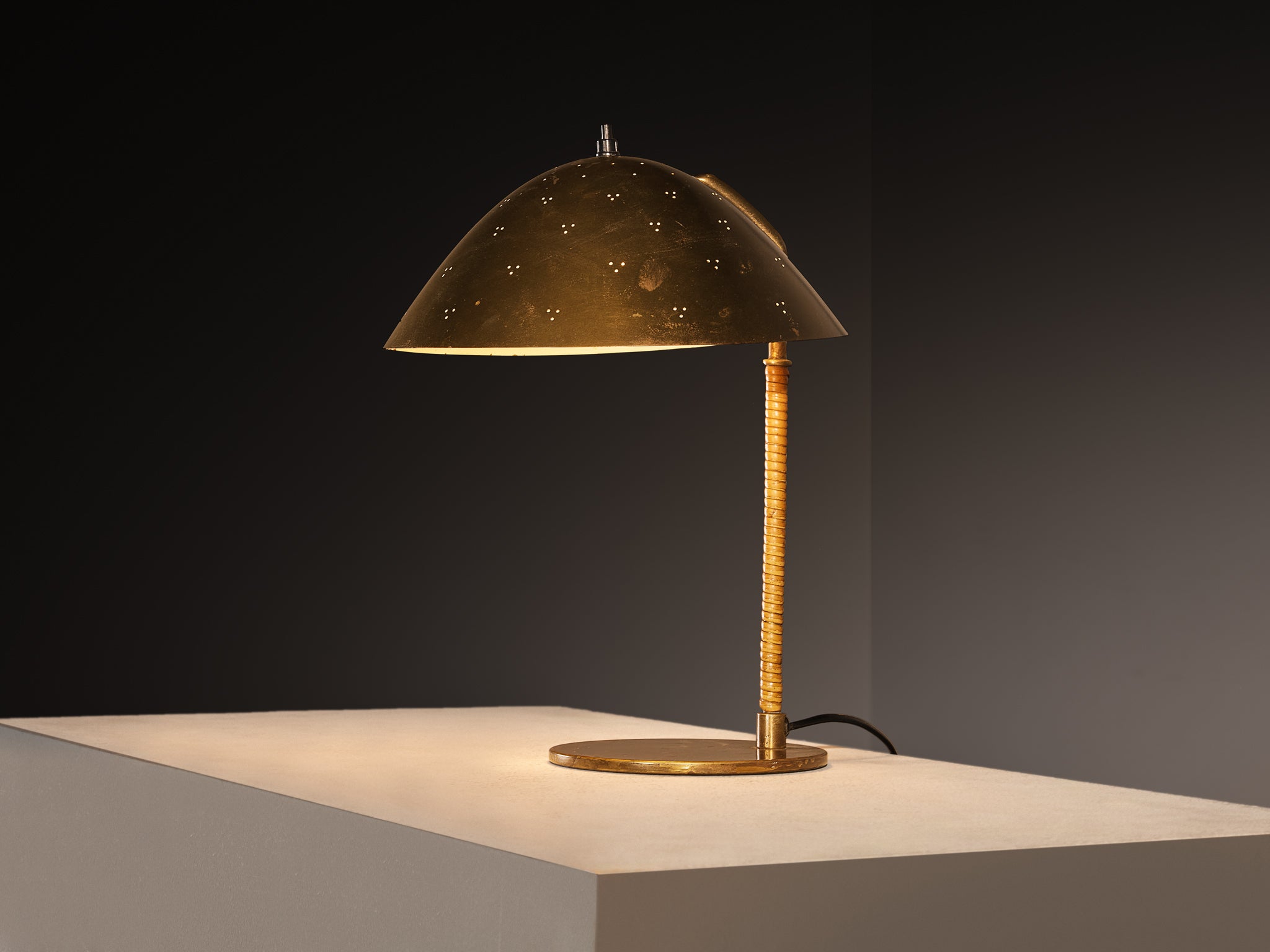
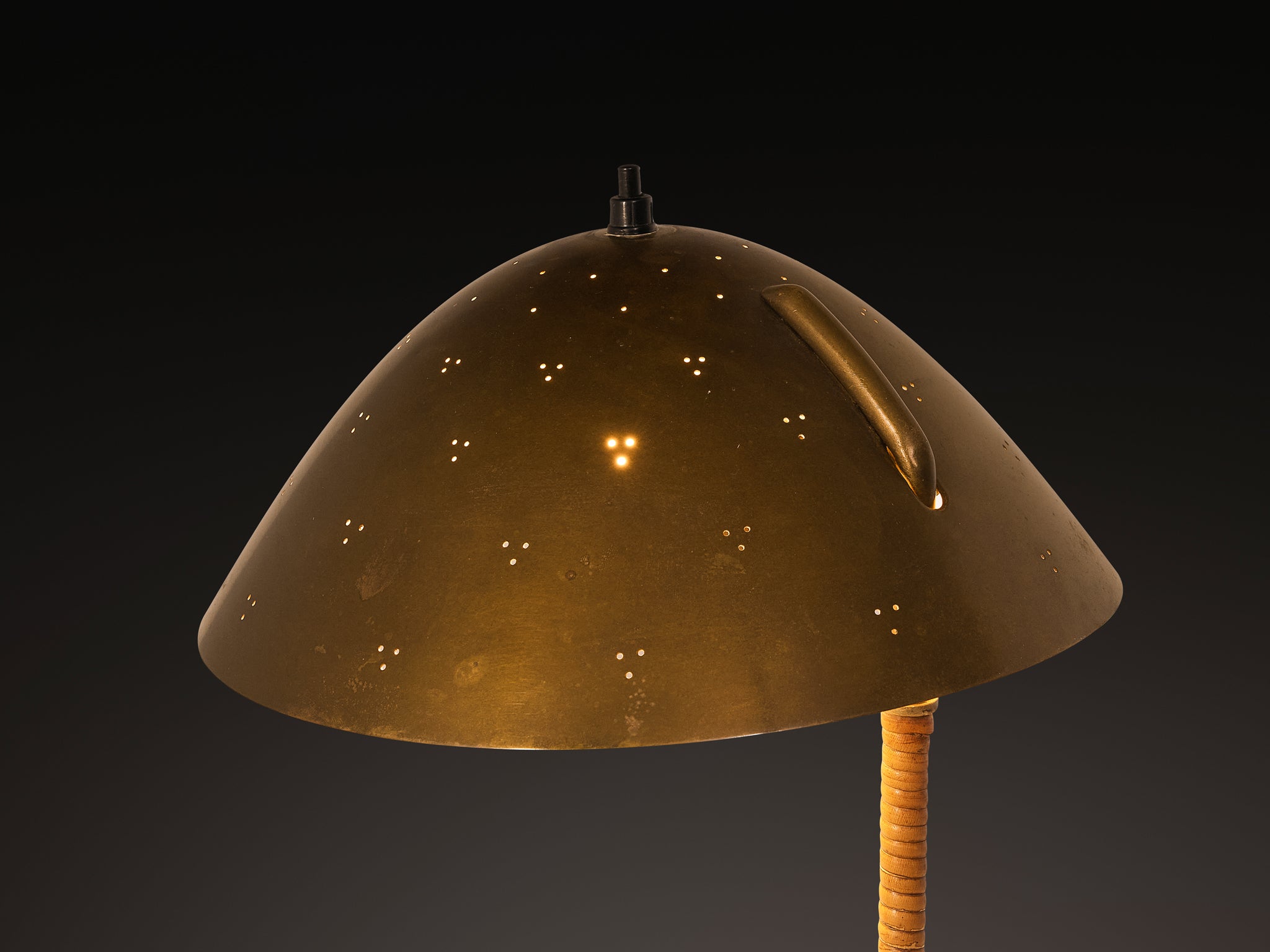
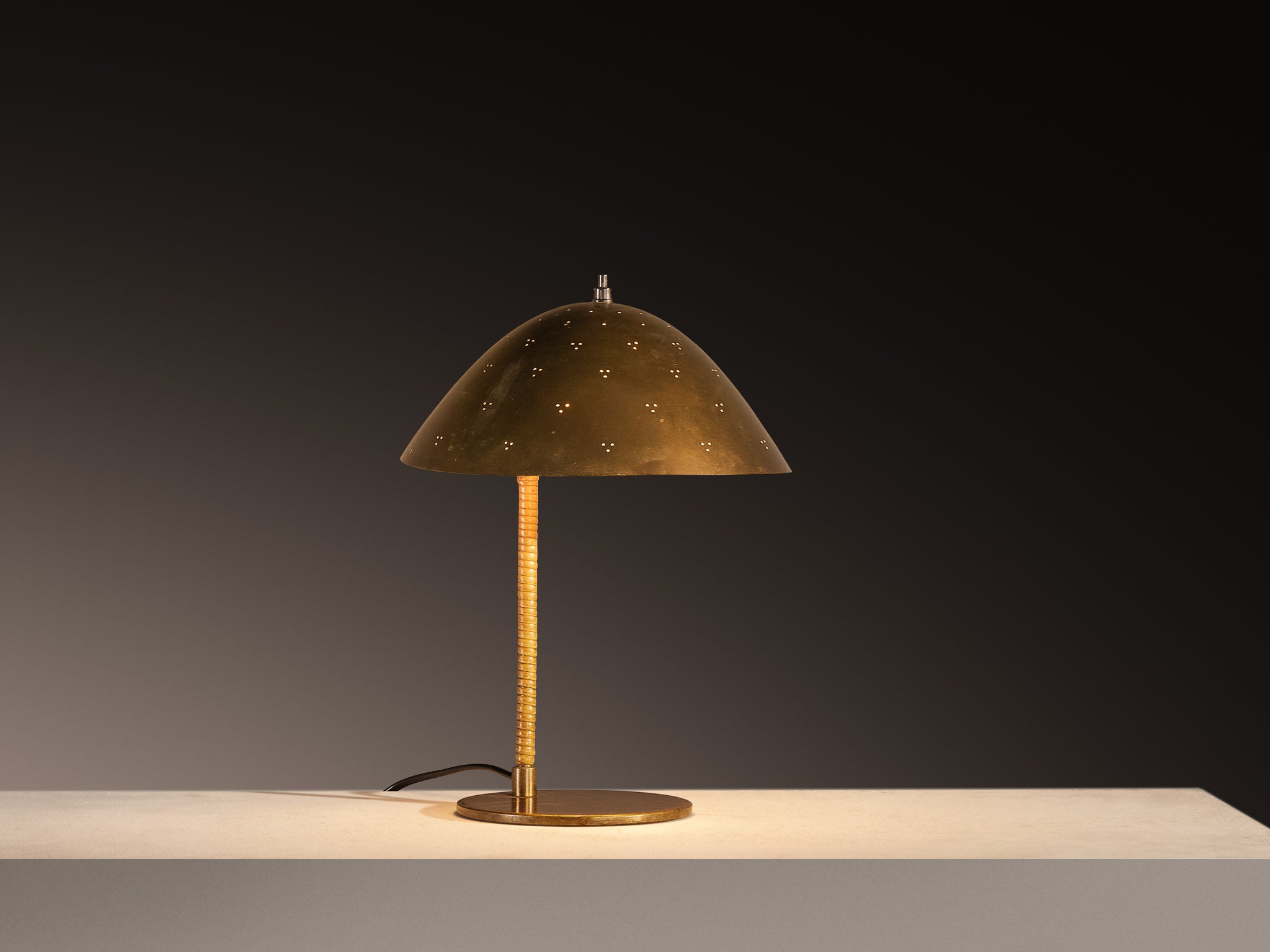
Paavo Tynell for Taito Oy, 'Kypärä' desk lamp, model '9209', brass, cane, Finland, 1950s
Few designers contributed more to the development of twentieth-century lighting design than Paavo Tynell (1890–1973). Often referred to as “the man who illuminated Finland,” Tynell played a pivotal role in shaping the warm and human-centered character of Scandinavian modernism. Through his work for Taito Oy and his collaborations with leading architects such as Alvar Aalto, he transformed lighting from a purely functional necessity into an essential architectural and decorative element.
Created around 1950, the model 9209 desk lamp – also known as the Kypärä ("Helmet") lamp – captures Paavo Tynell at the height of his creative powers. This period also coincided with the growing international success of his lighting designs, as his pieces found their way into prestigious public commissions and private residences alike, while the Finland House in New York introduced his work to an international audience. Kypärä encapsulates many of the qualities that distinguish Tynell's work. More than a desk lamp, it represents his unique ability to combine technical sophistication, artisanal craftsmanship, and poetic elegance.
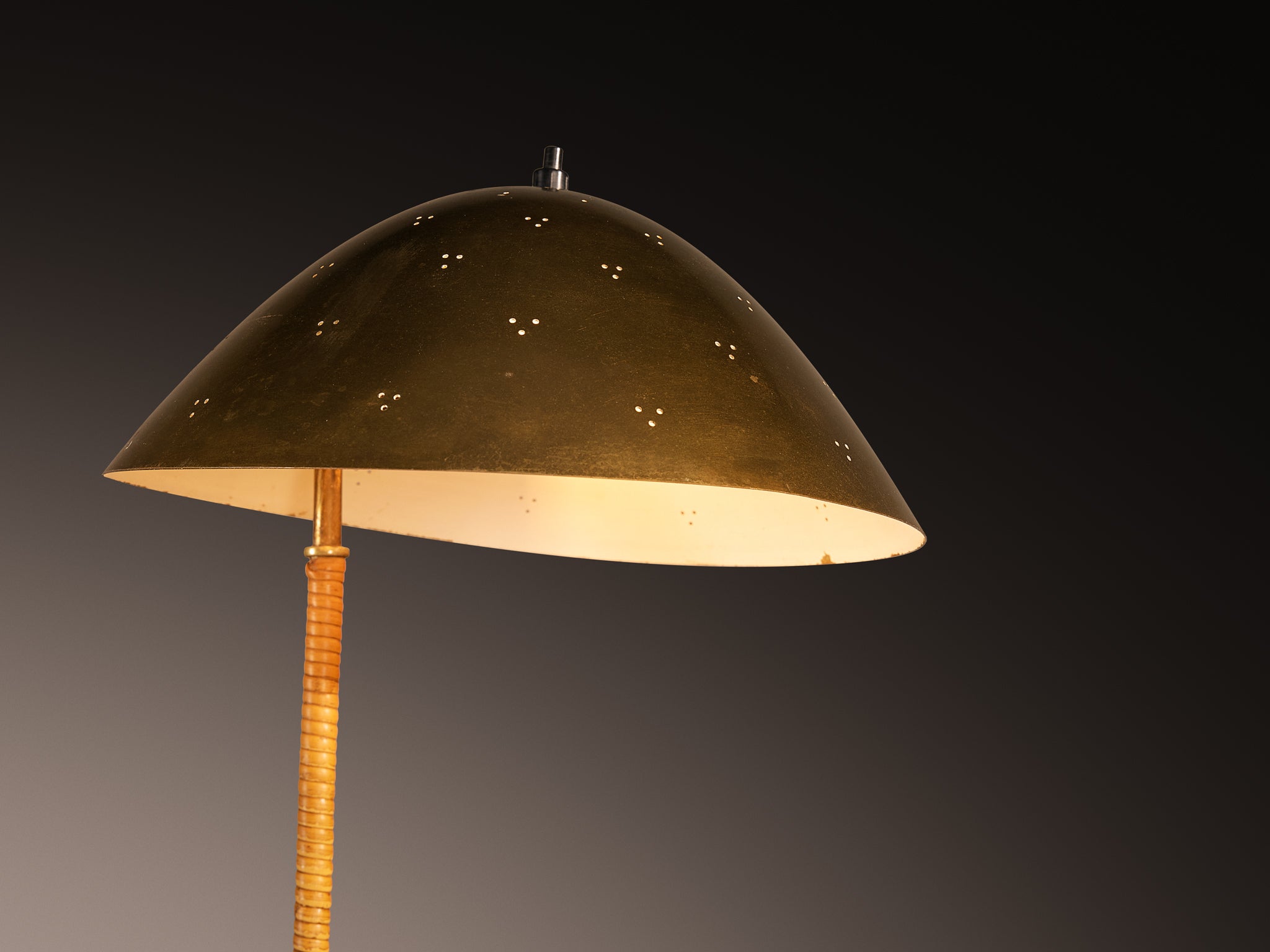
The years following the Second World War marked the international breakthrough of Scandinavian design, and Tynell emerged as one of its leading figures. While many contemporaries pursued increasingly rational and industrial forms, he developed a softer interpretation of modernism, one that embraced natural materials, decorative detail, and an intimate relationship with light. The Kypärä lamp exemplifies this approach. Defined by its distinctive mushroom-shaped shade, the design combines the clarity of Scandinavian modernism with an exceptional sensitivity to material and craftsmanship.
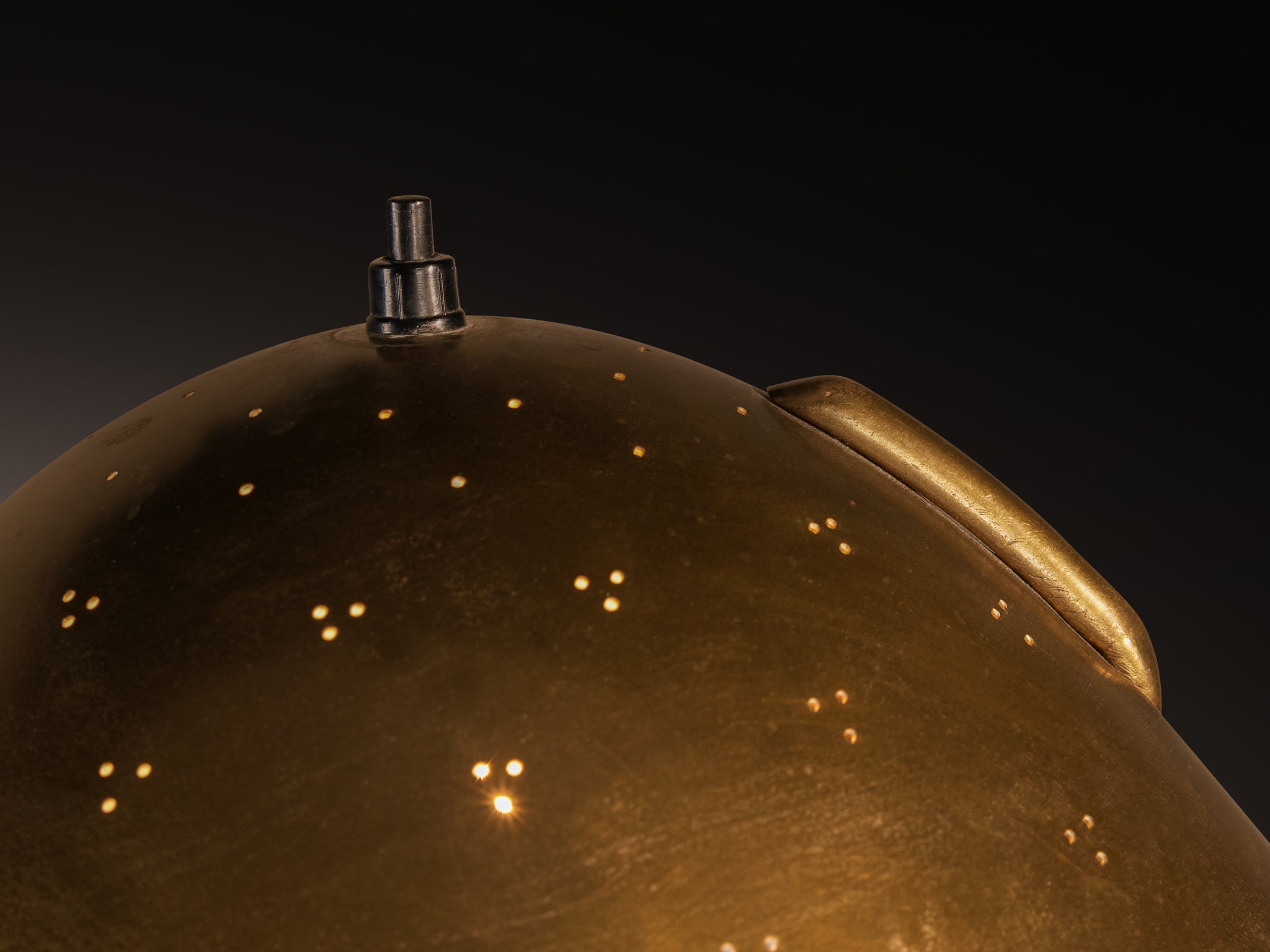
Among Tynell's most recognizable elements was his use of perforated brass, here expressed through a delicate pattern of circular perforations that allows light to shimmer through the metal surface. Rather than concealing the technical aspects of illumination, Tynell transformed them into decorative features, creating a poetic interplay of light, shadow, and reflection that became one of the defining characteristics of his work.
The lamp's circular base supports a slender stem wrapped in cane, a material he frequently employed to soften the appearance of metal and introduce a tactile, organic quality. This juxtaposition of lustrous brass and natural cane demonstrates Tynell's extraordinary understanding of materials and his ability to create visual warmth within a modernist vocabulary. Originally trained as a metalsmith, he possessed an exceptional command of metalworking techniques, evident in the precision and refinement of every detail. His designs were never merely functional objects but carefully orchestrated compositions in which material, form, and light worked together in perfect harmony.
Few designers contributed more to the development of twentieth-century lighting design than Paavo Tynell (1890–1973). Often referred to as “the man who illuminated Finland,” Tynell played a pivotal role in shaping the warm and human-centered character of Scandinavian modernism. Through his work for Taito Oy and his collaborations with leading architects such as Alvar Aalto, he transformed lighting from a purely functional necessity into an essential architectural and decorative element.
Created around 1950, the model 9209 desk lamp – also known as the Kypärä ("Helmet") lamp – captures Paavo Tynell at the height of his creative powers. This period also coincided with the growing international success of his lighting designs, as his pieces found their way into prestigious public commissions and private residences alike, while the Finland House in New York introduced his work to an international audience. Kypärä encapsulates many of the qualities that distinguish Tynell's work. More than a desk lamp, it represents his unique ability to combine technical sophistication, artisanal craftsmanship, and poetic elegance.
The years following the Second World War marked the international breakthrough of Scandinavian design, and Tynell emerged as one of its leading figures. While many contemporaries pursued increasingly rational and industrial forms, he developed a softer interpretation of modernism, one that embraced natural materials, decorative detail, and an intimate relationship with light. The Kypärä lamp exemplifies this approach. Defined by its distinctive mushroom-shaped shade, the design combines the clarity of Scandinavian modernism with an exceptional sensitivity to material and craftsmanship.
Among Tynell's most recognizable elements was his use of perforated brass, here expressed through a delicate pattern of circular perforations that allows light to shimmer through the metal surface. Rather than concealing the technical aspects of illumination, Tynell transformed them into decorative features, creating a poetic interplay of light, shadow, and reflection that became one of the defining characteristics of his work.
The lamp's circular base supports a slender stem wrapped in cane, a material he frequently employed to soften the appearance of metal and introduce a tactile, organic quality. This juxtaposition of lustrous brass and natural cane demonstrates Tynell's extraordinary understanding of materials and his ability to create visual warmth within a modernist vocabulary. Originally trained as a metalsmith, he possessed an exceptional command of metalworking techniques, evident in the precision and refinement of every detail. His designs were never merely functional objects but carefully orchestrated compositions in which material, form, and light worked together in perfect harmony.

Choose options
Paavo Tynell for Taito Oy '9209' Table Lamp in Brass and Cane
Sale price£28,341.86
Regular price
Product Details
VAT within the EU: When buying or delivering an item within the EU, VAT usually applies and will be added.