
Osvaldo Borsani for Arredamenti Borsani Varedo Rare Three-Seat Sofa in Walnut and Mohair
 Open here
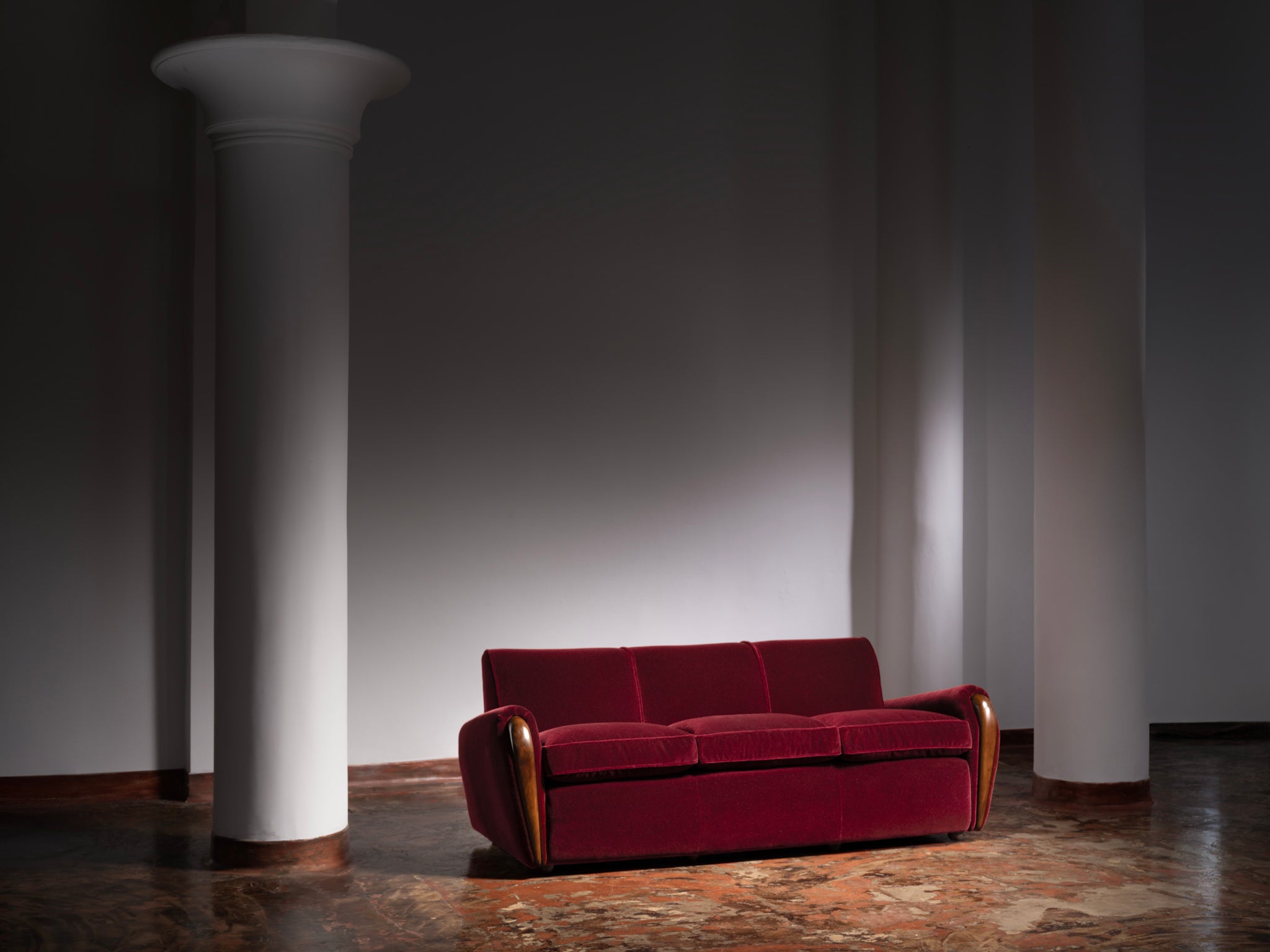
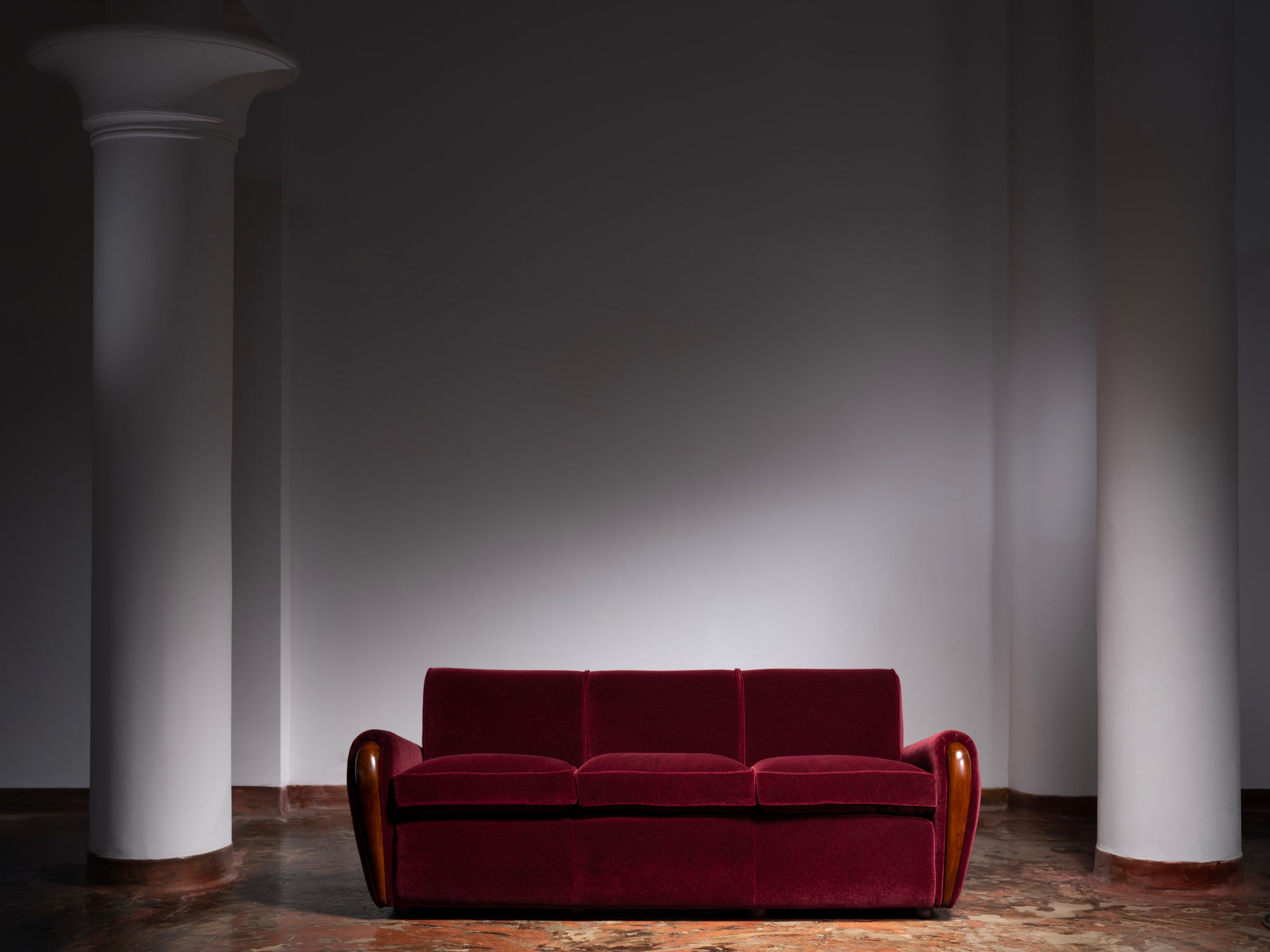
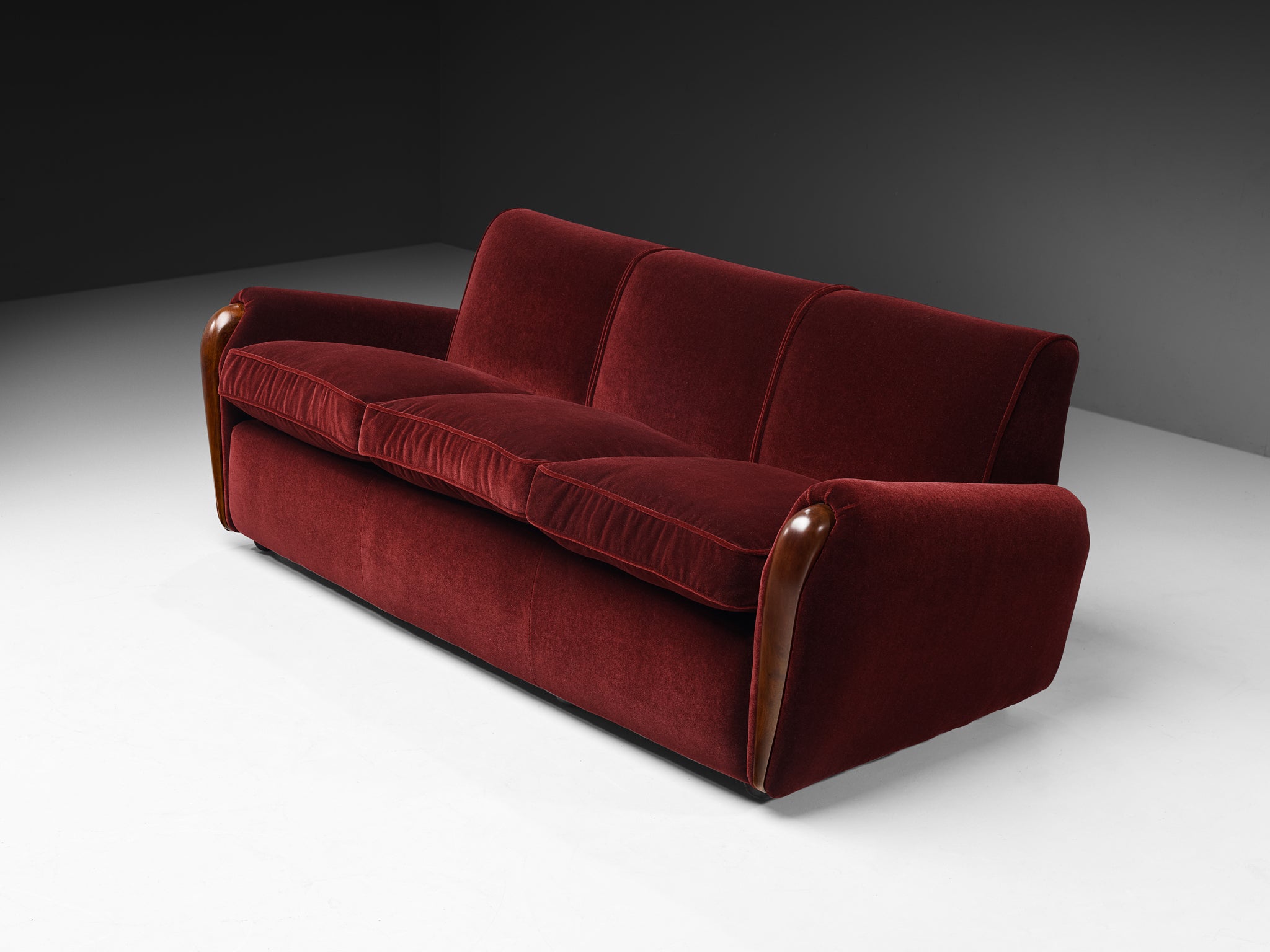
Osvaldo Borsani for Arredamenti Borsani Varedo, sofa, model '3615', walnut, reupholstered in mohair Rose Uniacke “Claret”, Italy, design 1935, made 1935-1936
A Personal Vision of Early Borsani
Designed in 1935 and produced by Arredamenti Borsani Varedo between 1935-1936, model 3615 belongs to a pivotal period in the development of Italian modern furniture. Created when Osvaldo Borsani was still in his twenties, the sofa reflects a moment in which traditional craftsmanship, Art Deco refinement, and emerging ideas of modern living converged into a distinctive new design language.
Its provenance from a Milanese house further enhances its historical interest, situating the piece within the type of sophisticated residential environment for which Borsani originally designed such furnishings.
The Early Years of Arredamenti Borsani
Osvaldo Borsani (1911–1985) was raised in Varedo in a family of skilled furniture makers. At the age of sixteen, he joined his father’s workshop, then known as the Atelier di Varedo, which specialized in high-quality interiors and furniture for refined Italian residences. In 1932, the family company was renamed Arredamenti Borsani and opened a studio in Milan, marking the beginning of a more ambitious phase in its development.
During these early years, Borsani combined architectural training with a deep understanding of materials and craftsmanship. His furniture from the 1930s reveals a designer still rooted in the world of bespoke interiors, yet already moving toward a more modern and integrated conception of furniture as part of a complete domestic environment.
Craftsmanship Meets Modern Comfort
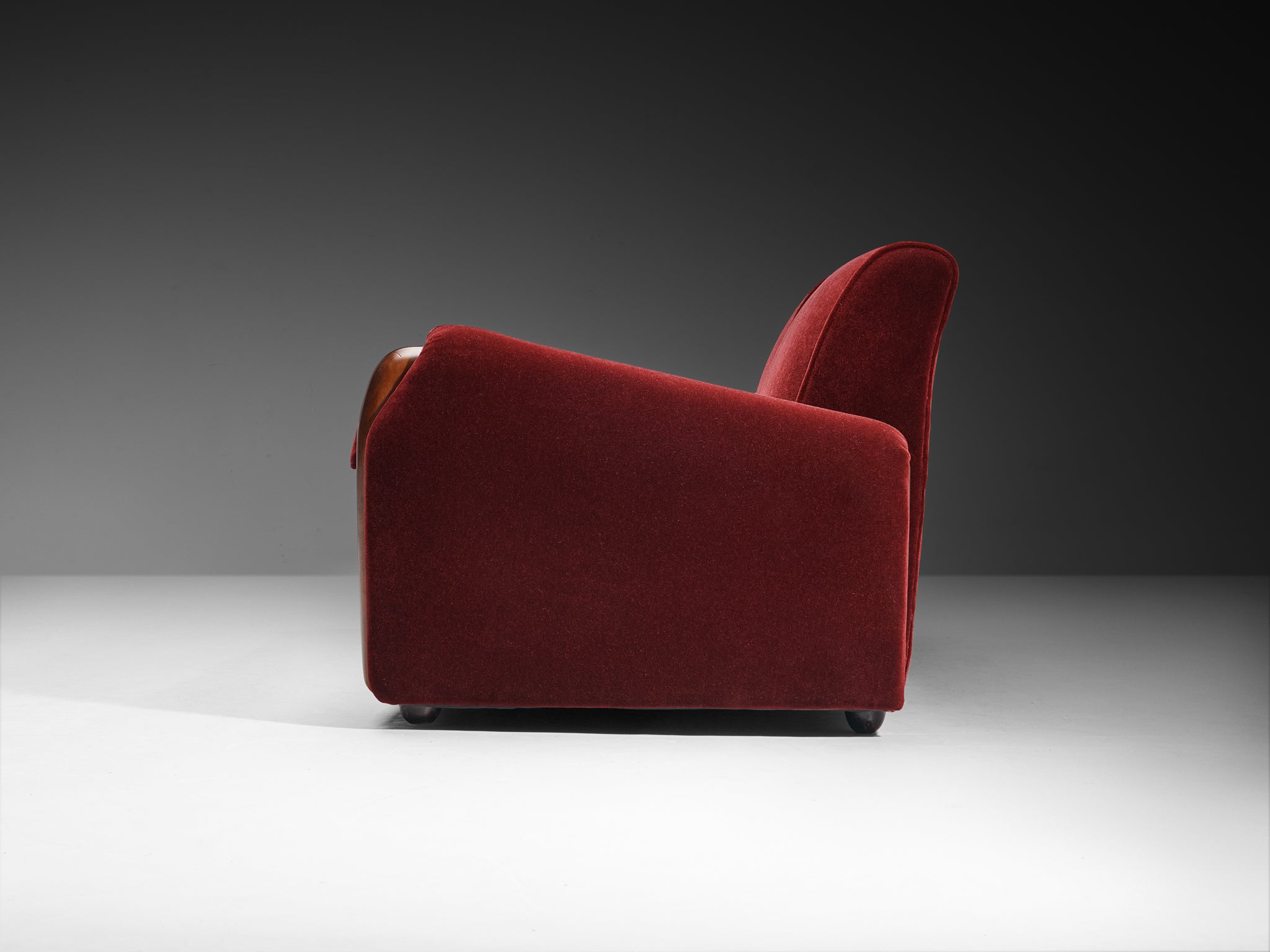
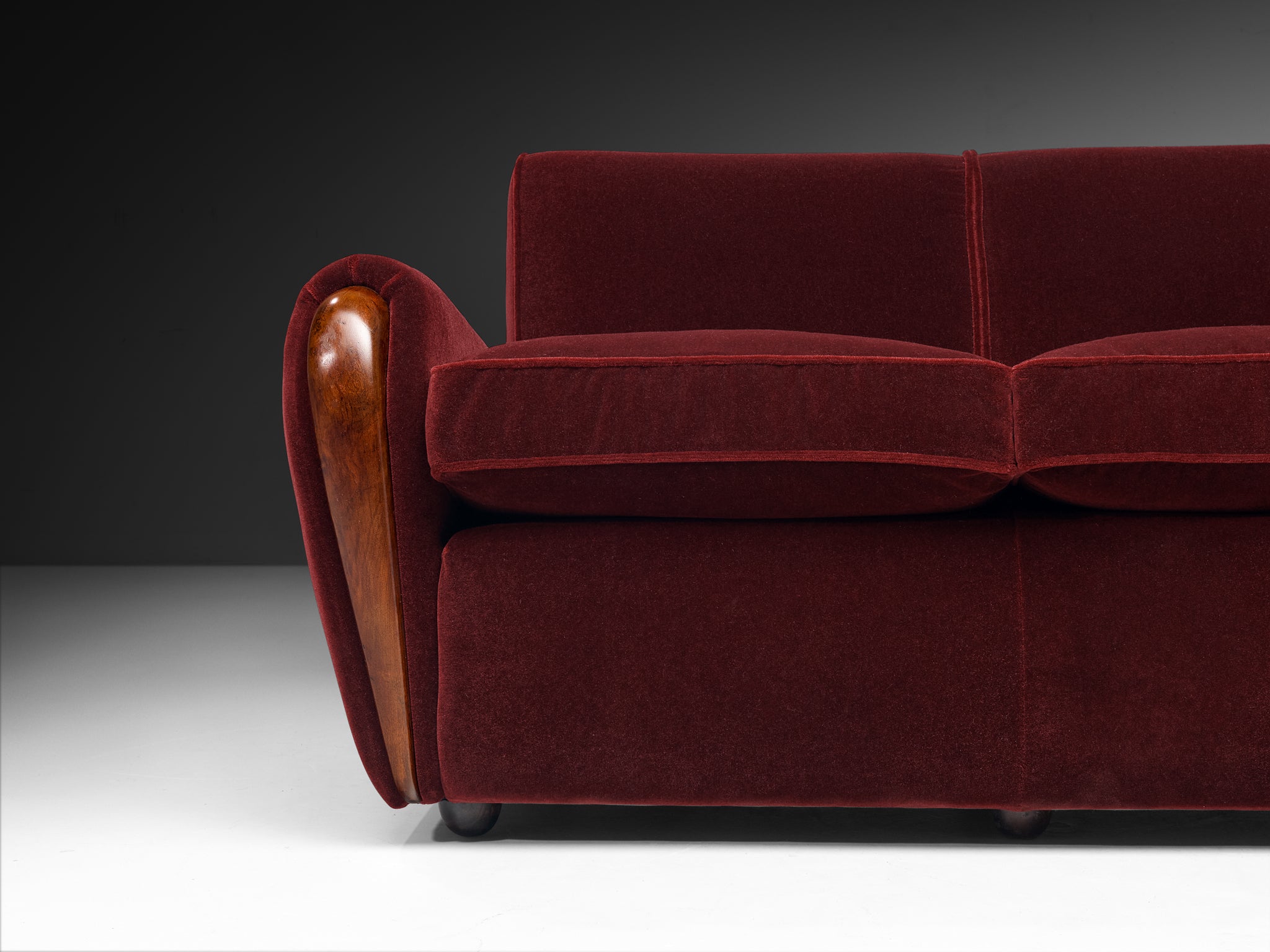
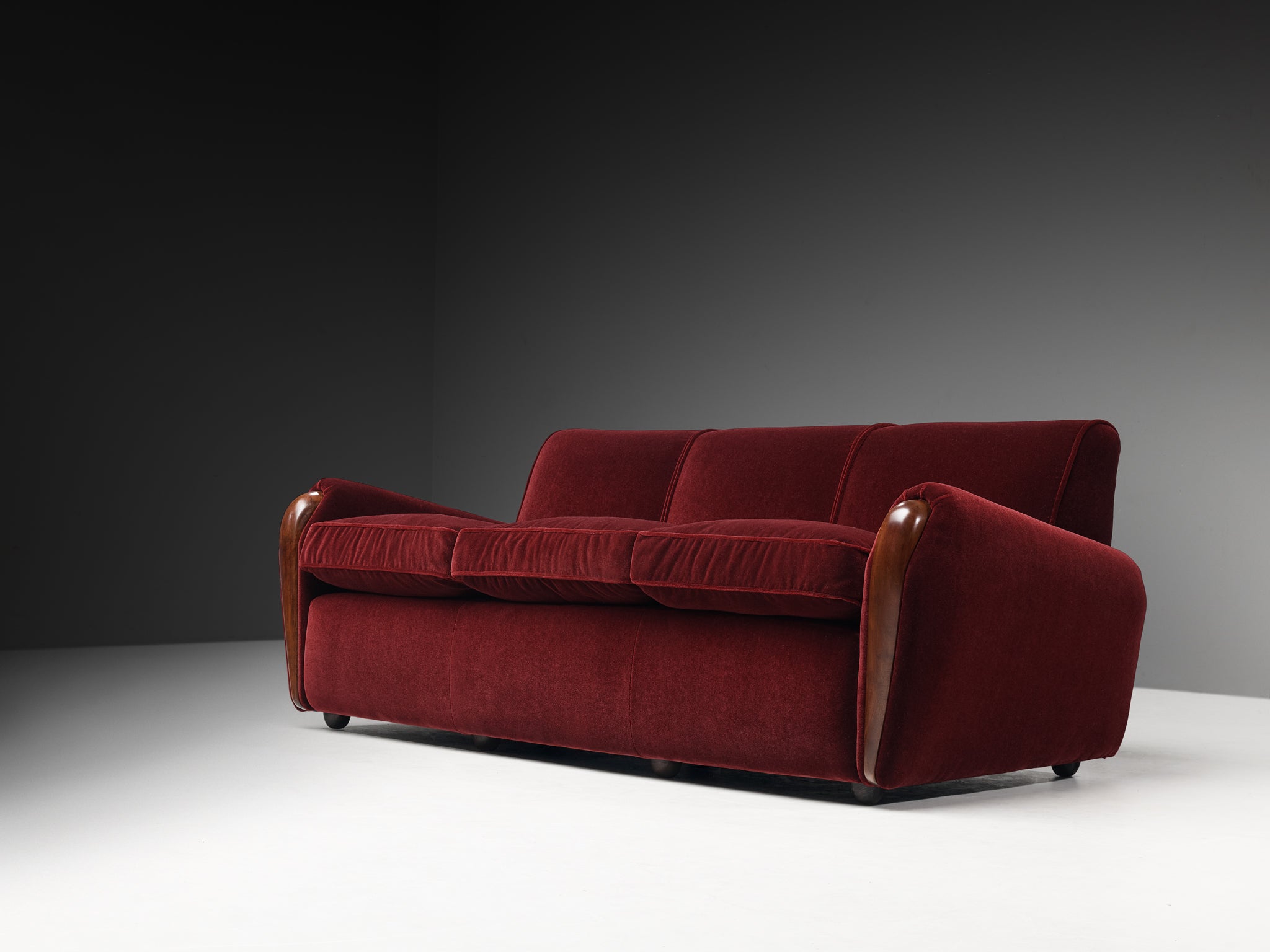
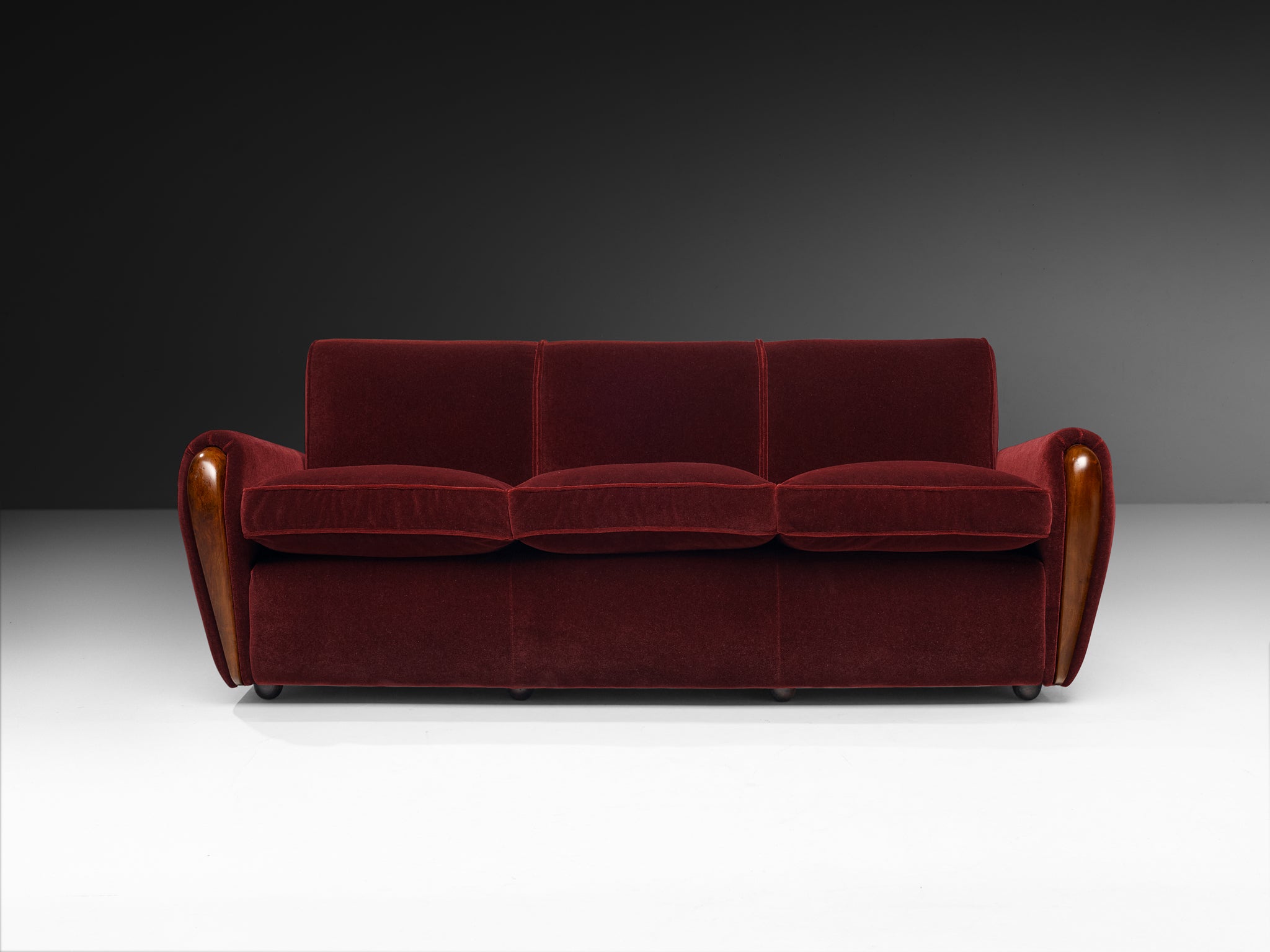
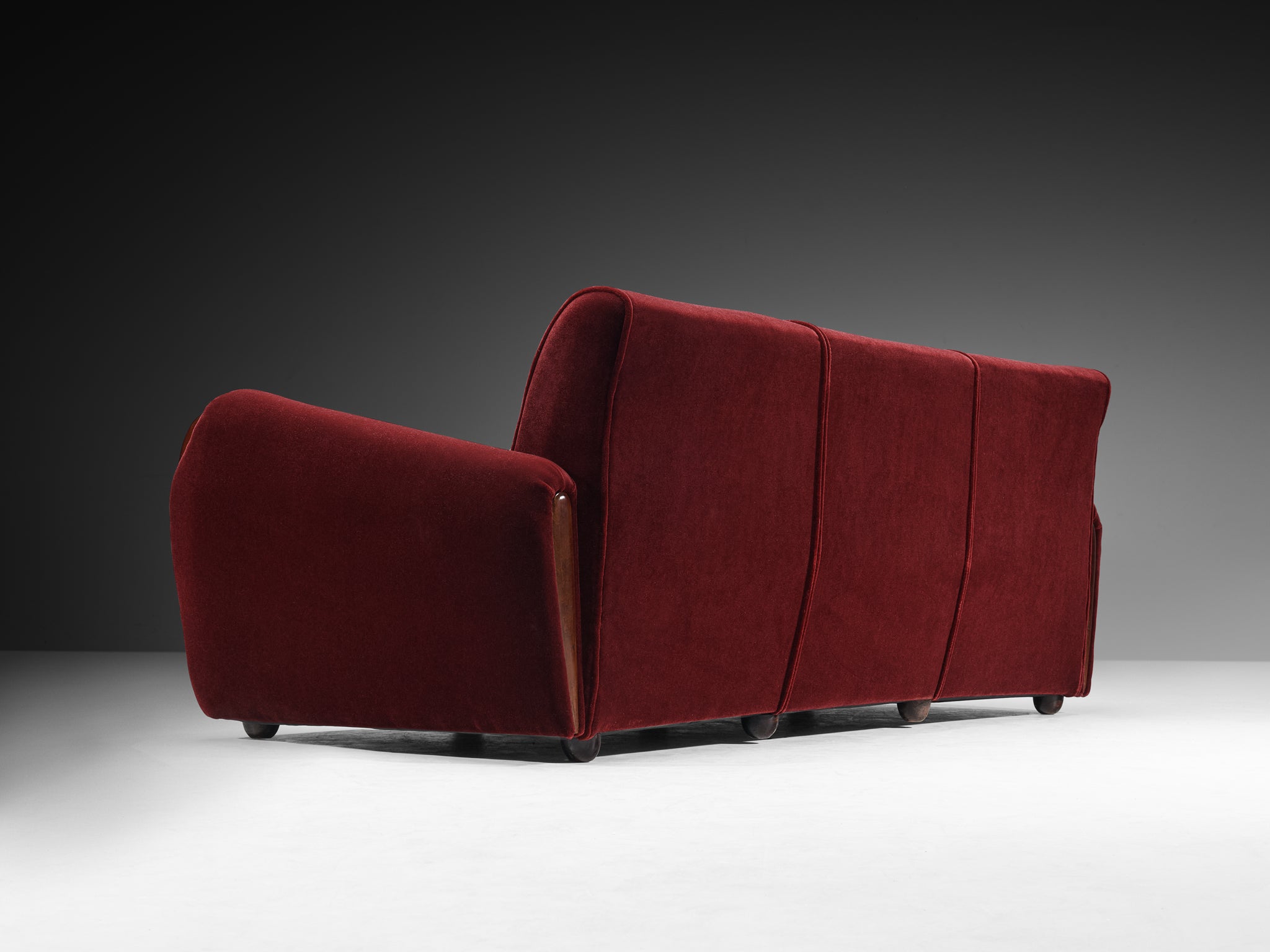
The sofa is distinguished by its generous, enveloping form, defined by broad upholstered volumes and softly rounded contours. The substantial body is animated by a pair of exposed walnut elements that emerge at the front of the armrests, their polished surfaces providing a visual counterpoint to the expansive upholstery. Rather than functioning as purely decorative accents, these sculpted wooden components articulate the sofa's silhouette and reveal Borsani's continued interest in integrating fine cabinetmaking into upholstered furniture. As with many of Borsani's early bespoke commissions, craftsmanship plays a central role. The contrast between the rich walnut detailing and the expansive upholstered surfaces demonstrates the quality of production achieved by ABV during the 1930s.
Newly upholstered in sumptuous burgundy-red mohair velvet by Rose Uniacke, the sofa regains the luxurious and tactile quality that would have suited the sophisticated interiors for which Borsani originally designed such pieces. As a rare survivor from one of the most significant periods of his career, it offers a compelling glimpse into the origins of one of Italy's greatest twentieth-century designers.
A Foundation for Future Innovation
Although Borsani would later become internationally renowned for the technical sophistication and mechanical ingenuity of Tecno, the foundations of that later success are already visible here. The attention to proportion, the integration of structure and form, and the pursuit of new ways of living all emerge in these early works.
A Personal Vision of Early Borsani
Designed in 1935 and produced by Arredamenti Borsani Varedo between 1935-1936, model 3615 belongs to a pivotal period in the development of Italian modern furniture. Created when Osvaldo Borsani was still in his twenties, the sofa reflects a moment in which traditional craftsmanship, Art Deco refinement, and emerging ideas of modern living converged into a distinctive new design language.
Its provenance from a Milanese house further enhances its historical interest, situating the piece within the type of sophisticated residential environment for which Borsani originally designed such furnishings.
The Early Years of Arredamenti Borsani
Osvaldo Borsani (1911–1985) was raised in Varedo in a family of skilled furniture makers. At the age of sixteen, he joined his father’s workshop, then known as the Atelier di Varedo, which specialized in high-quality interiors and furniture for refined Italian residences. In 1932, the family company was renamed Arredamenti Borsani and opened a studio in Milan, marking the beginning of a more ambitious phase in its development.
During these early years, Borsani combined architectural training with a deep understanding of materials and craftsmanship. His furniture from the 1930s reveals a designer still rooted in the world of bespoke interiors, yet already moving toward a more modern and integrated conception of furniture as part of a complete domestic environment.
Craftsmanship Meets Modern Comfort
The sofa is distinguished by its generous, enveloping form, defined by broad upholstered volumes and softly rounded contours. The substantial body is animated by a pair of exposed walnut elements that emerge at the front of the armrests, their polished surfaces providing a visual counterpoint to the expansive upholstery. Rather than functioning as purely decorative accents, these sculpted wooden components articulate the sofa's silhouette and reveal Borsani's continued interest in integrating fine cabinetmaking into upholstered furniture. As with many of Borsani's early bespoke commissions, craftsmanship plays a central role. The contrast between the rich walnut detailing and the expansive upholstered surfaces demonstrates the quality of production achieved by ABV during the 1930s.
Newly upholstered in sumptuous burgundy-red mohair velvet by Rose Uniacke, the sofa regains the luxurious and tactile quality that would have suited the sophisticated interiors for which Borsani originally designed such pieces. As a rare survivor from one of the most significant periods of his career, it offers a compelling glimpse into the origins of one of Italy's greatest twentieth-century designers.
A Foundation for Future Innovation
Although Borsani would later become internationally renowned for the technical sophistication and mechanical ingenuity of Tecno, the foundations of that later success are already visible here. The attention to proportion, the integration of structure and form, and the pursuit of new ways of living all emerge in these early works.

Choose options
Osvaldo Borsani for Arredamenti Borsani Varedo Rare Three-Seat Sofa in Walnut and Mohair
Sale price£74,837.82
Regular price
Product Details
VAT within the EU: When buying or delivering an item within the EU, VAT usually applies and will be added.