
Jan de Jong Rare Custom Stool in Dark Green Lacquered Wood
 Open here
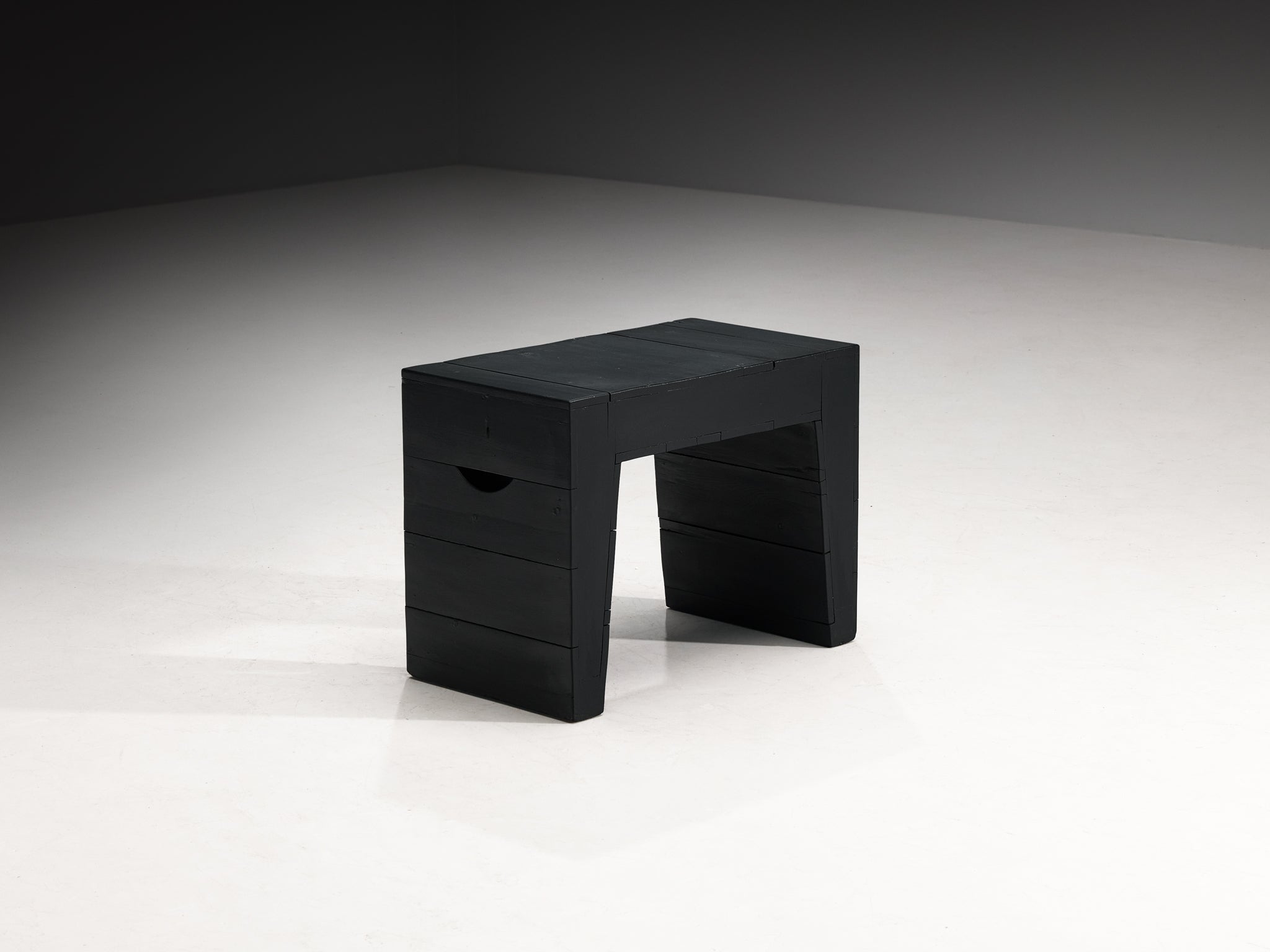
Jan de Jong, custom stool, lacquered wood, the Netherlands, 1970s
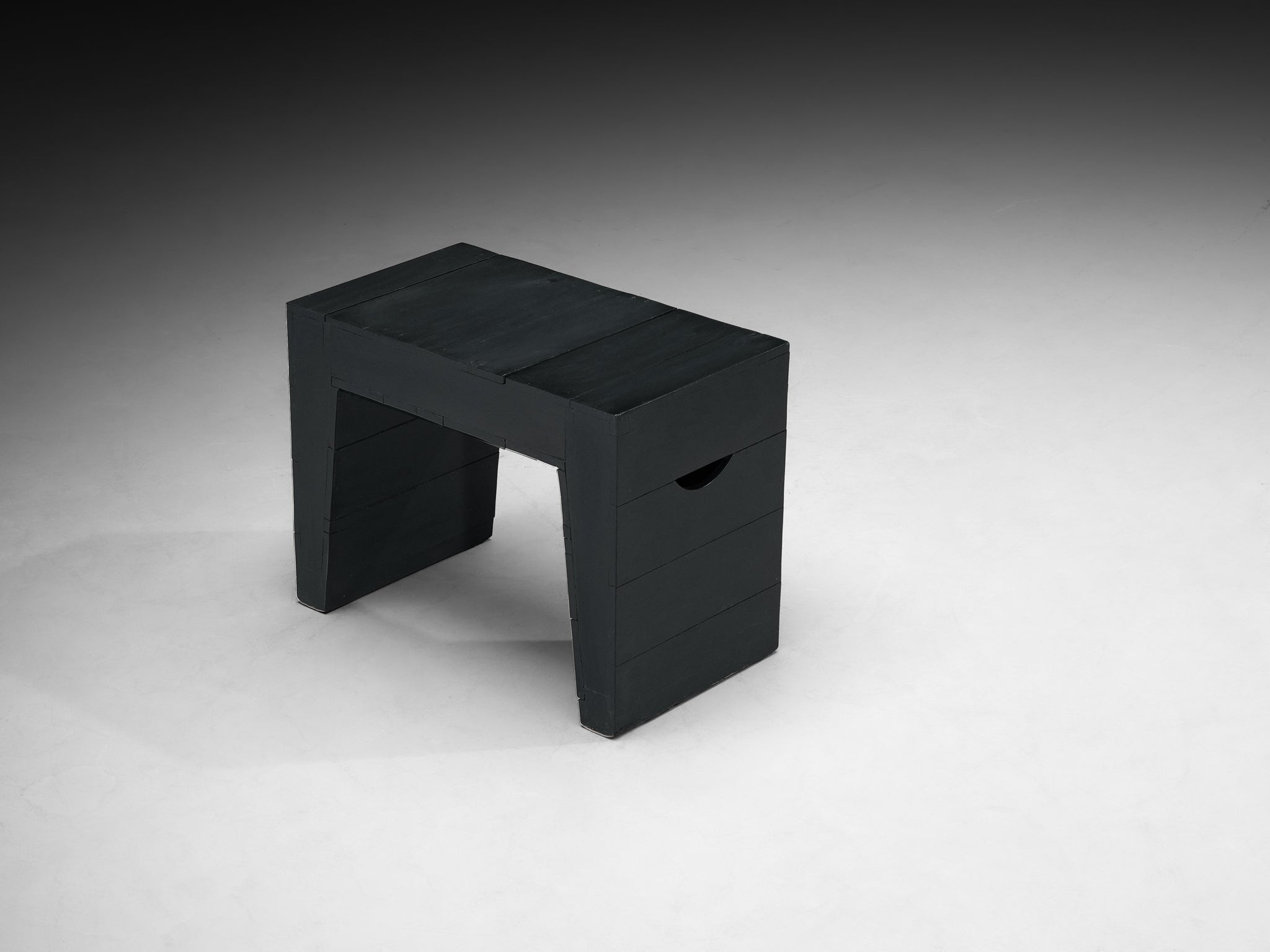
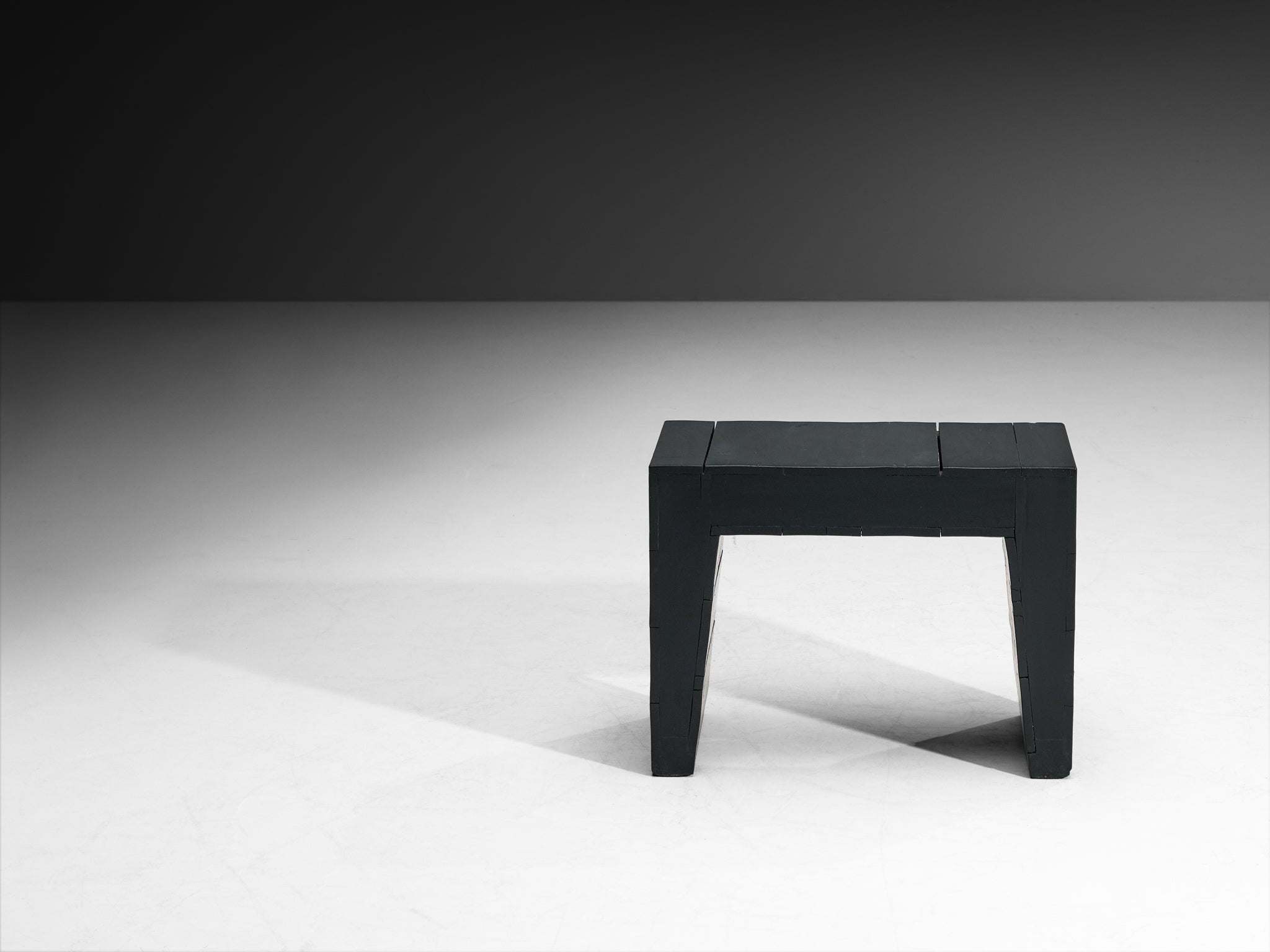
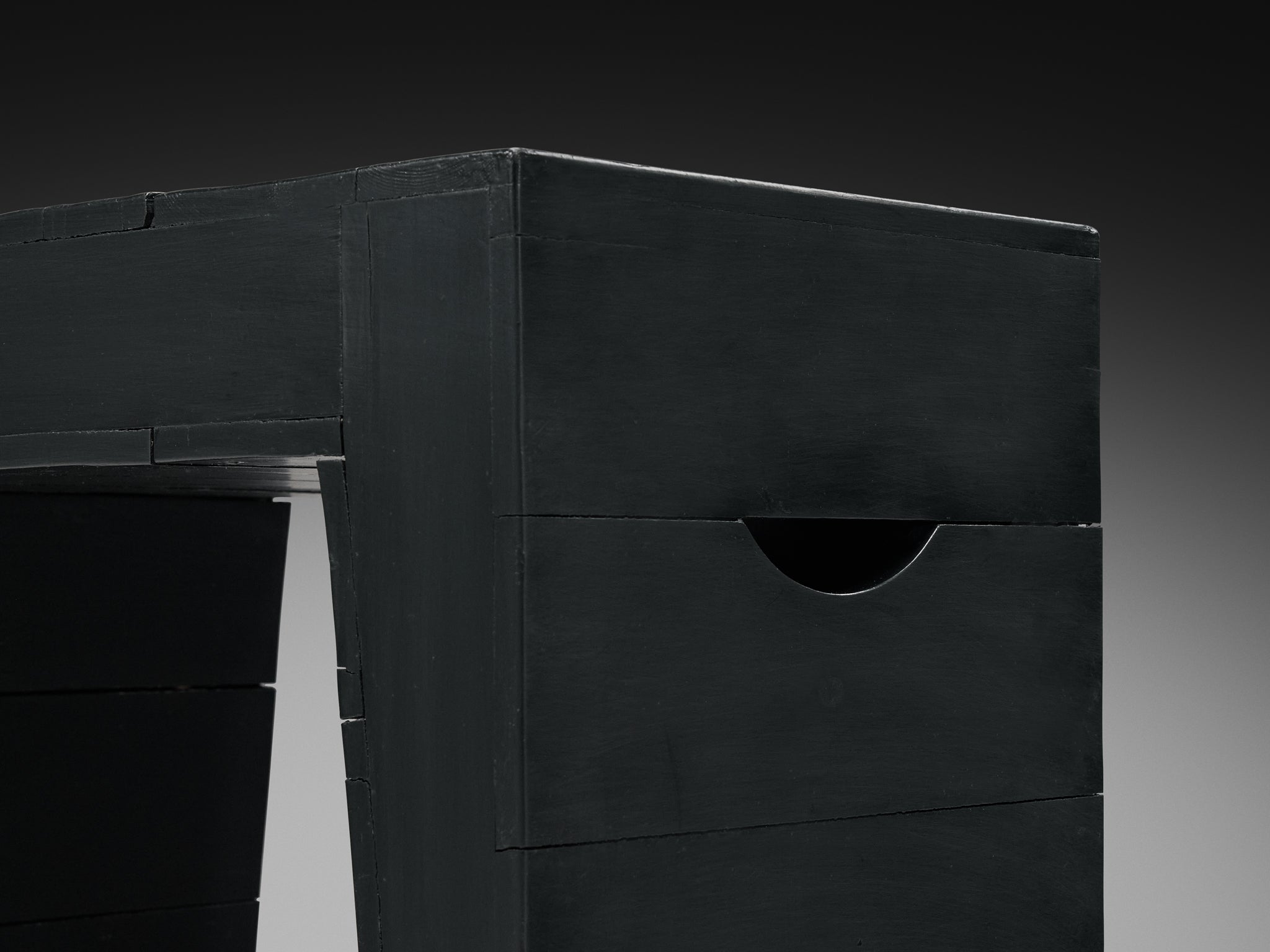
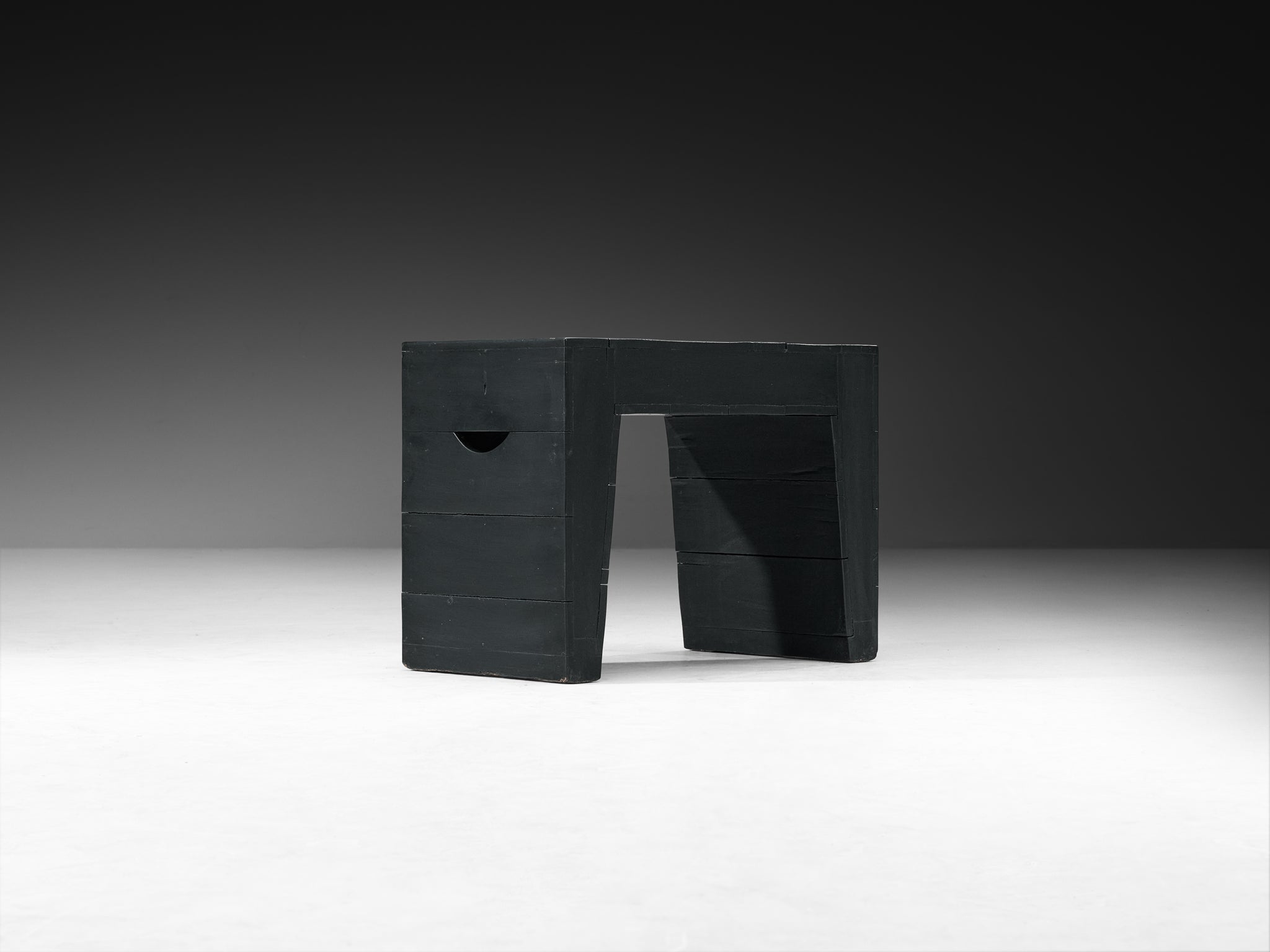
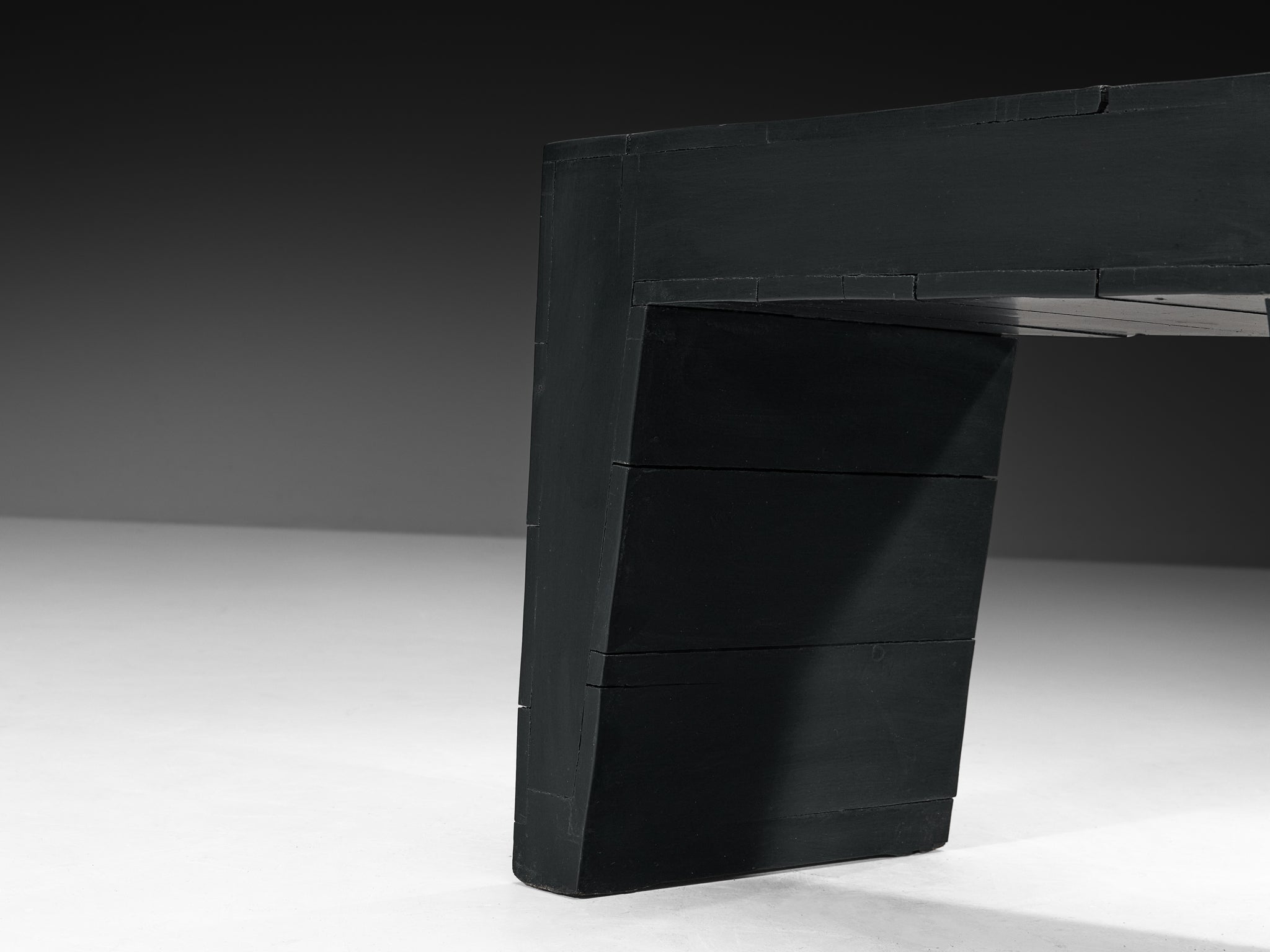
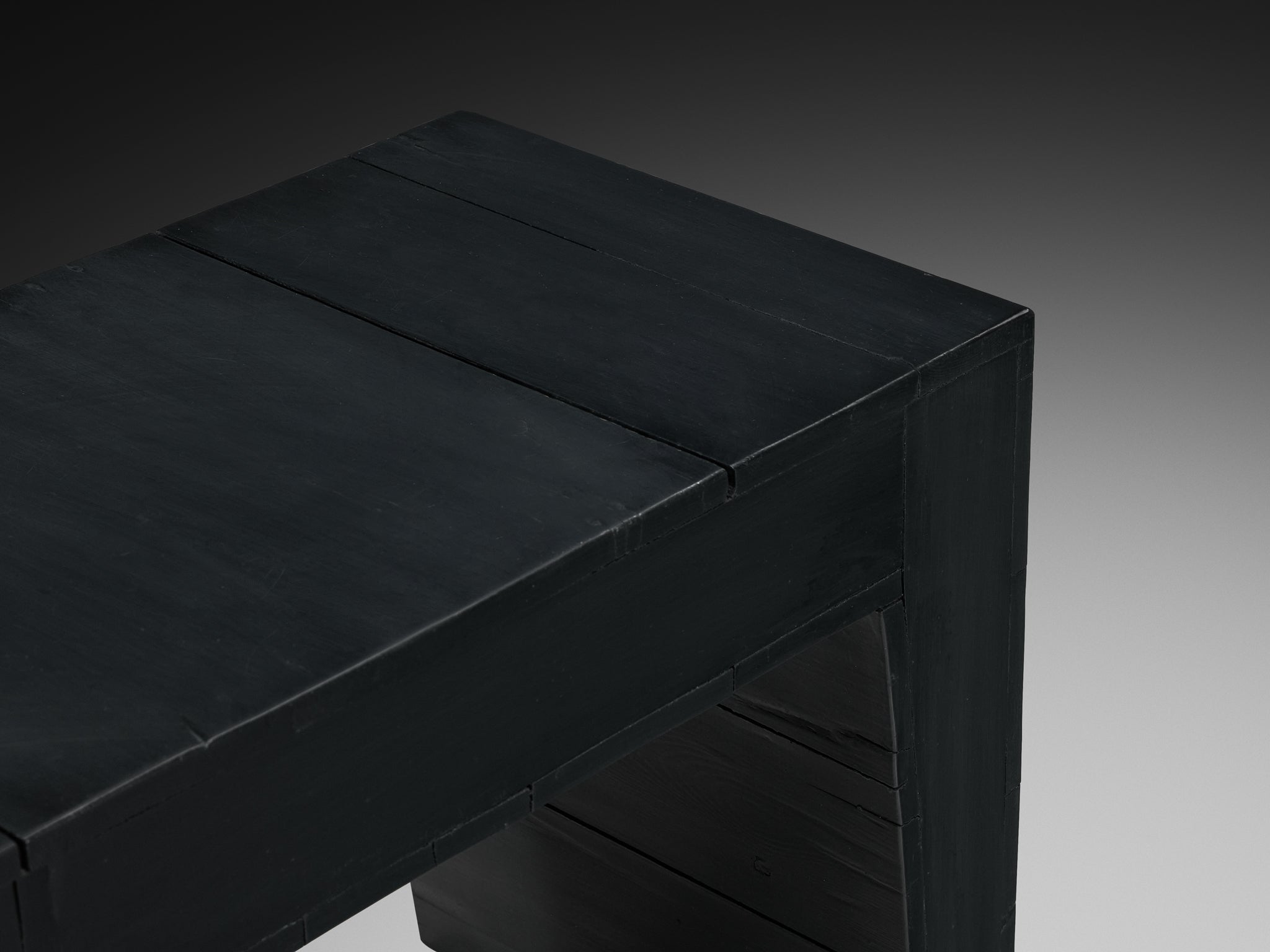
An exceptional stool by Jan de Jong, defined by clean lines and strong geometric volumes. Exemplifying De Jong’s architectural approach to furniture design, it reflects a careful balance of proportion, simplicity, and craftsmanship. Designed for a private villa by Jan de Jong, this rare and highly collectible piece was conceived as an integral part of the architecture and interior, embodying his vision of total design. The wood is lacquered in a deep, dark green with subtle undertones of blue and anthracite.
De Jong studied with the Dutch Benedictine monk and architect Dom Hans van der Laan and was deeply influenced by him. Van der Laan taught courses in architectural theory at the Cursus Kerkelijke Architectuur (Course in Ecclesiastical Architecture) in ’s-Hertogenbosch. De Jong attended these courses and became one of van der Laan’s most dedicated students and followers. Through this mentorship, he absorbed the principles of the Bossche School, including the theory of proportions and the concept of the “plastic number.”
Aligned with their theoretical pursuits, both Van der Laan and De Jong valued the design of individual objects and architecture equally. Their approach centers on perceiving liturgy as a transformative process, elevating ordinary actions to a sacred realm. With its restrained character and ascetic formal language, the furniture and liturgical items seamlessly integrate into the comprehensive design of the buildings.
All the furniture that the men designed is constructed from wooden planks. When viewed from the side, the ending of the planks and the foundational wood to which they are affixed are both visible.
Biography
Jan de Jong (1917–2001) was a Dutch twentieth-century architect and a key representative of the Bossche School, a post-war architectural movement founded by the architect and Benedictine monk Hans Dom van der Laan (1904–1991). This movement is characterized by austere brick façades, a rhythmic arrangement of windows, exposed concrete crossbeams, and grey-painted walls.
De Jong began his career as a carpenter and, around the time of the Second World War, worked his way up to become an architect. Over the course of his career, he developed a diverse body of work encompassing various building types. His architecture was strongly influenced by the proportional theory devised by van der Laan, which emphasizes ideal spatial relationships. Van der Laan argued that natural space is too vast for human experience and that it is the architect’s task to shape spaces that correspond to human scale. From this perspective, proportion, rather than construction technique or visual appearance, forms the essence of architecture.
A central principle of the Bossche School is the “plastic number,” a proportional system derived from the golden ratio, which De Jong frequently applied in his designs.
An exceptional stool by Jan de Jong, defined by clean lines and strong geometric volumes. Exemplifying De Jong’s architectural approach to furniture design, it reflects a careful balance of proportion, simplicity, and craftsmanship. Designed for a private villa by Jan de Jong, this rare and highly collectible piece was conceived as an integral part of the architecture and interior, embodying his vision of total design. The wood is lacquered in a deep, dark green with subtle undertones of blue and anthracite.
De Jong studied with the Dutch Benedictine monk and architect Dom Hans van der Laan and was deeply influenced by him. Van der Laan taught courses in architectural theory at the Cursus Kerkelijke Architectuur (Course in Ecclesiastical Architecture) in ’s-Hertogenbosch. De Jong attended these courses and became one of van der Laan’s most dedicated students and followers. Through this mentorship, he absorbed the principles of the Bossche School, including the theory of proportions and the concept of the “plastic number.”
Aligned with their theoretical pursuits, both Van der Laan and De Jong valued the design of individual objects and architecture equally. Their approach centers on perceiving liturgy as a transformative process, elevating ordinary actions to a sacred realm. With its restrained character and ascetic formal language, the furniture and liturgical items seamlessly integrate into the comprehensive design of the buildings.
All the furniture that the men designed is constructed from wooden planks. When viewed from the side, the ending of the planks and the foundational wood to which they are affixed are both visible.
Biography
Jan de Jong (1917–2001) was a Dutch twentieth-century architect and a key representative of the Bossche School, a post-war architectural movement founded by the architect and Benedictine monk Hans Dom van der Laan (1904–1991). This movement is characterized by austere brick façades, a rhythmic arrangement of windows, exposed concrete crossbeams, and grey-painted walls.
De Jong began his career as a carpenter and, around the time of the Second World War, worked his way up to become an architect. Over the course of his career, he developed a diverse body of work encompassing various building types. His architecture was strongly influenced by the proportional theory devised by van der Laan, which emphasizes ideal spatial relationships. Van der Laan argued that natural space is too vast for human experience and that it is the architect’s task to shape spaces that correspond to human scale. From this perspective, proportion, rather than construction technique or visual appearance, forms the essence of architecture.
A central principle of the Bossche School is the “plastic number,” a proportional system derived from the golden ratio, which De Jong frequently applied in his designs.

Choose options
Jan de Jong Rare Custom Stool in Dark Green Lacquered Wood
Sale price£3,791.68
Regular price
Product Details
VAT within the EU: When buying or delivering an item within the EU, VAT usually applies and will be added.