
George Nakashima Round Turned-Leg Dining Table in American Black Walnut 152cm
 Open here
George Nakashima for George Nakashima Studio, round turned-leg dining table, American black walnut, United States 1965
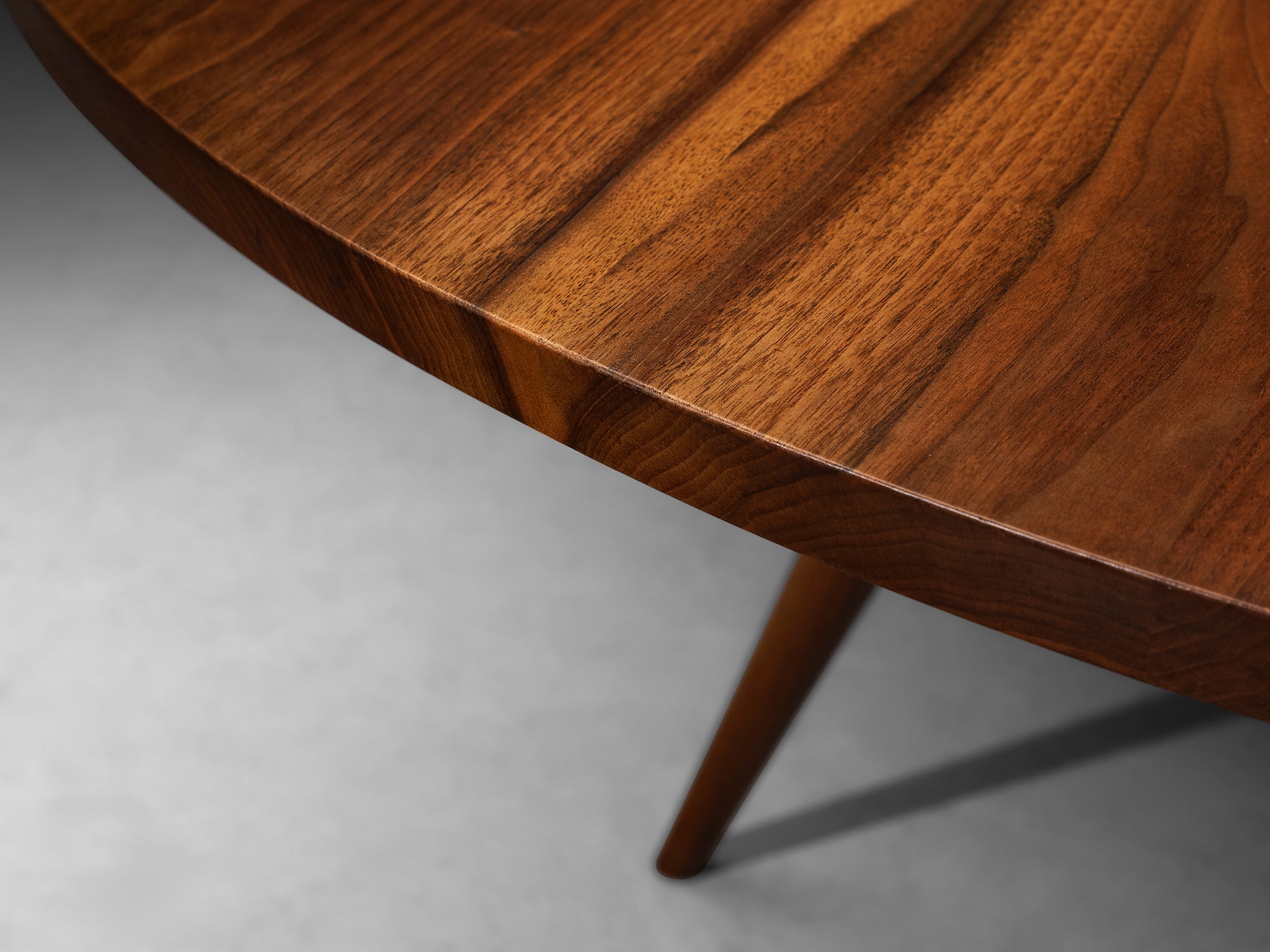
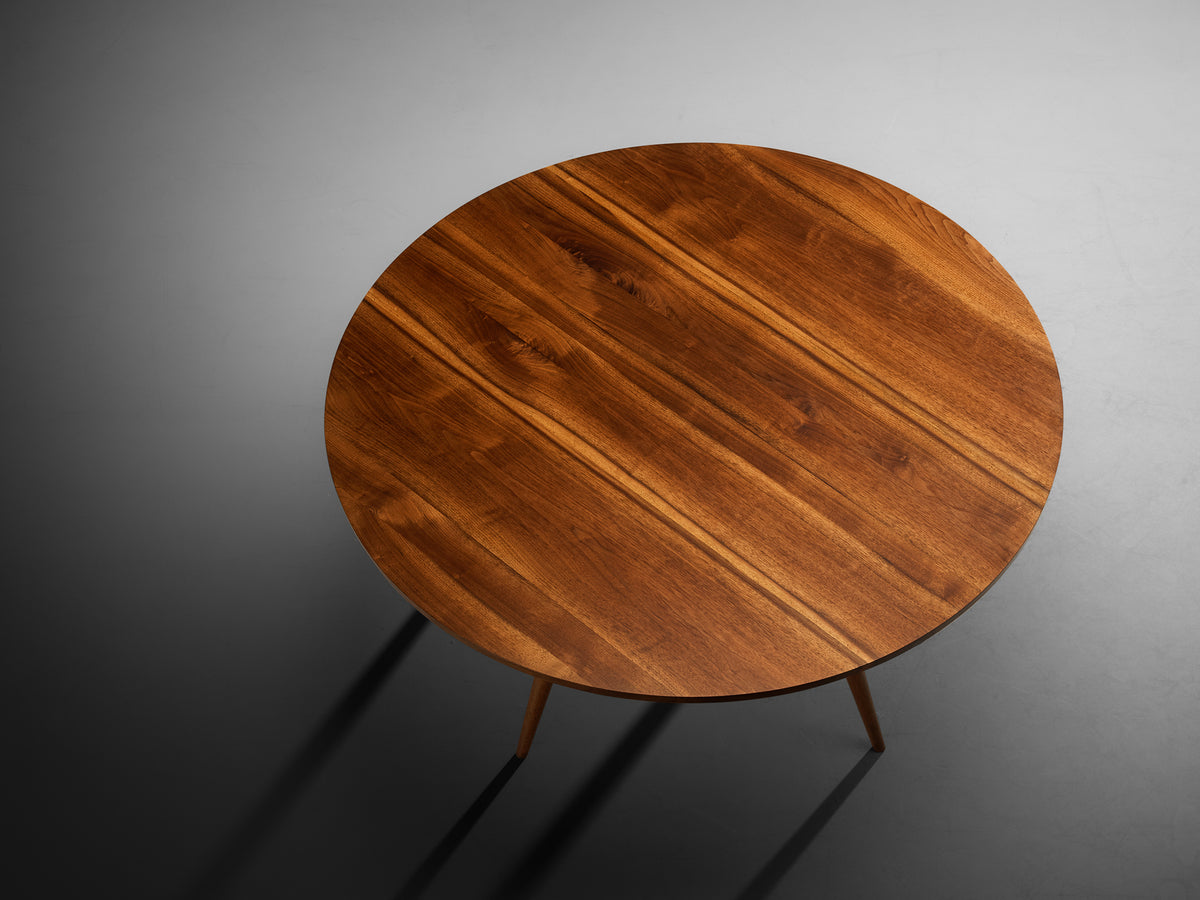
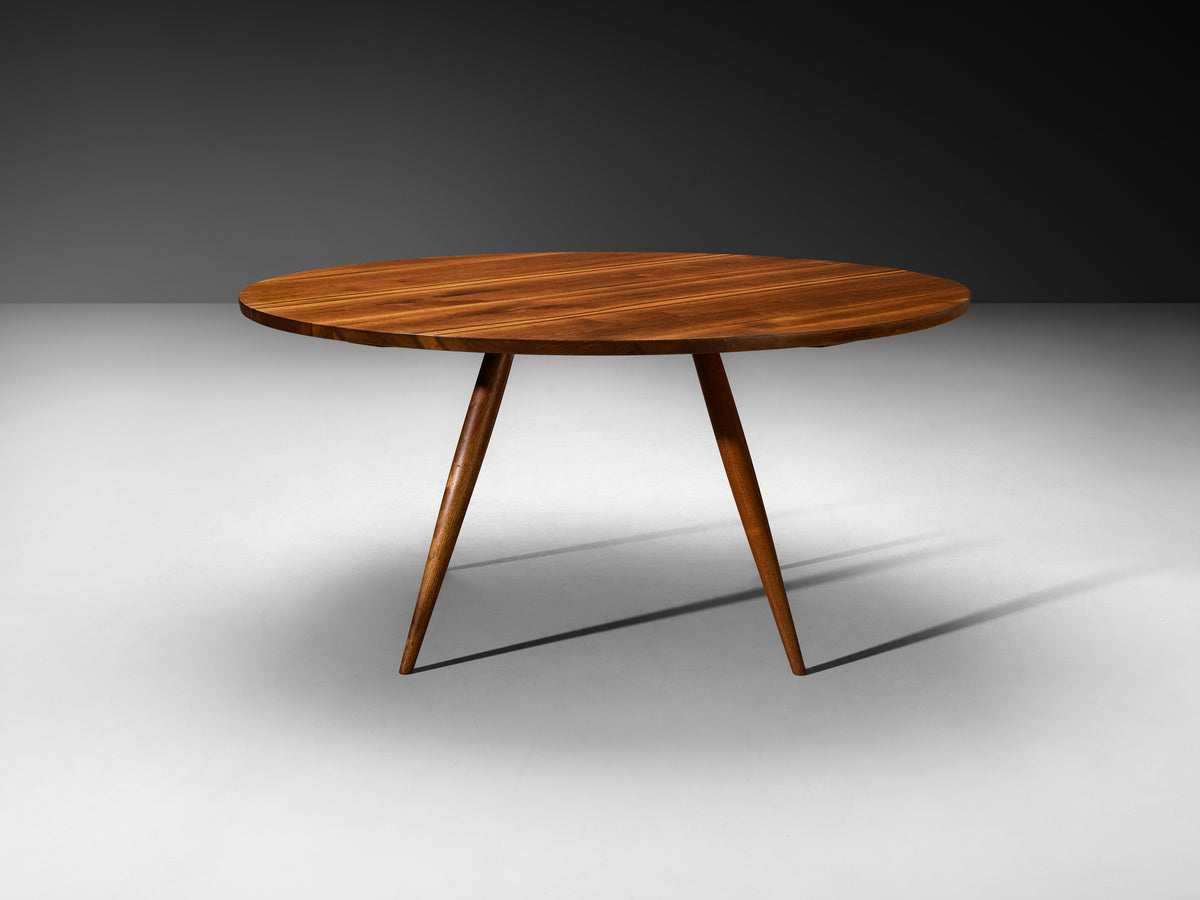
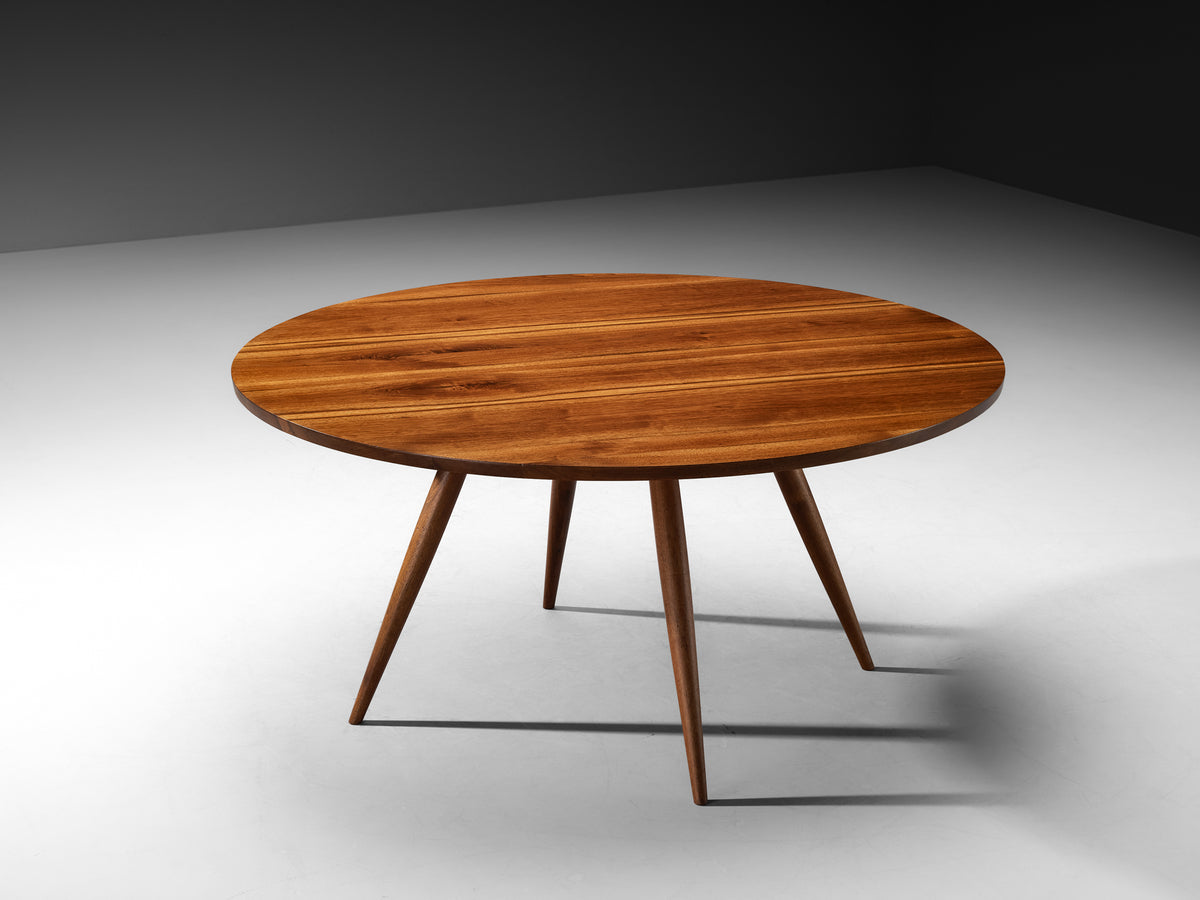
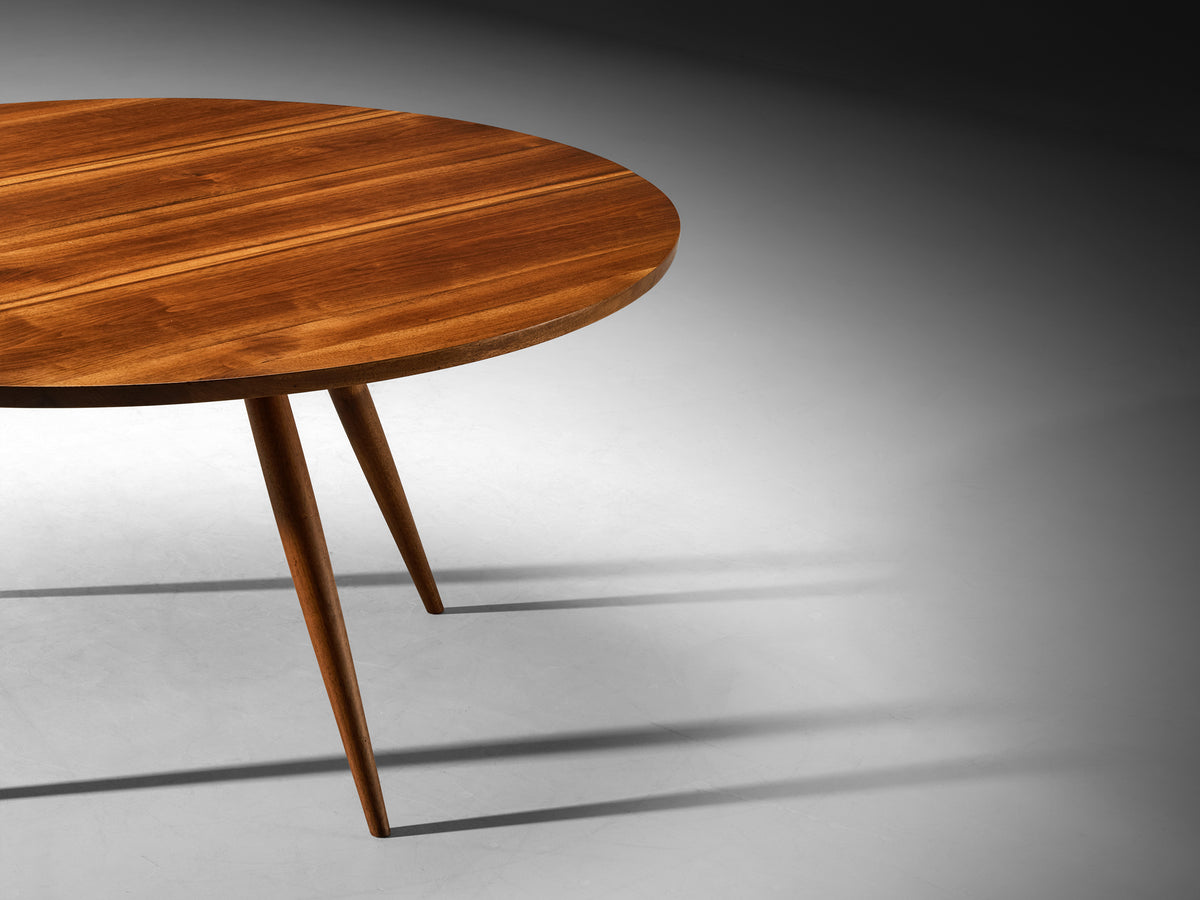
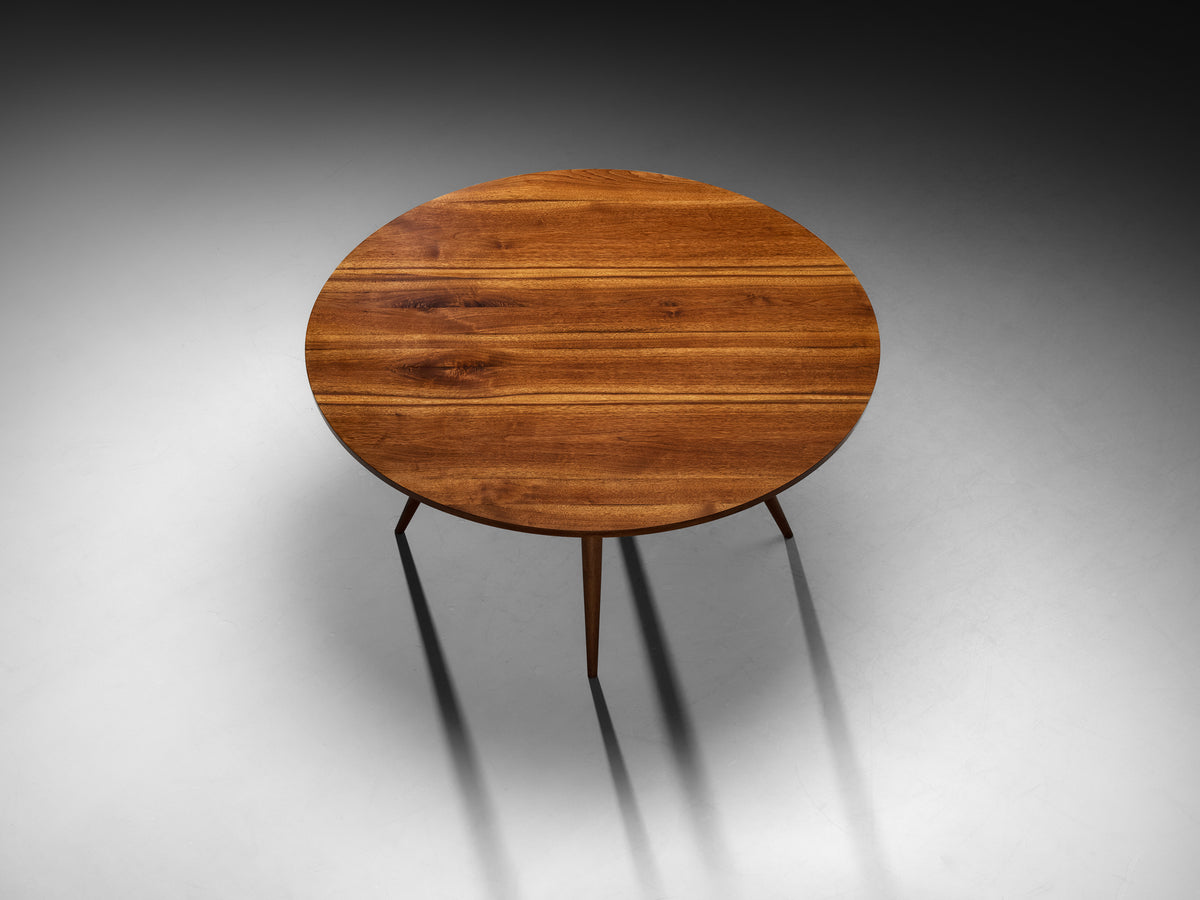
Crafted in 1965, this round dining table by George Nakashima shows how quietly powerful his work could be. There is no unnecessary decoration and no attempt to disguise the material. Instead, the table is defined by proportion, touch and the natural beauty of American black walnut. The circular top feels generous and grounded, while the four turned, splayed legs introduce a sense of movement and lightness beneath it.
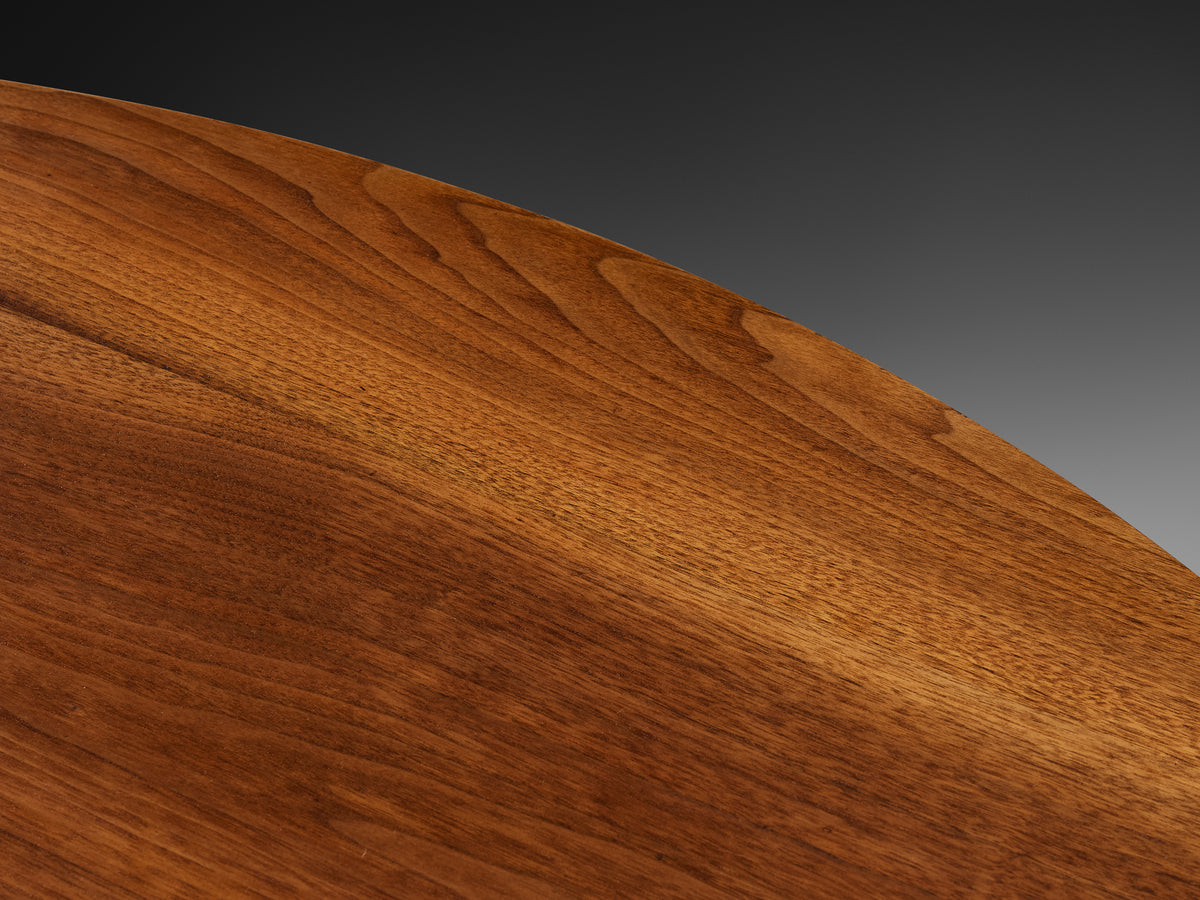
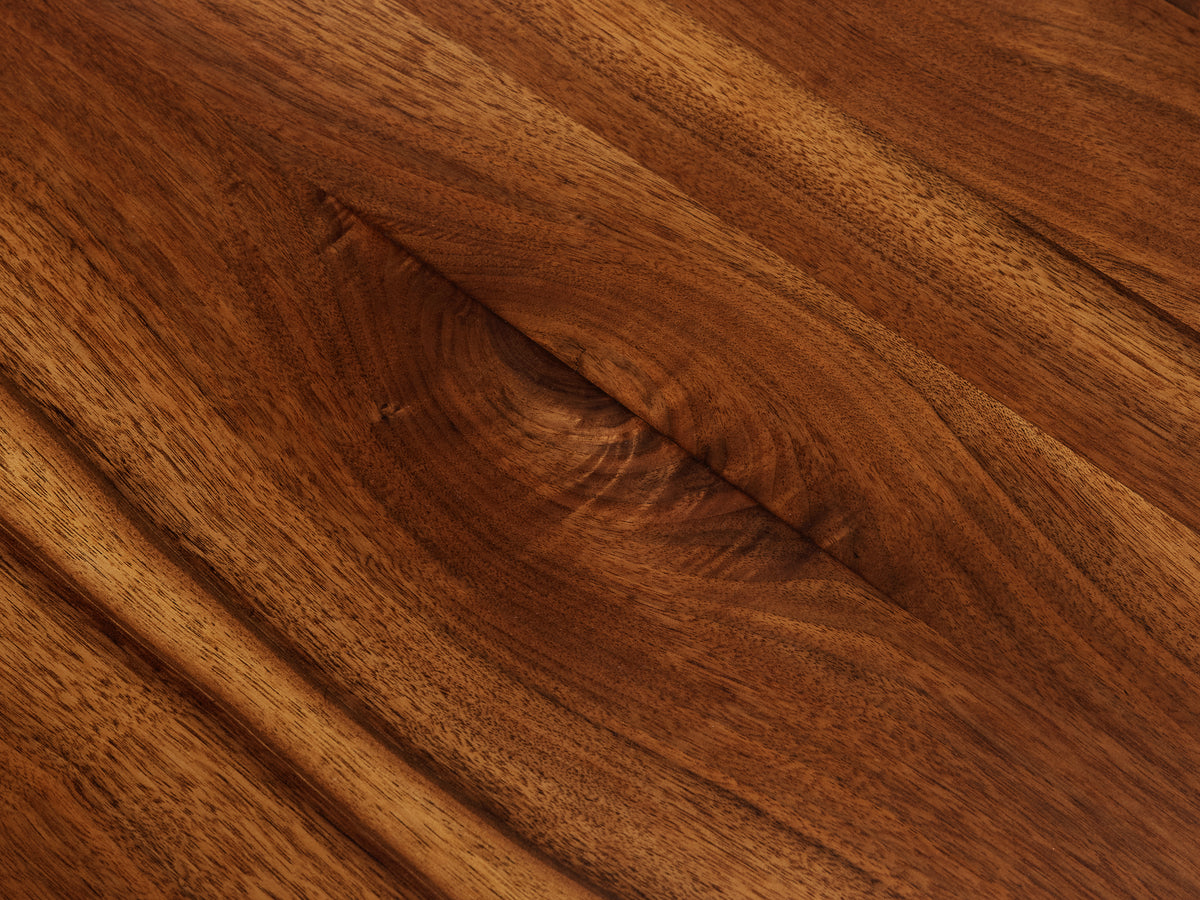
What makes the table especially compelling is the way Nakashima allowed the wood to remain the main subject. The shifting grain across the surface becomes a kind of natural drawing, revealing the individual character of the tree.
Nakashima saw trees as living beings with their own histories, and furniture making as a way of continuing that life. His often-repeated idea of giving a tree a “second life” transformed craftsmanship into something almost spiritual: the finished object was not merely useful, but a continuation of nature through human hands.
The simplicity of this table is therefore deceptive. Its restrained silhouette reflects discipline, respect and careful observation. The round form brings people together, while the warmth of the walnut gives the piece an intimate, almost domestic presence.
Biography
George Nakashima (1905-1990) was a well-known woodworker, architect, and furniture designer from Japanese descendants. He was born in Spokane, Washington and enrolled in the University of Washington program in architecture. After his graduation in 1931, he decided to live his life as a bohemian in France. Afterwards, he spent some time in North Africa and eventually settled in Japan for some time. There, he started working for Antonin Raymond, who was an American architect. While working for Raymond, Nakashima extensively toured Japan while trying to understand the Japanese architecture and design. Around 1940, Nakashima decided to leave Japan and returned to the US. However, like many other with a Japanese ancestry, he was interned during World War Two and sent to Camp Minidoka in Idaho. There, Nakashima met a master woodcarver who tutored him in Japanese crafting techniques. From him, he learned to master traditional Japanese hand tools and joinery techniques. From here onwards, he began to use woodworking with discipline and patience, striving towards perfection in his designs. In 1943, he was released from the camp and invited by Antonin Raymond to live in his farm in New Hope, Pennsylvania. During this period, New Hope formed the home port for many great designers such as Frank Lloyd Powell and Paul Evans. Nakashima was a very spiritual and philosophical designer. The basis of Nakashima's work was derived from his practice of integral yoga. Therefore, primary goal of Nakashima's work was to live in harmony with nature rather than to destroy it for their own use. Above all, Nakashima wanted to embody a message to all modern societies that we must constantly remember the eternal in all that we do. He often said of his own work that he gave trees a second life. His designs are known for their exquisite craftsmanship and are often 'signed' with dovetails and butterfly connections. With these ideas in mind, Nakashima created his own style based on Japanese designs and shop practices, combined with the American and International Modern Styles. Therefore, he became one of the best 20th century American Art furniture designers.
Crafted in 1965, this round dining table by George Nakashima shows how quietly powerful his work could be. There is no unnecessary decoration and no attempt to disguise the material. Instead, the table is defined by proportion, touch and the natural beauty of American black walnut. The circular top feels generous and grounded, while the four turned, splayed legs introduce a sense of movement and lightness beneath it.
What makes the table especially compelling is the way Nakashima allowed the wood to remain the main subject. The shifting grain across the surface becomes a kind of natural drawing, revealing the individual character of the tree.
Nakashima saw trees as living beings with their own histories, and furniture making as a way of continuing that life. His often-repeated idea of giving a tree a “second life” transformed craftsmanship into something almost spiritual: the finished object was not merely useful, but a continuation of nature through human hands.
The simplicity of this table is therefore deceptive. Its restrained silhouette reflects discipline, respect and careful observation. The round form brings people together, while the warmth of the walnut gives the piece an intimate, almost domestic presence.
Biography
George Nakashima (1905-1990) was a well-known woodworker, architect, and furniture designer from Japanese descendants. He was born in Spokane, Washington and enrolled in the University of Washington program in architecture. After his graduation in 1931, he decided to live his life as a bohemian in France. Afterwards, he spent some time in North Africa and eventually settled in Japan for some time. There, he started working for Antonin Raymond, who was an American architect. While working for Raymond, Nakashima extensively toured Japan while trying to understand the Japanese architecture and design. Around 1940, Nakashima decided to leave Japan and returned to the US. However, like many other with a Japanese ancestry, he was interned during World War Two and sent to Camp Minidoka in Idaho. There, Nakashima met a master woodcarver who tutored him in Japanese crafting techniques. From him, he learned to master traditional Japanese hand tools and joinery techniques. From here onwards, he began to use woodworking with discipline and patience, striving towards perfection in his designs. In 1943, he was released from the camp and invited by Antonin Raymond to live in his farm in New Hope, Pennsylvania. During this period, New Hope formed the home port for many great designers such as Frank Lloyd Powell and Paul Evans. Nakashima was a very spiritual and philosophical designer. The basis of Nakashima's work was derived from his practice of integral yoga. Therefore, primary goal of Nakashima's work was to live in harmony with nature rather than to destroy it for their own use. Above all, Nakashima wanted to embody a message to all modern societies that we must constantly remember the eternal in all that we do. He often said of his own work that he gave trees a second life. His designs are known for their exquisite craftsmanship and are often 'signed' with dovetails and butterfly connections. With these ideas in mind, Nakashima created his own style based on Japanese designs and shop practices, combined with the American and International Modern Styles. Therefore, he became one of the best 20th century American Art furniture designers.

Choose options
George Nakashima Round Turned-Leg Dining Table in American Black Walnut 152cm
Sale price£71,240.14
Regular price
Product Details
VAT within the EU: When buying or delivering an item within the EU, VAT usually applies and will be added.