




George Nakashima Double Pedestal Desk with Live-Edge Top
 Open here
George Nakashima for George Nakashima Studio, Double Pedestal Free-Edge writing desk, American black walnut, United States, 1969
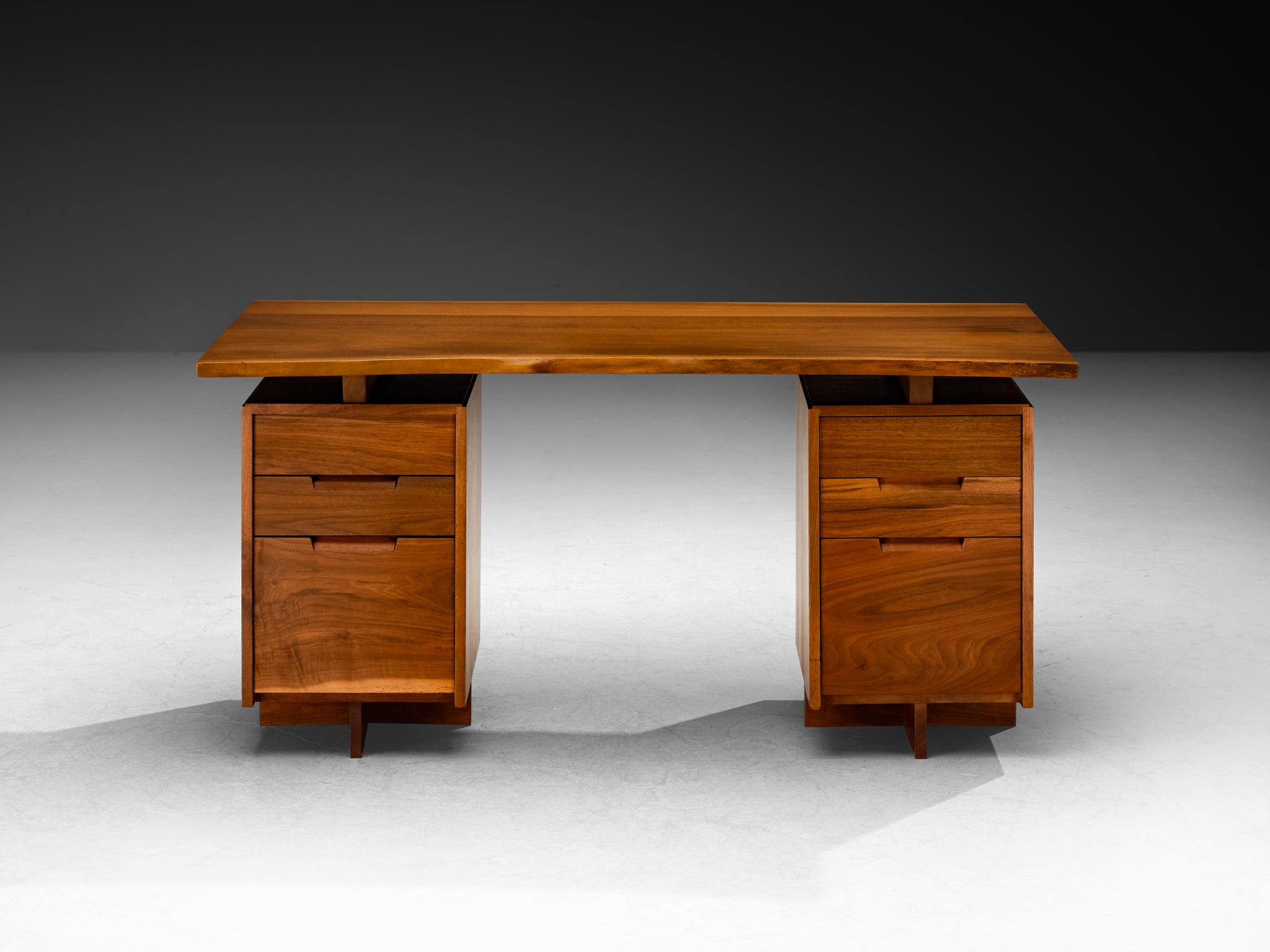
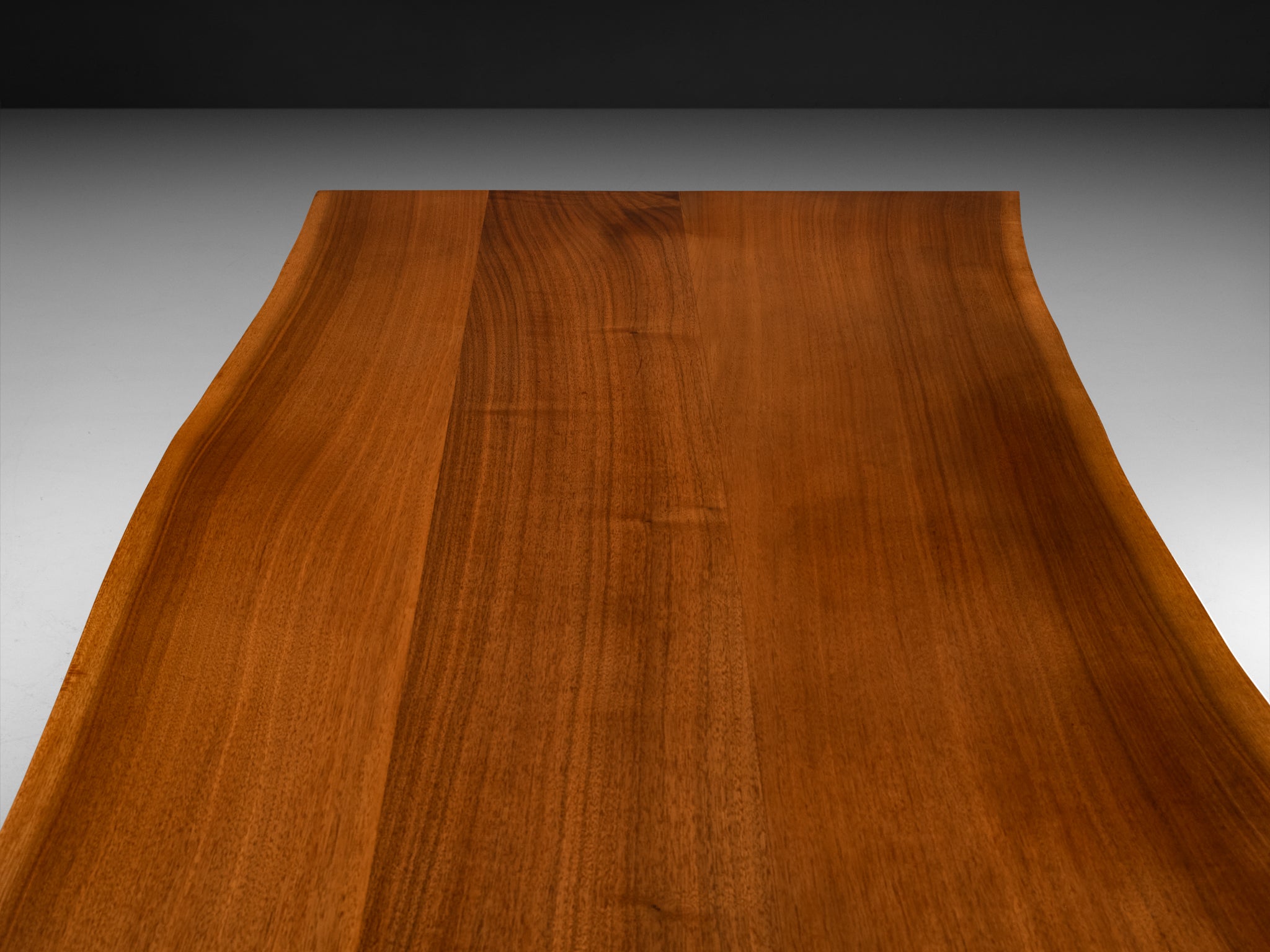
You have encountered a truly outstanding example of George Nakashima’s Double Pedestal desk design. Made custom for a private client in 1969, it exemplifies his signature style, which blends nature and design, evident in the raw beauty of the wood juxtaposed against the clean, modern lines of the desk's base. This piece stands out for its free-edge top crafted from American black walnut, highlighting the natural contours and texture of the wood.
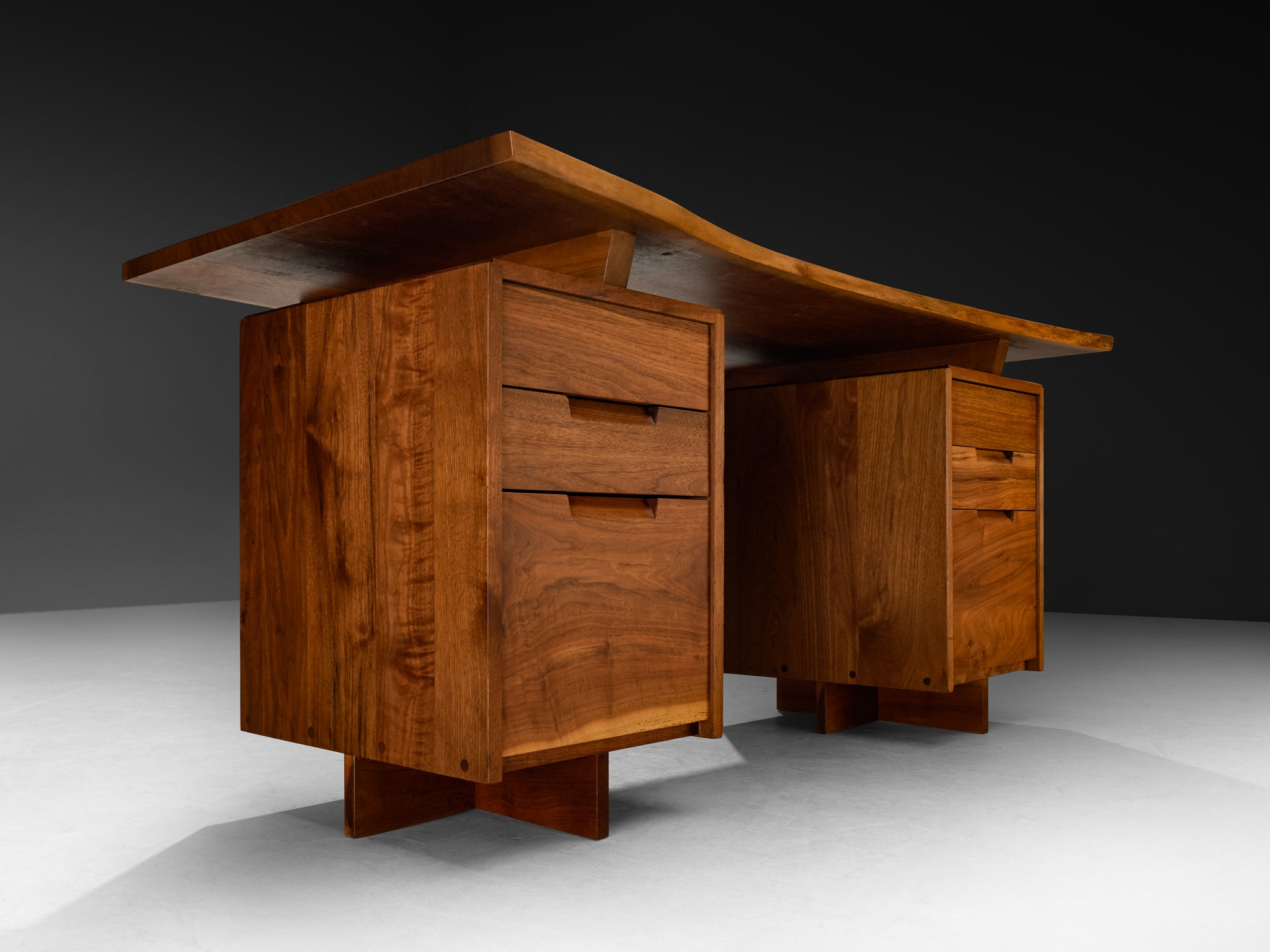
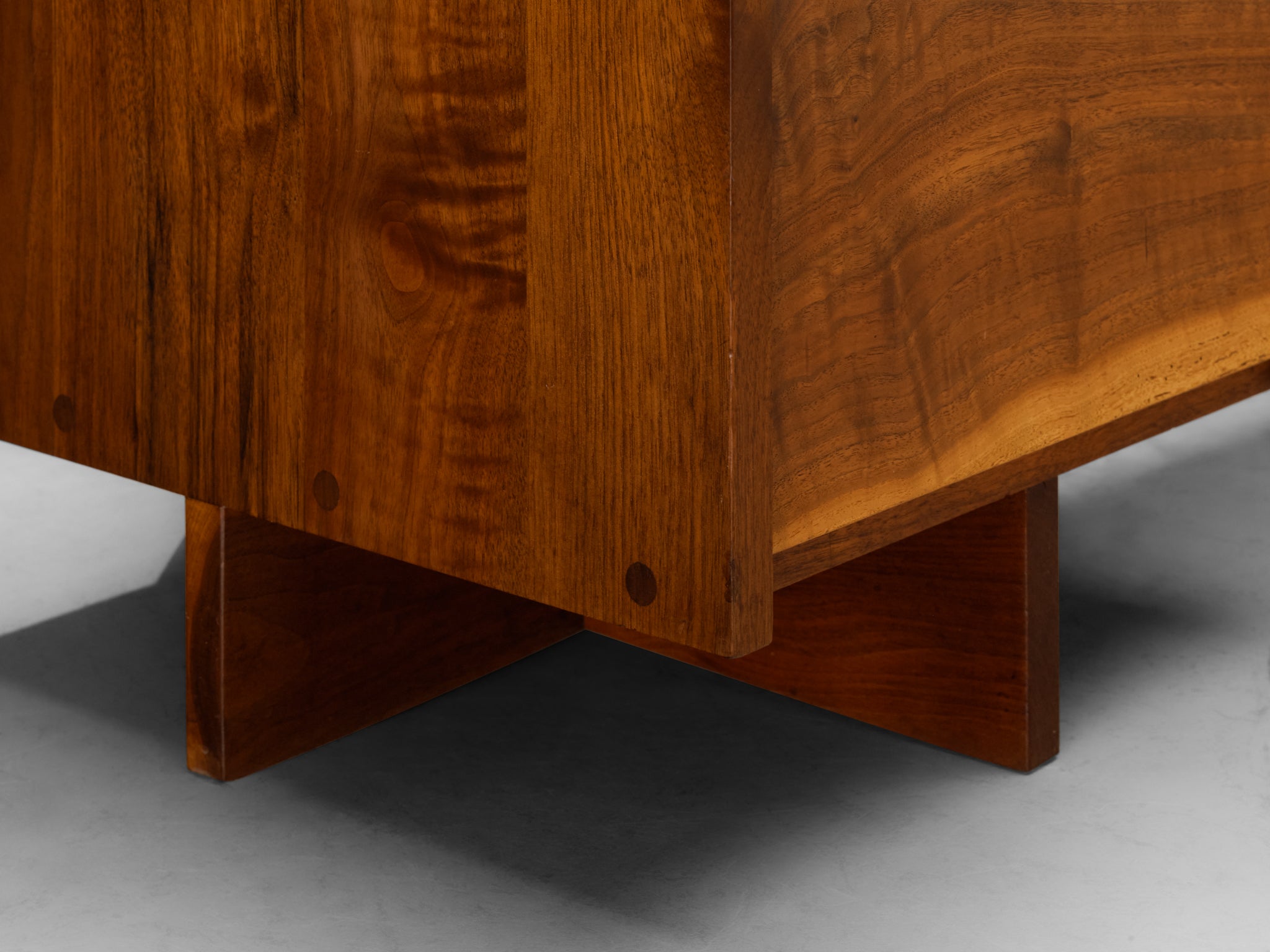
The table is supported by a pair of pedestals which incorporate a set of drawers with beautiful recessed handles. The base is formed by wooden slats intersecting perpendicularly to create a cross-shaped support. The joinery techniques used in the desk are meticulously executed, displaying fine craftsmanship and attention to detail. This early and rare desk by Nakashima Studio dates back to 1969. One drawer was adjusted at a later date. The desk comes with a copy of the original order card issued by the Nakashima Foundation. Nakashima succeeded in creating a durable piece of furniture with a timeless aesthetic and impeccable quality made possible by his close relationship with nature.
Biography
George Nakashima (1905-1990) was a well-known woodworker, architect and furniture designer from Japanese descendants. He was born in Spokane, Washington and enrolled in the University of Washington program in architecture. After his graduation in 1931, he decided to live his life as a bohemian in France. Afterwards, he spent some time in North Africa and eventually settled in Japan for some time. There, he started working for Antonin Raymond, who was an American architect. While working for Raymond, Nakashima extensively toured Japan while trying to understand the Japanese architecture and design. Around 1940, Nakashima decided to leave Japan and returned to the US. However, like many others with a Japanese ancestry, he was interned during World War Two and sent to Camp Minidoka in Idaho. There, Nakashima met a master woodcarver who tutored him in Japanese crafting techniques. From him, he learned to master traditional Japanese hand tools and joinery techniques. From here onwards, he began to use woodworking with discipline and patience, striving towards perfection in his designs. In 1943, he was released from the camp and invited by Antonin Raymond to live in his farm in New Hope, Pennsylvania. During this period, New Hope formed the home port for many great designers such as Phillip Lloyd Powell and Paul Evans. Nakashima was a very spiritual and philosophical designer. The basis of Nakashima's work was derived from his practice of integral yoga. Therefore, primary goal of Nakashima's work was to live in harmony with nature rather than to destroy it for their own use. Above all, Nakashima wanted to embody a message to all modern societies that we must constantly remember the eternal in all that we do. He often said of his own work that he gave trees a second life. His designs are known for their exquisite craftsmanship and are often 'signed' with dovetails and butterfly connections. With these ideas in mind, Nakashima created his own style based on Japanese designs and shop practices, combined with the American and International Modern Styles. Therefore, he became one of the best 20th century American Art furniture designers.
You have encountered a truly outstanding example of George Nakashima’s Double Pedestal desk design. Made custom for a private client in 1969, it exemplifies his signature style, which blends nature and design, evident in the raw beauty of the wood juxtaposed against the clean, modern lines of the desk's base. This piece stands out for its free-edge top crafted from American black walnut, highlighting the natural contours and texture of the wood.
The table is supported by a pair of pedestals which incorporate a set of drawers with beautiful recessed handles. The base is formed by wooden slats intersecting perpendicularly to create a cross-shaped support. The joinery techniques used in the desk are meticulously executed, displaying fine craftsmanship and attention to detail. This early and rare desk by Nakashima Studio dates back to 1969. One drawer was adjusted at a later date. The desk comes with a copy of the original order card issued by the Nakashima Foundation. Nakashima succeeded in creating a durable piece of furniture with a timeless aesthetic and impeccable quality made possible by his close relationship with nature.
Biography
George Nakashima (1905-1990) was a well-known woodworker, architect and furniture designer from Japanese descendants. He was born in Spokane, Washington and enrolled in the University of Washington program in architecture. After his graduation in 1931, he decided to live his life as a bohemian in France. Afterwards, he spent some time in North Africa and eventually settled in Japan for some time. There, he started working for Antonin Raymond, who was an American architect. While working for Raymond, Nakashima extensively toured Japan while trying to understand the Japanese architecture and design. Around 1940, Nakashima decided to leave Japan and returned to the US. However, like many others with a Japanese ancestry, he was interned during World War Two and sent to Camp Minidoka in Idaho. There, Nakashima met a master woodcarver who tutored him in Japanese crafting techniques. From him, he learned to master traditional Japanese hand tools and joinery techniques. From here onwards, he began to use woodworking with discipline and patience, striving towards perfection in his designs. In 1943, he was released from the camp and invited by Antonin Raymond to live in his farm in New Hope, Pennsylvania. During this period, New Hope formed the home port for many great designers such as Phillip Lloyd Powell and Paul Evans. Nakashima was a very spiritual and philosophical designer. The basis of Nakashima's work was derived from his practice of integral yoga. Therefore, primary goal of Nakashima's work was to live in harmony with nature rather than to destroy it for their own use. Above all, Nakashima wanted to embody a message to all modern societies that we must constantly remember the eternal in all that we do. He often said of his own work that he gave trees a second life. His designs are known for their exquisite craftsmanship and are often 'signed' with dovetails and butterfly connections. With these ideas in mind, Nakashima created his own style based on Japanese designs and shop practices, combined with the American and International Modern Styles. Therefore, he became one of the best 20th century American Art furniture designers.

Choose options
George Nakashima Double Pedestal Desk with Live-Edge Top
Sale price£95,484.70
Regular price
Product Details
VAT within the EU: When buying or delivering an item within the EU, VAT usually applies and will be added.