
Frits Henningsen Three-Seat Sofa in Pastel Upholstery
Tearsheet
×
Receive a copy in your email or download directly:
I accept emails from Morentz.
 Open here
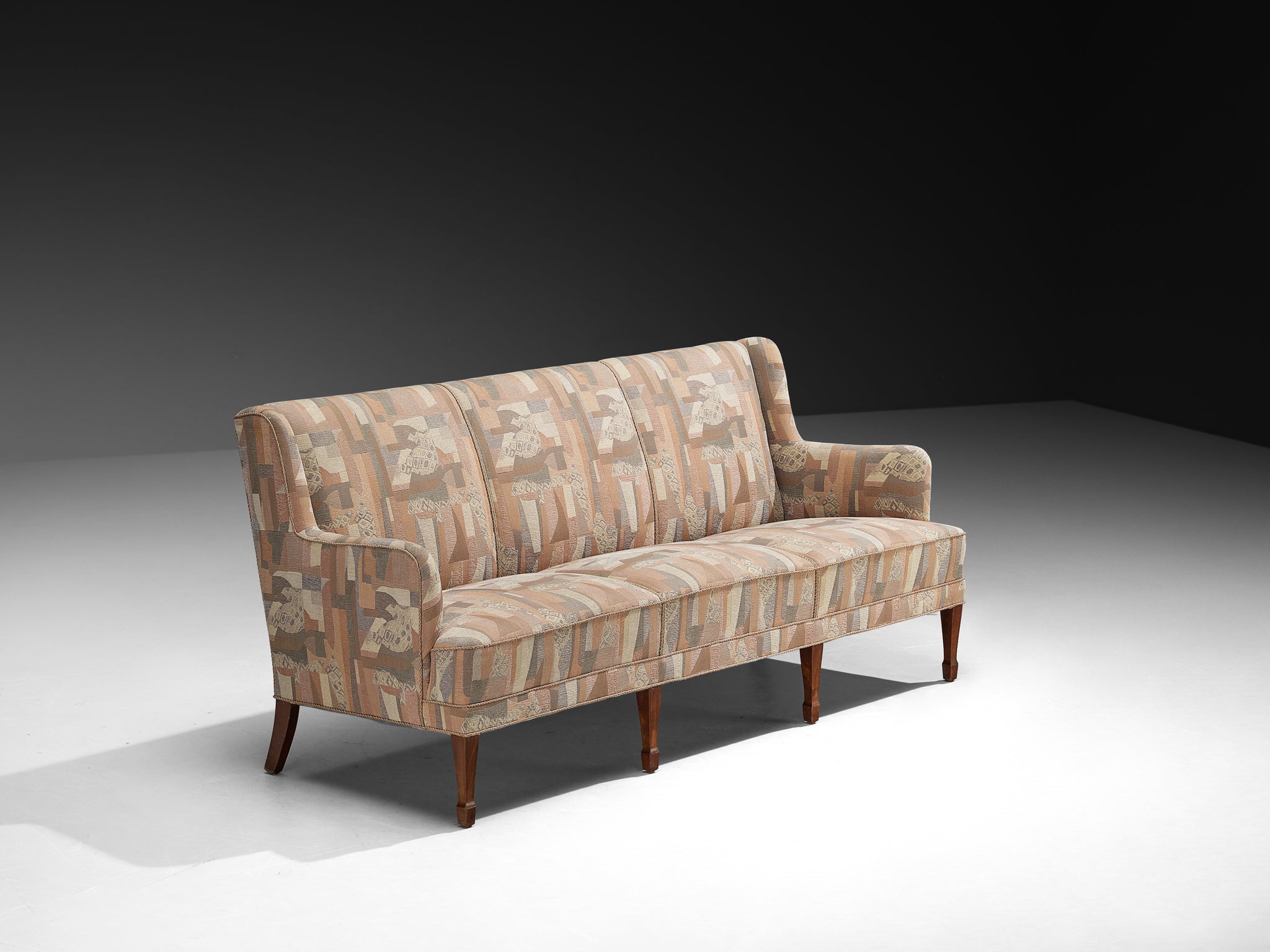
Frits Henningsen, three-seat sofa, fabric and beech, Denmark, 1940s.
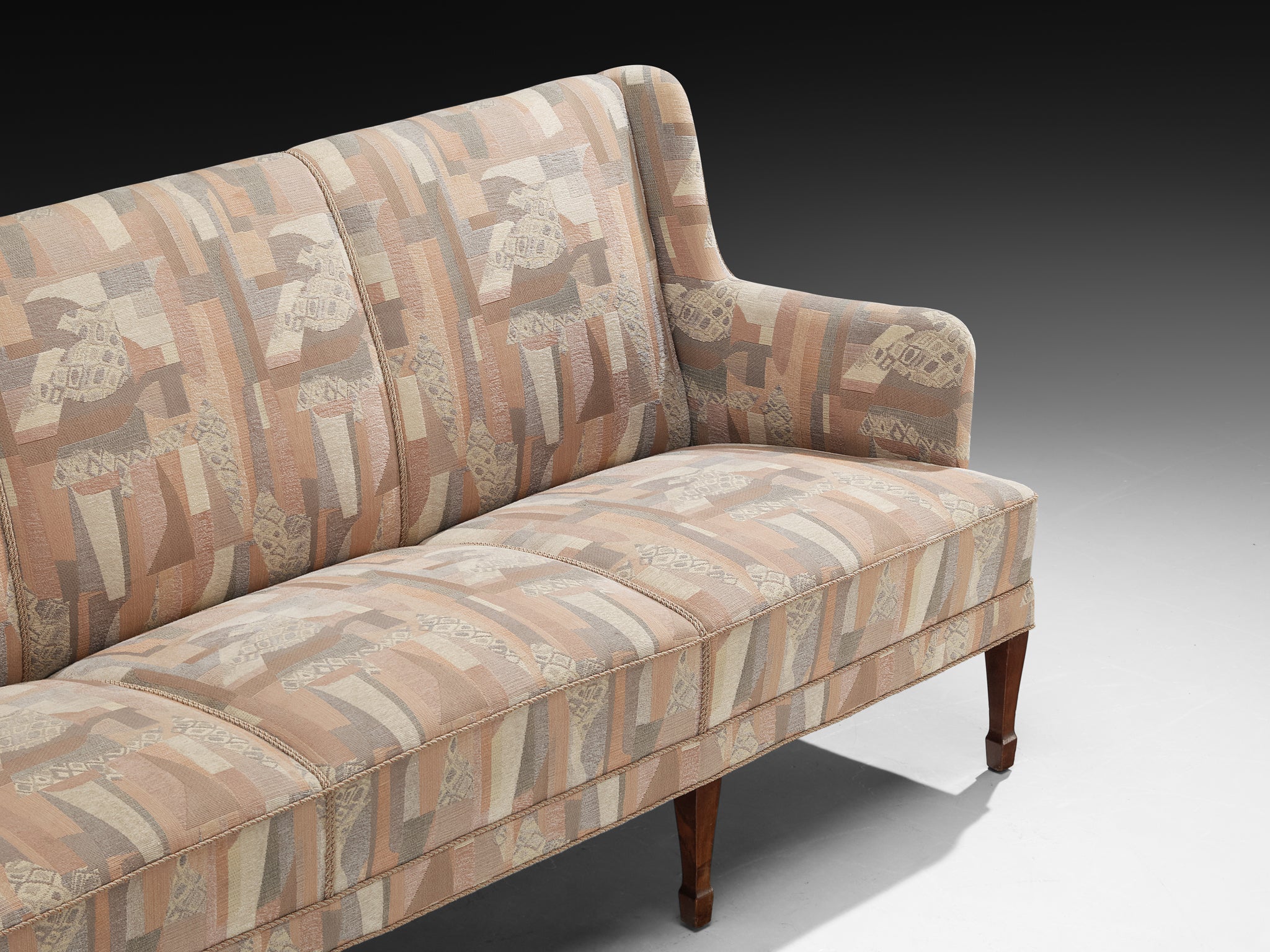
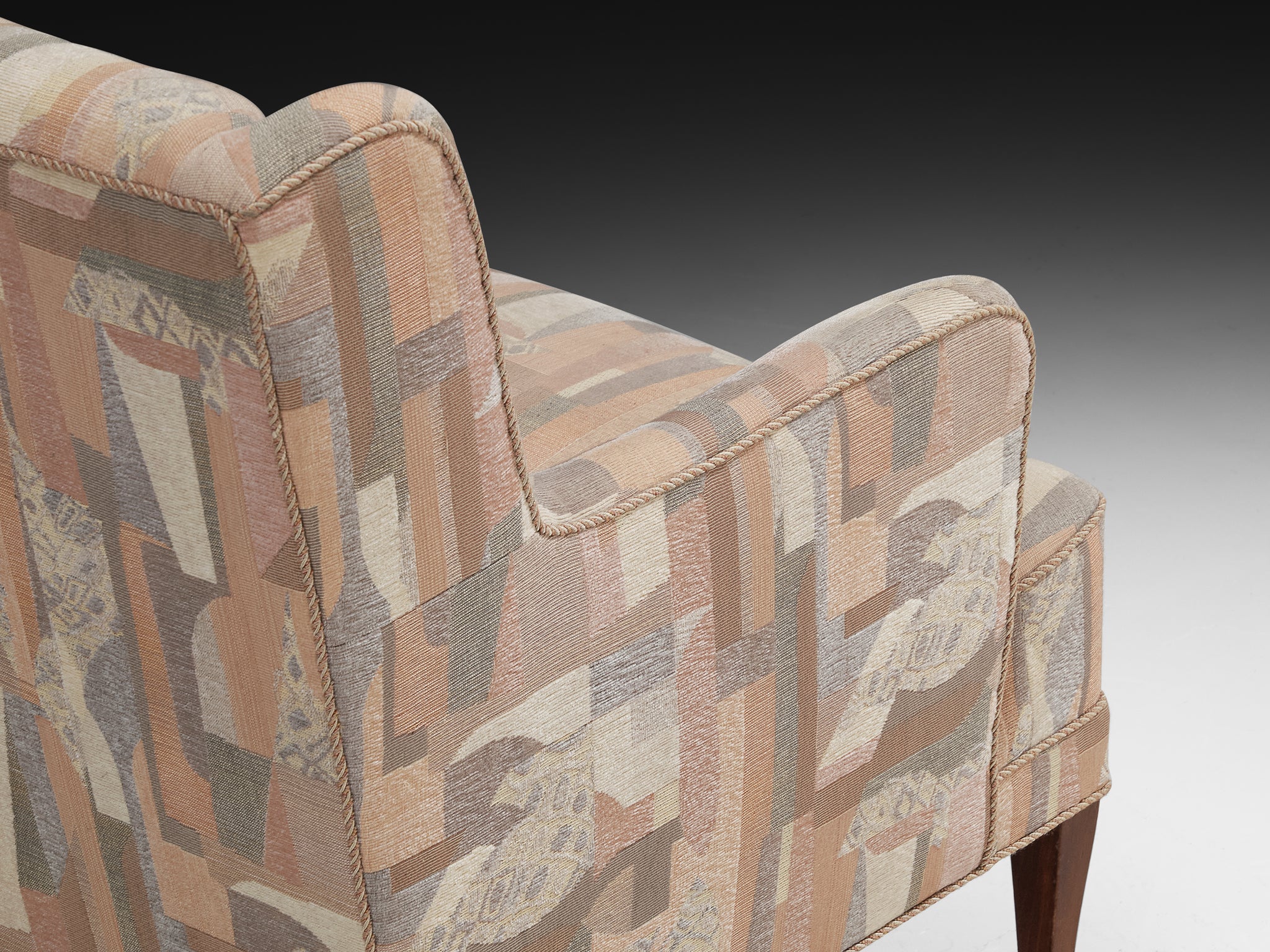
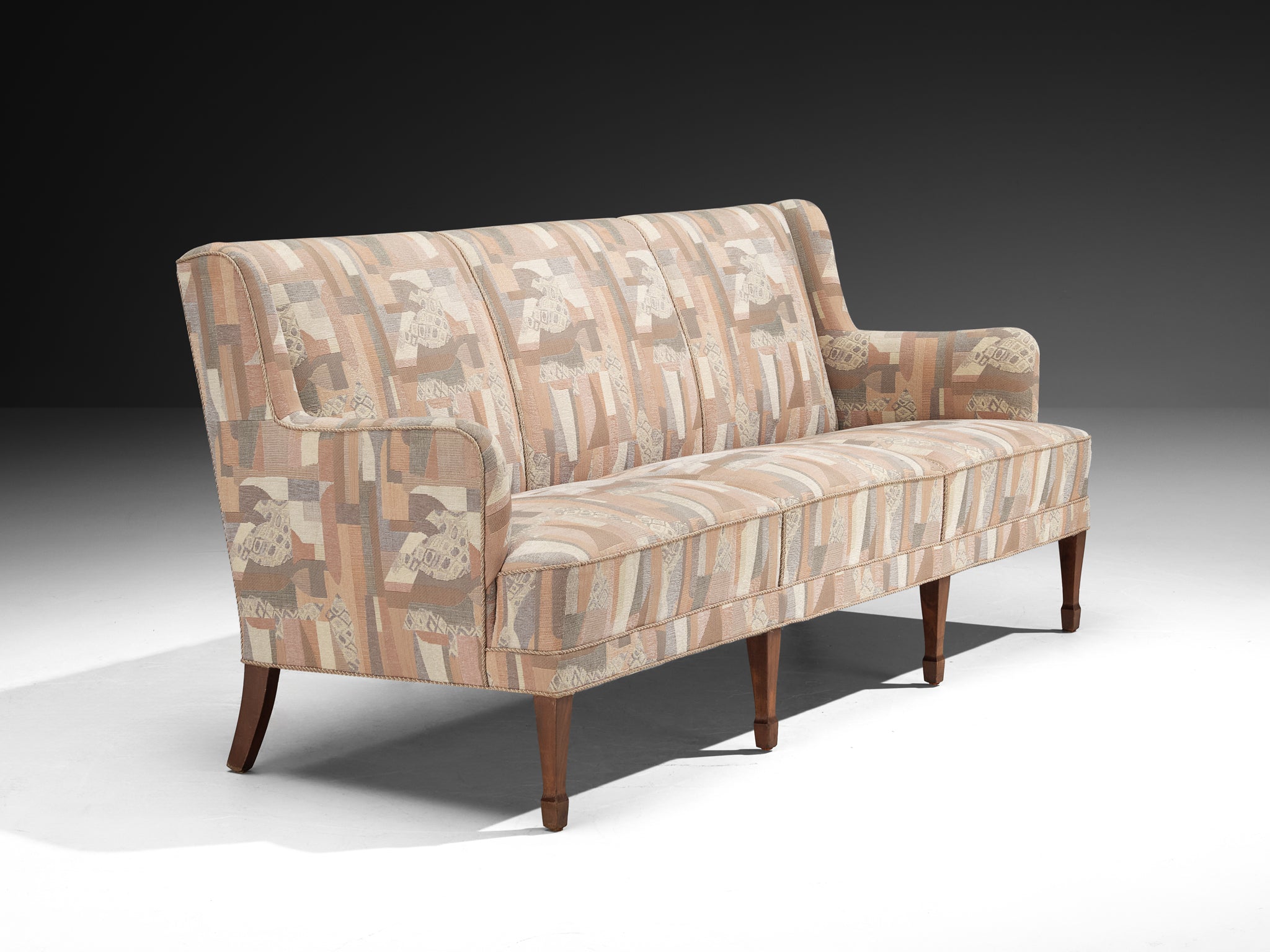
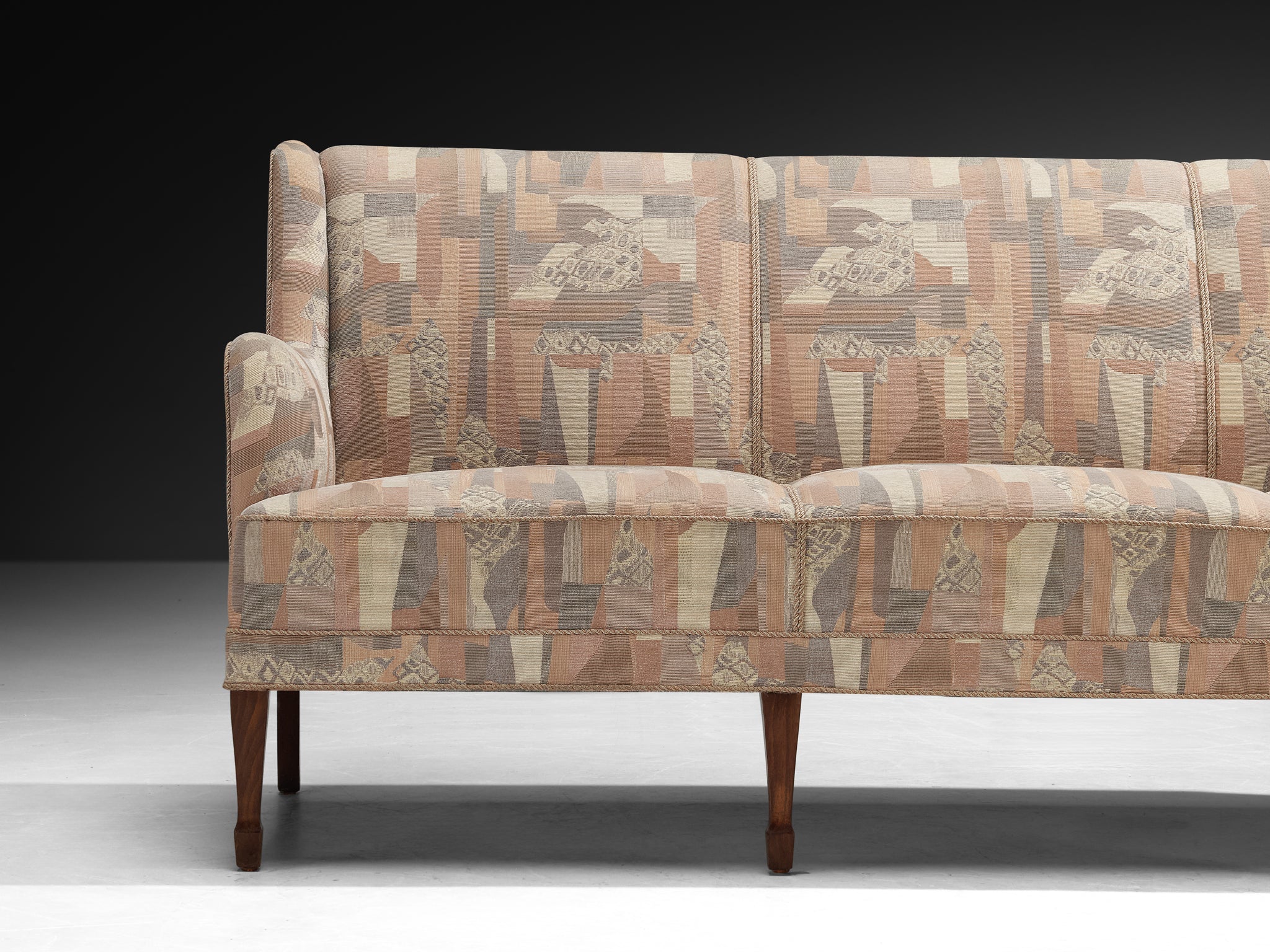
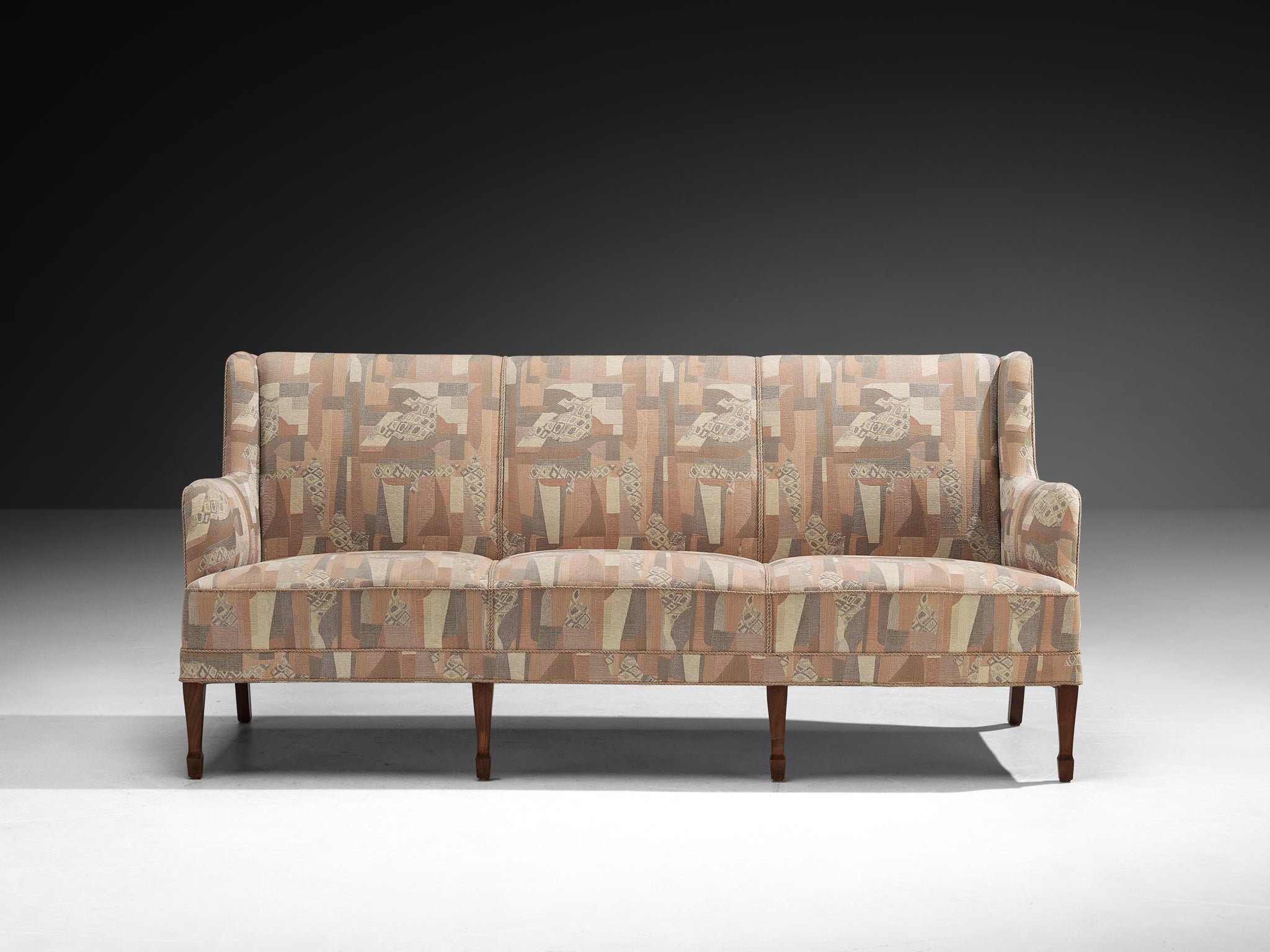
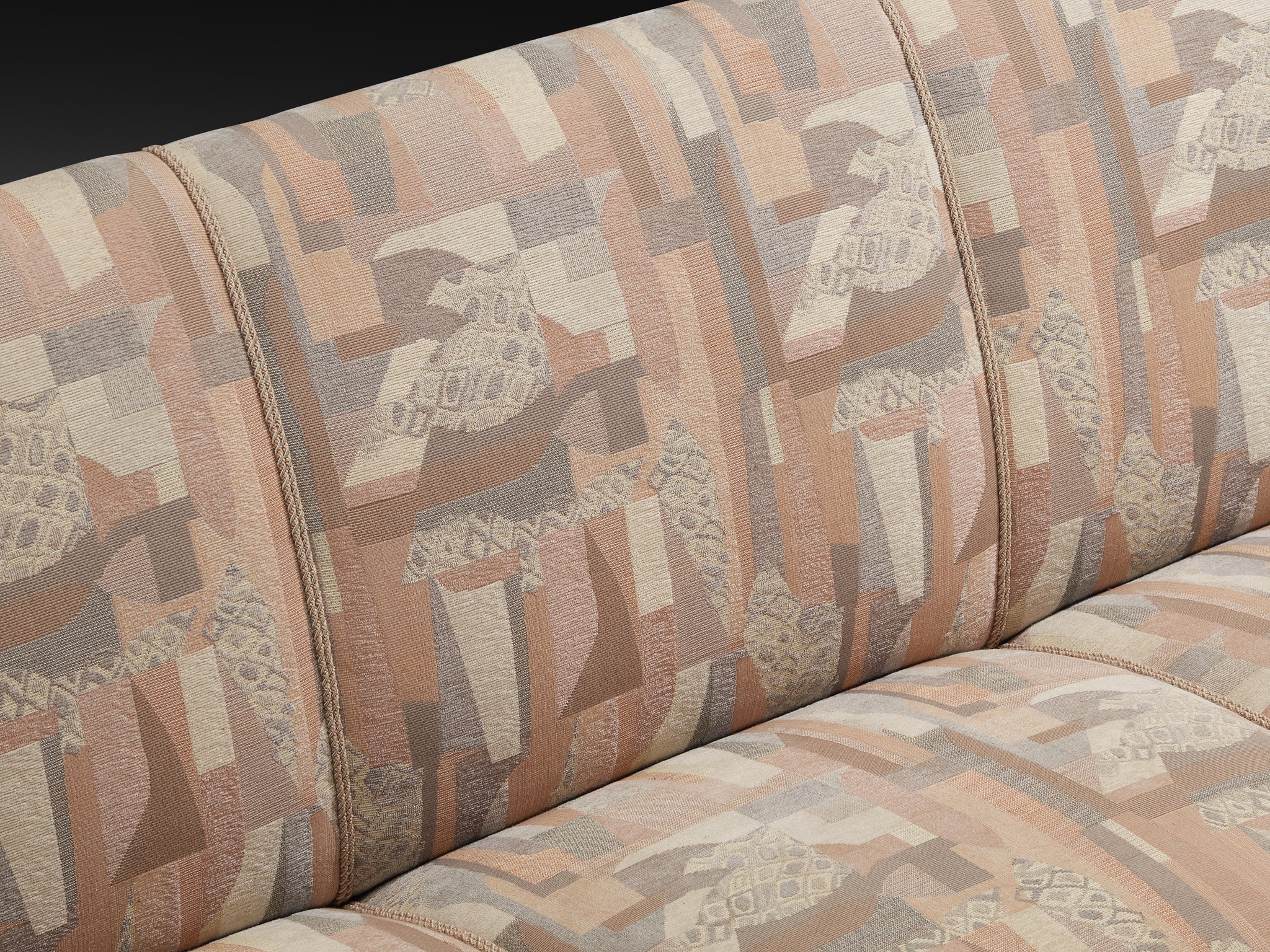
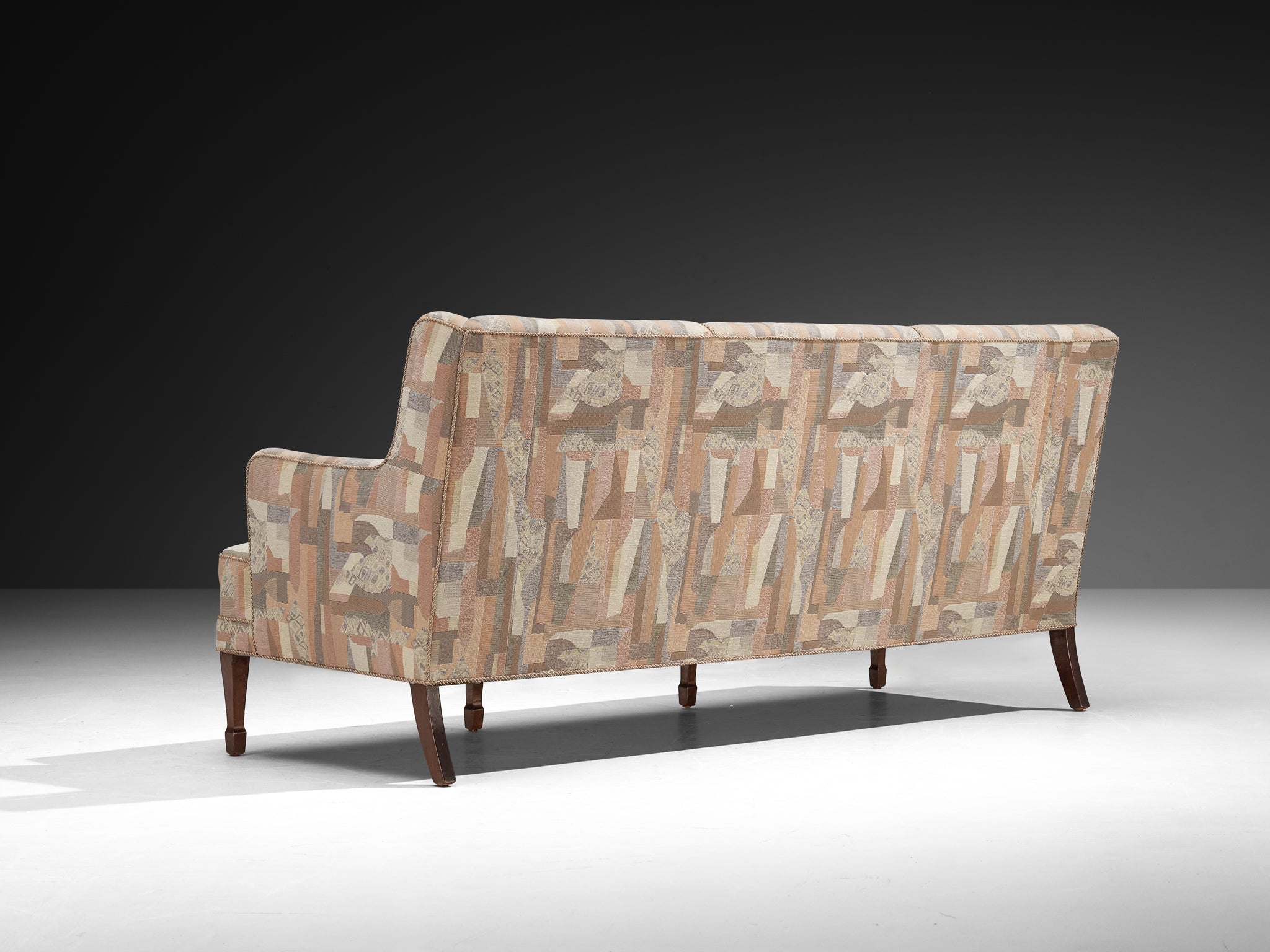
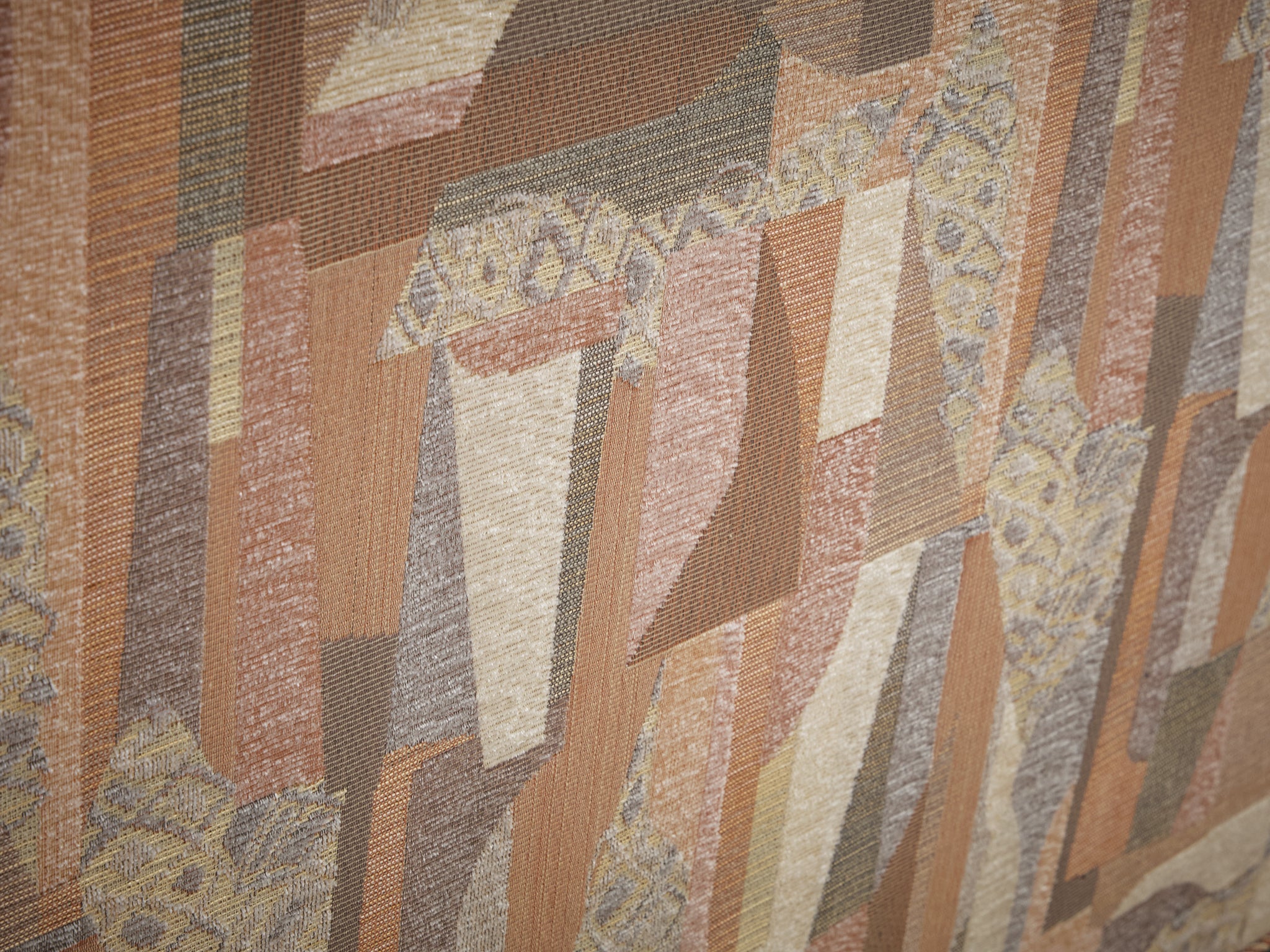
This sofa, designed by Frits Henningsen in the 1940s, presents a refined balance between traditional craftsmanship and modern restraint. Its overall shape is compact and disciplined, with a strong linear presence that emphasizes structure and proportion. The backrest is divided into three vertical panels, each slightly curved to accommodate the body, while maintaining a strict rectangular outline. The arms are modestly curved and gently slope outward, softening the otherwise rectilinear composition. They transition smoothly into the backrest, creating a continuous silhouette. The seat is low and subtly deep, with three cushions integrated seamlessly into the frame. The legs are slender and tapering, slightly flaring outward, and elegantly carved. The textile is woven with a complex geometric motif, combining angular forms with stylized forms. The palette is muted but varied. Earthy reds and pinks, warm browns, pale beiges, and dusty blues combine in a way that feels both subdued and lively.
Danish furniture designer and cabinetmaker Frits Henningsen (1889–1965) is known for his distinctive oeuvre, characterized by exceptional craftsmanship and high-quality materials. At 22 years old, Henningsen began his journey as a cabinetmaker, completing an apprenticeship before traveling across Europe to refine his skills and gain experience. In 1915, he returned to Copenhagen and established his own furniture shop. He later joined the Copenhagen Cabinetmakers' Guild, an influential annual exhibition (1927–1966) where designers showcased their latest creations and engaged in competition. This exhibition played a crucial role in the international recognition of the Danish Modern movement. Henningsen was influenced by Kaare Klint, one of his teachers, yet he developed a distinctive approach to furniture design. He firmly believed that the focus should be on the furniture itself rather than its creator. This philosophy, while admirable, is often cited as a reason his work did not achieve the same level of widespread recognition as some of his contemporaries. Nevertheless, his designs remain highly valued for their timeless elegance and superior craftsmanship.
This sofa, designed by Frits Henningsen in the 1940s, presents a refined balance between traditional craftsmanship and modern restraint. Its overall shape is compact and disciplined, with a strong linear presence that emphasizes structure and proportion. The backrest is divided into three vertical panels, each slightly curved to accommodate the body, while maintaining a strict rectangular outline. The arms are modestly curved and gently slope outward, softening the otherwise rectilinear composition. They transition smoothly into the backrest, creating a continuous silhouette. The seat is low and subtly deep, with three cushions integrated seamlessly into the frame. The legs are slender and tapering, slightly flaring outward, and elegantly carved. The textile is woven with a complex geometric motif, combining angular forms with stylized forms. The palette is muted but varied. Earthy reds and pinks, warm browns, pale beiges, and dusty blues combine in a way that feels both subdued and lively.
Danish furniture designer and cabinetmaker Frits Henningsen (1889–1965) is known for his distinctive oeuvre, characterized by exceptional craftsmanship and high-quality materials. At 22 years old, Henningsen began his journey as a cabinetmaker, completing an apprenticeship before traveling across Europe to refine his skills and gain experience. In 1915, he returned to Copenhagen and established his own furniture shop. He later joined the Copenhagen Cabinetmakers' Guild, an influential annual exhibition (1927–1966) where designers showcased their latest creations and engaged in competition. This exhibition played a crucial role in the international recognition of the Danish Modern movement. Henningsen was influenced by Kaare Klint, one of his teachers, yet he developed a distinctive approach to furniture design. He firmly believed that the focus should be on the furniture itself rather than its creator. This philosophy, while admirable, is often cited as a reason his work did not achieve the same level of widespread recognition as some of his contemporaries. Nevertheless, his designs remain highly valued for their timeless elegance and superior craftsmanship.

Choose options
Frits Henningsen Three-Seat Sofa in Pastel Upholstery
Sale price£2,187.55
Regular price
Tearsheet
×
Receive a copy in your email or download directly:
I accept emails from Morentz.
VAT within the EU: When buying or delivering an item within the EU, VAT usually applies and will be added.
Product Details