
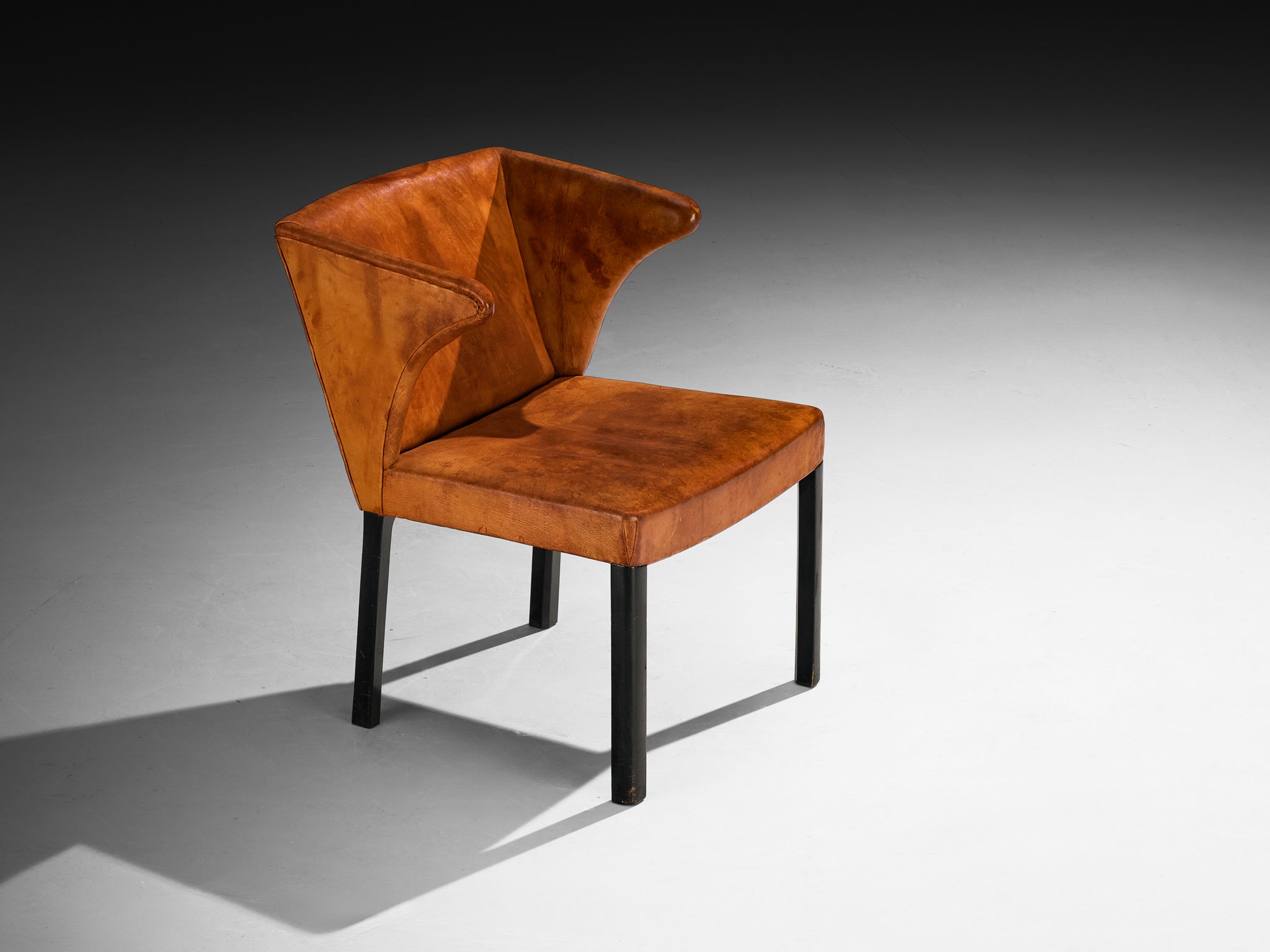
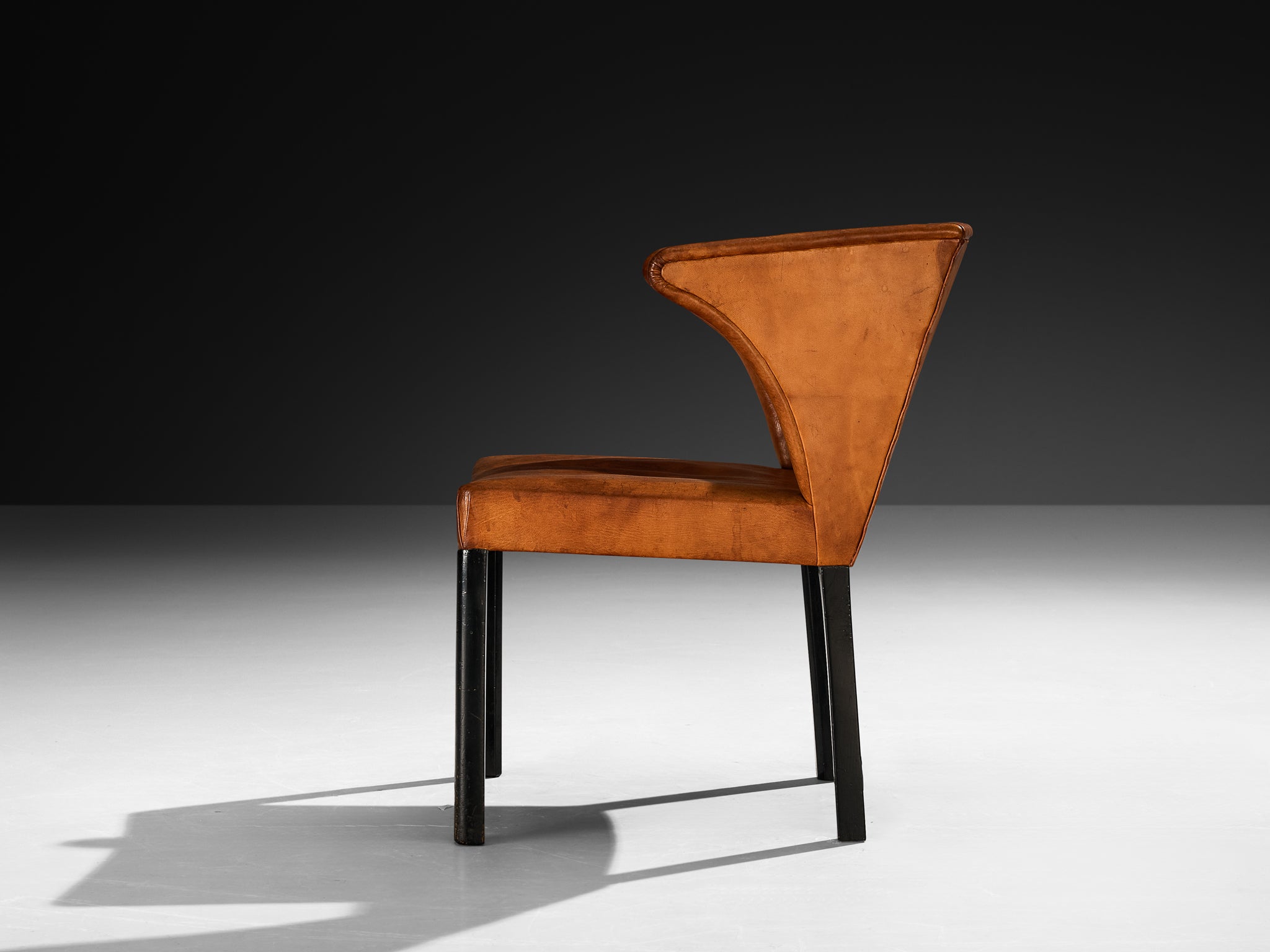
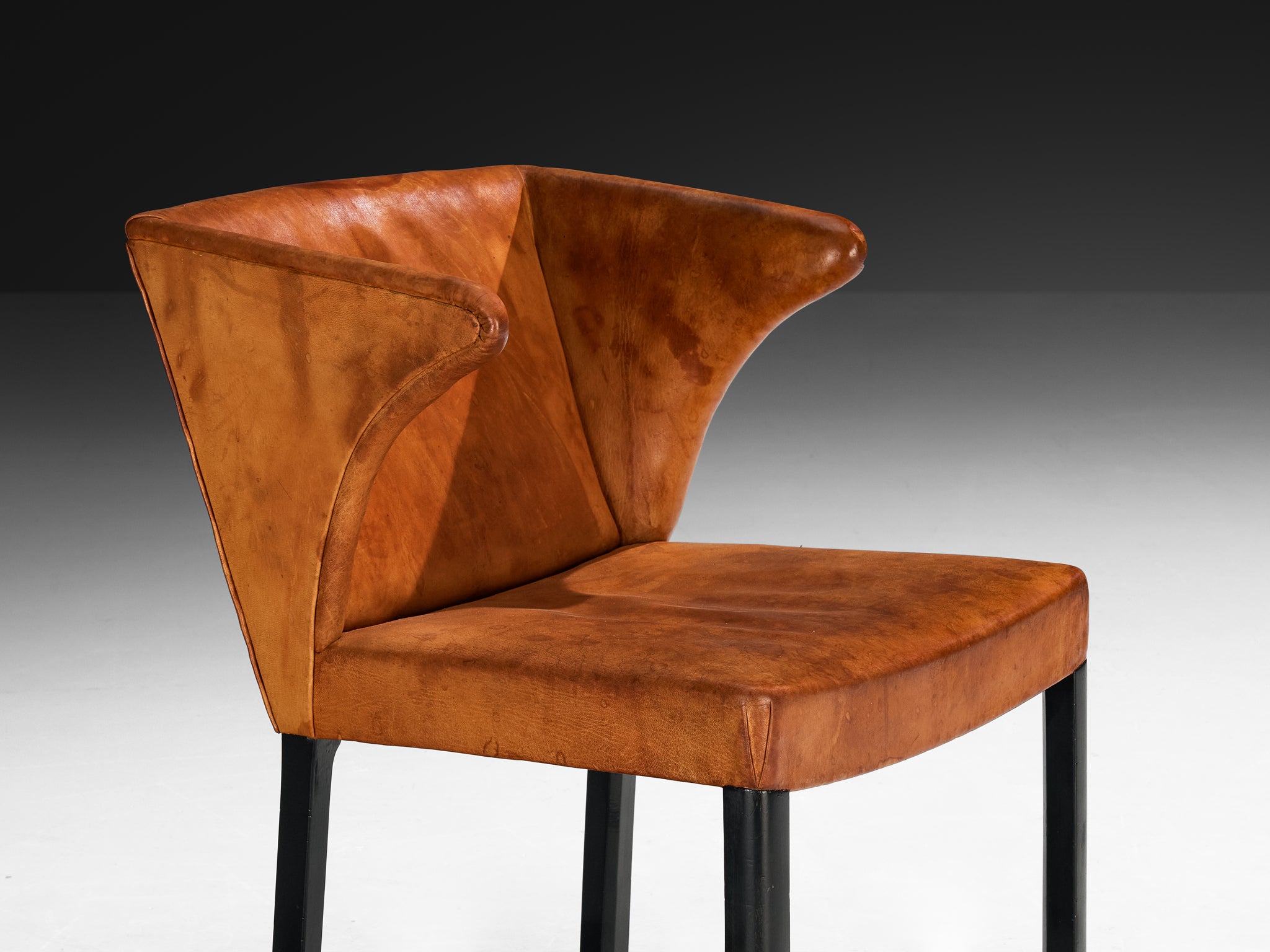
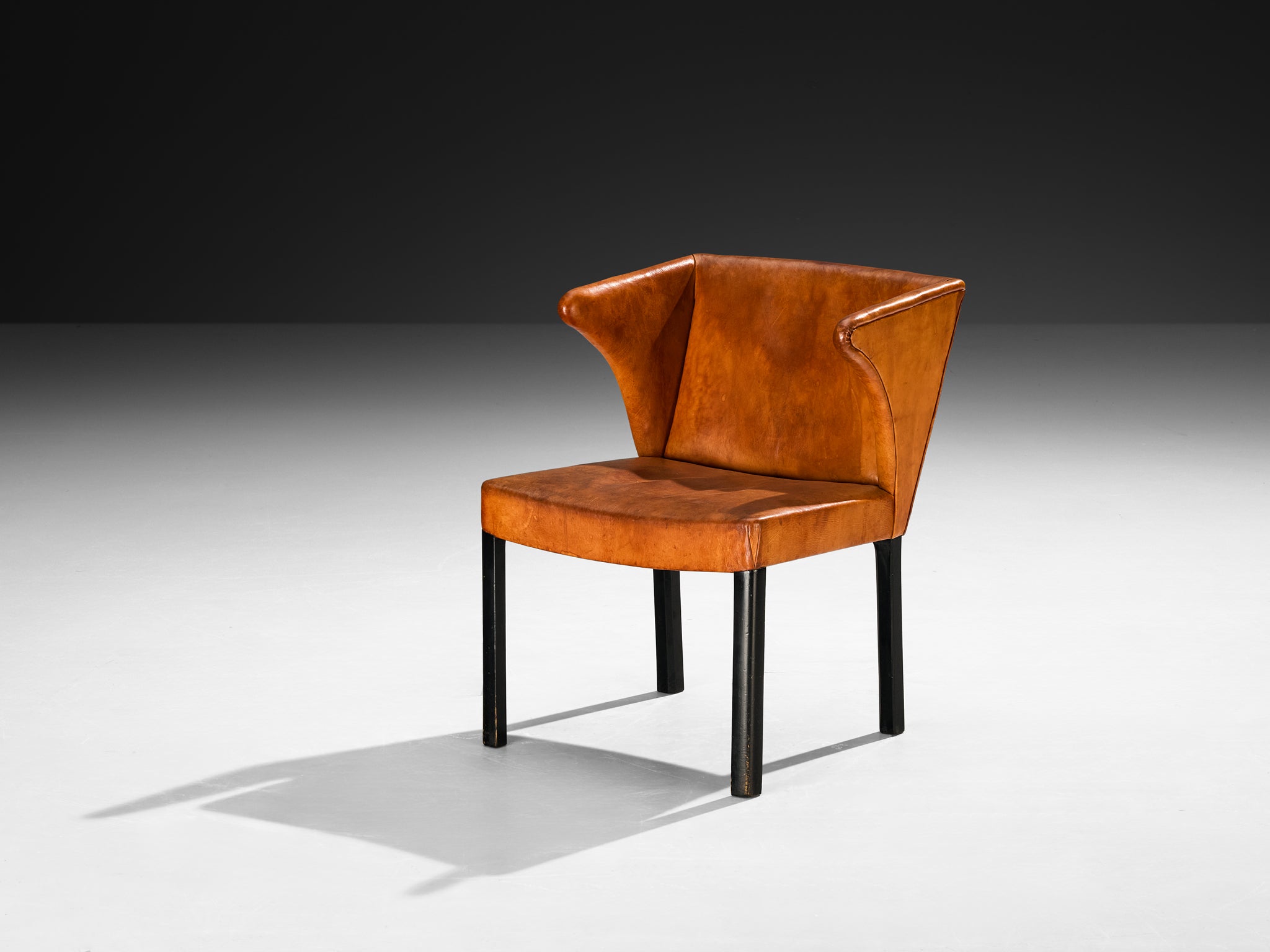
Frits Henningsen Armchair in Patinated Cognac Niger Leather
 Open here
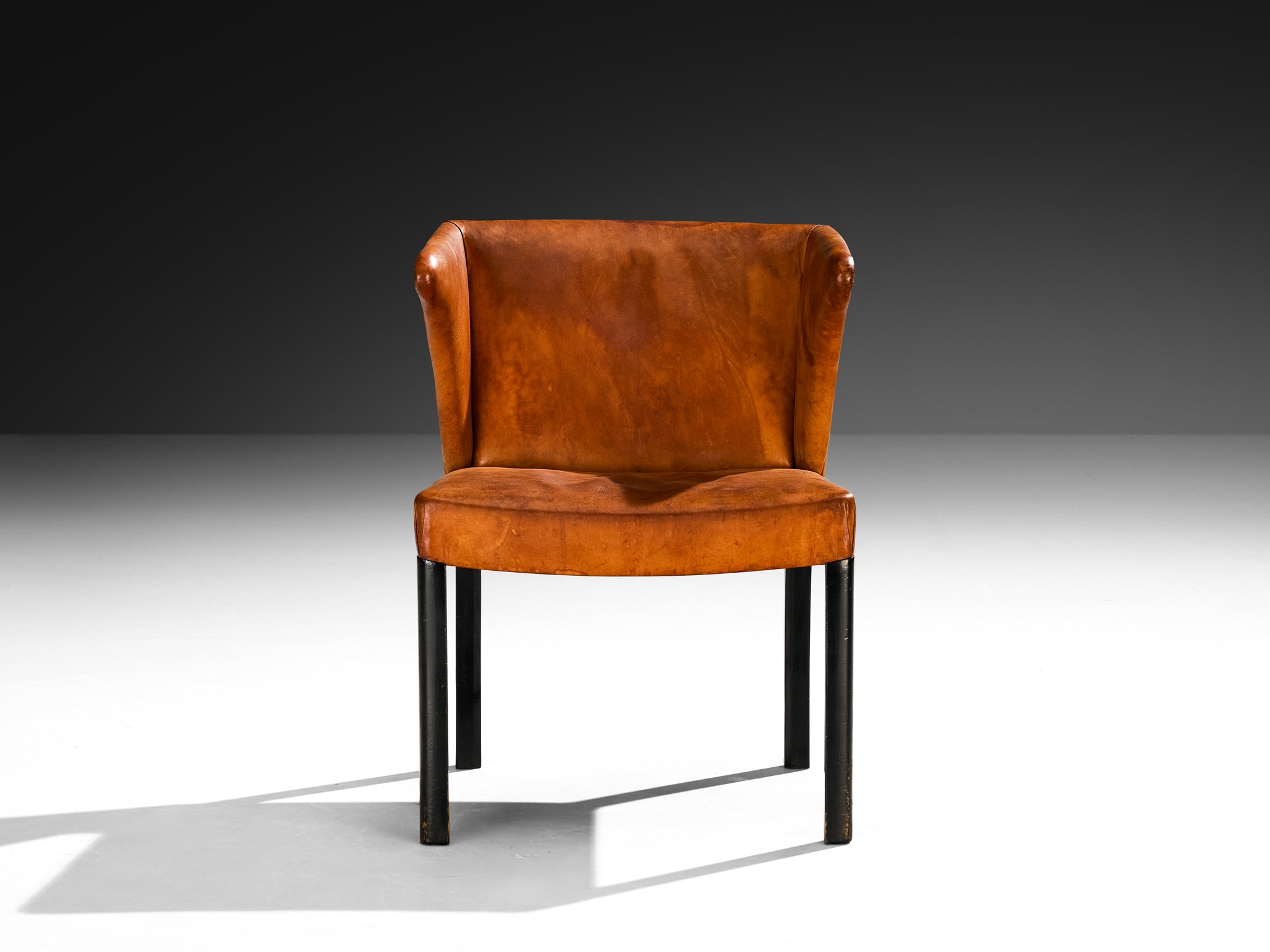
Frits Henningsen, armchair, Niger leather, lacquered wood, Denmark, design 1933, made 1930s/1940s
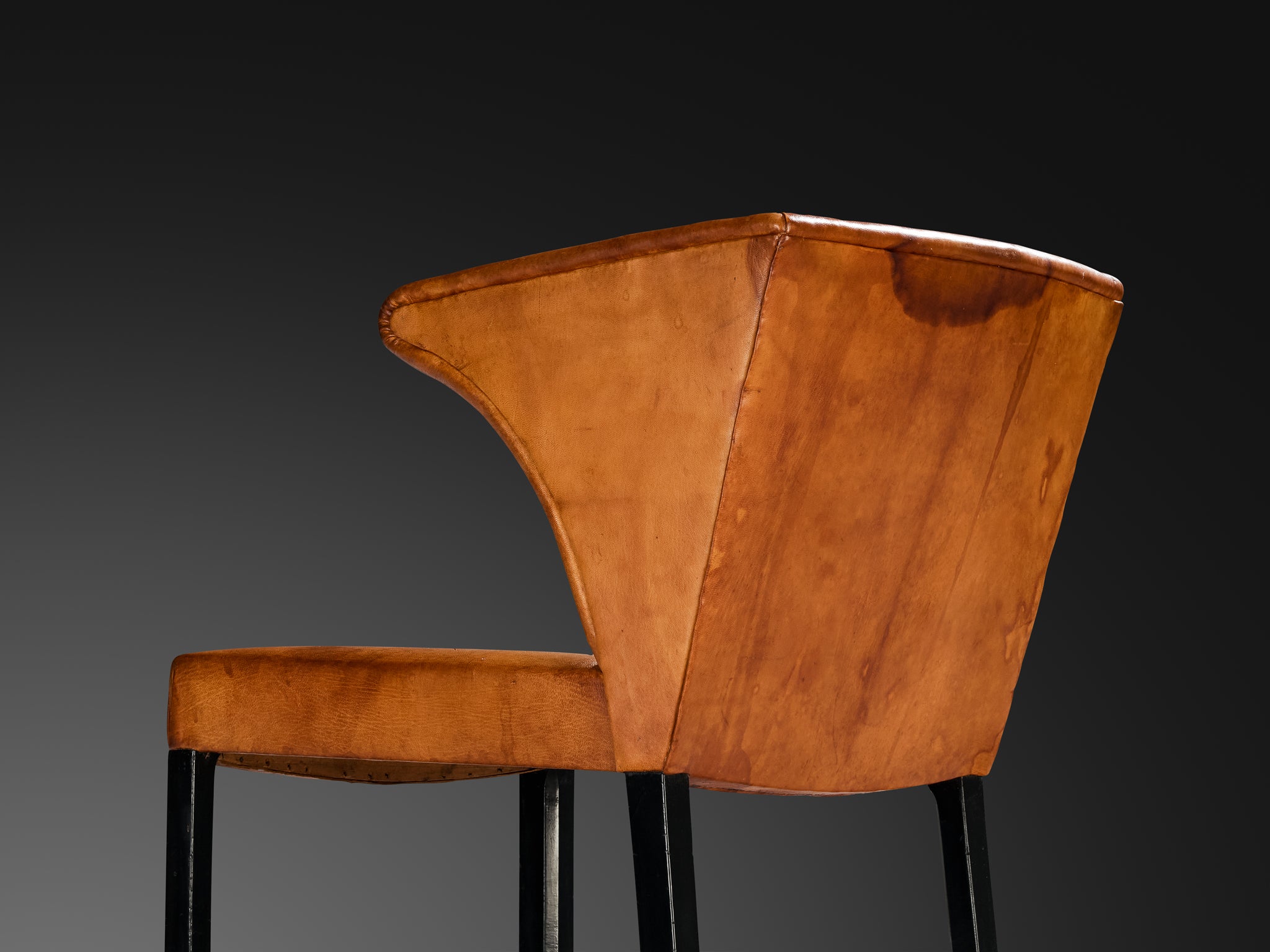
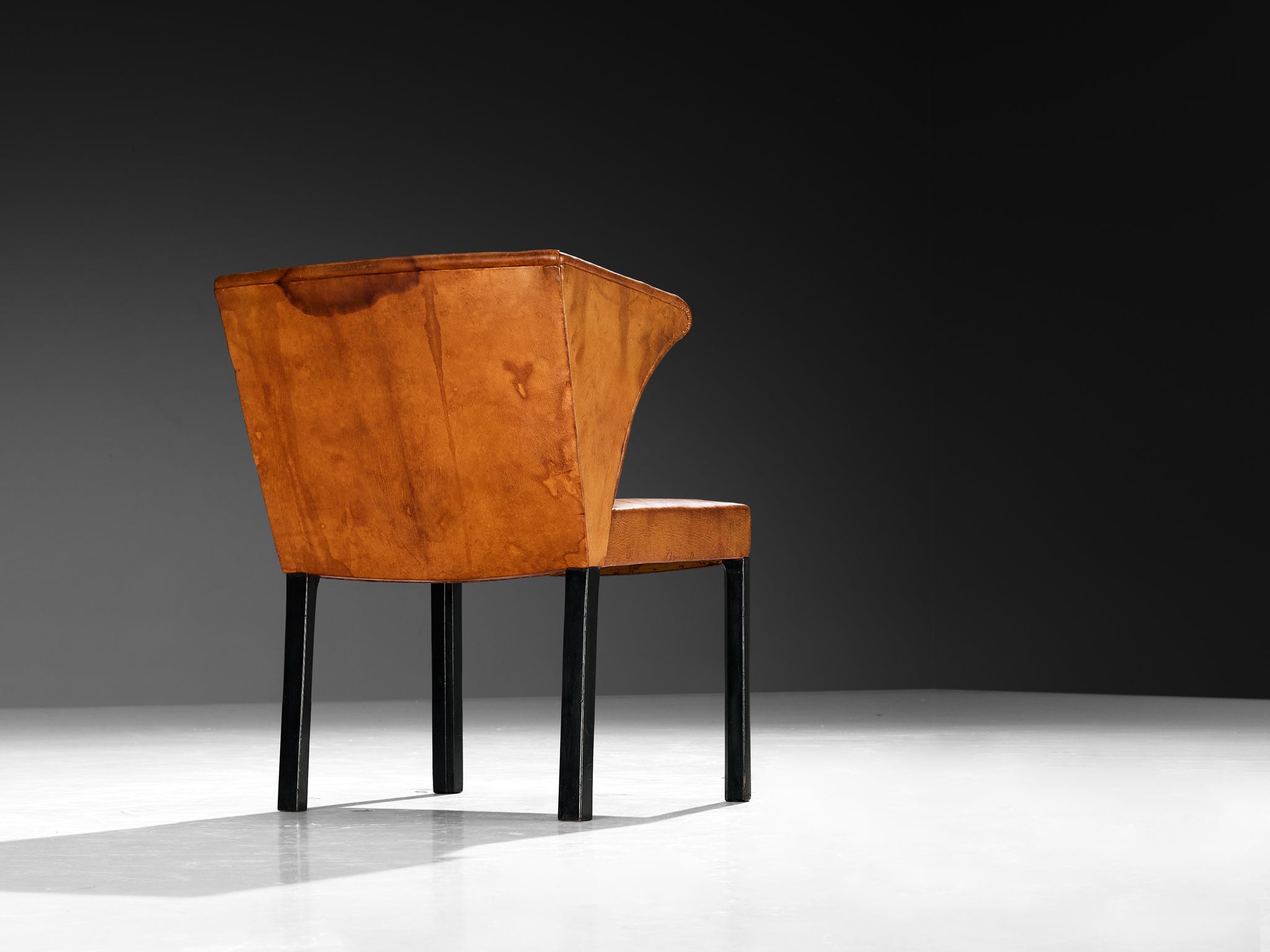
First unveiled at the 1933 Copenhagen Cabinetmakers' Guild Exhibition at Designmuseum Danmark, this chair by Frits Henningsen was highly favored by the public. Its popularity led to several variations, becoming a signature design. The chair’s clean, architectural lines reflect a restrained modernism, avoiding excessive ornamentation in favor of subtle, yet highly intentional details. The leather upholstery is seamlessly integrated with the wooden frame, stretched tautly over the seat and backrest to create a sculptural fluidity. The precise stitching and wrapping technique used to affix the leather to the structure demonstrates an exceptional level of craftsmanship. Niger goatskin leather is a high-quality leather derived from goats native to the Niger region of West Africa. Esteemed for its exceptional durability, supple texture, and ability to develop a deep, rich patina over time, it became a favored upholstery material among leading designers of early Danish modernism, Kaare Klint. In contrast to the sculpted, curved armrests, the legs of the chair are deliberately simple, allowing the backrest to take center stage.
The provenance of this piece is particularly compelling. Originally part of Frits Henningsen’s personal collection, it was presumably designed for his own use. Subsequently, the chair was inherited by his daughter. The present variation – featuring original, black-painted legs and a full leather cognac seat – stands out as remarkably modern for the 1930s (compared to the other variations). Its design, paired with its pristine condition and beautifully aged leather, along with its notable provenance, makes this chair arguably one of the finest examples recently discovered.
Biography
Danish furniture designer and cabinetmaker Frits Henningsen (1889–1965) is known for his distinctive oeuvre, characterized by exceptional craftsmanship and high-quality materials. At 22 years old, Henningsen began his journey as a cabinetmaker, completing an apprenticeship before traveling across Europe to refine his skills and gain experience. In 1915, he returned to Copenhagen and established his own furniture shop. He later joined the Copenhagen Cabinetmakers' Guild, an influential annual exhibition (1927–1966) where designers showcased their latest creations and engaged in competition. This exhibition played a crucial role in the international recognition of the Danish Modern movement. Henningsen was influenced by Kaare Klint, one of his teachers, yet he developed a distinctive approach to furniture design. He firmly believed that the focus should be on the furniture itself rather than its creator. This philosophy, while admirable, is often cited as a reason his work did not achieve the same level of widespread recognition as some of his contemporaries. Nevertheless, his designs remain highly valued for their timeless elegance and superior craftsmanship.
First unveiled at the 1933 Copenhagen Cabinetmakers' Guild Exhibition at Designmuseum Danmark, this chair by Frits Henningsen was highly favored by the public. Its popularity led to several variations, becoming a signature design. The chair’s clean, architectural lines reflect a restrained modernism, avoiding excessive ornamentation in favor of subtle, yet highly intentional details. The leather upholstery is seamlessly integrated with the wooden frame, stretched tautly over the seat and backrest to create a sculptural fluidity. The precise stitching and wrapping technique used to affix the leather to the structure demonstrates an exceptional level of craftsmanship. Niger goatskin leather is a high-quality leather derived from goats native to the Niger region of West Africa. Esteemed for its exceptional durability, supple texture, and ability to develop a deep, rich patina over time, it became a favored upholstery material among leading designers of early Danish modernism, Kaare Klint. In contrast to the sculpted, curved armrests, the legs of the chair are deliberately simple, allowing the backrest to take center stage.
The provenance of this piece is particularly compelling. Originally part of Frits Henningsen’s personal collection, it was presumably designed for his own use. Subsequently, the chair was inherited by his daughter. The present variation – featuring original, black-painted legs and a full leather cognac seat – stands out as remarkably modern for the 1930s (compared to the other variations). Its design, paired with its pristine condition and beautifully aged leather, along with its notable provenance, makes this chair arguably one of the finest examples recently discovered.
Biography
Danish furniture designer and cabinetmaker Frits Henningsen (1889–1965) is known for his distinctive oeuvre, characterized by exceptional craftsmanship and high-quality materials. At 22 years old, Henningsen began his journey as a cabinetmaker, completing an apprenticeship before traveling across Europe to refine his skills and gain experience. In 1915, he returned to Copenhagen and established his own furniture shop. He later joined the Copenhagen Cabinetmakers' Guild, an influential annual exhibition (1927–1966) where designers showcased their latest creations and engaged in competition. This exhibition played a crucial role in the international recognition of the Danish Modern movement. Henningsen was influenced by Kaare Klint, one of his teachers, yet he developed a distinctive approach to furniture design. He firmly believed that the focus should be on the furniture itself rather than its creator. This philosophy, while admirable, is often cited as a reason his work did not achieve the same level of widespread recognition as some of his contemporaries. Nevertheless, his designs remain highly valued for their timeless elegance and superior craftsmanship.

Choose options
Frits Henningsen Armchair in Patinated Cognac Niger Leather
Sale price£21,064.89
Regular price
Product Details
VAT within the EU: When buying or delivering an item within the EU, VAT usually applies and will be added.