


Early Josef Frank for Svenskt Tenn '695' Dining Chairs in Walnut
 Open here
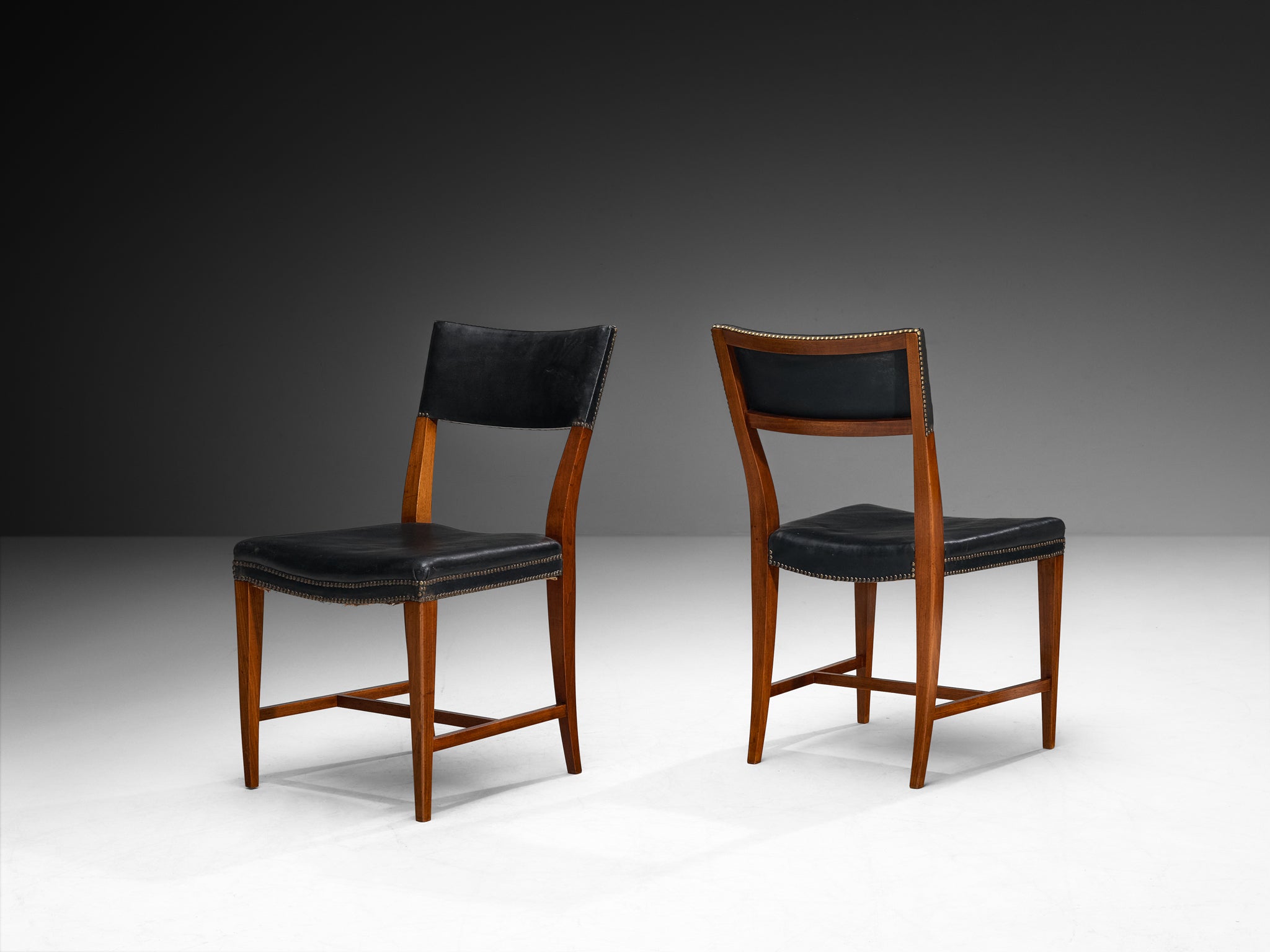
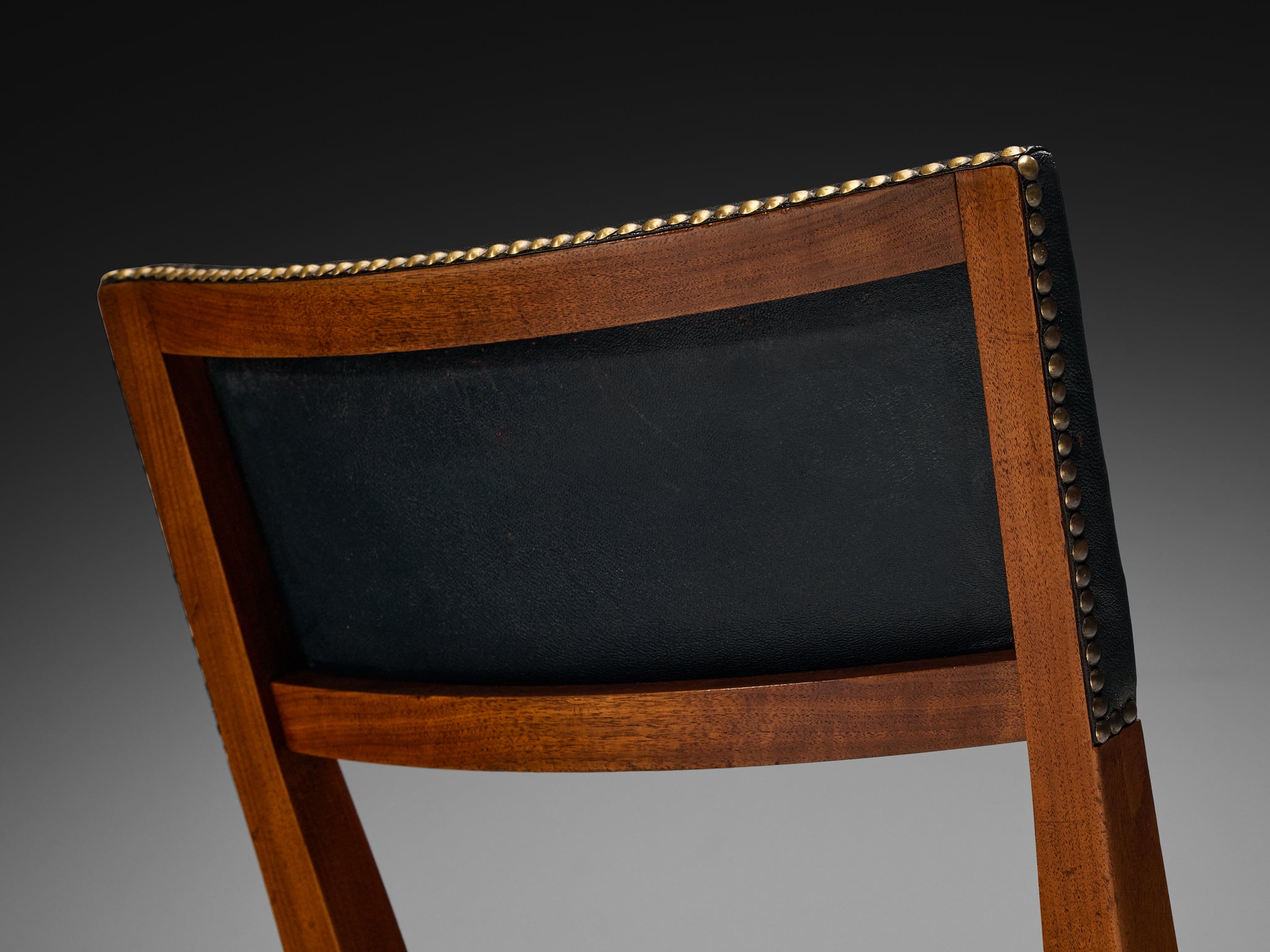
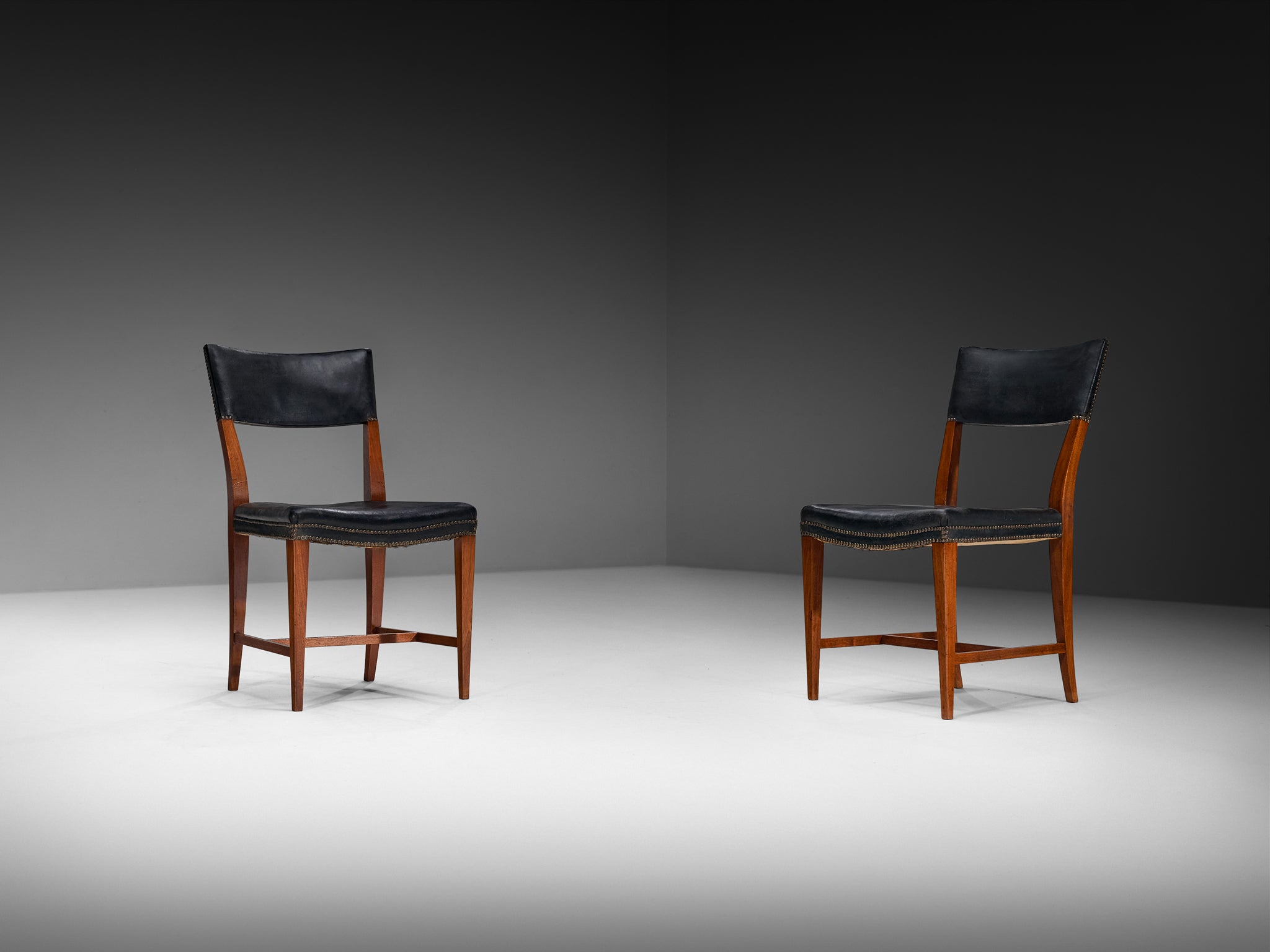
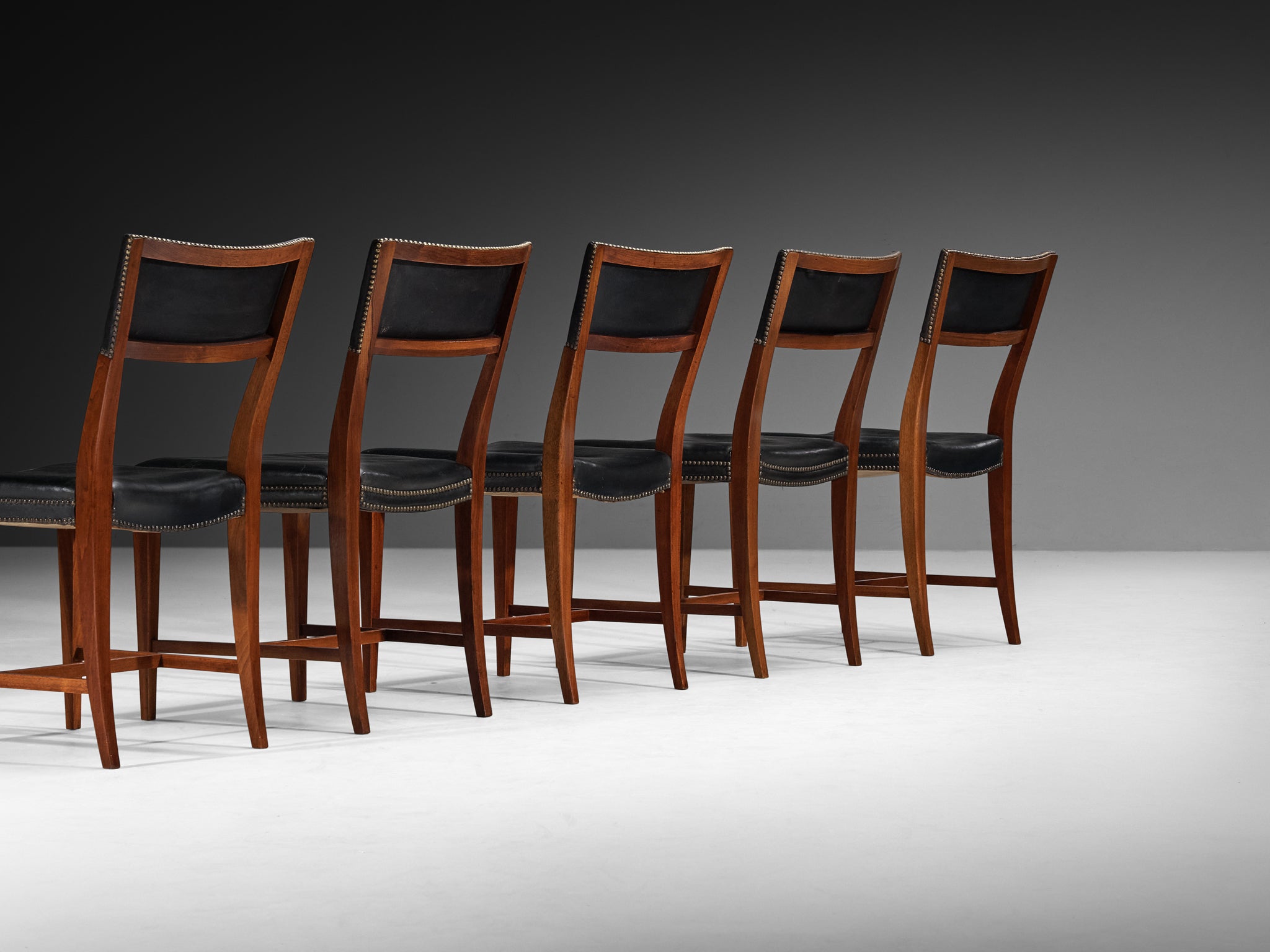
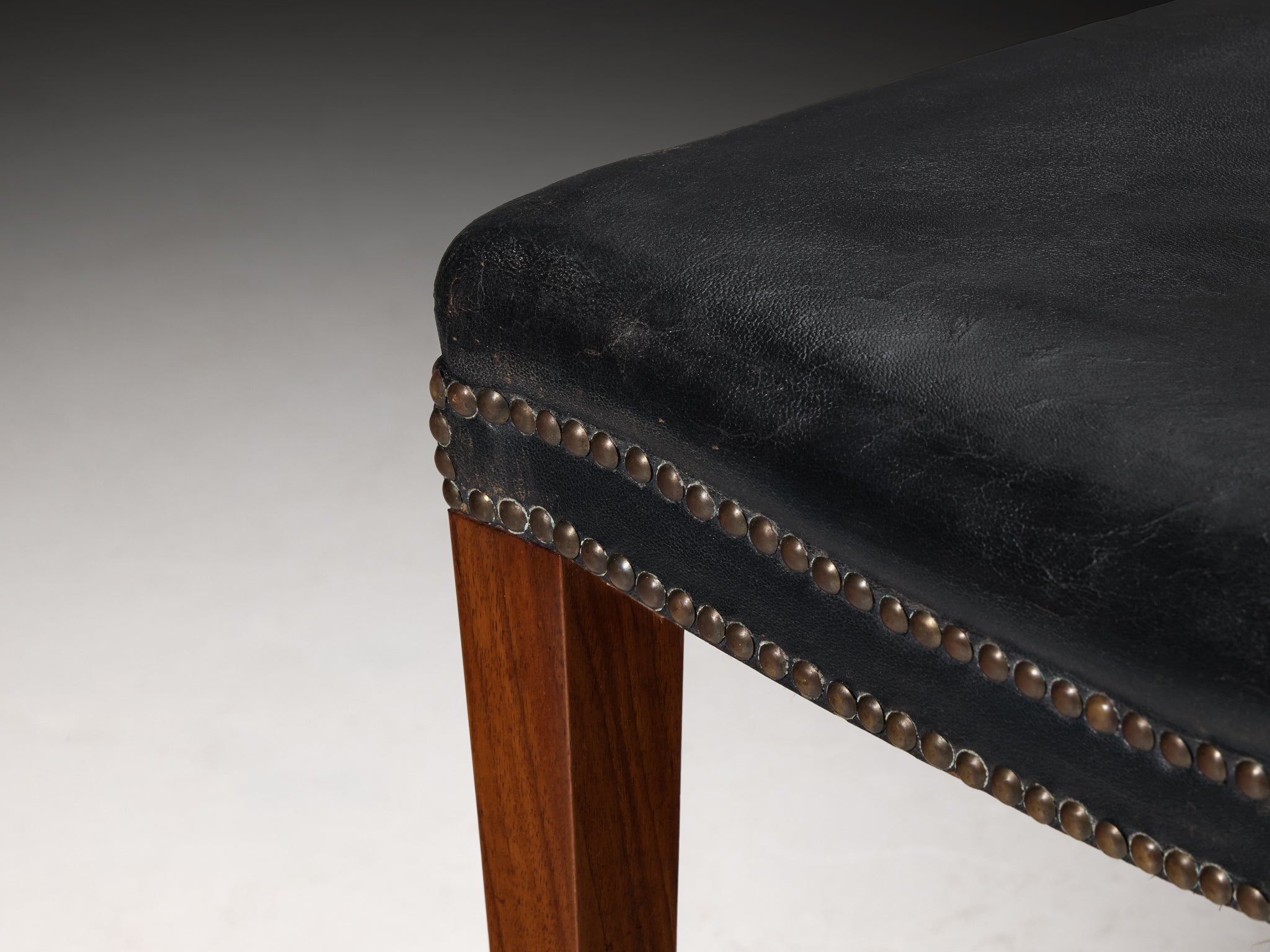
Josef Frank for Svenskt Tenn, set of ten dining chairs, model '695', faux leather, walnut, brass, Sweden, design 1935
A refined set of ten dining chairs designed by Josef Frank for Svenskt Tenn in 1935. This lovely set of chairs showcases the strong and modern aesthetic and design principles of Josef Frank. Their graceful proportions, thoughtful use of materials, and the rarity of finding such a large set together make them particularly special and appealing.
Austrian designer, architect and theorist Josef Frank (1885-1967) is considered one of Europe’s leading modernists and progressive designers in the 1920s and 1930s. But Frank´s criticism on modern architecture and design during the early 1930s made him far less popular, and eventually led to his important contributions not been acknowledged in earlier studies. For Josef Frank, the centre of modernism was about history and the culture of everyday life instead of art and technology; a statement that in the 1930s was quite radical, as it fades away the boundaries between high and low culture. Born in a small Austrian spa town called ‘Baden’ in 1885, Josef Frank grew up in a middle-class Jewish family. On the age of eighteen, Frank enrolled in the architecture faculty at the Technische Hochschule or Polytechnic Insitute in Vienna. He specialized in interior design and single-family houses. His clientele largely came from upper-middle-class families. Instead of dedicating to the Jugendstil principles, which was popular during the ‘Fin de Siècle’ era in Austria, Frank substituted an eclectic style inspired on a variety of practices.
In 1933, Josef Frank and his Swedish wife Anna emigrated to Sweden, as they sensed a volatile political situation in Central Europe and the growing fascist movement, years before the Nazi regime emerged in Germany. The Austrian ‘Werkbund’, that was founded in 1912 to encourage collaboration between the arts, crafts and industry, formally split and a ‘New Werkbund’ was organized in 1933. As one of the initiators of the Werkbund, Frank could not ignore the notable anti-Semitic tendency within the organisation and beyond and decided to leave the country. Swedish designer Estrid Ericson (1894-1981) offered him a position as chief designer at her company Svenskt Tenn. Initially, Josef Frank was hired to expand the range of furnishing offered by the company but eventually led to a partnership for over three decades. He abandoned his work as an architect and started to focus on interior and furniture design. Frank introduced a new design vocabulary; colorful, vibrant and he selected a remarkable variety of materials in his furniture designs. Characteristic for his work is his ‘accidental approach’ or ‘accidentism’ as how he ironically called it; it all derives spontaneously and should make the impression as if they originated by chance. He stood against the modernistic believes of the ‘Gesamtkunstwerk' that provides a standard design solution and its pure functionality, and believed that ornament and complexity create peacefulness and therefore freedom.
A refined set of ten dining chairs designed by Josef Frank for Svenskt Tenn in 1935. This lovely set of chairs showcases the strong and modern aesthetic and design principles of Josef Frank. Their graceful proportions, thoughtful use of materials, and the rarity of finding such a large set together make them particularly special and appealing.
Austrian designer, architect and theorist Josef Frank (1885-1967) is considered one of Europe’s leading modernists and progressive designers in the 1920s and 1930s. But Frank´s criticism on modern architecture and design during the early 1930s made him far less popular, and eventually led to his important contributions not been acknowledged in earlier studies. For Josef Frank, the centre of modernism was about history and the culture of everyday life instead of art and technology; a statement that in the 1930s was quite radical, as it fades away the boundaries between high and low culture. Born in a small Austrian spa town called ‘Baden’ in 1885, Josef Frank grew up in a middle-class Jewish family. On the age of eighteen, Frank enrolled in the architecture faculty at the Technische Hochschule or Polytechnic Insitute in Vienna. He specialized in interior design and single-family houses. His clientele largely came from upper-middle-class families. Instead of dedicating to the Jugendstil principles, which was popular during the ‘Fin de Siècle’ era in Austria, Frank substituted an eclectic style inspired on a variety of practices.
In 1933, Josef Frank and his Swedish wife Anna emigrated to Sweden, as they sensed a volatile political situation in Central Europe and the growing fascist movement, years before the Nazi regime emerged in Germany. The Austrian ‘Werkbund’, that was founded in 1912 to encourage collaboration between the arts, crafts and industry, formally split and a ‘New Werkbund’ was organized in 1933. As one of the initiators of the Werkbund, Frank could not ignore the notable anti-Semitic tendency within the organisation and beyond and decided to leave the country. Swedish designer Estrid Ericson (1894-1981) offered him a position as chief designer at her company Svenskt Tenn. Initially, Josef Frank was hired to expand the range of furnishing offered by the company but eventually led to a partnership for over three decades. He abandoned his work as an architect and started to focus on interior and furniture design. Frank introduced a new design vocabulary; colorful, vibrant and he selected a remarkable variety of materials in his furniture designs. Characteristic for his work is his ‘accidental approach’ or ‘accidentism’ as how he ironically called it; it all derives spontaneously and should make the impression as if they originated by chance. He stood against the modernistic believes of the ‘Gesamtkunstwerk' that provides a standard design solution and its pure functionality, and believed that ornament and complexity create peacefulness and therefore freedom.

Choose options
Early Josef Frank for Svenskt Tenn '695' Dining Chairs in Walnut
Sale price£57,001.30
Regular price
Product Details
VAT within the EU: When buying or delivering an item within the EU, VAT usually applies and will be added.