
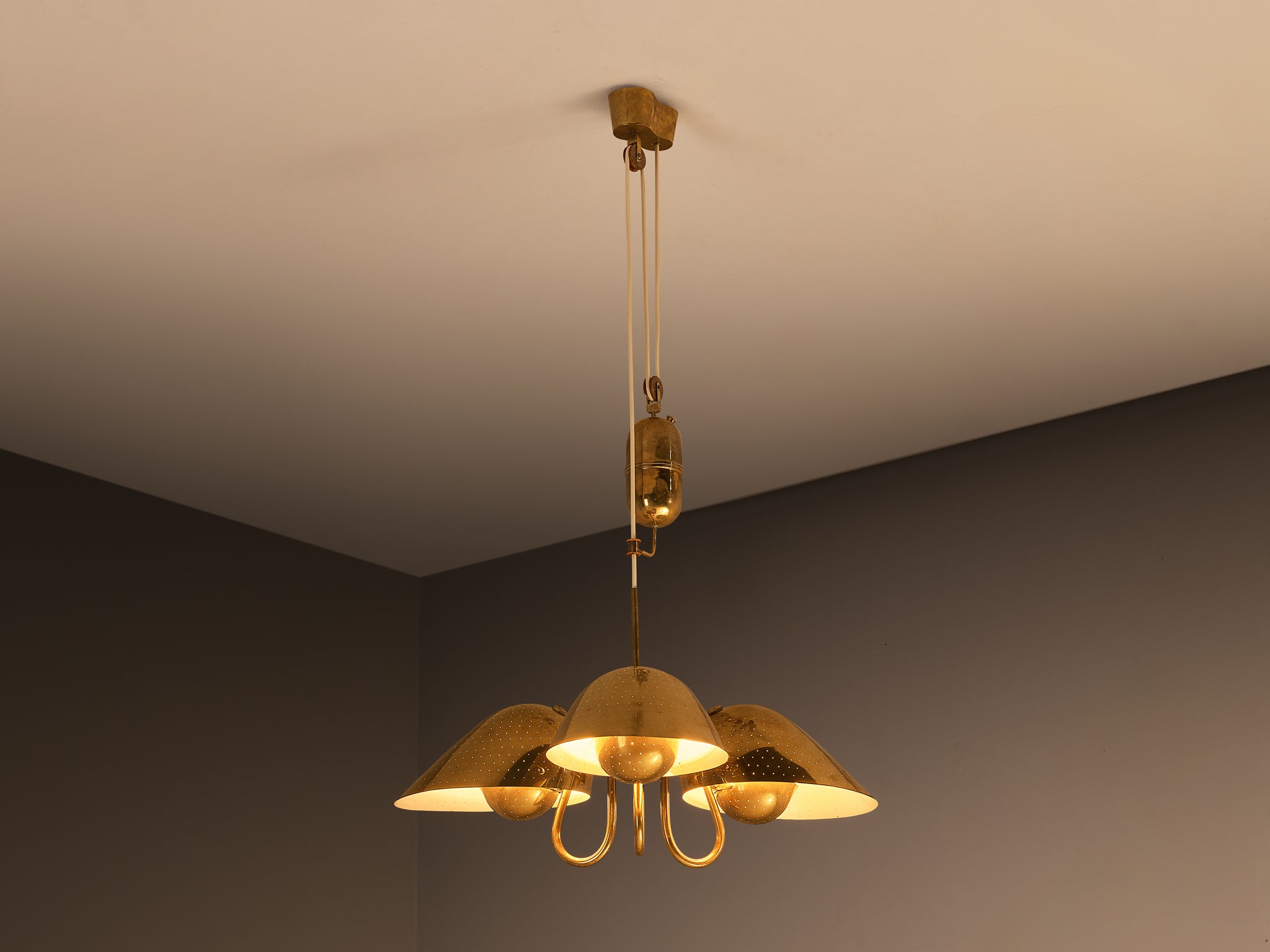

Carl-Axel Acking Swedish Modern Chandelier in Perforated Brass
Tearsheet
×
Receive a copy in your email or download directly:
I accept emails from Morentz.
 Open here
Carl-Axel Acking for Bröderna Malmströms Metallvarufabrik, chandelier, model '958' brass, Sweden, design 1939
In 1939, the young architect and designer Carl-Axel Acking (1910–2001) was entrusted with one of the most prestigious commissions of pre-war Swedish design: contributing to the Swedish Pavilion at the New York World’s Fair. The pavilion, inaugurated on April 30, 1939, was Sweden’s official showcase for its national identity. Designed by the architect Sven Markelius (1889-1972) with Folke Bernadotte as Commissioner General, the event involved some of the country’s most forward-thinking architects, designers, and manufacturers. Acking designed both furnishings and lighting fixtures for some of the pavilion’s representative spaces, including Bernadotte’s own office. It was here that the present chandelier, manufactured by Bröderna Malmströms Metallvarufabrik in Malmö, made its debut.
Based in Malmö, Bröderna earned its place among other major players in the Swedish lighting industry, including Nordiska Kompaniet in Nyköping, Ateljé Lyktan in Åhus, and Böhlmarks in Stockholm. Together, these companies shaped not just the market but also the cultural identity of lighting design in Sweden during the 20th century. The company was known for its high-quality metal craftsmanship and its collaborations with leading Swedish designers and architects.
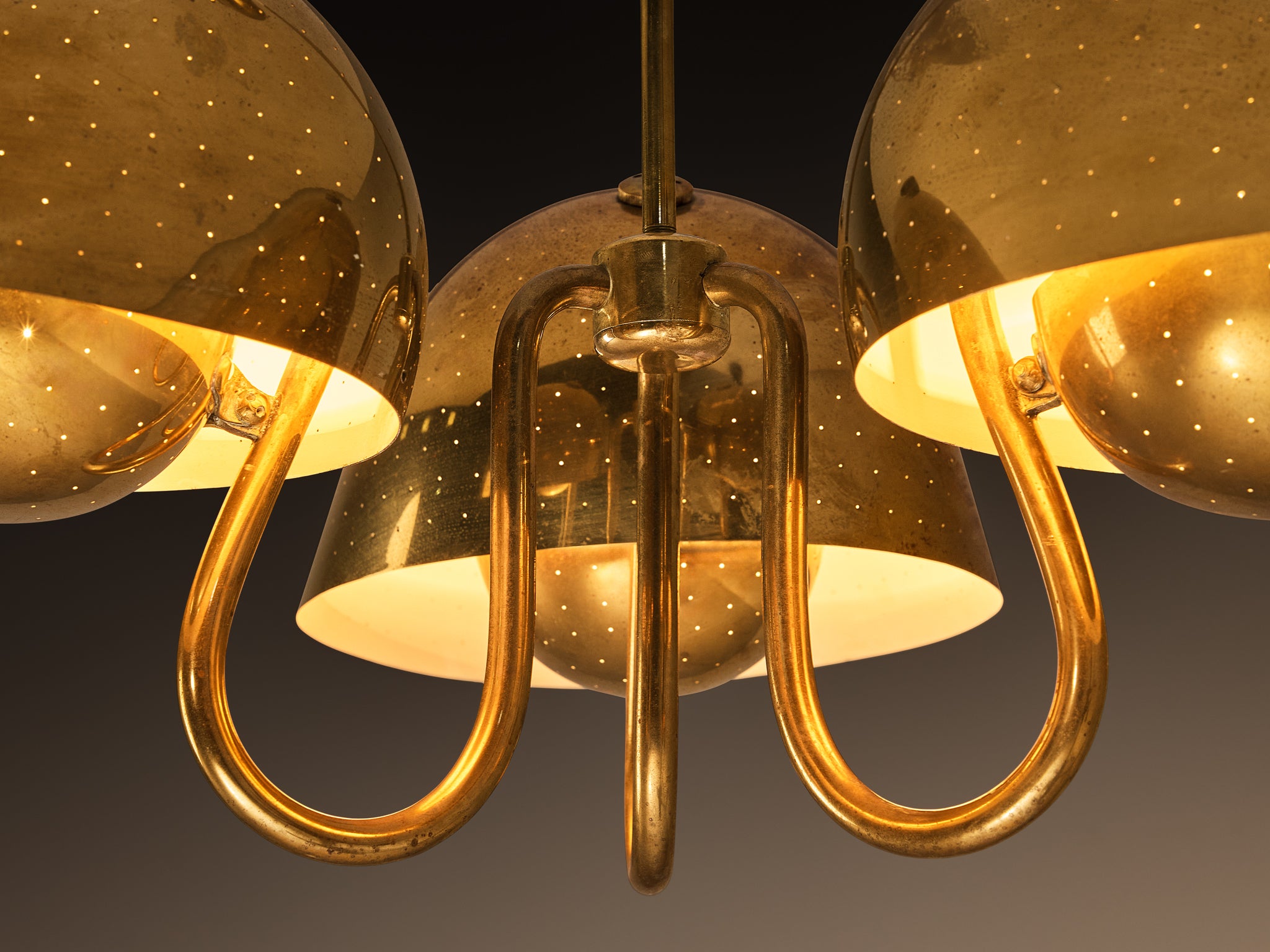
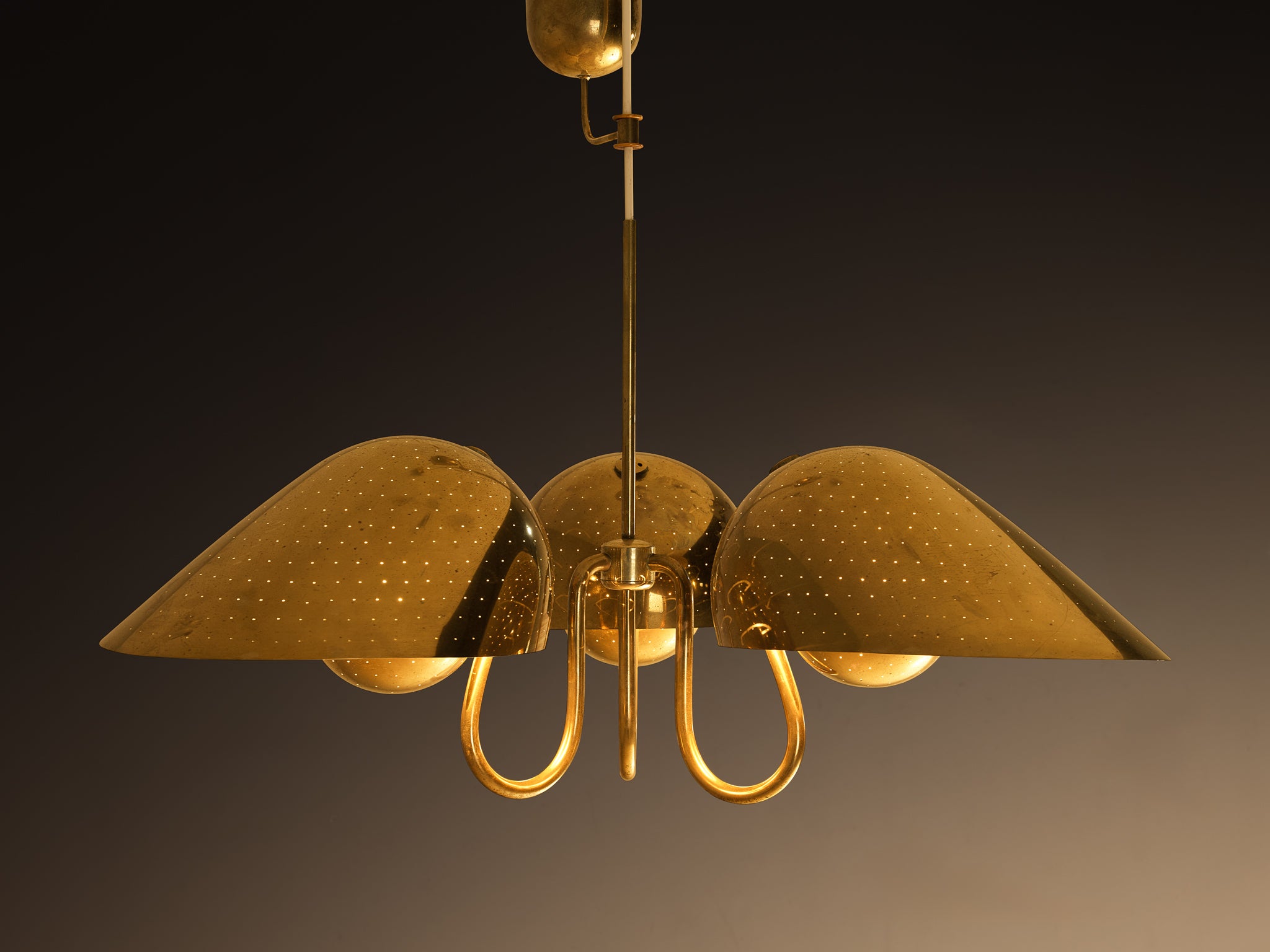
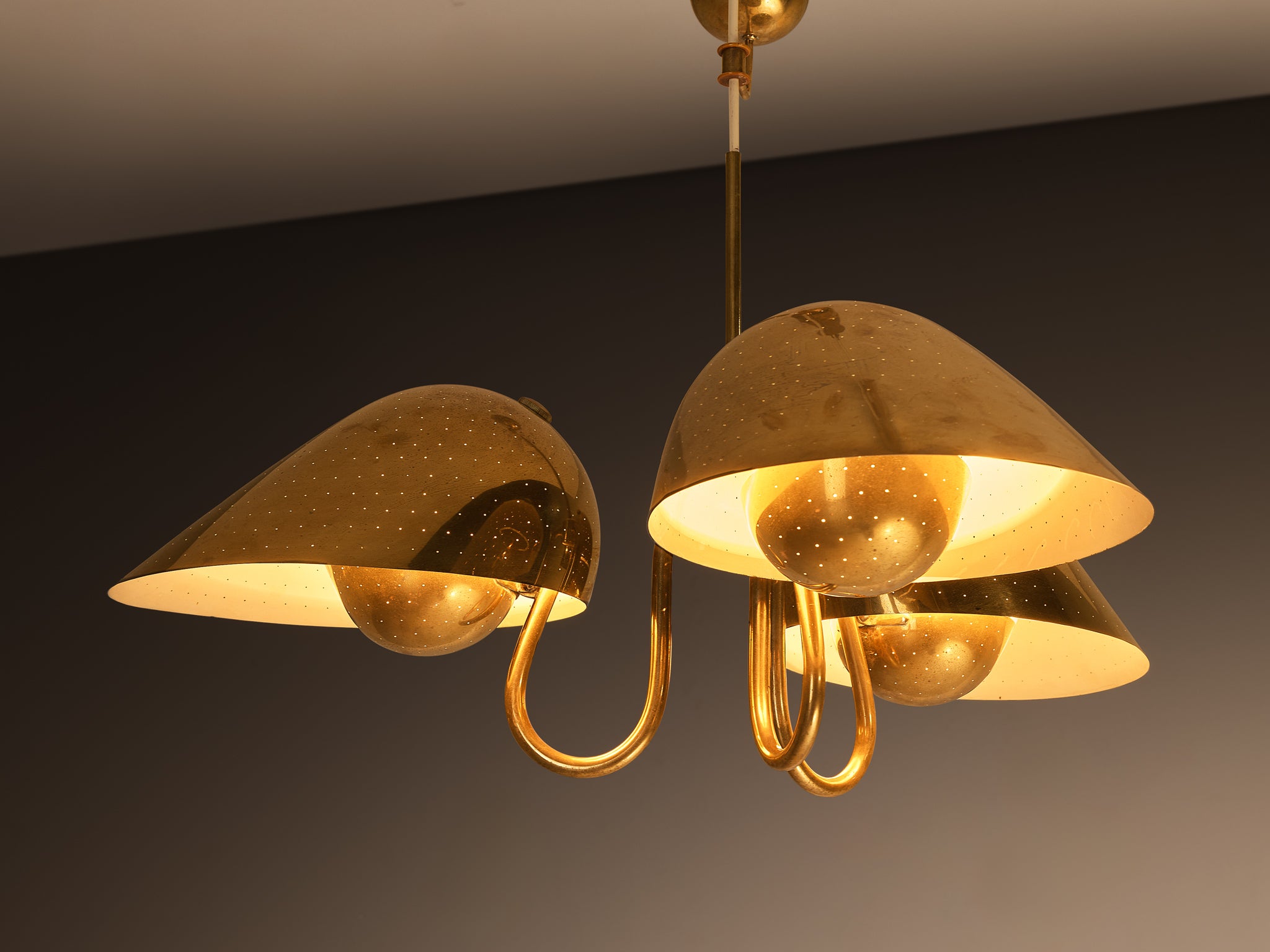
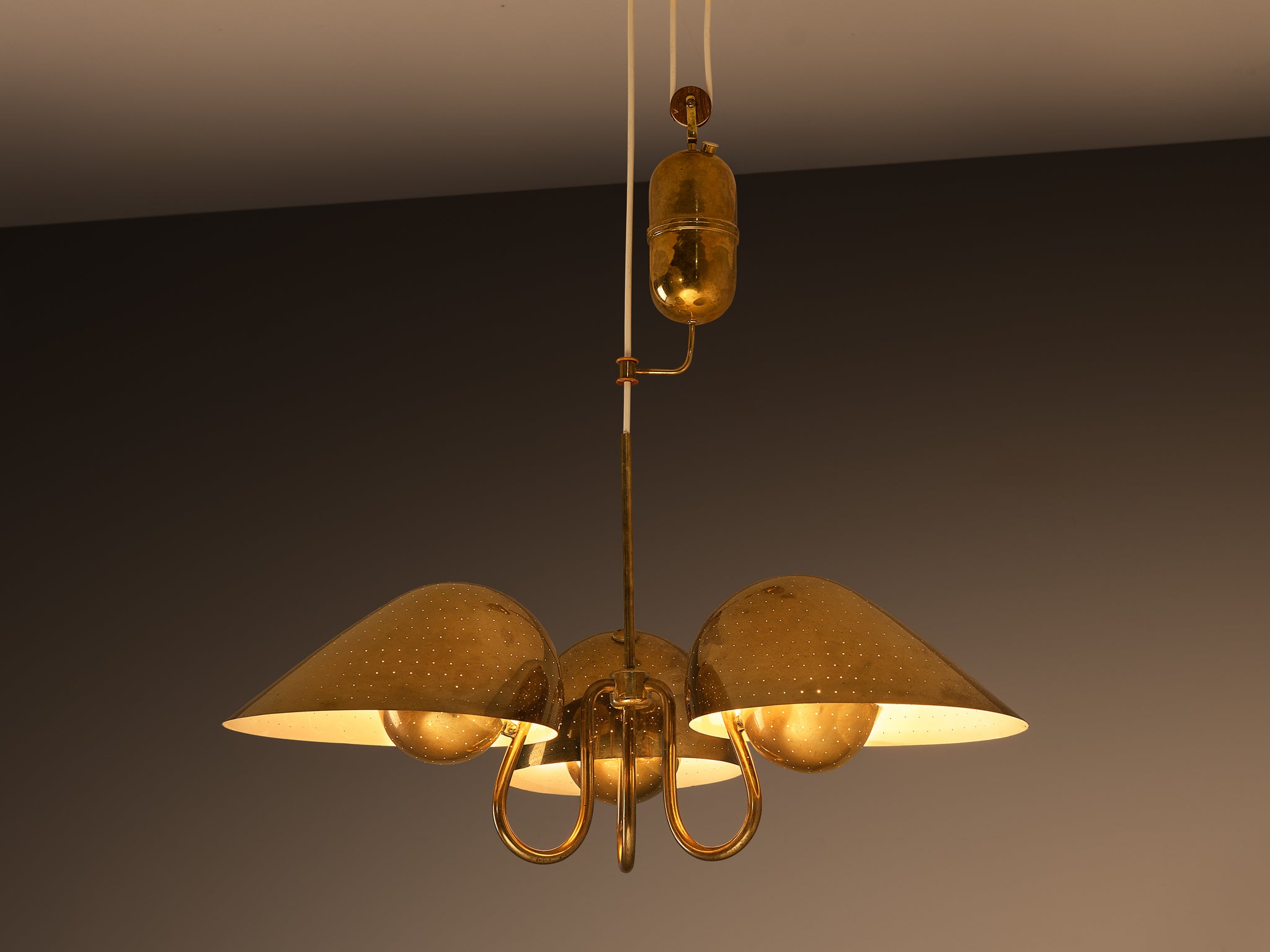
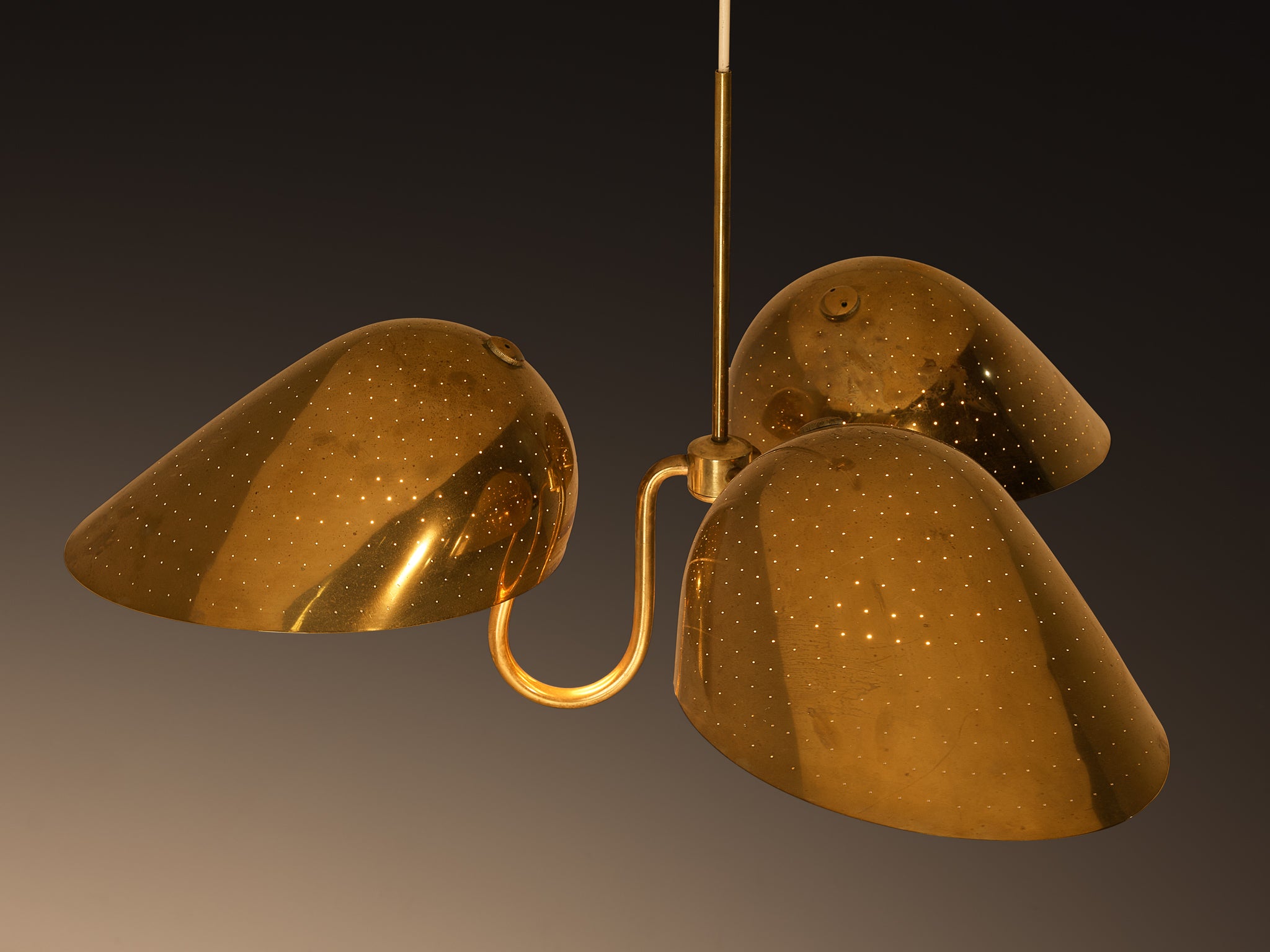
The design is defined by three rounded shades with gracefully curved silhouettes. Smaller reflectors – with the light bulbs concealed – are positioned below and affixed to the elegantly curved arms. The double-reflector principle (where one reflector directs light upward into another, larger reflector) appears in several other works by Bröderna Malmströms, especially in their collaborations with Acking. In the broader discourse of the 1920s and 1930s, this approach resonates with contemporary debates on rational lighting design, a topic explored in the Swedish Journal of Light Culture (founded 1928). Theorists and practitioners sought to educate architects and consumers alike in the principles of glare reduction, indirect illumination, and material optimization. Acking absorbed these ideas and transformed them into practice. The reflectors diffuse a soft ambient light, while fine streaks escape through the perforations of the shade. This model captures Acking’s fusion of sculptural form and technical precision, turning light fixtures into architectural elements rather than mere sources of illumination.
Carl-Axel Acking was part of a new generation of Swedish architects who shaped the character of Swedish Modern, a style that blended the simplicity of functionalism with the tactility of fine craftsmanship and softly shaped forms. Educated at the Royal Institute of Technology and what is now Konstfack in Stockholm, he combined technical precision with an acute sensitivity to materials and detail, working across the fields of architecture, custom furniture, interior design, and lighting. For Acking, lighting was never an afterthought but a vital architectural component; a medium through which structure, atmosphere, and function converged.
In 1939, the young architect and designer Carl-Axel Acking (1910–2001) was entrusted with one of the most prestigious commissions of pre-war Swedish design: contributing to the Swedish Pavilion at the New York World’s Fair. The pavilion, inaugurated on April 30, 1939, was Sweden’s official showcase for its national identity. Designed by the architect Sven Markelius (1889-1972) with Folke Bernadotte as Commissioner General, the event involved some of the country’s most forward-thinking architects, designers, and manufacturers. Acking designed both furnishings and lighting fixtures for some of the pavilion’s representative spaces, including Bernadotte’s own office. It was here that the present chandelier, manufactured by Bröderna Malmströms Metallvarufabrik in Malmö, made its debut.
Based in Malmö, Bröderna earned its place among other major players in the Swedish lighting industry, including Nordiska Kompaniet in Nyköping, Ateljé Lyktan in Åhus, and Böhlmarks in Stockholm. Together, these companies shaped not just the market but also the cultural identity of lighting design in Sweden during the 20th century. The company was known for its high-quality metal craftsmanship and its collaborations with leading Swedish designers and architects.
The design is defined by three rounded shades with gracefully curved silhouettes. Smaller reflectors – with the light bulbs concealed – are positioned below and affixed to the elegantly curved arms. The double-reflector principle (where one reflector directs light upward into another, larger reflector) appears in several other works by Bröderna Malmströms, especially in their collaborations with Acking. In the broader discourse of the 1920s and 1930s, this approach resonates with contemporary debates on rational lighting design, a topic explored in the Swedish Journal of Light Culture (founded 1928). Theorists and practitioners sought to educate architects and consumers alike in the principles of glare reduction, indirect illumination, and material optimization. Acking absorbed these ideas and transformed them into practice. The reflectors diffuse a soft ambient light, while fine streaks escape through the perforations of the shade. This model captures Acking’s fusion of sculptural form and technical precision, turning light fixtures into architectural elements rather than mere sources of illumination.
Carl-Axel Acking was part of a new generation of Swedish architects who shaped the character of Swedish Modern, a style that blended the simplicity of functionalism with the tactility of fine craftsmanship and softly shaped forms. Educated at the Royal Institute of Technology and what is now Konstfack in Stockholm, he combined technical precision with an acute sensitivity to materials and detail, working across the fields of architecture, custom furniture, interior design, and lighting. For Acking, lighting was never an afterthought but a vital architectural component; a medium through which structure, atmosphere, and function converged.
%20was%20entrusted%20wit...)
Choose options
Carl-Axel Acking Swedish Modern Chandelier in Perforated Brass
Sale price$38,500.00
Regular price
Tearsheet
×
Receive a copy in your email or download directly:
I accept emails from Morentz.
VAT within the EU: When buying or delivering an item within the EU, VAT usually applies and will be added.
Product Details